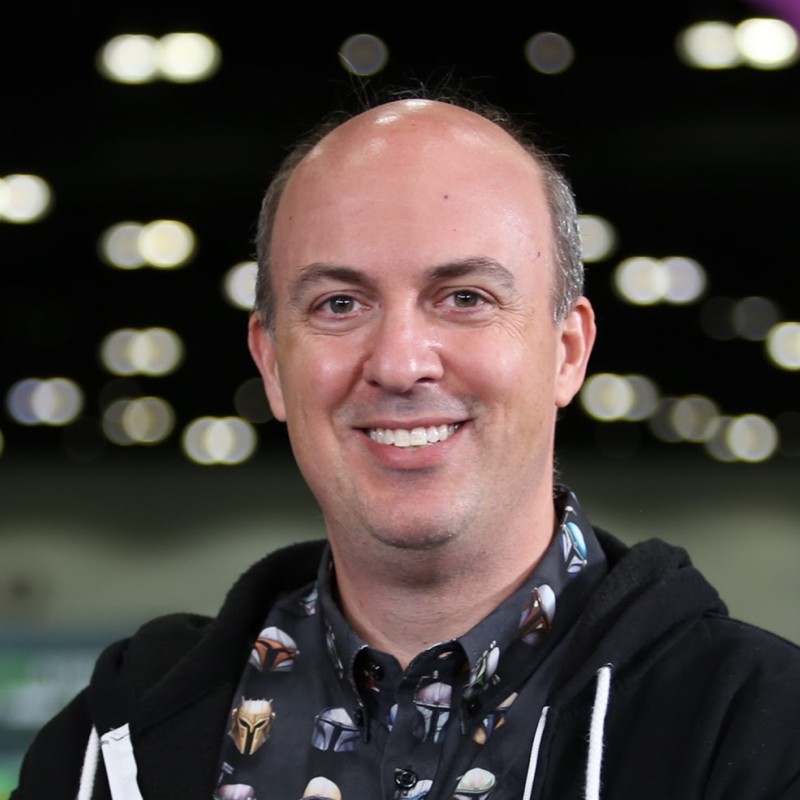
Mike Evans, VP, Business Development, Red Hat | @michaleevans72 sits down with John Furrier and Stu Miniman for Google Cloud Next 2019 at the Moscone Center in San Francisco, CA
#GoogleNext19 #theCUBE
https://siliconangle.com/2019/04/15/qa-differentiating-among-cloud-services-in-an-expanding-market-googlenext19/
Q&A: Advice from Red Hat aided Google Anthos’ open-source journey
Even as Google has built one of the world’s most successful businesses on cloud computing, translating its innovations into enterprise-ready services has been a challenge in a competitive field. Now under new leadership and rebranded as Anthos, the contemporary Google Cloud Platform is the result of a series of decisions spanning open-source partnerships and storage technologies, layered with strong software support for a multicloud world.
“I’ve been working with Google on their cloud efforts for almost 10 years now, and it started back when Google was about to get into the cloud business. They had to decide whether they were going to use KVM or Xen as their hypervisor, and we helped them do that,” said Mike Evans, vice president of technical business development at Red Hat Inc., noting his company’s role in aiding Google’s contemplation of open-source hypervisors for running their virtual machine services.
Evans spoke with Dave Vellante (@dvellante) and Stu Miniman (@stu), co-hosts of theCUBE, SiliconANGLE Media’s mobile livestreaming studio, during the Google Cloud Next event in San Francisco. They discussed the OpenShift service and the different kinds of cloud services and their providers (see the full interview with transcript here). (* Disclosure below.)
[Editor’s note: The following answers have been condensed for clarity.]
Miniman: Speak on the engineering relationships going on, joint customers that you have, and the value.
Evans: Through the years, we’ve really done a lot of work to make sure that [Red Hat Enterprise Linux], at the foundation works really well on GCP. So that’s been a really consistent effort on whether to round optimization for performance, security elements. So that provides a nice base for anybody who wants to move any workload, or application, from on-prem over there, or from another cloud, and that’s been great.
Vellante: Multicloud is a sort of evolved form multi-vendor. How do you guys look at it? Is multicloud a strategy? How do you look at hybrid?
Evans: It’s simple in my mind, but I know the terms get used by a lot of different people in different ways. Hybrid cloud, to me, is just that straightforward, being able to run something on-premise, being able to run something in a public cloud, and have it be somewhat consistent or shareable/movable. And multicloud is being able to do that same thing with multiple public clouds. And then there’s a third variation on that, wanting to do an application that runs in both and shares information.
Miniman: But it’s [Google Kubernetes Engine] on top of those public clouds. Give us a little bit of contrast of that compared to OpenShift, because OpenShift lives in all of these environments too, but they’re not fully compatible. How does that work?
Evans: Anthos, which was announced yesterday … is a validation of what our message has been. Hybrid cloud is a value; multicloud is a value. Also, it puts us in a competitive environment more with Google than it was yesterday, or two days ago. But, again, that’s our normal world, right? We partnered with IBM and HPE and competed against them on Unix. That said, we believe with OpenShift having five-plus years in market, over a thousand customers, very wide deployments, and already running in Google, Amazon and Microsoft Cloud, [we’re] already there, and solid, and people are doing real things with it.
Watch the complete video interview below, and be sure to check out more of SiliconANGLE’s and theCUBE’s coverage of the Google Cloud Next event. (* Disclosure: Red Hat Inc. sponsored this segment of theCUBE. Neither Red Hat nor other sponsors have editorial control over content on theCUBE or SiliconANGLE.)
Forgot Password
Almost there!
We just sent you a verification email. Please verify your account to gain access to
Google Cloud Next 2019 | San Francisco. If you don’t think you received an email check your
spam folder.
Sign in to Google Cloud Next 2019 | San Francisco.
In order to sign in, enter the email address you used to registered for the event. Once completed, you will receive an email with a verification link. Open this link to automatically sign into the site.
Register For Google Cloud Next 2019 | San Francisco
Please fill out the information below. You will recieve an email with a verification link confirming your registration. Click the link to automatically sign into the site.
You’re almost there!
We just sent you a verification email. Please click the verification button in the email. Once your email address is verified, you will have full access to all event content for Google Cloud Next 2019 | San Francisco.
I want my badge and interests to be visible to all attendees.
Checking this box will display your presense on the attendees list, view your profile and allow other attendees to contact you via 1-1 chat. Read the Privacy Policy. At any time, you can choose to disable this preference.
Select your Interests!
add
Upload your photo
Uploading..
OR
Connect via Twitter
Connect via Linkedin
EDIT PASSWORD
Share
Forgot Password
Almost there!
We just sent you a verification email. Please verify your account to gain access to
Google Cloud Next 2019 | San Francisco. If you don’t think you received an email check your
spam folder.
Sign in to Google Cloud Next 2019 | San Francisco.
In order to sign in, enter the email address you used to registered for the event. Once completed, you will receive an email with a verification link. Open this link to automatically sign into the site.
Sign in to gain access to Google Cloud Next 2019 | San Francisco
Please sign in with LinkedIn to continue to Google Cloud Next 2019 | San Francisco. Signing in with LinkedIn ensures a professional environment.
Are you sure you want to remove access rights for this user?
Details
Manage Access
email address
Community Invitation
Mike Evans, Red Hat | Google Cloud Next 2019
Mike Evans, VP, Business Development, Red Hat | @michaleevans72 sits down with John Furrier and Stu Miniman for Google Cloud Next 2019 at the Moscone Center in San Francisco, CA
#GoogleNext19 #theCUBE
https://siliconangle.com/2019/04/15/qa-differentiating-among-cloud-services-in-an-expanding-market-googlenext19/
Q&A: Advice from Red Hat aided Google Anthos’ open-source journey
Even as Google has built one of the world’s most successful businesses on cloud computing, translating its innovations into enterprise-ready services has been a challenge in a competitive field. Now under new leadership and rebranded as Anthos, the contemporary Google Cloud Platform is the result of a series of decisions spanning open-source partnerships and storage technologies, layered with strong software support for a multicloud world.
“I’ve been working with Google on their cloud efforts for almost 10 years now, and it started back when Google was about to get into the cloud business. They had to decide whether they were going to use KVM or Xen as their hypervisor, and we helped them do that,” said Mike Evans, vice president of technical business development at Red Hat Inc., noting his company’s role in aiding Google’s contemplation of open-source hypervisors for running their virtual machine services.
Evans spoke with Dave Vellante (@dvellante) and Stu Miniman (@stu), co-hosts of theCUBE, SiliconANGLE Media’s mobile livestreaming studio, during the Google Cloud Next event in San Francisco. They discussed the OpenShift service and the different kinds of cloud services and their providers (see the full interview with transcript here). (* Disclosure below.)
[Editor’s note: The following answers have been condensed for clarity.]
Miniman: Speak on the engineering relationships going on, joint customers that you have, and the value.
Evans: Through the years, we’ve really done a lot of work to make sure that [Red Hat Enterprise Linux], at the foundation works really well on GCP. So that’s been a really consistent effort on whether to round optimization for performance, security elements. So that provides a nice base for anybody who wants to move any workload, or application, from on-prem over there, or from another cloud, and that’s been great.
Vellante: Multicloud is a sort of evolved form multi-vendor. How do you guys look at it? Is multicloud a strategy? How do you look at hybrid?
Evans: It’s simple in my mind, but I know the terms get used by a lot of different people in different ways. Hybrid cloud, to me, is just that straightforward, being able to run something on-premise, being able to run something in a public cloud, and have it be somewhat consistent or shareable/movable. And multicloud is being able to do that same thing with multiple public clouds. And then there’s a third variation on that, wanting to do an application that runs in both and shares information.
Miniman: But it’s [Google Kubernetes Engine] on top of those public clouds. Give us a little bit of contrast of that compared to OpenShift, because OpenShift lives in all of these environments too, but they’re not fully compatible. How does that work?
Evans: Anthos, which was announced yesterday … is a validation of what our message has been. Hybrid cloud is a value; multicloud is a value. Also, it puts us in a competitive environment more with Google than it was yesterday, or two days ago. But, again, that’s our normal world, right? We partnered with IBM and HPE and competed against them on Unix. That said, we believe with OpenShift having five-plus years in market, over a thousand customers, very wide deployments, and already running in Google, Amazon and Microsoft Cloud, [we’re] already there, and solid, and people are doing real things with it.
Watch the complete video interview below, and be sure to check out more of SiliconANGLE’s and theCUBE’s coverage of the Google Cloud Next event. (* Disclosure: Red Hat Inc. sponsored this segment of theCUBE. Neither Red Hat nor other sponsors have editorial control over content on theCUBE or SiliconANGLE.)