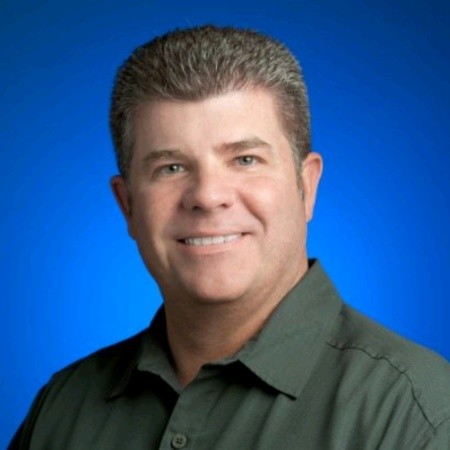
Joe Kava, VP Google Data Centers, Google Cloud | @jkava67 sits down with John Furrier and Dave Vellante for Google Cloud Next 2019 at the Moscone Center in San Francisco, CA
#GoogleNext19 #theCUBE
https://siliconangle.com/2019/04/10/how-google-is-building-worlds-most-sustainable-cloud-googlenext19/
How Google is building ‘world’s most sustainable cloud’
Google Cloud Platform continues carving out its brand among competing hyperscalers. One way it’s setting itself apart is with its globally dispersed data-center operations: It wants to run the most environmentally sound data centers on the planet.
Building “the world’s most sustainable cloud” is the day-to-day work of Joe Kava (pictured), vice president of data center operations at Google Cloud. “We were the first company to announce that we were buying 100% renewable energy,” he said.
In 2017, Google achieved this when its renewable power purchase agreements covered 100% of its energy consumption. It then decided to advance to both renewable and sustainable energy. It began using wind and solar energy.
Google Cloud is continuing efforts to further reduce pollution and leverage environmentally friendly energy sources. “It’s a relentless focus on efficiency and innovation,” Kava said.
Kava spoke with John Furrier and Dave Vellante, co-hosts of theCUBE, SiliconANGLE Media’s mobile livestreaming studio, during the Google Cloud Next event in San Francisco. They discussed Google Cloud’s sustainability mission (see the full interview with transcript here).
Google’s novel ways to keep cool
Google Cloud is working to optimize power use up and down its stacks. “It’s optimizing software to be efficient, optimizing the server architecture to be more efficient, optimizing the power supplies in the servers, optimizing the racks, designing the racks to be working with the cooling equipment,” Kava said.
Google leverages unique cooling systems in its data centers. Sometimes, locations around the globe have existing natural cooling solutions. “In our data centers right on the Gulf of Finland, we use cold seawater from the Gulf of Finland to cool the data center,” Kava stated.
And Google Cloud has plenty of artificial-intelligence and machine-learning tech to put to good environmental use. “We have ML running some of our cooling systems in fully autonomous mode and doing a much better job of matching the cooling needs to the workloads at the time,” Kava added.
Google’s DeepMind ML project has applied ML to a wind farm to predict output 36 hours in advance. “That allows the operators of the grid to better bring on more energy and get higher value out of that wind energy,” he concluded.
Here’s the complete video interview below, part of SiliconANGLE’s and theCUBE’s extensive coverage of the Google Cloud Next event:
Forgot Password
Almost there!
We just sent you a verification email. Please verify your account to gain access to
Google Cloud Next 2019 | San Francisco. If you don’t think you received an email check your
spam folder.
Sign in to Google Cloud Next 2019 | San Francisco.
In order to sign in, enter the email address you used to registered for the event. Once completed, you will receive an email with a verification link. Open this link to automatically sign into the site.
Register For Google Cloud Next 2019 | San Francisco
Please fill out the information below. You will recieve an email with a verification link confirming your registration. Click the link to automatically sign into the site.
You’re almost there!
We just sent you a verification email. Please click the verification button in the email. Once your email address is verified, you will have full access to all event content for Google Cloud Next 2019 | San Francisco.
I want my badge and interests to be visible to all attendees.
Checking this box will display your presense on the attendees list, view your profile and allow other attendees to contact you via 1-1 chat. Read the Privacy Policy. At any time, you can choose to disable this preference.
Select your Interests!
add
Upload your photo
Uploading..
OR
Connect via Twitter
Connect via Linkedin
EDIT PASSWORD
Share
Forgot Password
Almost there!
We just sent you a verification email. Please verify your account to gain access to
Google Cloud Next 2019 | San Francisco. If you don’t think you received an email check your
spam folder.
Sign in to Google Cloud Next 2019 | San Francisco.
In order to sign in, enter the email address you used to registered for the event. Once completed, you will receive an email with a verification link. Open this link to automatically sign into the site.
Sign in to gain access to Google Cloud Next 2019 | San Francisco
Please sign in with LinkedIn to continue to Google Cloud Next 2019 | San Francisco. Signing in with LinkedIn ensures a professional environment.
Are you sure you want to remove access rights for this user?
Details
Manage Access
email address
Community Invitation
Joe Kava, Google Cloud | Google Cloud Next 2019
Joe Kava, VP Google Data Centers, Google Cloud | @jkava67 sits down with John Furrier and Dave Vellante for Google Cloud Next 2019 at the Moscone Center in San Francisco, CA
#GoogleNext19 #theCUBE
https://siliconangle.com/2019/04/10/how-google-is-building-worlds-most-sustainable-cloud-googlenext19/
How Google is building ‘world’s most sustainable cloud’
Google Cloud Platform continues carving out its brand among competing hyperscalers. One way it’s setting itself apart is with its globally dispersed data-center operations: It wants to run the most environmentally sound data centers on the planet.
Building “the world’s most sustainable cloud” is the day-to-day work of Joe Kava (pictured), vice president of data center operations at Google Cloud. “We were the first company to announce that we were buying 100% renewable energy,” he said.
In 2017, Google achieved this when its renewable power purchase agreements covered 100% of its energy consumption. It then decided to advance to both renewable and sustainable energy. It began using wind and solar energy.
Google Cloud is continuing efforts to further reduce pollution and leverage environmentally friendly energy sources. “It’s a relentless focus on efficiency and innovation,” Kava said.
Kava spoke with John Furrier and Dave Vellante, co-hosts of theCUBE, SiliconANGLE Media’s mobile livestreaming studio, during the Google Cloud Next event in San Francisco. They discussed Google Cloud’s sustainability mission (see the full interview with transcript here).
Google’s novel ways to keep cool
Google Cloud is working to optimize power use up and down its stacks. “It’s optimizing software to be efficient, optimizing the server architecture to be more efficient, optimizing the power supplies in the servers, optimizing the racks, designing the racks to be working with the cooling equipment,” Kava said.
Google leverages unique cooling systems in its data centers. Sometimes, locations around the globe have existing natural cooling solutions. “In our data centers right on the Gulf of Finland, we use cold seawater from the Gulf of Finland to cool the data center,” Kava stated.
And Google Cloud has plenty of artificial-intelligence and machine-learning tech to put to good environmental use. “We have ML running some of our cooling systems in fully autonomous mode and doing a much better job of matching the cooling needs to the workloads at the time,” Kava added.
Google’s DeepMind ML project has applied ML to a wind farm to predict output 36 hours in advance. “That allows the operators of the grid to better bring on more energy and get higher value out of that wind energy,” he concluded.
Here’s the complete video interview below, part of SiliconANGLE’s and theCUBE’s extensive coverage of the Google Cloud Next event: