Margaret Dawson of SUSE, chief marketing officer, participates in a SUSECON 2026 session with Paul Nashawaty of theCUBE Research, practice lead and principal analyst. Dawson draws on their experience in open source strategy and marketing, and they discuss partner ecosystems, composable architectures, artificial intelligence readiness and the transition of legacy virtualization to cloud native models. The conversation emphasizes how open standards and community-driven development underpin resilient and sovereign IT infrastructure.
Key takeaways include Dawson's assertion that transparency and open source are essential to sovereignty and security rather than contradictory to them. They stress the role of partners and IT training to close skill gaps and reduce complexity, and they recommend modular, composable architectures for edge and AI workloads. Nashawaty emphasizes multi-cloud flexibility and adherence to open standards as practical steps to increase resilience and support modern cloud native and hybrid environments.
Forgot Password
Almost there!
We just sent you a verification email. Please verify your account to gain access to
SUSECON 2026. If you don’t think you received an email check your
spam folder.
In order to sign in, enter the email address you used to registered for the event. Once completed, you will receive an email with a verification link. Open the link to automatically sign into the site.
Register for Susecon 2026
Please fill out the information below. You will receive an email with a verification link confirming your registration. Click the link to automatically sign into the site.
You’re almost there!
We just sent you a verification email. Please click the verification button in the email. Once your email address is verified, you will have full access to all event content for Susecon 2026.
I want my badge and interests to be visible to all attendees.
Checking this box will display your presense on the attendees list, view your profile and allow other attendees to contact you via 1-1 chat. Read the Privacy Policy. At any time, you can choose to disable this preference.
Select your Interests!
add
Upload your photo
Uploading..
OR
Connect via Twitter
Connect via Linkedin
EDIT PASSWORD
Share
Forgot Password
Almost there!
We just sent you a verification email. Please verify your account to gain access to
SUSECON 2026. If you don’t think you received an email check your
spam folder.
In order to sign in, enter the email address you used to registered for the event. Once completed, you will receive an email with a verification link. Open the link to automatically sign into the site.
Sign in to gain access to SUSECON 2026
Please sign in with LinkedIn to continue to SUSECON 2026. Signing in with LinkedIn ensures a professional environment.
Are you sure you want to remove access rights for this user?
Details
Manage Access
email address
Community Invitation
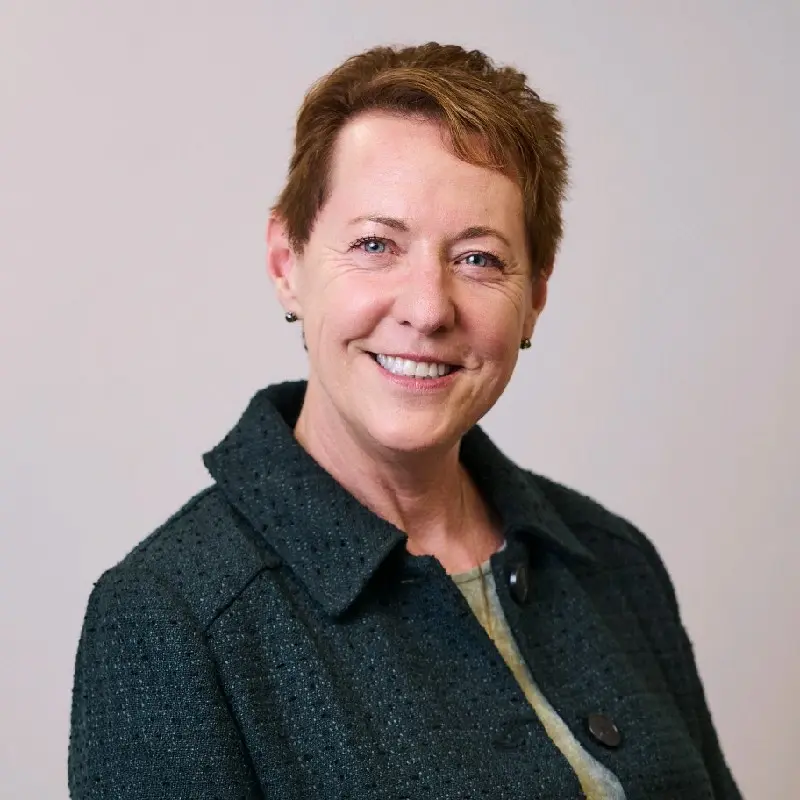
Margaret Dawson, SUSE
Margaret Dawson of SUSE, chief marketing officer, participates in a SUSECON 2026 session with Paul Nashawaty of theCUBE Research, practice lead and principal analyst. Dawson draws on their experience in open source strategy and marketing, and they discuss partner ecosystems, composable architectures, artificial intelligence readiness and the transition of legacy virtualization to cloud native models. The conversation emphasizes how open standards and community-driven development underpin resilient and sovereign IT infrastructure.
Key takeaways include Dawson's assertion that transparency and open source are essential to sovereignty and security rather than contradictory to them. They stress the role of partners and IT training to close skill gaps and reduce complexity, and they recommend modular, composable architectures for edge and AI workloads. Nashawaty emphasizes multi-cloud flexibility and adherence to open standards as practical steps to increase resilience and support modern cloud native and hybrid environments.
In this interview from SUSECON 2026 in Prague, Margaret Dawson, chief marketing officer of SUSE, joins theCUBE Research's Paul Nashawaty to discuss why open-source infrastructure is the essential foundation for enterprise resilience across cloud, edge and AI workloads. Dawson highlights record momentum at the event — nearly 1,500 registrations, its largest turnout — and traces the resilience theme to SUSE's own primary research, which found the concept surfacing across every customer conversation on cost optimization, AI adoption and virtualization migration....Read more
exploreKeep Exploring
What does "resilience" mean from your perspective, especially in relation to sovereignty, security, openness, and technology choices?add
What are the main challenges enterprise IT leaders face in adopting new technologies, and how can vendors and partners (for example SUSE) help reduce complexity and address skill gaps through solutions, services, and training?add
Should an organization consolidate vendors and standardize its technology stack to reduce complexity, or use multiple vendors and a multi‑cloud approach to manage risk and improve resilience — and how does data sovereignty factor into that choice?add
Looking ahead one year to SUSECON 2027 in Dallas, what developments or changes do you expect compared with SUSECON 2026?add
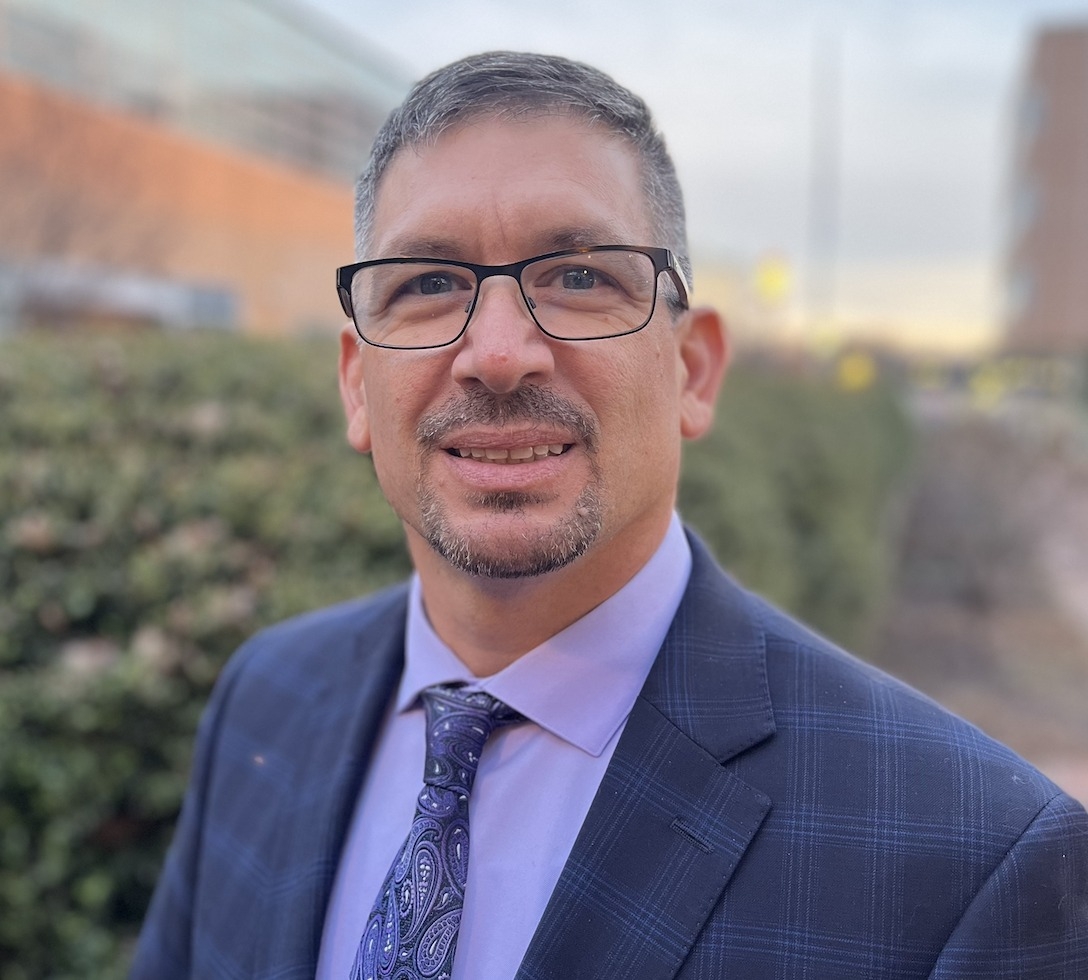
>> Hello and welcome back to SUSECON 2026. My name is Paul Nashawaty. I'm the practice lead and principal analyst at theCUBE Research, and I'm here with Margaret. Margaret, how are you today?
Margaret Dawson
>> I am doing wonderful. How are you?
Paul Nashawaty
>> I'm fantastic.
Margaret Dawson
>> Great.
Paul Nashawaty
>> What a great event. There's so many people out there. The keynotes were really amazing. They're well attended. Let's start there. I mean, how's the show going for you?
Margaret Dawson
>> So much energy. You look forward to this and everybody's been planning this obviously for months, but we had almost 1,500 registrations, which is record breaking. So many, hundreds and hundreds of customers, hundreds of partners, more sponsors than ever before. So that energy. The hallways, everything, no matter where you go, the Geeko gear shop is packed. So I'm just loving the energy, I'm loving the conversations, and I think everyone's having a good week.
Paul Nashawaty
>> I think so too. I mean, it started off strong. It started off really strong. I think that some of the conversations that I was involved in, certainly some of the conversations were about reshaping your resilient future and how the partner ecosystem really helps expand what you're doing with SUSE. Do you want to talk a little bit about that?
Margaret Dawson
>> I mean, we like to say we're partner first. I know a lot of people say that, but really none of this could happen without the partner ecosystem. And I think there's two things. One is, we've done a lot of primary research in the last few months that was something that uncovered this theme of resilience. Because no matter what we were talking to customers about, whether it was cost optimization or implementing AI or migrating off their current virtualization, the underlying theme always went back to this resilience. And so when we talk to our partner ecosystem, the crucial thing they're bringing is that strategic services, how are they bringing solutions together? How are they helping people migrate to the future? So none of this could happen without our amazing partners.
Paul Nashawaty
>> Absolutely. And I think that the theme here I've been hearing is shaping the resilient future. Some of this, like you were saying, is near and dear to what you're used to doing is the open source side and the open source culture. So let's talk a little bit about that. I think the open standards, I love the phrase choice happens. I mean, I love that. It kind of solidifies that approach. But what does that mean from your perspective?
Margaret Dawson
>> It's interesting because if you look at the term resilient, a lot of people are tying that to sovereignty and security, there's this tendency to think, oh, that means I need to be closed or I have to be locked down, so to speak. I need more control. But none of those things mean that you can't be open. So I think what we're bringing to this conversation is you actually can't be sovereign in a black box. You need to be able to see, you need that transparency to have control. So it may sound counterintuitive, but it actually, architecturally and technologically, is vital. Same thing with security. We all know that open source code is actually more secure than closed code. Because you have tens of thousands-
Paul Nashawaty
>> People touching it.
Margaret Dawson
>> ... of people... Right. You've got tens of thousands of people looking for vulnerabilities and helping with the CVEs, then however many engineers you have in-house. So everything that we're talking about this week, whether it be AI and the need for more open standards there, which we could talk about forever, or the need to move to a more open virtualization solution that puts you more towards cloud native, all of these things go back to choice, flexibility, adaptability, and resilience.
Paul Nashawaty
>> Yeah, absolutely. And I think you were kind of going down this path, and I was going to double click on that, which is the adaptable foundations and that open kind of architecture. It is important to understand that flexibility is a key. Actionable insights is also key. And then, as you're moving forward, there's an element of bridging the gap between heritage environments and new as well. So you have to be kind of open in that kind of perspective.
Margaret Dawson
>> I mean, the way I think about it, and I'll be talking about this on Thursday, is the open architecture viewpoint. How do we all move towards a more composable or modular architecture, which I think you and I have been talking about for years. People are really starting to move in that direction more and more. You need it as you're going more to the edge, you need those smaller footprint technologies and the ability to have that composable architecture helps you there. AI, it helps you there. It needs that composability as well to act. So I think part of this is looking at how do we use open source? How do we use composability? How do we use the choice and the adaptability to move where we need to move and take the pieces that we need based on what those goals are. And all of that means getting off of these black boxes that don't have that flexibility, that don't have that adaptability. You're stuck.
Paul Nashawaty
>> Yeah. And I also, I mean, I hear quite a bit about the challenges, the barriers that stop people from moving forward. Complexity and skill gaps are obviously some of the-
Margaret Dawson
>> Huge one.
Paul Nashawaty
>> ... two areas, right? SUSE kind of eliminates a lot of that friction. Maybe touch a little bit about that.
Margaret Dawson
>> Yeah. It's interesting. We actually did research that showed the number one challenge enterprise IT leaders are facing is skill gaps and training needs. And I think that's interesting because we keep hearing all this hype about AI taking away jobs. That's not what's coming up as the challenge. It's how do I actually bring my staff with me to the future and help with training? And throughout the week we've had certification, we've had training sessions. And so everything we're doing, and I think I could go back to open source and how you learn in the community, but everything we're doing is helping our customers and working with our partners to take customers where they are today, regardless of where that is, and move to the future. And with that, yes, there's technology, but there's solutions that include services and migrations and like the whole thing, and training has to be part of that.
Paul Nashawaty
>> Yeah, it does. I mean, I'm finding out, I mean, I researched that 67% of organizations are hiring generalists over specialists.
Margaret Dawson
>> Interesting.
Paul Nashawaty
>> Yeah. And they're working with companies to reduce complexity. So the organizations are going back to vendors saying, "You need to reduce the complexity." But in order to achieve some of these goals, and this goes back to the partner ecosystem that I'm seeing here on the show floor, is they work with service delivery partners to get the job done. So that's one way to overcome that skill gap issue.
Margaret Dawson
>> It is. I mean, something I'm thinking about, I'm curious what you think is this whole juxtaposition of, do I consolidate vendors? Do I consolidate technologies? Or do I maintain kind of different vendors to manage risk? And I think this is a conversation that's coming up, and it goes back to resilience. Is it more resilient to kind of make some big bets and standardize layers of my architecture, or is it more resilient to have a multi-cloud environment where I can kind of move things around and where does sovereignty fit into this? I mean, those are the complexities and architectural questions I think that everyone is having. And I don't know what you think about that.
Paul Nashawaty
>> No, absolutely, for sure. I mean, I think that I wouldn't be in IT if I didn't say it depends. Because you have to kind of-
Margaret Dawson
>> As in IT depends? No.
Paul Nashawaty
>> There you go. But the fact is is many organizations want to reduce complexity with their relationships. They want one back to pat to go after that. But they also want to make sure that they have those open standards in the open ecosystem to support what they're trying to achieve. Now you did touch on this, and briefly, and I want to definitely jump in, is the sovereignty, it does require transparency. And when we look at sovereignty, the ecosystem is absolutely important when it comes to data sovereignty. So that's where SUSE come in. Yeah.
Margaret Dawson
>> Yeah. I mean, this is where, so being a European company for EU organizations is obviously helping us a lot, but we're also looking to our partners, whether that be an AWS or other hyperscaler, or other regional clouds to provide that sovereign infrastructure base, which all of the hyperscalers are looking more and more at sovereign examples. One thing that we don't talk about a lot, but our sister company, Rancher Government Services, has also built what I would call very hardened government ready sovereign versions of our stack. And we're starting to see interest in RGS in other countries. So we actually have some products beyond maybe what the standard enterprise would, through RGS and through our partnerships, that bring that sovereignty, bring that resilience, but for a very specific use case around digital sovereignty or deeper data protection, whatever you call it. It's also interesting, I don't know if you saw this, but people tend to think that digital sovereignty is more of a European thing, but we're actually seeing it being a top priority in Japan. 32%, I think it was, of US based IT leaders said it was a top priority.
Paul Nashawaty
>> Oh yeah. I was just having a conversation earlier today about it. It's a big, big focus for a lot of organizations. Now, I will say that, when you look at it from a European perspective, there's drivers that are doing this, like the EUCRA, that's going into effect. I mean, you have compliance, regulations, and governance that needs to be put into effect.
Margaret Dawson
>> And the EU AI Act as well, that is kind of touching it.
Paul Nashawaty
>> Right. But there's also the Singapore Act. There's also the NIST standards in the US, right? But all of this kind of means that, we're a global economy. We're a global environment. So if your application, even though it's maybe an EU standard, if you're using an application that bridges those barriers, it has to comply.
Margaret Dawson
>> Well, and I think this is where a lot of times this comes up in modernization, but I think it's very true for sovereignty, is we have to be careful not to think of an application as an island. Because every application, as you know, has dependencies, whether it be other applications, workflows, data sets. And so as we're looking at sovereignty, we really need to look at what has to be sovereign from a location perspective, what has to adapt so that the application isn't at risk of sovereignty. But we have to look at that entire ecosystem around an application. And to do so, you're obviously touching a lot of different technologies, a lot of different things, and partners help kind of bring that whole solution together.
Paul Nashawaty
>> Yeah, absolutely. Absolutely. And I think that kind of leads to this point here, which is the power of collaboration, the open culture. And when you look at resiliency being a team sport, it truly is, right?
Margaret Dawson
>> It really is. Yeah. And I mean, this goes back to open source communities. The thing I have said, and we've talked about this for probably 15 years, and I haven't changed, open source communities provide us the model for this. How does this work? The best ideas come from anywhere. It's not hierarchical. People collaborate for the best. Everybody works toward common goals. And while that may sound maybe euphoric or whatever, but I think the more organizations, as they look at technology and they look at their vendor ecosystem and how they are working together, those cultural aspects really make a difference. And I think that the more that we can collaborate and work in a community for common good, the faster we'll be able to move. It actually increases agility. It doesn't slow you down.
Paul Nashawaty
>> Yeah. Yeah. So okay. I mean, I agree with that. Collaboration's important. Transparency is important, and then you have these pieces. What keeps you up at night with this?
Margaret Dawson
>> I think the hype sometimes keeps me up. We still like to look at the shiny new penny. And at the end of the day, though, organizations are still focused on the same things. How do I stay secure? How do I reduce cost? But we've got a lot of pressure to innovate faster than ever. And I would say the second thing is all those changes are happening faster than ever. The pace of change, the pace of innovation, and I know we've said this before, but it really does feel like it's beyond exponential. We've already killed Moore's law off. I don't even know what the next thing is, quantum leaps, if we look at quantum computing. So what keeps me up is, not only how we innovate at that pace in our communities, but how do we help our customers move to that future so they're not left behind. And it's not a silver bullet and it's not lift and shift everything to the future, but it's slowly incorporating all those next generation technologies and helping them get there safely.
Paul Nashawaty
>> Yeah. I mean, that makes a lot of sense. I mean, it's kind of a go as you grow kind of-
Margaret Dawson
>> 100%.
Paul Nashawaty
>> And it's also-
Margaret Dawson
>> That's correct.
Paul Nashawaty
>> ... depending on your journey. Your maturity might be different.
Margaret Dawson
>> Everyone's in a different place. Yeah. So I mean, how do we help them assess where they are and assess those priorities. And I think the resilience, I'll go back to where we started, is that, no matter what you're doing, what that resilience is is how do I keep my IT reliable, secure, stable, and scalable. Foundational stuff, that's resilience. So no matter what you're doing, you're not putting those things at risk or compromising those elements.
Paul Nashawaty
>> Yeah. I mean, that makes a lot of sense. I like that. All right. So let's ask this question. So we're sitting here at SUSECON 2027 in Dallas a year from now. We're talking about all the cool things that we talked about here in SUSECON 2026. Where do you see it going in a year?
Margaret Dawson
>> Oh my gosh. First of all, it's going to be huge. The Dallas Omni, I think can have several thousand more people. So I'm expecting more than 2,000 people definitely. I'm putting a target in the ground right now. I mean, I think AI obviously will go even further. One of the areas that is ripe for more open standards in open source is all of those technologies around what we call AI. The edge, and now the industrial edge, is a place where we are not seeing a lot of open standards right now. So I think what we'll start to see is increased pressure and how all of these things are having to open up because they're all intersecting. I mean, that's the other thing is all these things are coming together. And so I'm hoping when we're sitting here a year from now, we're going to be announcing new partnerships, all those great things, but also advancements in how open standards are driving innovation to allow for more resiliency. Because I think that the fear factor of this is because we can't see it. So we've got to get rid of these black boxes.
Paul Nashawaty
>> Yeah. I think you're right. I think it's going to be more open, more eco-friendly so people can use these different parts of the system.
Margaret Dawson
>> I hope so.
Paul Nashawaty
>> Yeah. But very important question. You always have the coolest swag, like the earrings and such. So what are we going to see next year? Are we going to see-
Margaret Dawson
>> I don't know. We're going to bust it out. A giant Geeko. I want to see like a giant stuffed Geeko breaking into the Omni, I think. I'm trying to look and see who's over there that can say that. No, I mean, I don't know how much bigger we can go. But the big, the bold, you've got your Geeko there. So that's a little one, but just imagine like a huge one. No, I think it's just going to continue. We're going to just take over Dallas. But Prague, we're being respectful. This is a beautiful historical city.
Paul Nashawaty
>> Sure is.
Margaret Dawson
>> So it's mostly just inside the Hilton where we're taking over, and it's been great. But tons of swag. If you haven't gotten your Geeko socks yet, they might be gone. I don't know.
Paul Nashawaty
>> I have to go get some.
Margaret Dawson
>> It's been busy.
Paul Nashawaty
>> Margaret, always a pleasure talking to you.
Margaret Dawson
>> Thanks, Paul.
Paul Nashawaty
>> This has been great. Thank you for being on.
Margaret Dawson
>> Thank you.
Paul Nashawaty
>> And thank you for watching. Paul Nashawaty coming to you live from SUSECON 2026 on theCUBE, your leading source of tech news.







 Paul Nashawaty