Open-source platforms are quietly reshaping the foundations of enterprise infrastructure. At SUSECON 2026 in Prague, theCUBE examines how SUSE and its ecosystem are advancing Linux-based systems, cloud-native architectures and edge deployments. Catch theCUBE’s coverage highlighting the flexibility organizations gain from open, portable infrastructure to modernize workloads, strengthen digital sovereignty and build AI-ready environments without vendor lock-in.

Share

Forgot Password

Almost there!

We just sent you a verification email. Please verify your account to gain access to SUSECON 2026. If you don’t think you received an email check your spam folder.


Didn't get an email? Click here
Sign in to Susecon 2026.

In order to sign in, enter the email address you used to registered for the event. Once completed, you will receive an email with a verification link. Open the link to automatically sign into the site.


Not registered? Join Now

Not registered? Join Now

Register for Susecon 2026

Please fill out the information below. You will receive an email with a verification link confirming your registration. Click the link to automatically sign into the site.

First Name *
*
Last Name *
*
Email *
*
Company Name *
*
Job Title *
*
* Indicates a required field
Already Registered? Sign in and verify to access the event

You’re almost there!

We just sent you a verification email. Please click the verification button in the email. Once your email address is verified, you will have full access to all event content for Susecon 2026.

Tuesday Apr 21, 2026 | 7:00 AM UTC
Don’t miss out! Add the event to your calendar:
Google Calendar
Microsoft Outlook
Office 365
Download ICS
Didn't get an email? Click here

All set!

Thanks for confirming your account. Now you can access Susecon 2026 with this email address.
Tuesday Apr 21, 2026 | 7:00 AM UTC
Don’t miss out! Add the event to your calendar:
Google Calendar
Microsoft Outlook
Office 365
Download ICS
Profile
person_add
CONFERENCE PASS
  • General
Delete my registration
Delete my CUBE365 account
I want my badge and interests to be visible to all attendees.
Checking this box will display your presense on the attendees list, view your profile and allow other attendees to contact you via 1-1 chat. Read the Privacy Policy. At any time, you can choose to disable this preference.
Select your Interests!
add
Upload your photo
 Uploading..
OR
Connect via Twitter
Connect via Linkedin
EDIT PASSWORD

Cancel

Incorrect password


theCUBE.net
home SUSECON 2026 Agenda
  • more_horiz
    • info Help
    Tuesday, April 21 (UTC) April 21
    • 7:00 am

      Morning Keynote

      • Google Calendar
      • Microsoft Outlook
      • Office 365
      • Download ICS
    • ON DEMAND

      Keynote Analysis with Steven Dickens, HyperFRAME Research
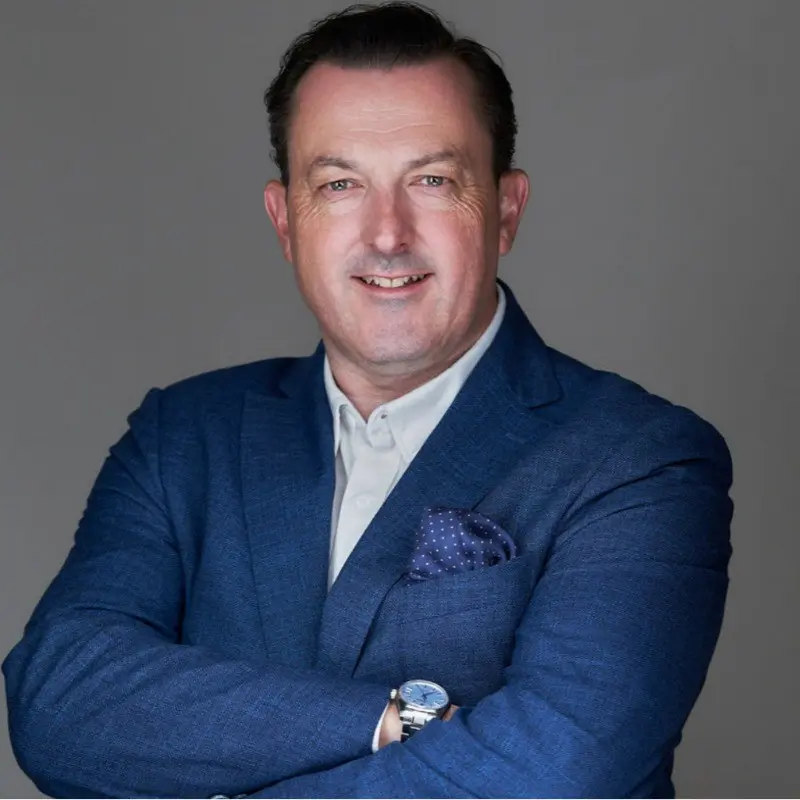
      In this interview from SUSECON 2026 in Prague, Steven Dickens, chief executive officer of HyperFRAME Research, joins theCUBE's Paul Nashawaty for a keynote analysis examining how open-source infrastructure, digital sovereignty and AI-ready platforms are reshaping enterprise computing strategy. Dickens describes SUSE as well-positioned to capitalize on a market moving in its direction, with a strong roadmap built around Rancher Prime and SUSE Linux Enterprise. He points to cloud portability as the defining enterprise priority — research cited in the conversation shows 65% of organizations running four or more clouds and 67% hiring generalists over specialists, making a unified orchestration layer essential. The discussion also unpacks virtualization modernization, with both guests framing VMs not as legacy but as heritage environments that will coexist with containers and bare metal for the foreseeable future.

      The conversation also explores the mounting pressure of digital sovereignty, particularly across Europe where DORA and the Cyber Resilience Act are driving a regulatory-first approach to infrastructure governance. Dickens argues that frameworks developed in the EU are setting a rising global standard — much as GDPR reshaped data handling worldwide — and that sovereignty has evolved beyond data residency to encompass who controls the entire stack. With 73% of enterprises reporting that compliance significantly impacts AI development life cycles and 95% planning AI investment within the next 12 months, the stakes are clear. From SUSE's certified partnership with NVIDIA for sovereign AI deployments to the broader Cloudbase announcement targeting application modernization, Dickens outlines why the industry's defining shift is from a cloud-first to a control-first mindset.
      • Google Calendar
      • Microsoft Outlook
      • Office 365
      • Download ICS
      Steven Dickens
      CEO HyperFRAME Research
    • ON DEMAND

      Dirk-Peter "DP" van Leeuwen, SUSE

      In this interview from SUSECON 2026, Dirk-Peter "DP" van Leeuwen, chief executive officer of SUSE, joins theCUBE Research's Paul Nashawaty to discuss how open-source infrastructure is giving enterprises the resilience and flexibility to modernize legacy environments while navigating the rapid pace of AI adoption. Van Leeuwen frames the defining challenge confronting enterprise CIOs: the simultaneous pressure to adopt AI and manage years of accumulated technical debt — all without surrendering control over sensitive data. He explains why data sovereignty has become a hard prerequisite for AI deployment, noting that enterprises risk exposing intellectual property when proprietary large language models ingest their data and surface it to a broader audience.

      The conversation also explores SUSE's five pathways to greater resiliency — a framework spanning digital sovereignty, open standards, operational efficiency, edge computing and AI-ready platforms. Van Leeuwen highlights how Kubernetes-based portability allows organizations to build once and deploy anywhere, pointing to research showing 65% of enterprises already operate across two or more clouds. He addresses the "proprietary tax" directly, noting that every CIO conversation now centers on reducing lock-in from vendors whose pricing shifts — the Broadcom-VMware situation being the defining example — have made single-vendor strategies untenable. The discussion also covers SUSE's recent edge acquisition, which extends its open-source framework down to IoT devices and industrial protocols, completing the stack from the smallest connected sensor to the largest mission-critical server. From the launch of SLES 16 — the first major Linux release in seven years — to the vision of a stable AI foundation that absorbs continuous innovation without forcing a rip-and-replace cycle, van Leeuwen outlines why open infrastructure has become the strategic foundation for enterprises looking to compete in the AI era.
      • Google Calendar
      • Microsoft Outlook
      • Office 365
      • Download ICS
      Dirk-Peter "DP" van Leeuwen
      CEO SUSE
    • ON DEMAND

      Margaret Dawson, SUSE

      In this interview from SUSECON 2026 in Prague, Margaret Dawson, chief marketing officer of SUSE, joins theCUBE Research's Paul Nashawaty to discuss why open-source infrastructure is the essential foundation for enterprise resilience across cloud, edge and AI workloads. Dawson highlights record momentum at the event — nearly 1,500 registrations, its largest turnout — and traces the resilience theme to SUSE's own primary research, which found the concept surfacing across every customer conversation on cost optimization, AI adoption and virtualization migration. She makes the counterintuitive case that sovereignty and security require openness rather than closure, arguing that transparency is what delivers real control, and that open-source code is inherently more secure because tens of thousands of contributors continuously surface vulnerabilities.

      The conversation also explores the structural challenges shaping enterprise infrastructure decisions. Dawson identifies skill gaps as the number one obstacle facing IT leaders — underscoring that the real pressure isn't AI replacing workers, but helping teams upskill as complexity accelerates. On digital sovereignty, she challenges the assumption that it's a purely European concern, pointing to Japan and the 32% of US IT leaders who rank it a top priority, and noting how Rancher Government Services offers hardened, government-ready sovereign deployments for global demand. Regulatory drivers are accelerating the urgency, from the EU AI Act and EUCRA to the Singapore Act and NIST frameworks. From advancing open standards for the industrial edge to building the composable architectures that eliminate rigid black boxes, Dawson provides a roadmap for how organizations can move toward resilient, flexible and AI-ready infrastructure without leaving their teams behind.
      • Google Calendar
      • Microsoft Outlook
      • Office 365
      • Download ICS
      Margaret Dawson
      CMO SUSE
    • ON DEMAND

      Imran Khan, SUSE

      In this interview from SUSECON 2026, Imran Khan, chief customer officer of SUSE, joins theCUBE Research's Paul Nashawaty to discuss how enterprises can modernize legacy virtualization environments without disruption as they build toward AI-ready infrastructure. Khan, who oversees the full customer experience at SUSE, explains how organizations often don't know what they don't know — making infrastructure assessments and white-glove migration services essential first steps. He describes the "chasm" between heritage environments and modern platforms, and how SUSE is helping customers use Kubernetes as a unified foundation for managing both virtual machines and containers while reducing the TCO burden of siloed operations.

      The conversation also explores the skills gap reshaping enterprise infrastructure strategy, with theCUBE Research data showing 67% of organizations now hiring generalists over specialists and pushing back on technology providers to reduce complexity. Khan highlights SUSE's multi-limit support strategy as a model for frictionless vendor transitions, detailing how customer migrations have been seamless enough that the primary change is simply the support contact organizations call. He outlines how SUSE's ecosystem partnerships give customers the flexibility to choose between rapid lift-and-shift paths or slower, guided modernization journeys based on their own readiness. From addressing entrenched virtualization lock-in to building the foundations that AI workloads increasingly demand, Khan provides a practical roadmap for how enterprises can advance modernization on their own terms without compromising stability or control.
      • Google Calendar
      • Microsoft Outlook
      • Office 365
      • Download ICS
      Imran Khan
      Chief Customer Officer SUSE
    • ON DEMAND

      Peter Smails, SUSE

      In this interview from SUSECON 2026 in Prague, Peter Smails, general manager of cloud-native at SUSE, joins theCUBE Research's Paul Nashawaty to discuss how open-source principles are becoming a survival requirement for enterprises navigating hybrid and multi-cloud complexity. Smails argues that while open source is not a new concept, many vendors have drifted toward proprietary models at precisely the wrong moment — when customers most need resilience and digital sovereignty. He explains why avoiding single points of failure demands a trusted, interoperable ecosystem rather than opinionated vendor stacks, and details how SUSE Rancher Prime delivers consistent operations across data centers, multiple clouds and edge environments from a unified control plane, reducing complexity for organizations increasingly reliant on generalist IT teams.

      The conversation also explores how the post-VMware landscape is sharpening demand for modern virtualization alternatives. Smails details how SUSE Virtualization enables organizations to run traditional virtual machines and container-based workloads under a single, consistent management interface — letting enterprises modernize at their own pace without disruptive rip-and-replace migrations. He underscores that encapsulation remains a valid path for heritage systems where refactoring isn't practical, while the underlying platform quietly enables a path forward. The discussion closes on SUSE's deep involvement in open-source governance, from its top-five contributor status to active participation in the Linux Foundation, CNCF and emerging European sovereign cloud policy. Smails frames standards not as abstract governance but as the foundational substrate that makes interoperability, common control planes and trusted ecosystems possible — and argues that SUSE's community investment is ultimately what gives enterprises a credible, durable alternative to proprietary lock-in.
      • Google Calendar
      • Microsoft Outlook
      • Office 365
      • Download ICS
      Peter Smails
      GM of Cloud Native SUSE
    • ON DEMAND

      Rhys Oxenham, SUSE

      In this interview from SUSECON 2026 in Prague, Rhys Oxenham, vice president and general manager of AI at SUSE, joins theCUBE Research's Paul Nashawaty to discuss how open-source infrastructure is bridging the gap from AI experimentation to enterprise production at scale. Oxenham frames SUSE's approach through two distinct lenses: AI for infrastructure, where intelligence is embedded into how enterprises deploy, manage and operate systems, and infrastructure for AI, where open platforms provide the foundation for running AI workloads. He highlights how agentic AI — enabled through MCP server integrations — is moving from automation to autonomous decision-making, and why shadow AI has become the defining enterprise threat as organizations face growing pressure to demonstrate tangible return on investment to executive leadership.

      The conversation explores how SUSE is helping customers cross the "production chasm," moving validated pilots into governed, secure deployments at scale. Oxenham introduces the concept of "private enterprise AI," clarifying that "private" refers not to a locked-down data center but to organizational ownership of intelligence across hybrid environments, from the far edge to the public cloud. He argues that digital sovereignty has outgrown its reputation as a European compliance checkbox, repositioning it as a universal business imperative. The SUSE AI stack — built on SUSE Rancher Prime and SUSE Linux Enterprise Server — gives organizations the freedom to deploy and pivot across infrastructure without proprietary lock-in. From maximizing GPU utilization through observability-driven best-fit placement to the accelerating enterprise adoption of agentic AI in the year ahead, Oxenham outlines why the infrastructure decisions organizations make in 2026 will shape their competitive position in the AI era.
      • Google Calendar
      • Microsoft Outlook
      • Office 365
      • Download ICS
      Rhys Oxenham
      VP & GM of AI SUSE
    • ON DEMAND

      Abhniav Puri, SUSE

      In this interview from SUSECON 2026, Abhinav Puri, general manager of portfolio and community at SUSE, joins theCUBE Research's Paul Nashawaty to discuss how open-source infrastructure is evolving from passive platform to intelligent, autonomous foundation for the modern enterprise. Puri opens by reframing resilience — no longer about uptime but about an organization's capacity to absorb shock from geopolitical, technological and financial disruptions. He argues that as AI agents become embedded in core workflows, enterprises risk surrendering control over proprietary data, business processes and competitive advantages to closed, proprietary stacks. Puri identifies a "production gap" separating AI experimentation from tangible ROI, pointing to legacy infrastructure built to host workloads — not to think — as the root cause.

      The conversation also explores SUSE's two-pronged response: "AI for infrastructure," which infuses intelligence across its portfolio to orchestrate autonomous operations, and "infrastructure for AI," which delivers a turnkey sovereign platform for private enterprise environments. Puri introduces MCP servers — described as a "USB adapter" capable of plugging into any existing agentic platform regardless of vendor — to lower the barrier to adoption for existing SUSE customers and net-new environments alike. He traces the scaling journey from a developer's laptop to thousands of factory floors, underscoring that bridging legacy and modern architectures requires an enterprise partner with both depth and flexibility. Looking ahead to 2027, Puri envisions IT and platform teams shifting from hands-on operators to governors of SRE agents, with autonomous operations becoming a present reality rather than a distant goal. From setting deterministic guardrails for non-deterministic agents to building sovereign, scalable infrastructure, Puri outlines how SUSE is positioning itself as the intelligent nervous system of the agentic enterprise.
      • Google Calendar
      • Microsoft Outlook
      • Office 365
      • Download ICS
      Abhinav Puri
      VP & GM - Portfolio & Community SUSE
    • ON DEMAND

      Troy Topnik, SUSE & Sudeep Goswami, Traefik Labs
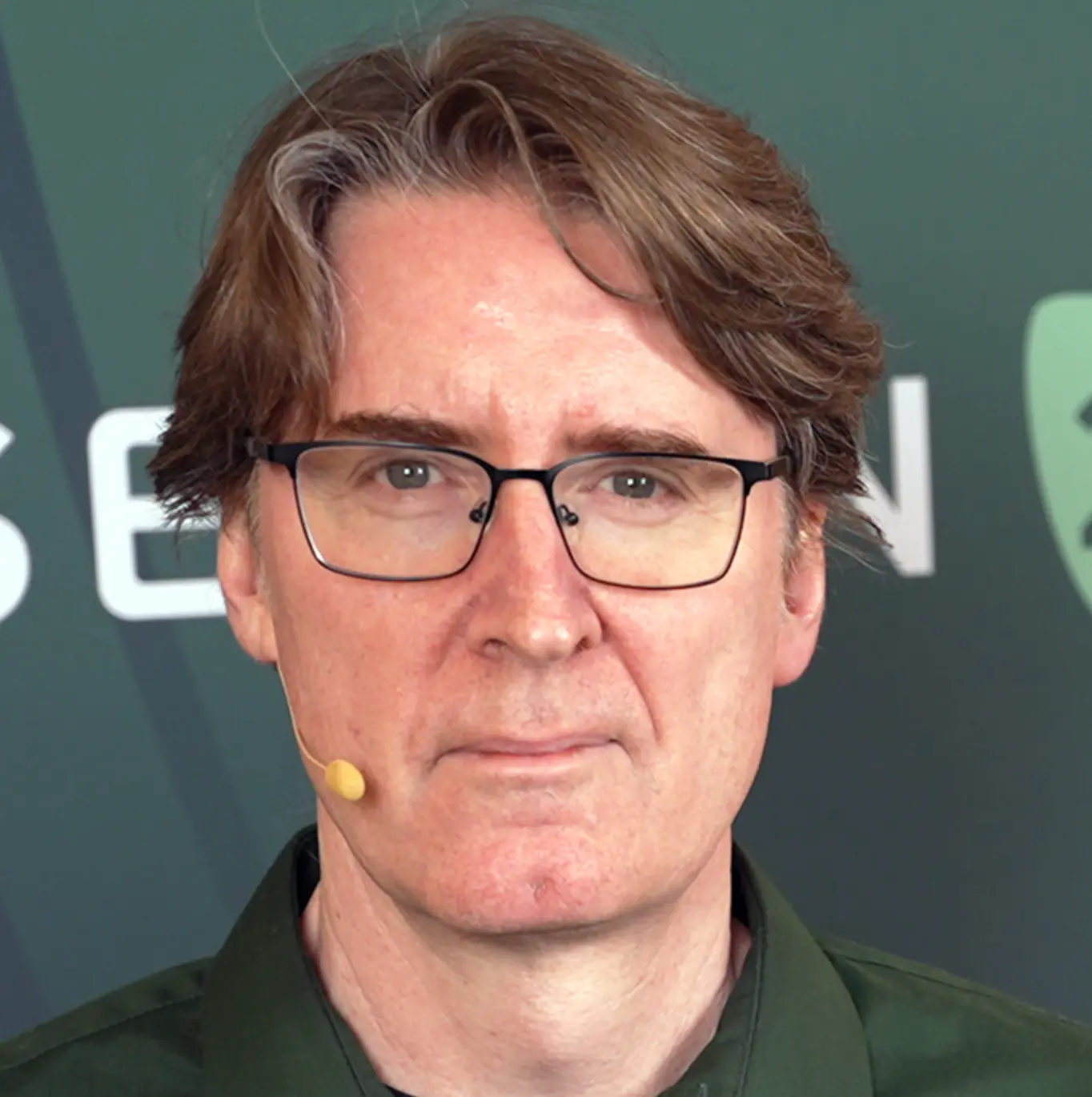
      In this interview from SUSECON 2026 in Prague, Troy Topnik, director of product management, Rancher partners and ecosystems at SUSE, joins Sudeep Goswami, chief executive officer of Traefik Labs, to talk with theCUBE Research's Paul Nashawaty about how open-source infrastructure is enabling enterprises to navigate migration, modernization and AI transformation. Topnik and Goswami open by discussing the expanded SUSE-Traefik partnership, which now extends Traefik beyond its role as the default ingress controller for K3S at the edge to RKE2, creating a consistent networking layer from edge to enterprise. Goswami outlines three journey arcs — migration, modernization and transformation — that most organizations are managing simultaneously, and explains why a unified architectural approach is the only scalable path through all three. The deprecation of Ingress NGINX at KubeCon accelerated customer urgency around the shift, reinforcing networking as a foundational enterprise priority.

      The conversation also explores how SUSE and Traefik Labs are helping organizations manage the coexistence of VMs and containers without compounding operational complexity. Topnik details the K3K project, which introduces virtual clusters within SUSE Virtualization to insulate host and guest Kubernetes environments, and highlights how Rancher's unified management UI bridges virtualization and cloud-native workloads in a single plane. The discussion then shifts to AI operationalization, where Goswami argues that a strong governance layer — combining consistent policy enforcement, real-time observability and enforceable guardrails — separates enterprises that experiment with AI from those that successfully deploy it in production. Topnik points to SUSE's dedicated sovereignty practice and its investment in on-premises AI as a direct response to data localization pressure growing across Europe and Canada. Goswami expands the frame by introducing Traefik Labs' AI sovereignty maturity model, which treats sovereignty as a multidimensional spectrum rather than a binary state. From managing VM-to-cloud-native transitions to governing agentic AI across distributed environments, the panel outlines a practical roadmap for enterprises building infrastructure that is both flexible and sovereign.
      • Google Calendar
      • Microsoft Outlook
      • Office 365
      • Download ICS
      Troy Topnik
      Director of Product Management, Rancher Partners & Ecosystems SUSE
      Sudeep Goswami
      CEO Traefik Labs
    • ON DEMAND

      Kevin Cochrane, VULTR

      In this interview from SUSECON 2026 in Prague, Kevin Cochrane, chief marketing officer of Vultr, joins theCUBE Research's Paul Nashawaty to discuss how the Vultr and SUSE partnership is equipping enterprises to move from AI experimentation to full-scale implementation. Cochrane frames enterprise AI readiness around three pillars: openness, efficiency and governance. He explains why openness — rooted in SUSE's open-source leadership — is critical for teams building AI-native applications, while efficiency means delivering peak performance and resilience within real budget constraints. He points to Vultr's 50-90% cost advantage over traditional hyperscalers and an 82% performance-per-dollar lead on AI infrastructure as evidence that a radically different economic model is now available at global scale.

      The conversation also explores how digital sovereignty is reshaping cloud architecture decisions, particularly in European markets. Cochrane details how Vultr was built from day one with data residency at the core — every region operates as an autonomous zone where data never crosses regional boundaries and no third-party process can access it, directly addressing emerging regulatory requirements around operational sovereignty. He also highlights how scaling agentic AI globally demands legally compliant, region-isolated deployments, with GPU clusters and vector stores serving local data in each geography. Looking ahead, Cochrane outlines a vision for a marketplace of open, composable cloud stacks on Vultr and SUSE, enabling developers to share templates and best practices rather than rebuilding workloads from scratch for every new deployment. From sovereign infrastructure to crowdsourced developer tooling, he makes the case that the Vultr-SUSE alliance is positioned to define the next era of open, enterprise-grade AI infrastructure.
      • Google Calendar
      • Microsoft Outlook
      • Office 365
      • Download ICS
      Kevin Cochrane
      CMO Vultr

    Welcome to Cube365 Events Platform Digital Community

    You are now part of the interactive digital experience for all SiliconANGLE conferences and an exclusive member of the social community. Enjoy live and on-demand broadcasts, theCUBE interviews, CrowdChats, and access to premium content and presentations. Engage and interact in real time with influencers and peers in a social space designed for collaboration and networking. Discover all that Cube365 Events Platform has to offer before, during and after the event.

    CONTACT US

    Privacy Statement

    • Privacy
    • Terms
    Social Link
    Social Link
    Social Link
    Social Link
    © CUBE365
    © theCUBE
    © 2026 theCUBE