We just sent you a verification email. Please verify your account to gain access to
Red Hat Summit + AnsibleFest 2025. If you don’t think you received an email check your
spam folder.
In order to sign in, enter the email address you used to registered for the event. Once completed, you will receive an email with a verification link. Open this link to automatically sign into the site.
Register For Red Hat Summit + AnsibleFest 2025
Please fill out the information below. You will recieve an email with a verification link confirming your registration. Click the link to automatically sign into the site.
You’re almost there!
We just sent you a verification email. Please click the verification button in the email. Once your email address is verified, you will have full access to all event content for Red Hat Summit + AnsibleFest 2025.
I want my badge and interests to be visible to all attendees.
Checking this box will display your presense on the attendees list, view your profile and allow other attendees to contact you via 1-1 chat. Read the Privacy Policy. At any time, you can choose to disable this preference.
Select your Interests!
add
Upload your photo
Uploading..
OR
Connect via Twitter
Connect via Linkedin
EDIT PASSWORD
Share
Forgot Password
Almost there!
We just sent you a verification email. Please verify your account to gain access to
Red Hat Summit + AnsibleFest 2025. If you don’t think you received an email check your
spam folder.
In order to sign in, enter the email address you used to registered for the event. Once completed, you will receive an email with a verification link. Open this link to automatically sign into the site.
Sign in to gain access to Red Hat Summit + AnsibleFest 2025
Please sign in with LinkedIn to continue to Red Hat Summit + AnsibleFest 2025. Signing in with LinkedIn ensures a professional environment.
Senior Vice President & Chief Information OfficerRed Hat
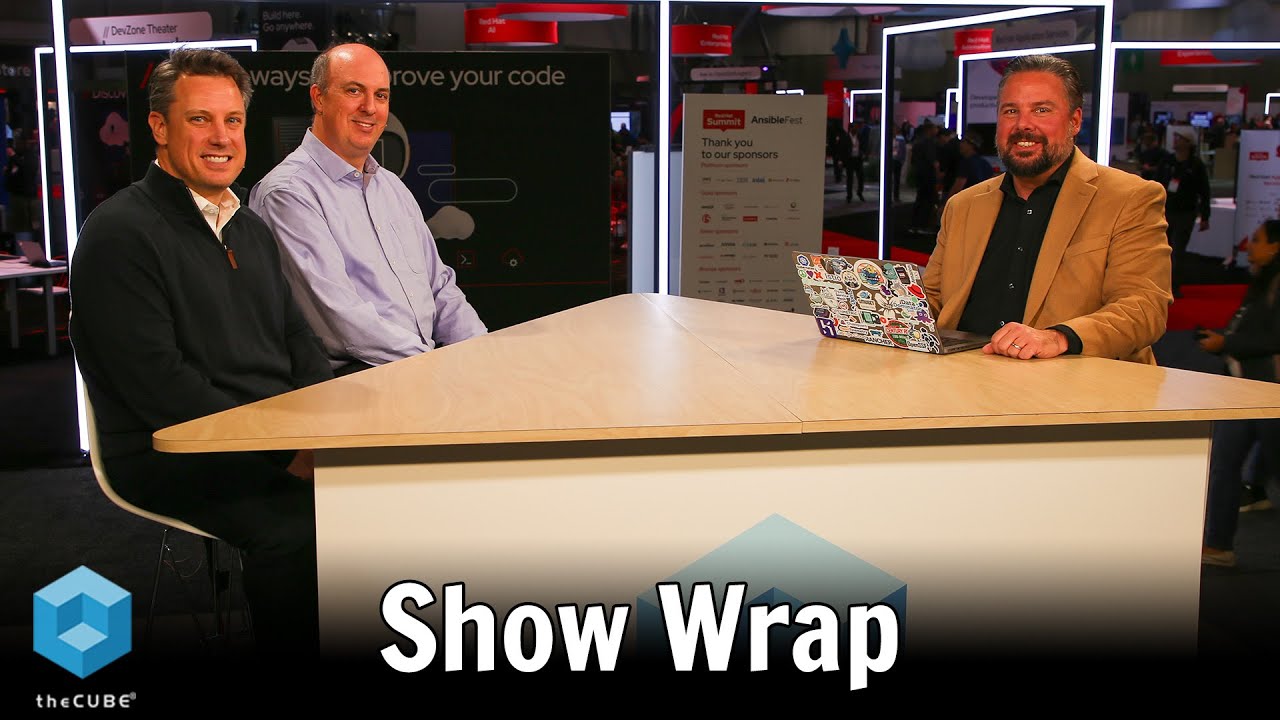
Marco Bill, senior vice president and chief information officer of Red Hat, joins theCUBE’s Rob Strechay and Rebecca Knight at Red Hat Summit 2025 to share his perspective on the CIO’s evolving role amid accelerating digital transformation. The session explores how Red Hat is balancing innovation and operational excellence in a fast-changing enterprise landscape.
Bill reflects on nearly two decades of leadership within Red Hat, highlighting the shift toward data-driven decision-making, AI integration and strategic standardization. He explains how the...Read more
exploreKeep Exploring
What is the role and vision of Marco Bill, the Senior Vice President and CIO of Red Hat, in relation to the company's technological advancements and future growth?add
What are the three priorities in terms of utilizing AI and data within the IT department internally?add
What approach does Red Hat take towards innovation and standardization within their organization?add
What is Red Hat on Red Hat and how are employees utilizing it to improve problem-solving efficiency and access information more quickly?add
>> Hello, everyone, and welcome back to theCUBE's live coverage of the Red Hat Summit AnsibleFest here at the Boston Convention Center. I'm your host, Rebecca Knight, alongside my cohost and analyst, Rob Strechay. Rob, day three. One of my favorite topics, something we talk a lot about here is the changing role of the CIO.
Rob Strechay
>> Absolutely. Yeah, and I think, again, it's one of these things that... It is definitely an interesting time for CIOs with all the technology changes and the rapid advancement of things like AI.
Rebecca Knight
>> Absolutely. So, there is no one better to talk about that than Marco Bill, Senior Vice President and the CIO of Red Hat. Thank you so much for coming on the show, Marco.
Marco Bill
>> Thanks for having me.
Rebecca Knight
>> So, you are the CIO now, but you've been with Red Hat for many, many years, and in different leadership positions. How do you think about your mission now as the CIO, and in broad brushstrokes how you see your role in the company?
Marco Bill
>> Yeah, it's a really good question. So, I got kind of snookered into this role, but being, like you say, almost two decades at Red Hat, it feels like home or it feels like your family and so it's kind of like, yeah, we got a few things to clean up and get ready for the next evolution. I always in my career looked at independent role at Red Hat, "Hey, we got to prepare for the next big..." It was 100 million, 1 billion, and now I think we are looking at how do we do 10 billion, 20 billion? Just like: what's the scale we need? And so I inherit actually a really good team, but we got to kind of prepare for that. You mentioned AI, you mentioned there's a lot of transformation we're all doing. Red Hat also we accumulated a lot of technical debt, like every other company. And so I think Matt was saying on the stage, "You live in this world, and you should go there." And it's kind of like that's what I live. What the vision that I have or my motivation for this role is we got to really prepare that we are getting into this next world, as in Red Hat wants to be a leader in the AI space, so we got to internally also enable it, but then also lead how we do this that we can show to customers. This is what we got to do.
Rob Strechay
>> Yeah, I guess that's a great segue into prioritization. And I was in IT a long time ago. I ran data centers for a financial services company, and when you looked at it, prioritization, to your point, there's tech debt, we have upgrades, we have a whole bunch of number of things. Cloud's kind of changed that as well, and so has a cloud operating model, which is where a lot of Red Hat for even on-prem and the cloud is. How do you see the prioritization, especially with how AI is going to be implemented, how you need to meet the company's desire for AI to help them go faster, as well as how it's helping IT internally as well?
Marco Bill
>> Yeah, I think, let me start with priorities, because I think that's really important to really not get lost in. Hey, we got to do it. We have a very good hybrid cloud strategy. Most of it is actually in the cloud that we operate. There's some that we're still on-premise, but really that part, I'm really super happy and this been done well. Their priority is really I think on three areas. One is data because you can't do AI well if your data is not good. And so we started... Even my previous role is like, "How do we redo data? How do we look at different things? How do we look at it digitally?" But that's one priority. The second priority is AI, and AI is different. There's an element of we got to enable the engineering team that they have, the environments that they can play with. They can either play or build the products. So, we have model as a service that they can choose every model that's approved. We make sure data that's behind it is legally also approved and compliant, but that's kind of what we do for engineering. And then there's a lot of areas that we look at productivity gains, be it for IT, but I think I actually look at more for the company. And that specific Red Hat on Red Hat, how do we use our staff to implement? I'll give you a simple example, creating RFPs. So, you get from a company, "Hey, this is a request for proposal, what's your sustainability?" It's a lot of just templates move over, and so having AI for that is perfect. And you still have obviously an associate looking over it, but those are real productivity gains, be it, as I said, for sales in this case, for IT in other cases, like service desk, how you actually speed that up. Those are specific AI use cases to increase productivity. And then we have a big one that we actually opened up the whole population to actually, Gemini, as in we use Google Mail. We can be open about that, and to actually enable for 20,000 employees, Gemini and experiment with safe data. It's a safe space. And the feedback on that is, again, it's productivity gain from every role, but also if you're in a sales role, if you're in a more finance role, it's not just for the engineers because AI got to help everybody. It's not just an engineering tool. So, that's kind of the three-pronged approach we're doing, and I think we see actually good results and also acceptance of AI. It's not just technology, it's also like, "Oh, yeah, this actually really helps my work." So, that is our first priority, data, second, AI, and the third is really business transformation. So, we started a big business transformation for sales like two or three years ago. We're finishing that to make the whole flow more efficient. And in there we will augment it with certain AI capabilities. There's other transformations we do, but those are the priorities that I'm looking at.
Rebecca Knight
>> So, this is Red Hat, this is open source, this is open innovation. How does that philosophy shape your approach, both to leadership and also to the internal transformations that you are helping lead at this company?
Marco Bill
>> That's a really good question, and I wish I could tell you, "Hey, in an open world we let innovation happen everywhere. Everybody can do whatever they want." That was in the early days of Red Hat. I think we got to be much more structured these days. If you look at sales transformation, to actually prepare for the next big wave, we have to standardize a lot. And so it's not like the open innovation, everybody can do it. It's like in certain areas, very... I would say it's not top down, but it's more like bring your requirements, we will collect them, but we will build a standardized environment with the sales team. In certain areas, it's definitely more the open approach, "Bring your feedback, we can try it this way."
That's why also opening Gemini and try it and see what works for you, let us know what use case works well. I think that's the beauty of Red Hat is, yes, it's an open culture, so as a leader you got to be open that people will be happy or not happy, because there's a-
Rebecca Knight
>> They'll tell.
Marco Bill
>> Yeah, yeah, they will tell you, and you will know about it, Which is, to be honest, it's beautiful. It's really something that sometimes you get annoyed about it, but it's literally a gift that, hey, there is no hierarchy, et cetera. But from a leadership perspective is like we still got to lead this company for especially financial. We have auditors. We have a mothership that looks at us pretty closely. And so you got to... some stuff, got to be very solid, and certain areas you can experiment, and I think that's the beauty of it.
Rob Strechay
>> And so you brought up a couple of different use cases that you see with AI and things like that. And one of the ones that comes to mind for me is really customer portals and customer service, customer success. How have you really looked at helping in that area? Because I think that's where kind of your job actually meets the customer, versus... Because you're not doing the products, you're not building RHEL, but you're helping them.
Marco Bill
>> No, no, I think the use case of how you help support is... And support can be external. I used to run support. My bills were basically Red Hat support in my previous roles and we always experimented with AI. We didn't call it AI. It was ML, but I think now you have capabilities to do it better. And I think it's really important to, again, also internal. The internal tech support is with me, as in... But it's important to look at it in the right way, as in you want to help the customer, but you don't want to deflect the customer. I always hated it, and, again, internal, external, you can't tell a customer, "Help yourself. Good luck to you." That's the business model of Red Hat doesn't work. I actually think no company should do that. You should actually really be careful about engage, but it helps you internally as well, as in... I'll give you a good example. If you have a critical support issue going around the world, again, internal, external, you have a shift that's in our cases in Australia and then they hand it over to India and then India hand it over to Europe. Those transitions have been always super painful because the guy that comes on, the guy or the lady that comes on helping might not know what's exactly the content. And then you have to support case, you got to read through his art. Now, you have summarization, and so you're the new agent or new tech support guy, you come out, you read the summary, "Oh, this information has already been requested." And the customer doesn't get, "Oh, send me this information, send me this information." That's a simple thing, and it's really powerful. And those are the use cases I really like. Also, we announcing this Ask Red Hat that you basically can ask questions. It's not deflection, it's how do you actually help yourself or augment the help you need? You're also seeing a lot of the AI built into the product. It's that help that you need, but I think those are really good use cases, but I don't want it to be a, "This is how we save costs," and the customer has a bad experience, it's like, how do you actually make it better?
Rebecca Knight
>> So, tell our viewers a little bit more about Red Hat on Red Hat, how it works and how your employees are using it to get better, faster answers and be able to solve problems more quickly.
Marco Bill
>> Yeah. So, it's basically we have so much information collected over let's say last two decades basically. And before it was always we had a knowledge base, very good knowledge base that is in a process that you always update the knowledge base, and now you have a capability that you can ask this, with a chatbot basically you can ask the knowledge base, you can ask the documentation. I think that's a big change. And be it internal or external, you can ask, "Hey, how does this work?" And for a support tech to actually getting a bit smarter immediately... I've done this in my early career, I was a support agent. You get the phone... At that time it was still phone calls. I'm aging myself, but you would like, "Oh, you have this problem and do you want to..." It's like, "What are you talking about?"
And you obviously can't say that, so you are searching at the same time. I think now obviously it's very few phone calls these days, but it's the same way and you actually don't need to have an agent in between as well in some cases now. I think that's the areas that we help with those approaches. And it changes every week. This is something that we will learn a lot. I think documentation is a big change as well as in we... I'm sure we still have a lot of viewers that basically when RHEL 10 comes out, you read the installation manual, good old style, that's how many of us did it. I don't know if that's still a lot of people doing it versus, "How do I do this?" And can ask that question, you get an instant response, versus searching on the internet and you get like, "Oh no, this doesn't apply to this version, et cetera." I think we're getting a bit more precise, and it's not just search, it's real help.
Rob Strechay
>> So, I think just building off the Red Hat on Red Hat, I think the viewers would really be interested in understanding what your stack looks like under there, and what is that... which Red Hat stack models, things of that nature that you're using to support something like Ask Red Hat?
Marco Bill
>> Yeah, I think, well the stack is basically OpenShift AI and basically our standard stacks that we are using. The models, I think we're switching quite a bit to see which model works better and what's more ideal. So, there is obviously our favorite model be... Just blanking a bit . But there's been a lot of experimentation also on other models, "Hey, this might work better." And I think that's where we all see, "Hey, you got to experiment more." And we do internally, not just on the support side. There's also a whole flow that we want to do an intranet based on MCP. There's a lot of experimentation, some with our products and some are actually also with IBM products that we're looking at, "How can we use that?"
I think that's important right now not to get stuck on, "Hey, this is just a stack." Obviously we use our products wherever we can, be it in this AI space, but also running our infrastructure. Ansible is everywhere, as in the automation. I think that's an area I'm pretty proud, and would show to every customer, "Hey, that part, we've done." And it's good if you get into this role, and that part is already cleaned up, so you don't have to worry about infrastructure or cybersecurity as well.
Rob Strechay
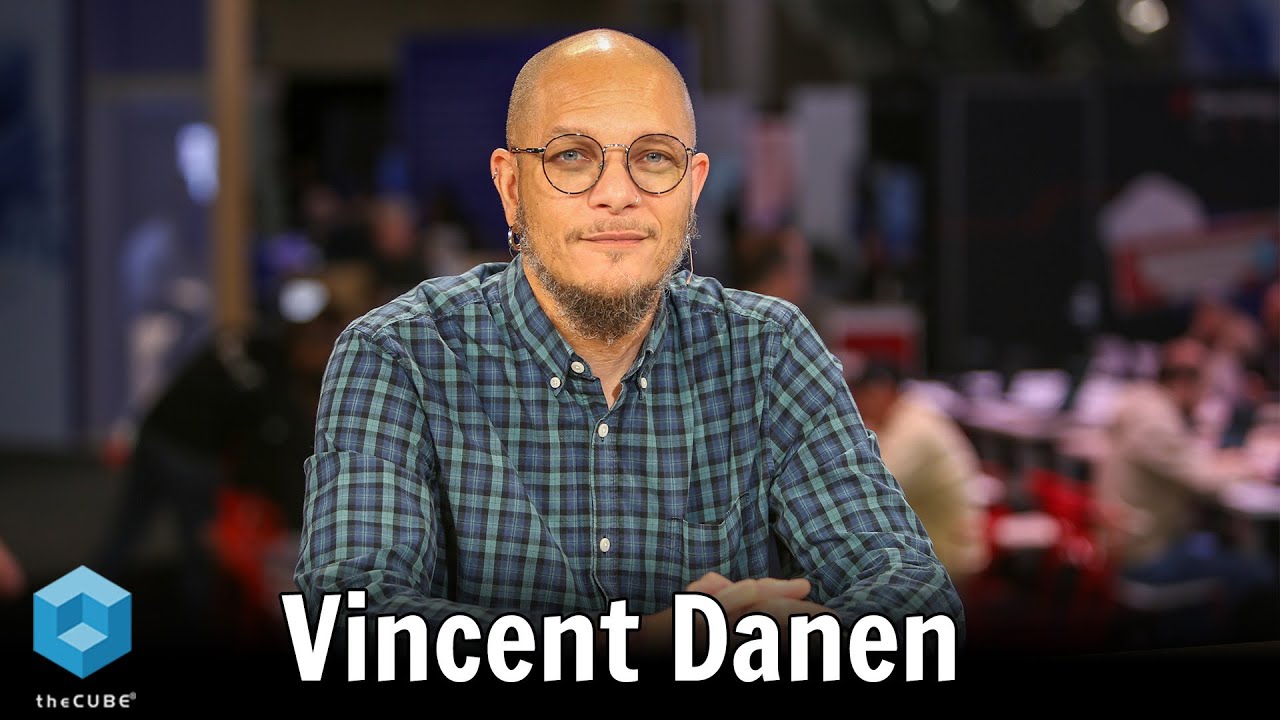
>> Yeah, I was going to say, in security, we just had Vincent on around the product security aspect of it, security has to be a big concern. Being an open source producing company, you have repositories, not just out in the public gets, but internally when people are working through things. That has to be top of mind as well.
Marco Bill
>> Yeah. So, the CISO is in my team. And basically they work closely, obviously not just with IT, but also with legal, et cetera. But yeah, I think we have... There's a lot of, I would say, interest from companies, or maybe not companies, from third parties to actually hack into Red Hat. But yeah, I'm like, "Touch wood." But we have a good team. They're monitoring a lot of inputs, as in what's happening. Like Vincent does on the product side, we have a very similar team that's very security-minded people that look at that very, very closely. But it's one of my big concerns, be it security, be it areas also on data integrity, so kind of data leaks, et cetera. What do we do? And there's a lot of things... Also being compliant with whatever... be it, the IBM compliance, but also with regulatory compliance is a real real... That's like back to your comment, as an open source company, we do have to adhere, be it the law or be regulations.
Rebecca Knight
>> Exactly, exactly. Well, Marco, a pleasure having you on the show. Thank you so much.
Marco Bill
>> Thank you very much. .
Rebecca Knight
>> I'm Rebecca Knight. For Rob Strechay, stay tuned for more of theCUBE's live coverage of the Red Hat Summit AnsibleFest. You're watching theCUBE, the leader in enterprise tech news and analysis.