We just sent you a verification email. Please verify your account to gain access to
Red Hat Summit + AnsibleFest 2025. If you don’t think you received an email check your
spam folder.
In order to sign in, enter the email address you used to registered for the event. Once completed, you will receive an email with a verification link. Open this link to automatically sign into the site.
Register For Red Hat Summit + AnsibleFest 2025
Please fill out the information below. You will recieve an email with a verification link confirming your registration. Click the link to automatically sign into the site.
You’re almost there!
We just sent you a verification email. Please click the verification button in the email. Once your email address is verified, you will have full access to all event content for Red Hat Summit + AnsibleFest 2025.
I want my badge and interests to be visible to all attendees.
Checking this box will display your presense on the attendees list, view your profile and allow other attendees to contact you via 1-1 chat. Read the Privacy Policy. At any time, you can choose to disable this preference.
Select your Interests!
add
Upload your photo
Uploading..
OR
Connect via Twitter
Connect via Linkedin
EDIT PASSWORD
Share
Forgot Password
Almost there!
We just sent you a verification email. Please verify your account to gain access to
Red Hat Summit + AnsibleFest 2025. If you don’t think you received an email check your
spam folder.
In order to sign in, enter the email address you used to registered for the event. Once completed, you will receive an email with a verification link. Open this link to automatically sign into the site.
Sign in to gain access to Red Hat Summit + AnsibleFest 2025
Please sign in with LinkedIn to continue to Red Hat Summit + AnsibleFest 2025. Signing in with LinkedIn ensures a professional environment.
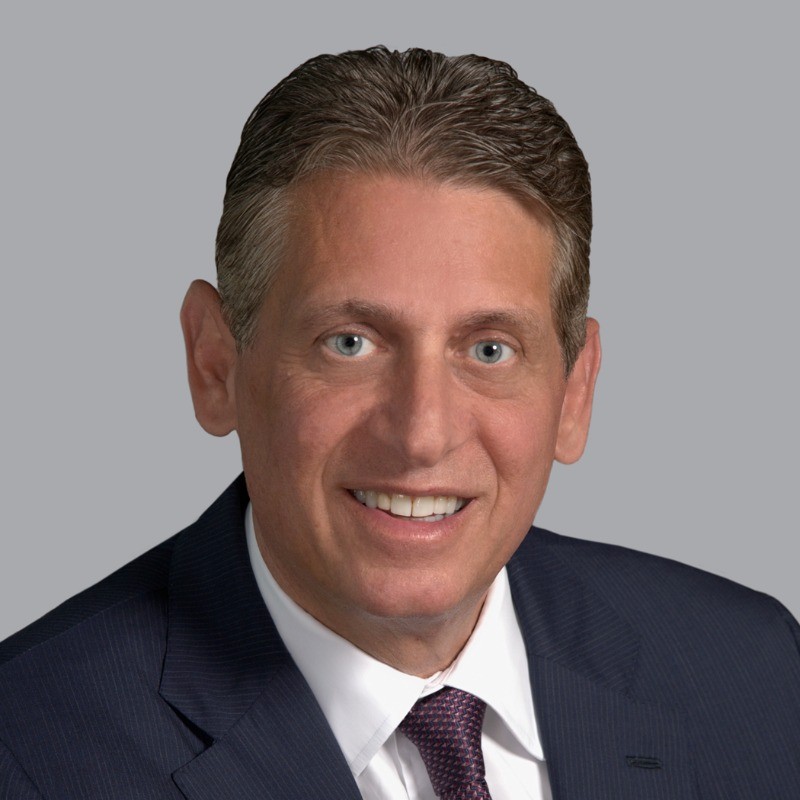
Executive Vice President & Chief Commercial OfficerAMD
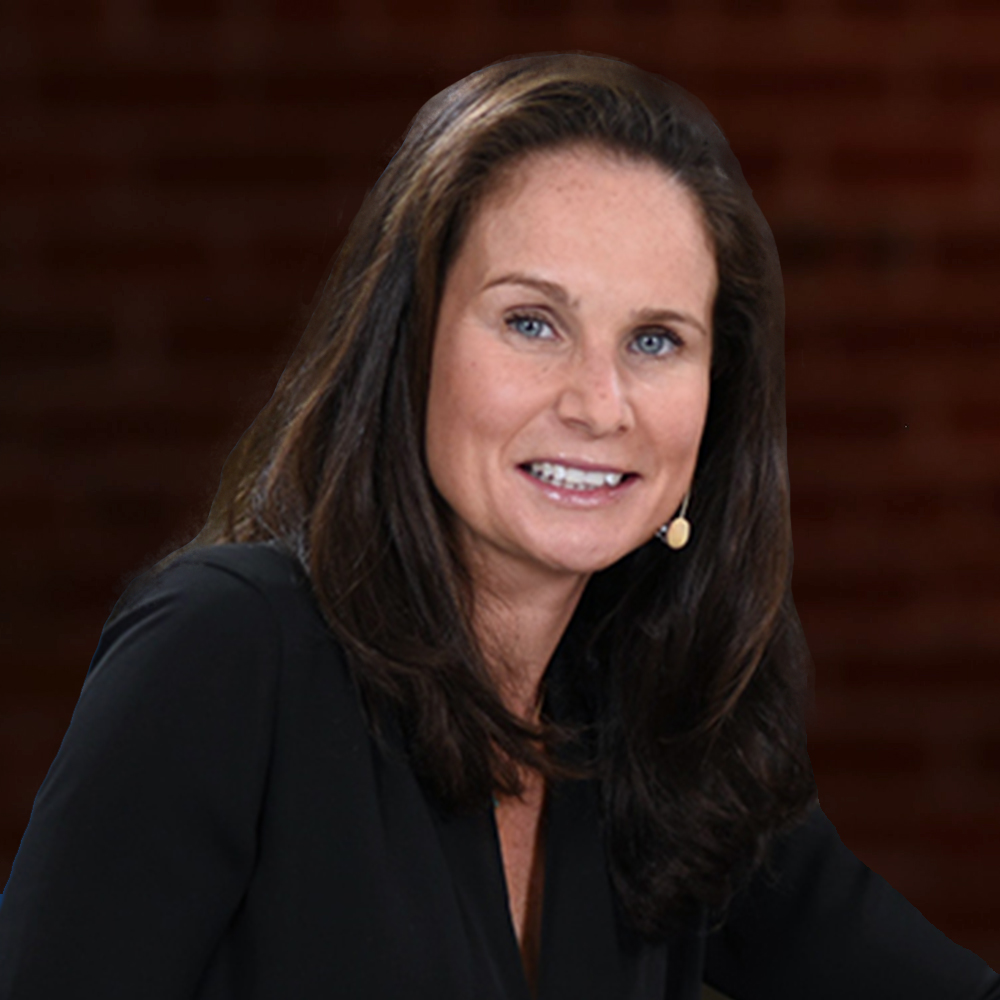
Phil Guido, executive vice president and chief commercial officer of Advanced Micro Devices, Inc., joins theCUBE’s Rob Strechay and Rebecca Knight at Red Hat Summit 2025 in Boston. The conversation spotlights AMD’s longstanding collaboration with Red Hat and how their combined innovation is fueling infrastructure modernization and enterprise AI readiness.
Guido discusses AMD’s focus on customer flexibility, especially as companies shift from legacy VMware systems to Red Hat’s modern platforms. He also unpacks how AMD’s blend of CPU and GPU technologies...Read more
exploreKeep Exploring
What were some of the benefits and savings that customers could achieve by moving from a legacy VMware environment to a modern Red Hat environment powered by AMD?add
What topics were discussed in the keynote regarding Linux version 10 and its relationship with AI technology?add
What are customers looking for in terms of flexibility and choice in their AI implementation journey, especially in relation to different open platforms and architectures like Red Hat and AMD?add
What are the biggest commercial opportunities for Red Hat and AMD in the next year or so?add
>> Welcome back everyone to theCUBE's live coverage of Red Hat Summit AnsibleFest 2025 here in beautiful Boston, Massachusetts. I'm your host, Rebecca Knight, alongside my cohost and analyst, Rob Strechay. Rob, this is just a cool show. There's just so much love that you can really just... The collaborations, the partnerships that go back for years, for decades on display.
Rob Strechay
>> Yeah. I think it's great how all of it's being brought forward, and it's all customer-centric as well, and better outcomes for the customers, and that's what I love about this ecosystem in a big way.
Rebecca Knight
>> Exactly. With that, I would like to introduce our next guest. He is Phil Guido, Executive Vice President and Chief Commercial Officer at AMD. Thank you so much for coming on theCUBE.
Phil Guido
>> Well, thank you. It's a pleasure and an honor to be with you here today.
Rebecca Knight
>> And fresh from the main stage, I should say, where you are up in bright lights, so thank you so much, Phil. So, as we were saying to start off this segment, your relationship with Red Hat goes back decades. Can you talk a little bit about your collaboration, what you do together, how you work together, and what you're working on now?
Phil Guido
>> Sure. Well, first our relationship with Red Hat goes back... As you point out, the key thing that we both have in common, it's around customers and how do we work with customers. And it goes back, like you said, a decade ago. And our collaboration was really around helping them move from a legacy VMware environment to a modern Red Hat environment powered by AMD. And what we really wanted to do is give customer optionality, choice, flexibility, and that provides them the ability then to leverage that ecosystem that you just commented on that gives them greater insight, flexibility, and choice. And then from there, we started to look at what we could do together, and we started to show how we could partner together and really save significant amount of savings for them, up to 77% in CapEx just by moving from a legacy environment to a world-class Red Hat powered by AMD. And then you start to look at the energy consumption, that's everything that everyone's concerned about, and we could save up to 71%. But what it really meant, giving customers choice and flexibility.
Rob Strechay
>> And it goes even beyond just OpenShift, right, because again, we're talking about... Wow, my brain just went.. But we have Linux version 10 coming out for Red Hat, RHEL 10, and you guys do a lot with Linux AI and things of that nature. Kind of help people understand and frame, because, for me, we look at it, we have our own distribution law for GenAI. And the long tail on that, and it was talked a lot, not only in your section of the keynote, but in the keynote in general, was around inference. And for me, that's going to be powered both by GPU and CPU. And I think you hit on that a little bit in your talk or-
Phil Guido
>> Yeah, like you said, from Linux to OpenShift to all those different open platforms, again, provides customer optionality, flexibility and choice. Now, as we kind of advance, think about now inferencing and where the world's going around AI, and then with Red Hat, again, that open architecture, that open ecosystem provides customers so much optionality to do that. So, where they want to do their AI, their journey, a lot of them are saying, "I'd like to do it on the cloud, I'd like to do it on-prem, I'd like to do it on the edge," and here once again with Red Hat and AMD, we could provide that in every dimension. So, think about allowing customers to do their AI where their data is and where their AI journey is. Again, tremendous flexibility that they can get.
Rebecca Knight
>> You are leading global sales and customer engagement at a time when enterprise tech is changing so incredibly rapidly. What are you hearing from customers in terms of their biggest priorities? You mentioned the need for optionality, the desire for flexibility. What else are you hearing in terms of what they are requiring from who they work with?
Phil Guido
>> Initially what we started to see with the enterprises, they were just, people would say just kicking the tires. Now they're looking at agentic AI and looking at use cases and really meaningful ways to drive return on investment. And so what we're starting to see is that they're going from kicking the tires to POCs to deployments. And when they're looking at the deployments, they're starting to look at: how do they get the mind share within their companies? How do they make sure that these pilots are successful? And then they could scale rapidly. So, it's kind of a proven model, but the thing that we're starting to see is the promise of AI, really that vision come to a reality. And so we're starting to see some of the use cases around where customers are really starting to say, "Hey, we're starting to see the value, the benefits of all this." And I always say when you think about this AI journey, we're in the early stages and we're learning and we're learning fast, and we're taking those learnings in an agile way, and we're applying them, and then we're scaling them out. And now you start to see different departments, different end users thinking about how they could do things, whether it's fraud, abuse or supply chain. It's getting exciting now, and it's starting to feel real. And then that realness is kind of perpetuates itself in some momentum.
Rob Strechay
>> Yeah, so I think to get a little geeky for a second, because the folks on the main stage, and Chris in particular was talking... And there was a lot of discussion around vLLM, and AMD and Red Hat are going down the path and helping. And for those who don't know, that helps distribute out for inference. How is AMD helping play in that community?
Phil Guido
>> Great, vLLM is going to be very powerful, and you're starting to see people embrace it. And that goes back to where the data is. I referenced that I was at IBM Think, and they provided a statistic that only less than 1% of the data is being used today for AI. That means: where's the data? And 90%, it's spread diverse across all different areas: some in the cloud, some on-prem, some are different users, some on the edge. Now with vLLM, think about now, doing your AI where your data is. Now you're harnessing the power of technology and business, and so you're bringing those two forces together. And to me, once you bring the intersection between business and technology, and start focusing on the key business imperatives, you're going to fundamentally change business and society the way we live, the way we work for the next several decades.
Rebecca Knight
>> So, you've spent so much of your career working on problems like this, helping organizations modernize their IT. Where do you think companies tend to get stuck the most, and how do you help them move forward?
Phil Guido
>> That is a great question. Sometimes the ambition is so big and the scope is so big, it's not achievable. So, part of it is where we have to help companies look at and be pragmatic. You need to look at the use case, look at the scope, the work, so you could really define the boundaries, so you could measure it in a meaningful time. They can't be where it say, this is my words, a Big Bang Theory where we're going to solve this in multiple years. People need to see results, so you need a pragmatic approach. You need to really be thoughtful of those initial use cases, so you could get the pragmatic view, but also the benefits that you could see along the way. And then you could scale it out. So, to really put a finer point on it, you really need to think about the use case, the usability, the scope of it to make it real. Don't make it so ambitious where it's unachievable, and then you get the mind share. And then once you get the mind share within the organization, then you find other use cases that you could repeat and replicate and then you could scale. And that's really what we're trying to help customers... That's why working with Red Hat is such an exciting time.
Rob Strechay
>> I think, to that exact thing, people get wrapped around the axle around, "I need all GPUs and stuff like that." And you have the Instinct GPUs, but I also look at it and go, "A lot of inference is going to run on CPUs." And you have Epic CPUs for going and doing that. How do you see that balance playing out in the solutions? Because working with a lot of the people who are building the solutions and opinionated stacks.
Phil Guido
>> And it is a great, great point that you're making because it really is a spectrum. And the reason why you hear a lot of talk about, "It has to be a GPU," because the key competitor out there, that's all they have. And so everything is a GPU, but it's not that way. You got to really look at the use case and the applicability. There are so many solutions that could be done on CPUs at a much better cost point. And that's why at AMD, you think about our CPUs and our GPUs and our product line, that gives us the ability to help customers really fine-tune their solution where they get the best business return, the best business value. And then the other thing you've got to look at, it's also beyond the CPUs and GPUs, is think about the commercial client. Here's where you're going to do some on your laptop. You'll be downloading some models from the cloud or on the prem or on the edge. And so here's where I believe we're uniquely positioned because we can really provide solutions on-prem and the cloud, on the edge, on the laptop. Our embedded solutions, we're very uniquely to help our customers really do their AI processing wherever they'd like. And that's the power of having a very broad portfolio.
Rebecca Knight
>> So, we talk a lot in this show about the role of the CISO and the CIO and the CTO and how it's evolving in this AI-driven era. I'm curious about your perspective on the role of the Chief Commercial Officer and how it is changing, and how you are adjusting to meet those changes?
Phil Guido
>> Another great question. When you think about the C-suites and all our enterprise customers that we work with, they're really trying to solve business problems. And so my job is really: how do I help them? How do we prioritize? What is the business imperative that we're really trying to solve? You just can't throw tech for tech. You really need to think about: what is the business outcome that you're trying to achieve. And so my job is really to help look at the prioritization based on the business imperatives that they're trying to solve, work with them, help build some proof of concepts, and then demonstrate the capability of the technology, see the business benefits, and then exploit it and roll it out.
Rob Strechay
>> So, just kind of leveraging off of that and your experience, because I think you just talked about having been over in the Middle East recently and the fact that in Asia things like power is really a concern. And I look at it, the lower power consumption is always great for multiple reasons, not just the sustainability reasons, which I love as well, but Singapore, you can't get more power. I know some of the data center folks there trying to get more power into their data centers literally have to go to the government to get approval to get more power. How are you seeing that being a focus of what you guys, what AMD is doing as well?
Phil Guido
>> Absolutely. Energy consumption is on top of mind for everybody all over the world, and that's one of the limiting factors is energy, power. You think about some of the developed nations, they're struggling now with the ability to power their data centers. That's why AMD has really a charter where we want to drive the best efficiency, total cost of ownership and power. And so back to your other point, that's where you look at CPUs and GPUs and inferencing where you want to help customers get the best return. So, what we look at is some of the power consumptions we could have on our CPUs. Sometimes we're saving up to 30%, 40%, 50% in terms of power. Then you go to the GPUs and our power consumption is lower as well, and so are the models that are getting used. So, we feel that helping customers get the right workload on the right platform, the right technology with the total cost of ownership, including the power consumption, is really a key differentiator that we have. As you pointed out, I was in the Middle East and that was top of mind. How do you help us in the future? The processing power is just going to get more advanced by generation to generation, and it's going to consume more power. So, we need to be thoughtful about how we develop the technology, keeping in mind the efficiency of power all over the world, and helping every developed nations, underdeveloped nations because we want to make sure AI's for everybody and that we have an opportunity to provide AI to help everybody and elevate everybody in this new AI world.
Rebecca Knight
>> So, Phil, looking ahead for the next year or so, what do you see as the biggest commercial opportunities out there for Red Hat and AMD?
Phil Guido
>> I think it goes back to customers. How do we help customers? So, many customers have legacy environments, and they need to upgrade those environments. So, if you think about some of the things to accelerate your AI journey is: where's your data? What skills do you have? Is your infrastructure ready? Do you have the right software. So, working with Red Hat and partnering together, helping customers understanding where they are in their journey and giving them flexibility, choice and options, prioritizing where they're going to get the best business return for their business imperatives. Delivering business outcomes is really what we're really excited about, what we could do with Red Hat and AMD together.
Rob Strechay
>> Yeah, I think, again, when you start to look at how OpenShift and RHEL and how they're working with you all the way down to the vLLM and LLM-D and all of that stuff, it has to be an exciting time to be sitting here, because you see it from a different space within the tech realm. Being in the chip space and looking at it, like you said, you see it from the hyperscaler perspective, you see it from the on-prem and you see it from colo. You kind of mentioned it earlier, but how do you see that? Because we see that 85% of the data people want to use in AI is on-prem today. You talked about the 1%, and how do you see this, again, going towards the future of that? Is it, "Hey, I'm bringing the AI to the data," and that's really where people are modernizing?
Phil Guido
>> That's really where it's going to wind up. And then ultimately, you think about companies are going to need a very robust AI, but a data strategy too. And so if it's in the cloud, their strategy is to move workload and the data to the cloud, we could work there on the edge to print, but ultimately it's going to come down to is: where are you on that journey and where's the business outcome that you're trying to achieve? And then where's your data? And then how can we then bring, with Red Hat and AMD together, to bring a world-class solution to allow your AI journey to be where you want to do your processing? And so we'll meet them where they want to do their AI; in the cloud, on-prem, on the edge.
Rebecca Knight
>> It goes back to the pragmatism you were talking about earlier. Absolutely.
Phil Guido
>> Yes. Yeah.
Rebecca Knight
>> Well-
Rob Strechay
>> Yeah. So, one last question here is that... So, like you've talked about, now, we had one thing that didn't come up today on the main stage, so I'm not trying to throw you a curveball here, but you talked about the desktop, and to me, you have in InstructLab and Podman. Are you seeing that being able to, like you said, have AMD in all of those areas, from the desktop to the core data center, out to the edge? Has that really helped in people's journey because they know what to expect, the performance, their benchmarking, and things of that nature?
Phil Guido
>> Absolutely. Think about now the flexibility that you have in your AI journey. Like I said, on-prem, the cloud, on the edge, the desktop, we're uniquely positioned to participate in all those areas. And that's really where you look at customer's business, their business imperatives, and how you could give them the best solution that gives them the best return, that delivers the best business outcome. And that's exciting about that. We're uniquely positioned to participate in all that.
Rob Strechay
>> Love it.
Rebecca Knight
>> Excellent. Great. Well, Phil, thank you so much for coming on theCUBE. A real delight talking to you.
Phil Guido
>> It's been an honor and privilege just spending time with you. Thank you.
Rebecca Knight
>> I'm Rebecca Knight. For Rob Strechay, stay tuned for more of theCUBE's live coverage of the Red Hat Summit AnsibleFest 2025. You're watching theCUBE, the leader in enterprise tech news and analysis.