Exploring Cloud Innovation at Red Hat Summit 2025: A Discussion with Industry Leaders
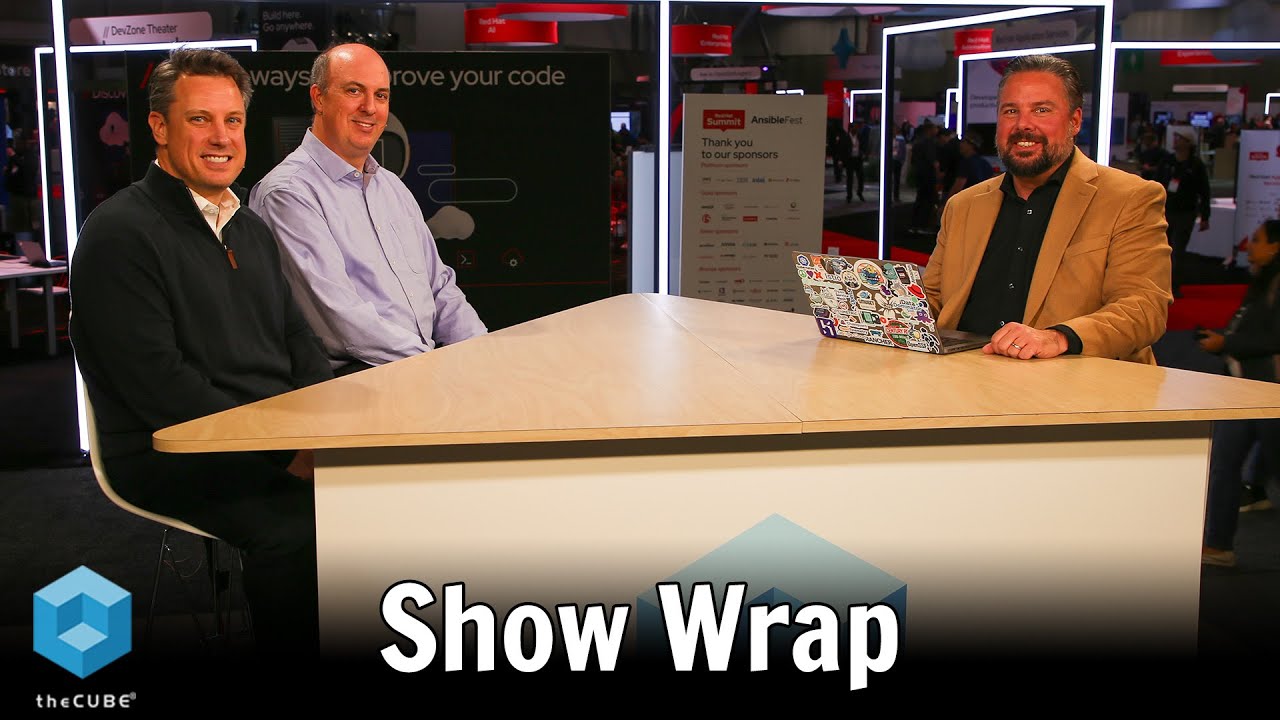
Bria Huber of Red Hat, global cloud alliances leader, and Manasi Jagannathay of AWS, head of business application partnerships, explore the evolving landscape of cloud solutions at the Red Hat Summit AnsibleFest 2025 in Boston. Hosted by Rebecca Knight of SiliconANGLE Media and Rob Strechay, principal analyst at theCUBE Research, this insightful discussion highlights the strategic collaboration between AWS and Red Hat, along with customer-driven advancements in enterprise technology.
Huber discusses the integration of AWS Marketplace offerings with Red Hat solutions, emphasizing procurement ease and seamless customer experience. Key areas of focus include the managed service Red Hat OpenShift on AWS, the utilization of Ansible for operational efficiency, and strategies such as channel partner private offers. The conversation underscores AWS and Red Hat's commitment to innovation, highlighting their successful partnerships with industry clients such as Johnson Controls and Capital One.
Jagannathay shares insights on market trends, addressing how Red Hat and AWS work together to empower customers with virtualization capabilities, flexibility in managing workloads, and reducing infrastructure costs. They detail the role of Ansible in improving deployment efficiency and collaboration strategies to transform enterprise software procurement. According to Jagannathay, customer-centric innovation drives their future endeavors, aiming to integrate cutting-edge technology and create dynamic solutions with reliability and security.
Forgot Password
Almost there!
We just sent you a verification email. Please verify your account to gain access to
Red Hat Summit + AnsibleFest 2025. If you don’t think you received an email check your
spam folder.
In order to sign in, enter the email address you used to registered for the event. Once completed, you will receive an email with a verification link. Open this link to automatically sign into the site.
Register For Red Hat Summit + AnsibleFest 2025
Please fill out the information below. You will recieve an email with a verification link confirming your registration. Click the link to automatically sign into the site.
You’re almost there!
We just sent you a verification email. Please click the verification button in the email. Once your email address is verified, you will have full access to all event content for Red Hat Summit + AnsibleFest 2025.
I want my badge and interests to be visible to all attendees.
Checking this box will display your presense on the attendees list, view your profile and allow other attendees to contact you via 1-1 chat. Read the Privacy Policy. At any time, you can choose to disable this preference.
Select your Interests!
add
Upload your photo
Uploading..
OR
Connect via Twitter
Connect via Linkedin
EDIT PASSWORD
Share
Forgot Password
Almost there!
We just sent you a verification email. Please verify your account to gain access to
Red Hat Summit + AnsibleFest 2025. If you don’t think you received an email check your
spam folder.
In order to sign in, enter the email address you used to registered for the event. Once completed, you will receive an email with a verification link. Open this link to automatically sign into the site.
Sign in to gain access to Red Hat Summit + AnsibleFest 2025
Please sign in with LinkedIn to continue to Red Hat Summit + AnsibleFest 2025. Signing in with LinkedIn ensures a professional environment.
Are you sure you want to remove access rights for this user?
Details
Manage Access
email address
Community Invitation
Manasi Jagannathay, AWS & Bri Huber, Red Hat
Exploring Cloud Innovation at Red Hat Summit 2025: A Discussion with Industry Leaders
Bria Huber of Red Hat, global cloud alliances leader, and Manasi Jagannathay of AWS, head of business application partnerships, explore the evolving landscape of cloud solutions at the Red Hat Summit AnsibleFest 2025 in Boston. Hosted by Rebecca Knight of SiliconANGLE Media and Rob Strechay, principal analyst at theCUBE Research, this insightful discussion highlights the strategic collaboration between AWS and Red Hat, along with customer-driven advancements in enterprise technology.
Huber discusses the integration of AWS Marketplace offerings with Red Hat solutions, emphasizing procurement ease and seamless customer experience. Key areas of focus include the managed service Red Hat OpenShift on AWS, the utilization of Ansible for operational efficiency, and strategies such as channel partner private offers. The conversation underscores AWS and Red Hat's commitment to innovation, highlighting their successful partnerships with industry clients such as Johnson Controls and Capital One.
Jagannathay shares insights on market trends, addressing how Red Hat and AWS work together to empower customers with virtualization capabilities, flexibility in managing workloads, and reducing infrastructure costs. They detail the role of Ansible in improving deployment efficiency and collaboration strategies to transform enterprise software procurement. According to Jagannathay, customer-centric innovation drives their future endeavors, aiming to integrate cutting-edge technology and create dynamic solutions with reliability and security.
Manasi Jagannatha, head of strategic partnerships for business applications, Linux and containers at Amazon Web Services Inc., and Bria Huber, global cloud alliances leader at Red Hat Inc., join theCUBE’s Rebecca Knight and Rob Strechay during Red Hat Summit 2025 to discuss their companies’ evolving collaboration in enterprise cloud. The conversation centers on streamlining procurement, improving deployment efficiency and delivering integrated customer experiences.
Huber highlights Red Hat OpenShift on AWS and the role of Ansible in driving operational...Read more
exploreKeep Exploring
What has been the journey and partnership with Red Hat, AWS, and the AWS Marketplace for the company mentioned in the text?add
What are some examples of how Red Hat and AWS work together to make it easier for customers to virtualize their workloads?add
What is the goal of the technology being discussed in terms of helping customers have flexibility and continue using AWS infrastructure?add
What is the vision for the future of enterprise software procurement and what role will AWS and Red Hat play in that vision?add
>> Welcome back everyone to theCUBE's live coverage of the Red Hat Summit AnsibleFest 2025 here at the Boston Convention Center. I'm your host, Rebecca Knight, alongside my co-host and analyst, Rob Strechay. Rob, this is Red Hat. This is all about open source. This is all about the vast ecosystem of partners and customers coming together to solve interesting problems.
Rob Strechay
>> Absolutely, and I think, again, one of the ones that's been a partner with Red Hat for quite a while, especially in the hyperscale space, is really with us now, and I think this is going to be a fun conversation.
Rebecca Knight
>> Indeed, it is. So with that, I would like to introduce our next guest. We have Bria Huber, Global Cloud Alliances leader at Red Hat. Thank you so much for coming back on the show, Bria.
Bria Huber
>> -
Rebecca Knight
>> And Manasi Jagannathay, head of business application partnerships at AWS. Welcome, Manasi.
Manasi Jagannathay
>> Thank you, Rebecca. Thank you, Rob. As you kicked off the introduction, right, I was thinking the first RHEL instance that we launched was in 2008. So we've come a long way, 18 years of building together.
Rebecca Knight
>> Yes. Yeah. Yes. So you're a teenager now in terms of your relationship.
Manasi Jagannathay
>> Can vote.
Rebecca Knight
>> Exactly. So Manasi, I want to start with you. Let's talk at a high level about AWS Marketplace and how it is evolving today to meet the changing needs of enterprise customers, particularly within the Red Hat ecosystem.
Manasi Jagannathay
>> I'd love to walk you through the journey we've had with Red Hat. Like I mentioned, we started building in 2008, and then in 2022 we launched ROSA, which is a managed service built and engineered together with Red Hat and AWS. Post that I think our journey has been through the marketplace. The goal is to make sure we meet our customers where they are. So customers use RHEL, ROSA, Ansible and JBoss, all that is available today on the AWS Marketplace, and that provides three benefits for our customers. One is procurement, ease of procurement, months to days. And then the other piece is integration with AWS Services, integration, that's what customer wants. And then the last piece is the ability to have custom pricing and the ability to have a single bill and manage your hybrid workloads. I think that is critical to customers and that's why the Marketplace has been such an effective mechanism for us to go to market.
Bria Huber
>> I agree. It's been really great to see us be able to pivot away from the traditional order form and software, that traditional kind of channel into making sure that the channel stays intact, but meeting the customers where they actually want to buy. And what we've heard from customers is, oh, this significantly reduces the amount of steps, the amount of people. It just makes things so much more efficient. And again, to be able to have our third party software be able to draw down the large commitments they're making with AWS is just icing on the cake.
Rob Strechay
>> So why don't we dive into that because I know, again, having a little history with Marketplace myself and Red Hat myself, when you start to look at it, the partner programs and how those partner programs... And when I say partners, I mean the value added resellers, the GSIs and others that are also helping those end user customers transact through Marketplace. What are some of the avenues that you've actually presented up for them to take advantage of?
Bria Huber
>> So we have channel partner private offers. Although we're talking about this as a product-led growth strategy and making sure that customers can self-serve, really what we see is that 70% of our customers are buying through private offers. So channel partner private offers, or CPPOs, certainly allows all of those partner types that you just said to be able to still consult with their customers and recommend a solution that ultimately then they can facilitate through CPPO. And then DSOR, designated seller of record is really what our distribution partners use to keep themselves and the value that they have in that home chain. And we're really seeing our distribution partners step up to provide so much of this education and financial optimization, all of the goodness that distribution brings, they're now bringing to these programs.
Manasi Jagannathay
>> To add to that AWS, we have about 20,000 listings in the Marketplace, and Red Hat and AWS together have almost upwards of 100,000 partners like distributors, DSIs SIs, and to bring all of that together and give them the ability to say, hey, you can do CPPO, you can DSOR, you basically buy any Red Hat software from the AWS. I think that is a powerful thing to have.
Rebecca Knight
>> So Manasi, can you walk us through how Red Hat and AWS work together to make it easier for customers to virtualize their workloads?
Manasi Jagannathay
>> I would like to start with an example. We have Johnson Controls, a customer who's in the business of building smart buildings, maintaining and building smart buildings. So what they did was they have legacy VMs on-prem and they are looking to innovate faster. So through their modernization journey, they said, we are going to use ROSA, Red Hat OpenShift Service on AWS to modernize our hybrid workloads. So what they did was they have their VMs, they have their container workloads on AWS, they manage that and they're able to mitigate risk. They don't have to jump from one to another. And through this, they were able to efficiently basically bring down their costs, one, like costs of managing their environment. And then most importantly, time to market like through ROSA and using RHEL, they use Ansible, all of these together, they were able to get past that dilemma of do we modernize now or do we wait?
Rebecca Knight
>> Yeah.
Rob Strechay
>> I think one of the things that also has been evolving is how Red Hat is bringing, how you're bringing your products into the cloud. And one of them is Ansible. Why don't we kind of dive in there and give people some information on that.
Bria Huber
>> Ansible is one that is such a powerful, powerful tool, especially when you think about you can host the control plane on AWS and then manage your endpoints anywhere. So it really does epitomize this hybrid story. If you were with us at reInvent, I know you were, I saw you, we announced that we're a launch partner with AWS in the Buy with AWS Program. So again, this now enables us to truly have this product led growth strategy where our customers can find us and then click a button and they could go right to AWS Marketplace to consume us. And so it really is a step in the direction that AWS is really bringing the ease of discovery and buying to our customers. So we're just happy to be a part of it.
Rob Strechay
>> Yeah, I mean it's also delivered as SaaS. So I mean, I think from that perspective, like you said, the control plane being up there, this talks to the simplification.
Manasi Jagannathay
>> And a great example, a very recent one is Capital One basically used Ansible to manage their hybrid workloads and the scale at which they had to manage all their applications through the Ansible Automated, managed service I think is a great example of how they were able to reduce time to value again.
Rob Strechay
>> Which is also, I mean a lot of the value prop that AWS brings in general with the platforms as a service and now having that optionality, that's always been AWS's thing, having the optionality and right service, right place, right time as well.
Manasi Jagannathay
>> And I think with Ansible, the ability to have your cloud formation templates, automate that, deploy it and provision it, it's a great partnership and a marriage between those two services.
Rebecca Knight
>> So when we're thinking about increasing optionality and reducing the complexity and figuring out these enormous technical challenges, a lot of it also comes down to changing mindsets and the ways people think and the ways people work together and collaborate and even compete. How do you work with customers with changing behaviors in addition to the technological issues?
Bria Huber
>> So I think it's so important. I love that question because this is just in life as well. How do you do that? I think starting with the end in mind and casting that vision and getting people excited about where ultimately they want to go as well. And then you can start to build back onto, okay, well that means this, this and this need to be true. So how can we start to work together to make that an easy transition for you, and then ensure that we're adding value throughout that journey? And ultimately helping them get to where they want to go in their own business objectives. So it's an interesting one and it definitely takes a lot of collaboration, a lot of transparency, all the things that Red Hat is really passionate about.
Manasi Jagannathay
>> Add to that, I think the ethos of what AWS and Red Hat believe in is you work backwards from the customer. So a lot of what we've brought to market is based on customer feedback. They've said, hey, we want to see JBoss, we want to see Ansible. So based on that, we had a lot of announcements around RHEL AI, OpenShift AI, collaborating and seeing how we can dive deeper on the things that customer is asking us.
Rob Strechay
>> One of the things that I don't think we all thought we'd be talking about is OpenShift Virt and how that's really transforming. Obviously ROSA has OpenShift Virt now as well. How are you seeing that transform given what's going on with VMware and people either... Because we're seeing that people aren't necessarily moving off VMware, they're consolidating and trying to get most out of their licensing. How are you seeing that come to AWS from a ROSA perspective as well?
Manasi Jagannathay
>> Take that Bria?
Bria Huber
>> Sure. So I think one of the things that we've talked about from very early days is that you need options. So vendor lock-in optionality is so, so critical. So to your point, we're seeing that this is a phenomenal technology that customers have standardized for well over a decade now, two decades. And so it is something that we are trying to help our customers have the freedom they need and do that in a way that helps them continue to go to AWS infrastructure. So it is this truly kind of hybrid model where you can run your virtualized workloads that right next to your container, and by the way, you can manage all of that and automate it and keep your VMware workloads too. This is not an either or. This is truly an and story really to enable customers to have that flexibility to do what they need to do for their business.
Manasi Jagannathay
>> And to add to that, I think the example that I shared Johnson Controls, that's just one example. I think over the last two days, I can't tell you how many times we've spoken about OpenShift Virt and ROSA every meeting. I feel like that's the opening statement. Of course there's AI, but I feel like Virt is right up there, OpenShift Virtualization because it's top of mind for every customer. They want to know and understand how to either move their workloads or manage it in a hybrid environment.
Rob Strechay
>> And I think optionality being AWS's claim to fame, to put it mildly, I mean the number of services and everything else, but also even at the CPU level and stuff like that. And I know there's multiple different types of instances. I think one of the things that I heard about was just a Graviton and being able to use Graviton under ROSA. I don't know, who if wants to lead off with that?
Bria Huber
>> I'll talk about it because again, from the business and commercial perspective, cost is certainly a concern, cost and performance. And then so when you've got something like Graviton that could really be powering ROSA, one, performance is better tuned. Performance metrics are fantastic and I'm sure Manasi will talk about that. But really we're able to optimize the underlying infrastructure to reduce costs. And so I think this is part of the journey as to how we're working together to make this not only attractive from a technology perspective, but financially too. We want our customers to be wildly successful and do so in the most cost-optimized way.
Rebecca Knight
>> Looking ahead, what is your vision for the future of enterprise software procurement and what role will AWS and also Red Hat play in that vision? Manasi, I'll start with you.
Manasi Jagannathay
>> So I think going off what Bria was saying, our goal is to make sure... For instance, the model is RHEL is available on every EC2 instance type the day it is released. So to start, that's the model. So the way we are looking at it is as we are developing Inferentia, Trainium the goal is to make sure we have RHEL certified on all of these. That's one. And then the other piece is we are innovating as we speak, a lot of places where we are collaborating like Ansible. So the procurement is one piece of it, but under the hood, our engineering teams, our go-to-market teams are identifying what are the next two, three products we are going to go to market with. And of course, in Inferentia and Trainium certifications, collaborating deeply with the OpenShift AI and RHEL announcements. I think that's where I see a lot of collaboration in the future.
Bria Huber
>> I would say customers clearly have placed really big bets on their partnership with AWS, and we're happy to be alongside of it. And the enablement that Amazon has given to allow for them to buy any of their enterprise software through Marketplace is a tremendous, tremendous value. I think one of the things I'm really excited about is our close partnership to help influence and give feedback from our customers to make their experience with Marketplace even better. One of those things is really around the ISV workloads. So as much as I love Red Hat, I don't believe that customers just go there and they're just looking for Red Hat. What they care about is what's powering their business, and we are underneath that to bring that enterprise-grade security and reliability. So one of the things that we've talked a lot about is, and I look at it from an Amazon consumer perspective, customers who buy this recommend... And to me that is the future of saying, hey, we are powering these mission-critical applications that you have, and really giving folks the confidence to say, with Red Hat and AWS together, your workloads are going to run the way that you want them to run with the security that you want.
Rebecca Knight
>> Yeah. If you like this, you'll also like this.
Bria Huber
>> Exactly.
Rebecca Knight
>> I love it. I love it. Very good. Well, Manasi, Bria, thank you both so much for coming on the show. Always a pleasure having you on.
Bria Huber
>> Thanks.
Manasi Jagannathay
>> Appreciate it. Thank you.
Rebecca Knight
>> I'm Rebecca Knight, for Rob Strechay. Stay tuned for more of theCUBE's live coverage of the Red Hat Summit AnsibleFest 2025. We'll be back in just a little bit. You're watching theCUBE, the leader in enterprise tech news and analysis.
















 Rebecca Knight
 Rob Strechay