We just sent you a verification email. Please verify your account to gain access to
Red Hat Summit + AnsibleFest 2025. If you don’t think you received an email check your
spam folder.
In order to sign in, enter the email address you used to registered for the event. Once completed, you will receive an email with a verification link. Open this link to automatically sign into the site.
Register For Red Hat Summit + AnsibleFest 2025
Please fill out the information below. You will recieve an email with a verification link confirming your registration. Click the link to automatically sign into the site.
You’re almost there!
We just sent you a verification email. Please click the verification button in the email. Once your email address is verified, you will have full access to all event content for Red Hat Summit + AnsibleFest 2025.
I want my badge and interests to be visible to all attendees.
Checking this box will display your presense on the attendees list, view your profile and allow other attendees to contact you via 1-1 chat. Read the Privacy Policy. At any time, you can choose to disable this preference.
Select your Interests!
add
Upload your photo
Uploading..
OR
Connect via Twitter
Connect via Linkedin
EDIT PASSWORD
Share
Forgot Password
Almost there!
We just sent you a verification email. Please verify your account to gain access to
Red Hat Summit + AnsibleFest 2025. If you don’t think you received an email check your
spam folder.
In order to sign in, enter the email address you used to registered for the event. Once completed, you will receive an email with a verification link. Open this link to automatically sign into the site.
Sign in to gain access to Red Hat Summit + AnsibleFest 2025
Please sign in with LinkedIn to continue to Red Hat Summit + AnsibleFest 2025. Signing in with LinkedIn ensures a professional environment.
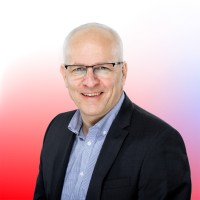
Joerg Schubert & Roland Weiss, ABB Process Automation
Joerg Schubert
Senior Vice President and Head of Product and Portfolio ManagementABB Process Automation
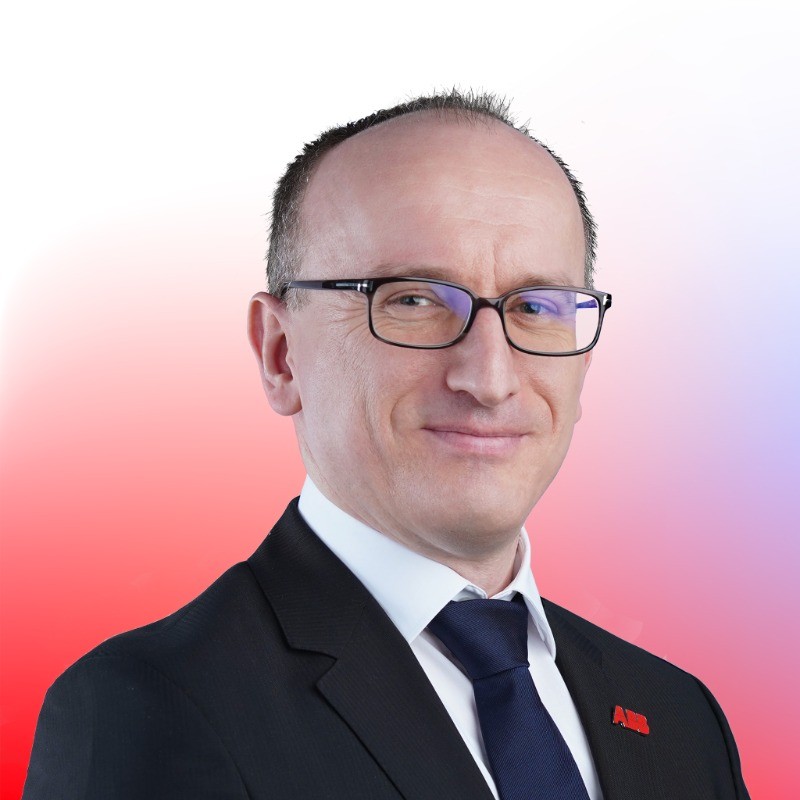
Roland Weiss
Head of Research and DevelopmentABB Process Automation
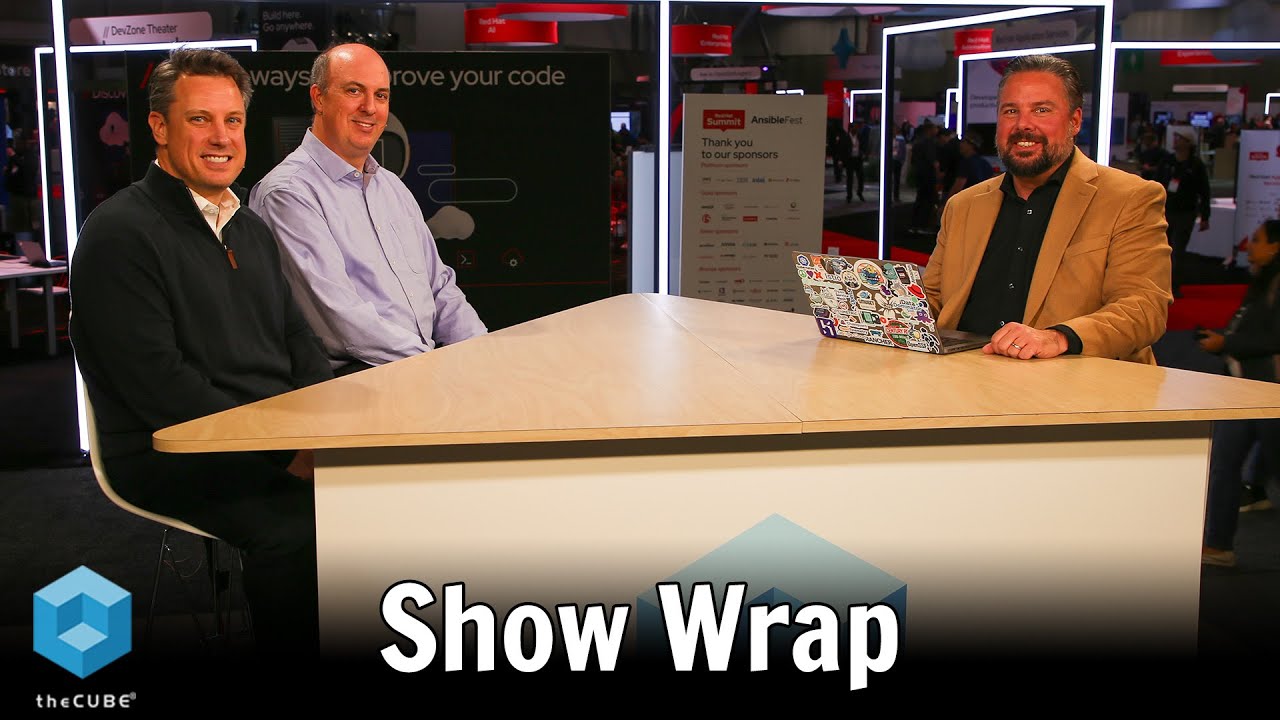
IJoerg Schubert, senior vice president and head of product and portfolio management at ABB Process Automation (Asea Brown Boveri Ltd.), and Roland Weiss, head of research and development and technology at ABB Process Automation, join theCUBE’s Rebecca Knight and Rob Strechay during Red Hat Summit 2025 to discuss the evolution of process automation. The conversation focuses on integrating Red Hat technologies into ABB’s core systems to modernize operations across industrial environments.
Schubert highlights how the innovation cycle within ABB is accel...Read more
exploreKeep Exploring
What can you tell me about the collaboration between Red Hat and ABB?add
What advancements have been made this year in integrating Red Hat's technology into the core process automation?add
What steps are being taken to evolve the automation process and transition to a new ecosystem in a strategic manner?add
What stack are we receiving from Red Hat that allows us to deploy workloads on the edge and in the cloud?add
Joerg Schubert & Roland Weiss, ABB Process Automation
search
Rebecca Knight
>> Good afternoon everyone, and welcome back to theCUBE's live coverage of the Red Hat Summit AnsibleFest, here at the Boston Convention Center. I'm your host, Rebecca Knight, alongside my co-host and analyst, Rob Strechay. Rob, let's talk process automation.
Rob Strechay
>> I'm really excited about this because this one, I got to interview this company. Some of the folks from the two groups last year at KubeCon in EU in Paris, so I'm excited to get an update on that.
Rebecca Knight
>> You go way back. So I'd like to welcome our guest to the show, Joerg Schubert, head of product and portfolio management, ABB Process Automation. Welcome, Joerg. And Roland Weiss, head of research and development, ABB Process Automation. Welcome, Roland.
Roland Weiss
>> Thanks for having us. Great being here.
Rebecca Knight
>> Yeah, so there's some news of the day, but before we get into that, I'd like you to tell me a little bit about the collaboration between Red Hat and ABB. Set the stage for our viewers. Start with you.
Joerg Schubert
>> Yeah, let me start maybe from management point of view. We have an for sure changing landscape even in process automation. I mean it's a very conservative market where the people like innovation, but when they deploy it, they're completely risk averse. But we have realized that we need to do something because what we are seeing in the IT world is for sure fully applicable to the OT as well. So last year I think we have been sitting here and showing how we get the digital world closer to the automation to extract data and to make sense out of it, to optimize process and operation capabilities. And this year I think we have moved this a bit forward from having the digital solution outside now also touching our core automation by introducing some of Red Hat's technology into the core process automation. We are segregating out the core control from the place where the extended applications are running. Everything that has to do this AI optimizing things, doing engineering work, these things are happening split. But it allows us to get faster innovation to the automation because the rugged core remains more or less untouched.
Rob Strechay
>> It seems like we talked about being out at the edge, and microshift, and some other technologies last year. How has that been going, and did that lead you to this next announcement that you made today?
Roland Weiss
>> Well, I mean, absolutely. I mean we started as you indicated on the edge, which is the digital environment that Joerg also talked a bit about right now. And this is a bit the less critical area of our system. And when we go to the core control environment where the real-time process control is happening that keeps plants up and running, the demands on reliability are much higher. So that's why we started looking at the periphery, make sure that this is running well. And that our requirements in terms of footprint, in terms of performance have been addressed by the device product that we have integrated now. But now we are taking the next step in bringing this technology also to our core process control layer. I think from a technology perspective, Joerg was talking about product management perspective, technology perspective. We are really excited working with Red Hat because you bring a lot of expertise that helped us accelerate our way forward from more traditional Windows-based stack to something that is more, container-based, Linux-based, and this is the journey we are on and where we also want to take the whole industry with us.
Joerg Schubert
>> It's not an accidental step that we are making. There is something that we named the automation vision on how we want to go forward from where we are right now into the future. And a little bit the specialty is that our industry is moving relatively slow. So we have lifecycle expectations for the things that we have in the market of 20, 30, 40 years. And we cannot just start over by saying, "Okay, this is all. This is new." We have to evolve this stepwise. And then again, protecting the actual automation core from adding on more features functions, we have to find our way of transitioning. So we started with the edge part, extracting data in a smarter way than we have been doing this in the past, and now we are linking this to the core control, and at the same time changing also our way on how we are doing lifecycle services going forward. So the ecosystem that we are creating now by splitting core control from the extended automation and then providing a more seamless, easier to handle lifecycle umbrella for both elements are really part of a longer-term strategy going forward.
Rebecca Knight
>> I'm curious about why this was the right time for this announcement and for this joint solution because as you said, the life cycles are quite long, and it's a relatively slower moving and more conservative space.
Joerg Schubert
>> Well, I mean I think technology needs to reach a certain maturity level before we can jump on it. And I think that's what we have seen. Coming from the edge side, it was more the peripherals. So very acceptable for us to start there. What we have seen is showing us in robust, very reliable environment we can tag onto, and now doing the second step was just right.
Rob Strechay
>> How has this helped you? You talked about the lifecycle management. But with that I would assume that it helps from a velocity perspective as well and feature sets that you can bring to your customers. The reliability has to be there and maybe you can go into... Because people may not know ABB, so you could say what processes you're managing there as well. Because I think that will give people an idea of how critical it is for that.
Roland Weiss
>> Joerg, maybe for the features, I say a little bit about the velocity of
Joerg Schubert
>> Yeah, I mean the robustness for controlling the process, that's something that we are bringing and there's not a lot of modification and annuity happening. You want to have the control system is handling continuous processes and these facilities depending on in what market or industry we are, they're running for many years necessarily without a larger shutdown. The automation system is active all time and just has to function. And that change or that demand is not changing. So doing this today and doing this tomorrow will be the same thing. But while you operate this, you want to be way more flexible in reacting to things happening in the market. You want to get faster decisions in, you want to optimize your process to push this really to the design limits. And that is where the innovation cycle is so important. In the past we have been asked for, "Can we get some of the new features also on your DCS side?" And then we had long development times to get there. So here we are seeing through Red Hat and containerization modernization possibility to bring the new ideas, the new features functions way closer to the automation than we have been able in the past. So expediting the innovation cycle on the digital side but keeping the robustness for the core control that we need.
Rob Strechay
>> And just before we shift over on the robustness aspect of it, and you mentioned industries. What types of industries, because I think this will help shape it for people who don't know about that.
Joerg Schubert
>> We are spanning everything from, let's say the process industries where you have pulp and paper, where you have maybe energy generation to hydrocarbons upstream. So it's the full span from chemical facilities, pulp and paper industries, metals, everything that has to do with continuous processes where you have a production facility that constantly is having a process inflow versus factory automation where you have discrete elements that you're pushing through your manufacturing process.
Rob Strechay
>> And just on that whole second part because you mentioned a little bit on the velocity side. But again from a research and development perspective, how does that really help you look at the new features, and new things, and processes that you can go and bring to your customers as well?
Roland Weiss
>> Absolutely. So I mean you emphasized that we are driving critical infrastructure and our customers expect this robustness from us. And how this manifests is that they don't want to see any regressions when we release a new version. And that forced us into very rigid test structures. Another dimension here is that around 20 years ago and longer, the automation systems that owned the market today have been built and they have been evolving over the last 20 years. But that also comes with the hardware requirements and constraints of around 20 years ago that drove how the architecture looks like. It was pretty monolithic and it's forced us into a rather waterfall ish development cycle. And now we are breaking this system up. We are modularizing it, microservices based, container-based, and that allows us to adopt modern CI/CD pipelines. And so the whole development is more agile, faster, and that is then translating first in the digital environment that we can push applications out faster. But even the innovation at the inner layer will be faster because we have way more control over the modules. The modularization helps us isolating regressions, interference of the system.
Joerg Schubert
>> And that's one of the strong demands that we have. From a lifecycle point of view, the end customers want to be able to produce. And then okay, you have certain issues in your software that you might have that you might have to correct you cybersecurity needs. So you need to touch the system to keep it current. But even these processes, the things go wrong. That's the last thing someone wants to have. They would rather say, "Well then I'll operate leaving the things as they are instead of renewing it." And that's where with the flexibility we get through containerization, we see the big opportunity to have this way more seamless going in, and being able to have a constant inflow of new features functions. Especially if you separate the core control, then the acceptance goes suddenly up because now you do this on the peripheral and not in the core anymore.
Rebecca Knight
>> So one of the goals and also one of the outcomes of this joint solution is that you are, as you say, expediting the innovation cycle. And that creates new demands and needs for flexibility and openness, and you're pushing the design limits. But you're also really changing the way people have worked together in the past, and the way they interact and collaborate. How have you as leaders helped your teams become accustomed to these new ways and drive the changes that you need to see?
Joerg Schubert
>> I think we do this from the R&D side first and then we look at end users.
Roland Weiss
>> Absolutely. As mentioned, we had pretty traditional stack and processes in terms of development. And a few years ago we really pushed very hard to go into more on agile flexible development organization. And that of course requires changes in the whole organization starting how we build teams, the responsibility in the teams. So our development organization is now structured, influenced by the safe framework, scalable agile framework for enterprises, but of course adjusted to our needs. We are trying to remove a lot of the hierarchies that have been there so that decision-making happens as close as possible to the R&D teams, of course with input from our product management. But technology choices, technology decisions, we try to have down and teams so that the people that know the technology best are taking the right decisions here, enabling them, empowering them, but then of course having consistency with our architects. And that of course required a huge change program, trainings of the people. So one is the development process, the other one is of course the whole technology stack is changing now. From a Windows-based, I've mentioned that to containers, Linux. I mean an organization of thousand developers that have been working 20, 30 years on the tech stack, moving them over new development process, new development technology. I mean it's a huge undertaking. We are still on this journey.
Joerg Schubert
>> And from the user community so those that have our systems deployed and now have to work with them, they're very concerned on the changes. So here we are spending a lot of effort in trying to hide this behind the tools that we are providing so that they're not exposed. So far we have been a lot on Windows environment, now we are moving over to a Linux-based environment, and that is for the users in huge change. The way we are doing this is we are complementing the existing technology and introducing the technology stack in the back, more or less, not noticeable by the end users. At the same time, we are giving them confidence that the core control is taken care of and now new things to operate are coming in, and they can utilize this without disturbing their main production flow. And it has been focused for us for many, many years to allow an operator to make informed decisions in a quick way. And that's exactly where then with the AI and other things coming in, being able to get this over into the core control where the operators are sitting, but having it executed outside but still on-premise, which is a big topic for us as well. We hear a lot here on cloud and similar technology, but for someone that is producing things has a certain IP in the process, they are very concerned that their knowledge is fading away and other people have suddenly access to it. So they want to see many of the things on-prem, but they give us a compute power outside, and then we can bring this information back so that the operators leverage AI without really knowing it. They suddenly have scenario play that they can work with while the underlying core automation is unchanged.
Rob Strechay
>> I think it looks like, again, that this has helped you once again revolutionize how you're providing better products to your customers, and how you really tackle this. One of the things that I assume you're using is OpenShift and now in this new deployment as well, and maybe the Red Hat Device Edge stuff. One of the things and a final note because I think it's always to me is, what do you hope that you can do in the next year? Because this seems to be a yearly thing that we get to talk to you about this. What do you still have to tackle?
Joerg Schubert
>> Well, I mean the development speed is still not infinite. It is somehow finite and we have a multistep road map. So last year we have been talking about the edge. This time we have brought it to the core control. And then in the core control we need to continue doing steps because we have typically and quite rich function set that we can offer. And now if you complement this with new functionality, the new functionality would not have all the features functions at the same time. It is a stepwise approach. The big thing coming ahead is that we are separating the hardware from the software. What you're seeing here in many parts that proprietary hardware is being replaced by virtual environments, or going into a containerized real-time environment. So this is a journey we are on while we are stepwise putting more functionality that we had in the proprietary developed hard and software before onto the new technology stack. So it's a journey for a couple of years to come, and I would hope that we have quite exciting news than if you keep inviting us to theCUBE.
Rob Strechay
>> We love having you guys on.
Roland Weiss
>> And maybe building a little bit on what Joerg just said. I mean, A. We are getting a consistent stack from Red Hat that starts at the edge on really the device level, and then goes up to the cloud. And this flexibility, that's also what we want to give our customers. That it's really the customer requirement that drive the deployment, it's not technical constraints that drive the deployment. I think the time is right because the stack that comes from Red Hat now allows us to deploy workloads on edge in the cloud, and we get really all the capabilities that we need to write applications that work in all of these environments. So that's why I think we are so excited to move forward.
Rebecca Knight
>> Excellent. Well, Joerg and Roland, thank you both so much for coming on the show.
Roland Weiss
>> Thanks for having us. Really, thank you.
Joerg Schubert
>> Thank you.
Rebecca Knight
>> I'm Rebecca Knight. For Rob Strechay, stay tuned for more of theCUBE's live coverage of the Red Hat Summit AnsibleFest. You're watching theCUBE, the leader in enterprise tech news and analysis.