We just sent you a verification email. Please verify your account to gain access to
Red Hat Summit + AnsibleFest 2025. If you don’t think you received an email check your
spam folder.
In order to sign in, enter the email address you used to registered for the event. Once completed, you will receive an email with a verification link. Open this link to automatically sign into the site.
Register For Red Hat Summit + AnsibleFest 2025
Please fill out the information below. You will recieve an email with a verification link confirming your registration. Click the link to automatically sign into the site.
You’re almost there!
We just sent you a verification email. Please click the verification button in the email. Once your email address is verified, you will have full access to all event content for Red Hat Summit + AnsibleFest 2025.
I want my badge and interests to be visible to all attendees.
Checking this box will display your presense on the attendees list, view your profile and allow other attendees to contact you via 1-1 chat. Read the Privacy Policy. At any time, you can choose to disable this preference.
Select your Interests!
add
Upload your photo
Uploading..
OR
Connect via Twitter
Connect via Linkedin
EDIT PASSWORD
Share
Forgot Password
Almost there!
We just sent you a verification email. Please verify your account to gain access to
Red Hat Summit + AnsibleFest 2025. If you don’t think you received an email check your
spam folder.
In order to sign in, enter the email address you used to registered for the event. Once completed, you will receive an email with a verification link. Open this link to automatically sign into the site.
Sign in to gain access to Red Hat Summit + AnsibleFest 2025
Please sign in with LinkedIn to continue to Red Hat Summit + AnsibleFest 2025. Signing in with LinkedIn ensures a professional environment.
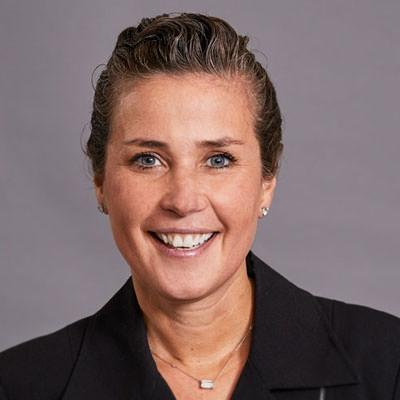
Senior Vice President, Partner Ecosystem SuccessRed Hat
Stefanie Chiras, senior vice president of partner ecosystem success at Red Hat, joins theCUBE’s Rob Strechay and Rebecca Knight at Red Hat Summit 2025. The conversation centers on Red Hat’s evolving AI strategy and the role of ecosystem alignment in delivering real business impact through partner collaborations.
Chiras unpacks how Red Hat’s partnerships with companies such as Nvidia, Google Cloud and AWS are shaping scalable, enterprise-ready AI solutions. She emphasizes the importance of staying agile in a fast-moving landscape, where technology decis...Read more
exploreKeep Exploring
What are some reasons why AI is considered to be a unique ecosystem in the industry?add
What are some examples of companies and technologies that are making advancements in the accelerator space within AI?add
What updates have been made to the partner validation program in the ecosystem catalog for OpenShift AI, and how will it benefit both partners and customers?add
What are some best practices for making decisions about modernizing applications and moving to the public cloud?add
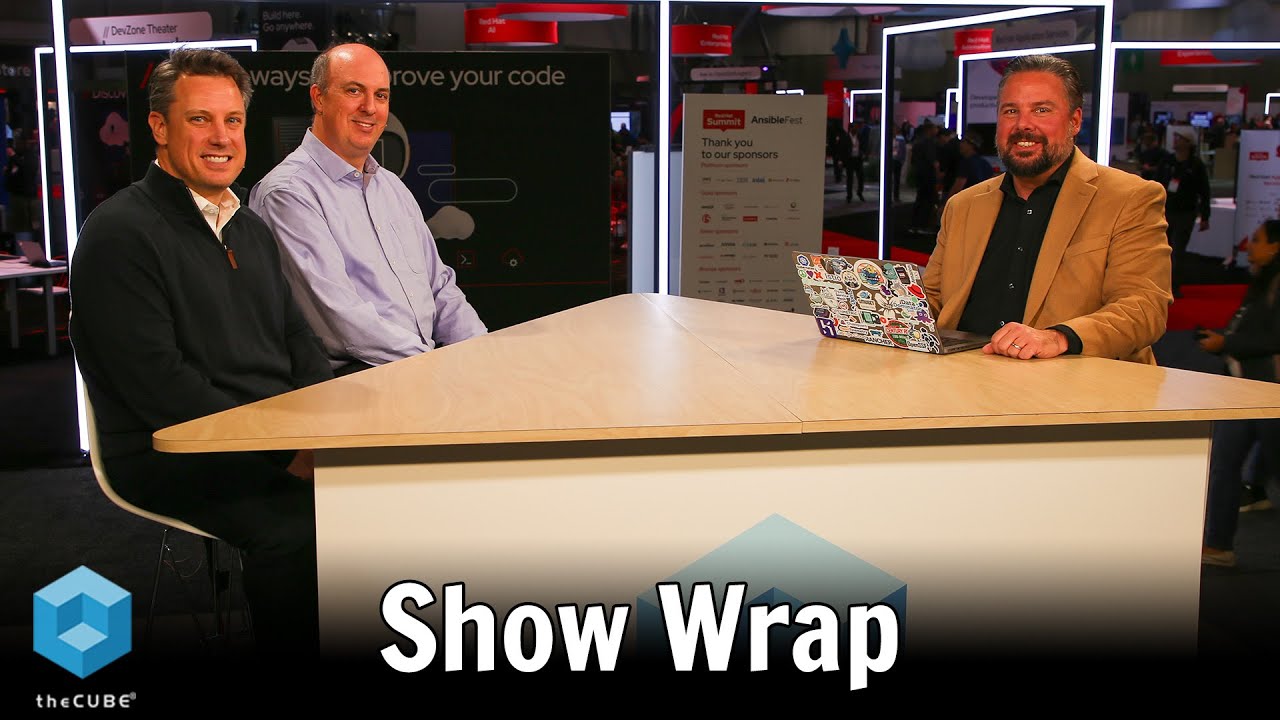
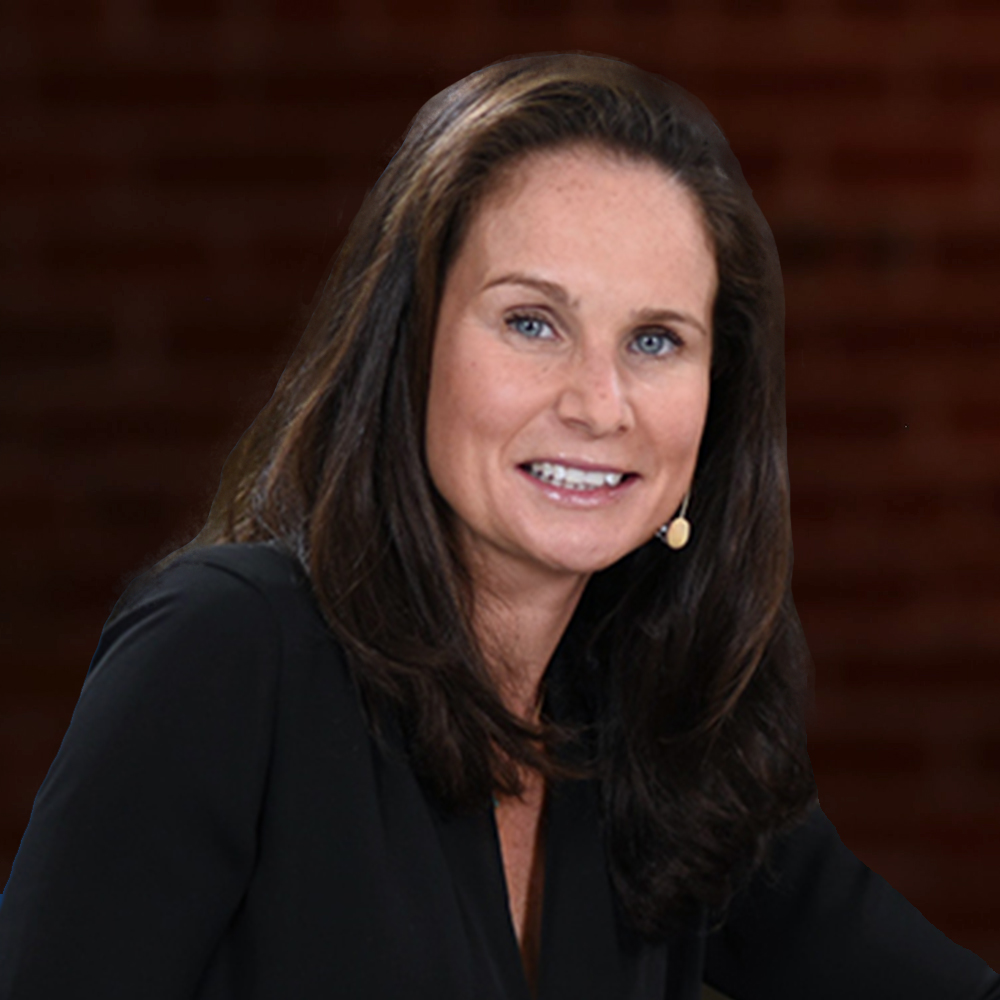
>> Good morning everyone, and welcome back to theCUBE's live coverage of Red Hat Summit Ansible Fest 2025 here in the Boston Convention Center. I'm your host, Rebecca Knight, alongside Rob Strechay, my co-host and analyst. Rob, we are both fresh from the main stage this morning and yesterday morning. The keynote game is strong.
Rob Strechay
>> Very strong. And I think again, the mix of customers and partners and Red Hatters has been fantastic, giving a very broad perspective on what Red Hat's up to.
Rebecca Knight
>> And telling the real story. And to tell more of that real story, I would like to introduce our next guest, Stefanie Chiras, senior vice president, Partner Ecosystems here at Red Hat. Welcome back to theCUBE, Stefanie.
Stefanie Chiras
>> Thank you, Rebecca. Thank you, Rob. It's great to see you both, and welcome to Boston. We're delighted to have you here at Summit.
Rebecca Knight
>> Well, we live here, so-
Stefanie Chiras
>> Me too. It's a hometown scene.
Rob Strechay
>> We were saying, we were talking with Chris about this, about the fact that we should have brought jackets with us and that it's not expecting the weather to go the direction of this week.
Stefanie Chiras
>> I know, I didn't-
Rob Strechay
>> It's still lovely to be home though.
Stefanie Chiras
>> It's lovely to be home. Yes.
Rebecca Knight
>> So let's first start at a very high level. We know that AI is evolving at breakneck speed. Talk to us a little bit about how Red Hat, from your perspective, is staying agile, staying collaborative, to meet the opportunities and the challenges that this new era presents.
Stefanie Chiras
>> So I think AI is a different way of ecosystem than we have ever seen before in the industry. There's a couple of things I think that make it so important. One is the speed, which you mentioned, Rebecca. The speed is unprecedented for the rapid pace of innovation that's happening. I think the second piece is never before I think have we seen a technology where the business outcome is so tied directly to the technology, which means customers are looking for AI to deliver a business outcome and getting that really tight, that's what customers are asking for. What is the business, either savings or business growth I'm going to get from it? And that discussion is happening at the same time with what is the technology I need to do it. In the past, those two were a little bit separate, but now right on top of one another. So as we approach in the AI space, we are full on with ecosystem to make sure that we remain where we're focused, which is a platform level, and we're pulling in the relevant ecosystem partners, which will continuously evolve. I think my background, of course, is in the processor space, so I'm thrilled in the AI space to see accelerators and hardware come straight up in the forefront again. We saw Nvidia, right? With their, of course accelerators, you have AWS, Google Cloud with their own accelerators. Intel AMD was on stage with us. This accelerator space, it offers a new layer for us to participate in ecosystem and the model space entirely new, right? For us and BLM, with the announcement of Red Hat AI Inference Server allows us a new way to engage in both of those ecosystems. So that's exciting for me.
Rob Strechay
>> Yeah, I was going to say, there was a lot of different partners on stage from Meta to Google to talking about the Oracle integrations with Oracle Cloud, and I think balancing all that must be just like a real... How do we make sure that we're seeing what our customers want us to do? And that must be one of the North stars for your organization as you help bring that together.
Stefanie Chiras
>> That's exactly right. In fact, we started Summit on Monday with a set of partner advisory councils. In the discussion with the global partner advisory council was exactly on that topic because we had partners who are global systems integrators and we have accelerator providers in the same room. And we bring up, I think often you'll hear AI about use cases. What we consider a use case, what an accelerator company considers a use case, and what a global systems integrator considers a use case are three different things. So how do we as an ecosystem come together to sort of make sure we're all aligned on driving to a use case that matters to a customer, and everything builds up from the accelerator to the VLLM, to the model, into the tooling and the application all the way up to a use case. I think this is a new way of doing ecosystem that we've really never seen before. Some of the other announcements, I think we're trying to be pervasive as well about how we engage. Some of the announcements around the validation program that was announced with the REL 10 announcement. So now they'll move into partner validation in the ecosystem catalog. So we revamped the partner ecosystem catalog to be able to really showcase all of that growing set of partners who are working and certified on OpenShift AI as an example. And now with the announcement that came out yesterday around this partner validation program, a partner can come in, do their own testing, right? Based upon our guidance, they can validate their application on REL, and then they can say, we will support it, it goes into the catalog and is visible for all partners and customers to see. That's important because this rate and pace of partner involvement is going to be faster and faster.
Rebecca Knight
>> So I want to dig into that a little bit because as you said, this is a new way of doing ecosystem, which I really like. At the same time, you started the conversation by talking about how companies are demanding to see cost savings or new growth opportunities. All the while this technology is changing in and of itself. Talk a little bit about the kinds of leadership capabilities and change management strategies that companies need to be doing glove in hand with all these changing technologies in terms of making sure their people, their teams are thinking differently in this new light.
Stefanie Chiras
>> I think it's a great point, and I think honestly, this is an opportunity for partners in this space. When I talk to partners, we're seeing three places that they have the opportunity to lean in and help customers. One is how are they infusing AI into the products and the capabilities and the services that they bring to customers. Second is how are they leaning in to help customers adopt AI technology that perhaps they're building within that customer's itself. And third is exactly where you went. How do you help customers really change the way they do work? That could be organizational changes. It could be structural changes within the company. It could be down to IT. It could be line of business changes. That's an opportunity that we're seeing partners lean in with expertise because that is not a blueprint you want to recreate at every single company. If you've seen a way that the process improvements, the way of working is done and works well in one company, a partner can help with that and bring that expertise into another company. To use AI effectively is not just a technology use case. It's not just a software use case. It is a whole process shift because it is an augmentation of skills. So you really have to figure out how you're going to benefit from that.
Rob Strechay
>> I think, yeah, one of the things that we hadn't hit on yet that I think is a huge partner opportunity, and I'm sure I guarantee you see it that way, is around the virtualization and OpenShift vert and how people can go through that migration and how they have to get that. To me, the GSIs have a lot of that skillset. They're in these customers, they're seeing and feeling the pain that the customers are going through with the relicensing by Broadcom and all of that fun jazz. We also had SiriusXM on, talking with Portworx and you guys earlier. So help us understand, because I don't think any of us thought in 2025 that this would be a massive opportunity for somebody like Red Hat, but-
Stefanie Chiras
>> It's been such an evolving journey. Last year we were talking a lot about the virtualization opportunity, what we were doing with OpenShift Vert. I think here at Summit this year, you're seeing now we have customers and partners on stage talking about VMs migrating, right? Which is so exciting. It's becoming real. I think in this evolution, it's been, at first it was who was courageous enough to take that step. Now there's confidence being growing in the industry for those who want to take this step. And it is absolutely a partner and ecosystem opportunity on several levels because the VM, as folks are looking at their VM modernization, I'll call it for a moment, right? Or their migration, it's pulling together a number of decisions that customers are looking at. One is, where do I put my VMs next? That's one and simple question tied to many of the changing dynamics in the market. The second is, does this open up my opportunity to expedite modernization and move to containerization, which perhaps puts me in a space to move into AI faster, which is all being done in containerization space. And the third question is, does this change the way I want to do my hybrid cloud? So you're starting to see some key decisions focus now around this virtualization decision. That pulls in this C-suite level discussion that you mentioned, Rob, right? It is bringing it up to this is where the SIs, the global SIs are really engaged to say, what is our strategic motion? How much do we want to bite off? What is this journey that we're taking? So that's kind of that strategic decision level. But even at the technology level, and you mentioned some of the key partners involved, there is a technology decision because we come in as Red Hat with OpenShift virtualization. Our real focus is to make sure that a customer can run VMs and containers side by side to be prepared for that journey. But in addition, we're not a direct drop-in replacement for all the technology that goes around it. Things like backup, disaster recovery, observability, all of those things. We're looking to partners in an ecosystem to come in. So you'll see announcements from folks like Palo Alto networks, from Pure Storage and Portworx, which you mentioned from Commvault. We've been actively working with them in order to make that ecosystem robust. When we come in with OpenShift Vert, we want to have those relationships with those partners that are already part of that virtualization experience. Storage partners are a key part of that as well. So it is absolutely from start to finish from technology to strategic decision making, this is an ecosystem play, and I'm really excited about the cloud side. I mentioned the cloud decision is coming into play. We made some announcements yesterday. We have OpenShift Vert available already on AWS, on IBM Cloud, on Google Cloud, but yesterday we announced on Oracle Cloud and now on Azure as well. So that option comes back in. We maintain that our goal is to be the platform that will endure with you through the journey, and that's what we want to be. When you decide to go to cloud, OpenShift Vert will be there. When you want to go containers, OpenShift Vert will be there. And in fairness, it's very similar to the announcements we made around AI. These are going to be journeys for customers on virtualization and on AI. Our hope is that the decision to choose Red Hat as your platform is the one decision you don't have to revisit because the ecosystem is there, right? It's there allowing you the flexibility.
Rob Strechay
>> Yeah, I think that is a huge point, and I think, again, that came through with having some of those partners on and some of them on stage, and some of them that aren't even here. But people like Dell were talking about this at DTW down in Vegas this week about some of the stuff that you're doing with them, with their private cloud.
Stefanie Chiras
>> And their AI factory offering. Absolutely.
Rob Strechay
>> So it's great and great to hear it even when it's a little further away.
Rebecca Knight
>> Yes. Well, because you also, in addition to the partners, you've had a lot of customers on stage, the Turkish Airlines, PNC Bank, Sirius FM, Wells Fargo, and then they're all talking about their data center transformations, their VMs migrating. When you think about your customers, and I'm not going to ask you to pick your favorite child here, but what best practices emerge in terms of how they are working with you? And as you said, Red Hat is with you wherever you are in your journey, but is there some advice and some insights that you've gleaned working with all these different customers from a diversity of industries?
Stefanie Chiras
>> I think, and this is probably a bit of an elusive answer, what I've seen so far is that the journey that a customer is on as a virtualization journey is different every time, quite honestly. One is how are they deciding where they are on their modernization journey or their cloud journey? Also, what is their existing infrastructure? And to me, I think that's been one of the most interesting learning experiences is what is their storage environment already? Do they want to change that storage environment or do they want to reuse their existing hardware? Our goal is to really lean in and help them leverage that with the decisions they make. And that's why the ecosystem is so key, right? This is why having the ecosystem partners and working with them at the technology level is so key. I do think one of the best practices is are they looking at it holistically? I think a year ago, it was a bit of an emotional response to it, and it was like, how do you get me off really quick now? And I think this is important, is folks are stepping back and saying, okay, I want to be intentional. Do I want to use this as an opportunity to modernize my applications? Do I want to use this as an opportunity to move to public cloud? And I think that's really... This is an opportunity to do that because this is not a easy decision for customers to make. So deciding what you want to tackle now and how you want to prepare for the future, now is the time to do that. And maybe you still will simply say, I want to lift and shift my VM somewhere, but do it intentionally. I think that's the biggest, best practice, Rebecca, that I'm seeing.
Rebecca Knight
>> Excellent. Well, Stephanie, great advice. Thank you as always. It's always a pleasure having you on.
Stefanie Chiras
>> Honestly, delightful to be here. Thanks for being at Summit.
Rebecca Knight
>> I'm Rebecca Knight for Rob Strechay. Stay tuned for more of theCUBE's live coverage of the Red Hat Summit, Ansible Fest. You're watching the Cube, the leader in enterprise tech news and analysis.