We just sent you a verification email. Please verify your account to gain access to
Red Hat Summit + AnsibleFest 2025. If you don’t think you received an email check your
spam folder.
In order to sign in, enter the email address you used to registered for the event. Once completed, you will receive an email with a verification link. Open this link to automatically sign into the site.
Register For Red Hat Summit + AnsibleFest 2025
Please fill out the information below. You will recieve an email with a verification link confirming your registration. Click the link to automatically sign into the site.
You’re almost there!
We just sent you a verification email. Please click the verification button in the email. Once your email address is verified, you will have full access to all event content for Red Hat Summit + AnsibleFest 2025.
I want my badge and interests to be visible to all attendees.
Checking this box will display your presense on the attendees list, view your profile and allow other attendees to contact you via 1-1 chat. Read the Privacy Policy. At any time, you can choose to disable this preference.
Select your Interests!
add
Upload your photo
Uploading..
OR
Connect via Twitter
Connect via Linkedin
EDIT PASSWORD
Share
Forgot Password
Almost there!
We just sent you a verification email. Please verify your account to gain access to
Red Hat Summit + AnsibleFest 2025. If you don’t think you received an email check your
spam folder.
In order to sign in, enter the email address you used to registered for the event. Once completed, you will receive an email with a verification link. Open this link to automatically sign into the site.
Sign in to gain access to Red Hat Summit + AnsibleFest 2025
Please sign in with LinkedIn to continue to Red Hat Summit + AnsibleFest 2025. Signing in with LinkedIn ensures a professional environment.
VP & GM, In-Vehicle Operating System and EdgeRed Hat
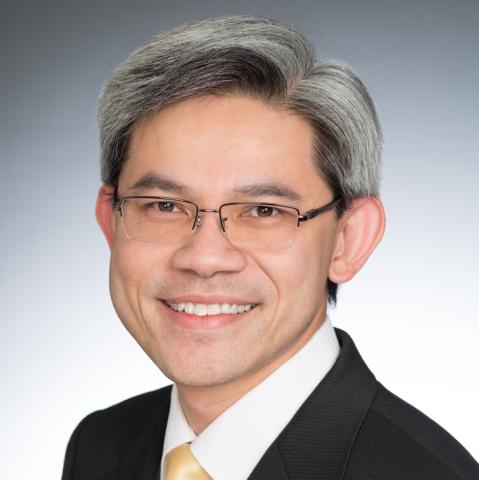
Francis Chow, vice president and general manager of the Edge Business Unit at Red Hat Inc., joins theCUBE’s Rebecca Knight and Rob Strechay during Red Hat Summit 2025 to explore the future of software-defined vehicles and edge computing. The conversation highlights how Red Hat applies IT expertise to transform in-vehicle systems and industrial technologies.
Chow discusses innovations such as Emiko OS and the importance of balancing in-vehicle complexity with broader industry requirements. He also emphasizes the need for safety, compliance and a unifi...Read more
exploreKeep Exploring
What are some ways in which the company is making products easier to consume at the edge?add
What motivated you to start working on software-defined vehicles in the automotive industry, considering the challenges posed by outdated infrastructure?add
What is the advantage of car makers having a software platform independent of model years and car model for implementing and deploying software?add
What are some potential advancements in autonomous vehicles and AI technologies that could change the experience for passengers in the future?add
>> Good afternoon, everyone. We are in the very home stretch of our three days of wall-to-wall coverage of the Red Hat Summit AnsibleFest 2025, here at the Boston Convention Center. I'm your host, Rebecca Knight, alongside my co-host and analyst, Rob Strechay. Rob, you're a car guy.
Rob Strechay
>> I am a car guy.
Rebecca Knight
>> Most modern vehicles are really defined by software.
Rob Strechay
>> Yep, software-defined vehicles. That's basically what they are at this point, it's crazy.
Rebecca Knight
>> Indeed. Well, this is going to be a really fun conversation with our guest.
Rob Strechay
>> I think so, yes.
Rebecca Knight
>> I would like to welcome back to the show, Francis Chow, VP and GM In-Vehicle Operating System and Edge at Red Hat. Thank you so much for coming back on the show, Francis.
Francis Chow
>> Thank you for having me again, Rebecca and Rob, good to see you again.
Rob Strechay
>> Yes.
Rebecca Knight
>> As your title suggests, you lead in-vehicle operating systems and edge, and Red Hat is obviously making significant strides in these areas, but there are inherent complexities but also a lot of synergies. Can you talk to our viewers a little bit about how you balance this tension?
Francis Chow
>> Well, I think the way we are looking at our business, in fact, my title reflects a little bit more of how we organize than kind of how we look externally. Emiko OS is a new product that we are building, so I have the typical product responsibility. At the same time, I also have the portfolio responsibility for edge as we take advantage of what we've built in the past 20 years, taking what we learned from the IT side, bringing those knowledge and expertise to modernize the OT world. So I have both a portfolio view, as well as a product view that's more specific to the automotive world, but that product over time, as you will see later, could be applicable to other industries as well.
Rob Strechay
>> Yeah, and I think again, when you talk about edge, people are doing AI out at the edge. There's a lot of different complexities and proliferation. What people define as edge is sometimes fluid, but there's retail where they look at their banks or at the banks, or even the end retail spots. Then you have others who look at their factories. We had Ford on, we were talking about their edge is really the manufacturing lines and things like that. Help us understand and highlight kind of the complexities and how you're really addressing those from an edge perspective portfolio.
Francis Chow
>> I think the complexity, there are a couple of dimensions. One is every vertical industry has their own language and use cases and ecosystems. So as we get into the edge market, we have to build the right ecosystem with each industry that we choose to kind of work with. And oftentimes what we would like to do is to find innovators in those industries to work with us to co-create solutions with the same open collaboration, open source model, which, a lot of industries are seeing the advantage of doing business that way so that we can start those businesses. The other complication is the type of systems that we have to support at the edge has a wide range of architectures compared to the more homogeneous architecture that we've seen in the data center world. So we have to enable different types of hardwares, figure out how to work with different ecosystem partners. But in the end, what I think is really exciting is how we can help different industries innovate faster in the open way.
Rob Strechay
>> I think one thing that I'm curious about as well is from a perspective of how, because the edge is different. I mean, when you're talking about manufacturing line, it's not like I have platform engineering people that are sitting with that. There tends to be skills gaps, right?
Francis Chow
>> Yes.
Rob Strechay
>> How does Red Hat look at those skills gaps, especially at the edge?
Francis Chow
>> I think there are a couple of things. One is we do recognize there's a skills gap, so part of what we are doing and plan to do more in the future is how do we make our products easier to consume at the edge? You heard about image mode for that's one of the ways that we can deploy our operating systems in an easy to consume way. You may have read about the Red Hat Edge Manager. We are now creating this capability so that OT folks without a lot of IT expertise can have a single pane of glass to help manage the edge devices and applications in one easy-to-use system.
Rebecca Knight
>> The automotive industry obviously has very strict safety and reliability constraints and requirements, and rightfully so because these are people's lives. Achieving certain milestones and certifications are a really big deal. Can you tell our viewers a little bit more about the journey that you went on to reach these kinds of certifications and the technical innovations that are involved?
Francis Chow
>> Good question, and it's been a very long journey for us. We started doing this about four years ago when we decided that the automotive industry is on the verge of transforming, as you talked about in the beginning, to software-defined vehicles. But the industry has been practically using software infrastructure that are 20 years old. Now, how do you build advanced applications or AI on a 20 year old infrastructure? Yes, you can do it, but it's going to be very challenging. So we see that as a potential opportunity for us to kind of bring in modern architecture like Linux to the automotive world. But as you said, there are stringent requirements on safety and regulations, so we have been on this journey of trying to prove Linux to be functionally safety-compliant to the international standard. Now, the challenge of that is the standard was written about 14 years ago. A lot of advancement has happened in the software world in the last 14 years, so what we've been trying to do is, "Okay, how do we meet the objective of the standard," which is, you have a certain risk-failure rate that you have to be achieving without having to go through the literal process of the context of how the standard was written 14 years ago, which is microcontroller-based hardware, software that may be 100,000 lines long, and now we're dealing with AI, GPUs, microprocessors, 120 million lines of software. So we're trying to adapt to the new world, but working with our partner, Exida, to get there with outdated approach to safety.
Rob Strechay
>> When you look at the, I mean again, the in-car operating system and what it will enable those manufacturers to go and do, and I've talked to some of your customers in this space and funny enough it tends to be Germans. It's like they were always up first with Linux anyway, so it doesn't really surprise me. What are some of the tangible benefits that they're seeing out of going this direction?
Francis Chow
>> I think the industry is getting to a point that the complexity of the car is very difficult to manage with the old way of designing systems, which is more hardware-centric. So what we're trying to bring to the table is it's not just a modern operating system, it's how we can also design vehicles with a more software-centric approach. The advantage to the car makers is now they could have a platform that instead of building these bespoke systems, every time you have a new model or a new production year, you have to sort of redo a lot of things. You can have a software platform independent of your model years and car model, and then you just add different applications on top, depending on the customer's demand and interest. That gives car makers a way more flexible way of implementing software and deploying software and in fact, updating the car capabilities over the lifetime of the vehicles.
Rebecca Knight
>> This is Red Hat and as we know, there is a vast ecosystem of partners and you work very closely with Silicon vendors like Intel, and they are really critical to the success of the in-vehicle operating system. Can you talk a little bit more about how you work with these vendors and how you collaborate and how you then optimize the operating system?
Francis Chow
>> It's definitely a journey. A lot of these Silicon vendors, they have their way of managing software, which works really well in the past, which is, I design an embedded system, the car goes to production. I pretty much am done with the software, right? But in the new world, as you have seen and experienced in some of the more advanced car manufacturers, you need to update, upgrade your systems. You can add new functions just like your phone over a long period of time. And for that to work, you have to have a scalable way to maintain your software platform. This is kind of where our expertise comes in, and so we have to work with the Silicon vendors in this space and, "Hey, how do we work together?" One key example was how do we help upstream, some of the device drivers hardware specific to the mainline Linux kernel so that everyone can benefit from that standardization, that we can be a part of the ecosystem to help maintain those drivers over a very long period of time? So that when you see highway upgrades, we would help maintain those consistent operations of those systems.
Rob Strechay
>> Do you see that the parts manufacturers and all the modules... Because I mean, a car doesn't just come out of one plant, it comes from multiple different plants, multiple different parts manufacturers. Are they leaning into this as well because they see that, "Hey, this is coming and we need to get on..." You talk about the drivers and stuff like that. It would seem like it's in their benefit that if-
Francis Chow
>> It is absolutely in their benefit, Rob. Some of the challenges that car makers are having today, which is one of the motivations for them to change is, as an example, you would have an application in your car. You would have an application in the website that sits in the cloud. You would have an application in your cell phone, right? These could be the same application, but most companies have three different teams designing and maintaining those applications, practically the same three different teams. The reason is they have a different hardware and software operating system for these applications. Now, what we are seeing, if you standardize on Linux now with safety, you don't need to do that anymore. Write your app once, deploy it in the car, in the cloud, in the phone, and it makes the car maker's life a lot easier.
Rob Strechay
>> I think one of the things that I'm interested in as well is, again, this is one of those things that always makes me think, and we were talking before we got on here around CES. And when I'm wandering through all of the car manufacturers on the floor at CES and seeing what tech they're using behind the scenes, one thing that comes up commonly, and there was one I saw with a very large industrial, they make garbage trucks and fire trucks and stuff like that. And they were going towards AI and how AI was used within to doing the sorting of actual recycling that would come out of them and they were using computer vision and stuff like that. One of the things that, when I was talking to them was about the balance between connection and not connection from that. How does that either help or make your job more difficult from an operating system that's running the car, like a connected car kind of situation?
Francis Chow
>> I think the way we've approached this is we can work independent of connectivity. Connectivity definitely give the manufacturer more options on how to operate some of the applications. For example, certain applications that are not timing-critical, not safety-critical. You can actually run part of that at the edge operating center or in the cloud. Whereas if it's safety-critical, timing-critical, you have to run everything in the edge or inside the vehicle. We've always been flexible enough, so depending on the applications and the demand, we can cater to both requirements.
Rebecca Knight
>> Francis, you have really painted a picture of how working with Red Hat for car manufacturers has a real value proposition in terms of accelerating innovation and reducing complexity and improving efficiency. But now blow our minds a little here, and what will we feel like as the drivers of these vehicles? What do you see as the most exciting innovations that we will see five, 10 years from now as the actual customers of these vehicles that you're-
Francis Chow
>> I think everyone's been talking about autonomous vehicle, which I think, it will happen. It probably will happen further out than people think. Most of that is not because of limitations of technology, but limitations of regulations and legal and ethics concerns. But the technology definitely will kind of get us there. But that's I think, only part of the excitement. I think what's really interesting is what AI combined with edge technology can help change your experience in a vehicle setting. The vehicle could basically look, for example, use the driver monitoring system, look at your mood, and then based on your profile and experience, they can determine, "Hey, you know what, Rob or Rebecca? Tonight, you probably should have sushi. I was just going to pre-order it, it's going to be 15 minutes away." That wait time, order ahead of time. Drive you there, you do the pickup, it's done. It's a completely different experience than what you could have imagined today.
Rebecca Knight
>> Oh, wow, I love it.
Rob Strechay
>> I think another thing that just popped into my head, because again, car manufacturers also have other edge devices like we were talking about with manufacturing and how they're doing that. When you look at things like Fleet Manager and how that's going to really change organizations and what kinds of apps they can bring to the edge, I was talking to one manufacturer on their manufacturing lines, not in the auto industry. They use computer vision, they're also using robots and they have to then coordinate all of this, but they're shipping all this data back to the central data center because of the AI and the compute power. Are you seeing more power coming towards the edge and in that way, even in same small packages?
Francis Chow
>> Oh, absolutely. I think there are a couple of mega technology trends that are happening at the same time. AI definitely is moving very fast, but the model is getting smaller and smaller very rapidly. At the same time, the compute power of these edge devices is also especially getting very powerful with Moore's Law. Now, the combination of that with the fact that most of the data is generated at the edge, so it sort of makes sense to process the data where it's generated. In fact, what we've seen in some of the analysts are saying that even at the end of this year, more than half of the enterprise managed data will be created and processed at the edge, which is mind-boggling of kind of how fast it's happening.
Rebecca Knight
>> Francis, thank you so much for coming on theCUBE. Always really a pleasure to have you.
Francis Chow
>> Always a pleasure. Thank you, Rebecca and Rob.
Rob Strechay
>> Thank you.
Rebecca Knight
>> I'm Rebecca Knight for Rob Strechay. Stay tuned for more of theCUBE's live coverage of the Red Hat Summit AnsibleFest 2025. You're watching theCUBE, the leader in enterprise tech news and analysis.