We just sent you a verification email. Please verify your account to gain access to
Red Hat Summit + AnsibleFest 2025. If you don’t think you received an email check your
spam folder.
In order to sign in, enter the email address you used to registered for the event. Once completed, you will receive an email with a verification link. Open this link to automatically sign into the site.
Register For Red Hat Summit + AnsibleFest 2025
Please fill out the information below. You will recieve an email with a verification link confirming your registration. Click the link to automatically sign into the site.
You’re almost there!
We just sent you a verification email. Please click the verification button in the email. Once your email address is verified, you will have full access to all event content for Red Hat Summit + AnsibleFest 2025.
I want my badge and interests to be visible to all attendees.
Checking this box will display your presense on the attendees list, view your profile and allow other attendees to contact you via 1-1 chat. Read the Privacy Policy. At any time, you can choose to disable this preference.
Select your Interests!
add
Upload your photo
Uploading..
OR
Connect via Twitter
Connect via Linkedin
EDIT PASSWORD
Share
Forgot Password
Almost there!
We just sent you a verification email. Please verify your account to gain access to
Red Hat Summit + AnsibleFest 2025. If you don’t think you received an email check your
spam folder.
In order to sign in, enter the email address you used to registered for the event. Once completed, you will receive an email with a verification link. Open this link to automatically sign into the site.
Sign in to gain access to Red Hat Summit + AnsibleFest 2025
Please sign in with LinkedIn to continue to Red Hat Summit + AnsibleFest 2025. Signing in with LinkedIn ensures a professional environment.
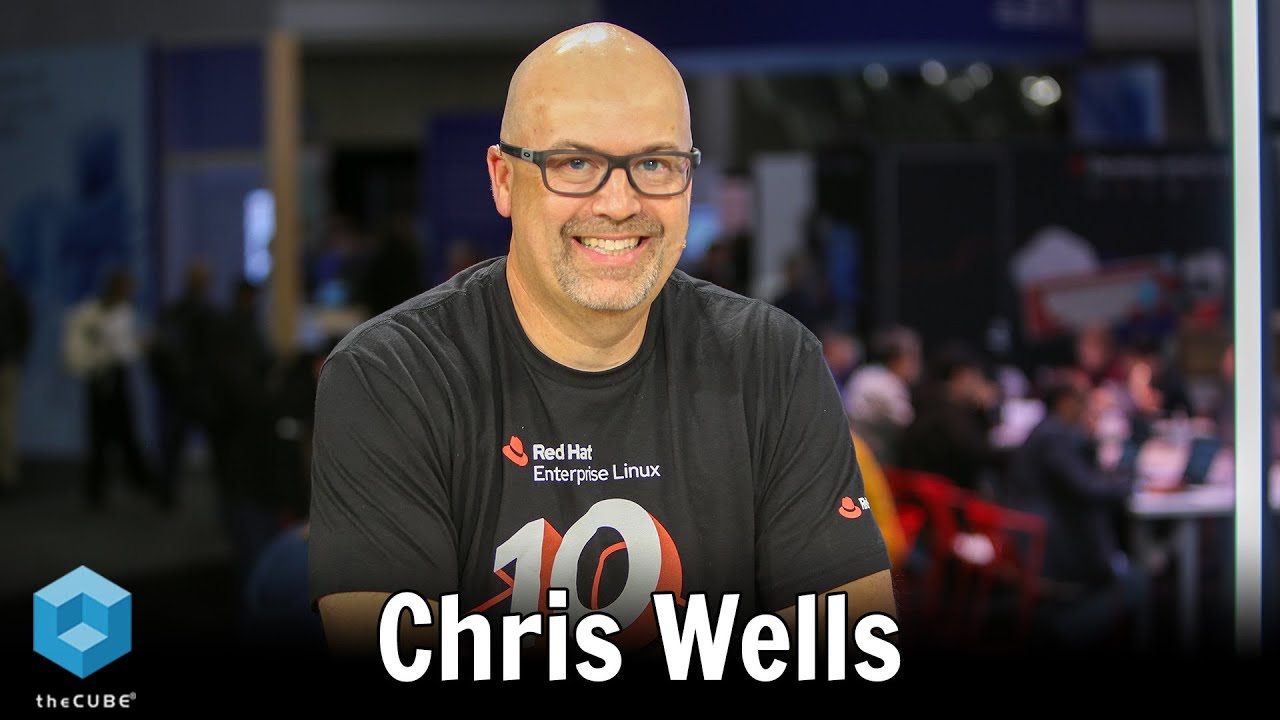
Chief Technology Officer and Senior Vice President, Global EngineeringRed Hat
Chris Wright, chief technology officer and senior vice president of global engineering at Red Hat, joins theCUBE’s Rob Strechay and Rebecca Knight at Red Hat Summit 2025 to share his perspective on balancing operational stability with AI innovation. The conversation explores Red Hat’s evolving strategy as it helps enterprises navigate complex tech transitions.
Wright offers a candid look at the challenges companies face while integrating AI into existing systems, emphasizing the role of open-source communities and platforms such as OpenShift AI. He d...Read more
exploreKeep Exploring
What is the speaker's perspective on technology innovation happening in collaborative communities through open source models?add
What are some important open source AI projects that focus on bringing models into production environments and scaling them efficiently?add
What is your best advice for leaders who are trying to accelerate their journey from experimentation to production using platforms like OpenShift AI?add
What role can Red Hat play within the AI space and how is their vision of acting as an operating system between hardware and applications being received by people?add
>> Good morning everyone, and welcome back to TheCUBE's Live coverage of the Red Hat Summit, AnsibleFest 2025 here at the Boston Convention Center. I'm your host, Rebecca Knight, alongside my cohost and analyst, Rob Strechay, in a beautiful but very brisk Boston, Massachusetts.
Rob Strechay
>> It is, it's unseasonably cold for this time of year, and I think it's caught a number of us who've lived here by surprise.
Rebecca Knight
>> It has, but it does not dim the good vibes and the fun and the energy and the warmth that we're all feeling inside.
Rob Strechay
>> A lot of energy inside the summit.
Rebecca Knight
>> Indeed, indeed. So I would like to introduce our first guest of the day. He is Chris Wright, Chief Technology Officer and Senior Vice President Global Engineering at Red Hat. Thank you so much for coming on, for returning to TheCUBE, Chris.
Chris Wright
>> Yeah, you bet. Love to be here.
Rebecca Knight
>> And congratulations on your main stage performance. It was terrific.
Chris Wright
>> Thank you. We had a lot of fun putting that together. It was a really good energy between what we were saying and what the audience was really receiving. So, fun.
Rebecca Knight
>> So I want to actually pick up on something that you were talking about on the main stage. You said that the challenge that every company is facing today is they're living in these two parallel worlds. They're trying to run their business and keep tabs on their applications and their current technologies, but also trying to seize the opportunity that is AI. Talk a little bit about that tension and what you're seeing out there and hearing from your customers.
Chris Wright
>> Yeah. Well first it's tough. There's all these amazing new technologies. Sometimes it feels like inaccessible compared to what you have to do to just keep the business operating, and yet we know, we can feel there's a ton of potential in all this opportunity that sits in the space of AI and how you use AI to either improve your business or improve your operations. So one of the things that we're looking at is how do we sort of gracefully bring those worlds together? In technology transitions it's never healthy to throw everything away and start over. I mean, occasionally it works for a few narrow scope problems, but in general we have to have some kind of an evolutionary path. So we're focused on that. What are the things that we can do to bring the business that's there today into this AI space? And looking at connectors, so one of the things we're talking about today was using MCP as a connective tissue between AI and your existing business so that you can evolve in place. And we think about that broadly even from virtualization, application modernization and AI. If you have a common platform, you can run any of those workloads and you get to choose when and how you implement the application modernization or the integration of AI.
Rob Strechay
>> Yeah, I think again, that was throughout the last two days in the keynotes and we've been talking to a number of people. What is your perspective from where you sit on open source and AI and how open source AI is really evolving? Because I think there's always interesting things about what is open source and what's not open source, don't need to go down that route, but it seems like people are leaning into open, your partners, a lot of it and yourselves from that perspective.
Chris Wright
>> Well, I think technology innovation happens en masse in collaborative communities through open source models, open source collaborative models. So to me, it's an inevitability that we will win, leveraging that collaborative model, building AI with open source communities, and it's already happened in the software layers. Think about the libraries, the dependencies, the frameworks. Those are open source, they have been. That kind of, it's familiar, it's software. As you bridge into the models themselves, the accessibility of those models, the ability to tweak and tune those models because they're licensed with an open source license so you can change the weights. I think that reflects the expectations of the user base, the community, if you will. And in the end, what we're doing is finding the best way to build the best technology and the community is just shared problem, shared vision, all these diverse views on how to build and evolve technology. The community side is the winning formula.
Rebecca Knight
>> So I want to dig into the community a little bit because it's so clear over the past few days that Red Hat is making big bets on vLLM. What other community projects do you have your eyes on? And I also really appreciate what you're talking about in terms of the community bringing this diversity of viewpoints and really improving the outcome.
Chris Wright
>> Yeah, well, there's innumerable open source AI projects. I won't even be able to go through the exhaustive list. vLLM is important from our point of view in the context of operating a model to generate results, call it inference, and that is what's required to put models into production. So a lot of focus has been on training, building the largest possible frontier models, multi-trillion parameters. There's a ton of interesting and important open source projects, and if you start digging underneath, PyTorch becomes one of those really important kind of building blocks. But we've really focused in on vLLM as this way to bring that work into a production environment. The next one for us that we launched here at Red Hat Summit is llm-d. And llm-d takes the inference engine of the vLLM focused essentially on a single server type environment and distributes it across your infrastructure. So these are really two critical projects that are bringing the models that we've built into production environments and then scaling that efficiently.
Rob Strechay
>> So let me dig in a little bit on that because I think what was interesting is everybody kind of thinks of Red Hat, thinks of Linux and the cloud, CNCF and that kind of thing, but vLLM is actually in PyTorch, in that community. How is it working between all of these, I mean, again, you're seeing it from a global perspective. You have all of these different communities that you have to be involved in and how does that really work for you? Because it seems like it makes sense for vLLM to be in PyTorch, that kind of the thing you figure out where to go and how that-
Chris Wright
>> Yeah, I mean, communities are really interesting. I think there's a tendency to say the community, there is no such thing. There are literally probably if not thousands, if not millions, certainly thousands of communities and each one has some variations and subtleties because in the end, what is a community collaborative initiative? It's people, people working together and people work together in different ways based on the culture that they build within their community. Finding places where shared values and kind of adjacent technologies can evolve together are also important. So CNCF is a great example of that. It's all the cloud native projects. It's huge. Its anchor tenant, if you will, is Kubernetes, but there's so much activity around that. PyTorch represents a critical building block in this stack, and we have inference, for example with vLLM as an adjacent space. These are great. There's community collaboration across these boundaries. It's really important and that's how you evolve a bigger technology stack. For us, is it hard to engage in one more community? I mean, it's real work and we love that work. In general, we touch thousands of communities. Just the Linux distribution itself touches thousands of communities. So it's something we're very familiar with and part of it is get in there, understand what's unique and different and figure out how do you contribute? What is valued in this community? And that's something that I think we do especially well and we're happy to join new communities and then foster this creativity around a set of ideas. It's not just one technology, but it's cloud native in one case, it's AI and AI for the enterprise in another case.
Rebecca Knight
>> You're fostering creativity, but there is also this sense that companies are in it with vested interests, of course. So how do you describe that tension and how does it either cultivate more innovation or create a little bit of competition that can be uncomfortable?
Chris Wright
>> Yeah. Well, I mean, if you're not uncomfortable, you're not growing.
Rebecca Knight
>> That's a good point. Good point. Touche.
Chris Wright
>> There's that, I think it's really important, the tension of the co-op-etition, if you will. In one context we're going to cooperate in another context we might compete. Having those diverse opinions and different views and even different ideas of what the market opportunity is and your route to market, I think is part of what builds a robust community. Certainly at the ground level, it's about technology innovation, but the sponsorship from each of the different companies and their viewpoints. If we were all doing the exact same thing, it wouldn't be as powerful as when we're all building the same technology to solve the same problems with slightly different viewpoints. To me, that's actually really healthy and it creates some tension. And the negative side is it can devolve towards something that's slower and slower because it gets bogged down in just the governance and it starts to feel more like a standards body than an innovative open source project. We've seen that before. We know how to sort of recognize that and course correct. So it's a dynamic balance, but I think it's a really, really important one to make a healthy community.
Rob Strechay
>> Yeah, I think that to me is one of those things because today the keynote was about going deeper into the announcements from yesterday. We were talking about this earlier, and I think what was really interesting to me as I looked at the thread that was being pulled through the keynote was simplification of the infrastructure, be it for your traditional apps that are in VMs or your new cloud native apps or your AI and agentic apps. To me, it seems like it's intentional from a Red Hat perspective to understand the personas that you're building to and kind of trying to stick to your knitting and making it simple for people to build infrastructure.
Chris Wright
>> Yeah, it's really important. The long history we have shows an evolution in how people use technology. So in the earlier days, I like to say people celebrated the mastery of the arcane. If you know the most obscure command line argument and how to make this amazing sort of Linux distribution come to life, you're the celebrated person in that environment. Today, it's not that those things aren't valuable and useful, it's that there's so much technology and you just need to get your job done and you don't necessarily want to be the expert or can't even afford the time to become the expert in all the things. So ensuring that there's a simple on-ramp, simple ways to get your job done, whether that's simplifying the interfaces or whether that's adding AI assistance to help you get your job done, they're both useful. In the end, it's about addressing the right persona. Somebody wants to dig under the hood and get way into the details, we got to let that happen. Somebody else has an expertise somewhere else and just wants this part to be easy and get out of the way and be not the thing they're spending their time learning about.
Rebecca Knight
>> No, these are fascinating points about what is the role of expertise in this AI era. So I mean, I think that these are really fascinating questions. So many organizations still struggle to go from experimentation to production. What is your best advice for leaders out there who are trying to accelerate that journey using platforms like OpenShift AI?
Chris Wright
>> Yeah. Well, first of all, the time to get involved was yesterday. The pace of technology in the AI space moves so quickly that there's maybe a temptation to wait for the next one to get involved. That is not the winning formula. Recognizing that getting involved early also means moving with that change. And in that context, some experimentation I think is how you get familiarity with the technology and the tools. Expectations of whether that turns into a production experiment or just an experiment. I think thinking of this as a learning exercise is a really valuable way to make it feel like it's time well spent. Then if you want to get from experimentation to production, one, really getting clear on what is that business problem that you're solving. We see technology oriented people like myself gravitating towards just solving a hard technology problem. You got to make sure there's some value that's coming out of it because it's time, it's expense. And then with the work that we're doing in OpenShift AI, it's about maintaining the full lifecycle of starting with something, iterating, evolving to a model that works, putting it into production, continuing to monitor that. We're going to give that platform that gives those capabilities. So you get the room to do the experimentation and figure out what you want to promote. That's just like development. You do some development, you do some testing, you verify, then you promote it into production. We can give you that tool chain, but the biggest number one is get involved, experiment. Get the intuition that you might be missing today of what those tools can do for you and iterate.
Rob Strechay
>> So kind of final question here. When you look at everything that's been going on this week and you've ramped up now you're through two keynotes and you've been talking to probably hundreds of customers over the last couple of days or the last three days. So what do you see as the big takeaway for customers who are sitting out there who maybe didn't get here to Boston this week, and what they can expect from Red Hat over the next year?
Chris Wright
>> Yeah, well, going back to that persona, it's going to depend a little bit on the persona. One of the things that has really stood out is the role that we can play, Red Hat, within this AI space is starting to crystallize. Think of it as an operating system sitting between hardware and applications, and then translate that into hardware equals accelerators and applications look like models. That vision, I think, is coming more to life for people. They really see, especially with vLLM and the kind of integration of our portfolio where we play in this space, which is super important. Also, what we were showing here at Summit is not just the ability to run your virtual machines in OpenShift virtualization as you're looking for an alternative, but you're in great company. The number of customers that we've already helped move from their existing infrastructure to new infrastructure, which is beginning that full journey of maybe modernizing some of those applications and even bringing AI workloads into that space is, "Come on in. The water's warm." I think we get that message across, and then we're really excited about RHEL 10, and this is Linux, and this is so much who we are, and yet there's still exciting technology innovation coming in, this very stable, mature platform, and a little bit for everything. We even talked about Ansible and Terraform as Ansible being a Red Hat tool, Terraform being a Hashi tool, what can we do together? Because so many of our customers use those in concert. A lot of takeaways just depends on who you are and what your persona is.
Rob Strechay
>> A lot of opportunity for the next year for more to be. So stay tuned.
Chris Wright
>> Yeah, yeah.
Rebecca Knight
>> See you back here in 2026. Thank you so much, Chris.
Rob Strechay
>> Well in Atlanta, we'll see you in Atlanta.
Chris Wright
>> In Atlanta, maybe warmer.
Rob Strechay
>> Just a little bit, a tad warmer.
Rebecca Knight
>> Always a pleasure having you on TheCUBE. Thank you so much.
Chris Wright
>> Absolutely.
Rebecca Knight
>> I'm Rebecca Knight for Rob Strechay. Stay tuned for more of TheCUBE's live coverage of the Red Hat Summit AnsibleFest. You're watching TheCUBE, the leader in enterprise tech news and analysis.