We just sent you a verification email. Please verify your account to gain access to
Red Hat Summit + AnsibleFest 2025. If you don’t think you received an email check your
spam folder.
In order to sign in, enter the email address you used to registered for the event. Once completed, you will receive an email with a verification link. Open this link to automatically sign into the site.
Register For Red Hat Summit + AnsibleFest 2025
Please fill out the information below. You will recieve an email with a verification link confirming your registration. Click the link to automatically sign into the site.
You’re almost there!
We just sent you a verification email. Please click the verification button in the email. Once your email address is verified, you will have full access to all event content for Red Hat Summit + AnsibleFest 2025.
I want my badge and interests to be visible to all attendees.
Checking this box will display your presense on the attendees list, view your profile and allow other attendees to contact you via 1-1 chat. Read the Privacy Policy. At any time, you can choose to disable this preference.
Select your Interests!
add
Upload your photo
Uploading..
OR
Connect via Twitter
Connect via Linkedin
EDIT PASSWORD
Share
Forgot Password
Almost there!
We just sent you a verification email. Please verify your account to gain access to
Red Hat Summit + AnsibleFest 2025. If you don’t think you received an email check your
spam folder.
In order to sign in, enter the email address you used to registered for the event. Once completed, you will receive an email with a verification link. Open this link to automatically sign into the site.
Sign in to gain access to Red Hat Summit + AnsibleFest 2025
Please sign in with LinkedIn to continue to Red Hat Summit + AnsibleFest 2025. Signing in with LinkedIn ensures a professional environment.
Show Wrap with Stu Miniman & Brian Gracely, Red Hat
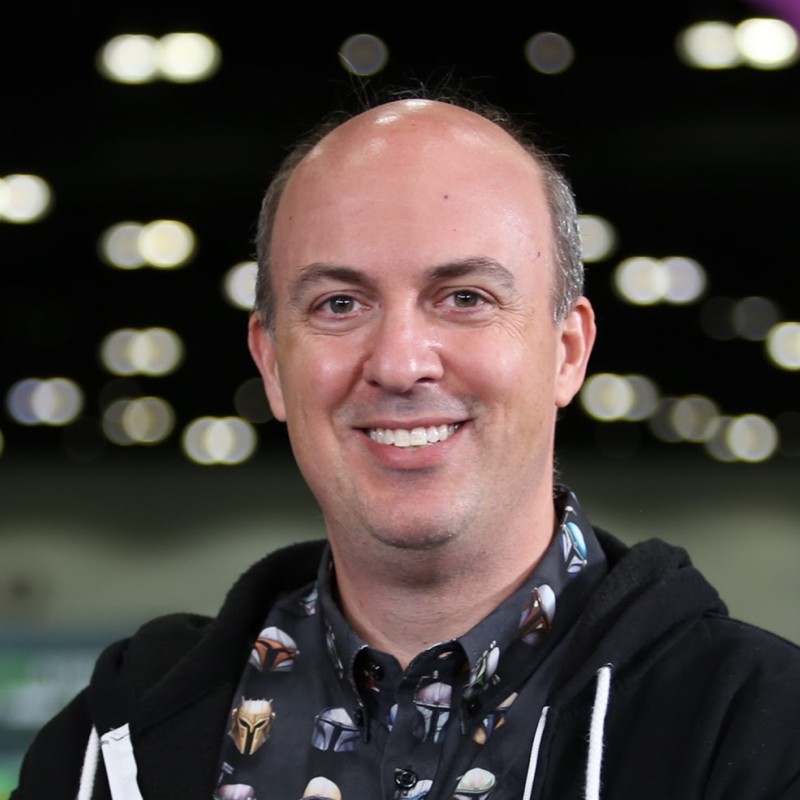
Stu Miniman
Senior Director of Market Insights, Hybrid PlatformsRed Hat
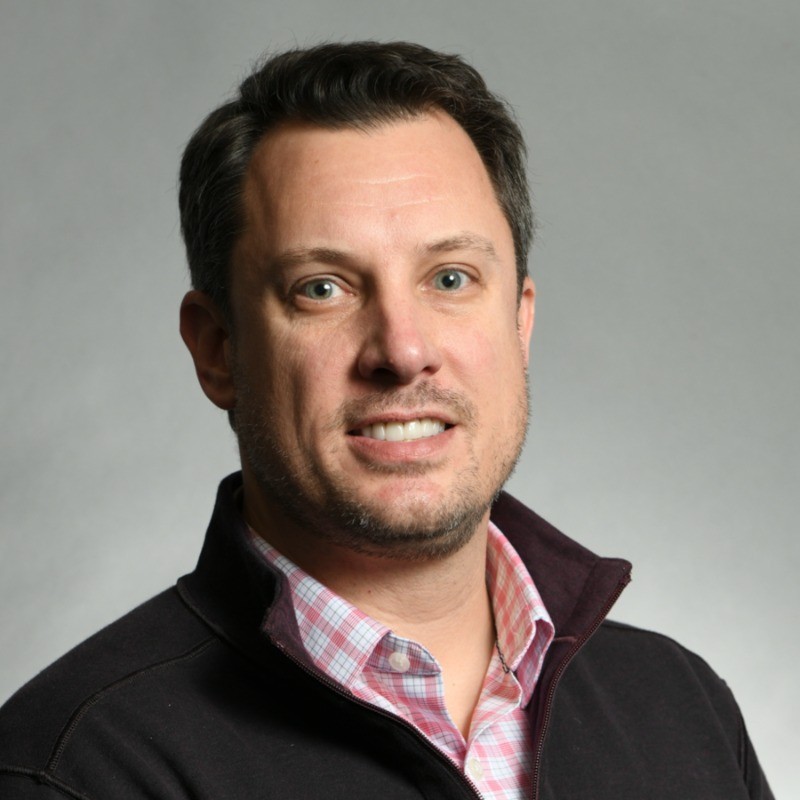
Brian Gracely
Senior Director Portfolio StrategyRed Hat
Join us in this episode as we present the concluding insights from the Red Hat Summit and AnsibleFest 2025 in Boston. Rob Strechay of theCUBE Research, as well as Stu Miniman of Red Hat and Brian Gracely from the same company, reflect on the event's highlights and future directions for Red Hat. Miniman and Gracely share their professional journeys and current roles, discussing critical themes from the Summit such as advancements in OpenShift, the integration of artificial intelligence in cloud platforms, and notable customer success stories. Hosts from theCUB...Read more
Show Wrap with Stu Miniman & Brian Gracely, Red Hat
search
Rob Strechay
>> Hello and welcome back to the last episode here at Red Hatch Summit in AnsibleFest 2025 from chilly Boston, Massachusetts. I'm Rob Strechay and Rebecca Knight just took off, but we're here bringing things home. Who better to help me bring it home and wrap things up than Stu Miniman, who's the senior director of Market Insights and Brian Gracely, who's the senior director of portfolio strategy at Red Hat. We've never seen you guys here on the show before.
Stu Miniman
>> Wait, Rob. Rob, I think Brian and I are going to take this over. We both hosted, probably hosted more things than been on theCUBE in this building than you have.
Rob Strechay
>> Definitely, you did do all that.
Stu Miniman
>> This is the 15th year anniversary of it originating, right, this location.
Rob Strechay
>> Yeah.
Stu Miniman
>> EMC-
Brian Gracely
>> We're there....
Stu Miniman
>> right behind us there. And it's the 11th year of theCUBE at Red Hat Summit, which Red Hat poached Brian and me both away from theCUBE, so thanks for allowing us back on.
Rob Strechay
>> Well, I was going to say they didn't want you to get too close to me, so just stay over there. But I think this has really been, I think a watershed moment for Red Hat. I think there was talk about things like OpenShift for last year. This year there was a lot of results delivered I think during the keynotes, tons of customers coming up, tons of customers coming on board here to talk about it. Who thought in 2025 we'd be talking about virtualization and VMs? I mean, that was not on my bingo card. What have you been hearing as you've been out, you've had a lot of customer meetings and dinners and stuff like that and what have you been seeing?
Stu Miniman
>> Yeah, so I'm happy to start with the virtualization piece since you started there. And you're right, Rob. Thank you. There's a lot of work that goes into this. The product's been years of activity. Last year, there was a lot of engagement knocking down some of those hurdles that we had and nothing better than having all of those customers on the main stage in the breakouts, in the customer meetings, talking to their peers. Talking to the analysts about what they're doing because we know at the end of the day, it's what the customers want to know are, what are their peers doing. I mean, that's what I come out of this always with is just more stories to tell and the details and what was working, what are the challenges, and to show that this is real. And I mean we've been doing this for a long time, but just some of the little details that might've prevented people from saying like, "Oh wait, I do want to move forward with this," today we can hopefully allay any of the fears they have and know that they can go forward with it.
Rob Strechay
>> Yeah, I mean I think that to me was one of the things that definitely came across clear on the main stage as well, and I think that was fantastic.
Brian Gracely
>> Yeah, I think one of the things I've been hearing all week, and I've spent a lot of time the intersection of OpenShift customers and AI discussions is that in the AI space there's still a lot of curiosity, a lot of, "We think we want to apply it." I think the biggest takeaway though has been A) we get what you guys are trying to do. It all starts to make a lot more sense now. But B) and probably is more importantly is they're going, "Oh wait, all this stuff I can just layer on top of OpenShift. I've been working with that for a bunch of years. I've got expertise in that. My application team already use it." So they're really excited about, that it's not a completely new thing, it's not a totally new skill to learn. It's just going to drop in and play with what they want to deal with and they get all the same benefits of open hybrid cloud we've been talking about for a while.
Rob Strechay
>> Yeah, that's a great point. I think we had Brian Stevens on yesterday and with Joe Fernandez and one of the things we were able to break down was some of the confusion because it's VLLM this, LLMD that, MCP this, all of this and where they all fit and what use cases to go solve. Has that really been... I mean, I look at that there's, in my mind, there was four really big things this week. There was the OpenShift VIRT discussions, there was a lot of discussions around OpenShift and RHEL AI as well as AI in general and all the VLLM and the Neural Magic acquisition stuff and now coming to fruition and how that's in PyTorch and stuff like that. Where you also sit from a security perspective and how that's moving forward. Then there was a lot of discussion about really operational efficiencies in that, did I miss anything? What were of the other... Were there other themes that I may have missed or?
Brian Gracely
>> I think that was a lot of it. I think it was, we're hitting on all cylinders on the main platforms. RHEL continues to evolve. Ansible's got great customer adoption. It's integrated now with the HashiCorp stuff that's all public. OpenShift continues to have customers. I think the takeaway is you were diving into some of the new technologies. Red Hat's model is always, you build a stable platform, you build a bunch of ecosystem around it. That was RHEL for a bunch of years. New thing comes along, that's OpenShift for a bunch of years. Now that's a very stable base. The AI piece builds on top of that and what are we showcasing A bunch of innovation and the whole ecosystem getting around that.
You've got MET on stage, you've got Nvidia on stage, you've got AMD on stage coming to our shows, which for us is really big endorsement of like, "Okay, we're doing things the right way." They're excited that it still remains open. We answer that question every year. So yeah, I think you hit on it. It's the stable platforms. It's about efficiency and adoption and the innovation platforms are ecosystem and let's just keep pushing innovation.
Stu Miniman
>> I mean, Rob, when I sat in your seat at these shows, it was like, "Okay, last year to this year, what changed?" Last year we had an AI vision. Now it was like, okay, Ansible Lightspeed was out there, but now RHEL AI. RHEL Lightspeed and OpenShift Lightspeed are both generally available and they actually look similar even though they're developed very different for very different use cases. If productivity is something that we can improve greatly. On the OpenShift side, it's not just for containers, but we made sure we do that for virtual machine too so it ties into that. And then the, why do I need to think about Red Hat when it comes to AI? I got super excited when I reconnected with Brian Stevens a year ago and been helping to spread that message and not just the VLM, but then take that into distributed with LLMD and love to see that logo slide up there with not just Nvidia, but Google and Berkeley and a very broad ecosystem and our expertise is going to help. We really think create that Linux moment for AI and show some of the proof that we've done in many other ecosystems in the past.
Rob Strechay
>> Yeah, I mean to me that was one of the big takeaways was the ecosystem play this year was I think bigger than I've seen any year at Summit. That really, like you said, it was a lot of the things coming to fruition that had been talked about as well. I think simplification of AI, and I am quoted in our article saying, "Red Hat is sticking to its knitting," which I think is a compliment. It's not like we're trying to spin AI to do, it's really how do you build an AI infrastructure and that focus is really clear. I mean, I think that's why there's tangible results with the customers.
Stu Miniman
>> Yeah, Rob, I think it's a great point. I was in the analyst session listening to the Q&A with our executive team and somebody asked, "What use cases and all of these things we're going to throw?" And Matt was like, "Hey, look, we are infrastructure software. We are going to unlock the capabilities that customers can do." I mean, our mission statement is, "Open source unlocks the world's potential," and we're doing that for AI too. It's like we are not building all the applications. We're giving you the tools and the capabilities and freeing up your people to be able to take advantage of that more than anything else. And very much partners, I mean, have to be involved with it. We understand our places to where we sit in that overall stack.
Brian Gracely
>> I think we're at a stage now where we don't have to worry about distractions. We're not doing hardware and software, we're not doing consumer products and enterprise. We're very focused on what does the enterprise need. The enterprise world's complex enough as it is, but the nice thing is you take something like LLMD, does the enterprise need that today? Are they doing large scale stuff like that? Probably not. There's a few of them, there's early ones. But the nice thing is we're going to learn from CoreWeave in production because they're going to be giving stuff back to that project. We're going to learn from your Google and production for all those things. So if you're an enterprise and you're like, "When I'm ready to do that, I just want to know it's going to work." It's not going to be just like, well, we think it'll work. It's going to be like, no, that's been battle tested on tens of thousands of environments and so forth. So that's the nice thing about the open source Flywheel, us focused on enterprise, we don't have to compete with our partners. We just learn from them and we bring that to the enterprise.
Rob Strechay
>> I think that was really clear. I mean, I think every one from a partnership perspective, all the cyber resilience partners are here and have integrations with OpenShift VIRT and things of that nature, which again, I think some of the discussion was about not making people go to a place they have. Like yes, no, but you've got to change out how you do cyber resilience site. I think, to me, this week has been a lot about, hey, we're not only taking you to new places, we're bringing along the stuff that you've also done. That must make it easy when you're going to have these discussions with partners about, hey, we have this new set of features coming out that you may be able to take advantage of beyond the open source aspect of it.
Brian Gracely
>> Yeah, because for a lot of the partners, open source isn't their DNA, it's not the way they think about it. But yeah, being able to just say, "Look, we want you to continue to be successful. We're not asking you to change how you do business. We're not asking you to change your APIs. We'll adapt to that. We're used to having to deal with 30, 40, 80 partners in a domain," and they just want to know that, look, is this what customers want? Again, whether that's virtualization, modernization, whether that's AI, whether that's multi-cloud stuff, our results speak for themselves.
Rob Strechay
>> So one of the interesting things, we got to talk to Sudar from Turkish Airlines and I was blown away, and I think there's a pattern here, and I'm interested to get your guys' feedback on this. Some of the more advanced users of "AI" and I put AI in quotes because it's not just gen AI, it's more the agentic AI where it's ML, AI, other types of AI and gen AI and bringing things together where they're starting to look at MCP to connect other tooling in . I'm seeing two things. There's people who missed maybe the last wave and didn't maybe go all in on cloud and still have a significant on-premise data centers, and they're looking to modernize the applications they have. They're in a cloud-native way because cloud's an operating model, not a place. That's my mindset. There's another one is the heavily regulated guys where in those heavy regulated industries where they couldn't move, but now they're seeing and having the tooling to move faster in those regulators. Is that where you've seen some of the early adopters?
Stu Miniman
>> Yeah. It's an interesting observation, Rob, because from my viewpoint, my first three years at Red Hat, I talked a lot about cloud adoption with my customers, but the last two years there've been a lot of gravity as to why I'm either doing things in my data center for AI, it might be for security reasons, I want to lock it down and do that, or maybe I can get whatever AI accelerator chips I need and have a price point that makes sense. The virtualization discussion, of course has put a real focus on that. So cloud hasn't diminished, it's still... you know the growth numbers cloud's still doing phenomenal. I sat on a cloud panel today and there's still lots of interest in it, but it felt like we reached a certain equilibrium and we'd stopped talking about the data center for a lot of years, and now there's lots of reasons why, and it might not be my data center, it might be hosted, and we've got lots of choices. Edge is very important, but from a Red Hat standpoint, it's been, we've always talked hybrid. It was a couple of years ago, I think AWS said, "AI is the killer app for hybrid," and we totally agree. So absolutely those things do come together a lot and it really comes to where we've been playing for a long time.
Brian Gracely
>> I think the only thing you're going to see is, and Turkish technology is a great example of that, they'd been visible with what they're doing with AI. So as a company, they weren't afraid of it. They weren't thinking like, well, what are all the downsides first? And then maybe what's an upside? I think we're seeing more of the companies who are like, look, every new technology's got risk, cloud had risk. Is my job going to be the same? Are my skill's going to be the same? What's it going to cost? We've been through these things before, Matt talked about it in his keynote on Monday. We've lived through balances of excitement and fear. I think we're seeing early AI customers that maybe were on the predictive side of things, but they were open about it. They realized what worked and didn't work. They're the ones that on the gen AI, I said, they're just like, "Look, I'm going to look at it. I'm going to find the positives. I'm going to push forward." But they know what that... I think we're going to see that spread between the customers that are really hesitant and the ones that are going all in on it, they're going to find cost savings faster. They're going to find skills faster. They're going to not be afraid of use cases. So I think that's going to be... you're going to see that more and more, and they're a perfect example of it. He just looks at AI as like, it's a holistic thing. I don't care what the nuance of gen AI and predictive and whatever, it's a thing we do and we're going to own that skill set and it's going to differentiate them.
Rob Strechay
>> I thought it also showed off how it's not just... I think people sometimes get focused on where they're from and you start to see, and that it is across the world. I thought that was a great example of seeing how it's being adopted across the world. So final thoughts. I'll give each of you a second to give your wrap on. We'll start with you Stu, and then Brian. Final thoughts on this week.
Stu Miniman
>> Sure thing, Rob. So I think one of the things coming into this is what was holding you back? So we talked about the virtualization piece already. Quick anecdote. I had one of our channel partners I was getting ready for Summit with, I was talking to their AI team and actually hadn't heard about BLLM yet. I brought them to a meetup that was happening, happened to be down in New York City. He came out of it so excited, it was like, "Best three hours I spent in the last year."
When I talked to him a couple of days later, he's like, "Oh, my environment. I was running two models before, I did VLM, I'm running four models now." The biggest thing I've heard from so many customers is like, "Oh, I tried some gen AI things, I did it. But when I look at the ROI on it, I don't know that it makes sense. So, oh my gosh, wait, if I can double my throughput, reduce my footprint, do all this, it changes the economics greatly."
So VLM, LLMD our virtualization activity, we think we have some compelling economics that will help pull through and get you ready with the architectures that you're ready to be able to take advantage of these waves of technology.
Brian Gracely
>> Yeah, I think for me, the walk away from this week is going to be, there are people a lot of times who want to pigeonhole us as a Linux company or they're just the open source company. I think we've proven time and time again when we get behind stuff, whether again it's Kubernetes and doing new applications. Well, that wasn't a Red Hat thing, and then we dominated that market. We're seeing what happens with virtualization. We've got a great framework and portfolio for AI. I think doubting us is fine. We don't mind that spot, but I think we over and over again, it's here's the customers, here's the proof points, here's the momentum. I think we're on another one of those runs. So it's an exciting time.
Rob Strechay
>> I think it is. I mean, this week I know the customers I've talked to that have been here both up on the set and out at lunch and stuff like that, totally jazzed. I think there was such a great... By the way, if you haven't seen the keynote from yesterday, it was probably one of the most well-architected keynotes I've ever seen. Just give a shout-out to the team that put that together. It's worth to go back and watch it if you haven't seen it yet. But you guys, thanks for coming on board and helping me close this out. Like you said, you probably could have done this without me. I mean, no doubt, but it's more fun to get-
Stu Miniman
>> Rob, come on, your final takeaway, what should people at the bumper sticker, as John would always say, walking away from Red Hat Summit AnsibleFest 2025.
Rob Strechay
>> My thing is the bumper sticker is, AI is real. Dive in now to get your infrastructure ready. Really the time is now to help future-proof yourself for the future of AI. Because I think that, like you said, the VLLM and the amount of processor you can get back to me is just simply, especially with accelerators and not the cheapest things on Earth. So that's the bumper sticker for me. VLLM help you get more out of your processors.
Brian Gracely
>> Thanks for having us. You guys do a great job every year.
Rob Strechay
>> Oh thanks.
Brian Gracely
>> Glad to be back here.
Rob Strechay
>> Yep. Well, thank you both.
Brian Gracely
>> Thanks Rob.
Rob Strechay
>> And thank you for watching this closing wrap-up live from Red Hat Summit and AnsibleFest 2025, live from Boston. Hopefully we'll see you very soon in the next year here in Atlanta where it will probably be warmer than Boston. So take care and watch everything on demand.