We just sent you a verification email. Please verify your account to gain access to
Red Hat Summit + AnsibleFest 2025. If you don’t think you received an email check your
spam folder.
In order to sign in, enter the email address you used to registered for the event. Once completed, you will receive an email with a verification link. Open this link to automatically sign into the site.
Register For Red Hat Summit + AnsibleFest 2025
Please fill out the information below. You will recieve an email with a verification link confirming your registration. Click the link to automatically sign into the site.
You’re almost there!
We just sent you a verification email. Please click the verification button in the email. Once your email address is verified, you will have full access to all event content for Red Hat Summit + AnsibleFest 2025.
I want my badge and interests to be visible to all attendees.
Checking this box will display your presense on the attendees list, view your profile and allow other attendees to contact you via 1-1 chat. Read the Privacy Policy. At any time, you can choose to disable this preference.
Select your Interests!
add
Upload your photo
Uploading..
OR
Connect via Twitter
Connect via Linkedin
EDIT PASSWORD
Share
Forgot Password
Almost there!
We just sent you a verification email. Please verify your account to gain access to
Red Hat Summit + AnsibleFest 2025. If you don’t think you received an email check your
spam folder.
In order to sign in, enter the email address you used to registered for the event. Once completed, you will receive an email with a verification link. Open this link to automatically sign into the site.
Sign in to gain access to Red Hat Summit + AnsibleFest 2025
Please sign in with LinkedIn to continue to Red Hat Summit + AnsibleFest 2025. Signing in with LinkedIn ensures a professional environment.
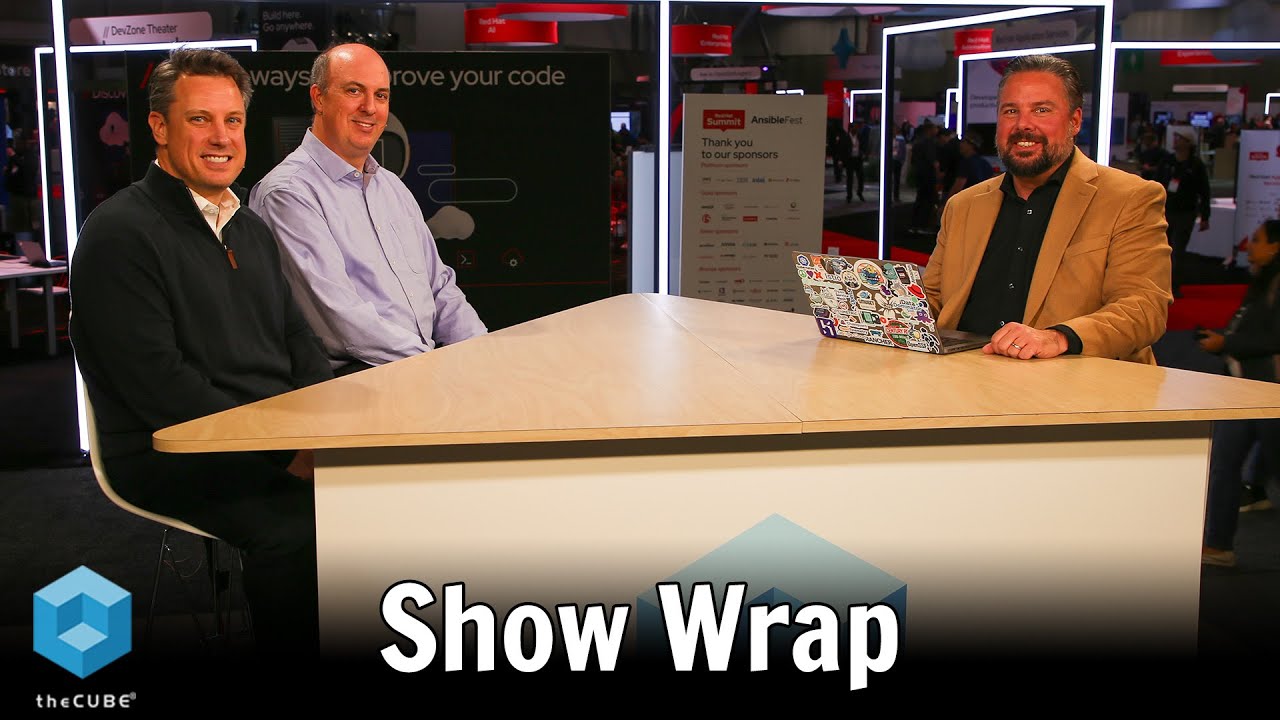
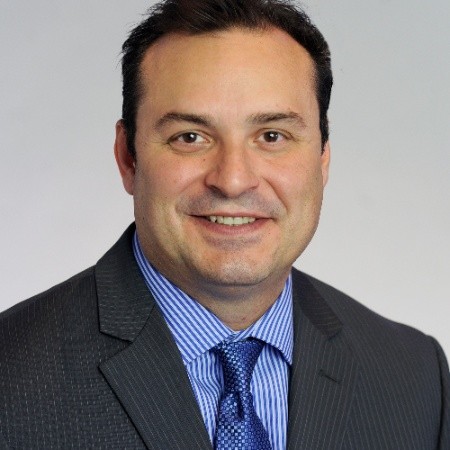
Victor Principe, chief technology officer of the PNC Financial Services Group, Inc., joins theCUBE’s Rebecca Knight and Rob Strechay during Red Hat Summit 2025 to share insights into the bank’s ongoing data center transformation. The conversation explores how PNC balances modernization, regulatory compliance and innovation across its expanding technology ecosystem.
Principe discusses strategies to align developer needs with enterprise-scale objectives, including path-to-production frameworks built in collaboration with Red Hat. Key focus areas includ...Read more
exploreKeep Exploring
What is PNC going through a transformation in terms of modernizing their technology fleet and enhancing their capabilities, and what approach are they taking to do so?add
What company is being discussed in terms of potentially partnering together to build a more holistic product for modern application development?add
What potential exists today for modernizing mainframe systems in the financial world, especially with the use of AI?add
What are you hoping to achieve with regards to standardizing your portfolio and leveraging technologies like AI?add
>> Hello everyone and welcome back to theCUBE's live coverage of the Red Hat Summit AnsibleFest 2025. We are in day three. Three days, CUBE's coverage, wall-to-wall coverage. I'm your host, Rebecca Knight, alongside my co-host and analyst, Rob Strechay. Rob, we're at a tech show. We go to a lot of tech shows, but not all of the cool tech takes place at tech companies.
Rob Strechay
>> Yeah, I think again, every company is a tech company at this point in time. Every company's becoming a software company, and really applying that and bringing that modernization is a huge thing.
Rebecca Knight
>> Indeed. Well, a perfect segue to introduce our next guest. He is Victor Principe, chief Technology Officer at PNC. Thank you so much for coming on theCUBE.
Victor Principe
>> Thank you for having me.
Rebecca Knight
>> And I should mention fresh from the main stage, the bright lights and all the fame that comes with it. Congratulations. Great job up there.
Victor Principe
>> It was definitely different. Not what I'm used to, but it was good. It was good to get the message out there. It was fun.
Rebecca Knight
>> Yeah. So tell our viewers a little bit about what was going on up there. You're talking about your data center transformation and your desire to beef up capabilities.
Victor Principe
>> Yeah, so we're all tech companies now. So PNC is going through a transformation. We are modernizing our technology fleet. As the CTO, I'm responsible for the data centers and the platform, so we are actively looking for ways to enhance our capabilities there. And with that comes from challenges. So when you talk about capabilities, you talk about having to adopt capabilities, and there's two ways that you do that. You either enforce it through some kind of risk framework that says, "Look, if you don't do this, the risk goes up," so we have to manage that. I prefer to try to do it organically. 11 years ago, as I referenced on the main stage, when we did Greenfield, which was our first data center revamp, we had many disparate data centers, low standard tech stack. So we rationalized to two standardized data centers up to, I would call it platform as a service at the time. And what that allowed us to do is get to a level playing field where we can start looking at modernization. But over the three years it took to run the Greenfield program, we diverted all of the resources away from developing products and services into that initiative. It had to happen. We were a regulatory scrutiny, so we all knew we have to do it, but it really creates friction a lot, because the business doesn't really care about the things that I do, and they shouldn't. They should be there, it should be a utility. But ultimately, you have to balance the two things, because when you stop products and service development, then you ruin or you impede the customer relationship and you create a dynamic that's really not healthy. So this time, we're looking at the problem a little bit differently. Through the path to production construct that we're building, it's all about ideation through operation. So what I want to do is create the capabilities, enable them in a way that I can insert them into the developers backlog, and as they consume the new pattern and standards we develop, they will get to the end state. I get what I want, they get what they want, we're all kind of happy. That's the idea.
Rob Strechay
>> I think one of the interesting things, and having been in financial services and insurance myself in the past, one of the things is that there are regulations on this industry. So it's not like, hey, we can just go whiz bang here. So I think what happens, and I'm interested in your point of view on this, is that you really take, like you said, kind of an approach that says, "Let's go on this journey to get to here, to this modernization because these are the benefits that will bring to our customers, and here's the ROI out of that as well."
Victor Principe
>> Yes. And that's exactly how we look at it. So we know we have to get there. We don't want to do it the way we did it before because we know that's impactful. It creates problems. We know that we have to satisfy, we want to grow as a bank organically or through the acquisition. We want to grow. That's been out there. We believe that the right way to do this is to create a technology stack that is really helping the developer achieve what they want to achieve, because they're brilliant. You really impede their brilliance when you force them into kind of our lane of all the checkboxes we need to go through to ensure compliance and regulatory framework compliance. So all of these things that they don't care about that I care about, that's where we have to come together as an industry and really understand that we need both. But when you start impeding them, you take their brilliance and you slow it down, that's not valuable to the customer because the customer really wants what they build. They don't want what I build, I need to be there. So I think that as an industry, and one of the reasons I'm here is we got to start looking at the problem differently. Everybody today looks at the problem of how you modernize and how you comply with this one thing. I'm going to focus on this one thing, whether it be risk or security, it's not. It's all an ecosystem. And the message is that as consumers, I need to build the ecosystem, but when I build it, it's expensive, and I don't want to build things. I want to buy things, right? I need to run a business, not be in supporting a platform that we build to get the path to production. So I think that the industry and leaders in the industry have to start looking at it as, we need to productize these things that we all care about so we end up in the same space. It's reliable, it's secure and assured. And so that's really, I think the tipping point right now when it comes to the regulatory landscape. We have to skew it so it's consistent enough where people understand it as opposed to building it all one-off.
Rob Strechay
>> Right, and supportable as well. So how has Red Hat really played a role in this as well?
Victor Principe
>> We are on this journey, and right now we're faced with a couple of fundamental problems. Path to production is not a new concept, but believe it or not, we really haven't succeeded in fulfilling it. Like ideation to operation, it hasn't really happened. When you look at the landscape of how you build this and who has the pieces you need, there are a lot of small companies that do very specific parts of this, right? Red Hat brings kind of a more holistic view. Now, they're not there, but my pitch to Red Hat was, all right, so you have the automation piece, you have the framework for modern application development, right? You have a lot of the components within there that we need, so how do we partner together to build it from PNC? But then I would like to see you take it to market more holistically as a product, as a SKU. That's really my vision for why I'm here. I think Red Hat's the closest. From a tool chain perspective, they're the closest that you look at that can do what I'm talking about.
Rebecca Knight
>> And up on the main stage, and I want to help you make this point again, is that your biggest constraint is time. Time is not on your side here.
Victor Principe
>> That is correct. So to move faster, we have to do things differently. Time is the equalizer. So when you look at the daunting task of building a path to production, like structure with each individual tool, stitching it together, you're talking about thousands and thousands of person hours. You're talking about years of development, and then supportability at the end as you mentioned. I don't think it's tenable, and that's why people have only done pieces of it. And I think that's where we're stuck, and that's what I'm trying to break free. That's my vision. I want to break that piece free so this is accessible to everybody, and that's the important part.
Rob Strechay
>> So I was talking to another financial large, they're more on the institutional side of the fence versus banking, and similar things that they're looking at. And when I was talking to them, what I found and saw was that they're really actually doing really highly innovative stuff inside their organization, even though they're seen as been around for hundreds of years and things of that nature, financial services, highly regulated, but what they're doing in their path to production is actually modernizing from the front to the back. And what they're finding is that they still have mainframes in the back, and that what they're doing is how do I put the right APIs on top of that? How do I bring that data forward? How do I use AI on top of that data? Do you see that there's a lot of really neat stuff happening in addition to some of the stuff that you've, you got to keep the lights on and keep running these applications. Some of them are older, but you're modernizing them in steps from the customer back to where the data lives.
Victor Principe
>> Yeah, so we do. I think it was about a month ago we went to the Z17 launch for IBM, and it opened my eyes because, and I think, and I'm going to mess this number up and I hate doing it, but I think I'm going to get close, it's like $370 trillion still runs through the mainframe globally. Some ridiculous number.
Rob Strechay
>> It's a lot.
Victor Principe
>> It's a lot, right? So that tells you that the world still runs, especially in the financial world, on the mainframe. So part of our program is looking at how we modernize that, especially now with AI. The potential is there where you can go into your COBOL code and kind of use AI to parse it, explain it, and reformat it and go more to a microservices architecture, a API architecture. So that potential exists today, and we need to leverage that. As far as the aging fleet, the fleet's always going to age, right? And that's why I go back to path to production is a way that you can maintain that cadence of keeping your portfolio to date, current without friction. Because what happens is today because of budget cycles and time and demand for feature functionality, you feature function, set build, and then all of a sudden you're like, oh man, my infrastructure's old and I got to go move it now. So you have these events that get in the way. So that's why I really believe, and that's why the industry has to look at this, because we have to get out of this mindset of do the feature function set and then address the infrastructure at a point in time where you're almost out of life. Just build it natively in. And I think that's where you start getting the more modern experience across the board for everybody. And it takes a lot of risk off the table, quite frankly, because the old way introduces a completely different risk set that we have to deal with. I think this way would alleviate a lot of that, quite frankly, because you're always innovating across the entire stack, and that's important.
Rebecca Knight
>> So you are definitely painting the picture that you as a bank are dealing with very big messy technology problems and really working on interesting, innovative stuff here. And when we started this conversation, you said, "I want to get the word out that this is an interesting place to work for the next generation of technology talent." We have the unemployment rate for college graduates has risen 30% since September of 2022. There is talent out there. So what can we do to help you get the word out of here's a great place to work, you don't have to go work for Amazon or-
Victor Principe
>> There's two things that really need to happen, so I believe that traditionally we've looked at recruiting in a different way. You go find experience, resume-based. There's some of that required, but I like to think of it more of, we started a program in our, so operations sits within the office of CTO, and in order to up-skill our SRC, we had a bunch of open heads and we centralized a lot of the operational state. We partnered with some of our recruiting partners to build a specific program that trained people on the things that we needed out of the SRC, the site reliability center. So it was site reliability engineers, observability engineers. So it was really this program that allowed us to go out and say, "Look, you're new to the industry. We want to grow you inside into our culture. Come through this program and we'll onboard you," right? And then at the end of the day, we choose the best talent that fits our needs, and it's really worked out well. And I think we have to continue that evolution. But the way you attract people is by assuring them when they come in, it's not going to be the heavy process, heavy-handed. So right now we have a bit of a conflict because we want, we're aspiring to these things, but we're not there yet. So we still have a lot of heavy process on the manual side that really is not appealing to the younger college grad. So once again, I think this is an industry issue. We got to fix it holistically, because you're not going to attract the best talent outside of being the Googles of the world and the AWS of the world unless you do this, and everybody's going to have to do it eventually. I don't see another way forward. If we don't kind of fix this and get that friction out of the organizations, it's going to hurt everywhere, from risk to talent acquisition to talent maintenance. It impacts everything we do.
Rob Strechay
>> So kind of last thoughts here. When you're on stage or with us next year in Atlanta-
Victor Principe
>> I heard Atlanta. .
Rob Strechay
>> Or Hot-lanta, not cold Boston, so I'll be fine with that. But when we're together next and you're saying, "Hey, here's the people I was able to bring in, here's the offerings I brought to the bank based on that," what do you hope to be able to say next year?
Victor Principe
>> Look, I hope to be able to say that we have been able to standardize our portfolio in a way that allows us to control risk, manage the risk that we have to face and increase velocity through a tool chain that I don't have to support, that somebody in the industry worked with me to build and productized and we operationalized it together. That's my hope. We'll see. The future is unknown, but that's why it gets me out of bed every morning. So I'm excited for the next set of challenges that we'll face. It's a cool time to be there, and also, I want to be able to say that we've leveraged technologies like AI, but in a way that is meaningful. Not potential stuff you can do, but things that actually measure success and are monetizable, right? Reduce costs, reduce friction. I hope that if we do those two things, I think we'll be in good shape.
Rebecca Knight
>> Both for the employee experience, but also the customer experience too.
Victor Principe
>> Well, my premise is very simple. If I improve the employee experience, that will automatically flow through to the customer.
Rebecca Knight
>> You are 100% correct there. Absolutely. Victor, pleasure having you on, and great job on the main stage.
Victor Principe
>> Thank you.
Rebecca Knight
>> I'm Rebecca Knight for Rob Strechay. Stay tuned for more of theCUBE's live coverage of the Red Hat Summit AnsibleFest 2025. You're watching theCUBE, the leader in enterprise tech news and analysis.