In this interview at Qlik Connect 2026 Chris Powell of Qlik, chief marketing officer, discusses operationalizing artificial intelligence in enterprise analytics with a focus on building trust, context and adaptability. Rebecca Knight of theCUBE Research and Rob Strechay of theCUBE Research host the conversation and explore Powell’s perspectives on trusted data foundations, context-aware semantic layers and agentic models for production use. Powell provides examples from marketing and supply chain where structured and unstructured data converge, and they emphasize practical steps for moving from experimentation to operational deployment.
Powell stresses that organizations prioritize three pillars—data trust, contextualization and flexibility—to scale AI successfully. They highlight human-in-the-loop approaches, cost governance for token and model usage and the development of cross-functional data products that support measurable return on investment. Hosts and analysts note increasing examples of measurable impact and underscore the role of partners and customers in rethinking architectures to move beyond pilots toward business outcomes.
This conversation addresses enterprise analytics, data governance, semantic layer design, agentic capabilities and applied use cases such as marketing analytics and United Parcel Service UPS implementations. Viewers gain actionable guidance on governance, model selection and operational considerations to achieve trusted, contextual and adaptable analytics at scale.
Watch the full interview to learn practical guidance for operationalizing AI and scaling analytics across the enterprise.
Forgot Password
Almost there!
We just sent you a verification email. Please verify your account to gain access to
Qlik Connect 2026. If you don’t think you received an email check your
spam folder.
In order to sign in, enter the email address you used to registered for the event. Once completed, you will receive an email with a verification link. Open the link to automatically sign into the site.
Register for Qlik Connect 2026
Please fill out the information below. You will receive an email with a verification link confirming your registration. Click the link to automatically sign into the site.
You’re almost there!
We just sent you a verification email. Please click the verification button in the email. Once your email address is verified, you will have full access to all event content for Qlik Connect 2026.
I want my badge and interests to be visible to all attendees.
Checking this box will display your presense on the attendees list, view your profile and allow other attendees to contact you via 1-1 chat. Read the Privacy Policy. At any time, you can choose to disable this preference.
Select your Interests!
add
Upload your photo
Uploading..
OR
Connect via Twitter
Connect via Linkedin
EDIT PASSWORD
Share
Forgot Password
Almost there!
We just sent you a verification email. Please verify your account to gain access to
Qlik Connect 2026. If you don’t think you received an email check your
spam folder.
In order to sign in, enter the email address you used to registered for the event. Once completed, you will receive an email with a verification link. Open the link to automatically sign into the site.
Sign in to gain access to Qlik Connect 2026
Please sign in with LinkedIn to continue to Qlik Connect 2026. Signing in with LinkedIn ensures a professional environment.
Are you sure you want to remove access rights for this user?
Details
Manage Access
email address
Community Invitation
Chris Powell, Qlik
In this interview at Qlik Connect 2026 Chris Powell of Qlik, chief marketing officer, discusses operationalizing artificial intelligence in enterprise analytics with a focus on building trust, context and adaptability. Rebecca Knight of theCUBE Research and Rob Strechay of theCUBE Research host the conversation and explore Powell’s perspectives on trusted data foundations, context-aware semantic layers and agentic models for production use. Powell provides examples from marketing and supply chain where structured and unstructured data converge, and they emphasize practical steps for moving from experimentation to operational deployment.
Powell stresses that organizations prioritize three pillars—data trust, contextualization and flexibility—to scale AI successfully. They highlight human-in-the-loop approaches, cost governance for token and model usage and the development of cross-functional data products that support measurable return on investment. Hosts and analysts note increasing examples of measurable impact and underscore the role of partners and customers in rethinking architectures to move beyond pilots toward business outcomes.
This conversation addresses enterprise analytics, data governance, semantic layer design, agentic capabilities and applied use cases such as marketing analytics and United Parcel Service UPS implementations. Viewers gain actionable guidance on governance, model selection and operational considerations to achieve trusted, contextual and adaptable analytics at scale.
Watch the full interview to learn practical guidance for operationalizing AI and scaling analytics across the enterprise.
In this interview from Qlik Connect 2026, Christopher Powell, chief marketing officer of Qlik, joins theCUBE Research's Rebecca Knight and Rob Strechay to discuss how enterprises are moving past AI experimentation toward operational dependence — and what foundational work that shift demands. Powell argues the AI inflection point is less about whether the technology works and more about whether the data does. He outlines three prerequisites for enterprises ready to operationalize AI: a trusted data foundation, deep contextual understanding of proprietary envir...Read more
exploreKeep Exploring
What must organizations put in place to move beyond experimentation and achieve real ROI from these technologies?add
What is a "trust score" for AI, and why is data quality a major challenge when deploying large language models in organizations?add
How are shared data products and AI tools changing organizational structures and breaking down departmental silos?add
How should organizations approach cost management when building AI-driven environments (for example, in a marketing department) to ensure those systems are scalable, sustainable, and deliver ROI?add
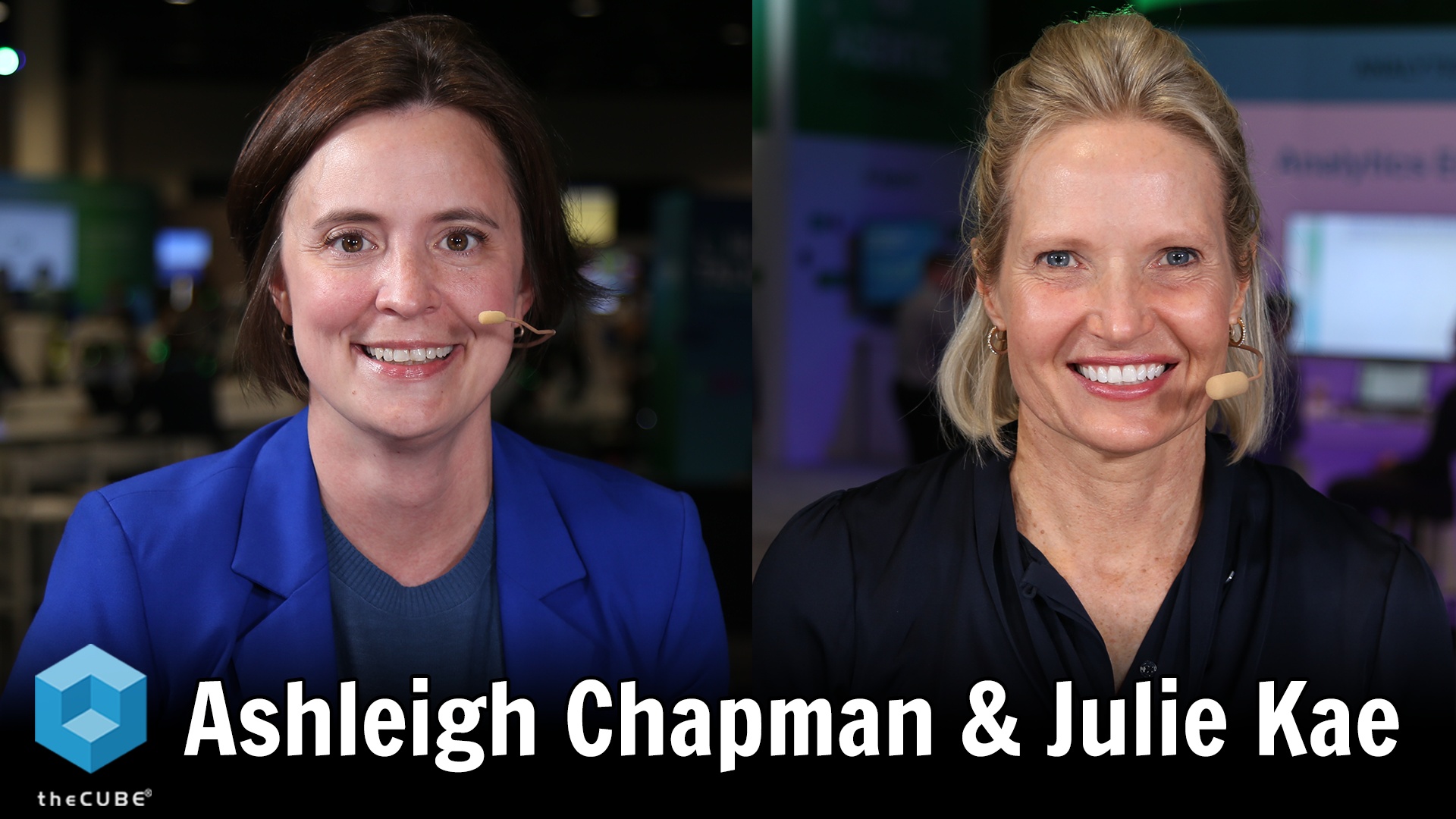
>> Good morning everyone and welcome to theCUBE's live coverage of Qlik Connect 2026 here in Orlando, Florida. I'm your host, Rebecca Knight, alongside Rob Strechay, the one and only Rob Strechay. Rob, welcome to the party.
Rob Strechay
>> Well, this is a fun party to be at. I love data and I love how this is really just energizing so many different personas that deal with the data all the way up to the people who rely on that data to make those important decisions.
Rebecca Knight
>> Indeed, there are 2,000 people here from 53 countries around the world and who better to talk about that than our next guest, I would like to welcome, Chris Powell, the CMO of Qlik. Thank you so much for coming on the show.
Chris Powell
>> I appreciate it. Thanks, guys. Great to be here.
Rebecca Knight
>> Yeah, and congrats on a great show.
Chris Powell
>> Thank you. Thank you. Hardworking so far.
Rebecca Knight
>> So you're a technology veteran and you've said before that we're really at an inflection point in terms of crossing this line between experimenting with AI and really depending on it. Can you describe a little bit about what that shift looks like with the organizations you're working with and also within Qlik?
Chris Powell
>> Yeah. So look, everybody's talking about this. It's not anything anybody's surprised by. Our CEO said on stage this morning during the keynote that people are having to move past experimentation. I think it's driven by a few things. It's not inexpensive. These are expensive. And it's also people are looking for the ROI, they're looking for results out of it. And what we're finding the inflection point is more and more people are coming back to the realization that there are certain foundational things that have to be in place. And for us, it comes down to three things. You have to be able to trust the data, trust the foundation. There's a lot of aspects that make that up. You have to understand the context of the data of your proprietary environment. And then the really big one that I think is cool, Mike talked about it as freedom on stage, but it's really about flexibility, adaptability. You don't know where the next innovation's going to come from and you can't be locked into an environment. You kind of have to build flexibility in, build context in, build the ways to ensure that you trust your data into your system.
Rebecca Knight
>> He said if you're locked in, you're not a customer, you're a hostage.
Chris Powell
>> Yeah. He did say that.
Rebecca Knight
>> It was pretty profound.
Rob Strechay
>> I agree. And I think there's another analogy that kind of comes to mind for me. It's like when you go to the grocery store and you're putting all the vegetables in, you're putting your potatoes, your sweet potatoes, you're putting in beans, you're putting in broccoli, you're putting in all of these different vegetables into the basket, and then you go and check out and you get home and you're like, "Hey, I can't productionalize this. I can't bring this to fruition because I really didn't follow a menu and I don't know how to operationalize that." What are some of the things that you see that people are trying to operational AI, but there's just gaps for them getting to that production state?
Chris Powell
>> Yeah. Well, first I love that analogy because we work, one of our great customers is called Nortera and they make, I think it's a million pounds of vegetables a year from Mexico all the way up into Canada and all the things you mentioned. So I think when people are building these AI systems, they're needing to apply them to their real world. And the things that we're seeing them talking to us about are the things we covered, of course, on main stage earlier today. And they're of course looking at ways that they can apply AI as quickly as possible today, but it starts with that foundational piece. And I think that's the piece that more and more customers are coming to is looking to understand how they can bring different data sources together, apply a level of trust to it. We have something we call the trust score for AI. A really key component of any large language model and the way that these systems are working is they'll look and they'll try to assess whether or not a piece of data is trusted and then sort of elevate that in terms of feeding that back to the person who's asking a question. That's the pieces that they're looking to build into the systems that they're creating. And usually when I'm talking to a lot of customers, that's where they're starting right now. They're stuck at that level. I think it's an interesting place for this tech because it's not that whether or not AI works or not, it's whether or not the data works for AI. And a lot of organizations are finding that it's the data side of this, not if the AI is working because we can all see what it works like. If you see a demo, you can see the potential of it. It's just making that demo work in the real world is what's challenging.
Rebecca Knight
>> So you actually did this with UPS on stage today. We're really talking about building the trust, making sure that the data, the context is accurate. What are some best practices that have emerged in terms of how you make sure that the data is accurate and that the workers who are relying on that data and the AI are confident about it?
Chris Powell
>> Well, look, I think Michael Sloan from UPS put it perfectly today when he was talking about bringing in their experts. One of the things that UPS has that's probably one of their most valuable assets is their expertise of their people and leveraging that expertise to build these agentic systems to understand when the agent can take autonomous action and when it needs to be passed over to a human or when things are just, you can continue to evolve. We're finding that a lot of customers, understandably with this tech, they start off with the human in the mix and then it's those humans that bring the expertise of knowing when they can be sort of taken out of it. And look, we work in the marketing world. It's not as if the humans haven't been taken out of some things. We've got automated systems to send emails, right? We've had those for years. That's not exactly a serious business critical function though. When you're starting to do things that are involving your supply chain, these things are much more critical to the business. Closing your financial books. This is when it gets much more serious and companies need to make sure they're relying on trusted environments.
Rob Strechay
>> Just keeping going with that theme, I think again, when you start to look at companies that can produce the metrics that help move them forward and the ones that can't and are stuck in pilot mode, what do you see as some of the gaps that you're helping address for those customers?
Chris Powell
>> Well, look, a lot of what we're talking about at this show came from conversations with customers, right? All of it really. It's not ... Well, we're always looking to make sure that we're shaping everything we're doing just based on reality. And the big three things that we're talking about is that trusted foundation, the context and the adaptability, and that's how we've shaped all of our conversations with customers based on what they're talking to us about. The trust components of things are revolving around ... And it's one of those words everybody's talking about. I think it's so important to define it in some ways. When we talk about trust, sometimes it's just where did the data come from? Sometimes it's the lineage of the data. Who had access to it? When was it changed? Where did it come from? Where was it stored? And the vegetable analogy that you gave earlier, whether you're shipping grapefruit or apples or oranges or bananas, the provenance of sort of where that's been coming through, of where it came from, who has had access to it, what it's been sitting next to, how it's changed over time, are these critical components that they're looking to build. So we're really proud to be working with some companies large and small. We talk about huge companies on stage often, with UPS and others, but we're so proud to be working with companies of all sizes to bring this technology in and help them with that foundation, help them bring the context in, and then just make sure that they're fit for purpose for the next thing that's coming because we don't know ... Something's coming, right? In six months, something's coming, and you just have to be ready for it.
Rebecca Knight
>> How is it changing your life day-to-day? How are marketing teams adjusting now that AI is becoming less of a pilot and more of an operational reality?
Chris Powell
>> Look, I think where we're in the middle of shifting right now, and for us personally and internally, is really the move from what people would call from agents to agentic. So we've had a lot of AI tools ... And maybe it's a three move, right? It's AI tools, then there's agents that can do something for you, and then agentic that's really taking a task forward. And we're really probably in that agents and agentic phase now where we're trying to take things that we've been able to use for the last year, but really take them into more of an automated place. And we're using it within marketing. And I think we talk to companies often, marketing's one of the main use cases. Part of it's because of the unstructured side of things, and certainly leveraging it from a content creation standpoint is one of the early sweet spots. But we're finding that now leveraging it with our structured data and our unstructured data, we're able to bring together tools to aid all of the people who are working in our demand center and in other areas. And the other thing I think is really interesting is, I was talking to our chief operating officer who's also our chief customer officer, and we're realizing that all these ... The walls are completely being blown away within an organization. I think the organizational changes companies are going to have to do is huge. Because the same exact system that he's helping me build to make our marketers so much more efficient is the same tools that are needed by our customer success representatives, they're the same tools that are being used by the people who are driving renewals, the same things that are being used by our sales force. So all of these tools are remarkably simple, and it comes back to relying on the same data products. Even for us, an analytics company, you had your different silos of marketing uses this data, finance uses this data, sales uses this data. That's all changing and now becoming a common landscape that we're all feeding into and then applying these AI tools and creating agents and agentic models against.
Rebecca Knight
>> Is it the human workers who are breaking down the silos or is it the AI itself? Is it agents working together with other agents or is it actually bringing together the workforce too?
Chris Powell
>> I think it's both. And it's interesting, I would say it's the human agentic workers that are breaking it down. Something that we've all been told, and I think it's an obvious statement now, is the people who are going to be left behind are just the people who don't understand this stuff. And so the people who are bringing this to me are the folks who are, we were talking just before we started, the folks who were vibe coding, really putting this together, making sure they're educated in this because this isn't one department that's going to figure this out. This is every department. And as they're building these tools, they're talking to other people who are doing the same. We've created a community within our organization of people who are really doing this kind of vibe coding. And it's tens of people, it's not hundreds yet. It's still tens of people that are doing things that are really impressive. And they're the people who are willing to put in the 70, 80 hour weeks and they're doing it at night and they're doing it on the weekends. They just get the bug and then they're realizing the commonality that they can form and the tools that can be even more powerful when they do it together.
Rob Strechay
>> So what are some of the things that the C level folks should be thinking about and the questions they should be asking to their organization so that they can set themselves up for AI in the long haul here?
Chris Powell
>> Yeah. Look, there's one that I think that I always go to, and it sounds a little bit too easy, but as we're building out things just within my marketing department, I'm realizing that the models that we can control the costs around ... I shouldn't say models, that sounds like AI models. The ways that we can control costs of these environments, it has to be built in. And so many organizations, they're just focused on trying anything to get it to work, but you can build environments that will absolutely not be fit for purpose in terms of the being able to scale them because of the way that costs have been built into the system. So what we're finding is that you have to think of costs from a strategic standpoint. It's not an after the fact. You have to make sure that somebody's understanding the cost model of these systems you're building or else they just won't be sustainable, and next meeting you'll be in is with finance talking about ROI. And that is the real key to these things. We're burning through tokens faster than we can imagine. And sometimes in those organizations, the people who are buying the tokens and signing those contracts aren't the same people who are using all of them, and breaking down those silos so the people who are building these systems really understand the cost implications.
Rebecca Knight
>> You started this conversation by talking about this inflection point that we are at and that human workers are at, that organizations are at, that we as society are at right now. What do you think it will be that will separate the companies, and even the workers too, that really operationalize this and that get left behind?
Chris Powell
>> Yeah. Well, look, I think that this is a new skillset within organizations. It's thinking about ... We've got, a quick commercial for our keynote speaker this afternoon, it's Jesse Cole from the Savannah Bananas. And I think that the best way I could answer that is it's people who are taking things that may have been done the same way for decades and just rethinking it. I know that that's what I'm looking at within so many of the areas that we're driving in our business, that if you think that you're just apply AI to the exact same thing you're doing today, it's actually your organization is going to change, the skillsets you need will change, the actual work will change, the processes will change. And the faster you can embrace this as not how can I use AI to do my job better, but how will AI fundamentally change everything that we're doing and taking us to a higher level of what are we here really to do, I think that's the ones that are going to win. The customers that we have here in different showcases are just rethinking how they're doing business. They're not just applying it to what they're already doing. They're rethinking their business.
Rob Strechay
>> When you look at the next year, because it's moving so fast, and we're at Qlik Connect 2027 and we're having this conversation, as you start to look at what vegetables they're putting in there, okay, now they got the cabbage in and all of this, you got new technologies like MCP and you're doing semantic layer stuff, and you're doing a lot of the deep data engineering and bringing that up so people have meaning to that and give that meaning pass that through to agents. Do you see a lot more of that coming to the customers and to the partners who are here as well that are going to be building on top of that?
Chris Powell
>> Sure. I think a lot of the partners that we're talking to that are trying to build out their systems are having the same conversations we were having. The keynote that was by Drew Clarke, our head of products, he put sort of an architectural diagram. I don't think you can come to a conference like this without at least one architecture diagram. And I think it's really representative of what everybody is looking to build out, whether you're a partner looking to work with customers that are growing vegetables and carrots of all sorts, or whether you're a organization that is delivering consulting services, you're delivering new software that can be really personalized to individual needs. The partners that we have here are fundamentally rethinking their business, they're understanding their businesses are changing. The customers that we have here, I think if we look forward 12 months, I don't know, I think a lot of this might be, we'll find that there's more and more real happening and less fancy demos and more people that are doing things that are really impacting their business. The things that we're getting excited about are, you find some organizations that are saving hundreds of millions of dollars when they're applying some of this technology. We've got customers that are not public yet with our different customer success stories that we're putting out there that the ... Somebody was telling me a story last night of somebody spending a couple hundred thousand dollars to save $15 million a year. They're building these systems now that are really having that return on investment. So my real strong belief is that in another 12 months, there'll be a lot more public use cases around ways that ... I think companies are trying to figure out ways they can bring more value to their shareholders perhaps. A lot of that often is in being able to figure out ways to be just dramatically more efficient. I think AI is going to have that realization in the next 12 months, a lot more efficiency stories, a lot more ways that you can bring greater value to their customers and how they're building the value they bring to the market.
Rebecca Knight
>> Excellent. Well, we'll be all minding our Ps and Qs in the meantime. Thank you so much, Chris Powell.
Chris Powell
>> Thank you. Thanks, guys.
Rob Strechay
>> Thank you.
Rebecca Knight
>> I'm Rebecca Knight. Stay tuned for more of theCUBE's live coverage of Qlik Connect. For Rob Strechay, you're watching theCUBE, the leader in enterprise tech news and analysis.












 Rebecca Knight
 Rob Strechay