Enterprise analytics is moving beyond dashboards toward automated decision-making. At Qlik Connect, theCUBE examines how Qlik helps organizations turn data strategies into action through real-time integration, AI-driven automation and trusted insights. The coverage features exclusive interviews with practitioners, architects and ecosystem partners focused on delivering measurable business outcomes. Join theCUBE for exclusive insights from Qlik Connect on data-driven decision-making.

Share

Forgot Password

Almost there!

We just sent you a verification email. Please verify your account to gain access to Qlik Connect 2026. If you don’t think you received an email check your spam folder.


Didn't get an email? Click here
Sign in to Qlik Connect 2026.

In order to sign in, enter the email address you used to registered for the event. Once completed, you will receive an email with a verification link. Open the link to automatically sign into the site.


Not registered? Join Now

Not registered? Join Now

Register for Qlik Connect 2026

Please fill out the information below. You will receive an email with a verification link confirming your registration. Click the link to automatically sign into the site.

First Name *
*
Last Name *
*
Email *
*
Company Name *
*
Job Title *
*
* Indicates a required field
Already Registered? Sign in and verify to access the event

You’re almost there!

We just sent you a verification email. Please click the verification button in the email. Once your email address is verified, you will have full access to all event content for Qlik Connect 2026.

Tuesday Apr 14, 2026 | 3:00 PM UTC
Don’t miss out! Add the event to your calendar:
Google Calendar
Microsoft Outlook
Office 365
Download ICS
Didn't get an email? Click here

All set!

Thanks for confirming your account. Now you can access Qlik Connect 2026 with this email address.
Tuesday Apr 14, 2026 | 3:00 PM UTC
Don’t miss out! Add the event to your calendar:
Google Calendar
Microsoft Outlook
Office 365
Download ICS
Profile
person_add
CONFERENCE PASS
  • General
Delete my registration
Delete my CUBE365 account
I want my badge and interests to be visible to all attendees.
Checking this box will display your presense on the attendees list, view your profile and allow other attendees to contact you via 1-1 chat. Read the Privacy Policy. At any time, you can choose to disable this preference.
Select your Interests!
add
Upload your photo
 Uploading..
OR
Connect via Twitter
Connect via Linkedin
EDIT PASSWORD

Cancel

Incorrect password


theCUBE.net
home Qlik Connect 2026 Agenda
  • more_horiz
    • info Help
    Tuesday, April 14 (UTC) April 14
    • ON DEMAND

      Chris Powell, Qlik

      In this interview from Qlik Connect 2026, Christopher Powell, chief marketing officer of Qlik, joins theCUBE Research's Rebecca Knight and Rob Strechay to discuss how enterprises are moving past AI experimentation toward operational dependence — and what foundational work that shift demands. Powell argues the AI inflection point is less about whether the technology works and more about whether the data does. He outlines three prerequisites for enterprises ready to operationalize AI: a trusted data foundation, deep contextual understanding of proprietary environments and architectural flexibility to adapt as innovation accelerates. To address the trust dimension, Powell highlights Qlik's trust score for AI, which evaluates data lineage, provenance and access history to give AI systems confidence in the inputs they're acting on.

      The conversation also explores how leading organizations are building human expertise into agentic systems before removing humans from the loop — a model demonstrated on stage with UPS, where domain knowledge defines the boundaries of autonomous action. Powell breaks down the evolution from standalone AI tools to agents to fully agentic workflows, noting how this progression is dissolving organizational silos and forcing companies to build shared data foundations across marketing, sales and customer success. He underscores cost management as a strategic imperative, warning that AI environments built without embedded cost controls will fail to scale. From emerging efficiency stories — including customers spending a few hundred thousand dollars to save $15 million annually — to the broader organizational rethinking required to lead in the AI era, Powell outlines why companies that ask not how AI can improve existing processes, but how it will fundamentally transform them, are the ones best positioned to win.
      • Google Calendar
      • Microsoft Outlook
      • Office 365
      • Download ICS
      Chris Powell
      CMO Qlik
    • ON DEMAND

      Craig Brophy, Qlik

      • Google Calendar
      • Microsoft Outlook
      • Office 365
      • Download ICS
      Craig Brophy
      Director, Global Communications & Operations Qlik
    • ON DEMAND

      Kyle Jourdan, Qlik

      • Google Calendar
      • Microsoft Outlook
      • Office 365
      • Download ICS
      Kyle Jourdan
      Head of AI Practice Qlik
    • ON DEMAND

      Marcus Tannerfalk, Qlik

      In this interview from Qlik Connect 2026, Marcus Tannerfalk, head of product design at Qlik, joins theCUBE Research's Rob Strechay to discuss how AI is transforming the product design discipline and pushing analytics beyond the dashboard into an omnichannel future. Tannerfalk opens with a vivid real-world example: a professional hockey club using Qlik to run a Moneyball-style approach to squad optimization, analyzing players across multiple markets to maximize value within tight budget constraints. He then explains how AI is radically reshaping product design at Qlik — shifting the discipline from crafting native interfaces to enabling what he calls "omnichannel AI," where Qlik's capabilities surface wherever users already work, including inside tools like Claude through the Model Context Protocol (MCP).

      The conversation also explores how Qlik is building what Tannerfalk describes as a "context layer" — enriching existing data models and applications with metadata and structure so customers extract more value from the LLMs they already use. He outlines the philosophy of meeting users where they are, adapting Qlik's presence to whichever AI tools a team relies on rather than requiring navigation of a fixed interface. Looking ahead to Qlik Connect 2027, Tannerfalk previews an initiative to unify and simplify Qlik's native experiences, with an early prototype set to debut ahead of a planned main-stage reveal — a signal of how the platform intends to become a core component across an expanding range of AI-powered workflows and channels.
      • Google Calendar
      • Microsoft Outlook
      • Office 365
      • Download ICS
      Marcus Tannerfalk
      Global head of Product Design Qlik
    • ON DEMAND

      Roberto Sigona, Qlik

      • Google Calendar
      • Microsoft Outlook
      • Office 365
      • Download ICS
      Roberto Sigona
      Chief Operating Officer Qlik
    • ON DEMAND

      James Fisher, Qlik

      In this interview from Qlik Connect, James Fisher, chief strategy officer of Qlik, joins theCUBE Research's Rebecca Knight and Rob Strechay to discuss how enterprises are moving from blanket AI mandates to deliberate, data-driven decision intelligence. Fisher explains that the enterprise AI conversation has matured from top-down directives to a focused search for meaningful use cases grounded in quality data. He underscores that trusted, governed data isn't just a technical requirement — it's the catalyst that prompts individuals to act differently, take informed actions and drive genuine organizational transformation.

      The conversation explores how Qlik's platform supports users across the full analytics maturity spectrum — from PDF reports to agentic AI — rather than forcing a single consumption model on a diverse enterprise workforce. Fisher introduces the "go slower to go faster" principle, arguing that investing time in a governed data foundation delivers exponential long-term benefits for AI application performance and autonomous agent deployments alike. He also raises an urgent concern about the widening opportunity gap in data literacy, noting that democratizing access to AI tools must go hand in hand with democratizing the value those tools create. From helping cautious executives identify ROI in their existing Qlik applications to delivering new agentic capabilities for on-premise customers, Fisher outlines how organizations can build flexible, future-proof AI infrastructure without sacrificing governance or trust.
      • Google Calendar
      • Microsoft Outlook
      • Office 365
      • Download ICS
      James Fisher
      Chief Strategy Officer Qlik
    • ON DEMAND

      Drew Clarke & Juan Hurtado, Qlik

      In this interview from Qlik Connect 2026, Drew Clarke, executive vice president of products and technology at Qlik Technologies Inc., joins Juan Hurtado, vice president of business intelligence and data analytics at Ingersoll Rand Inc. and executive advisory board member at Qlik, to talk with theCUBE Research's Rob Strechay about how enterprises are moving beyond dashboards to AI-powered decision automation. Clarke and Hurtado explore why 70-80% of enterprise AI efforts stall in data engineering rather than delivering business value — and how anchoring AI initiatives to existing data gravity, rather than starting from scratch, is the key to breaking that cycle. Hurtado describes Ingersoll Rand's "AI factory" framework, a composable architecture built on curated semantic layers and lakehouse principles that enables the company to prototype quickly and scale solutions across business units without accumulating technical debt.

      The conversation also explores how Ingersoll Rand manages a uniquely complex data environment — integrating about 70 ERPs while absorbing about one acquisition per month, each with its own metrics definitions, product hierarchies and reporting structures. Hurtado explains how Qlik's semantic layer standardizes that complexity, ensuring consistent definitions across geographies and business units. Clarke outlines Qlik's native support for Apache Iceberg tables as a foundation for multi-cloud interoperability, enabling enterprises to keep data where it lives without costly replication — what the pair dubs the "Goldilocks zone" of data architecture. From compressing the event-to-outcome loop for competitive advantage to empowering every data practitioner to operate as an AI expert, the discussion maps a clear path from fragmented analytics to enterprise-grade, AI-driven decision intelligence.
      • Google Calendar
      • Microsoft Outlook
      • Office 365
      • Download ICS
      Drew Clarke
      EVP, Product & Technology Qlik
      Juan Hurtado
      VP, BI & Data Analytics, Ingersoll Rand & Executive Advisory Board, Qlik Ingersoll Rand
    • ON DEMAND

      Matt Hayes, Qlik

      In this interview from Qlik Connect 2026, Matthew Hayes, general manager of the Data Business Unit at Qlik, joins theCUBE Research's Rebecca Knight and Rob Strechay to discuss why data quality and governance have become the critical foundation for enterprise AI. Hayes describes a pattern emerging from his customer conversations: leadership is demanding AI velocity while practitioners are forced to pause and ask whether their data is genuinely AI-ready. He explains how the stakes have fundamentally shifted — data is no longer just operational infrastructure but a direct competitive differentiator drawing board-level scrutiny. Hayes makes the case that organizations taking time to assess their architecture before charging ahead are better positioned to build trusted agentic systems that won't make headlines for the wrong reasons.

      The conversation also explores Qlik's stance on vendor lock-in, with Hayes arguing that enterprises must never let contractual constraints dictate architecture decisions — data should remain theirs regardless of which platform manages it. He details Qlik's streaming support for Open Lakehouse, a capability customers are already using to ingest high-velocity IoT data at lower cost than traditional enterprise data warehouses. The discussion turns to the data product concept — Qlik has surpassed 3,000 customer-enabled data products — which Hayes compares to a perishable good: only valuable if it arrives on time, meets quality standards and carries the governance controls that define who can access it and when. From navigating a rising wave of data sovereignty regulation to building agentic workflows where humans set the guardrails and automation handles the rest, Hayes outlines why a unified platform strategy beats accumulating dozens of point AI tools.
      • Google Calendar
      • Microsoft Outlook
      • Office 365
      • Download ICS
      Matt Hayes
      GM, Data Business Unit Qlik
    • ON DEMAND

      Sam Pierson, Qlik

      In this interview from Qlik Connect 2026, Sam Pierson, chief technology officer of Qlik, joins theCUBE Research's Rob Strechay and Rebecca Knight to discuss how Qlik is helping enterprises close the gap between AI experimentation and production-scale decision intelligence. Pierson frames the core challenge directly: legacy systems numbering in the hundreds or thousands, migration fidelity requirements and persistent data quality issues are what separate AI pilots from production deployment. He also highlights a fundamental behavioral shift, noting that knowledge workers who once started their day in email and calendar apps are increasingly turning to AI assistants to summarize, schedule and surface information — freeing them from overhead work and redirecting attention toward decisions that actually move the business forward.

      The conversation also explores how Qlik is using MCP to democratize access to its analytical capabilities, scaling what a handful of power users can do to tens of thousands of employees across an organization. Pierson explains that Qlik's AI inherits its security model directly from the core platform, ensuring role-based access controls travel with every query regardless of which AI assistant surfaces the answer. He highlights the platform's semantic layer and metadata impact analysis, noting that responses now surface inline data quality scores and lineage context — equipping users to act on insights with confidence or flag potential issues before decisions are made. On the longevity of MCP itself, Pierson urges a modular, standards-based approach, pointing to Iceberg and the Open Semantic Interchange as architectural anchors that allow organizations to swap components safely as the landscape evolves. From data governance at scale to the rapid rise and fall of competing AI model providers, he argues that flexibility and an iterative mindset are the only durable strategies for enterprises navigating this environment.
      • Google Calendar
      • Microsoft Outlook
      • Office 365
      • Download ICS
      Sam Pierson
      CTO Qlik
    • ON DEMAND

      Nick Magnuson, Qlik & Mike Leone, Moor Insights & Strategy

      In this interview from Qlik Connect 2026, Nick Magnuson, head of AI at Qlik, joins Michael Leone, vice president and principal analyst at Moor Insights & Strategy, to talk with theCUBE Research's Rob Strechay and Rebecca Knight about how enterprises are moving from dashboard-driven insights to AI-powered automated decisions. Magnuson outlines how the traditional model of building reports and acting on them manually is being overtaken by AI systems capable of detecting patterns, analyzing data at scale and taking action autonomously. Leone highlights that data quality challenges predate AI but are now amplified — and argues that AI's ability to find and act on the right data faster than humans will ultimately deliver more reliable decisions than organizations may expect.

      The conversation also explores how context has emerged as a foundational requirement for effective AI systems. Magnuson explains that context is not a static input but must evolve alongside the organization, giving AI systems the institutional knowledge needed to apply past decisions to future scenarios. Leone points to the resurgence of semantic layers and knowledge graphs as critical infrastructure for helping AI understand business relationships and deliver more defensible responses. On explainability, Leone notes that most organizations remain highly exposed — hesitant to accept headline risk from AI-driven decisions they cannot fully audit. Magnuson's prescription for managing that risk: start with contained, measurable use cases that build organizational confidence before tackling more complex deployments. From the critical role of human oversight in AI governance to the necessity of ecosystem partnerships in a landscape where no single company can do it all, the discussion provides a practical roadmap for enterprises ready to move beyond experimentation.
      • Google Calendar
      • Microsoft Outlook
      • Office 365
      • Download ICS
      Nick Magnuson
      Head of AI Qlik
      Mike Leone
      VP & Principal Analyst Moor Insights & Strategy
    • ON DEMAND

      Brian Hamel, Qlik

      In this interview from Qlik Connect 2026, Brian Hamel, chief revenue officer of Qlik, joins Sunil Varanasy, data and AI head for manufacturing, logistics, energy and utilities at Cognizant, to talk with theCUBE Research's Rebecca Knight about how trusted data and ecosystem collaboration are enabling enterprises to move from AI experimentation to operational outcomes. Hamel explains that the starting point for AI is universal: a solid data foundation built on governance, quality and trusted context. Varanasy, who has worked with Qlik for 15 years, underscores the urgency, noting that half the room goes silent when asked whether proper data stewardship is in place. Both highlight Qlik's rapid product evolution over the last few months — from analytics platform to agentic system, with discovery and automation agents now reshaping how enterprises act on data.

      The conversation also explores how the Qlik-Cognizant partnership is translating those principles into measurable results. Cognizant, named Qlik's Global System Integrator Innovation Partner of the Year, recently co-launched a data product as a service targeting predictive maintenance — a problem Varanasy notes roughly 80% of industrial clients have yet to solve. He details a shift from traditional SDLC to an accelerated delivery model: a prototype in one week, power users onboarded in four and production-ready in another four to six. Hamel frames this as a broader industry shift from reactive consulting to proactive co-creation, where partners arrive at client conversations with pre-validated solutions rather than open-ended problem statements. The discussion also covers workforce transformation, with Varanasy describing how Cognizant is re-skilling its 350,000-person organization — introducing roles such as value engineer, agent product manager and AI compliance lead — while both guests agree AI is augmenting human capacity rather than replacing it. From closing the gap between AI ambition and data readiness to building reusable solutions across industries, the two outline why trusted data and deep ecosystem partnerships are the indispensable foundation for scaling enterprise AI.
      • Google Calendar
      • Microsoft Outlook
      • Office 365
      • Download ICS
      Brian Hamel
      Chief Revenue Officer Qlik
    • ON DEMAND

      Mike Capone, Qlik & Ed Dunger, HelloFresh

      In this interview from Qlik Connect 2026 in Orlando, Mike Capone, chief executive officer of Qlik Technologies, joins Ed Dunger, director of data and operations systems at HelloFresh, to talk with theCUBE Research's Rebecca Knight and Rob Strechay about how enterprises are moving from AI experimentation to measurable business outcomes. Capone describes a pivotal shift in enterprise conversations: AI has graduated from novelty to a CFO-level accountability question, with organizations demanding proof of value rather than proof of concept. Dunger illustrates what that looks like in practice, detailing how HelloFresh uses Qlik Predict to manage logistics exceptions — automatically identifying at-risk deliveries and triggering recovery workflows before customers are ever left waiting.

      The conversation also explores the trust-building process behind AI adoption, with Dunger noting that aligning business stakeholders around realistic expectations is the real unlock — AI doesn't need to be perfect to outperform the processes it replaces. Capone underscores context as Qlik's core superpower, pointing to the platform's ability to detect data quality drift and halt automated decisions when inputs fall below reliable thresholds. Both guests push back against the instinct to overengineer, citing Dunger's experience standing up a production-ready Qlik Predict model in a single day as proof that building on existing curated data beats rebuilding pipelines from scratch. From aligning operational stakeholders around quantifiable KPIs to forecasting a near-term future defined by P&L wins rather than buzzwords, the discussion offers a practical roadmap for enterprises ready to close the gap between AI ambition and business impact.
      • Google Calendar
      • Microsoft Outlook
      • Office 365
      • Download ICS
      Mike Capone
      CEO Qlik
      Ed Dunger
      Director of Ops Tech Automated Cluster & Analytics Enablement HelloFresh
    • ON DEMAND

      Julie Kae, Qlik & Ashleigh Chapman, Justice U
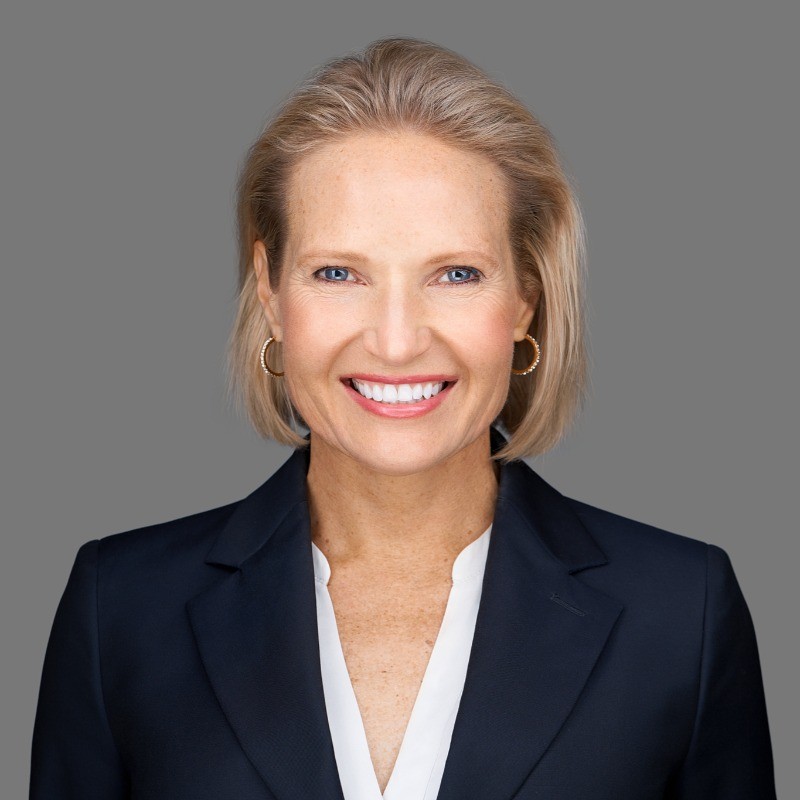
      In this interview from Qlik Connect 2026, Julie Kae, vice president of sustainability and social impact and executive director of Qlik.org at Qlik, joins Ashleigh Chapman, founder and chief executive officer of Engage Together, to talk with theCUBE Research's Rebecca Knight and Rob Strechay about how data and analytics are being deployed to combat human trafficking. Chapman, a human rights lawyer with 25 years in the field, explains how hundreds of nonprofit efforts working in parallel but rarely in coordination prompted Engage Together's data-driven approach to mapping risk factors, service gaps and community resources across affected areas. Kae highlights how Qlik's platform, refined through 15 years of nonprofit partnerships, brings the same data integration and visualization strengths it delivers to enterprise customers to organizations working on the ground against exploitation.

      The conversation also explores how consolidated dashboards and reports are reshaping decision-making for non-technical stakeholders — legislators, task forces and local commissioners — giving them a comprehensive picture of where to direct resources. Chapman shares a compelling example from Florida, where data analysis revealed that trafficking risk originated in rural communities even as exploitation concentrated in urban areas, prompting a fundamental shift in resource allocation. Kae details how Qlik's nonprofit collaborations have directly influenced product development, citing work with the United Nations Department of Peacekeeping in the Democratic Republic of Congo that shaped the platform's offline mobile capabilities. Both guests point to Qlik's emerging AI features as a force multiplier, one that promises to accelerate the translation of raw data into community-level action. From pulling together sources ranging from informal field records to sophisticated agency systems to producing targeted reports that move legislators and nonprofits to act with precision, the discussion demonstrates how purpose-driven data partnerships can turn fragmented goodwill into measurable progress against one of the world's most persistent human rights challenges.
      • Google Calendar
      • Microsoft Outlook
      • Office 365
      • Download ICS
      Julie Kae
      VP, Sustainability & DEI, Executive Director Qlik.org
      Ashleigh Chapman
      Founder & CEO Justice U
    • ON DEMAND

      Natalie Rhoades & Randy Mickey, Qlik

      • Google Calendar
      • Microsoft Outlook
      • Office 365
      • Download ICS
      Natalie Rhoades
      Global Sr. Director, Advisory Services Qlik
      Randy Mickey
      SVP, Global Professional Services Qlik

    Welcome to Cube365 Events Platform Digital Community

    You are now part of the interactive digital experience for all SiliconANGLE conferences and an exclusive member of the social community. Enjoy live and on-demand broadcasts, theCUBE interviews, CrowdChats, and access to premium content and presentations. Engage and interact in real time with influencers and peers in a social space designed for collaboration and networking. Discover all that Cube365 Events Platform has to offer before, during and after the event.

    CONTACT US

    Privacy Statement

    • Privacy
    • Terms
    Social Link
    Social Link
    Social Link
    Social Link
    © CUBE365
    © theCUBE
    © 2026 theCUBE