This interview is recorded at Oracle Data Deep Dive 2026 during the Oracle AI World Tour in New York City and features Jenny Tsai-Smith of Oracle, senior vice president of database product management. Tsai-Smith explains how artificial intelligence reshapes enterprise application development and frames GenDev as a blend of philosophy, best practices and technology. They highlight Oracle APEX AI Application Generator, AI agents, Oracle AI Database capabilities including autonomous AI vector stores, agent memory and integration with open formats such as Apache Iceberg.
Key takeaways emphasize trust, privacy and developer productivity. Tsai-Smith states that trust equals confidence in data correctness, access controls and outcomes and that these concerns are addressed through features such as Deep Data Security and propagated user identity. They highlight simplified autonomous AI vector databases for lower cost and ease of use, agent factories for no-code agent creation and learning resources such as LiveLabs Docker images and FreeSQL to accelerate adoption.
Watch to learn practical guidance on generative development, agent memory and secure AI for application development, and how Oracle integrates AI into database and developer workflows to improve productivity and governance.
Forgot Password
Almost there!
We just sent you a verification email. Please verify your account to gain access to
Oracle Data Deep Dive NYC. If you don’t think you received an email check your
spam folder.
In order to sign in, enter the email address you used to registered for the event. Once completed, you will receive an email with a verification link. Open the link to automatically sign into the site.
Register for Oracle Data Deep Dive NYC
Please fill out the information below. You will receive an email with a verification link confirming your registration. Click the link to automatically sign into the site.
You’re almost there!
We just sent you a verification email. Please click the verification button in the email. Once your email address is verified, you will have full access to all event content for Oracle Data Deep Dive NYC.
I want my badge and interests to be visible to all attendees.
Checking this box will display your presense on the attendees list, view your profile and allow other attendees to contact you via 1-1 chat. Read the Privacy Policy. At any time, you can choose to disable this preference.
Select your Interests!
add
Upload your photo
Uploading..
OR
Connect via Twitter
Connect via Linkedin
EDIT PASSWORD
Share
Forgot Password
Almost there!
We just sent you a verification email. Please verify your account to gain access to
Oracle Data Deep Dive NYC. If you don’t think you received an email check your
spam folder.
In order to sign in, enter the email address you used to registered for the event. Once completed, you will receive an email with a verification link. Open the link to automatically sign into the site.
Sign in to gain access to Oracle Data Deep Dive NYC
Please sign in with LinkedIn to continue to Oracle Data Deep Dive NYC. Signing in with LinkedIn ensures a professional environment.
Are you sure you want to remove access rights for this user?
Details
Manage Access
email address
Community Invitation
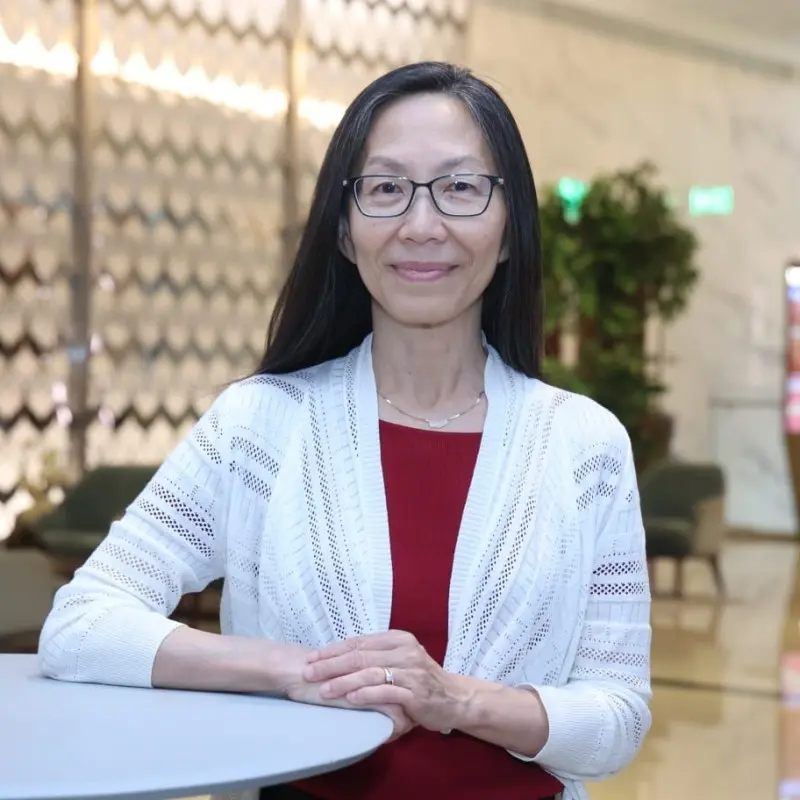
Jenny Tsai-Smith, Oracle
This interview is recorded at Oracle Data Deep Dive 2026 during the Oracle AI World Tour in New York City and features Jenny Tsai-Smith of Oracle, senior vice president of database product management. Tsai-Smith explains how artificial intelligence reshapes enterprise application development and frames GenDev as a blend of philosophy, best practices and technology. They highlight Oracle APEX AI Application Generator, AI agents, Oracle AI Database capabilities including autonomous AI vector stores, agent memory and integration with open formats such as Apache Iceberg.
Key takeaways emphasize trust, privacy and developer productivity. Tsai-Smith states that trust equals confidence in data correctness, access controls and outcomes and that these concerns are addressed through features such as Deep Data Security and propagated user identity. They highlight simplified autonomous AI vector databases for lower cost and ease of use, agent factories for no-code agent creation and learning resources such as LiveLabs Docker images and FreeSQL to accelerate adoption.
Watch to learn practical guidance on generative development, agent memory and secure AI for application development, and how Oracle integrates AI into database and developer workflows to improve productivity and governance.
In this interview from Oracle Data Deep Dive NYC 2026, Jenny Tsai-Smith, senior vice president of overall database product management at Oracle, joins theCUBE's Dave Vellante to discuss how Oracle is building trust and simplicity into the data layer to support enterprise-grade AI application development. Tsai-Smith introduces GenDev — generative development for the enterprise — as a blend of philosophy, best practices and technology designed to help organizations generate code at speed without sacrificing trust. She explains that producing thousands of lines ...Read more
exploreKeep Exploring
Is it safe to use AI-generated code ("vibe coding") in enterprise systems, and how does GenDev address trust, best practices, and deployment of such code?add
How will Oracle APEX use AI to generate applications, and how does that approach address data schema and privacy concerns compared with using general-purpose models like Codex or Claude?add
What are AI agents, how do they differ from generative AI, why do they need memory, and how can a database like Oracle AI Database support those memory requirements?add
What is Oracle's Autonomous Database, and what is the autonomous AI vector database — how does it differ and why was it introduced?add
>> Welcome back to theCUBE NYSE Wired Studio here at the New York Stock Exchange. You're watching the Oracle data deep dive. My name is Dave Vellante and we're excited to be here in New York City. We're covering the Oracle AI World Tour and the data deep dive events that have been going on this week in New York City at the Javits Center. And Oracle and others say that AI changes everything. And one of the things we haven't talked a ton about today is application development. And we're seeing profound transformation, of course, in application development and coding. We hear a lot about vibe coding and the like. Jenny Tsai-Smith is year and she's Senior Vice President of Product Management at Oracle, a direct report to Juan Loaiza, who was here earlier. And we're going to be talking about how AI is reshaping AppDev. Good to see you. Thanks for coming on.
Jenny Tsai-Smith
>> Thank you so much for having me, Dave.
Dave Vellante
>> So everybody talks about vibe coding. Everybody does vibe coding, it's kind of fun. It's kind of cool. Traditional coding is kind of passe now, isn't it? And you can generate so much code so quickly. Juan was saying, imagine you could build a building in 20 minutes. But question is, would you go into that building? Would you take your family into that building? So what is GenDev? Give us a high level overview of what it is and what problems you're trying to solve with it.
Jenny Tsai-Smith
>> Well, first of all, vibe coding is fun, but is it safe? That's the question. And I think that's what Juan was trying to say.
Dave Vellante
>> Yeah, big time.
Jenny Tsai-Smith
>> So GenDev is basically generative development for enterprise. And really it's part philosophy, part best practices and part technologies. And really the goal there is to allow people to use AI to generate more quickly code that they could use, but do it in a way that they can trust. Because once you generate 10,000 lines of code in less than 10 minutes, can you actually just go deploy it and run it and have it manage your bank system? No, you're not going to do that. You're going to want to probably look at the code, but can a human actually read 10,000 lines of code? Maybe Juan can, but I certainly can't. So it's about using AI in a way that you can then take the generative code and trust it and deploy it.
Dave Vellante
>> Yeah, so generating code has actually become quite easy for virtually anybody. You just need an account for some LLM that generates code and boom, here you go, but can you trust it is really the point. And I'm struck when you see everything's changing so fast. As we know, every three months, something new. You see OpenClaw comes out and then you start asking questions, "Well, is it secure?" And then now everybody in the open source community is coming in, but it's not trusted. Not yet anyway. Although things are moving fast, but from my standpoint, I want somebody to sort of give it a stamp of approval. And if Oracle does, then you're on the hook with me. And so what are some of the key capabilities that you've designed in and some of the secure capabilities that you're enabling?
Jenny Tsai-Smith
>> Yeah. I think trust really means confidence, confidence in the correctness of the data, in the correctness of the access control of the data, and then correctness in terms of the outcome of using that data. And when you generate code and you generate 10,000 lines of code, what is it doing? Yeah, you might have told it, "Okay, I want it to be three modules with two reports and some screens," but is it really creating the right process flow in the code to do what you wanted to do? So the other thing is when you're generating code, LLMs, while they're amazing, they're not perfect and they're very easy to be misled. They could also hallucinate. I don't know about you, but I've tried ChatGPT and sometimes it gives me answers that are just totally not even close to being correct, right?
Dave Vellante
>> Blatantly wrong.
Jenny Tsai-Smith
>> But if you didn't know any better, you would just go blindly just say, "Okay, yeah, that sounds good. Okay, I'm going to do this."
So data privacy to us is really number one. As I said, trust is confidence in the correctness of the data, but also in access to the data. And so we're building in data protection within the database. So you're putting in essentially end user specific data access rules in the database, and we propagate the user identity from beginning to end into the database. So you can always be sure that no matter if the data is being accessed by an AI agent or an LLM that's coming through, let's say an MCP connection, that it cannot access data that that end user that invoked it has access to. It just will protect it 100%.
So that's what we're working on. And we're about to release that particular feature, it's called Deep Data Security, coming up in about two weeks. And we're really excited because that's going to help us start on this journey of ensuring data privacy and data access is protected and you can trust that.
Dave Vellante
>> So you guys, Oracle, obviously obsessed with security. So you're designing that in, you're not bolting it on. We say that all the time, how important that is. But I remember when DevOps first came out, it was this kind of cool new thing, and now we're entering a new era of application development that's now considered modern, next gen, whatever we want to call it. So what else should we know about your capabilities?
Jenny Tsai-Smith
>> Yeah. So you can very easily power up Codex from OpenAI or Claude from Anthropic and start, like you said, just typing in the natural language, telling it, "I want this, I want that, build me this app," and it'll do it for you. But those tools from these vendors are not really smart about your data schema, about how that data privacy is set up and so forth. So we actually have a tool that we've offered for quite a long time called Oracle APEX. It's a no code development platform. It's very tightly integrated with the database. So we're infusing that tool with AI. And pretty soon, I can't really say exactly when, but pretty soon we will have that tool be able to generate applications in a way that allows the application developer to look at an interim version of the generated code. So it's human readable. So instead of 10,000 lines, you're getting essentially human readable pseudo code, if you will, that you can look through and make modifications and then generate the code. So that's one. It's called APEX AI Application Generator.
Dave Vellante
>> Very cool. I don't know if the audience can hear, but so it's getting to that time of day.
Jenny Tsai-Smith
>> And I'm starting to yell.
Dave Vellante
>> Where there's all kinds of action going on at the options exchange. It's really kind of an awesome experience, but there ...
Jenny Tsai-Smith
>> Hopefully you have AI tools that could filter out that noise.
Dave Vellante
>> I wonder if the audience can even hear it, Jenny, because it's ... Well, we certainly can, and it's kind of exciting here.
Jenny Tsai-Smith
>> Yeah. Well, that's why I'm speaking more loudly because I can't really hear myself.
Dave Vellante
>> And the reason is the bell is about to ring. In the market here, when the market's about to close, that's when all the options action happens-
Jenny Tsai-Smith
>> Oh, I remember.
Dave Vellante
>> And we're overlooking the options exchange. But now you were just in London-
Jenny Tsai-Smith
>> Yes.
Dave Vellante
>> ... and you're actually, you're like the road warrior these days because they want you at these events, but you had Oracle AI World in London and you guys talked about a lot of the things that you're doing around application development. One of them is Oracle Unified Agent Memory Core. What is that? How does it affect developers? How does it translate into tangible value for devs?
Jenny Tsai-Smith
>> Yeah. So AI agents are essentially sort of the next step up from a generative AI. Generative AI is ChatGPT, you ask it a question, it gives you some answers. Now with AI agents, it could actually perform tasks for you. So you could actually go to an agent and say, "Okay, I want to go on a vacation." And not only can it give you the itinerary for your vacation, you could say, "Okay, book me the hotel, the flight. Buy me some museum tickets so that I can just not have to even worry about doing that." But you have to give it your credit card and so on and so forth.
Dave Vellante
>> I'm a little nervous about that.
Jenny Tsai-Smith
>> Yeah. Right.
Dave Vellante
>> You're going to make me feel more comfortable or ...
Jenny Tsai-Smith
>> So AI agents need basically memory. So it could remember things about your credential, about your preferences. I like certain hotels, not other hotels. I like certain kind of art. And also it needs knowledge, information about maybe the area and all of that needs to be stored somewhere or accessible somewhere. Now, when I say memory, think of it as like human memory. You have long-term memory, you have short-term memory. Long-term memory stays in your brain for a long, long time, right? Things like, okay, don't jaywalk because you might get run over. That should be in your long-term memory. But short-term memory could be you meet somebody at a cocktail table or cocktail party and you may not remember their name after that night. So the idea is agents also need that kind of memory so that it can do things like reasoning, planning, and do the job that it needs to do. And so we have the perfect use case for Oracle AI Database because Oracle AI Database is a converged data architecture, meaning it could store not only relational data, it could store spatial graph, and there are different kinds of information that agents need that needs to be best stored in a certain kind of format. So the Oracle AI Database can support all of these different formats, and it's the perfect way for us to be able to offer those agent memories. So that's one of the things that we're working on. And we made an initial announcement and there'll be more to come on that.
Dave Vellante
>> Excellent. Thank you for that. And one of the themes that we've been talking about throughout, because we're talking about some fairly complicated things here, super high availability and platinum levels and diamond levels and RAFT algorithms, but I want to stay on the theme of simplification because that's the other sort of side of the coin. And when you think about the data layer for AI-driven apps, you've got this autonomous AI vector database that you've basically built in. It's not a separate siloed database. What was the driver behind that and how does that address developer needs?
Jenny Tsai-Smith
>> Right. So we have had something called the Oracle Autonomous Database for eight years now. We introduced it back in 2018, I believe. And it basically is a self-running, self-managing, self-operating database service in the cloud, but underpinned by the Oracle AI Database, Oracle Exadata, the most optimized hardware software stack to run Oracle Database, and it's in the cloud and it's completely managed, fully managed. So what we've done is we said, okay, some people look at the AI database, Oracle AI Database, and they think kitchen sink. It's got everything. And it's a little intimidating. So what we did, we said, okay, let's still have the underlying core engine, but now let's carve out something we call the autonomous AI vector database where it sort of gives you a user interface and access methods that's very familiar to developers, REST API, Python SDK, even SQL and PL/SQL so that they don't even have to really know that it's a database. They just need to know, "Hey, I want to store some vectors." And as you probably have heard, vector is one of those data types, a new data type that's very important to the retrieval augmented generation component of generative AI. So now you can use this autonomous AI vector database and create this vector database to store the vectors and use it in your solution very, very simply. And it's a lower cost. So we know that the C-level people, they want lower costs, so it's much lower cost than the full-blown autonomous AI database, and it's simpler to use. So I think it's sort of a win-win for both in terms of cost and also in terms of simplification.
Dave Vellante
>> Yeah. Vectors, that's how we interact with data these days, right?
Jenny Tsai-Smith
>> Unstructured data, mostly.
Dave Vellante
>> Yes.
Jenny Tsai-Smith
>> Mostly. Yeah.
Dave Vellante
>> Absolutely. Okay. Is there any other feature that developers should absolutely know about that you guys are working on or have introduced?
Jenny Tsai-Smith
>> Well, like I said, AI agents, sort of the current thing that everybody's experimenting with. And we have a new tool called the Oracle AI Database Private Agent Factory, which allows you to use this no-code tool to basically create agents, AI agents. And it's a simple canvas and the user interface is very simple. It's just you take a component like you say, "Okay, I want to create an agent. Here's the data source. This is how I want to connect to an MCP server." And you just drag and drop. And then it can create essentially like a multi-agent, fairly complex kind of workflow. You could test it, you could deploy it, you can monitor it all within this tool. And I think Oracle is not exactly known for being a purveyor of simple to use tools, but I would have to say this is one of the tools that I'm really proud of coming out of the database organization, that it's going to be easy for even a person who's not a developer, like a data analyst or data scientist to be able to use. So immediate productivity with AI agents.
Dave Vellante
>> Well, I'm always a fan of making sure that the hard stuff works and then simplifying. So you guys have done a good job at that. I was reading through your press releases and I saw something around ending AI data lock-in with open standards and frameworks, and that sounded like a good title, a good headline, good heading. But can you elaborate on that and what it means specifically for developers?
Jenny Tsai-Smith
>> Yeah. So for the longest time, I think we've kind of garnered this reputation that we want everything to come into the Oracle Database. And yes, of course, I want that, but the reality is people have other data sources, other applications. We see people using, for example, Apache Iceberg, which is an open table format where you can store these basically columnar tables data in the object storage, which is very cheap, much cheaper object storage in the cloud, and be able to apply multiple query engines on top of the same set of Iceberg tables. So for some of our customers, it's a very flexible way of storing data and then being able to access data. So we now support, for example, vectors that are stored in Apache Iceberg. So with our similarity search functionality in Oracle AI Database, you can actually use that to search, do similarity search on the vectors in the Iceberg tables. That's one. We could also allow you to create indexes on top of these vectors in Iceberg. And then finally, you can combine searching across the vectors in Iceberg as well as vectors and other kind of data in Oracle AI Database. So it just kind of opens up a lot of possibilities in terms of how you can combine data and make your applications even richer. So that's one example. I could probably give you a few others, but I don't know. I don't want to completely overwhelm your viewers with too much information.
Dave Vellante
>> But I have a follow-up. Are the safety capabilities and the security capabilities, they go with that into the open format?
Jenny Tsai-Smith
>> Yeah. And we're actually working on that. So that is an area ... And that's a question actually some of the customers I've spoken with this week and while I was in London have said like, Wow, so all the great trustworthy security features that we're used to in the Oracle Database, can I now apply that to Iceberg tables? And the answer is not yet, but we're working on it. So that's the vision.
Dave Vellante
>> We've talked to Juan a number of times about this thing, kind of funny name, JSON Relational Duality that you guys announced.
Jenny Tsai-Smith
>> It's very zen, right? The whole duality, yin and yang kind of thing.
Dave Vellante
>> But then there's Apache on Ice, which is so hip.
Jenny Tsai-Smith
>> Yeah, yeah.
Dave Vellante
>> But how are you-
Jenny Tsai-Smith
>> Actually it's Vector on Ice.
Dave Vellante
>> Vector on Ice.
Jenny Tsai-Smith
>> Vector on Ice.
Dave Vellante
>> What I'd say?
Jenny Tsai-Smith
>> It's a new show.
Dave Vellante
>> Yeah, Vector on Ice. It's very good. So how are you seeing the uptake there? Are you getting good traction? Anything that you can share?
Jenny Tsai-Smith
>> I think initially people were scratching their heads going, "Okay, what is this thing?" It sounds very new age, right? But we're actually seeing some good adoption, even from some of our larger customers who they realize that they want to be able to support their developers that want to use JSON document like REST API, but they also want relational format, easier to manage, consistency and so forth. So we have a MongoDB API tool that now allows you to connect through the database and through the REST API, so you don't have to change any of the application code that you've written for MongoDB.
Dave Vellante
>> Okay. So let's sort of zoom out a little bit. Thinking about this sort of AI driven applications, what are you telling developers? How should they be thinking about all these changes? What advice would you give them?
Jenny Tsai-Smith
>> So I think for developers, they can get carried away with all the new tools, the toys, new way of generating code. And that's fine, and I encourage everybody to go and try out the tool, use the tools, apply it. But also keep in mind that the whole notion of being able to verify what's being generated and to be able to trust the generated code is really important. So think about and take a look at the capabilities that we have delivered through Oracle AI Database 26ai and see if some of those things that we've introduced could help you do a better job in leveraging AI and also trusting.
Dave Vellante
>> Well, how would a developer go about that? I mean, Oracle is hot again, right? It's on fire. Young people out there might say, "Well, you know what? I'm kind of into this mission critical thing and bringing together transactions and unstructured data. I want to check it out." How would they get their hands on some of these capabilities?
Jenny Tsai-Smith
>> So we have quite a lot of resources and that's an area that we've been investing in is to create resources to help people make use of our technology. And also, by the way, the LLMs are being trained on public content, and the more content we have out there in terms of workshops and tutorials and videos on how to do stuff, the smarter the LLMs will become about how to use Oracle technology and then more likely it'll be able to generate the correct code and so forth.
Dave Vellante
>> Right.
Jenny Tsai-Smith
>> So one thing is we have something called Oracle LiveLabs, which is a set of workshops. We have quite a lot in ... It spans not just Oracle AI Database, by the way. Also some of the other services in Oracle Cloud Infrastructure and even some Oracle Fusion applications workshops. So the idea is, okay, it's a workshop that you can just look at. You can actually get a sandbox. So if you don't want to get a cloud account, you can say, "Okay, I want to use the sandbox for two hours, let's say, and work through the workshop." You could do that. The other way is, I know my kids, I have some 20 something year olds, they have their MacBook. They don't want to be plugged in anywhere. They just want to go to the beach or whatever and vibe code or try things out. So you could download Oracle AI Database free and be able to run it in a Docker image on your laptop, wherever you are. We also have the always free Autonomous Database Docker image. So the always free autonomous database is essentially an image of all the components of the Autonomous Database in the cloud, but located in the container. And then finally, if you don't want to do any of that, you don't want to download, you don't want to click on a link to go to the workshop, you can go to FreeSQL, just freeSQL.com and get a SQL prompt and start typing SQL and testing out the capabilities through our SQL interface using the latest 26ai.
Dave Vellante
>> Very cool. Just do that in the cloud.
Jenny Tsai-Smith
>> Yeah.
Dave Vellante
>> Oka,. Last question. Obviously developers are key. We saw that in the cloud era. We're certainly seeing that in AI. What are you guys doing to pipeline developers? Young people, data engineers, data scientists, IT architects? What are you doing to attract them?
Jenny Tsai-Smith
>> So short of trying to make ourselves cool again, which my kids tell me how we got a lot more to do, but we're trying. We're doing hackathons. We are going to universities and working with professors, offering them curriculum that they can use in their classes, projects that they can use. So helping that whole pipeline of new graduates be exposed to the Oracle technologies. We have a program called Oracle Academy that works directly with universities, and even some high schools, throughout the world. So people could just go to Oracle Academy and sign up. And if you're a professor or educator, that would be the best way to go. And we have free cloud credits as well there. And then finally, I know that we have some early professionals or people in college. Like today at our Data Deep Dive, there were two university students from, I think it was Lehigh University. They said, "Hey, what do I need to do to get a job at Oracle?" I'm like, "Oh, you want to work for Oracle? Yay." We have internships. We also have something called Oracle ACE program. We added a new level called Apprentice Level that allows university students to basically become an ambassador for Oracle Technologies. And that would be another way that they can get connected.
Dave Vellante
>> Well, Oracle, you guys aren't shy about going big. You're running some of the world's most intense transaction systems. Every time I swipe our credit card, many times you guys are behind it. So I actually think that's pretty cool, Jenny.
Jenny Tsai-Smith
>> We run some of the trading desks.
Dave Vellante
>> Yeah, you make some trades and there you go.
Jenny Tsai-Smith
>> Yeah.
Dave Vellante
>> Well, Jenny Tsai, thanks so much for coming on theCUBE. Really appreciate your time and your insights.
Jenny Tsai-Smith
>> And thank you very much, Dave.
Dave Vellante
>> Yeah, you bet. All right. This is Oracle Data Deep Dive NYC. You're watching theCUBE Wired's coverage here at the New York Stock Exchange. I'm Dave Vellante. We'll be right back, right after this short break.




 Dave Vellante