The database layer is quietly becoming the operational backbone of enterprise AI. Reporting from the New York Stock Exchange, theCUBE explores how Oracle is embedding AI, vector search and advanced analytics directly into its data platform — and how multicloud integration, lakehouse modernization and governance enable production-ready architectures at scale. Watch the full coverage to see how Oracle is operationalizing AI at scale.

Share

Forgot Password

Almost there!

We just sent you a verification email. Please verify your account to gain access to Oracle Data Deep Dive NYC. If you don’t think you received an email check your spam folder.


Didn't get an email? Click here
Sign in to Oracle Data Deep Dive NYC.

In order to sign in, enter the email address you used to registered for the event. Once completed, you will receive an email with a verification link. Open the link to automatically sign into the site.


Not registered? Join Now

Not registered? Join Now

Register for Oracle Data Deep Dive NYC

Please fill out the information below. You will receive an email with a verification link confirming your registration. Click the link to automatically sign into the site.

First Name *
*
Last Name *
*
Email *
*
Company Name *
*
Job Title *
*
* Indicates a required field
Already Registered? Sign in and verify to access the event

You’re almost there!

We just sent you a verification email. Please click the verification button in the email. Once your email address is verified, you will have full access to all event content for Oracle Data Deep Dive NYC.

Wednesday Apr 15, 2026 | 5:00 PM UTC
Don’t miss out! Add the event to your calendar:
Google Calendar
Microsoft Outlook
Office 365
Download ICS
Didn't get an email? Click here

All set!

Thanks for confirming your account. Now you can access Oracle Data Deep Dive NYC with this email address.

Wednesday Apr 15, 2026 | 5:00 PM UTC
Don’t miss out! Add the event to your calendar:
Google Calendar
Microsoft Outlook
Office 365
Download ICS
Profile
person_add
CONFERENCE PASS
  • General
Delete my registration
Delete my CUBE365 account
I want my badge and interests to be visible to all attendees.
Checking this box will display your presense on the attendees list, view your profile and allow other attendees to contact you via 1-1 chat. Read the Privacy Policy. At any time, you can choose to disable this preference.
Select your Interests!
add
Upload your photo
 Uploading..
OR
Connect via Twitter
Connect via Linkedin
EDIT PASSWORD

Cancel

Incorrect password


theCUBE.net
home Oracle Data Deep Dive NYC Agenda
  • more_horiz
      • main page
        NYSE
      • Links
        theCUBE Network SiliconANGLE Media
    • info Help
    Wednesday, April 15 (UTC) April 15
    • ON DEMAND

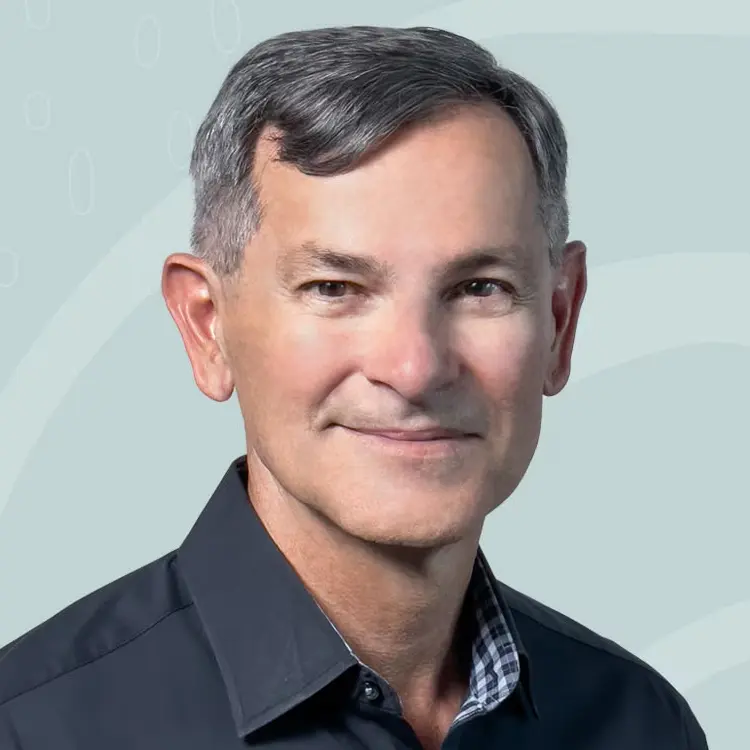
      Juan Loaiza, Oracle

      In this interview from Oracle Data Deep Dive NYC 2026, Juan Loaiza, executive vice president of Oracle database technologies at Oracle Corp., joins theCUBE's Dave Vellante to discuss how Oracle is positioning the database as the center of gravity for enterprise agentic AI. Loaiza opens with a striking analogy: just as AI can now generate 20,000 lines of code in 20 minutes, the real challenge is no longer building — it's trusting what was built. He explains how Oracle is engineering that trust directly into the database layer, ensuring agents handle data atomically, prevent leakage and respect business rules. Loaiza also details the architectural philosophy behind Oracle's general-purpose approach — what he calls "winning the Olympics" — building specialized algorithms for each data type and workload on a single, proven foundation rather than proliferating siloed databases.

      The conversation also explores the breadth of Oracle's latest AI database announcements. Loaiza breaks down the Unified Agent Memory Core, which enables agents to share persistent, cross-type memory — spanning relational, document, graph and vector data — as multi-agent systems grow more complex. He details two tiers of enhanced mission-critical availability: a platinum tier delivering disaster recovery four to five times faster and node failover up to ten times faster, and a diamond tier achieving zero data loss failover in under three seconds. On security, Loaiza highlights Oracle's quantum-safe encryption and a new database-native layer that scopes each AI agent's access to only the authenticated user's data — closing the leakage risk introduced when agents bypass the traditional application tier. From Vectors on Ice — extending Apache Iceberg with native vector indexing across open data lakes — to a unified product that handles real-time OLTP and large-scale analytics from a single codebase, Loaiza outlines why Oracle is built to serve as the foundational infrastructure for the AI era.
      • Google Calendar
      • Microsoft Outlook
      • Office 365
      • Download ICS
      Juan Loaiza
      EVP, Oracle Database Technologies Oracle
    • ON DEMAND

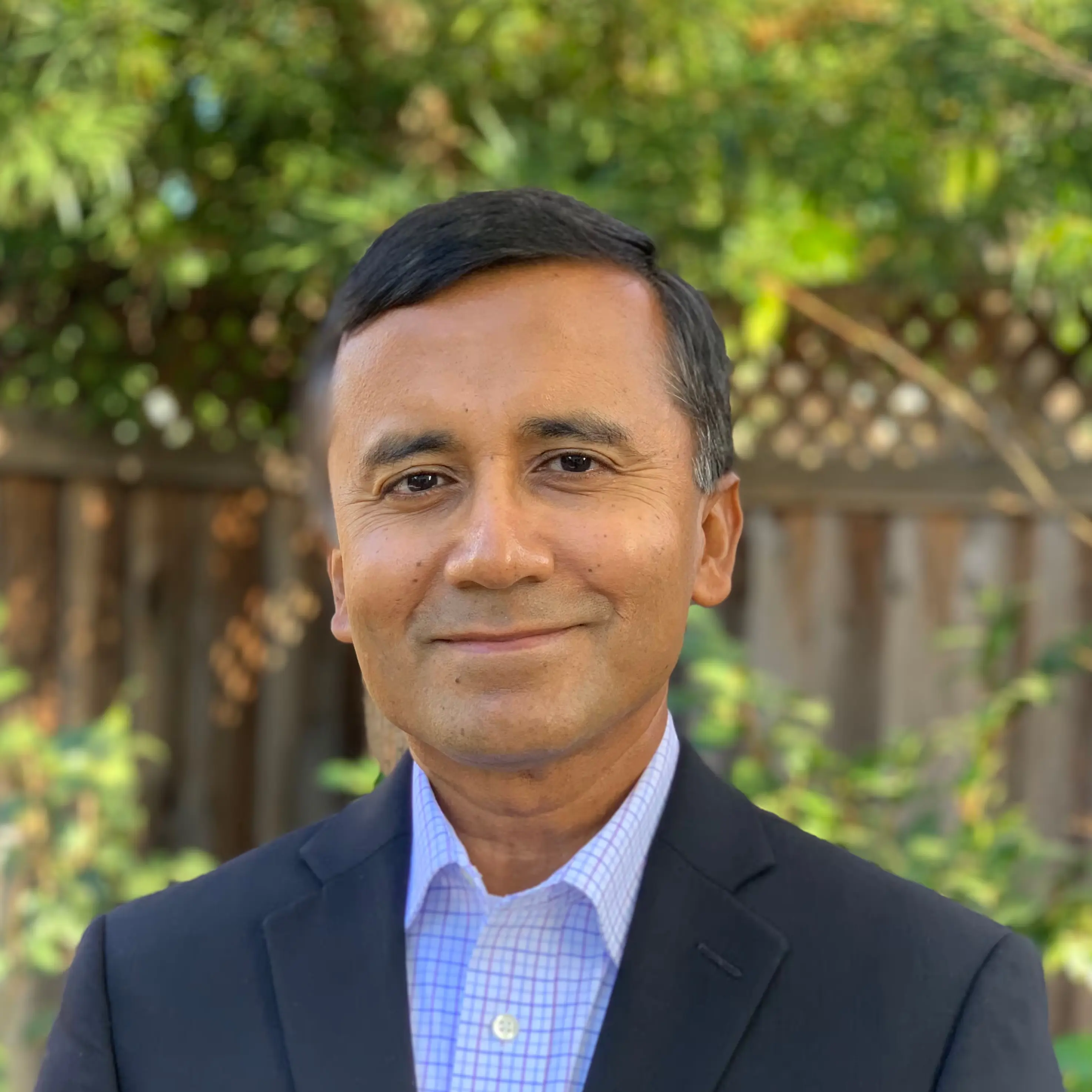
      Ashish Ray, Oracle

      In this interview from Oracle Data Deep Dive NYC 2026, Ashish Ray, senior vice president of product management at Oracle, joins theCUBE's Dave Vellante to discuss how the transition to agentic AI is raising the bar on mission-critical database availability, resilience and security. Ray explains how Oracle AI Database 26AI delivers high availability and near-zero failover times by default — requiring no application changes from customers. He breaks down Oracle's tiered resilience framework, where the platinum tier reduces failover to roughly 20 seconds and the diamond tier achieves near-instant recovery under three seconds, both powered by deep kernel-level optimizations across redo generation, transport and apply. With Exadata providing the underlying hardware foundation, Ray underscores how hardware and software engineered in tandem produce outcomes greater than either achieves alone.

      Key themes include Oracle's Zero Data Loss Recovery Appliance (ZDLRA), which replaces traditional weekly full-backup cycles with an incremental-forever model that continuously tracks database changes to reduce recovery point objectives toward zero. Ray also details how Oracle's multicloud strategy delivers the same kernel, the same performance and the same predictable SLAs across on-premises deployments, OCI and partner clouds including AWS, Azure and Google Cloud — allowing enterprises to modernize without disruption or compromise. He makes clear that C-level leaders cannot treat agentic AI infrastructure and mission-critical databases as separate concerns: agentic workloads making microsecond decisions against bottlenecked systems will cascade failures across entire workflows. From the incremental-forever recovery model to Data Guard Fast Sync's synchronous transport capabilities, Ray outlines why Oracle's decades of enterprise mission-critical engineering uniquely position it to deliver true zero data loss at scale.
      • Google Calendar
      • Microsoft Outlook
      • Office 365
      • Download ICS
      Ashish Ray
      SVP, Product Management Oracle
    • ON DEMAND

      Tirthankar Lahiri, Oracle

      In this interview from Oracle Data Deep Dive NYC 2026, Tirthankar Lahiri, senior vice president of mission-critical data and AI engines at Oracle, joins theCUBE's Dave Vellante to discuss how embedding agentic AI capabilities directly into the database is helping enterprises move beyond pilots to production-scale AI deployments. Lahiri explains how the transition from RAG-based chatbots to multi-step agentic workflows is reshaping data architecture requirements. He outlines Oracle's strategy of co-locating agentic processing with data to eliminate fragmentation, reduce round trips and ensure agents act on current, consistent information. Central to this approach is the Unified Memory Core — allowing short-term, medium-term and long-term memory constructs to be derived directly from existing database data, removing the need for separate storage systems for each memory type.

      The conversation also explores how Oracle is tackling the security risks unique to agentic environments. Lahiri introduces "deep data security," a policy-based approach that enforces identity-aware access controls at the data layer rather than the application tier — making it resilient to prompt injection, malformed queries and unauthorized access regardless of how an agent enters the system. He details new offerings including the AI Database Private Agent Factory, the Private AI Services Container for fully air-gapped deployments and Trusted Answer Search, which uses vector search rather than LLMs to guarantee hallucination-free reporting. From the "Vectors on Ice" capability for vectorized access to Apache Iceberg tables to a commitment to making all of these capabilities available at no additional cost, Lahiri provides a roadmap for how organizations can make the database the operational hub of their AI strategy.
      • Google Calendar
      • Microsoft Outlook
      • Office 365
      • Download ICS
      Tirthankar Lahiri
      SVP, Mission-Critical Data and AI Engines Oracle
    • ON DEMAND

      Jenny Tsai-Smith, Oracle

      In this interview from Oracle Data Deep Dive NYC 2026, Jenny Tsai-Smith, senior vice president of overall database product management at Oracle, joins theCUBE's Dave Vellante to discuss how Oracle is building trust and simplicity into the data layer to support enterprise-grade AI application development. Tsai-Smith introduces GenDev — generative development for the enterprise — as a blend of philosophy, best practices and technology designed to help organizations generate code at speed without sacrificing trust. She explains that producing thousands of lines of code in minutes is only half the challenge; verifying correctness and enforcing data access controls at every layer is the harder problem. That conviction underpins the upcoming Deep Data Security feature, which propagates end-user identity throughout the Oracle AI Database to ensure no AI agent or LLM — including those accessing data via MCP connections — can retrieve data beyond its authorized scope.

      The conversation also explores how Oracle is reducing complexity for developers building AI-powered applications. Tsai-Smith details the APEX AI Application Generator, which produces human-readable intermediate code so developers can review and modify logic before full generation, and the Autonomous AI Vector Database — a lower-cost, developer-friendly interface with REST API and Python SDK access that abstracts the full Oracle AI Database stack. She breaks down the Oracle Unified Agent Memory Core, explaining how the database's converged architecture handles the long- and short-term memory demands of AI agents across relational, spatial and graph formats. From Apache Iceberg integration that extends Oracle's vector similarity search to open table formats to hands-on developer resources including Oracle LiveLabs, free Docker images and FreeSQL.com, Tsai-Smith maps out how Oracle is positioning itself as the trusted backbone for the next generation of AI-driven applications.
      • Google Calendar
      • Microsoft Outlook
      • Office 365
      • Download ICS
      Jenny Tsai-Smith
      SVP, Database Product Management Oracle
    • ON DEMAND

      Wei Hu, Oracle

      In this interview from Oracle Data Deep Dive NYC 2026, Wei Hu, senior vice president of high-availability technologies at Oracle Corp., joins theCUBE's Dave Vellante to discuss how Oracle's globally distributed AI database is redefining high availability for mission-critical workloads in the agentic AI era. Hu explains how the architecture unifies replicated topologies into a single logical database, delivering strong consistency and automatic failover in under three seconds with zero data loss. By leveraging Raft consensus-based replication — processing changes in parallel and committing at the speed of the fastest follower rather than the slowest — Oracle eliminates the historical tradeoffs between consistency, performance and availability that have long constrained distributed systems.

      The conversation also explores how Oracle True Cache complements the globally distributed architecture by shifting cache management from the application layer into the database itself. Unlike traditional approaches that require applications to manually load and refresh data — a model prone to staleness and inconsistency — True Cache automatically populates and updates cache contents whenever backend data changes, removing a significant operational burden from development teams. Hu details a compelling data sovereignty use case, where placing True Cache close to the application tier enables low-latency access to regionally constrained data without cross-continental network delays. He also breaks down how the architecture scales in-memory vector indexes across thousands of nodes with constant response time — a capability purpose-built for agentic AI workloads generating machine-speed transaction volumes. From fine-tuning small private models as a cost-effective alternative to large commercial services to elastic cloud scaling for dynamic agentic loads, Hu makes the case that globally distributed database infrastructure is no longer optional for enterprises preparing to operate at AI scale.
      • Google Calendar
      • Microsoft Outlook
      • Office 365
      • Download ICS
      Wei Hu
      SVP, High Availability Technologies Oracle
    • ON DEMAND

      Jagdev Dhillon & Jeff Pollock, Oracle

      • Google Calendar
      • Microsoft Outlook
      • Office 365
      • Download ICS
      Jagdev Dhillon
      SVP, GoldenGate Development Oracle
      Jeff Pollock
      VP Product Development Oracle

    Welcome to Cube365 Events Platform Digital Community

    You are now part of the interactive digital experience for all SiliconANGLE conferences and an exclusive member of the social community. Enjoy live and on-demand broadcasts, theCUBE interviews, CrowdChats, and access to premium content and presentations. Engage and interact in real time with influencers and peers in a social space designed for collaboration and networking. Discover all that Cube365 Events Platform has to offer before, during and after the event.

    CONTACT US

    Privacy Statement

    • Privacy
    • Terms
    Social Link
    Social Link
    Social Link
    Social Link
    © CUBE365
    © theCUBE
    © 2026 theCUBE