We just sent you a verification email. Please verify your account to gain access to
RAISE Summit '26. If you don’t think you received an email check your
spam folder.
In order to sign in, enter the email address you used to registered for the event. Once completed, you will receive an email with a verification link. Open the link to automatically sign into the site.
Register for Raise Summit '26
Please fill out the information below. You will receive an email with a verification link confirming your registration. Click the link to automatically sign into the site.
You’re almost there!
We just sent you a verification email. Please click the verification button in the email. Once your email address is verified, you will have full access to all event content for Raise Summit '26.
I want my badge and interests to be visible to all attendees.
Checking this box will display your presense on the attendees list, view your profile and allow other attendees to contact you via 1-1 chat. Read the Privacy Policy. At any time, you can choose to disable this preference.
Select your Interests!
add
Upload your photo
Uploading..
OR
Connect via Twitter
Connect via Linkedin
EDIT PASSWORD
Share
Forgot Password
Almost there!
We just sent you a verification email. Please verify your account to gain access to
RAISE Summit '26. If you don’t think you received an email check your
spam folder.
In order to sign in, enter the email address you used to registered for the event. Once completed, you will receive an email with a verification link. Open the link to automatically sign into the site.
Sign in to gain access to RAISE Summit '26
Please sign in with LinkedIn to continue to RAISE Summit '26. Signing in with LinkedIn ensures a professional environment.
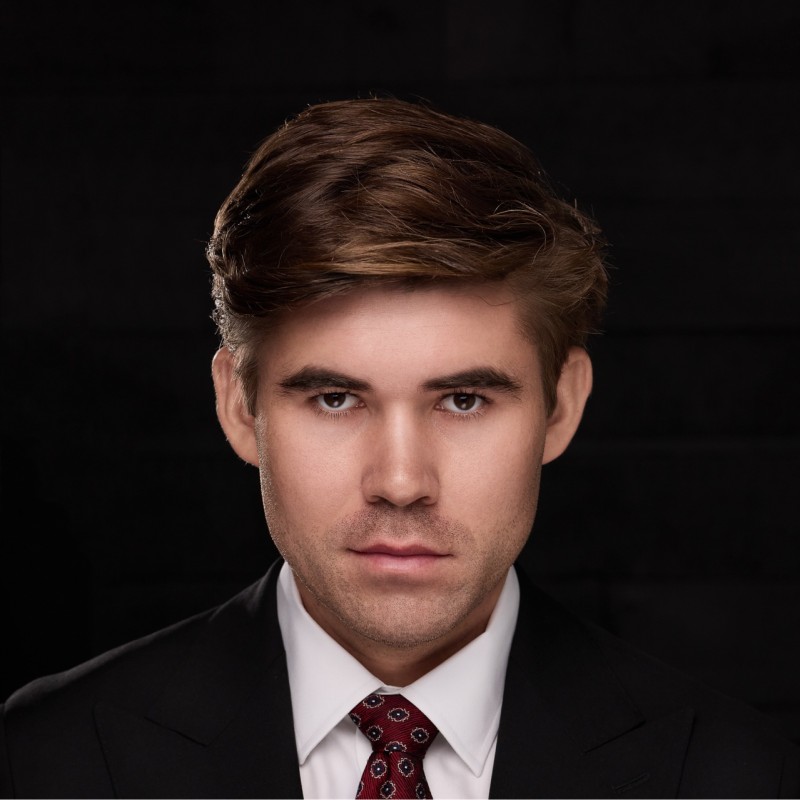
In this interview from RAISE Summit 2026 in Paris, Andrew Sobko, founder and chief executive officer of Argentum AI, joins theCUBE's John Furrier to discuss why capital, not power or compute, has become the biggest bottleneck in scaling AI infrastructure. Sobko details Argentum's asset-light, demand-first model, which brings power, compute and capital together to accelerate data center financing for developers. He shares the company's rapid growth since its debut on theCUBE, including over $10.5 billion in contracted revenue and a $180 billion pipeline that A...Read more
exploreKeep Exploring
How many deals have you done, what is your current contracted revenue (and is it growing), and how large is your pipeline?add
You said the “Holy Trinity” is now power, compute, and capital—can you explain that dynamic, how demand and capital create the biggest bottlenecks in data center development, and describe your strategies for financing projects and rapidly deploying compute capacity?add
What is Argentum’s strategy for the compute pillar—specifically its silicon/OEM neutrality, emphasis on speed of deployment, and customer-involved data center development—and how does this differ from competitors’ speculative GPU-buying approach?add
How will Argentum operate and finance large-scale GPU clusters (e.g., 20,000 GPUs) globally while mitigating execution and financial risk?add
How did Argentum develop and scale its capability to operate large GPU clusters (e.g., 20,000 GPUs) while de‑risking execution and financing and expanding globally?add
>> theCUBE connecting Silicon Valley and Wall Street. I'm John Furrier, the co-host of theCUBE, here with Dave Vellante, my co-host.>> Welcome to the RAISE Summit coverage, brought to you by Solidigm, with support from Tensordyne, d-Matrix, and Argentum.
John Furrier
>> Welcome back to theCUBE, everyone. I'm John Furrier, here in Paris for the live stream of the RAISE Summit. This is an event where breakout stories happen, We're seeing all the big top story lines. Mark Cuban's on stage. All the top leaders are here across the globe. North America, the USA obviously, and of course Europe and Asia. We're seeing a lot of activity. Everyone here, it's a global conference. But the fun part of my job is to see the breakout stories. And our next guest, Andrew Sobko, is one of those breakout stories. First on theCUBE in October of 2025, founder and CEO of Argentum. Great story, breaking out super fast. It might be the fastest company I've seen get to close to 10 billion dollars. We're going to get the facts here. Andrew, welcome back to theCUBE. CUBE alumni, hot as hell, hot startup, hitting escape velocity. Thanks for coming on.
Andrew Sobko
>> John, thanks for having me.
John Furrier
>> When we first met in October, you had a vision. Okay, I wrote a post. I love the story, because you were really kind of accelerating the idea of how to get more infrastructure rolled out as fast as possible. Obviously, AI infrastructure is a massive thing. We just had Solidigm on, and the demand curve is off the charts. And you had a unique view, and then there was a story that broke from Barron's, and then I posted after that, that you got 7 .8 billion in deals, and that was in June, June 24th. And Wall Street's all abuzz about what you're doing, and I've never seen anything like this. So explain what's happening. I said in a post, I'm going to sit down with you here at RAISE, you guys are experiencing massive success. What is, what's going on? How much, how many deals have you done? Where's the revenue today? Is it up and to the right? Give us the scoop.
Andrew Sobko
>> So,our point of view is everyone's talking about GPUs, and everyone's talking about the power shortages. And we sort of, over time, formed the view, and since originally we met, we had this kind of like asset, very asset -light type of mindset. we formed the view that the biggest bottleneck in the focus on the speed of deployment is a capital stack. How do you get the capital stack? How do you get the projects financed as fast as possible? And that sort of became one of our core products where we call it bringing power, compute, and capital together. At the beginning of Argentum, you remember, we had some of the original thesis where we were like, we want to be as asset -light as possible. We saw this kind of unique trend where thousands of entrepreneurs get into data center space and again, they're using their life savings, their connections, the understanding of local markets, and building those data centers. So we made that directional asset light that let them build and how can we help them accelerate their projects? And we found an answer, it's all in demand. If we just super focus on the demand side, bring the customers to this, we call it power envelope, bring capital with it, and focus on speed of deployments, you win at scale. So, as of right now, over the last few months, we closed over 10 and a half billion of contracted revenue. We have, again, over 50 heavyweights leaning in. And Argentum built already a 180 billion dollar pipeline, which we believe is going to -
John Furrier
>> 180 billion dollar pipeline.Correct.
Andrew Sobko
>> And it's scaling to 300 by the end of this year.
John Furrier
>> Awesome. I'm sure, I remember Wall Street was certainly all over you.
John Furrier
>> I want to get that, I want to dig into that later. But you mentioned the three, I call it the Holy Trinity. Used to be storage, compute, and networking, in the enterprise. The holy trinity now is power, compute, and capital. You mentioned those. Talk about that dynamic because, I love the quote in Field of Dreams, build it, they will come. That's been used in every generation from the internet. They're building, but they're already there. People, the demand, talk about this demand curve focus, but I think that is very unique.
Andrew Sobko
>> Yeah, so again, to cover just on the power side, so again, there are thousands of sites with hundreds and hundreds of megawatts globally. And you've kind of looked deep into it, what is the biggest bottleneck? Number one, they don't have a customer. If they don't have a customer, they don't have capital to fully build it out. You see all of this kind of power trials.
John Furrier
>> So they're too busy building.
Andrew Sobko
>> Not just too busy building, but they all get stuck on the capital side. But if you bring a customer, you get it in front of the stack. And then over time we developed this very unique, aggressive strategies where we help our data center developers with cash upfront.
Andrew Sobko
>> And that allows us to take that timeline from 12 months, 18 months, shrink it to a few months.
John Furrier
>> So rather than using their balance sheet or however they finance their build project, you're going to be essentially a financing vehicle backed by the demand curve.
Andrew Sobko
>> Backed by the demand curve. And then, on the Argentum side, if you talk about the second pillar, which is the most important compute side, we developed this very unique strategy where we are super silicon neutral. We are OEM neutral.
Andrew Sobko
>> We focus on speed of deployment. Whoever can hit our deadline and milestone wins with us. And that allows us on the capital side, a lot of our peers, a lot of our, I call it whatever, AI cloud, Neo cloud competitors,
Andrew Sobko
>> they still have this speculative mindset. We know there's a lot of demand everywhere, we're going to go and build it, we're going to go buy GPUs, and we believe that there will be a lot of demand. We took it in reverse. We're like, what if we can actually talk to our customers, get our customers to the finish line, get them involved in the sort of data center development project, get them fully validated, and fully accelerate the development. And that became very unique.
John Furrier
>> You're like a radical co -design business model. Jensen gets on stage and talks about co -design in his business model. You're kind of like the build out version of that.
Andrew Sobko
>> Yeah.
John Furrier
>> With money and power.
Andrew Sobko
>> Yeah, we like to again orchestrate and focus on speed of deployment. And that became very unique in the marketplace, and that's our core focus.
John Furrier
>> All right, so I'm going to put my skeptic hat on. I got to challenge that. So okay, here's what I would say. and I want you to react to it. Well, if you're going to be agnostic on silicon, can you actually build the right systems? Will it be cohesive? Will it scale? What do you say to that?
Andrew Sobko
>> So, from Argentum's point of view, and I can probably mention one of the unique stories. We started developing a very unique relationship back in the day with Google. And the question came to Argentum, what do you guys know about operating a 20 ,000 GPU cluster at scale in Oklahoma? or somewhere in Norway? And that was a great question. And as we started building our own capabilities, our own engineering capabilities, most of our talent came from best in class, world top companies in the world, we found a way to de-risk the execution, which also allowed us now to de-risk the finance side. We partnered up with over 15 global companies to help us do managed services, like managed cluster services, which we go back to back on SLAs with our customers, Argentum fully pre-negotiates with an end user, and then we go back to back with our end user. This strategy allowed us to completely de-risk the execution side, almost completely. Of course, there's always some sort of execution risk. And then also completely de-risk financing, which again, going backwards, we're looking at this project level financing instead of company balance sheet financing. And now, as we think about scaling globally, and as we were probably one of the first AI clouds scaling and going big and going global, we don't need to go and hire thousands of engineers We can just bring our partners, we like that, we like giving many options to our customers, and that became very unique.
John Furrier
>> So the constraint is not so much power, it's money. So Jensen has the power at the low level of the triangle, the AI hierarchy of needs, I call it. Talk about the power versus compute versus finance, which one's constrained? Mark Zuckerberg's like, compute is not available, which I don't think is, we were arguing about that last night with a bunch of folks, I think there's plenty of compute. First of all, is compute constrained? And what's the relationship between power and capital? Which one is more important?
Andrew Sobko
>> Look, we kind of formed this unique point of view that there's no shortage of power. There's no need to go into space either. We have plenty of power, we have a shortage of capital. And how do you do this? By having contracted revenue, then you have a GPU as an asset and then on top of it you have your contracted cash flows. Then you bring that stack to the data center developer, you get in front of the line, and then you bring a pile of cash. In many cases, again, we've been using this, where we use the cash as a sort of prepayment strategy. So in the case of the developer, instead of him going out and betting on the credit of one of my competitors, and then going out spending six months raising capital, we completely took that off. We give him cash. That's a solution.
John Furrier
>> Okay.
Andrew Sobko
>> We believe it's a capital problem, it's not a power problem.
John Furrier
>> It's a financial stack.
Andrew Sobko
>> Correct.
John Furrier
>> So great unique view, I love what you're doing. Again, October, zero revenue, over 10 billion in a 180 billion dollar pipeline. I think you said 300 billion visibility.
Andrew Sobko
>> By the end of the year.
John Furrier
>> By the end of the year, 300 billion with a B.
Andrew Sobko
>> With a B.
John Furrier
>> I don't think I've ever seen a startup do that. Andrew, congratulations. I think this financial layer is a missing layer of the AI infrastructure, and it continues to underwrite your accelerating AI infrastructure build out. You're a catalyst. Thank you. For all the enablement. Thanks for coming on. What's next? What are you working on now?
Andrew Sobko
>> Look, we're in the middle of a very large road show, investor road show, which is led by JPMorgan and Goldman Sachs. We're very excited. We're meeting some great investors, and again, we're focusing on global domination and positioning ourselves as a sort of new refinery of compute.
John Furrier
>> The AI factory's got to produce more tokens. Great story, again, the breakout stories continue to happen, and we are in a market that's about to explode. Entrepreneurs, large enterprises, large infrastructure providers, hyperscalers, neoclouds, all coming together, and the ecosystem around it is open source developers and entrepreneurs building software and applications on top, like Lovable, Replit. The list goes on and on and on here at RAISE Summit, doing our part here in theCUBE to bring that to you. I'm John Furrier, your host. Thanks for watching. Thank you.