The AI industry is entering a new phase, where the race for more capable models is giving way to the economics of building, deploying and scaling AI infrastructure. At RAISE Summit in Paris, theCUBE examines how compute, storage and orchestration are reshaping the AI stack, with coverage spanning agentic deployment, sovereign AI infrastructure, enterprise production readiness and the investment signals pointing to where value will accumulate next. Tune in to theCUBE's live coverage for expert insights.

Share

Forgot Password

Almost there!

We just sent you a verification email. Please verify your account to gain access to RAISE Summit '26. If you don’t think you received an email check your spam folder.


Didn't get an email? Click here
Sign in to Raise Summit '26.

In order to sign in, enter the email address you used to registered for the event. Once completed, you will receive an email with a verification link. Open the link to automatically sign into the site.


Not registered? Join Now

Not registered? Join Now

Register for Raise Summit '26

Please fill out the information below. You will receive an email with a verification link confirming your registration. Click the link to automatically sign into the site.

First Name *
*
Last Name *
*
Email *
*
Company Name *
*
Job Title *
*
* Indicates a required field
Already Registered? Sign in and verify to access the event

You’re almost there!

We just sent you a verification email. Please click the verification button in the email. Once your email address is verified, you will have full access to all event content for Raise Summit '26.

Wednesday, Jul 8, 2026 | 7:00 AM UTC
Don’t miss out! Add the event to your calendar:
Google Calendar
Microsoft Outlook
Office 365
Download ICS
Didn't get an email? Click here

All set!

Thanks for confirming your account. Now you can access Raise Summit '26 with this email address.

Wednesday, Jul 8, 2026 | 7:00 AM UTC
Don’t miss out! Add the event to your calendar:
Google Calendar
Microsoft Outlook
Office 365
Download ICS
Profile
person_add
CONFERENCE PASS
  • General
Delete my registration
Delete my CUBE365 account
I want my badge and interests to be visible to all attendees.
Checking this box will display your presense on the attendees list, view your profile and allow other attendees to contact you via 1-1 chat. Read the Privacy Policy. At any time, you can choose to disable this preference.
Select your Interests!
add
Upload your photo
 Uploading..
OR
Connect via Twitter
Connect via Linkedin
EDIT PASSWORD

Cancel

Incorrect password


theCUBE.net
home RAISE Summit '26 Agenda
  • more_horiz
      • main page
        NYSE
      • Links
        theCUBE Network SiliconANGLE Media
    • info Help
    Wednesday, July 8 (UTC) July 8
    Thursday, July 9 (UTC) July 9
    • RAISE Special Announcement with Charlie Meraud & Michael Amar
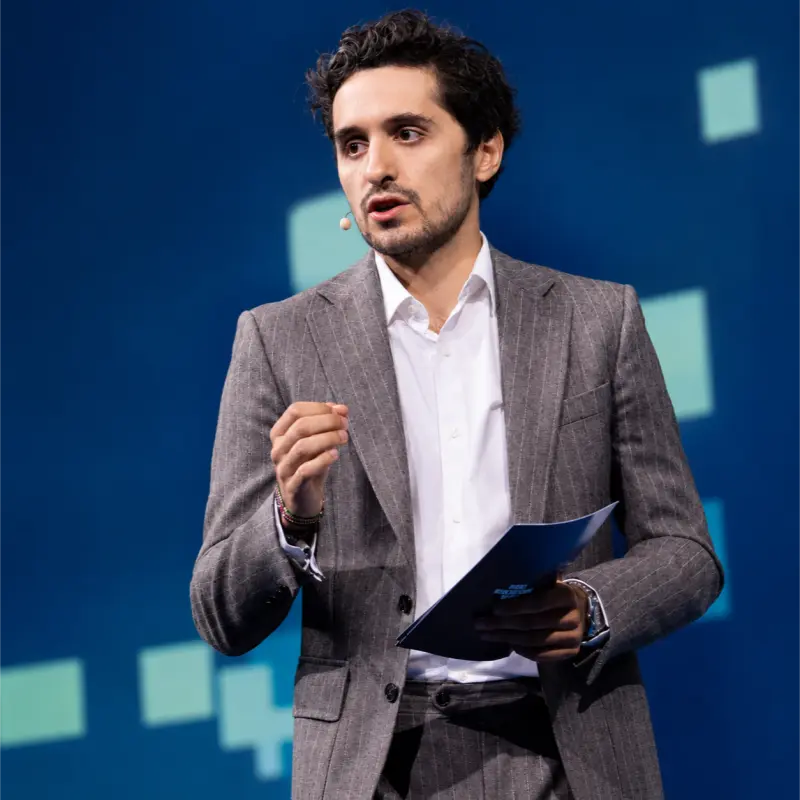
      In this interview from Raise Summit in Paris, Charlie Meraud and Michael Amar, founders of Chain Of Events, join theCUBE's John Furrier to break the news of the company's acquisition by the Hyve Group, a leading B2B events company based in London. Meraud and Amar explain the rationale behind the deal, describing plans to "geoclone" their events into markets such as the U.S. and the UAE while preserving the meetings-driven, ROI-focused model that has powered Chain Of Events' rapid growth across Paris Blockchain Week, RAISE Summit and the MACHINA robotics summit. They note that while their team excels at curating content and audiences, scaling event production across geographies requires a partner with proven operational infrastructure, which Hyve provides through its meeting-matchmaking technology.

      Meraud traces the company's origins back to Paris Blockchain Week, launched when Ethereum was only four years old and crypto regulation barely existed. He points to the event's evolution, noting more than 300 banks now attend, reflecting the broader institutionalization of digital assets. The founders highlight the synergy with Hyve's FinTech Meetup conference, which will combine traditional finance players with digital asset content under one roof. Looking ahead, they reveal plans to grow RAISE Summit three to four times its current size alongside an expanded MACHINA, with both events aligning with FinTech Meetup during the week of July 6, 2027. From blockchain's early skepticism to a rapidly scaling global events portfolio, Meraud and Amar outline a clear path for turning founder-led momentum into institutional-scale growth.
      • Google Calendar
      • Microsoft Outlook
      • Office 365
      • Download ICS
      Charlie Meraud Co-Founder | RAISE & Machina Summit & Paris Blockchain Week
      Michael Amar Co-Founder | RAISE & Machina Summit & Paris Blockchain Week
    • Greg Matson, Solidigm

      In this interview from RAISE Summit 2026, Greg Matson, senior vice president and head of marketing and products at Solidigm, joins theCUBE's John Furrier to discuss how high-capacity SSDs are becoming the intelligence layer powering AI inference and agentic workloads. Matson explains how the shift from training to agentic inference is pushing memory and storage from an afterthought to a forethought, as ballooning context windows and retrieval-heavy workloads overflow HBM and DRAM footprints. He details how high-capacity SSDs, now reaching 122 terabytes per drive, extend that memory tier so GPUs stay fed and generating tokens rather than idling on data.

      The conversation also explores how hyperscalers, NeoClouds and sovereign enterprises are all racing to rip and replace legacy storage infrastructure that can no longer keep pace with AI demand. Matson breaks down the economics of tokens, noting how a simple prompt can generate tens of thousands of tokens and gigabytes of context data, making fast, high-capacity storage essential to lowering the cost per token. He touches on Solidigm's move to liquid-cooled, fanless designs alongside partners like VAST Data, WEKA, MinIO and CoreWeave, and draws a comparison to the early internet buildout to frame today's AI infrastructure race as still in its infancy. From silicon-level density gains to rack-scale deployments, Matson makes the case that storage is now inseparable from compute in powering the next generation of AI.
      • Google Calendar
      • Microsoft Outlook
      • Office 365
      • Download ICS
      Greg Matson Senior VP, Head of Marketing & Products | Solidigm
    • Andrew Feldman, Cerebras

      In this interview from RAISE Summit 2026, Andrew Feldman, founder and chief executive officer of Cerebras Systems, joins theCUBE's John Furrier to discuss how speed has become the defining currency of the AI era. Feldman reflects on Cerebras' recent IPO and the years of sacrifice behind it, then explains why inference performance, not just model capability, now determines competitive advantage. He notes that Cerebras' chips run 10 to 30 times faster than GPUs, a gap he says nobody wants to be on the wrong side of. Feldman also details how agentic workloads from coding assistants to financial and design agents are driving demand for both accelerators and CPU resources, with Cerebras' SRAM-based architecture sidestepping the memory constraints troubling traditional systems.

      The conversation explores the frantic pace of the AI infrastructure buildout, with Feldman comparing today's data center construction to a general-contractor model where entrepreneurs race to meet demand outstripping supply. He points to prefabricated, skid-based data center designs and multi-gigawatt projects in the UAE as evidence that builders are compressing timelines once measured in years. Feldman also outlines Cerebras' expanding global footprint, with data centers across Europe, Canada, the Middle East and Asia-Pacific reflecting a world increasingly focused on AI sovereignty. Looking ahead, he previews Cerebras' next-generation chip work, an 8x to 10x manufacturing expansion and continued efforts to cut power waste per token, underscoring why infrastructure execution, not just model intelligence, will define the next phase of AI.
      • Google Calendar
      • Microsoft Outlook
      • Office 365
      • Download ICS
      Andrew Feldman Founder & CEO | Cerebras Systems
    • Andrew Sobko, Argentum AI

      In this interview from RAISE Summit 2026 in Paris, Andrew Sobko, founder and chief executive officer of Argentum AI, joins theCUBE's John Furrier to discuss why capital, not power or compute, has become the biggest bottleneck in scaling AI infrastructure. Sobko details Argentum's asset-light, demand-first model, which brings power, compute and capital together to accelerate data center financing for developers. He shares the company's rapid growth since its debut on theCUBE, including over $10.5 billion in contracted revenue and a $180 billion pipeline that Argentum expects to scale to $300 billion by year's end.

      The conversation also explores Argentum's silicon-agnostic, OEM-neutral approach, which Sobko says allows the company to de-risk execution by partnering with more than 15 global companies for managed cluster services rather than building out massive engineering teams. He draws a parallel between Argentum's model and Nvidia's co-design philosophy, framing the company as the financial equivalent of that approach — pairing capital with compute to shrink development timelines from over a year to a few months. Sobko also touches on Argentum's project-level financing strategy, which shifts risk away from company balance sheets and toward contracted, customer-backed revenue. From closing a large investor roadshow led by JPMorgan and Goldman Sachs to positioning itself as a new "refinery of compute," Sobko outlines how Argentum aims to remove the financial constraints holding back the global AI buildout.
      • Google Calendar
      • Microsoft Outlook
      • Office 365
      • Download ICS
      Andrew Sobko Founder | Argentum AI
    • Mark Papermaster, AMD

      In this interview from RAISE Summit 2026, Mark Papermaster, chief technology officer and executive vice president at AMD, joins theCUBE's John Furrier to discuss how agentic AI is reshaping infrastructure design from the chip level up to the rack. Papermaster explains why the industry is moving from optimizing individual components toward system-level optimization across CPU, GPU, networking and memory. He points to AMD's expanded portfolio — spanning its Xilinx, Pensando and ZT Systems acquisitions — as evidence of a broader shift toward rack-scale hardware and software design built for diverse, end-to-end AI workloads.

      Additionally, Papermaster shares how AMD's ROCm software stack enables portability across the full spectrum of AI workloads, from massive training clusters to edge inference on PCs, allowing enterprises to route tasks to the most cost-efficient compute engine available. He discusses how modularity — from the MI350P PCIe card to the upcoming MI455X training cluster — lets AMD serve customers ranging from hyperscale data centers to mid-sized enterprises without sacrificing performance. Papermaster also touches on how agentic AI is transforming AMD's own chip design process, shaving months off development schedules through automated workflows. From x86 backward compatibility to the economics of inference at scale, he outlines why the industry is entering an era where infrastructure providers must optimize across heterogeneous systems rather than single, homogeneous compute environments.
      • Google Calendar
      • Microsoft Outlook
      • Office 365
      • Download ICS
      Mark Papermaster CTO & EVP | AMD
    • Erwan Menard, Crusoe

      In this interview from RAISE Summit 2026, Fabrizio Del Maffeo, chief executive officer and co-founder of Axelera AI, joins theCUBE's John Furrier to discuss how AI computing is expanding from centralized data centers to the edge, embedding intelligence directly into telecom infrastructure, devices and physical environments. Del Maffeo explains that edge inference is booming as customers demand proximity, smaller on-device models and cost-effective performance rather than relying solely on frontier LLMs. He discusses Axelera's global customer base spanning Europe, North America and Asia, arguing sovereignty should function as a tailwind rather than a constraint. Del Maffeo also highlights how telecom operators, facing margin erosion from hyperscalers, are turning to embedded AI infrastructure to serve enterprise customers, particularly in emerging markets willing to adopt new hardware faster than established economies.

      The conversation also explores real-world deployments across more than 500 customers, from food safety inspection and protective equipment monitoring to advanced driver assistance systems and sports analytics. Del Maffeo details how Axelera's open-source software platform lets customers build and deploy AI pipelines in minutes, dramatically lowering the barrier to entry for edge intelligence. He introduces Europa, the company's new product line extending its edge silicon into enterprise servers while maintaining low power consumption and cost. From sorting fruit on production lines to tracking players at the World Cup, Del Maffeo illustrates how affordable, distributed AI is reshaping what's possible outside the data center.
      • Google Calendar
      • Microsoft Outlook
      • Office 365
      • Download ICS
      Erwan Menard SVP Product | Crusoe
    • Fabrizio Del Maffeo, Axelera AI

      • Google Calendar
      • Microsoft Outlook
      • Office 365
      • Download ICS
      Fabrizio Del Maffeo CEO & Co-Founder | Axelera AI
    • Alex Bouzari, DDN

      In this interview from RAISE Summit 2026 in Paris, Alex Bouzari, chairman, co-founder and chief executive officer of DDN, joins theCUBE's John Furrier to discuss how AI value creation is shifting from model training toward data-driven inference and sovereign infrastructure. Bouzari explains that while data centers, power and GPUs form the foundation of AI factories, monetization ultimately comes from data: how it's collected, trained on and turned into insights. He highlights sovereignty as a defining theme at RAISE, noting that nations increasingly demand air-gapped, secure AI infrastructure that keeps data and economic value within their own borders, with DDN currently involved in a dozen sovereign projects worldwide.

      The conversation also explores what separates organizations that get AI infrastructure right from those that don't, with Bouzari pointing to GPU utilization as the clearest signal of return on investment. He details how DDN's software stack, paired with NVIDIA compute, has boosted GPU productivity for customers like Salesforce by 70%, and why benchmarks alone can mask problems that only surface in end-to-end deployments at scale. Bouzari also addresses supply chain misconceptions, arguing that land, power and software optimization – not raw compute – are the real constraints. The discussion closes with a look at distributed edge architecture, where five- to 10-megawatt edge data centers connect to massive AI factories, and why managing blast radius and resilience will define the next phase of AI infrastructure buildout.
      • Google Calendar
      • Microsoft Outlook
      • Office 365
      • Download ICS
      Alex Bouzari CEO | DDN
    • Rodrigo Liang, SambaNova

      In this interview from RAISE Summit 2026 in Paris, Rodrigo Liang, co-founder and chief executive officer of SambaNova Systems, joins theCUBE + NYSE Wired's Gemma Allen to discuss how inference economics and sovereign AI deployment are reshaping enterprise infrastructure strategy. Liang details SambaNova's newly closed $1 billion funding round at an $11 billion valuation, led by General Atlantic with participation from Columbia Seligman, T. Rowe Price and Capital Group. He explains how disaggregated inference — pairing SambaNova racks with NVIDIA GPUs — delivers faster performance on the trillion-parameter models driving demand for accuracy and intelligence. Liang also unpacks SambaNova's new role as JPMorgan Chase's on-prem inference provider, highlighting why banks require secure, private infrastructure to protect sensitive data.

      The conversation also explores how sovereign AI initiatives across the UK and France are fueling demand for localized, private model deployment alongside global hyperscalers and neoclouds. Liang details a $3.5 billion partnership with Vista Equity Partners to power distributed, low-latency data centers under the new Vector Core Compute cloud. He breaks down SambaNova's focus on collapsing the cost, power and supply chain demands of massive models, arguing that affordability — not just capability — will determine which companies scale AI globally. Liang also touches on how customization, from domain-specific data to real-time voice and video performance, allows enterprises to move beyond commodity tokens and capture premium value. From banking deployments to distributed neocloud infrastructure, Liang outlines why SambaNova is positioning itself at the center of enterprise AI's shift toward production-scale economics.
      • Google Calendar
      • Microsoft Outlook
      • Office 365
      • Download ICS
      Rodrigo Liang CEO | SambaNova Systems
    • Vipul Ved Prakash, Together AI

      In this interview from RAISE Summit 2026 in Paris, Vipul Ved Prakash, co-founder and chief executive officer of Together Computer Inc., joins theCUBE's John Furrier to discuss how open weights models and agentic harnesses are reshaping enterprise AI infrastructure. Prakash points to a 10,000x increase in tokens processed through open-source models over the past year, driven by cost advantages of six to 60 times over closed models and growing enterprise demand for data control. He explains how companies are building their own harnesses to route requests across multiple models, manage token economics and avoid vendor lock-in, citing Together's growth from 30 billion to over 400 trillion tokens served monthly.

      The conversation also explores Europe's push toward AI sovereignty, with Prakash noting how available power in France is fueling enthusiasm to build regional infrastructure from the ground up. He details Together's partnership with Vista Equity to convert stranded power sources, like defunct printing press sites, into edge inference data centers, abstracting that complexity away from customers. Prakash breaks down how harnesses function as agentic loops that call models repeatedly, plug into enterprise data and permission systems, and increasingly require governance frameworks to validate autonomous agent actions. From the shift toward digital-native sophistication to the unresolved question of blessing agents with proper authentication, Prakash outlines why infrastructure, not just model intelligence, will determine who captures value in the next phase of AI.
      • Google Calendar
      • Microsoft Outlook
      • Office 365
      • Download ICS
      Vipul Prakash Co-Founder & CEO | Together AI
    • Pim de Witte, General Intuition

      In this interview from RAISE Summit 2026, Pim de Witte, co-founder and chief executive officer of General Intuition PBC, joins theCUBE's John Furrier to discuss how world models rooted in spatial and temporal reasoning are pushing AI beyond the limits of large language models. De Witte explains why LLMs alone can't handle the chaos of the real world, noting that General Intuition trains foundation models on trillions of actions rather than text tokens. He details how video games serve as an ideal pre-training data source, offering the dense, continuous streams of actions and observations that mirror how humans navigate physical space.

      De Witte breaks down how these general models already play video games at a high level and control robots walking city streets with similar ease. He touches on the company's approach to the long tail of real-world situations, arguing that true intelligence comes from generalization rather than memorized scenarios, and points to examples like AlphaFold's gamified protein-folding approach as proof that reframing problems as games can unlock scientific breakthroughs. He also shares that General Intuition recently raised $320 million from Khosla Ventures, Jeff Bezos and Eric Schmidt, and is hiring a small team of deeply ambitious specialists. From robots controlled with a standard game controller to models built for quadrupeds and beyond, de Witte outlines a roadmap for unlocking intelligence as the primary bottleneck in robotics.
      • Google Calendar
      • Microsoft Outlook
      • Office 365
      • Download ICS
      Pim de Witte CEO | General Intuition
    • Gilles Backhus, Tensordyne

      In this interview from RAISE Summit 2026, Gilles Backhus, co-founder at Tensordyne Inc., joins theCUBE's John Furrier to discuss how the company's newly unveiled inference chip is challenging assumptions about power, performance and scale in AI infrastructure. Backhus details Tensordyne's transcontinental structure, with chip and hardware engineering based in Silicon Valley and software development in Germany, and explains how the chip has entered production ahead of systems going live before year's end. He walks through the box-first design approach, born from a partnership with Juniper Networks, that packs 72 chips into a system running at 30 kilowatts rather than the 150 kilowatts typical of comparable racks.

      The conversation also explores Tensordyne's LogMath innovation, a logarithmic approach to matrix math that eliminates costly multiplier circuits without changing the user experience. Backhus highlights the system's single-hop, microsecond-level chip-to-chip latency, which he says solves the scaling bottleneck limiting rival architectures, and contrasts the platform's memory capacity with alternatives like Groq. He also unpacks Tensordyne's approach to disaggregated inference, running pre-fill and decode on separate pods from a single vendor rather than mixing hardware providers. From NeoClouds evaluating early beta systems to hyperscalers weighing an alternative to incumbent chipmakers, Backhus outlines why speed, power efficiency and simplicity of integration will define the next phase of AI infrastructure competition.
      • Google Calendar
      • Microsoft Outlook
      • Office 365
      • Download ICS
      Gilles Backhus Co-Founder | Tensordyne
    • Krishna Rangasayee, SiMa.ai

      In this interview from RAISE Summit 2026 in Paris, Krishna Rangasayee, founder and chief executive officer of SiMa.ai, joins theCUBE's John Furrier to discuss how physical AI is moving from early adoption into mainstream production across robotics, automotive and drones. Rangasayee details how SiMa.ai's Gen 2 silicon has entered production alongside a new system-on-module offering a pin-to-pin replacement for the industry's leading GPU SOM, removing the friction of switching platforms. He also unveils Palette Neat, an agentic wrapper around the company's software development kit that lets customers build and migrate applications using plain English, cutting deployment time from months to hours.

      The conversation explores why heterogeneous compute, rather than a GPU-only approach, is essential as inference and reasoning workloads scale, with SiMa.ai's Arm, DSP and proprietary ML architecture designed to give customers flexibility in power, performance and cost. Rangasayee touches on the company's deepening partnership with Micron on memory and highlights fast-emerging use cases, including GPS-denied drones, anti-drone systems, humanoid robotics and even an agentic autonomous lawnmower that responds to voice commands. He notes that unlike many enterprise AI applications still searching for ROI, physical AI markets are already established, leaving adoption as the primary growth driver. From ruggedized, power-efficient silicon to reasoning-driven software migration, Rangasayee outlines how SiMa.ai is positioning itself to scale physical AI as it moves closer to where people live and work.
      • Google Calendar
      • Microsoft Outlook
      • Office 365
      • Download ICS
      Krishna Rangasayee CEO | SiMa AI
    • Sunghyun Park & Marshall Choy, Rebellions AI
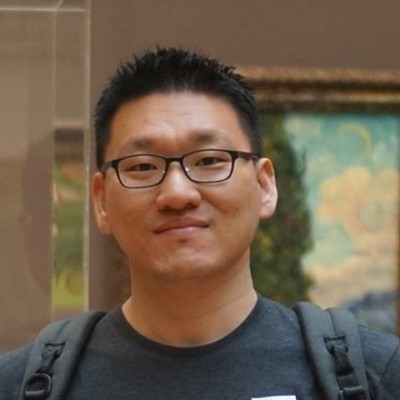
      In this interview from RAISE Summit 2026 in Paris, Sunghyun Park, co-founder and chief executive officer of Rebellions, joins theCUBE's John Furrier to discuss how Korea's sovereign AI strategy is reshaping the global chip and inference market. Park details Rebellions' second-generation chip, which pairs massive SRAM with high-bandwidth HBM3e memory in a hybrid, memory-centric architecture built to maximize inference efficiency per watt and dollar. He explains how agentic AI is driving inference demand as agents communicate with each other continuously, shifting the industry's bottleneck from compute to memory bandwidth and supply chain access. Park also highlights Rebellions' backing from Korea's National Growth Fund — its first-ever direct investment — alongside major partners including SK hynix, Samsung, Arm and Aramco, underscoring the country's push for sovereign, diversified AI infrastructure.

      The conversation also explores Rebellions' rack-scale deployments, including more than 100 racks delivered to a strategic customer in Saudi Arabia, achieving over three times the capital expenditure efficiency of comparable NVIDIA GPU systems. Park touches on the growing role of high-bandwidth flash and CXL-based memory pooling as storage increasingly behaves like memory within inference architectures. He details the recent acquisition of SqueezeBits, a leading vLLM software company, to strengthen Rebellions' open-source software ecosystem alongside its hardware. Park notes that neocloud and hyperscale customers overwhelmingly prioritize cost efficiency over raw performance, reflecting inference's rapid commoditization. Looking ahead, he outlines plans to add Ethernet scale-up I/O and CPU dies to support agentic AI workloads while expanding partnerships with European telcos and neoclouds. From sovereign chip design to rack-scale economics, Park makes the case that cost, energy efficiency and supply chain diversification — not just raw model intelligence — will define the next phase of the AI infrastructure race.
      • Google Calendar
      • Microsoft Outlook
      • Office 365
      • Download ICS
      Sunghyun Park Co-founder & CEO | Rebellions AI
      Marshall Choy Chief Business Officer | Rebellions AI
    • Duncan Clark, Canva

      In this interview from RAISE Summit 2026 in Paris, Duncan Clark, managing director of EMEA at Canva, joins theCUBE's John Furrier to discuss how AI is reshaping the visual economy while balancing user trust, sovereignty and enterprise adoption across Europe. Clark explains Canva's three-pillar AI strategy — proprietary foundational models, third-party AI integrations and ecosystem plugins — and how the company indemnifies enterprise customers against IP risks tied to generative content. He details how localization, from language to design taste, shapes adoption across markets like France, the UK and the Nordics, noting Canva's tools have now surpassed 32 billion uses worldwide.

      The conversation also explores how Canva is bridging the gap between AI generation and professional editing. Clark highlights Magic Layers, a feature that decomposes AI-generated images into fully editable design elements, and describes Canva's role as a top integration partner for ChatGPT, Claude and Gemini, where users can route conversations directly into Canva designs. He also discusses the company's professional suite, Affinity, which now integrates Claude to automate tedious tasks like renaming hundreds of layers, freeing creatives to focus on taste and strategy rather than mechanics. From foundational models trained on Canva's vast design archive to the push into professional-grade tools, Clark outlines how the company is positioning itself as the connective layer of the visual economy.
      • Google Calendar
      • Microsoft Outlook
      • Office 365
      • Download ICS
      Duncan Clark Head of EMEA | Canva

    Welcome to Cube365 Events Platform Digital Community

    You are now part of the interactive digital experience for all SiliconANGLE conferences and an exclusive member of the social community. Enjoy live and on-demand broadcasts, theCUBE interviews, CrowdChats, and access to premium content and presentations. Engage and interact in real time with influencers and peers in a social space designed for collaboration and networking. Discover all that Cube365 Events Platform has to offer before, during and after the event.

    CONTACT US

    Privacy Statement

    • Privacy
    • Terms
    Social Link
    Social Link
    Social Link
    Social Link
    © CUBE365
    © theCUBE
    © 2026 theCUBE