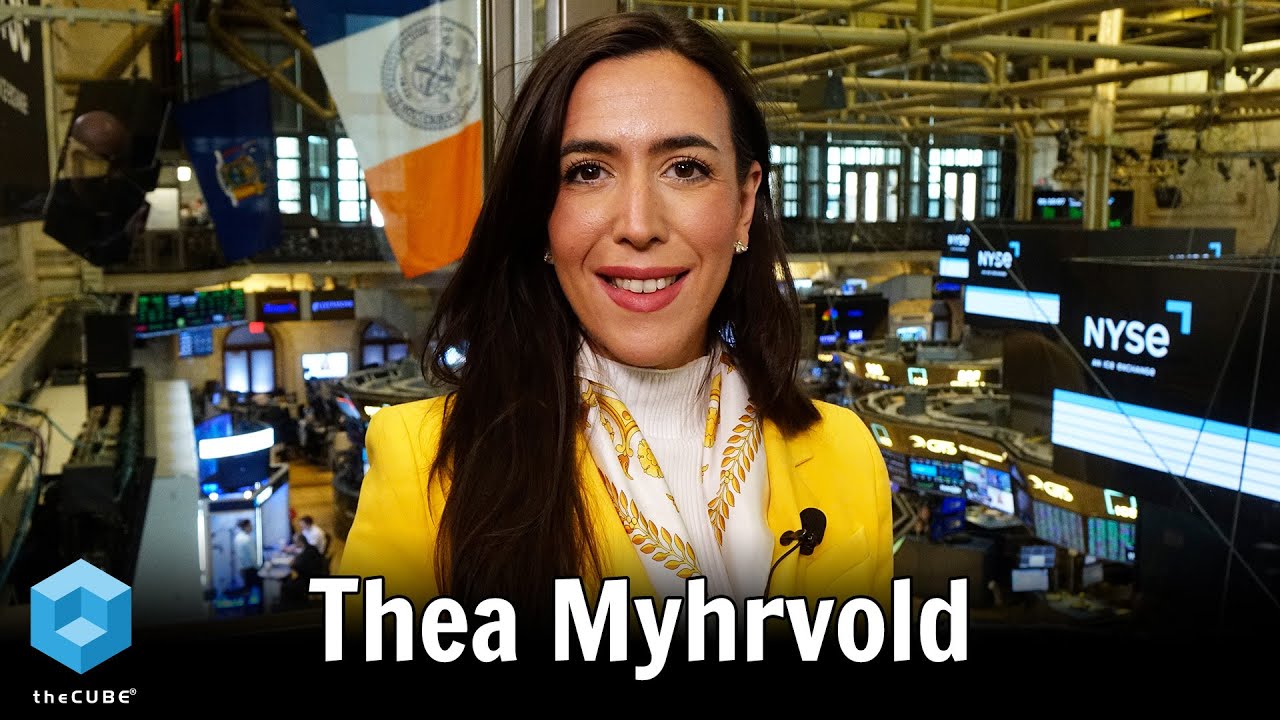
Thea Myhrvold, founder and Chief Executive Officer of Getbee, participates in a discussion with Gemma Allen on theCUBE's AI and Retail Trailblazers series at the New York Stock Exchange. This discussion coincides with the National Retail Federation event at the Javits Center, highlighting the transformative landscape of retail.
In this episode, Myhrvold shares insights into how Getbee is revolutionizing e-commerce by integrating live video sales into digital shopping experiences. Emphasizing the importance of maintaining the human element in commerce, they discuss leveraging existing sales teams to enhance online customer interactions. Hosts Gemma Allen and theCUBE Research explore Myhrvold’s journey and collaboration with partners such as Microsoft.
Key takeaways include the significance of qualitative data in agentic AI solutions for personalized shopping experiences and how brands can empower digital communities and influencers to improve customer engagement. Myhrvold asserts that the future of retail depends on human-powered AI, where technology complements the workforce rather than replacing it.
Forgot Password
Almost there!
We just sent you a verification email. Please verify your account to gain access to
theCUBE + NYSE Wired: AI & Retail Trailblazers. If you don’t think you received an email check your
spam folder.
Sign in to theCUBE + NYSE Wired: AI & Retail Trailblazers.
In order to sign in, enter the email address you used to registered for the event. Once completed, you will receive an email with a verification link. Open this link to automatically sign into the site.
Register For theCUBE + NYSE Wired: AI & Retail Trailblazers
Please fill out the information below. You will recieve an email with a verification link confirming your registration. Click the link to automatically sign into the site.
You’re almost there!
We just sent you a verification email. Please click the verification button in the email. Once your email address is verified, you will have full access to all event content for theCUBE + NYSE Wired: AI & Retail Trailblazers.
I want my badge and interests to be visible to all attendees.
Checking this box will display your presense on the attendees list, view your profile and allow other attendees to contact you via 1-1 chat. Read the Privacy Policy. At any time, you can choose to disable this preference.
Select your Interests!
add
Upload your photo
Uploading..
OR
Connect via Twitter
Connect via Linkedin
EDIT PASSWORD
Share
Forgot Password
Almost there!
We just sent you a verification email. Please verify your account to gain access to
theCUBE + NYSE Wired: AI & Retail Trailblazers. If you don’t think you received an email check your
spam folder.
Sign in to theCUBE + NYSE Wired: AI & Retail Trailblazers.
In order to sign in, enter the email address you used to registered for the event. Once completed, you will receive an email with a verification link. Open this link to automatically sign into the site.
Sign in to gain access to theCUBE + NYSE Wired: AI & Retail Trailblazers
Please sign in with LinkedIn to continue to theCUBE + NYSE Wired: AI & Retail Trailblazers. Signing in with LinkedIn ensures a professional environment.
In this interview from the theCUBE + NYSE Wired: AI & Retail Trailblazers event, Thea Myhrvold, CEO and co-founder of Getbee, joins theCUBE’s Gemma Allen from the New York Stock Exchange to unpack why the next era of digital commerce may feel less like a funnel and more like a conversation. Myhrvold explains how Getbee brings live, one-to-one video selling into e-commerce journeys, aiming to recreate the trust and nuance of an in-store associate for high-consideration purchases across categories such as skincare, luxury and electronics.
Myhrvold also l...Read more
exploreKeep Exploring
What is the company Getbee and what does it do?add
What is the mission and service offering of Getbee?add
What types of purchases benefit from human interaction and trust during the buying process?add
What are the differences in consumer behavior and preferences between livestream shopping in Asia and the West?add
What insights can be drawn about the role of personalized conversations and influencer networks in consumer purchasing behavior, particularly in the context of high consideration or emotional purchases?add
>> Welcome back to theCUBE, coming to you here from our studio at the New York Stock Exchange. This is our AI and Retail Trades Basis series in conjunction with NYSE Wired, and today is the last day of NRF here in New York. Very exciting conference at the Javits Center, who's who of retail here in the city. And joining me now is the woman who's no stranger to retail on the journey, Thea Myhrvold, CEO and co-founder of Getbee. Welcome, Thea.
Thea Myhrvold
>> Thank you so much. Thank you for having me.
Gemma Allen
>> So very busy week here in New York. I'm sure you're probably tired. Lots of long nights and fun events, no doubt. But tell me a little bit about the company, what's been happening, what the week has brought for you? Fill me in.
Thea Myhrvold
>> Yeah, so I'm the proud founder and CEO of Getbee, a company that helps any brand or retailer essentially bring live video conversations and live video sales to any e-commerce experience or any sort of digital customer journey. So we truly believe that the foundation of commerce is human at the end of the day. That's why people still go to stores and ask sales associates certain things. So if you think about those high consideration purchases, or emotional purchases as I like to call them, so think anything from electronics, maternity, jewelry, sports equipment, home, luxury, of course skin care, those are segments where talking to a real person and trust truly makes a difference. And that's where we come in. So it's essentially empowering your physical workforce in that digital buying journey, because traditionally retail has been very physical and stores operations focused and then very e-commerce focused, those whose teams don't necessarily interact. So how do you incentivize the team that you already have, your existing workforce to also service your online customers? Because as we all know, we're all customers. We live and we breathe and we shop in many different channels. So it's really leveraging the best of the best, what you already have into that digital experience while still keeping commerce very human.
Gemma Allen
>> Wow. And we hear a lot of the, I guess, buzzwords and some say jargon.
Thea Myhrvold
>> Yeah, yeah.
Gemma Allen
>> Right now in the space, right? We've heard agentic commerce. AI I think is said maybe multiple times per minute here a week. But tell me a little bit about how you are using data in this business. I assume it's very data, data-driven, personalization, a new form of recommender system per se.
Thea Myhrvold
>> Yes.
Gemma Allen
>> Explain to me how this works at scale.
Thea Myhrvold
>> Yeah, that's a great question and I think, again, as shoppers, most people are still quite frustrated with chatbots, but we're hearing a lot about agentic AI. And something that I heard that was quite interesting is for AI agentic solutions and proper agentic outcomes to happen, you need proper data and you need data to create content so that the right AI agents can find the right things for shoppers. But how do you do that? In a world of digital marketing, people are tracking what's being scrolled, but we're going from scroll-based to goal-based shopping. That's a term that I kept hearing. But again, it's quantitative data, it's not qualitative data. But the conversational data that we're capturing, we're analyzing sales conversations, that's qualitative data that you can then analyze, transcribe, and create content from. So AI agents can actually come back and really truly understand what questions do people have before they buy or don't buy, right? So you're kind of really truly getting that quality that's missing from just scroll-based shopping. If you think about goal-based shopping, you can truly understand what's needed.
Gemma Allen
>> And this idea of connecting brands in real time to buyers and implementing the decision-making process in the moment, I'm sure lots of brands would love to be able to do this organically and use a certain mechanism like an in-house personal shopper per se.
Thea Myhrvold
>> Yes.
Gemma Allen
>> How do you think about it from the perspective of the ecosystem around decision-making now, the middle layer of influencers, advertisers? You mentioned scrolling. A lot of folks are led by social media. How is that changing?
Thea Myhrvold
>> Oh, it's changing so much.
Gemma Allen
>> How is it changing how retailers engage and the commercial models behind these big brands?
Thea Myhrvold
>> So it's really interesting. If you look at China and Asia, livestream shopping is massive. And you have marketing experts and influencers like Gary Vee talking about livestream shopping, coming now more to the West and the West is catching up. Also, the trends with TikTok Shop and all these other big livestream shopping solutions. But something that we caught at Getbee was that the consumer here is a little bit different. So that one-to-one conversation, especially in high consideration or emotional purchases, still make a big difference. If you can have more of a private setting where you can ask follow-up questions, that's what really makes sense. And so to answer your question on the middle layer or influencer layer, it's really interesting to see a lot of our brands, if you think about the gig economy, they're also looking at their ambassador network. So if you take the example of skincare and makeup, a lot of makeup artists know the products really well, but they don't necessarily work for that brand, but they might love that brand. So this is a way for these, let's say makeup brands, to then hire a digital community to work on their behalf. And we can automate everything from commission and tracking who's doing what, ratings, reviews. We can track the whole ecosystem
Gemma Allen
>> Wow.
Thea Myhrvold
>> So you can kind of create your own gig economy for your ambassadors and people who love your brand. So that's one way to do it. Or offer this to your existing sales team. So it's a way to create that hybrid workforce as well.
Gemma Allen
>> Wow, yeah.
Thea Myhrvold
>> But it's a pure B2B play.
Gemma Allen
>> Yes.
Thea Myhrvold
>> So we are B2B in the sense that we work with retailers and brands to empower them to talk directly to their customers. So we are focused on that sort of B2B perspective, so you can truly understand your data and keep your data for yourself.
Gemma Allen
>> Wow.
Thea Myhrvold
>> What we're seeing with these other platforms is they're more marketplaces, they take a lot of that data. So we're more focused on the enterprise. That's why we're also very proud to work with partners like Microsoft, which is very focused on that enterprise segment as well.
Gemma Allen
>> I want to talk about Microsoft a little bit because I know they're a partner and also you're a part of their accelerator program. But before we go there, on the company side, in terms of the technology, tell me a little bit about the insights you're seeing. Are people buying more impulsively now that we're spending more time scrolling and not walking around stores? What is the average buyer cycle for a luxury good? Is it changing dramatically? Is it the same as it was 20 years ago?
Thea Myhrvold
>> I think, and this is interesting, it's something that I've heard during NRF as well, is the foundations of retail haven't changed, but it's just the channels that we're engaging with are evolving. So the fundamentals of good retail still very much are the same, and the problems still very much are the same. So it's truly taking those foundations and digitizing them, so to speak. So for example, with a solution like ours, in the skincare space, we're seeing the average consultation last between 10 to 15 minutes because, again, it's the same thing as you would in store. If you have certain skincare questions, a lot of people go to a high-end skincare brand before a dermatologist. So a lot of the marketing there is educate the customer and the purchase will follow, so to speak. And people come back for that kind of high-level service. Again, we're all customers, and that's what I love about retail because it's very relatable from that perspective as an industry. But again, quality service makes such a big difference.
Gemma Allen
>> For sure. It's such a personal experience. At the end of the day, what we all want is human connection, especially in shopping. We want someone to say to you, "This would look good on you right now."
Thea Myhrvold
>> Yes, it's that trust before a purchase.
Gemma Allen
>> 100%.
Thea Myhrvold
>> Yeah,
Gemma Allen
>> Haven't lost the enjoyment of those feelings. So tell me a bit about the company. I know you live quite a nomadic life. It's global. What are your large markets? Where are your largest partnerships? You're a part of this Microsoft Accelerate. Maybe fill us in a little bit about the actual journey you've been on in terms of zero to where you're at now today.
Thea Myhrvold
>> Yeah, so this is my third venture, proudly scaled global companies in the past as well. I love building and creating. And from my previous company, I had a very close relationship with Microsoft as well, and that's sort of what led me to the relationship with Microsoft this time around too. So as you said, spend my time globally. I travel quite a bit between Seattle, New York, San Francisco, Dubai, and then different places in Europe. So from that perspective, I've always taken the perspective of building a global technology platform. Especially in retail, a lot of brands are servicing a global, so you need to think about things differently.
Gemma Allen
>> For sure.
Thea Myhrvold
>> And Microsoft has been a great partner from that perspective too, because they focus on enterprise and they focus very globally.
Gemma Allen
>> Absolutely.
Thea Myhrvold
>> So Microsoft for Startups has over 100,000 startups in their community, and through that, they've actually selected something for Pegasus, which is their more qualified, I should say, program that's more enterprise-grade and enterprise-ready. And I think there are around 150 of us today globally, but in the main key sectors, retail being a key strategic focus for Microsoft. And it's been a fantastic program. That's part of why we're here again at NRF. We've been part of the Microsoft experience. We were part of the booth last year or two, and they put us in front of some of the best enterprise customers. I've been presenting to some top customers in Seattle with them as well. So from that go-to-market motion, it's incredible. And then we also have a great sort of architect technology support in the background too. So we have both the marketing commercial side and the technology side.
Gemma Allen
>> And this is an accelerator essentially. You said it's two years, I think you said?
Thea Myhrvold
>> Yes.
Gemma Allen
>> Okay. So quite a long stretch of time, really, which is great, I'm sure, because it gives you enough time to fully immerse and learn and hopefully get the right outputs.
Thea Myhrvold
>> And also enterprise is a different segment than consumer. So in enterprise, we have to think about compliance, you have to think about architecture, background, and the go-to-market cycles are also longer. So I think it's a great thing that it is a two-year program because you can truly become enterprise-ready, but also enterprise-scale.
Gemma Allen
>> Okay.
Thea Myhrvold
>> Yeah.
Gemma Allen
>> And tell me a little bit about the product itself. So you are collecting a lot of data and a lot of information, a lot of very personal information, preference-led information, right?
Thea Myhrvold
>> Yes.
Gemma Allen
>> You probably know, I'm sure, within these conversations you know if a woman thinks she's got big ties or whatever it might be. So how is that then collected? What is driven from that in the way of additional insights? Is this a data play per se, or is it fundamentally a brand relationship, a CRM play?
Thea Myhrvold
>> Yeah, it's a bit of both. So I think at the end of the day, and this is what I mean, the foundations of retail are always the same. In essence, if it drives the customer to have better outcomes and a happy customer, that's, in essence, what we want as retailers. So it's truly driving that customer loyalty, customer experience as a foundation. And then from that, we can capture other things as well. So everything from data insights, sentiment analysis, you can cross-reference the type of demographic of customer. Potentially comes in at a certain time of day, asking certain times of questions. You can capture trends and analyze things that you wouldn't otherwise in a store. And I think that's quite interesting because in a store you're not recording the actual sales conversations. So if you think about your marketing team, your product team, and the retail cycle on the back end, there's a lot that goes into marketing a certain product. So in this funnel, if you think about it from a sales funnel, you're not capturing if that marketing layer is being translated into the sales layer. But with this, you can cross cross-reference, okay, this marketing campaign drove the right kind of customer in to have those sales conversations. And in those sales conversations, the right kind of questions were coming up or they weren't. And then you can feed that back to your marketing team, your product team, and your sales team. So I think that's a really full-cycle marketing piece that we're also capturing with the data. But again, it's driving that happy customer outcome.
Gemma Allen
>> We've had a lot of folks here that've come down from the Javits Center to do with this here at the NYC this week, and it seems there's a lot of teams. One team is a agentic commerce, we're hearing a lot about that. Hearing a lot about companies that are driving insights to help loyalty per se, where you're shopping for insurance and you're alerted that, "Hey, it's cheaper on this platform," or whatever it is. And how do you, as the original owner of that relationship, know when this is happening, et cetera? Some of it is I guess somewhat inspiring. Some of it's kind of scary, I would say, as a consumer. I'm sure you can agree with that. It seems like who knows where we're going to be 10 years from now. But tell me about some of the teams that are really standing out to you from an opportunity perspective. Are there things you've seen and heard this week that you feel retail has been missing the mark on, this might be a little bit of a moment of reckoning? What are your thoughts?
Thea Myhrvold
>> That's really interesting. And I think AI agents and agentic is definitely a theme of all the major conferences in every industry these days. But what I noticed this year that I didn't see as much of last year, so this is an interesting sort of evolution, is human-powered AI or people-powering AI. And there's a lot of conversations around change management. So if you think about enterprise, it's actually implementing these kind of technologies now, but with that human perspective and how do you empower people with AI and not replace people with AI? Because I think that's a general fear that everybody has, will AI take my job?
Gemma Allen
>> Yeah. For sure.
Thea Myhrvold
>> And in retail, there's still a lot of commerce that, again, is fundamentally very human. So how do we empower the best of the people that we have with AI to drive better outcomes? And I think that's a big theme that I saw, especially at the Microsoft booths, and I think that's really interesting. Their theme was ROI, return on intelligence.
Gemma Allen
>> I like that.
Thea Myhrvold
>> So it's an ROI on ROI, so to speak. And again, it's driving people with technology, not replacing people with technology.
Gemma Allen
>> It's interesting, because I heard someone say this week, we don't, at this point in this journey we're on in the world of AI and agentic, don't necessarily need to be more intelligent. We need to be more useful. It's more, every day, what are the real ways its changing and shaping our lives for the better?
Thea Myhrvold
>> Yes.
Gemma Allen
>> So I think it's interesting. But from the perspective of retail and women, I know we spoke a little bit off camera, I'm a female technology journalist, I know that this shortage has been here for a very long time. The representation remains a challenge.
Thea Myhrvold
>> Yes.
Gemma Allen
>> What are your thoughts on the industry broadly, especially from the perspective of AI, the ways in which it can maybe become an equalizer or also become somewhat of a threat? It certainly creates new challenges for issues like advertising, body image, all of that stuff that has shaped the female psyche, sadly-
Thea Myhrvold
>> Absolutely....
Gemma Allen
>> for quite a while. So what are your thoughts? Are you feeling really optimistic? What keeps you up at night in that space?
Thea Myhrvold
>> Oh, this is a long philosophical topic I could talk about forever. But on the topic of women in AI and women in retail, especially women, it's important to mention, drive 70 to 80% of all retail buying decisions, especially for their family. So it's a big influencer on the consumer side, but not necessarily represented on the industry side. And this is where we're seeing great organizations like Women in Retail, it's an organization here, driving that parity change on the industry side. So that's just retail as an industry. But if we also think about technology, I'm a big advocate for diverse and inclusive conversations because I truly believe that AI is a reflection of us as a society, regardless of industry. So I think it's important that we have more women and diverse people talking about these topics, being part of the conversation, but also shaping the technology that we're creating.
Gemma Allen
>> For sure. I mean, it's a cultural mirror in some respects, right?
Thea Myhrvold
>> Absolutely.
Gemma Allen
>> Past becomes prologue.
Thea Myhrvold
>> Yes.
Gemma Allen
>> I think people forget that sometimes if they are, especially when you think about the ethical-
Thea Myhrvold
>> Sides of it....
Gemma Allen
>> sides of things, right?
Thea Myhrvold
>> Absolutely.
Gemma Allen
>> So tell me, on the representation issue particularly, we know, and I've got two kids, so I know. Even though I'll be honest, finances are certainly not my forte, but I would say I'm a unique in that perspective. Most of my friends do run the family household finances, but don't necessarily run the investments or whatever. So what do you think fundamentally though needs to change? We've seen the DEI rise and fall across broad industries. We've seen the kind of challenge of what's deemed tokenism per se. What do you think, if you did have a magic wand there for women in retail and women in industries broadly, where do you think we could just make some small tactical changes with long-term impacts?
Thea Myhrvold
>> It's a great question and I wish I had an overarching solution for that. But I think on the tech side, especially VC funding that is invested in women, is still around 2% globally.
Gemma Allen
>> I know.
Thea Myhrvold
>> If you think about it, it's 2% of all startups aren't ... It's 50/50 actually if you look at the data. So if you look at capital allocation, I think that's a key barrier to entry. When you have less than 2% of all funding going to diverse or female founders, I think that's shocking and that's sad that that's still happening today because that's a big change potential. And then on the industry side, I think it's so important, and I've had some great champions during my career, it's raising that awareness but also having male champions to work with to pull you up and pull you along and guide you and mentor you through this process. And I think raising awareness and talking about it on platforms like this is key. And then all of us as champions for the next generation of young girls, women and diverse people in tech and retail, I think it's on all of us as a community to drive that forward and be aware of our unconscious bias. There's an amazing TED Talk actually on the topic of unconscious bias around VC funding and the questions that women get asked versus men. And it's fascinating to see her research. She did a PhD, she analyzed 10 years of data on questions from TechCrunch, the public pitches, and the questions that women get asked are fundamentally negative. So, "Tell me how you won't go bankrupt or lose all your customers." It's a very different footing than saying, "Tell me how big you can be," because you're automatically in the defense, versus sort of like, "This is my vision."
And so there's hope in this data that if you can flip the question around, there's still a positive outcome and she explains it much better than I can on this TED Talk. I'll try to find it for you.
Gemma Allen
>> I'll definitely check that out. story. I.
Thea Myhrvold
>> T's fascinating. And we all have unconscious bias. So I think it's being aware, being self-aware, and being part of the community to change that.
Gemma Allen
>> Change starts here, I guess, right?
Thea Myhrvold
>> Yes.
Gemma Allen
>> Starts with each and every one of us.
Thea Myhrvold
>> Ye.
Gemma Allen
>> So Thea, tell me what's ahead. I know you're probably tired after what was a busy week, and I don't know if you're getting on a plane or what the plans are from today. But for the company, for Getbee, where are you at with the Pegasus program? Are you halfway through? What does the next 12 months look like and what are your big goals in the year ahead here?
Thea Myhrvold
>> There's so much happening that we're about to announce soon. NRF is a great launch pad to start the year because you've got a pulse of what's happening in the industry. Partners, trends, themes. And we're about to launch some exciting new projects. We're already live in different locations, so in different languages and different locations. And so big announcements coming soon. I can't show them quite yet, but please follow us for more.
Gemma Allen
>> When you have more news, we'd love to have you back, so keep us posted.
Thea Myhrvold
>> Of course.
Gemma Allen
>> We also have our studio in Palo Alto, so we can certainly find the time.
Thea Myhrvold
>> Wonderful. And you can always find me in yellow at your next event.
Gemma Allen
>> I love it, by the way. I love the colors. Thank you so much for coming on theCUBE.
Thea Myhrvold
>> Thank you so much.
Gemma Allen
>> I'm Gemma Allen, here at our studio at the New York Stock Exchange, connecting Silicon Valley to Wall Street. Thanks so much for watching.
















 Gemma Allen