The head of retail at UiPath, Nasir, recently attended NRF, a massive convention with 30-40,000 attendees. The focus was on retail innovations, including generative AI and improving the customer experience. Automation has evolved from task-based to AI capabilities, with UiPath's agnostic approach being key to its success. Now, the focus is on enhancing supply chain activities, like warehousing efficiency. Customers use UiPath's technology to streamline processes and predict demand. The combination of deterministic RPA and probabilistic AI provides powerful solutions for retailers. Process mining and task mining are used to identify areas for automation. In retail, automation optimizes planograms and rebate requests. Nasir's background includes starting at Unilever and joining a startup focusing on automation, driven by a desire to improve customer experience and internal processes. Automation and AI technologies are helping retailers provide a consistent experience for customers and teams.
Forgot Password
Almost there!
We just sent you a verification email. Please verify your account to gain access to
theCUBE + NYSE Wired: AI & Retail Trailblazers. If you don’t think you received an email check your
spam folder.
Sign in to theCUBE + NYSE Wired: AI & Retail Trailblazers.
In order to sign in, enter the email address you used to registered for the event. Once completed, you will receive an email with a verification link. Open this link to automatically sign into the site.
Register For theCUBE + NYSE Wired: AI & Retail Trailblazers
Please fill out the information below. You will recieve an email with a verification link confirming your registration. Click the link to automatically sign into the site.
You’re almost there!
We just sent you a verification email. Please click the verification button in the email. Once your email address is verified, you will have full access to all event content for theCUBE + NYSE Wired: AI & Retail Trailblazers.
I want my badge and interests to be visible to all attendees.
Checking this box will display your presense on the attendees list, view your profile and allow other attendees to contact you via 1-1 chat. Read the Privacy Policy. At any time, you can choose to disable this preference.
Select your Interests!
add
Upload your photo
Uploading..
OR
Connect via Twitter
Connect via Linkedin
EDIT PASSWORD
Share
Forgot Password
Almost there!
We just sent you a verification email. Please verify your account to gain access to
theCUBE + NYSE Wired: AI & Retail Trailblazers. If you don’t think you received an email check your
spam folder.
Sign in to theCUBE + NYSE Wired: AI & Retail Trailblazers.
In order to sign in, enter the email address you used to registered for the event. Once completed, you will receive an email with a verification link. Open this link to automatically sign into the site.
Sign in to gain access to theCUBE + NYSE Wired: AI & Retail Trailblazers
Please sign in with LinkedIn to continue to theCUBE + NYSE Wired: AI & Retail Trailblazers. Signing in with LinkedIn ensures a professional environment.
Are you sure you want to remove access rights for this user?
Details
Manage Access
email address
Community Invitation
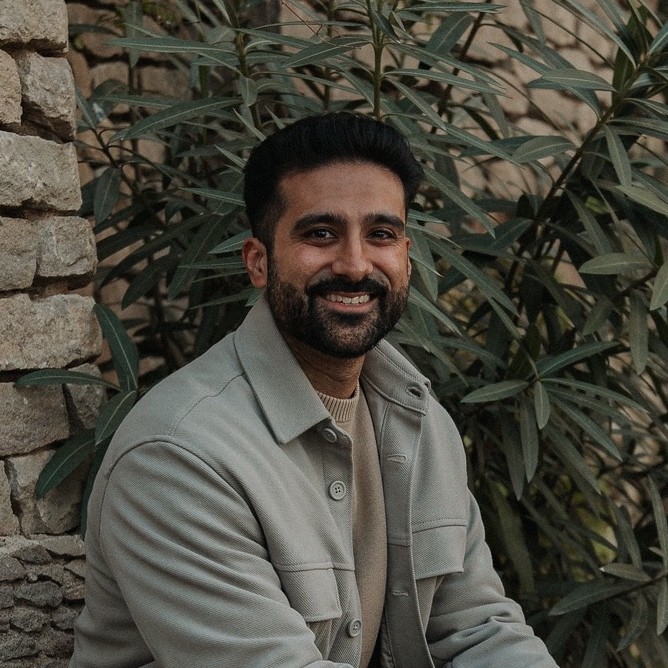
Nasir Feerasta, UiPath
The head of retail at UiPath, Nasir, recently attended NRF, a massive convention with 30-40,000 attendees. The focus was on retail innovations, including generative AI and improving the customer experience. Automation has evolved from task-based to AI capabilities, with UiPath's agnostic approach being key to its success. Now, the focus is on enhancing supply chain activities, like warehousing efficiency. Customers use UiPath's technology to streamline processes and predict demand. The combination of deterministic RPA and probabilistic AI provides powerful solutions for retailers. Process mining and task mining are used to identify areas for automation. In retail, automation optimizes planograms and rebate requests. Nasir's background includes starting at Unilever and joining a startup focusing on automation, driven by a desire to improve customer experience and internal processes. Automation and AI technologies are helping retailers provide a consistent experience for customers and teams.
The head of retail at UiPath, Nasir, recently attended NRF, a massive convention with 30-40,000 attendees. The focus was on retail innovations, including generative AI and improving the customer experience. Automation has evolved from task-based to AI capabilities, with UiPath's agnostic approach being key to its success. Now, the focus is on enhancing supply chain activities, like warehousing efficiency. Customers use UiPath's technology to streamline processes and predict demand. The combination of deterministic RPA and probabilistic AI provides powerful so...Read more
exploreKeep Exploring
What is the typical starting point for customers when considering introducing software automation, especially in the mid to back office?add
What capabilities does UiPath offer in terms of supporting various systems and processes, particularly in relation to AI technologies like document understanding and intelligent document processing?add
"How can your technology help customers connect different systems, predict the right item placement, and rebalance their network effectively?"add
What are some challenges and considerations in implementing RPA in the retail industry?add
What drove you towards wanting to improve the customer experience for both consumers and internal employees in regards to shipping and delivery time?add
>> Hi, welcome back to theCUBE's coverage. This is NYSE Wired and theCUBE's coverage of NRF. This is Media Week. This is probably our sixth or seventh or eighth Media Week that we've done here in our studios at NYSE, overlooking the stock exchange floor. Super excited to have Nasir Feerasta here. He's the head of retail at UiPath and fresh off the floor at NRF. Nasir. Thanks for coming on. Really appreciate you coming down here.
Nasir Feerasta
>> Yeah. Thank you for having me. Pleasure to be here.
Dave Vellante
>> A big trip from Midtown.
Nasir Feerasta
>> Yeah, such an excursion.
Dave Vellante
>> So I've never done NRF. Can you just describe the vibe? We got a couple analysts there, but what's it like and what were really the themes? Any takeaways this year?
Nasir Feerasta
>> Yeah, it's a massive convention. There's roughly, I think 30 to 40,000 people that were there this past year. You've got two floors of exhibitors, multiple expo stages, a lot of sessions where people are just getting educated on what's the latest and greatest inside of retail. How can we take advantage of innovations, whether they're hardware on the shop floor, all the way to the software in the back and mid-office areas? Where can we just continue to drive innovation and help our margins overall? And that was the theme that I felt out there. There was a lot of software vendors that were there who were all talking about very similar things, generative AI, how they're introducing that into their platforms, how they're making their platforms more powerful, providing more insights for their customers and for their customer's customers to then be leveraged. So it was very same theme across the board around how can we be smarter, how can we take advantage of the latest technologies? And then there's the other side of it, which was, "Well, how do we really impact then the customer experience? How can we make that in-store experience better for our customers? How can we make sure that we're providing the latest goods, the best items, making sure the items on the shelf for there when they need them? Both e-commerce-wise as well as physical stores." So those were some of the things that I started to sense from customers that they were really wanting to dive deeper into.
Dave Vellante
>> Help me understand the journey of a typical retail customer, their automation journey from whether it's RPA, enterprise automation, now agentic. Just take us through that serial flow.
Nasir Feerasta
>> Yeah, it's funny, automation isn't anything new. Automation has been around for 100 years. Just the evolution of it is continuously happening. There's new capabilities, there's new technology that's introduced to make things better. And when I think about customers, they always start first with an education. They always want to understand, "What is it that we can do better? What is it that we have ourselves that we can tap into to make our product, our offering or experiences more powerful?" And so they start there. And then when they start to think about introducing software automation, especially in the mid to back office, that's traditionally where most start, is in areas around finance, HR, supply chain, especially in retail. And they'll start with task-based automation. You touched on RPA. And that was the genesis of where UiPath really started was in that task-based automation. Let's take this part of this larger process. Let's reduce the burden on the teams and just remove that for them. And then over time you start to see more and more of the AI capabilities being introduced.
Dave Vellante
>> Let me ask you a question before you go there.
Nasir Feerasta
>> Sure.
Dave Vellante
>> If I understand it correctly, that task-based automation, that back office, that was pretty horizontal, right? Correct me if I'm wrong, but it was not dramatically different in retail versus manufacturing versus finance. And that's how UiPath, its ascendancy really took off, right?
Nasir Feerasta
>> Yeah.
Dave Vellante
>> But now you're getting into the AI piece that becomes much more industry specific, does it not? And so pick it up from there if you would.
Nasir Feerasta
>> Yeah, to your point, those processes were all very similar. And I think that for UiPath, really shine was the agnostic capability. Your systems don't really matter to us. We're going to come in and help complement them across the board. We're going to fill those areas that are painful. And then when you start to think about the AI capabilities, whether that's from document understanding and intelligent document processing to communications understanding and mining, to even just understanding what do our processes look like today, you now take it to the next level where you start to see customers and trends that start to appear. So for example, within retail, what we see a lot of customers really honing in on is, "How can we enhance our supply chain activities?" And supply chain is so broad, we really like to think about it as an entire value chain, not just supply chain. People oftentimes think of supply chain, they think of warehousing and logistics. But there's so much more to supply chain and ultimately that value chain that needs to be delivered. So what we're seeing with some customers, and specifically within the warehousing areas, is they often have seven, eight, 10, 12 different distribution centers, and they each run on a specific warehouse management system. Now, it might be the same warehouse management system, but they don't talk to each other. So an example might be if a customer places an order online and you promise two to five day fulfillment. Well, what happens when they place that order and the distribution center that's supposed to fill that order is now out of stock? In today's world, someone has to take that order number, look up that item, and then go and see, "Okay, which one of my warehouses actually has that item?" And it's not a seamless activity. Someone has to take time out of their day to do that. Now imagine that across thousands, millions of orders. That's a lot of time being spent. And so what we're seeing is customers taking our technology to help them connect those different systems together and perform that activity for them. But then taking it a step further as well, where now you have that data, how can we help you predict where is the right item going to be? Can we help rebalance your network? And you start to involve the deterministic elements of RPA, the rules-based processes, along with the probabilistic, which is where the AI and the LLMs and agentic capabilities really come into play, where you need that reasoning. You need to understand, "Okay, how can we rebalance things effectively? What are the standard operating procedures that we need to follow?" And so you start to combine those two things and you have a really powerful solution.
Dave Vellante
>> Help me understand your concept of, I'll call it the extended supply chain into the value chain. Because we had the CEO of Blue Yonder on yesterday, Duncan Angove, and you're exactly right. We're thinking warehousing and picking products and that component of the supply chain, which by the way, the opportunities to reduce waste are enormous.
Nasir Feerasta
>> Yeah, tremendous.
Dave Vellante
>> And you're saying you pick it up and you would in theory, feed those systems and ERP systems. Can you explain that mesh?
Nasir Feerasta
>> Sure, sure. So let's take a CPG manufacturer, for example. They have items that they're sourcing, raw materials. That's the very first part of their value chain of the supply chain. They're taking those materials and they're manufacturing the good. So that's two steps really within that value chain. Once they've manufactured that good, they then need to ship it to their distribution warehouse. That's the next step of their value chain. Then they need to deliver it to their retailers. That's another step of the value chain. And then the retailers are delivering those products on behalf of those CPG companies to the end consumer, and that end consumer is that end journey of that value chain. And every step along that way, there are going to be multiple systems involved from your planning, ERP systems, to your sourcing systems, to your contract management systems, to your point of sale systems, to your category management systems. All of those vast amounts of data that not always talk to each other. And sometimes that's on purpose. Companies want to have separation, they want to have controls between their systems. But the person who's actually responsible for delivering each element of that process, it's helpful for them to understand, "Where is my data in each area? How can I bring that together, download those reports, filter those spreadsheets and analyze what's working well, what's not working well?" Well, how can we help them really connect those dots together? That's where UiPath can really bridge those systems together, perform that repetitive tasks that are happening today. But now, if we look to towards the future, taking it a step further where there's oftentimes these standard operating procedures, there's these knowledge-based articles that they need to follow if they have a question. Well, now you can feed that same type of instructions to agents, so now they're performing those types of tasks, those, "Okay, let me reason. Let me think about is this the right information? Is this going to be the right outcome?" Providing that together and then surfacing that back up to a person who ultimately needs to do something with that information, whether it's enhance a customer experience, for example.
Dave Vellante
>> Thank you for that, Nasir. I want to talk about what you said earlier, the deterministic versus the probabilistic now.
Nasir Feerasta
>> Sure.
Dave Vellante
>> So you think about RPA and automation there, it's largely hard-coded, and it would observe humans and do what they did, and boom. It did the job very well. You brought very high quality to mundane business processes, Six Sigma, which you would never think about investing in Six Sigma before RPA and normal business processes, just there was no ROI there. You guys changed the game on that. Now you're into the agentic, which as you described, you've got retail knowledge in those worker bee agents. It's not like these agents are omniscient. They're not. So how do you ingest that knowledge or infect those agents with that knowledge? And how do you see your customers learning from the reasoning traces of humans where there needs to be an exception and those agents have to learn and add in that exception so that I don't have to go to a human the next time, if that makes sense?
Nasir Feerasta
>> Yeah, absolutely. So what you're touching on, and the way we're thinking about it at UiPath is really in two places. One is around agentic orchestration, and that is being able to orchestrate the humans, the robots or the automations and the agents together as a whole end-to-end process. So there's going to be multiple agents that might be built within UiPath. There might be agents that other systems are also creating. And so we want to take a Switzerland approach where, again, similar to our approach to RPA in the beginning, being system agnostic. It doesn't really matter what your system landscape looks like to us, we just want to help you execute that process from an end-to-end perspective, knowing that there's still going to sometimes be a need for a person to be in the loop. And that's where agents can start to learn from those decisions that people are making. So giving them the memory. So as decisions are being made... So in the beginning you may not have an agent automatically make a decision on your behalf and go to your ERP and update that information. You might still want to have a person review that information. Well now the agent's learning from those decisions that are happening within that task, and it's going to be better moving forward. And we're approaching it with this sense of what we call controlled agency. So you mentioned earlier, how do we feed the right context or the right information to those agents? And that's where our agent builder experience is really important. And when we think about how we're building these agents, we think about it from a perspective of what are the instructions that this agent needs to perform? What are the tools? And the tools could be automations that you've created. They could be APIs, they could be other agents that it might be leveraging and calling as well. And then what are the parameters or the context in which this agent needs to actually perform the job? What are the standard operating procedures that you're feeding it? So you're giving the agent the ability to make these decisions or to understand and learn, "Here's the data, here's what you need to do, but do it within this framework." So you're really controlling that level of agency so they're more secure, they're well governed, and with the orchestration element as well, you're getting insights into how effective is our end-to-end process, leveraging these agents, leveraging these automations, and still keeping people in the loop to review and manage as needed over time?
Dave Vellante
>> Okay. So you are the Switzerland of agents. You've got to be agnostic. So that means you can work with SAP agents.
Nasir Feerasta
>> Sure.
Dave Vellante
>> Because SAP's going to have agents.
Nasir Feerasta
>> Absolutely.
Dave Vellante
>> Every software company's going to have agents.
Nasir Feerasta
>> Absolutely.
Dave Vellante
>> So how does that work? You talk to SAP agents, you guys speak the same language? Explain that in a little more detail.
Nasir Feerasta
>> So if you think about it this way, agents are really designed to be easy for the end user to understand and to build, very natural language based. But when we think about these agents that are being built within these systems, SAP, Salesforce, you name your system, they're creating an agent for that system. And that's exactly it. They're creating agents specific to that system that are really good inside of that system. But when you start to branch out of those systems, those agents have a harder time to then execute. And what we're seeing are companies don't actually want to give an SAP agent access to their CRM as well or to their WMS system. So how can we bridge that together? And that's where you UiPath being able to orchestrate across the board, being able to leverage, whether it's through APIs or through RPA, those other capabilities and the outputs of those agents, it really allows you to again, go end to end in your process and not just be piecemeal of one part of the task, then this task. Let's bring it all together.
Dave Vellante
>> So I could see how RPA as... I look at it as the plumbing in this whole system. I could see how having that plumbing in place gives a customer a real advantage. Is it a prerequisite in your view, or is it more of a nice to have or a really nice to have? What I'm trying to get to is can you sell your agentic to a greenfield that wasn't an RPA customer, or is it really... Obviously to me it's clear there's advantages. If you built that RPA plumbing, then you're going to be able to build on top of that, get to outcomes faster. But how's that shaping up? Specifically in retail, what are you seeing there?
Nasir Feerasta
>> Yeah, so within the retail space especially, customers still have a need for RPA. I don't think RPA is going to go away anytime soon or ever. I think RPA becomes one of those tools for an agent to execute that end-to-end process or that task that you're giving it. So again, agents need specific activities in order to complete the prompt or to complete the instructions that you're giving it to get that job done. And those RPA automations, the capabilities become one of those tools for a successful agent. And I think the other piece that oftentimes gets overlooked is the governance element. When you're creating an RPA automation, it is very deterministic. "If this, then do this, and here's the access that you have only." You also want to provide that same level of governance to your agents, otherwise, you don't want to have any type of risk being introduced. Because if you prompt an agent today without any parameters or without the right access to tools, it's going to find 100 different ways to try to get that job done. It doesn't necessarily know that it's going to be breaking your controls that you have in place, that it's going to be going over your governance policies. And so in the retail space specifically, sometimes one use case that I've seen recently is around planograms and being able to take that same data around what's working well within our shops, what's our point of sale data telling us, what's our customer loyalty data telling us? But you have controls in place to keep them separate for a reason. But then if an agent gets introduced without the specific bounds or the specific tools, it might try to break down those walls and those controls introducing risk. And so you want to make sure that you're getting the right goods at the right time into your shelves without introducing that type of risk that... and honestly, enterprises just are not comfortable with at this point.
Dave Vellante
>> It would seem to be as well, Nasir, that you've got to have process not just the sort of... Well, it's a workflow, it's a process, and you have to have knowledge of that process. You guys purchased a company, ProcessGold.
Nasir Feerasta
>> Yep, for process mining. Yep.
Dave Vellante
>> Right. For process mining. So that seems to me to be an intelligent, pretty high-value piece of real estate here. First of all, is that true? And how is it being applied in retail?
Nasir Feerasta
>> Yeah, so customers are absolutely leveraging process mining to understand their current state of the business. How is the work actually getting done at a system level? And then they're taking it a step further with our task mining capabilities as well to understand, "Well, what are the specific activities that people are doing as part of these end-to-end processes that aren't just living in these systems?" So combining those two things together, they're starting to get better and more valuable insights. And that then feeds to your point, that end-to-end orchestration, identifying where are there natural areas for automation, for agents, and for people to still be a part of that process? So it all feeds each other at the end of the day. And within the retail space, one area that I've seen around that is within... I'm trying to think of an example that just went off my mind, but I'll take rebates for example. So when a rebate comes in, someone has to fulfill that rebate request, they have to fill out the documentation, very manual activity. So customers want to understand, "Well, what is happening when we're receiving a rebate request?" We need to see, "Okay, did this customer or this end producer, did they actually fulfill the terms of that rebate? Are they within the bounds of that rebate?" And sometimes those fall through the cracks. And so you might end up paying too much in rebates to someone, or you might not be paying them enough. And if you're on the other end and you're responsible for receiving those rebates, you want that money back.
Dave Vellante
>> Yeah, "Where's my rebate?"
Nasir Feerasta
>> Exactly. So it becomes a very interesting area where you start to get deeper into really financial impacting opportunities that the CFOs are really interested in making sure that they have a good pulse on, because at the end of the day, it impacts their cash balance and cash is king.
Dave Vellante
>> How'd you get into this? What's your background?
Nasir Feerasta
>> Yeah, it's funny. I started out at Unilever actually, and I fell backwards into automation. I saw a demo of someone showing an automation filtering a spreadsheet as part of a larger process. And I said, "Time out. You mean I never have to filter a spreadsheet ever again if I don't want to? Why isn't everybody doing this?" And so that really piqued my interest and I got deeper into the space, and I actually joined a startup at first and was with them for quite some time. And I always admired UiPath as they're the key players, they're the big players in the space, they're market leaders for a reason. And when the opportunity came to join UiPath, I thought, "You know what? I've got the experience within retail. I've got the experience within automation, so why not take that lead?"
Dave Vellante
>> Was your startup in retail?
Nasir Feerasta
>> Our startup was in automation, actually, workflow automation. So it was a good opportunity to bridge those two things together. And then when UiPath came calling I said, "Why not?"
Dave Vellante
>> Okay, so Unilever, but retail specifically, what drew you to retail?
Nasir Feerasta
>> Yeah, I think about our own experiences. I think about myself as a shopper.
Dave Vellante
>> You're a buyer. Yeah.
Nasir Feerasta
>> Yeah, I'm a buyer. I want to have the best experience. I get frustrated when I order something and it says, "Oh, it'll be there in two to five days." And it shows up three weeks later. And I always ask myself, "Well, why does that happen? What is it that's happening there that I could potentially help solve for? And what companies and technologies exist that are targeting that space to make that experience better for people?" And not just for the consumer, but for the internal employees as well. They feel the same heat. When something goes wrong, they feel that pressure to deliver for their customers, and they want to make sure it's happening at the right time. And so it just drove me towards, "Well, everyone here is a consumer. Everyone here has various experiences. There's some companies that are phenomenal in how they manage those things. Well, how can we make everybody have that same standard?" And I think automation and AI and the agentic automation capabilities really helps level everybody up to the same playing field in that sense.
Dave Vellante
>> Nasir, thank you for your time. It was really great having you on the program.
Nasir Feerasta
>> Yeah, thank you so much for having me. Appreciate it.
Dave Vellante
>> Appreciate you coming down here. All right, keep it right there. This is Dave Vellante for John Furrier. You're watching NYSE and CUBE Wired community coverage of NRF, New York Stock Exchange. We'll be right back, right after this break.















 Dave Vellante