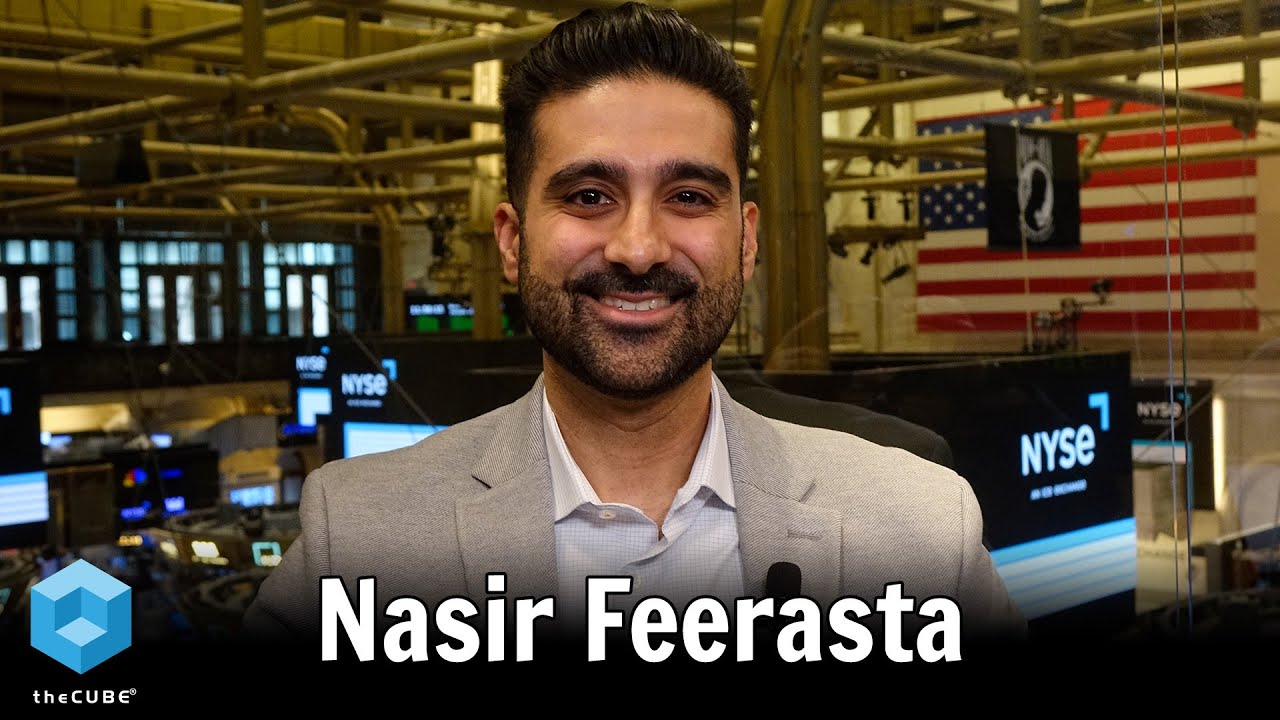
In this segment from the theCUBE + NYSE Wired: AI & Retail Trailblazers event, Zebra Technologies CTO Tom Bianculli joins theCUBE’s John Furrier and analyst Bob Laliberte to map retail’s shift from AI pilots to deployment. Bianculli argues the agentic moment will reward teams that partner, pick specific use cases and prove outcomes fast. Zebra’s focus is pragmatic: on-device AI that turns photos of shelves, pallets and documents into usable context for workflows, then feeds that intelligence into generative systems that help workers move quicker with fewer errors.
The discussion also digs into what “physical AI” looks like in stores and warehouses where latency, bandwidth and privacy all matter. Bianculli outlines Zebra’s strategy around AI enablers, blueprints and companion-style experiences that surface the right interface at the moment of work. He describes retailers moving into a “show me the ROI” phase, with metrics that start with adoption and extend to unit economics. The goal is measurable labor productivity and better customer outcomes, including gains Zebra has studied with Oxford Economics, while keeping sensitive data closer to the edge when personal information is not required.
Forgot Password
Almost there!
We just sent you a verification email. Please verify your account to gain access to
theCUBE + NYSE Wired: AI & Retail Trailblazers. If you don’t think you received an email check your
spam folder.
Sign in to theCUBE + NYSE Wired: AI & Retail Trailblazers.
In order to sign in, enter the email address you used to registered for the event. Once completed, you will receive an email with a verification link. Open this link to automatically sign into the site.
Register For theCUBE + NYSE Wired: AI & Retail Trailblazers
Please fill out the information below. You will recieve an email with a verification link confirming your registration. Click the link to automatically sign into the site.
You’re almost there!
We just sent you a verification email. Please click the verification button in the email. Once your email address is verified, you will have full access to all event content for theCUBE + NYSE Wired: AI & Retail Trailblazers.
I want my badge and interests to be visible to all attendees.
Checking this box will display your presense on the attendees list, view your profile and allow other attendees to contact you via 1-1 chat. Read the Privacy Policy. At any time, you can choose to disable this preference.
Select your Interests!
add
Upload your photo
Uploading..
OR
Connect via Twitter
Connect via Linkedin
EDIT PASSWORD
Share
Forgot Password
Almost there!
We just sent you a verification email. Please verify your account to gain access to
theCUBE + NYSE Wired: AI & Retail Trailblazers. If you don’t think you received an email check your
spam folder.
Sign in to theCUBE + NYSE Wired: AI & Retail Trailblazers.
In order to sign in, enter the email address you used to registered for the event. Once completed, you will receive an email with a verification link. Open this link to automatically sign into the site.
Sign in to gain access to theCUBE + NYSE Wired: AI & Retail Trailblazers
Please sign in with LinkedIn to continue to theCUBE + NYSE Wired: AI & Retail Trailblazers. Signing in with LinkedIn ensures a professional environment.
play_circle_outlineExploring NRF Insights: John Furrier and Zebra Technologies Discuss AI Advancements and Customer Deployment Changes with Tom Bianculli
replyShare Clip
play_circle_outlineUnlocking Retail Potential: Insights from the MIT NANDA Study on AI Partnerships and Tailored Solutions for Efficiency and Innovation
replyShare Clip
play_circle_outlineDiscussion on the ecosystem role in AI solutions and need for collaborative vendor partnerships.
replyShare Clip
play_circle_outlineAdvancements in data collection methods and their implications on labor productivity in retail.
replyShare Clip
play_circle_outlineThe value of focusing on labor productivity to drive significant ROI in retail operations.
In this segment from the theCUBE + NYSE Wired: AI & Retail Trailblazers event, Zebra Technologies CTO Tom Bianculli joins theCUBE’s John Furrier and analyst Bob Laliberte to map retail’s shift from AI pilots to deployment. Bianculli argues the agentic moment will reward teams that partner, pick specific use cases and prove outcomes fast. Zebra’s focus is pragmatic: on-device AI that turns photos of shelves, pallets and documents into usable context for workflows, then feeds that intelligence into generative systems that help workers move quicker with fewer er...Read more
exploreKeep Exploring
What has changed in the technology landscape over the past year, particularly regarding AI, for Zebra Technology?add
What are the key takeaways from the MIT NANDA study regarding successful strategies in a competitive landscape?add
What are some examples and use cases of how an ecosystem of vendors delivers real value in AI solutions for retail partners?add
What advancements have been made in artificial intelligence applications over the past year, especially regarding the use of data and device-based AI?add
What factors contributed to the company's advantage in the mobile computing and RFID industry?add
>> Hello, I'm John Furrier with theCUBE. We are here at our CUBE's NYSE studio here in New York City. Of course, we have our Palo Alto studio and our Boston studio connecting tech and capital. I'm joined by Bob Laliberte, our industry analyst and our next guest, Tom Bianculli, who's the CTO of Zebra Technology back on theCUBE. A year ago, Tom, you were here. It's been a wild year. NRF is happening. You guys have made massive progress. Take us through what's been the year like?
Tom Bianculli
>> Yeah, I mean, on one hand, I can't believe it's here. On the other hand, it's been flying by. I mean, massive amounts of change, particularly around AI. So I think when we spoke last year, we spoke about some of the original agents and companion capability that we were looking to bring to market, and now we've got real customers in the booth with us at NRF using the tech and deploying it today.
John Furrier
>> A year ago, it's interesting, the buzz was RAG, LLMs. We were just kind of teasing out the small language models you guys were leaning into that. We were scratching the surface on the conversation, but you guys were already down that road with agents.
Tom Bianculli
>> Yes. Yeah.
John Furrier
>> Now, fast-forward, full throttle, everyone's raging about agents. You're seeing value.
Tom Bianculli
>> Totally.
John Furrier
>> Pooh-poohing all those studies.
Tom Bianculli
>> Yes.
John Furrier
>> Take us through some of the key results.
Tom Bianculli
>> Yeah, I think we were talking, Bob, a little bit earlier around this with the MIT NANDA study that came out earlier this year, and there's a lot of debate around the numbers in that study, but I think the bottom line directional output from it, which is what separated the winners from the losers, it was kind of two key takeaways from that. One is partnering up, and so don't try to go it alone. And we've been doing that together with our partners and our partners coming back to us to look to do that. And the second is pick a specific use case. That's been the biggest reason for our success as I look from last year to this year, is we're not trying to blanket every workflow with AI. We're trying to pick some specific use cases and make a dent in those. So when we look at sales assistance, product knowledge, knowledge assistant, and then start to augment and automate parts of the workflow, go get wins there. I mean, if you think about a grocery retail and the margins they have, if you can bring a 2-3% improvement to the labor cost, you're a winner. Right?
Bob Laliberte
>> Yeah, Tom, that was a great point, and you mentioned NRF, so I've been there as well this week. It's been a really fascinating show. Some of my takeaways from it, obviously it was great to see that AI is real, right? There's real use cases and examples, and I saw some in your booth, so I'd like you to talk about those. But also an interesting point that you brought up was the ecosystem part.
Tom Bianculli
>> Right.
Bob Laliberte
>> It's not like you're going to find one vendor who does all of your AI solution.
Tom Bianculli
>> Exactly.
Bob Laliberte
>> It really takes an ecosystem. So I'm wondering if you could talk about maybe some of the areas and the examples or use cases where you're delivering real value today for your retail partners and maybe how that ecosystem is shaking out as well.
Tom Bianculli
>> Yeah, yeah, sure. Absolutely. Great questions, Bob. And I think a couple of things that have advanced too from last year is we're seeing all of these models really require ... as we all know, they require data to be useful. So using traditional AI, that's gotten a reboot as well because now we're using AI down on the device, not necessarily generative to start off with, to pull in contextual information. So I'm snapping that picture of the shelf, I'm taking a picture of a pallet, I'm taking a picture of a document, and it's extracting the key information out of that document to then bring it into the generative AI that then assists with the workflow. The biggest opportunities we're seeing are really around labor productivity, and we've got real deployments with customers now going from pilot to starting to move beyond pilot, particularly with Total Wine as you saw in the booth, and then with these AI enablers that allow you to extract information from a scene as you're getting a job done enabling faster picking, as an example. We saw loads of home improvement in the booth using our AI enablers on device. Basically hold the device up and have it point you directly to the package you should be picking. So if you're saving a few seconds on every one of those picks, that's right to the bottom line.
Bob Laliberte
>> Absolutely.
John Furrier
>> One of the things I posted before NRF was on my SiliconANGLE story, the title was Retail 2026: When AI becomes the operating system. A little bit more of a leaning towards the NVIDIA, kind of the physical AI trend that we've been covering. If you look at retail, it's brick and mortar, it's physical. So you've got physical goods, you got the digital convergence. What's your take on this threshold that we're at? Because from supply chain to the boardroom, everything is impacted operationally. There's no real strategy risk because everyone's like make AI part of your business. Okay, check. Execution risk comes to play. What is your view on kind of this threshold in the industry with this whole physical AI kind of overlay?
Tom Bianculli
>> Yes. Yeah. I mean it's really about, I think, picking the specific use cases you're going to go after that are going to have an impact and then it's rethinking what the experience looks like. This is probably something I think if we think about what we spoke about next year where you mentioned, John, we were a little ahead of the curve of what was going on. I think where we're looking at ahead of the curve now is what's the user experience for using all this technology? And we think it's going to be dynamic, it's going to be contextual, and it's going to be disposable. So think about instead of an app, the UI is just surfacing based on what you need to get done. So there is no more sort of a priori user interface. It's just appearing based on the work you need to get done. So we think things are really going to head in that direction. We're starting to embrace that. And I think this collaborative component, Gartner has been talking about augmented collaborative intelligence, ACI. So rather than thinking about AGI, which is the generalized artificial intelligence that we're all talking about-
Bob Laliberte
>> The road to super-intelligence.
Tom Bianculli
>> Yeah, yeah, the super . More-
Bob Laliberte
>> The way it keeps changing....
Tom Bianculli
>> more intelligence than the entire human race. But really that's just one vector on a spider diagram of what you need to execute to work. So you need perception, you need agency, you need autonomy, you need physical execution. And so that's really going to happen when you bring together the knowledge that AI can bring to the table with the workflow, the perception of the person in the job. This is really about bringing people in AI together to collaborate, to get work done in entirely new ways. And a really cool thing we saw from an Oxford Economics study that we did together with Oxford Economics was the customers that are doing that with us in the workflow are seeing a 20% improvement in customer satisfaction, which may not be intuitive, but the bottom line is they're moving cycles away from routine operational tasks into serving and selling to customers, which is what we all want as consumers.
Bob Laliberte
>> Correct.
John Furrier
>> When you look at last year, what would be the biggest accomplishment from Zebra's standpoint? Because, again, you were early. Can you point out some notable wins? What gave you that advantage? And this next wave with the physical you just laid out, what are customers ... where is their heads at? Take us through one ... the big win from last year. What's the tailwind there? And then where are the customers at right now, psychologically, business operations-wise, what's their orientation?
Tom Bianculli
>> Yeah. Yeah, great question. I think in terms of what gave us the advantage was two things, working closely with customers from the beginning and the second is not being afraid. We're leaders in the industry, as you guys know, on the mobile computing side in RFID, data capture, scanning. So putting a thesis out there and not being afraid to be wrong and, well, listen, we weren't exactly right. We pivoted, we weaved, and where we are today is different than where we were before. In terms of where our customers are at, they're at the show me stage. And I think last year at NRF, AI was all over the place. I was having this conversation with some customers and colleagues. This year, the tone of AI has now different. I think a lot of it's gotten filtered out and it's really got down to, "Hey, show me the ROI. Bring me the benefit." And that's exactly where we are with our customers. They're doing value engineering exercises. They're bringing in store operations people to be able to explain to their CFO, "Hey, if I'm going to attach a service for AI," which is the way we're looking to sell this as a service on top of a Zebra device, "how do I explain to my CFO the return on investment and what that looks like?" So that's where customers are at today.
John Furrier
>> One, there's jargon to explain too. There's KPIs. What KPIs come out of that when you're, say, looking for results?
Tom Bianculli
>> Yeah. Yeah, that's great. So, first thing, although it's not sufficient, but we started with just adoption, are people using it? And the change management around that. So is it easy to use? Does it help you get your job done? And that's really important because there's a human factor to this that says, "Hey, I used to do things a certain way. Now the AI is coming to the equation. Is my life easier?" So user experience, making it easy and driving just user adoption is one. And then the second is just benchmarking the unit economics. So if you say, "I've got a person with this and they're getting a picking job done. They're doing a merchandising of a shelf. They're doing a movement of stock from the back to the front. They're doing a receiving workflow. What is the labor benchmark for that before and after?" And then bringing that down to a value engineering equation that we can crunch into an ROI. And that's exactly where we're at right now. We couldn't have done that a year ago because we didn't have all the pieces in place to do it. Now we do. And the customers are turning the crank. They like what they see, and we're starting to see the deployments ramp up.
Bob Laliberte
>> Yeah, it's great for me coming in and being at NRF last year and then coming here a year later. I mean, last year a lot of it was all about the video analytics and walkout stores and so forth, and now you come back ... So people started deploying it and then realized, wait a minute, this isn't sufficient. We actually need RFID tagging. We can charge them for a shirt, but it doesn't help us if we don't know what size that shirt was or things like that. So a lot of the cool technology I saw revolved around even down that serialized RFID, not blanket, getting more specific so retailers can track down to a single device where it is, when did it come in, when was it sold, etc.
Tom Bianculli
>> Totally. Yeah.
Bob Laliberte
>> So even for loss prevention, huge opportunities there. So a lot of benefits coming out of all the technology that's evolved over the last year or so.
Tom Bianculli
>> Absolutely, Bob. I love that idea of getting down to the serialized item and giving every physical asset a digital voice and a unique digital voice with serialization. So one thing I want to key off of ... because this has been another huge dynamic learning for us over the last year ... is multimodal. I mean, it's lots of talk about multimodal AI. I think when people say that, for the most part, in a consumer sense, they mean voice, text, and maybe typing, maybe a video. That sort of thing. But what we're bringing in is ... first of all of our mobile computers now have RFID embedded in. So you've got RFID reads. You've got camera reads. We're putting time-of-flight 3D sensors in our devices so we can understand a scene in 3D. You've got the conventional camera, of course, you've got voice, you have accelerometers, you have location. We're bringing all that contextual information in to say, "Hey, this is what's happening around the worker," and then let the gen AI use its cognitive abilities to digest that and help orchestrate what should happen. So the multimodal piece is really interesting and it's a big differentiator for us because your average, let's say, consumer cell phone, it doesn't have 3D sensors and RFID built into it, but we do and we have it in every one of our devices.
John Furrier
>> Talk about the partner opportunity. You guys have partners, a lot of partners.
Tom Bianculli
>> Yes.
John Furrier
>> How's that going? Because now you have an enabling market, some say disruptive, some say accelerating, enabling, disruptive enabling, whatever you want to call it. New things are going to be coming on top of this automation layer. What's the partner equation look like for Zebra, technically?
Tom Bianculli
>> Right. So what we did in terms of the framework we put together around our AI strategies, it's got three key components. One is AI enablers, which plays into the partner piece. I'll get into a second. The second is blueprints, which kind of snaps the Lego building blocks of AI enablers together to automate portions of workflow. I think Companion is what, for instance, Total Wine is showing that helps assist a worker through an entire workflow. So on the AI enablers front, this is an SDK of AI capabilities that run down on the device. Right now, it's a lot of traditional AI to convert the physical world to digital insights. We're going to be expanding that with generative AI and further expanding it with an MLOps platform that developers can use. And now we've got multiple partners that are writing applications, some very big customers that have their own IT departments using those AI SDKs on device. I met with a company out of Europe yesterday, Smartway, that's doing really cool things in the produce area in terms of fresh, and they're using our AI enablers suite to be able to go from photo to action, which is really cool. So we think there's a super long tail. I mean, what I'd say, John, is what apps were to mobile, we're going to see AI and data SDKs drive that in the next wave. So we're thinking ... what we're starting to talk about is AI first, instead of mobile first. Mobile first has been around for a couple of decades. AI first is going to be the new revolution.
John Furrier
>> I mean, you guys made your bones from paper to mobile.
Tom Bianculli
>> Yes.
John Furrier
>> Now you've got AI to what? Autonomous.
Tom Bianculli
>> Yes.
John Furrier
>> How would you ... because you guys transitioned paper to mobile. Very successful. Well documented. Now, you're AI to ... what? Fill in the blank.
Tom Bianculli
>> Right, right. No, this is great. So we talk about ... typically we've talked about asset visibility and connected front line, right? Now where it's going, we're using a little bit different words in terms of an AI-centric view. We're saying ambient intelligence is critical. So this is basically every device becomes a sensor, fixed infrastructure from a camera and RFID point of view, Bob, that you were talking ... so we have this ambient understanding of what's happening. The second is an AI-connected front line, so it's not good enough just to have the device and connectivity that's, as you pointed out, John, table stakes. It's AI enabling that workflow. And then a third category we're talking about is autonomous orchestration. A little bit of a mouthful, but the idea is-
John Furrier
>> So intelligence built in. Automated intelligence.
Tom Bianculli
>> Automated intelligence, and basically making sure that we're able to route the right information ... Basically the very best next action someone should take, they know at every moment in the workflow. And this optimizes the workflow, but also brings job satisfaction to employees as well.
Bob Laliberte
>> And the key is having the contextual information for it to make the right decision in that autonomous workflow.
Tom Bianculli
>> That's right. Yeah.
Bob Laliberte
>> And obviously the other thing that we look at with all this AI becoming more prevalent is the ability for you to collect all the correct data. And it all starts with, you'd mentioned all the different forms and ways in which you can collect data, whether it's the RFID portal when things are coming in and no longer having to hand scan everything. So you're able to get the data, you're able to provide the context around it and deliver it in a meaningful way. So you're turning that data into information-
Tom Bianculli
>> That's right....
Bob Laliberte
>> that they can take action on.
Tom Bianculli
>> Exactly right. Yeah. It's turning what would be really either a manual workflow into snap a picture and go. I mean, there's a great demo we have in the booth where we snap a picture of parcels on a pallet. We automatically count all those pallets, verify what they are, snap a picture of the manifest, and immediately reconcile that and then push that all back into the SAP backend system as an example. So you're not dealing with the green screen and function keys and keyboards.
Bob Laliberte
>> People, right.
Tom Bianculli
>> Snap a couple of pictures and you're off and running. So you're right, it's turning the raw data into context that can then be consumed by the system.
Bob Laliberte
>> Absolutely.
John Furrier
>> Tom, I want to get your thoughts on this. I wrote ... again, back to my post, one of the paragraphs was, "The real constraint: people. Data's no longer the primary bottleneck. Infrastructure's no longer the primary bottleneck. People are." I think infrastructure's got some challenges, but with respect to retail, we've heard from a lot of other experts on theCUBE bandwidth diversity. Some places don't have a lot of connectivity. Some do. Make a warehouse, obviously we'll have fat pipe. But the people who are running those operations ... first of all, do you agree with that statement? And then two, the networking piece becomes key. How do you see that enablement with maybe a constrained environment on the networking side? How does the platform ... do you see AI factories at the edge? Do you see networking ... What's your view on this as a CTO?
Tom Bianculli
>> Yeah, right, I mean, first of all, starting with the people part of the equation, and there's economists that have laid this out, but in terms of just the aging population and the availability of workers is a challenge. That's a challenge globally as we're all seeing. Then, of course, you've got the cost of labor, which is particularly a challenge in retail. And then you have the attrition, which is this turnover. And we're hearing lots of retailers say, "Hey, I can't take two, three months to get somebody up to speed and doing their job. I got to have them in two or three days up to speed," and that's where using AI to assist and steer them in the work just makes it really simple and intuitive. So that's number one. Number two, on the infrastructure side, we work with a lot of infrastructure architects that are some of our largest customers, and I think what it kind of boils down to, John, is they're saying, "I want as much to be consumed and processed as close to where it's captured as possible." So, "Hey, give me a smart camera. Don't give me a camera. That's going to stream all the way back to the-"
John Furrier
>> So I want as much edge, power at the location-
Tom Bianculli
>> Process at the edge, extract the insights, send that up as metadata to where it needs to go, and we have a number of retailers now that have adopted this idea of what's running in the cloud, what's running on the edge, and then what's running on the far edge? So the device-
John Furrier
>> Yeah, the device....
Tom Bianculli
>> that maybe is in your hand or-
John Furrier
>> Wearable. Yeah....
Tom Bianculli
>> is a wearable is the far edge and we're actually starting to play around with this, like-
John Furrier
>> The human edge.
Tom Bianculli
>> Yeah.
John Furrier
>> Or the robot edge.
Tom Bianculli
>> Yeah, exactly. Right. It's where the work's getting done. That edge of operations is consuming it there. And we're also looking at this idea of having an edge appliance where you might have a very small wearable with a camera. You don't want to be piping that all the way back up from a network infrastructure -
John Furrier
>> Are you guys doing that now?
Tom Bianculli
>> We are. We're working with partners around edge, the GPU appliance capability, where we can send on the order of 10 or 20 frames a second from a camera that might be mounted on the person, understand the scene, and then use that to direct and steer workflows. And I think we could get it to this whole topic of vision language models, but this is going to be a really interesting-
John Furrier
>> We'll put a pin in that. We'll come back to that one.
Tom Bianculli
>> Yeah, let's come back to that one. Yeah.
John Furrier
>> I love the computer vision because it's one of those things where it's a whole nother data set, huge value, but mixed in with the networking. I mean, this is where I think this unified networking layer at the edge is going to be huge.
Tom Bianculli
>> Absolutely. And I would say everyone's trying to figure it out. We spoke with some of the world's largest retailers. They're infrastructure architects and they don't know exactly how it's going to land, but they're thinking this way. Push as much process as you got to -
John Furrier
>> Amazon has just walked out. I interviewed them. They said, "Oh, we are all about privacy. We don't have any user information." I talked to someone else. They're being smart about identity. They want the information to give to the user as an option. What's your view on that? Because there's two schools of thought. There's complete autonomous statistical thing and then there's, like, wait, there's a user experience that I might want to give John if I'm walking into a retail outlet. Hey, that shirt that's in your inbox or your shopping basket, it's on rack, whatever.
Tom Bianculli
>> Yes. Yeah. I mean, I think it's horses for courses. I mean, it just depends on what the use case is. Our general stance on that is if the application doesn't require personally identifiable information, there's no reason to be capturing it. And so that's another reason to also process at the edge. It's a really good point. It's not just speed, latency, but it's also security and PII where you can anonymize it right at the edge before it has a chance to go anywhere. And then there's conveniences that we all like where we're willing to trade off a little bit of privacy to have a better experience.
Bob Laliberte
>> The loyalty apps, things like that, right?
Tom Bianculli
>> Exactly. Loyalty, promotion, personal shopper.
Bob Laliberte
>> Shopper.
Tom Bianculli
>> So we have a personal shopping device that you can scan as you go, and lots of customers like to maybe get, "Hey, this pairs well with that, or look at ingredients for a recipe." Maybe throw up some retail media that would be interesting for them and for the retailer as well. And you really can't do that without the personalization, Bob, that you're referring to. So in that case it makes sense, but you're opting in to go and do that-
Bob Laliberte
>> Correct....
Tom Bianculli
>> in order to enjoy it.
John Furrier
>> One of the things I want to ask you, and this is a little bit out there question, but just bear with me. The market's changing. There's a lot of confusion. People are looking at results. The execution risk is clearly on the table. People are focused on getting the value, getting momentum. But one of the trends is once you get adoption, things happen. The flywheel kicks in. We're seeing that. What's the biggest thing from your perspective, from a Zebra perspective, and also as a CTO that's misunderstood, that if you could clarify and wave the magic wand saying, "Hey, this concept is not understood well enough. There's more education needed," what are some of the areas this in retail AI that needs to be unpacked?
Tom Bianculli
>> Yeah, so it's interesting. I think a lot of it orbits around, and we mentioned this a little bit earlier, around the people and not so much the technology. So I think thinking about what is the experience you want to create, and this doesn't happen enough, for your customers, for your store associates, and then working backwards from that into the technology. So I think that's also a good way of getting different stakeholders on board because internally, decision makers vary between IT store operations. You have maybe the CFO that's aligned there, and if everyone can get agreement on, hey, what's uncompromising is this experience, I think that becomes really critical. The second one is fail fast. I mean, I think this notion of execution risk is really only an issue if the execution-
John Furrier
>> If you don't execute.
Tom Bianculli
>> Exactly. If you don't execute or you execute for too long before you hit a vein of success. So don't be afraid to fail fast and jump in and go after ... I would say the biggest wins we're seeing are in these labor productivity use cases. So rather than trying to automate 10 steps in a workflow, go automate two. And take that right to the bottom line.
John Furrier
>> Power to the people.
Bob Laliberte
>> Yeah, absolutely.
John Furrier
>> Tom, thanks for coming on theCUBE. Really appreciate it. We certainly will see you before next year. I know there's a lot to unpack. I definitely want to talk about the computer vision. Bob's digging in. He's doing a ton of research in the area. Thanks for coming in and being part of our-
Tom Bianculli
>> Always love it, John....
John Furrier
>> retail trailblazers and congratulations.
Tom Bianculli
>> Thank you. And really appreciate the opportunity to be here with you and Bob and looking forward to following up.
John Furrier
>> Cool. I'm John Furrier, host of theCUBE, and Bob LaLiberte, digging into the AI in retail. As the physical AI comes in, the consumer experiences, the user experience, and the intelligent automation changing the game, digital and physical coming together, theCUBE doing it's part to bring that to you. Thanks for watching.
















 John Furrier