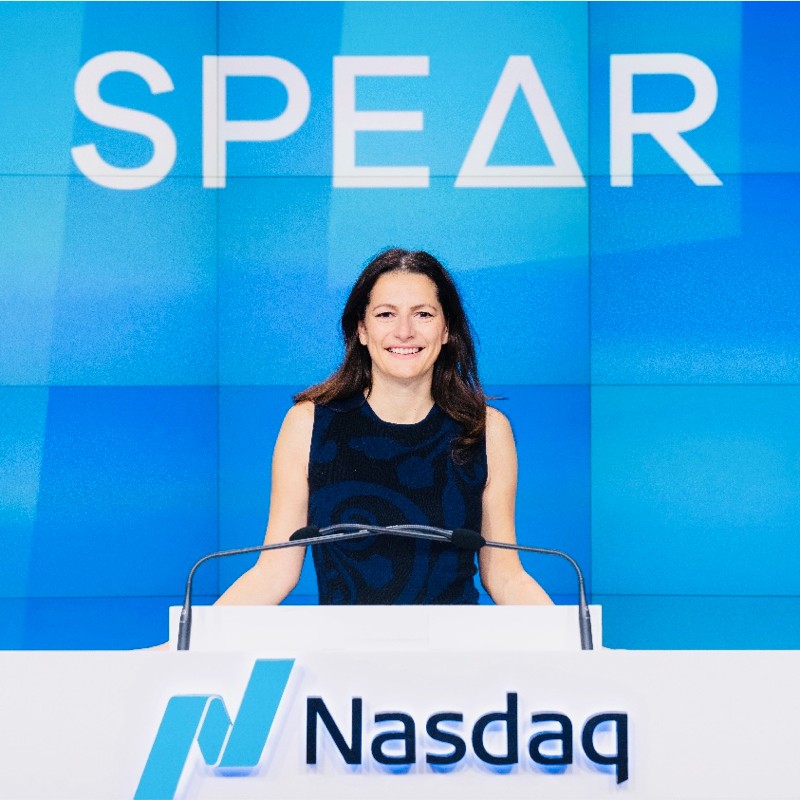
Ivana Delevska, CIO of Spear Invest, shares optimism for the technology sector, especially with a focus on NVIDIA and Marvell. She discusses the geopolitical implications of recent regulations affecting NVIDIA’s chip sales, highlighting the importance of domestic manufacturing in the US.
Delevska expresses confidence in the potential of autonomous driving technology and its impact on Tesla’s future growth. She also touches on Snowflake's position in the software market amid considerations about interest rates.
The conversation turns to Databricks' valuation and potential IPOs in the second half of the year. Delevska remains fully invested, emphasizing a risk-on approach based on projected growth and improved sentiment among business leaders.
Overall, she anticipates a productivity trade kick in 2025, driving market sentiment and economic growth. The positive shift in CEO sentiment aligns with her observations from conversations with companies.
Dave Vellante and John Furrier on NYSE Wired community, media week. Stay tuned for more after break.
Forgot Password
Almost there!
We just sent you a verification email. Please verify your account to gain access to
theCUBE + NYSE Wired: AI & Retail Trailblazers. If you don’t think you received an email check your
spam folder.
Sign in to theCUBE + NYSE Wired: AI & Retail Trailblazers.
In order to sign in, enter the email address you used to registered for the event. Once completed, you will receive an email with a verification link. Open this link to automatically sign into the site.
Register For theCUBE + NYSE Wired: AI & Retail Trailblazers
Please fill out the information below. You will recieve an email with a verification link confirming your registration. Click the link to automatically sign into the site.
You’re almost there!
We just sent you a verification email. Please click the verification button in the email. Once your email address is verified, you will have full access to all event content for theCUBE + NYSE Wired: AI & Retail Trailblazers.
I want my badge and interests to be visible to all attendees.
Checking this box will display your presense on the attendees list, view your profile and allow other attendees to contact you via 1-1 chat. Read the Privacy Policy. At any time, you can choose to disable this preference.
Select your Interests!
add
Upload your photo
Uploading..
OR
Connect via Twitter
Connect via Linkedin
EDIT PASSWORD
Share
Forgot Password
Almost there!
We just sent you a verification email. Please verify your account to gain access to
theCUBE + NYSE Wired: AI & Retail Trailblazers. If you don’t think you received an email check your
spam folder.
Sign in to theCUBE + NYSE Wired: AI & Retail Trailblazers.
In order to sign in, enter the email address you used to registered for the event. Once completed, you will receive an email with a verification link. Open this link to automatically sign into the site.
Sign in to gain access to theCUBE + NYSE Wired: AI & Retail Trailblazers
Please sign in with LinkedIn to continue to theCUBE + NYSE Wired: AI & Retail Trailblazers. Signing in with LinkedIn ensures a professional environment.
Are you sure you want to remove access rights for this user?
Details
Manage Access
email address
Community Invitation
Ivana Delevska, Spear
Ivana Delevska, CIO of Spear Invest, shares optimism for the technology sector, especially with a focus on NVIDIA and Marvell. She discusses the geopolitical implications of recent regulations affecting NVIDIA’s chip sales, highlighting the importance of domestic manufacturing in the US.
Delevska expresses confidence in the potential of autonomous driving technology and its impact on Tesla’s future growth. She also touches on Snowflake's position in the software market amid considerations about interest rates.
The conversation turns to Databricks' valuation and potential IPOs in the second half of the year. Delevska remains fully invested, emphasizing a risk-on approach based on projected growth and improved sentiment among business leaders.
Overall, she anticipates a productivity trade kick in 2025, driving market sentiment and economic growth. The positive shift in CEO sentiment aligns with her observations from conversations with companies.
Dave Vellante and John Furrier on NYSE Wired community, media week. Stay tuned for more after break.
Founder and Chief Investment OfficerSpear Advisors LLC
Ivana Delevska, CIO of Spear Invest, shares optimism for the technology sector, especially with a focus on NVIDIA and Marvell. She discusses the geopolitical implications of recent regulations affecting NVIDIA’s chip sales, highlighting the importance of domestic manufacturing in the US.
Delevska expresses confidence in the potential of autonomous driving technology and its impact on Tesla’s future growth. She also touches on Snowflake's position in the software market amid considerations about interest rates.
The conversation turns to Databrick...Read more
exploreKeep Exploring
What are some reasons for remaining optimistic about the technology wave and its potential growth in the next few years?add
What is the current sentiment regarding NVIDIA and its future prospects, particularly in relation to the Blackwell launch and custom chips?add
What are some factors that are affecting software stocks, particularly in relation to interest rates?add
What is the analyst's opinion on Databricks staying private, raising a large amount of funding, and having a higher valuation than Snowflake?add
What are some potential upcoming IPOs that are being watched for in the second half of this year?add
>> Hi everybody. Welcome back to the NYSE Wired and CUBE community's wall-to-wall coverage. We're here covering NRF and really with a focus on retail, but we're going to take a little deviation, talk about markets, talk about stocks with Ivana Delevska, who's the CIO of Spear Invest. Great to see you again. Welcome back. Second time face-to-face. We've had you on Breaking Analysis a number of times. You're looking good, feeling good.
Ivana Delevska
>> Thanks for hearing me.
Dave Vellante
>> You had a good couple of years here. Of course, the tech market, and that's really where you focus, has been booming. Give us the update on Spear. 2023 was off the charts for you. This year was solid. How's things looking?
Ivana Delevska
>> Well, we're still very optimistic and we think we're in a very early innings of this technology wave. So we went through a downturn in '21 and we just started emerging from the downturn. First, we saw processors take a step up basically in performance, but then the market has been broadening out to other parts of the value chain where you're seeing a lot of investment in physical data centers now, where the processors are no longer going in in the existing infrastructure. So now you're looking at a massive build out that is going to take place. So we're looking to broaden our exposure from processors to areas like power generation, networking. Those are going to be pretty successful I think as we look out the next two to three years.
Dave Vellante
>> So NVIDIA's still your top holding, is that right?
Ivana Delevska
>> Absolutely.
Dave Vellante
>> You've doubled down on that, and how you feeling about NVIDIA?
Ivana Delevska
>> Absolutely. So what we like about NVIDIA here is that a lot of people are skeptical about the Blackwell launch, and a lot of people are skeptical about custom chips going into next year. I think people misunderstand the positioning that NVIDIA has with their CUDA architecture. Basically, if you're a company that needs frameworks or needs pre-built things in order to advance, you're not going to be able to use custom chips. So even though you're going to go through Amazon, through the hyperscalers, you will request NVIDIA chips. So I think the growth that we are seeing for NVIDIA is pretty solid. And then the Blackwell delivery issues, even if there is some supply chain challenges, I think they ultimately get sorted out. So this is a question of can you wait a quarter or two till they can deliver numbers? And I think this quarter is going to probably be the one where they're set up well to deliver.
Dave Vellante
>> Yeah, he said at CES in his keynote that we're shipping Blackwell in volume, and maybe that's somewhat of an overstatement, but I've always thought if it was a blip, it was a small blip, and it's CUDA, and it's also all the other stuff around it. It's Cosmos, and it's Omniverse, and it's all the other software, and the tooling that they've developed is quite impressive. What do you make of the recent Biden administration regulations that came out? NVIDIA was vehemently objecting to that, and my understood... I don't know if you saw SemiAnalysis. I don't know if you follow those guys, they did a detailed assessment of that and essentially my takeaway, and I'd love your thoughts on this, was those low-end chips that NVIDIA was... The price is dropping very rapidly as Blackwell comes out and those are the chips that they were selling into, maybe into China but also other countries that could back it back door into China. And so that's part of why NVIDIA was, I think, so upset about it. What's your take on that?
Ivana Delevska
>> Well, really it's going to come to geopolitics here, right? Because on one hand there is really no harm in sending tier two, tier three chips to your competitor even if they are able to use them, right? So I think that the government here jumped a little too quick to conclusions. We'll see though, because at the end of the day you need the new administration to approve this, and it's still too early to tell how the lay of the land will play out. I think both administrations have been for restrictions and putting tariffs. So I think there is no easy solution for these chip companies. But I think the domestic market is on the other hand very, very strong. So even if they restrict the lower-end chips, I think that the thesis still is solid here.
Dave Vellante
>> So you think the strength in the domestic, because I looked at it as the government was basically saying, "We want the US to be in control and force people to come to the US, including China. If you want these chips, you got to come to the US clouds." And so the great news for the big three cloud vendors, and that's easy to cut them off if you have to, but do you feel as though the loss of that low-end volume can be made up in domestic state-of-the-art chips? That's what you're basically saying.
Ivana Delevska
>> I think it'll absolutely be made up. I think in the long run though, the more China has incentive to develop products, the faster they will develop their own products. So there is a long... I think in the near term, NVIDIA is okay, but in the long term I think people need to step back and look, okay, well how is the lay of the land going to look 10 years from now, right, if there is also a competitive product from China?
Dave Vellante
>> That's interesting. That's like Stuxnet when they found out that there was that subterfuge, which is extensively was the US and Israel, it's never been admitted, but what did they do? They stepped up their nuclear program. And so you're saying a similar dynamic could happen where if China has some access then they might be more of a balanced approach. What about other semiconductor companies? You own Marvell still, right? And they have a tight deal with Amazon. Another Dylan Patel who runs SemiAnalysis, he called the AWS or Amazon Trainium2, did you see this? He called it the Amazon basics of GPUs-
Ivana Delevska
>> Yeah....
Dave Vellante
>> which I thought was funny, but he said that's really good because they got bigger memories and it's way lower cost, way more power efficient. That's Marvell technology, right, aligned with them? So that's your second-biggest holding I think .
Ivana Delevska
>> That's right. So yes, we do really like Marvell here. We like it because I think as percentage of their market cap, the AI opportunity is very significant. So Broadcom is just as well positioned in this market, but Marvell was able to win both Amazon and Microsoft, which were two of the bigger deals that are out there. So I think for them it's going to be pretty significant. AI revenue will exceed the rest of the business pretty quickly after you see these products ramping. And then the networking side, I think, that was one interesting thing as part of the Amazon deal, is that not only that they're using the custom chips, but they're using everything from their networking portfolio. So I think that we're going to see more and more of that where it's really all about how these chips are connected to each other, where you're going to be able to see the performance improvement come from.
Dave Vellante
>> When we first met, the first Breaking Analysis we ever did, I was asking you about Broadcom, you said, "No, it's not in the portfolio." I don't think you've ever invested in Broadcom, have you or have you?
Ivana Delevska
>> No, we have not.
Dave Vellante
>> I've always looked at them as the number two choice in AI, because they have the Google deal, they have the Meta deal, of course they have ByteDance, which is now interesting given the regulatory situation. But why doesn't Broadcom, doesn't fit your profile, does it?
Ivana Delevska
>> It fits the profile very well. The problem is that it's a much larger market cap. So we model it on upside, compounding upside in the next five years, right? So the size of opportunity for Broadcom and Marvell are quite comparable, but Marvell is a much smaller company, so you can see double and triple from here, versus Broadcom is less likely to double and triple here in the next-
Dave Vellante
>> Well, if you go back a couple of years, you would've had that double of triple, right?
Ivana Delevska
>> Yep.
Dave Vellante
>> Do you feel like you missed that one or-
Ivana Delevska
>> Well, interestingly for us it's all about picking one or two companies. So the more concentrated we are, the better our numbers are. So basically, the idea would be, would we allocate half of our NVIDIA position to Broadcom? Not really, right?
Dave Vellante
>> Yeah, yeah, yeah.
Ivana Delevska
>> So that would have been the question at the time, so it's all about-
Dave Vellante
>> Charlie Munger philosophy, right?
Ivana Delevska
>> Exactly.
Dave Vellante
>> Yeah. Mm-hmm.
Ivana Delevska
>> So what we do is we'll find five or six focus areas where we think there are opportunities, and then in each of those we try to pick one, two or maximum three names to drive the performance. So we always have to eliminate, and sometimes it does happen that we don't pick the outperformer, but still even having the number two, it's better than having a diversified exposure to a specific sector.
Dave Vellante
>> Yeah, because that dilutes your alpha.
Ivana Delevska
>> Spot on.
Dave Vellante
>> And so, okay, what about, I know you do a lot of work throughout the value chain and the supply chain. How do you think about stock that got hit recently pretty hard, ASML, which is one of the choke points? Do you not like that just because there's too much risk and it's too narrow? What are your thoughts on a company like that? Then there are others, some of the EDA manufacturers and software players, but specifically ASML, what do you think about those guys?
Ivana Delevska
>> So ASML is a very high quality company. It is at the wrong point in the cycle. So we looking, we constantly evaluated each quarter to see if there is any signs of the cycle bottoming. So if you see what happened was that over the past five years, companies really invested into CapEx. So TSMC had a big CapEx cycle. The memory players also went through a big CapEx cycle. So everything, all the projects that are going to be built over the next five to 10 years, they've already been announced and spoken for, right? So now we are looking for when is that next layer of CapEx investments into semis going to come from. So that's really where you want to be buying ASML. It is a very high quality company, so I think it's worth looking for an entry point, but it's a little further out from where you see chips bottom, right? So you'd need to see then needing to expand capacity and add more equipment.
Dave Vellante
>> How important is it for the United States to have advanced manufacturing onshore? I saw news, I think it was yesterday, the day before, the Taiwanese government has now said that TSM can manufacture two nanometer process outside of Taiwan. So that's a real positive for the US. How important do you think it is, just for the market overall, given that the US dominates so much of the market, to have advanced manufacturing in the US?
Ivana Delevska
>> From geopolitical standpoint it is very important, obviously. From free market perspective, it's really not an issue to have the chips being manufactured in Taiwan, right? It's been functioning pretty well over the past 15 years, but obviously it's a pretty significant geopolitical risk. There is some benefit of having diversified supply. So it's clearly a plus and it is a real positive that TSMC said that they can deliver the same margins in Arizona. I thought that was very interesting-
Dave Vellante
>> I was shocked when I saw that. Yeah....
Ivana Delevska
>> because I always thought that that's not going to be possible. I think a lot of it has to do with advanced automation. So I think as you see more automation and maybe AI playing a role here, with the new manufacturing facilities being significantly more productive and you're not relying as much on labor, I think maybe a possibility that you can deliver similar cost in the US. And in that case, it would be a real plus to have things being manufactured here, right? If you actually can do it at a lower cost than elsewhere.
Dave Vellante
>> And it will, and it also reduces one of your key risk factors around NVIDIA, Apple too. You don't own Apple, but obviously huge exposure from a geopolitical standpoint. And my third part of that question is how, and I think you've already answered this, how important is that a US headquartered company owns that capability? And you just answered that. that's not really a critical factor, but that leads me to Intel. You don't own Intel either, thankfully, and the company is an iconic name. I don't know how close you follow it, but if you have an opinion, I'd love to hear it on what should happen with Intel. I've said, they've got to spin out the foundry, it's long past the time they should have done that. Do you have any insight on that?
Ivana Delevska
>> So I think you were spot on the foundry spin-off. The foundry business and the design processors business have pretty much nothing to do with each other. One of them is a very heavy manufacturing business, so they need somebody that's a real operator, very similar to what DSMC is doing. On the other hand, you have something that requires constant innovation. Very different, right? So you need to be constantly staying ahead of the curve, coming up with new products, and the competitors here, you're competing with NVIDIAs and the-
Dave Vellante
>> Qualcomm, ....
Ivana Delevska
>> AMDs of the world, and Qualcomm, right? It's a pretty tough space to compete in. So I think it's two very different skill sets that are needed, and there is really not a lot of benefit in having the two pieces be together.
Dave Vellante
>> So I want to pick your brain as an investor. If you were an investor in, a hypothetical question, if you were an investor in Intel, so if you look back... You were too young, you remember this, but IBM... Maybe, no, not too young, but you might recall IBM sold its microelectronics division, "sold" in quotes. They basically paid GlobalFoundries to take it. But you're too young to remember the IBM monopoly that they gave to Intel. You know the story well, but that had negative, that fab that IBM gave, and paid GlobalFoundries to take, had negative value. I think Intel's fab has negative value right now. But as an investor, again hypothetical, would you rather see them divest that even at a loss, get it off the books, or would you want them to try to... Because that's what I'm hearing is that some of the investors are saying, "Wait, we want to try to get some value out of this thing." My feeling is there is no value. How would you approach that?
Ivana Delevska
>> I think there ultimately is some value in that business. So I don't know that you would sell it at a loss. I think it does make sense to put it in some sort of a presentable state where you can articulate a point to a buyer. I think something similar to what GE did recently, right, where people thought, "Oh, a lot of these pieces don't have any value," but if you can put them in the best light possible, there is some value in staying around and trying to present it. It is cash flow burning, right? So there is also, you're on a tight leash here in terms of how much time you have to do that, right? But I think it does make sense to have somebody that will oversee this, that has experience in these type of situations, where you put something to be presentable and then sell it.
Dave Vellante
>> Let's talk about Tesla. That's another big holding of yours. What's your take on Tesla? How do you feel about Elon now, basically the POTUS whisperer?
Ivana Delevska
>> Yeah, well, we'll see how that goes, but basically with Tesla, David, it's very interesting what we've gone through. I think in 2021 and '22, we did a deep dive to try to understand FSD and what kind of improvements it was making. And really, at the time, there was really no path to having full autonomous sales driving, because what was happening is that the more data they were feeding the models, they weren't really resulting in performance improvements. Now with accelerated computing, we are looking at a very different scenario where we are seeing significant performance improvements. So that's really one pillar of the story, where now autonomy is really a possibility in the next two to three years. And then on the regulatory side, if you don't have the regulatory support, right, like you have the technology but don't have the regulatory support, you're really going to go nowhere. But now with Trump winning the election and Elon being well positioned with the administration, I think people are expecting that regulatory approval will be a little easier to get, not just for autonomous driving but even more broadly autonomy and AI. So I think that's really the thesis here, where you're having both the technology and potentially the regulatory angle come together to enable autonomous driving.
Dave Vellante
>> So you think of Tesla, first of all had a potentially massive market because of autonomous driving and also like many, I'm sure you don't look at it as a car company, although it is a car company, but basically a software company that happens to be making cars. Is that how you look at it?
Ivana Delevska
>> That's right. So the way we have it modeled, basically the current valuation justifies it as a car company plus the FSD piece as a application, right? So FSD, they're selling it as a feature, basically. You're paying 10, 20, $30 a month for it and that basically justifies the current stock price. The upside will come from the robotaxi opportunity, basically vehicles that don't need a driver. So that's really, if that materializes, you will have upside. If it doesn't, then the stock is pretty well justified here in the 400s.
Dave Vellante
>> Do you see an opportunity? Because I think, I follow Tesla that closely, but unit sales are flat-ish. Is that correct? Do you see an opportunity to boost that by basically selling Teslas, full self-driving Teslas, to Uber drivers for instance, and having a human in the car so that it passes the regulatory framework, and then is more of a proof point? I know people are hinting at that, what are your thoughts on it?
Ivana Delevska
>> I think you need to have full autonomy to justify the upside, right?
Dave Vellante
>> Yeah.
Ivana Delevska
>> So having a driver versus not having a driver is a very different value proposition. So that's why I was saying the FSD component is already priced into the stock. That's why it's trading at-
Dave Vellante
>> Yeah, yeah, valuations. Yeah....
Ivana Delevska
>> where it is today, right? Versus car companies don't trade in the trillions, right? So that part of the story, the FSD as a help, or an application, or a service that's already priced in. The question is, do you have a car with no driver? And that's the bet that we're making on-
Dave Vellante
>> And that's . You got there . Yeah....
Ivana Delevska
>> in the next there three to five years. It is okay if the timeline is extended. Elon is promising next year. I think that's going to be difficult to-
Dave Vellante
>> Double or triple that .
Ivana Delevska
>> Yeah, exactly. But even if it's extended, it's a big deal if it happens.
Dave Vellante
>> All right, one of our favorite topics is Snowflake. You've been loyal to Snowflake. I think you trimmed your position when it was going through some of its challenges after Frank stepped down as CEO. Where are we at with Snowflake? Are they winning the AI game? What's your take on the company?
Ivana Delevska
>> It certainly appears as though they're making progress. I think the new CEO has done a lot of changes to change the culture as well as their outward-facing, client-facing program where they're listening more to what the customer wants. So I think a lot of the innovation is in the right direction. We're pretty optimistic on it. I would say though, for the software stocks, interest rates are a big headwind. So that's what we are really watching closely because we don't expect inflation to really moderate significantly from here all of these things that we're talking about, tariffs, tax cuts, right? All of those are quite inflationary. So we don't think inflation will be moderating and as a result, rates can't go much higher than here, but they can certainly stay elevated. So those are some of the concerns for the software names specifically. I think a lot of them are priced in by now and I think Snowflake has a cyclical component that if we see earnings recover, I think people will come back to the name. So that's why we still like it, but we're watching it closely on the interest rate .
Dave Vellante
>> Yeah, one rate cut or no rate cuts is another factor, and they seem to be tightly... I watch Amazon, and Amazon and Snowflake generally are birds of a feather, and they do a lot of business through Amazon, and a little bit through other hyperscalers as well. What do you make of Databricks, of staying private, raising a bunch of dough, a 60 billion valuation, which is higher than Snowflake? Of course it's private company, so the value is, as you know, what people will pay for it, but what do you make of that?
Ivana Delevska
>> So I think Databricks did an excellent job communicating their value proposition, and even though they started with a much narrower market than Snowflake, they were able to penetrate that enterprise market and go beyond just the nerdy tech community to larger companies using them. So I think the platforms though are pretty comparable and I think they each cater to different types of users and applications. So I think there is space for both companies to coexist and we're very positive on Databricks. I think it does make sense to stay longer in the private market until you figure out this interest rate dynamic, right? Because the private markets don't think of it the same way as the public markets are and take a little bit of a longer perspective. So that's why you see the valuations that they're raising money at, compared to Snowflake, they don't make any sense, but it's really that public-private disconnect driven by interest rates.
Dave Vellante
>> So what are you looking for IPOs this year? So tepid in the first half and then maybe picking up, or maybe gets pushed into 2026. What's your outlook there?
Ivana Delevska
>> I think it's going to be all rates based. If rates can stabilize and the economy can pick up, which is our base case, I think towards second half you're going to see more IPOs. Wiz is one, Databricks. Those are the big ones that we are watching for, for the second half of this year, but it's still at that point where there is uncertainty and companies prefer to stay private.
Dave Vellante
>> So is your fund, where are you? Are you risk on, you fully invested, are you raising cash? What's your outlook for-
Ivana Delevska
>> We're always fully invested because we always want to be positioned when the market turns to capture opportunities.
Dave Vellante
>> Right.
Ivana Delevska
>> We are very risk on right now because we do believe that most investors are still tepid and concerned about where rates are. But I think what they're missing is that this is going to come with a lot higher growth. I think the growth that we've seen over the past three to four years has been overstated. I think GDP actually may have been negative if you were putting in correct inflation adjustments. So I think the reason why you're seeing a lot of these enterprises not being able to deliver or exceed expectations is because GDP growth has been actually quite muted. So I think if debt inflects upwards and you see earnings inflect upward, I think that's really what's driving our confidence for the rest of this year.
Dave Vellante
>> And is that your bet for '25? -
Ivana Delevska
>> Yes, absolutely. That is our bet.
Dave Vellante
>> So the productivity trade hits kicks in 2025.
Ivana Delevska
>> Exactly, so you have the productivity trade kick in, you have all of these things that we talked about like tax cuts, if they happen. I think all of those will boost sentiment and where we are today, we talk to a lot of business leaders, sentiment has improved significantly, but dollars are not still following the sentiment. So we are waiting for that inflection to basically come through and usually it does happen within two to three months.
Dave Vellante
>> I heard Paul Ryan on the TV today, this morning, he's at, I don't know, some investment capital company. He was saying they did a survey of, I don't know, a lot of CEOs and their sentiment was up 35% a year-over-year, which is very, very positive.
Ivana Delevska
>> I'm not surprised. I'm not surprised by that at all. Yes, we don't have quantitative data on this, but our qualitative data from talking to companies is a hundred percent, that's spot on, that sentiment is up.
Dave Vellante
>> Well, you have a hard job and you do it really well. Thanks so much for coming back on theCUBE, we really appreciate it.
Ivana Delevska
>> Thank you for having me.
Dave Vellante
>> You're welcome. All right, keep it right there. Dave Vellante and John Furrier, we'll be back, NYSE Wired community and theCUBE. This is our media week. We'll be right back, right after this break.














 Dave Vellante