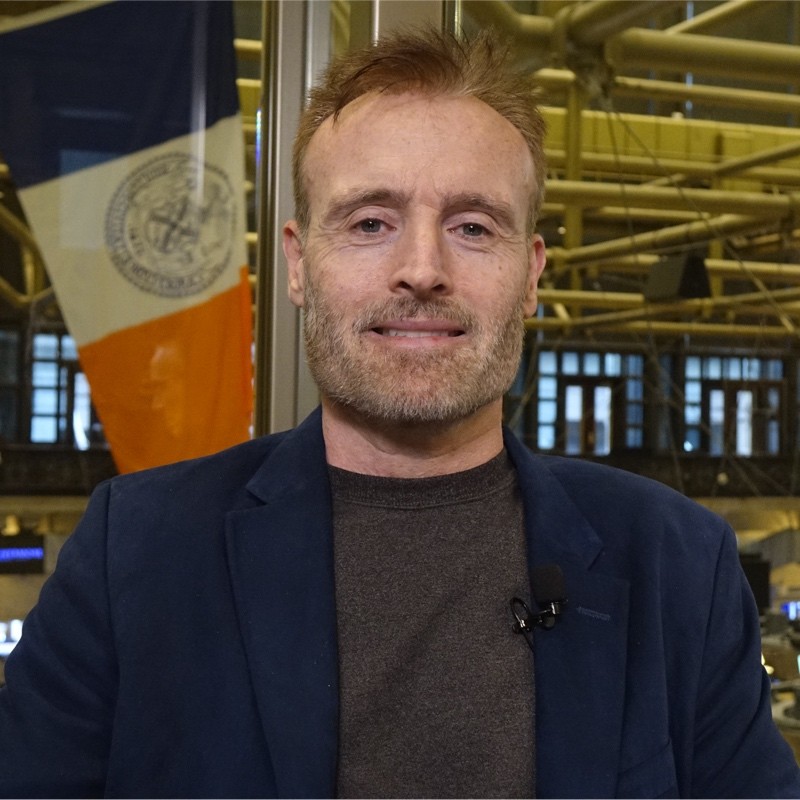
Quantum Metric, a company targeting large businesses with complex problems, including airlines, banks, and telcos, partners with Google Cloud to offer technology that sets them apart in the market. Their focus is on providing insights to different teams within organizations by breaking down data silos and making data meaningful to everyone. Quantum Metric's value proposition lies in helping businesses quickly identify and address issues in customer experiences, such as cart abandonment, by observing digital journeys and pinpointing friction points. Their AI technology automates tagging processes, eliminating the need for manual tagging and ensuring up-to-date data collection even as websites change. By using generative AI, Quantum Metric aims to personalize interactions with customers, predict loyalty, and improve overall experiences. The company emphasizes the importance of using data to drive action and listening to customers effectively in the digital age, with a focus on humanizing data-driven interactions to improve customer experiences without being intrusive.
Forgot Password
Almost there!
We just sent you a verification email. Please verify your account to gain access to
theCUBE + NYSE Wired: AI & Retail Trailblazers. If you don’t think you received an email check your
spam folder.
Sign in to theCUBE + NYSE Wired: AI & Retail Trailblazers.
In order to sign in, enter the email address you used to registered for the event. Once completed, you will receive an email with a verification link. Open this link to automatically sign into the site.
Register For theCUBE + NYSE Wired: AI & Retail Trailblazers
Please fill out the information below. You will recieve an email with a verification link confirming your registration. Click the link to automatically sign into the site.
You’re almost there!
We just sent you a verification email. Please click the verification button in the email. Once your email address is verified, you will have full access to all event content for theCUBE + NYSE Wired: AI & Retail Trailblazers.
I want my badge and interests to be visible to all attendees.
Checking this box will display your presense on the attendees list, view your profile and allow other attendees to contact you via 1-1 chat. Read the Privacy Policy. At any time, you can choose to disable this preference.
Select your Interests!
add
Upload your photo
Uploading..
OR
Connect via Twitter
Connect via Linkedin
EDIT PASSWORD
Share
Forgot Password
Almost there!
We just sent you a verification email. Please verify your account to gain access to
theCUBE + NYSE Wired: AI & Retail Trailblazers. If you don’t think you received an email check your
spam folder.
Sign in to theCUBE + NYSE Wired: AI & Retail Trailblazers.
In order to sign in, enter the email address you used to registered for the event. Once completed, you will receive an email with a verification link. Open this link to automatically sign into the site.
Sign in to gain access to theCUBE + NYSE Wired: AI & Retail Trailblazers
Please sign in with LinkedIn to continue to theCUBE + NYSE Wired: AI & Retail Trailblazers. Signing in with LinkedIn ensures a professional environment.
Quantum Metric, a company targeting large businesses with complex problems, including airlines, banks, and telcos, partners with Google Cloud to offer technology that sets them apart in the market. Their focus is on providing insights to different teams within organizations by breaking down data silos and making data meaningful to everyone. Quantum Metric's value proposition lies in helping businesses quickly identify and address issues in customer experiences, such as cart abandonment, by observing digital journeys and pinpointing friction points. Their AI t...Read more
exploreKeep Exploring
What is the goal of using data at Quantum Metric to understand what is happening in various roles within an organization?add
What cloud vendor did the company settle on in 2015 after evaluating all options?add
What is the importance of having differentiated data and analytics in understanding and improving business performance?add
What advancements in technology are allowing for tagless automation in collecting data for analytics companies?add
What are the advantages of buying through the marketplace with a partnership with Google Cloud?add
What is the importance of focusing on business outcomes rather than just on having more data or AI technology?add
What is the importance of using data to drive action in businesses and how can listening to customers be a key factor in success?add
>> Hello, welcome back to theCUBE here in New York City for NRF. This is our media week. I'm John Furrier, your host of theCUBE. a CEO, founder of Quantum Metric. Mario, thanks for coming in. Not a bad set here.
Mario Ciabarra
>> Beautiful background. I couldn't think of one better.>> Thanks for coming in NRF. I saw you had your badge. Just came back from there. We were there last night. A lot of events, saw the big companies there, Cisco, all the big players are there. Retail is not our sweet spot. We don't really cover retail speeds and feeds to the latest retail trend, but we do cover the tech and you're seeing a lot of retailers like healthcare be energized, enthusiastic by AI and data. We've been covering IoT edge for a long time, so you're seeing the confluence of that going on. You guys are in the middle of it, you're at NRF. Give us a quick taste of what's it like at NRF right now.
Mario Ciabarra
>> I tell you, you're probably at the gala last night to see Tommy Hilfiger being recognized for his decades of his passion and its obvious success, but being at NRF and to the point you're making, we've heard this before over and over. Every company is a technology company and why I'm at NRF as a CEO founder of a technology company is I think what we're seeing is that from five years I was at NRF maybe six, seven years ago, no one wanted to talk to the digital technology teams, right? They were there to talk about retail, about merchandising, about marketing campaigns. How do I differentiate? What we're seeing now is how many execs are seeking out who's driving innovation in generative AI and technology because that's where their customers are. We passed the 50% mark on how many people shop online versus physical retail, and they're looking for how do I differentiate our brand in the world of technology?>> Yeah, the brick and mortars, the digital convergence, it's happened, pandemic accelerated that. You had the pandemic forcing function of I got to go online. That was a big forcing function and now AI is forcing the user experience and now capabilities. So pandemic forces the behavior. Now you've got AI changing some of the business model, some of the capabilities of the providers where domain expertise really shines. If you have domain expertise and you have data, you're on the winning side of the AI wave. If you're not, you're going to be driftwood basically. Is it going to get crashed?
Mario Ciabarra
>> Yeah. I think we've all seen AI affect our individual lives, and I think when we apply it to enterprise, because we're seeing that effect happening from generative AI that impact, it only works when you have good data. So I'm on the same page with you. It's like how do I get the right data to make the right decisions that can be impactful? And we think about how do brands win the hearts of their customer? So how do I use data and analytics to win the hearts of customers? And that's the mission that we're on at Quantum Metric.>> I was just talking with some folks here in the exchange about apps, old school e-commerce apps, SaaS apps on the cloud. It's simply a website turns into a mobile app, posts on the cloud, okay, get some self-service. Great. Now it's gone to from that to full-blown platforms. It's not just a tool or an app. There's a lot going on in the apps. You guys at Quantum Metrics are in the middle of this. Set the table for Quantum Metrics. What do you guys do? What was the opportunity you saw? And give us some stats on where you guys are at.
Mario Ciabarra
>> What we do at Quantum Metric is help people understand the quantified why. And that's a lot of jargon and I want to explain it, but how do we use data to understand what's happening? This really the why and the why can be, why is John calling the call center? And imagine when the agent picks up, you're not pressing one through nine on the call and they say, "Hi, John, how are you?" They brought it to the right specialist, "Hi John. It looks like you're trying to check out with us, but you got an error in shipping address validation or that promo code didn't work. Can I help you with this or something else?"
Imagine they know John in an instant, and that's the world that's we're transitioning into with generative AI because for the last few decades we've been collecting data about John, but we've never had a way to communicate that data in real time. And obviously that's the call center example, but what about for the product owner, for the DevOps owner or for the marketing, for the merchandiser? That quantified why means a little bit different for each one of those audiences. So how do you translate the information we have about John to each one of those audiences so that they're all working lockstep at winning John's heart, not my marketing priority versus my tech priority versus my merchandiser's party. It's like what is John's priority? If we shift the paradigm to think about the consumer, we end up with happier customers.>> I love that you got metrics in the name of the company. I like the word quantum too. We actually have a guest actually talk about quantum computing.
Mario Ciabarra
>> A little different, but yes.>> So the why, when you hear why we now have to add on the what, there's always the why measurement, what are you doing and why are you doing it? Hey, I got to get my Christmas gifts. I'm ordering online. Why I am in a hurry. Why? Because I have a family.
Mario Ciabarra
>> Why am I calling? Because I'm frustrated because your site doesn't work. And I think we've all had those personal experiences. The site doesn't work for us. Have you had that happen to you, John?>> All the time. Well, all the time. I had a lot of problems with credit cards. Which card's expired? Which one's now in rotation?
Mario Ciabarra
>> Do you ever try your credit card and then Apple Pay worked or vice versa, or then get forced to try PayPal because the payment system's not working with your credit card or Apple Pay. This is silly.>> Apple Pay goes to my Apple email account. I got my Gmail, I have all these touch points. I have multiple relationships with the thing, the app and/or the brand. So I have an app and a brand. So there's a lot going on with me as the user. How do you guys help me? Because my why is pretty simple. I want to buy something, I want to solve a problem, I want to progress to a decision. Or-
Mario Ciabarra
>> You asked about the question about the foundation of Quantum. And in my early teens, probably like most of us, I had a job in retail and when someone walked in the store and they needed help, I could look into their eyes and see, "Hey John, can I help you with something?" How do we translate that love and care that we had in a physical store or digital especially I think maybe five years ago it wasn't important. Post-pandemic, as you pointed out, we've got that acceleration, that forcing function. Now how do I take that love and care that it had in the physical world onto digital? And it doesn't work when you're looking at graphs and charts, there's no connection. There's no human emotion with that. How do I use data to connect that human emotion? Because John coming to my site and in fact I had this experience or this paradigm or this analogy, what I'm looking for is could you imagine walking into a retail store, find the product that you love, and then on your way to check out, you run into a glass wall? You know what you do as an associate in the store, you move the glass wall out of the way. Where are the glass walls on digital? And the worst part that we've discovered is that there's thousands of glass walls on your path to success on digital. How do you find them? And then how do you figure out which one's the biggest? And I think that's really maybe a translation to everyday terms of what we're doing for the world's largest retailer, bank, airline, telco, healthcare, gaming, and more. We work with all these major brands at figuring out where are those glass walls where people are trying to complete some kind of task or transaction with them, and then how do we help them figure out how to make it better?>> Yeah, lockers, glass walls. And by the way, the glass walls is a great analogy because they're invisible.
Mario Ciabarra
>> Exactly.>> You just walk right into them.
Mario Ciabarra
>> Exactly, exactly.>> And a lot of that invisible or those walls are created by pre-existing conditions like databases, data silos.
Mario Ciabarra
>> Yes, yes.>> So let's talk about the data roll of the data because that's where the magic comes in as we accelerate through AI, data silos don't help make data available. If you want to get insight into me, you got to hit multiple databases, right? So okay, what does that mean? As people get bigger in their business, what are some of the challenges you guys help people with when they have to wrangle the data? Are you guys on the... how deep in the stack do you go? Do you have a full stack? Talk about what you guys do to solve that data problem.
Mario Ciabarra
>> Yeah, we collect data about John's experience, his journey, what he clicked on, what he did, what he saw, any friction points that he had. And I think it's not just about collecting and storing, analyzing data, that's been out there for a bit. But how do we shape that response, that understanding of that data to the different audiences within the organization? Because what we saw happen, like proliferation of tools, of data silos, as you mentioned across the org. So I had marketing analytics. It's probably one of the first analytics that data capturing of John's experience over the last 20 years. Then we saw product analytics, experience analytics, we had APM or IT analytics. We had all these different analytics. And now if you asked a simple question to a leader, who's responsible for ensuring John has a good experience? It's everyone. It's all of these different teams. And if they're all working on different sets of data, if they're all working in data silos, I can't align my organization to how to make John's experience better. So I think one of the really big transformational successes that we had at Quantum is how do we have this data communicate to the entire organization, to the marketer, to the product owner, to the DevOps owner, to the e-comm leader? So you're right, it's not about having these data silos, it's taking that data and making it be meaningful to the entire organization.>> So talk about the role of Quantum. What are you guys targeting for customers? What's the profile? Give us a taste for the customer user base you're going after.
Mario Ciabarra
>> You mentioned, tell us about the journey and the success. We started off in 2015. I remember our first customer was Advanced Auto Parts. It was serendipitous. You mentioned you're a founder, you remember probably every first customer that you're able to acquire. I remember that like it was yesterday. But if you fast forward 10 years to 2025, you're very public about our numbers. We grew from 100 million to 120 million here in 2024, we're expecting even greater growth in 2025. In fact, we had our best growth year ever in 2024. We actually hit profitability in Q4 of last year.>> Congratulations.
Mario Ciabarra
>> Thank you. It's definitely an honor and it's an amazing team to have to make that come to life. And we're seeing the acceleration and the fun part of that acceleration is what do we do differently in '23 versus '24? Generative AI, John, came on board. One of our board members happens to be named John as well. You mentioned Cisco. It was John Chambers, the former CEO and exec chairman of Cisco. He called me up and he said, "Mario, what is your generative A.I strategy?"
And through those discussions led to what we call Felix AI. And Felix AI is this ability to use Google Cloud's Gemini Pro to analyze John's experience. And we've always collected John's experience, but we didn't know how to communicate that in real time to a call center agent, to a marketer, et cetera. It took time. And what we're really seeing that impact of generative A.I both within our organization and to our customers is efficiency. You could have done all of these things before, but how do we make it more efficient? If a human is going to take hours to answer the question of what's wrong with John, man, imagine if generative A.I can do it in seconds. So that generative AI adoption inside of Quantum and as you productize it, took our customers, made that change, that growth change happen in our business in 2024. And to your point of who's our ideal customer profile, it's really people with large complex problems. We found that working with smaller retailers, it's easier for them to just ask John what his problem is and then to go iterate it. But when you have scale, when you have millions of people on your digital experience every day, you need tools, you need analytics to understand those users because you can't do it one-on-one. And with that scale, that's really our ideal customers, like who's got really large complex problems like an airline, a bank, a telco? All five airlines in the U.S. use Quantum, all three major telcos, all three major media companies in the U.S. all use Quantum and we're helping them solve these complex problems at scale.>> You mentioned Google. What's your relationship with Google Cloud?
Mario Ciabarra
>> Google Cloud has been with us along the entire journey. We evaluated all the cloud vendors in 2015 and we settled on Google Cloud and they have been a phenomenal, honestly the best partner we've had along in this journey. And when we think about our relationship, obviously they've had the best tech. I actually wrote an article in Forbes in 2016, how Google is winning the cloud war, which if you remember the revenue numbers in ->> They were third.
Mario Ciabarra
>> Yeah, exactly.>> third.
Mario Ciabarra
>> They were third. But it wasn't about their money that they're winning, it was about the technology. It was absolutely differentiated. I'm a technologist. As we were talking before we started, I'm an engineer by trade and what was different about the cloud vendors, it wasn't the brand name that I cared about because I think the other vendors have great brands. It was what's underneath the hood? What's technology's going to win? And you got to bet on the right horse and Google was the winner for us. And if I fast forward to 2024, as you evaluate LLMs and generative AI solution sets, we evaluated them all from anthropic to open AI, of course, and then Google. And we all know that OpenAI was first, and so we were leaning into OpenAI and Google came out with Gemini Pro, and I think what I saw was parody like, okay, great, now we're even, and it doesn't really matter which one you choose. Where I really saw the breakaway moment was when Google released the Gemini Pro, and the context window is a million now 2 million tokens. What we had to do before to solve the problems that we were solving was ask multiple iterations. We had to ask 10 questions to get to the end point that we needed. We had a break and chunk apart our questions and then we get to the end. We were able to solve it with the smaller context windows that everyone started off with. But with Gemini Pro, when they had a million or 2 million token context window, now it's all just one question. And I think about the simplification about how you run your business, that's been a big differentiator for us.>> And cost per token's been coming down too. So context window size and cost per token.
Mario Ciabarra
>> Yeah.>> .
Mario Ciabarra
>> I think they're all being so competitive that I wouldn't tell you I've chosen one versus another based on price. Because even if one's cheaper today, tomorrow they're going to, the price, it's race at the bottom.>> It's about capability.
Mario Ciabarra
>> Yeah, exactly. It's like, can you solve my problem? And Gemini is the only one that can do that huge context window and get to great answers at the same time.>> Yeah, when they eliminate checkpointing, that's going to be a game changer. All right, so let's get into the year of the current proposition. What is the current value proposition for customers now that you guys are offering? Omnichannel, first party analytics is a little bit easier, but when you're dealing with APIs and partners, you might have a black box there. You don't know what's behind that API. When data's there, you got to have the lineage, you got to have the data supply chain. These are technical things that come up, AI is relying on high quality data.
Mario Ciabarra
>> Yeah, I think the best way to explain what we can do with data that's differentiated, so that value prop is imagine it's Tuesday morning, Monday morning, and you get an email that says, "Revenue's down 10%." Maybe it's an alert, maybe it's your boss. I've seen both scenarios happen and the next question as a leader that you're going to have is why, right? Of course, the second question you're going to ask is, okay guys, go get it fixed. But you can't improve it until you know the why. And before Quantum, before great data and analytics, you'd always get to the why. It's just a question of how long does it take to get there? So I think the operational efficiency is the key underlying story that's being told here. But what we're really talking about is imagine when you get the email that says revenue's down 10%, it already has the quantified why in the email. It's down because the Apple Pay API broke or address validation broke or shipping vendors API broke. Some kind of friction is there, and we use people to get to that end game right now, imagine that we can use generative AI to really observe the journeys of thousands of users in a couple seconds and say, "This is the reason. These are the top three reasons why revenue's down 10%." And I think that's the real game changer because we can do it today, it just takes hours. Imagine I know the why right away.>> I was talking with Bill Tai, he's on theCUBE alumni, he was on our last sequence of events we did. He invested in Canva, early stage investor did well, is doing well, great company. He said the secret to their success was frictionless, repeatability and scale. That comes up a lot. So what problems do you see right now in the current state of the market where the problems get, if you stack rank the problems that are common in retail today as they, it's clunky right now as you move through and there's going to be a calm before the storm, then the storm, then it's calm. So what are some of the problems that categorize to the top? Is it payments, is it speed? What are some of the areas that you see the most of?
Mario Ciabarra
>> Yeah, when it comes down to friction, think about why does John ever abandon a card? It could be price, could be product availability, could be payment, could be shipping, shipping costs. We're helping answer those questions. Why are people abandoning the journey? They came to our site, our marketing worked. Why aren't they converting? This is what's on the minds of every retailer because as we've shifted from physical where we could observe people, oh, they left because we didn't have their size. Oh, they left because there's a long line to check out. There's lots of reasons why people might abandon a purchase process in a physical store, but we can observe them. How do we observe them on digital? So I think that's the problem that we're solving. How do we observe where the friction points are in digital? And when it comes to how do we stack rank them all, it's different at every retailer we've seen. Different kinds of problems, but helping them get to that why quickly, that's our value proposition that we're solving for. And we work with the world's largest retailer, which we all know the brand name.>> You've been an entrepreneur, now multi-time entrepreneur. What was the reason you did this company? What was the origination story? Was it you woke up one day and said, "Hey, I was in retail as a kid, I want to do this. It's a big opportunity. It could be disrupted." What was the entrepreneurial mindset at that time and then what happened?
Mario Ciabarra
>> You've done a number of startups too. So I think the answer's slightly complex because it does involve the story. You said I was a kid and I did observe it, but I think the real connection point was I ran my third startup was an app store for iOS. It was what was called in the jailbreak market. So I actually had created the Wi-Fi hotspot before Apple had created it. But you can create whatever you want, but how do you bring it to market? So I created a store to bring it to market and it was tremendously successful. But along the journey there would be people saying, "I can't check out." Imagine you create a great product, you create a great way to distribute the product, but there's going to be edge cases. How long did it take me to understand those edge cases? I'm like, "Wow, this is really hard."
I remember distinctly this person in Japan trying to communicate with me. His English wasn't great. My Japanese was near zero. And so it was difficult for me. It took weeks for me to understand what he was really getting at. Finally, it was a payment issue and I fixed it. Had I could have just seen what his experience was in quantifying. Actually, you know what, this is about 10% of the people out of Japan trying to buy our products and services and they couldn't get it because the payment system didn't work for some of the Japanese address validations. So just really that was a light bulb moment where it's so difficult to get to the quantified why, there's got to be an easier way. So if we could just observe users, use analytics to figure out in a quantified way, a prioritized way where we can make the biggest impact to win their hearts, that would be transformative .>> Okay. so how does someone use, you guys? Take us through that. I'm sold on it, I want to observe the journey, not just doing journey mapping. I want to have actionable-
Mario Ciabarra
>> Insights.... >> business results. How do I, on board as a SaaS, take me through the engagement.
Mario Ciabarra
>> We're a first party tag and we have an SDK in iOS and Android to help get that visibility. And I would tell you just a few weeks ago, we would have to go tag everything. We'd have to say, okay, here's the product they added to cart, here's the SKU, here's the color, here's the size, here's the quantity in the cart and so on. These are just some of the mundane tasks that all analytics companies have to do. We're tired of it. And it's been a , I've actually in 2015 was thinking, I need to solve this problem and I was not able to solve it, but enter 2024, '25, now with Genevieve AI here, we've actually solved this problem. So think about this. To get started with quantum, I've got to start collecting the right data and instead of using humans, I could just send these, let's say web pages or views inside of an app to an LLM and saying, "Hey, where's the product name? Where's the SKU? Where's the cart value?" And so on. And now it's tagging everything automatically. So this tagless automation that's coming out of the advances in Genevieve AI is allowing that deployment to just be deploy the tag.>> So your mundane tasks, the grueling tagging is gone?
Mario Ciabarra
>> Now automated with generative AI and it's just amazing how it's just seconds to get that deployed versus it would take days before with humans to do it. And the worst part about it, John, is okay, we got it deployed, it's working, we're creating success, they're going to change their website every day. And we got to make sure that we've kept up to date with the tagging. So it's not a one and done tagging process. It's constantly making sure that we're configured correctly and that whole constant monitoring and maintenance is now gone.>> Okay, so do I buy through you guys marketplace?
Mario Ciabarra
>> Yeah.>> What's the-
Mario Ciabarra
>> As a partner with Google Cloud, I tell you, most of our customers are buying through the marketplace because of some advantages for them to do it. So yeah, they can buy through the Google Marketplace with a great partnership with Google that we can work together with our Google account teams, they bring us in, do a POC. As a founder, you probably share this approach. I want to prove it to you before we solidify through some kind of commercial agreement. I'd love to prove with our customers that we can actually have this massive impact to their customer base and to their business.>> The premium?
Mario Ciabarra
>> Let's agree to a POC what the outcomes of success would look like.>> It's a paid POC.
Mario Ciabarra
>> It's a, make sure that we have an agreement if we hit the measure of success that we're going to continue as a partner.>> Pretty much variable backend outcome-based approach.
Mario Ciabarra
>> Yeah, outcome-based. Let's create success, and then we will go be commercial partners as well.>> All right. What's the coolest thing you've worked on?
Mario Ciabarra
>> To be honest, I have had some hands into this Felix AI, our generative AI, a product that we've released that has driven our success. And the funnest, or maybe coolest part about it was we used Gemini to create Felix AI. So we used generative AI to create our generative AI product. This is just getting into this weird circle matrix world that we're talking about now. So it was just amazing that these small couple of days of development has led to such an impact into our business.>> From a customer standpoint, can you name any customers or are they all confidential?
Mario Ciabarra
>> Well, I've mentioned every airline in the U.S., every telco in the U.S., the number one retailer and many more in the U.S.>> Pretty much customer facing use cases where there's an engagement or relationship buying or procuring something?
Mario Ciabarra
>> Yeah, I would say B2C is a big part, but it's even, I can mention someone like Medicare and Medicaid, our customers, and all this is public because you can see our tags deployed on all these customer bases. But think about where you're trying to use digital to do something. That's where we're going to be.>> What's the hardest thing that you're working on now that you see coming fast? You mentioned multi-channel, understanding the why. There's a lot of why's out there, a lot of data and there's a lot of data in marketplaces. There's data potentially in other companies. So you got this horizontal need to get as much as possible, but yet be very fast in analyzing it, which has always been a hard data problem. Everyone wants to be the semantic layer control plane. Everyone's peddling that value proposition. What's your reaction to that?
Mario Ciabarra
>> Well, I would say it's really all about business outcomes. It's not about I have more data, I have less data, I have AI, everyone has AI, everyone has data. What are the business outcomes? And I'll translate, what I'm excited about that's coming to market today? For example, I'm sure John, I'll put money on that. You've got an email saying, "John, you left three items in your cart." Could you imagine if John tried to pay but his payment didn't work or his shipping address validation didn't work and the promo code didn't work? He couldn't log in and reset his password. We've had all these experiences. Imagine personalization or that outreach, "John, hey, sorry you couldn't reset your password. We had a problem. We fixed it. Here's 20% off." Imagine the personalization we can do when we understand John as the individual versus, hey, let's blanket everyone that left the two items in their cart, right? It's crazy.>> Yeah. One problem you can fix right away is, I've done this many times is that I've booked the wrong flight because it defaults two months ahead.
Mario Ciabarra
>> Yes, I've done it too. I've done it too, John.>> It's crazy.
Mario Ciabarra
>> And imagine when you call in, they know what you're calling about when you're trying to change a flight. I think that's the expectations from a consumer's perspective that we're going to see change. In 2025, we're going to see these things roll out and you're going to start getting calls. And I hope both the audience and you when you call in and you're not pressing number five in the IDR and you're not getting, "John, how can I help you?" You're getting really personalized conversation.>> I love it when I get an interaction where they have my account pulled up, not I'm back to someone else, can you repeat your account number?
Mario Ciabarra
>> Exactly.>> Again?
Mario Ciabarra
>> Exactly.>> It's a third time.
Mario Ciabarra
>> How do we remove the friction? You said the word frictionless. How do we remove those frictions? How do we understand the customer, the individual? And also I think the hard part is how do we understand at scale, what are the top three things that we can do that would move the needle for our business? And it's got to be across marketing and product and tech. It's got to be all these things working in unison to really focus on the customer.>> All right, final question back to NRF. What percentage of this show would you say is tech versus pure retail stuff?
Mario Ciabarra
>> I think there's going to be merchandising. I think we're going to hear about marketing and what's changing and we're seeing, I think underneath it though, what I'm hearing is generative AI is changing our marketing, both marketing content, marketing direction, who we outreach to, merchandise. I think everyone, what we're hearing underneath any of the stories of any the different personas is how do I use generative AI? How do I use technology to change my success? And I think the words operational efficiency underneath that, it's really technology driving that change.>> Any observations on brand loyalty changing over due to the frictionless nature of the user experience? I can always one click away from jumping to the competitor.
Mario Ciabarra
>> That's the problem. I think, I remember talking to a brand here in New York about five or six years ago and showing them some terrible experiences that customers are having. They'd come back to the cart, they couldn't remove an item from the cart because it was broken. They get an error when they couldn't remove an item from the cart. And I remember the leadership there, "These are loyal customers, they're going to come back, don't worry." And I'm like, okay.
And I remember this person's name and I said, "Hey Michelle, that's great. Let's look at one of these journeys." And we saw that same person trying to shop over three days, the same item, and each time failing. And I think the question I asked is, "How many more times are they going to shop with you until they no longer want to shop with your brand?" So I think->> It's like they could see the item and they're running into these walls, like you said, the invisible wall.
Mario Ciabarra
>> Imagine I'm at checkout and I'm saying, "Take my money." And you're like, "Sorry, the register is broken." That's the experience that we're having on digital. And I think what people are waking up to is I have a choice as a consumer. And if you can't deliver, I think the experience is becoming more and more forefront to the same as the product quality, the same as the marketing quality. If you can't deliver a great digital experience, I'm not going to exist with your brand. So I think we're seeing that change at NRF where technology, I know I have to have as great of experience as I have with my product, as I do with my digital experience or else these customers won't be loyal brand to my brand.>> Okay, so 10 years, you're at a different place where you are than when you started. John Chambers gave you the pep talk, now you've got an AI.
Mario Ciabarra
>> Yes.>> Did he put money in?
Mario Ciabarra
>> He did.>> Okay, cool. John Chambers CUBE alumni, great guy. Okay, now going forward, what's the vision? What's the next mountain you're going to climb?
Mario Ciabarra
>> I really think, for us generative AI is changing so quickly. It's hard to look into the future about what it might change. But I think you mentioned it earlier, there's so much data that exists all around the organization. We've heard about net promoter score or NPS like how do we listen to the customer, make sure that we're doing a great job? We do that today mostly through surveys. Quantum in itself is doing the same thing. We're observing the customer journey to understand, are you happy or not? But there's lots of other pieces of information at a retailer like, did you get your product on time? What would the chat look like in the call center? Did you do a return? Did you leave a one-star review or five? And if I can start pulling in all of this data to understand, is John happy with me? It's more than just a survey. It's more than just a digital experience. There's so many pieces of data. I know about John. No one's really attacking the problem of how do I listen? And so I think what's in the future for us is how do we combine all these sources of data to get what I would call predictive customer loyalty. Is John going to stay with our brand because he's having great experiences across every touchpoint that we have? Or is John frustrated we're about to lose him and what can we change?>> Yeah, great conversation. I remember talking to a guy about around collective intelligence. He's like, "You know why the TVs at Costco, right when you walk in? Because they have data that tells them that that's a surprise and delight. It's a spur-of-the-moment purchase. No one goes to Costco to buy TVs, but it's right there. Sometimes they buy, sometimes they come back and get them."
The idea of finding what I'm looking for, that's the classic use case. And then there's the surprise and delight. You might like this, and I love that on Netflix. I love that on when you start to see you watch this, you might like that. It's been that contextual relevance comes in to be a huge factor. I know it's been around for a while, but how is that changing?
Mario Ciabarra
>> I think the gem of what you just said, whether it's Costco or Netflix, it's data. And it's not that I collected data. Because you can have data sitting in a data swamp, not a data lake. And if no one uses it, it has zero value. All the work you did to collect it doesn't mean anything. It's how do I take data to drive action? And the actions of placing TVs in the center of getting the right content on Netflix, I think that's what's going to be more effective as we move forward. And obviously Quantum, I think will be part of that story. How do I take data and drive the right outcomes for my business? And I think at scale, it's just listening. Listening, whether it's what drives success in Costco store or what movies or content do I want to watch, listening to your customer has been the age-old path to success. It's so simple, yet so many people miss. Just listen. And I think it's just hard when you're in a physical store, easy to listen to body language and what they say. On digital, we've had to make a big shift in just a small couple decades. I've got to listen with data and it's hard. And I think that's the evolution, the future of Quantum is how do we constantly make data listening easier for our consumers.>> That's humanizing it too. It's understanding it well and having that listening mode-
Mario Ciabarra
>> Yes.... >> without being creepy.
Mario Ciabarra
>> Yep, yep. Absolutely.>> Mario, thanks for coming on. I appreciate you.
Mario Ciabarra
>> Appreciate you, John. It was an honor.>> All right, we are here.
Mario Ciabarra
>> Thanks so much.... >> at the New York Stock Exchange. I'm John for your host of theCUBE. It's our CUBE East here on Wall Street from Silicon Valley and Palo Alto here in Wall Street. Thanks for watching.