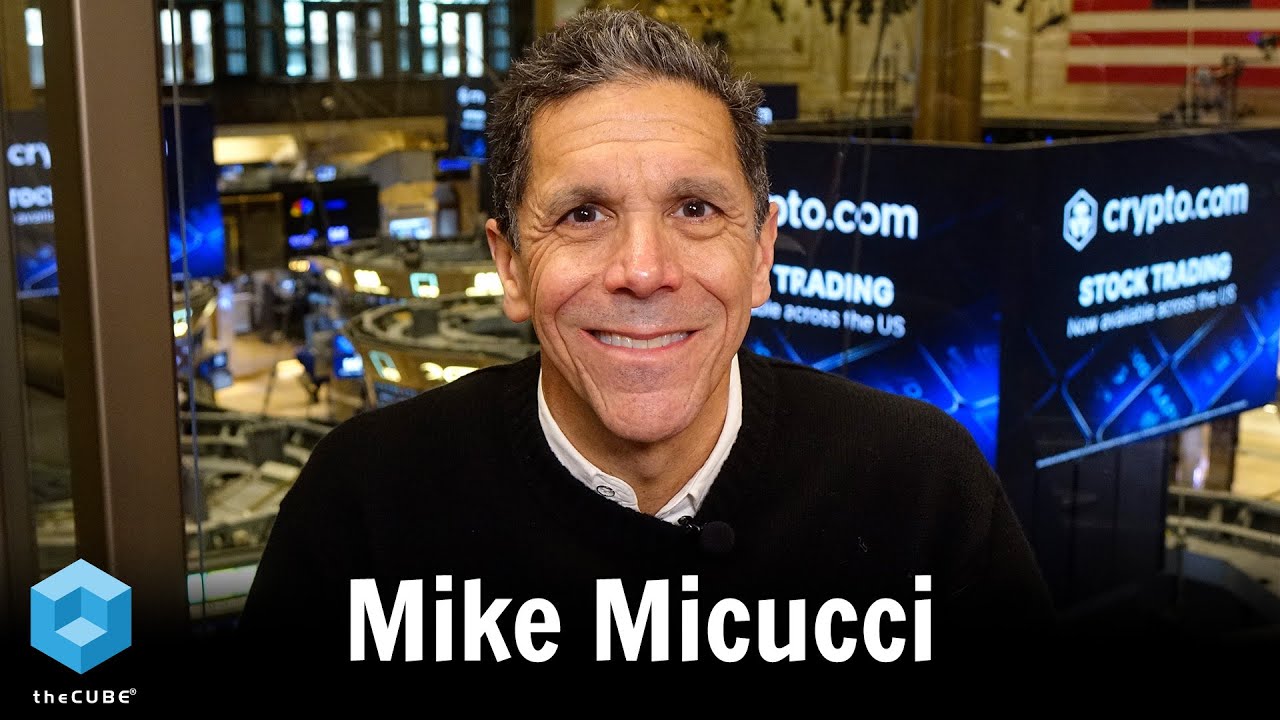
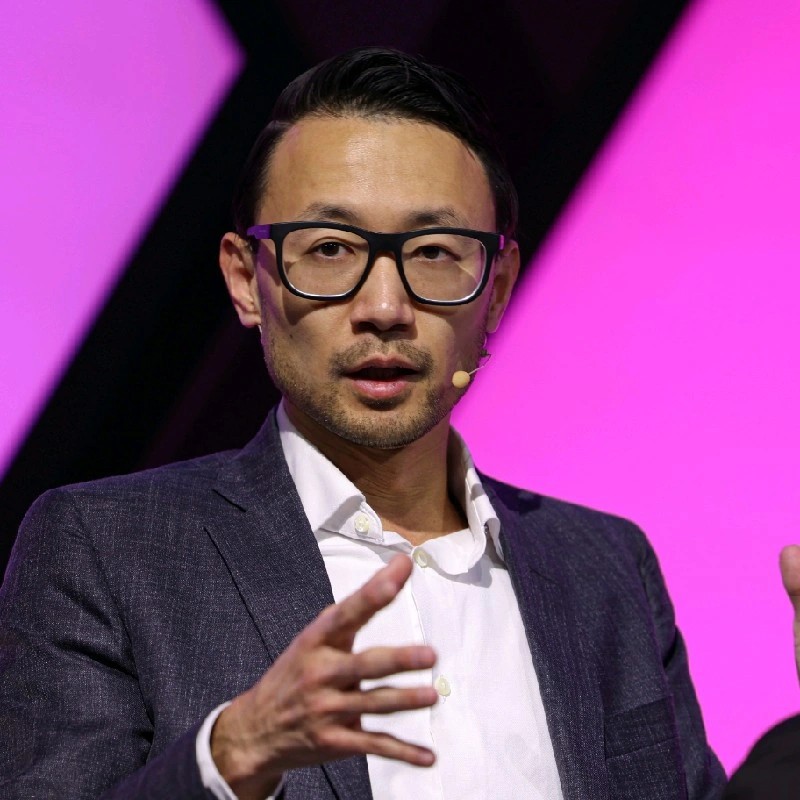
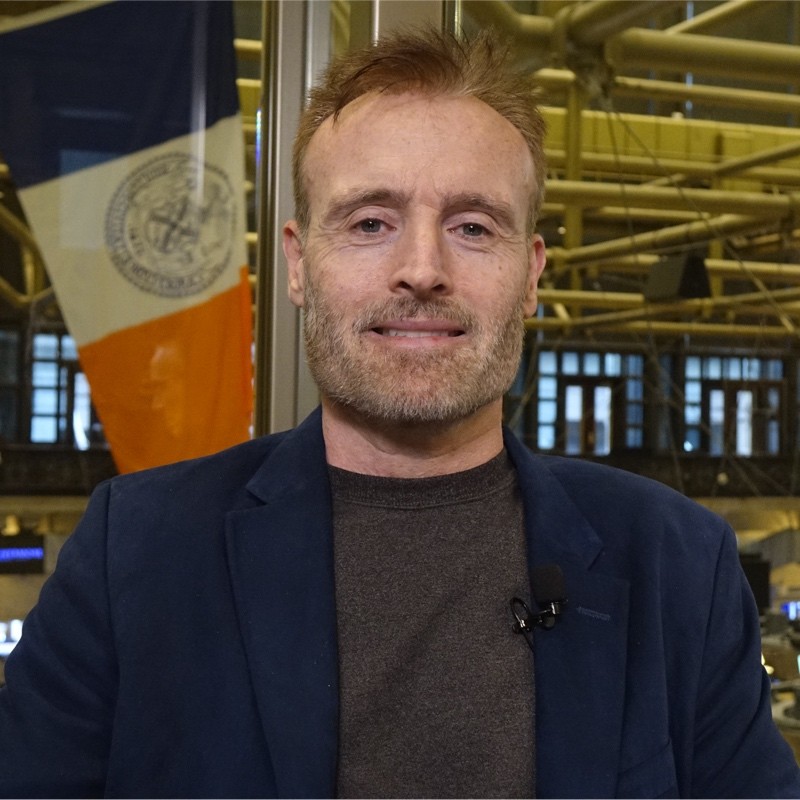
Dave Vellante, John Furrier, and Mike Micucci discuss the NRF event and the future of retail, highlighting the role of AI in transforming the industry. Mike explains how Fabric, a company he leads, offers software and technology to retailers to optimize their operations and improve customer experience. They discuss the challenges of data silos in retail and how Fabric's AI-powered platform helps retailers make better decisions regarding inventory allocation and fulfillment. The conversation delves into the technology behind Fabric, focusing on its modern retail platform built on AWS services and powered by Agentic AI agents that assist operators in making informed decisions. Mike emphasizes the importance of delivering customer value in the AI-driven retail landscape, predicting an increase in the use of shopping and selling agents to enhance productivity and drive better business outcomes. Fabric recently launched AI Order Cloud, a product aimed at streamlining the order lifecycle across various channels and optimizing inventory placement. The company is experiencing growth and has ambitious plans for the future.
Forgot Password
Almost there!
We just sent you a verification email. Please verify your account to gain access to
theCUBE + NYSE Wired: AI & Retail Trailblazers. If you don’t think you received an email check your
spam folder.
Sign in to theCUBE + NYSE Wired: AI & Retail Trailblazers.
In order to sign in, enter the email address you used to registered for the event. Once completed, you will receive an email with a verification link. Open this link to automatically sign into the site.
Register For theCUBE + NYSE Wired: AI & Retail Trailblazers
Please fill out the information below. You will recieve an email with a verification link confirming your registration. Click the link to automatically sign into the site.
You’re almost there!
We just sent you a verification email. Please click the verification button in the email. Once your email address is verified, you will have full access to all event content for theCUBE + NYSE Wired: AI & Retail Trailblazers.
I want my badge and interests to be visible to all attendees.
Checking this box will display your presense on the attendees list, view your profile and allow other attendees to contact you via 1-1 chat. Read the Privacy Policy. At any time, you can choose to disable this preference.
Select your Interests!
add
Upload your photo
Uploading..
OR
Connect via Twitter
Connect via Linkedin
EDIT PASSWORD
Share
Forgot Password
Almost there!
We just sent you a verification email. Please verify your account to gain access to
theCUBE + NYSE Wired: AI & Retail Trailblazers. If you don’t think you received an email check your
spam folder.
Sign in to theCUBE + NYSE Wired: AI & Retail Trailblazers.
In order to sign in, enter the email address you used to registered for the event. Once completed, you will receive an email with a verification link. Open this link to automatically sign into the site.
Sign in to gain access to theCUBE + NYSE Wired: AI & Retail Trailblazers
Please sign in with LinkedIn to continue to theCUBE + NYSE Wired: AI & Retail Trailblazers. Signing in with LinkedIn ensures a professional environment.
Are you sure you want to remove access rights for this user?
Details
Manage Access
email address
Community Invitation
Mike Micucci, fabric
Dave Vellante, John Furrier, and Mike Micucci discuss the NRF event and the future of retail, highlighting the role of AI in transforming the industry. Mike explains how Fabric, a company he leads, offers software and technology to retailers to optimize their operations and improve customer experience. They discuss the challenges of data silos in retail and how Fabric's AI-powered platform helps retailers make better decisions regarding inventory allocation and fulfillment. The conversation delves into the technology behind Fabric, focusing on its modern retail platform built on AWS services and powered by Agentic AI agents that assist operators in making informed decisions. Mike emphasizes the importance of delivering customer value in the AI-driven retail landscape, predicting an increase in the use of shopping and selling agents to enhance productivity and drive better business outcomes. Fabric recently launched AI Order Cloud, a product aimed at streamlining the order lifecycle across various channels and optimizing inventory placement. The company is experiencing growth and has ambitious plans for the future.
Dave Vellante, John Furrier, and Mike Micucci discuss the NRF event and the future of retail, highlighting the role of AI in transforming the industry. Mike explains how Fabric, a company he leads, offers software and technology to retailers to optimize their operations and improve customer experience. They discuss the challenges of data silos in retail and how Fabric's AI-powered platform helps retailers make better decisions regarding inventory allocation and fulfillment. The conversation delves into the technology behind Fabric, focusing on its modern reta...Read more
exploreKeep Exploring
What was the experience like at NRF this year?add
What are the big trends in retail and the underpinnings of that transformation?add
What are some key features of Fabric's retail platform?add
What is the importance of Agentic AI Systems in transforming the industry in the next couple of years?add
What new product has the company recently launched and how does it aim to help customers manage their order life cycle and improve their customer experience?add
>> Hi, everybody. Welcome back to Media Week, theCube and NYSE Wire's coverage of NRF. My name is Dave Vellante, and I'm here with John Furrier as well. Mike Micucci is here. He's the CEO of Fabric, a company that provides software and technology to retailers. And we're going to get into what's happening at NRF, and what's happening in retail, and transformation, and AI, and all that good stuff. Mike, good to see you. Thanks for coming in-
Mike Micucci
>> Thank you. Thanks for inviting me....
Dave Vellante
>> to our studio here. Yeah, you bet. So you've been up at the NRF this week?
Mike Micucci
>> Oh my gosh, yeah.
Dave Vellante
>> What was that like?
Mike Micucci
>> NRF was fantastic this year. See change even from the last year. Very busy, lots of excitement, seeing a lot of the retailers and brands out actively really looking and kicking the tires on new technology, and getting ready for their next wave of transformation.
Dave Vellante
>> It's kind of interesting. I mean, I was at GTC last, I guess March or April, and it was one of the most amazing conferences I've ever been to. You see CES this year, Mobile World Congress, MWC, same thing. I mean, just the transformation is palpable, isn't it? As I'm powered by software and technology, what are the big trends in retail and the underpinnings of that transformation?
Mike Micucci
>> Well, we're on, I think the next wave, particularly on retail and commerce, the next wave. With that next wave, it's pretty obviously being powered by AI. The underlying systems, which are phenomenal, have been laid in place. And it's setting the stage for an AI revolution. Most people, when they think about AI and commerce, you're thinking about the front-end consumer experience, which we'll see continued evolution there. But the real opening up, in my view, is the operational aspect. There's a lot of data inside of the all the retail systems commerce. But the ability to stitch that data together, from the point of purchase all the way through to how you fulfill, so that our customers, in this case brands and retailers, can make better decisions about how to allocate inventory, how to move product from point A to point B, how to better fulfill across their different locations, it's going to elevate everything. It's going to help them do a much better job on conversion, and save a lot of money on fulfillment.
Dave Vellante
>> Okay, so we used to walk in a store, that's the only way we could buy something. And then e-commerce was the big wave in the '90s. And of course, we've seen that balance. Amazon didn't take over the world. Walmart's actually pretty competitive, as are a number of other players. So when you think about those underlying systems, the plumbing if you will, what's the state of data? Every company struggles with data silos. Has retail, are they beginning to solve that problem? How are they solving that problem? And then, how do you leverage that data to drive value?
Mike Micucci
>> Yeah, I think if you took a step back, and you said, you kind of nailed the trend. We started, we just walked into a store, and you got what you got. And then, around every year, every 10 years, what I call demand disperses to more and more different channels. So your physical store, your online store, now it's marketplaces. Is it social? It's a search engine. Next year, this year, it'll be shopping bots. So demand continue to disperse. At the same time, you need systems that can understand those demand channels, and say, okay, how do I better orchestrate across those channels and make sure I fulfill? Data, to this point, mostly has been sitting in a series of different systems that didn't allow a brand or retailer to properly understand how to orchestrate that business to one, drive increased conversion, and two, how to reduce my cost and fulfillment? And when they didn't have that data in place, two things suffered. One, their business suffered, but two, the customer experience. We've all had that experience where everything goes great, and you're like, "Wow, that's awesome." And we've had the experience where it didn't go so great, and it's a real challenge, kind of unwinding it. That's a lot because that brand or retailer didn't have the data and systems working together to properly understand there's a shipping disruption, or there's an issue, a weather impact, or maybe I didn't have the inventory in there in the first place, I shouldn't even have sold it. All that now can be changed, because what happens, typically we're now putting AI on top of that, is AI and a good system can stitch this together, and provide clarity to help you make decisions, basically in real time to help drive your business.
Dave Vellante
>> So when I first read about your company, I was like, oh, it's like an operating system for retail. And then I looked at the name, I said, "Oh no, it's a fabric."
Mike Micucci
>> That's right.
Dave Vellante
>> And so-
Mike Micucci
>> Weaving things together.
Dave Vellante
>> Yeah, so talk about the underlying tech, if you would?
Mike Micucci
>> Yeah, so Fabric started with a best-in-class modern retail platform. Okay? It's built on top of AWS services. It was built recently. It's lightening fast, because that's what you need in today's retail. You need to be able to respond to changes and demand instantly. It's what we call auto-scale, meaning you can go up and then go back down on demand. That's awesome for a retailer, because, what do we know? They have peaks, they have sales, they have holidays, and they bring it back down, very cost-effective. But on top of Fabric is a set of core commerce services. Particularly, think about inventory, orders, and products that we can inter mesh to drive a particular experience. That might be a shopping experience for you, or it might be a fulfillment experience. But on top of that, which is, I think the real breakthrough in the industry, and you're going to see it transform the industry over the next couple of years, is what we call an Agentic AI System. Agentic AI is, essentially, we have AI agents that correspond to the people interact with the system. So we have an AI agent that helps the supply chain operator, helps them make decisions and configure the system. We have an Agentic AI agent that works with a merchandiser to help them do better assortment, product displays, and so forth. All of this now helps them automate their job, but brings that data together so they can do their job 10X better and drive a better customer outcome.
Dave Vellante
>> All right, you're from San Francisco and you're CEO of a tech company, so obviously you've got tech chops. I want to ask you, I want to dig into the tech a little bit. So we hear a lot about agents, and Agentic, and it's very exciting. I like to start with, they say follow the money, I like to follow the data. So you've got different data sources, you've got omni-channels, you've got to somehow harmonize that data and be able to present it to an agent so that it can act with confidence. And it's got to be governed. You've got to orchestrate those agents. Sometimes agents have to talk to other agents. You might have to talk to an SAP agent, or a CRM agent, or whatever. Where do you fit? And how do you adjudicate all that stuff?
Mike Micucci
>> Well, that is a really good question. If you think about commerce, you and I and consumers, we are very, very familiar with the web experience, the DTC experience. But what's behind that is a complex web of systems, that are interacting. And there's lots of different operators there, right? Fabric is behind the scenes. We are helping make sure that an order, when it's placed, gets routed to the customer efficiently. There's an agent there. We make sure that the products and inventory are placed at the right channel. You need to place X amount in social, X amount in a marketplace, or X amount in the DTC website. We make sure that happens. Our agents are helping and guiding the operators of a system, in this case a brand or retailer, make the best decisions and automate things. They don't run autonomously, they run as an assistant to the operators.
Dave Vellante
>> I see, okay. And so you have an analytics system that does that? Do you interact with other analytics systems to determine, okay, how much should be on social media? How much should be on X, versus Instagram? How much should be in billboards?
Mike Micucci
>> Yeah. So if you, in traditional world, you would have a separate business intelligence system data warehouse. Reality is, all the data is already sitting in your commerce system. It's in your order management system, it's in your inventory system, it's in your commerce space where your products are. Why export all that over to your BI system, when instead, use a powerful set of agents and analytics and surface that up? So we focus on outcomes. Outcomes are, we use the agents. So just like you've seen today, if you were using Perplexity or OpenAI, you can ask questions. Like, "Hey, how's my split shipment rate been going? How is my fulfillment rate?" And it's going to come back, using the analytics and data across all these different systems, goes and collects them, and says, "Hey, here's what we see. How can I improve it?"
It's going to give suggestions based on those, and then it's going to guide the operators, and let's say a supply chain person, to make the corresponding rules changes. In the old world, that would've been programmers, and code, and three months of work. In the new world, that can be minutes to hours.
Dave Vellante
>> So you're creating, essentially, as close to real-time as possible answer system and dynamic optimization system as possible?
Mike Micucci
>> Not only that, but drive towards business outcomes. So it's not disconnected, it's just part of the system. So when you get to the answers you need, and the data you need, here's how to drive outcomes, here's how to configure the system so that you can better allocate your inventory, or change your allocations, better change your fulfillment, better address customer service issues.
Dave Vellante
>> And what's the tech behind that? Is it a combination of sort of, I sometimes sell it legacy AI, like machine learning? You've got, obviously, Generative AI, or Retrieval Augmented Generation, which was hot and now everybody's saying it's dead. You've got Agentic. What's the tech behind it?
Mike Micucci
>> So in any good platform today, you start with a really rock solid, super-fast, modern, what we call a modular set of microservices. A microservice is a product inventory orders, and then there is an AI layer on top of that, which is AI intelligence. So we have trained our own AI ML models that gather and collect the data specific to commerce, and specific to these different areas, inventory, orders, customer service, and the agents interface with that. Of course, we work with different LLMs. We work extensively with AWS, and they have a system called Bedrock. So we are rotating between the underlying foundational large language models, the LLMs. So we pick which large language model we want to use, specific to factors of best use case, best cost performance, and then it works with our own ML, and that's how we surface up the answers.
Dave Vellante
>> So those microservices, correct me if I'm wrong, but they're largely hard coded, and then you build an AI layer on top of that, which is not hard coded. The agents are more flexible, they can reason. You're using Bedrock to pick the best LLM possible. Is that a correct way to think about it? You're building on top of those microservices? Or are you essentially subsuming them, or and or replacing those microservices? How does that all work?
Mike Micucci
>> It's really astute. We build on top of the microservices. So the microservices are the foundation. They're completely in real-time API, so they're lightening fast. So we can handle massive scale. We can handle as many transactions you can throw at us. But the agents sit on top of those, and they help orchestrate that business, but they also help back to the operators to make those decisions. When things are going X, or Y, or how do I optimize it? What if I have excess inventory sitting in the Midwest? Well, okay, now the agents are going to alert you that you have excess inventory. Then they're going to go a guided path about how should I set up a set of promotions and changes in my commerce system to optimize to make sure we sell through that inventory?
Dave Vellante
>> And that comes back to a human.
Mike Micucci
>> That's right.
Dave Vellante
>> This is my vision, the human says, "I like aspects of this plan, but I'd like you to optimize for X or Y. Redo it."
Mike Micucci
>> Nailed it. Yeah, exactly.
Dave Vellante
>> Okay, that's how it works?
Mike Micucci
>> Yeah. So this is helping the operators get the most out of their tech, without having to go to 50 people, programmers, and six months of work to do that, versus now you can do that back and forth with the agent, and really in real time.
Dave Vellante
>> When there's an exception, Mike, and the agents don't know what to do, and I got to call human. The agent has to bring in a human, can the agents, are we at the point where the agents can learn from the reasoning traces of humans? And if not, how far away are we from that?
Mike Micucci
>> So the whole interaction of AI with humans is training. So the AI is learning back and forth. So if you said, just use your example, "Oh, I'm not sure I want to try it this way or that way. I don't like what you suggested," that is training back into the Fabric Commerce ML models, to say, "Hey, based on these scenarios, this is a better outcome, based off of what the operator is preferring."
So this is a constantly learning system. It's constantly adjusting and learning from the interactions with the people. And that's always how it's going to be. These are what they call versus a deterministic system, which is traditional systems, which is, "I put in three parameters and I know exactly what comes out." This is what they call probabilistic, meaning, "I'm not sure exactly what the answer is. I'm going to give you scenarios, and you, the operator, the supply chain person, the merchandiser is going to use and decide what's the best outcome." But that interaction helps train the system to get better and better.
Dave Vellante
>> Yeah, I think about it, my experience with Amazon, everybody can relate, where it used to be you had a series of choices, "Are you A, B, C or D?" I'm like, "Kind of a little bit of A, a little bit of B." Now I taught the system.
Mike Micucci
>> I'm different.
Dave Vellante
>> You're different. Yeah, right. So now I talk to Rufus, it's still not great, but it's getting there. And it kind of interesting and fun to play with. And so, I feel like we always say in this industry, we're in the early innings, early days. We joke about how, those of us old enough remember dial up. We were amazed with dial up. And now it's like, you couldn't even imagine that. Do you feel like that's what it is, the state of AI today? And it's just going to be on this massive trajectory?
Mike Micucci
>> Yeah, I would use this example. So let's paint back. I was at Netscape way back in the day.
Dave Vellante
>> Oh.
Mike Micucci
>> We built the first server side e-commerce systems. And when you went from a traditional client server, traditional tech, to an internet, the browser, the big challenge, we all remember this, was the back button. You hit the back button, everything got all messed up. Right? We're kind of at the back button stage. We're still trying to determine the best way for the AI to work with, in a probabilistic world, with people. And this pattern is still emerging, but it's going to emerge really, really quickly, because, from OpenAI, to Anthropic, to Perplexity, they're training billions of people. So this pattern is going to emerge really quickly over the next couple of years. And all the enterprise systems, whether it's commerce or CRM, are quickly adopting this. So we're building a whole new norm of how humans will interact with these systems.
Dave Vellante
>> When were you at Netscape?
Mike Micucci
>> '97 and on, in that period?
Dave Vellante
>> How long were you there?
Mike Micucci
>> Two years.
Dave Vellante
>> You were there at a very interesting time. Netscape, for those of you that don't know, essentially, it was the ChatGPT moment of the internet.
Mike Micucci
>> Correct.
Dave Vellante
>> The first time you used a Netscape browser, you were like, "Oh my god, this is going to change the world."
Mike Micucci
>> Everything.
Dave Vellante
>> And it did. Looking back, it was just incredible. The Netscape IPO was set off the dot com bubble, which was probably the most exciting time of-
Mike Micucci
>> Of tech-...
Dave Vellante
>> many people's careers. I mean, tech, it was crazy stupid. Now it's very exciting, but it's not... Maybe it's stupid, I don't know, but at least it's being funded with CapEx from hyper scalers that can afford it, which is a global crossing in Enron.
Mike Micucci
>> That's true.
Dave Vellante
>> But I wonder if you have... I'm to go back in history a little bit. I remember it was either Barksdale or Clark, said, "It doesn't matter about the browser, we're going to be an intranet software company," which was a fatal mistake in my view. And then Microsoft killed Netscape, essentially. I don't know, you were there.
Mike Micucci
>> Yeah, I think in any emerging technology, maybe the search engine's even a better example. The first generation search engines, from Yahoo, to GLCs, and whatnot, it was a very fixed taxonomy. And it took a couple years for the guys at Google to figure out a different way. Search engine idea was there, but a different way to actually collect and present data that transformed. I think we're at that kind of moment. We're seeing first generation ideas emerge, but we're going to quickly move to second generation. I'm very confident that the concept of Agentic AI will morph a fair bit as we start to figure out good patterns of interaction, and how they lift all things business and consumer experience.
Dave Vellante
>> Yeah, that's interesting, because AltaVista probably had it right, but digital just wanted to be cool.
Mike Micucci
>> That's right.
Dave Vellante
>> They didn't even about an ad model. And my premise about Netscape is maybe not right, because maybe there wasn't a business model around the browser, and that's what Barksdale... I think it was Barksdale-
Mike Micucci
>> Unfortunately, it was a traditional software model-
Dave Vellante
>> Yeah, that's right....
Mike Micucci
>> that quickly emerged, as that was not the right model for the browser.
Dave Vellante
>> So it's interesting, because you're a software company that's going to leverage agents to make better products for better outcomes for your customers. There are others that are trying to be sort of the Switzerland of agents. And it's an interesting dynamic. Salesforce has them, and ServiceNow has them, and Fabric has them, and everybody's going to have agents. How do you see that playing out? Are the software companies that lean in and do a good job of applying agents and getting fast outcomes, are they the winners? Is there an opportunity for those horizontal agentic systems to emerge? Is it going to be a balance? Do you have an insight there?
Mike Micucci
>> My insight is that the products that really focus on delivering customer value will break through. This is like any other technology, whether a better database, whether a better BI system, this is a better way to organize complex data and drive outcomes. So the companies that lean into it and really focus on solving the business problem will win. And I see that same thing on the consumer side. I think we are going to quickly see a day where all of us have multiple type of shopping agents. So the internet as we know it will be swarming with these agents. They're going to be massive productivity help on shopping and whatnot. But also think of that impact on the incoming commerce systems. If there's five of me and five of you all shopping, that's 5X the traffic per person on any commerce system. If you don't have a modern commerce system really well architected, that's super fast, can deal in real time with all these requests, you have this inventory, that inventory. And what's it going to cost to move it from point A to point B? If you can't respond to this new world, you're going to be left behind. So around AI and agentic is a world where you're going to see a lot of shopping agents and a lot of selling agents working back and forth. And the systems that win are one that deliver the best business outcome. I wouldn't necessarily say it's the best agents, the one that deliver the best business outcome.
Dave Vellante
>> Interesting. That's kind of sage advice, from somebody who's seen a number of waves. You've seen it, it's not always the best product that wins, but it's the one that can deliver the best outcome for customers.
Mike Micucci
>> The outcomes.
Dave Vellante
>> And what can you tell us about the company, capital raises, IPO plans?
Mike Micucci
>> Yeah, we've had a great NRF. We just launched a new product, AI Order Cloud. Its entire job is to help our customers orchestrate the entire order life cycle across all your demand channels, like marketplaces, DTC, your physical stores, social, and make sure that we place inventory where it needs to be, use AI to help allocate it, and then of course, orchestrate that too, to give the best customer experience, lowering your shipping costs and obviously helping your margins. We built this system, because we see the complexity that our customers deal with on either side of the equation. We're really excited about it. It's seeing great reception. We've been working with our design partners to really scale it, and this is what helped us train our AI. We think this is the next wave of where companies go. It's not just about building a new DTC website, it's about helping you manage this complex business. We're really excited about it. The company's growing. We're in San Francisco and we've got big plans this year.
Dave Vellante
>> All right, Mike, thank you very much for coming into the studio.
Mike Micucci
>> Yeah, thank you. It was fun.
Dave Vellante
>> Really appreciate it and your insights on NRF. All right, keep it right there. My name's Dave Vellante. John Furrier is also here. This is our media week, NYSE Wired and theCUBE communities coming together, coming to you. Right back, right after this short break.