In this interview from theCUBE + NYSE Wired: AI & Retail Trailblazers series, Mario Ciabarra, chief executive officer and founder of Quantum Metric, joins theCUBE’s Gemma Allen to discuss the pivotal shift from traditional analytics to agentic AI. Ciabarra explains how AI is "killing the dashboard" by evolving into an intelligent analyst capable of interpreting vast amounts of data without manual oversight. The conversation highlights how retailers are using these autonomous insights to prioritize business-critical fixes – such as specific cart errors – over minor glitches, ultimately safeguarding revenue in an increasingly competitive digital landscape.
The discussion also delves into the rise of the "agentic shopper," where AI agents execute purchases on behalf of consumers. Ciabarra warns that these agents lack brand loyalty; if they encounter digital friction, they immediately pivot to competitors, making seamless digital experiences more critical than ever. From the rapid adoption of AI in banking to the potential for autonomous code fixes, Ciabarra outlines a future where technology moves beyond democratizing data to "democratizing understanding," allowing brands to meet elevated customer expectations with speed and precision.
Forgot Password
Almost there!
We just sent you a verification email. Please verify your account to gain access to
theCUBE + NYSE Wired: AI & Retail Trailblazers. If you don’t think you received an email check your
spam folder.
Sign in to theCUBE + NYSE Wired: AI & Retail Trailblazers.
In order to sign in, enter the email address you used to registered for the event. Once completed, you will receive an email with a verification link. Open this link to automatically sign into the site.
Register For theCUBE + NYSE Wired: AI & Retail Trailblazers
Please fill out the information below. You will recieve an email with a verification link confirming your registration. Click the link to automatically sign into the site.
You’re almost there!
We just sent you a verification email. Please click the verification button in the email. Once your email address is verified, you will have full access to all event content for theCUBE + NYSE Wired: AI & Retail Trailblazers.
I want my badge and interests to be visible to all attendees.
Checking this box will display your presense on the attendees list, view your profile and allow other attendees to contact you via 1-1 chat. Read the Privacy Policy. At any time, you can choose to disable this preference.
Select your Interests!
add
Upload your photo
Uploading..
OR
Connect via Twitter
Connect via Linkedin
EDIT PASSWORD
Share
Forgot Password
Almost there!
We just sent you a verification email. Please verify your account to gain access to
theCUBE + NYSE Wired: AI & Retail Trailblazers. If you don’t think you received an email check your
spam folder.
Sign in to theCUBE + NYSE Wired: AI & Retail Trailblazers.
In order to sign in, enter the email address you used to registered for the event. Once completed, you will receive an email with a verification link. Open this link to automatically sign into the site.
Sign in to gain access to theCUBE + NYSE Wired: AI & Retail Trailblazers
Please sign in with LinkedIn to continue to theCUBE + NYSE Wired: AI & Retail Trailblazers. Signing in with LinkedIn ensures a professional environment.
In this interview from theCUBE + NYSE Wired: AI & Retail Trailblazers series, Mario Ciabarra, chief executive officer and founder of Quantum Metric, joins theCUBE’s Gemma Allen to discuss the pivotal shift from traditional analytics to agentic AI. Ciabarra explains how AI is "killing the dashboard" by evolving into an intelligent analyst capable of interpreting vast amounts of data without manual oversight. The conversation highlights how retailers are using these autonomous insights to prioritize business-critical fixes – such as specific cart errors – over ...Read more
exploreKeep Exploring
What recent developments and exciting updates can you share about Quantum Metrics?add
What does Quantum Metric do to improve digital experiences for brands?add
What are the recent developments in how brands and consumers are using AI in business?add
What were the recent performance highlights of the company and the factors contributing to its success?add
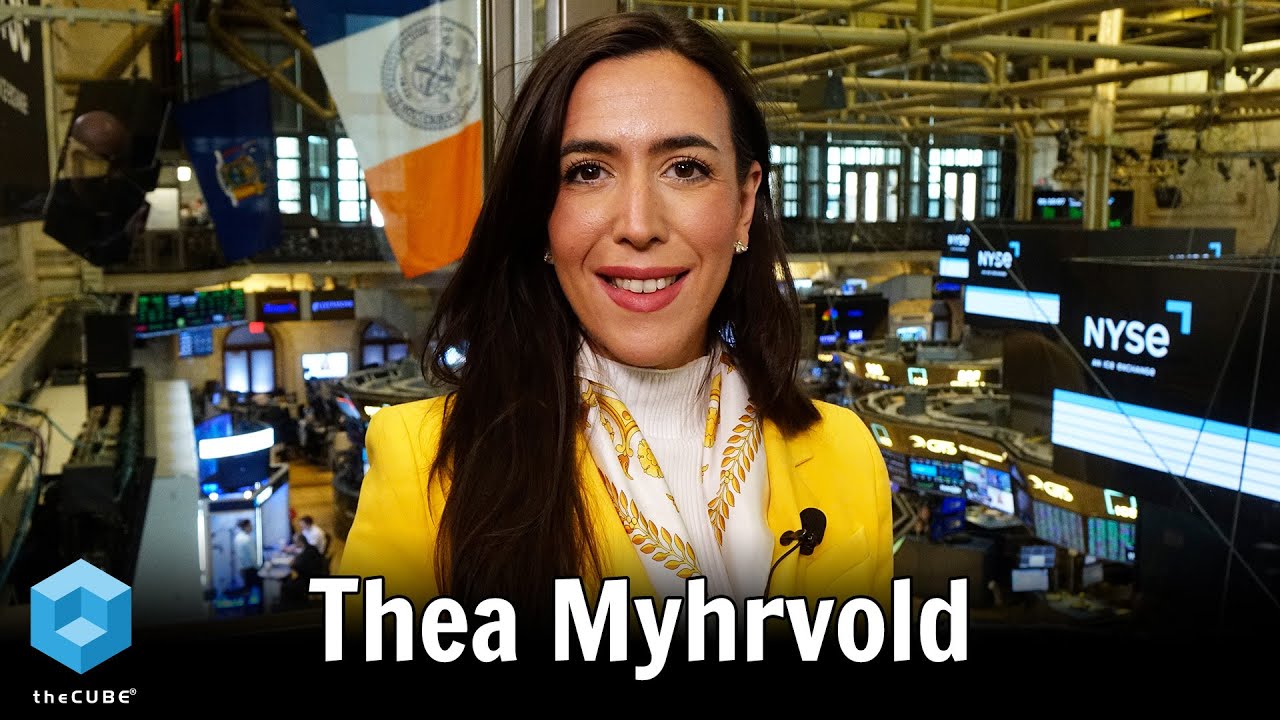
>> Welcome to theCube studio here at the New York Stock Exchange. This is NRF Week in New York and we are hosting a series with theCube and NYSC Wired looking at AI and retail trailblazers. Joining me today have Mario Ciabarra, CEO and founder of Quantum Metrics. Welcome, Mario.
Mario Ciabarra
>> Gemma, it's a pleasure be here. Thanks for having me.
Gemma Allen
>> So busy week in New York, lots happening. We spoke off camera there. You said all the big names and industry are here. It's been a year since you've been with us on theCube. Catch us up. Tell us a little bit about Quantum Metrics, what's been going on and what's really been exciting you in the industry this year.
Mario Ciabarra
>> I love it. Thanks, Gemma, for the opportunity. What Quantum Metric does is we capture experiences on websites and apps to help brands understand how do we make a better digital experience? How do we really not only just drive our traffic to the website, but once we have a captive audience, how do we convert them? So like me, you've probably gone to a website, maybe tried to buy something and gotten frustrated. Maybe the add to cart button doesn't work, maybe the promo code doesn't work, maybe it couldn't validate your delivery address. We help brands understand these pieces, and quantify which one's impacting their business the most. What's been exciting since the last year we've gotten together has been the impact of AI. And I think over the last few months, the impact of agentic AI into these brands and into our business, both we're adopting a agentic AI to help brands do better. But how brands are adopting AI and then how the consumer is adopting AI as agents now shop for them on websites. So there's been a lot of developments over the last year. Really excited to see what we're seeing from Sundar and Google on agentic commerce, but there's a lot of developments. So I'll give it to you.
Gemma Allen
>> I mean, there's been a lot of noise too in this space, right? We had a big announcement today with Walmart and Google Gemini helping, I guess, turn what was traditionally like this recommender system idea into something much more impactful, I'm sure, for industry, right? So in terms of how it's actually being used, how concepts like agentic AI are coming to life on our screens, on our phones, help us visualize. Where do we not see it happening to us? Give me some examples.
Mario Ciabarra
>> Yeah. And I think like, well, I'll share an example of what we're doing in our business, and I'm happy to put that in the consumer perspective as well. But if you think about dashboards and analytics, it's not a really exciting area to have a conversation around. And what I'm excited about specifically is that AI is fundamentally killing the dashboard. If you've probably have seen dashboards in lots of different instances of our lives, it's not easy to look at a chart or graph and try to understand what are we trying to get out of that data. For us, agentic AI is probably the world's best analyst. You can give it a dashboard, a graph, and then you can analyze it maybe to the peak of a human capability. What we're finding even more important than that is people don't want to build the dashboards anymore. They just have a question. How is my business doing? What are the top 10 products that are selling? And so on and so forth. And wouldn't it be just great instead of building dashboards and interpreting that to have agentic analyst or agentic AI interpret that data and help us understand the data and understanding that we're looking for? When we think about the consumer side, I don't know, I don't love to shop. I know that might be something I shouldn't say here at NRF week, but I don't love it. I mean, I love going and doing the things I love to do, but shopping isn't one of them. And so when I think about having agentic AI do the shopping for me, I think that's what we're seeing now, these Google, these Walmart announcements. Why don't we just say, "Hey, agentic AI, go buy this for me.", and then that's the in total involvement? I think there's different levels of engagement the public's going to want. They're going to want to maybe touch and feel or go through visual carousels and stuff like that. And I think that how humans interact with this agentic AI shopper will continue to evolve based upon, I have minimal desires, you might want to see more about what you're buying, but I think that's the evolution that we're seeing today at NRF.
Gemma Allen
>> So I want to come back to this idea of an agentic AI shopping for you, right? Like controlling the internet and getting you deals. But before we go there, help me understand a little bit about the buyer decision making process, and how data feeds that from the perspective of retailers. Like you guys help retailers understand why it is that I might have put something in my cart and not bought it, right? At what point in the buying cycle is the data most impactful or is it ... I'm sure that seems like somewhat of an idiom question, but help me understand it a little bit.
Mario Ciabarra
>> No, that's a great question, Gemma. And I think the challenge is that businesses for a long time have collected little pieces of information with the concept of there's one point that matters more than another. The approach that Quantum Metric took was, we collect 2,700 times more data than standard analytics for web and native apps. And with that information, we can determine what's most important. Not only for the buyers and in their journey, but is there a technical issue? Is there a marketing issue? Is there a product issue? Is there a merchandising issue? And I'll give you an example. One of our brands last week, they got an email at 5:30 in the morning and the email looks something like, "You're not going to hit your plan numbers today. And the reason is because you have 153% increase in your add to cart errors." Now this was about 5,000 euros on a 150,000 euro company plan. And the problem with that is death by a thousand cuts. If their entire website is broken, they would know about it. A lot of people would be yelling at them, the call center, the CEO, X, Twitter. There are lots of ways to get feedback that things aren't working. It's these little small problems that take a while for these brands to figure out. Eventually they figure it out. But wouldn't it be amazing instead of having to wait for someone to tell you there's a problem, that this agentic AI is looking through all of that data, this tremendous amount of data and finding those points that matter? Versus having a preconceived notion about, well, this point matters and that point matters. It's really looking at the holistic journey. And by the behavior, through observation, we can tell you what mattered and what didn't, and then we can quantify it and understand this issue is 5,000 euros. That one's 2,000. The one that the CEO was asking about because he or she was up at 2:00 in the morning trying the website, didn't like it, maybe that's only 1000 euros. Let's prioritize what's most important to the business.
Gemma Allen
>> Wow. And in that scenario, are we heading towards a future whereby then you have an agent who goes in and corrects the code on that cart, potentially makes live fixes on the fly? How do you see this? How far could this go?
Mario Ciabarra
>> I'm smiling inside, Gemma, because when I first came up with the idea of Quantum, I was showing what it could do, and that was the exact answer I'd get. It was 2015 and like, "All right, great. You have the problem. Can you fix it? " And I'm sitting there thinking, "Are you crazy? Which code base can I go edit automatically? We're going to break everything. It's not going to work." I had no idea that generative AI was going to come out. And here we are 10 years later and I can look you in the eye and I can answer you yes.
Gemma Allen
>> Wow.
Mario Ciabarra
>> Yes, the code can change. Or there's lots of different actions that come with this signal. So it might be, we determine that the homepage has an out of stock. Can you imagine you drive all this traffic to your home, like let's say a product page or homepage doesn't really matter, and what they were looking for is missing. It's out of stock. They're going to bounce. They leave, right? So imagine, okay, great. Well, they're landing on our homepage and the product's out of stock. What would you do? Well, the agent says, "Well, let's replace the out of stock product with something equally exciting for the audience." Do it automatically. Why are we waiting for a human to do it? So I think over the next few months, I don't think it's years away. Over the next few months, we're going to see agents taking action. And it could be create an experiment. It could be change the homepage and the layout of the products and merchandising. It could be fix the code, as you mentioned. It could be, we did a release last night at two in the morning and ever since then things have been broken. Roll it back automatically. We don't need humans in the loop. I think we're going to see the humans in the loop for the next few months. And then I think we're going to see automatic autonomous changes to websites based on the signal that we're capturing.
Gemma Allen
>> Wow. So talk to me a little bit about the competitive landscape in retail. You spoke about this idea that maybe an agent can go out and search for deals for you, right? You're buying an airplane flight, you're buying insurance to your car, whatever it might be. And actually tell you, hey, one provider is favorable to another, even if directed from an initial provider. I love the line you said off camera agents aren't loyal, right? That's a great, great line. Talk to me a little bit about what the opportunity is there for retailers. And also, I guess there's some very kind of real threats too, right? Because certainly things are going to get a lot more competitive very quickly.
Mario Ciabarra
>> I'll tell you, I've recently fallen in love with cashmere sweaters. I don't know. I got cold outside and I don't know what I want to wear. And I think if you go and ask a chat bot, "I want a cashmere sweater from," I don't want to pick a specific brand. So let's say from any brand A. Imagine the agent goes to the site and encounters an error, some kind of friction point, just like a human could. What we're seeing is agents unprompted six or seven times. I don't know who came up with this number. I think they might be listening to the kids nowadays. And it's going shopping for cashmere on other brands. And when site A, and we've seen this empirically, you ask for a specific brand, it tries A. At the same time, before it even gets the error, it's trying other brands at the same time. When A fails, when the directed target retailer fails, it says, "Hey, I couldn't find the cashmere sweater on here. I encountered error. But I got three other ones just like it."
Gemma Allen
>> Mm.
Mario Ciabarra
>> And I think if you back that into the brand, I had brand loyalty and they asked for my specific brand. And here's the agent running off and grabbing it from somewhere else because my site doesn't work?
Gemma Allen
>> Yeah.
Mario Ciabarra
>> I'm losing a customer because of a digital friction point. And so I think the ability to understand not only the consumer behavior, the human behavior, but now brands now have to understand the agent behavior, and they got to have it in real time. And we've released a product that, for the last 10 years, obviously helped brands understand the human behavior, but in the last three months, we released a product that allows them to understand the agent behavior as well. So it's going to be critical to understand both to be successful and looking forward.
Gemma Allen
>> Yeah. There's been a lot of curiosity around whether or not some of these frontier models and these large LLMs will actually buy into the ads world, right? Whether they're going to start taking ad revenue from that other customers, whether provider, et cetera. And I know Altman has given some kind of, I guess, ominous points in that, but what are your thoughts? From the perspective of the retail industry, do you think that these LLMs are going to just become another ad engine essentially in the very short term, or where do you see it going?
Mario Ciabarra
>> I think retailers would beg for that to happen, right? So you look for brand A, and I'm brand B, I want to pay the search engine, the foundational engine, whatever engine that's getting in front of consumers, to position my product there. So I think the demand from the retail side is there. I think if you look at the history of new technology developments, the monetization, I don't want to say it comes last. It's not last, last, but it comes after the adoption. So I think there's a race right now from Gemini, from chat, from Perplexity, you're seeing all of these foundational models. I want to own the customer. And as soon as I do, I'll figure out the monetization, the ads, the platform. But I think from a retail perspective, I might not have that first placement from what they asked, but put me there and I'll pay for it. So I think we're going to see it. I think it's just a matter of time. I would never predict what date it will happen, but I don't think it's that far away. This technology's moving too fast for us to not monetize it.
Gemma Allen
>> So another topic that's very front of mind right now in the AI space generally is context, right? Context graphs. There's been some very interesting releases over the last couple of weeks. Again, from a retail perspective, it seems though there's huge amount of value to be had there, because you're understanding buyer personas in a very segmented way. Your company works with a whole lot of different industries, and I'm sure some of those buyer decisions and those data points vary by industry, right? You probably see patterns emerging very, very quickly. Talk us through some industries that are really locking in fast and kind of adopting to the agentic world and industries that are maybe ... Give us your sense on where the pace is at.
Mario Ciabarra
>> I'm trying to think about which industries are forward leaning and which ones are slower to adopt. And historically, banks have been very slow to adopt technology, because it's not in their best interest to break something. They're very gun shy. I'm looking at the banks that we work with and they're all moving at a pace I've never seen.
Gemma Allen
>> Wow.
Mario Ciabarra
>> So I would tell you that every industry is on this generative AI in the last two years, in the last six months, agentic AI race. And I think it's because it's not just the speed at which the technology is shifting consumer demand and expectations, but it's also, it's very likely that it's related to how easy it is to adopt. And we could talk about how many failures there have been. There've been so many failures on agentic, on generative AI. Yes, that's true. But the ability for people to experiment, I've never seen a technology adopted so quickly.
Gemma Allen
>> Wow.
Mario Ciabarra
>> I've never seen a technology shift consumer expectations. One thing that we released a year and a half ago was the ability to know why someone is calling without saying a word. Think about when you call any brand, you try to self-service first. You go to the website, you go to their app, and when it doesn't work, you call in. And then they make you press five and they say, "Hi, Gemma, how are you? Tell me what your problem is." And you're like, "Really? I was just on your website. I was just in your app."
We take the data we've been capturing for these businesses and we provide them back using generative AI. "Hey, Gemma, looks like you're trying to change your flight back to New York, but you got an error on the app. I'm really sorry you got the error. Can I help you fix that flight change, or were you calling about something else?" What an incredibly different experience. And if you think about that, once one airline has that, could you imagine another airline not having it and how frustrated you would be as a consumer on that airline? So I think this is not what differentiates these brands. I think it's setting the bar so high for everyone it's going to become table stakes.
Gemma Allen
>> Wow. Tell me a little bit about what's being said, what's being heard in the kind of brick and mortar space, right? Because it does somewhat sadden me that the in-store experience has become so secondary to the online experience, and I'm sure that's only going to continue. But at the same time, there is a certain amount of brand loyalty, especially for high-end brands and going to a store and purchasing something. What sort of innovations are you seeing happening in-store? How are those two worlds kind of colliding or shifting?
Mario Ciabarra
>> This whole conference, I mean, I live in a very digital world, so I'll give you that disclaimer. But this whole conference is about innovation online and offline. So there's a lot of innovations happening offline as well in a physical store. But I tend to think the future that we're going to see differentiation is, when was the last time you bought a luxury good? Did you buy it online or did you go into the store? Versus you bought a commodity good, where you can just tell an assistant, an Alexa agent or something like that, "Hey, go buy me some paper towels." You're not going to go to the store for that, you don't need to. But for a luxury good, I bet you like to go into the physical store, touch it, feel it. Is this really worth my hard-earned dollars? Am I going to love this for the next five years? Whereas paper towels, it'll be dispensed in a few days. So I think what we'll see is the innovation really coming from luxury brands because they need to, because their audience is in that store. And I think the big box stores, they make a lot of money in their physical venues. I think what we're going to see is the commoditization of products. People just don't care. They're going to buy them online. And I think that's where the shopper is going to live. And I think these other brands are going to meet the shopper where they are, which is innovation that's happening in the store. And so imagine you walk into the store, they know who you are, they know your preferences, and they get right to business and they show you the things that you want. It's a much more delightful experience, but there's so many innovations that are happening here at NRF and being shared across. I think one fun one is just in delivery, and we saw that coming from Sundar and Google. And can you imagine a drone? You order luxury goods or the paper towels and it arriving in your door within 30 minutes?
Gemma Allen
>> It's actually an Irish company doing great delivering coffee by drone, right?
Mario Ciabarra
>> I love it. I'm a big coffee fan. I stood in line at NRF for 35 minutes for a coffee, and I was wishing that drone would come and bring me a coffee.
Gemma Allen
>> So tell me a little bit about what's ahead for you and the team at Quantum Metrics. What are you guys working on this year? What are the big kind of growth strategy? What's exciting you guys the most? And kind of close us out a little bit.
Mario Ciabarra
>> I'll tell you, our Q4 was one of the best quarters in the company history, and our Q1 is set to be the best Q1 that we've ever had. And I think about why? Why are we having such tremendous success? I think the demands for customers on digital have never been higher. So enabling a brand to get that visibility is critical for that brand's success. I also think that this real big shift of for 9, 10 years of our business, I can show you a dashboard, I can show you a user's experience, but there's a lot of manual work. Now we've moved to this agentic world, where the analysis is done by the AI. And this is just bringing smiles from ear to ear with the executives that I've been spending time with over the last couple of days here at NRF. So I think what's exciting for me is this breakaway moment for our brand, that we can help enable brands to understand their customers without all the work. So I think that, I mean, I feel like we're becoming as a society that's a little lazy, I'll just be honest. My kids want to do their homework on AI. My brands want to do their homework with analytics on AI. But I'm really excited about the future, because I think this is going to be a breakaway moment where we can harness the power of this new technology to deliver what my customers have always wanted. They wanted simple understanding. I think for the last decade, people have talked about democratizing data across the org, product and marketing and DevOps and all these different teams that need this data. I think we messed up in those words. I think what we really needed, what customers really demanded was democratize understanding. And I think that's a change that 2026 will bring for us.
Gemma Allen
>> AI will bring that context.
Mario Ciabarra
>> Yeah.
Gemma Allen
>> Right?
Mario Ciabarra
>> 100%.
Gemma Allen
>> And Mario, thanks so much for coming on. It's a busy week and you have a lot of exciting stuff happening here in New York, so thanks for taking the time to chat with us.
Mario Ciabarra
>> Thank you, Gemma. It was a pleasure.
Gemma Allen
>> I'm Gemma Allen here at our studio with the New York Stock Exchange. This is theCube and MYSC Wired programming. Thanks so much for watching.

















 Gemma Allen