This discussion on theCUBE, recorded live from the New York Stock Exchange, forms part of the Artificial Intelligence and Retail Trailblazer Series in association with NYSE Wired. The video features special guest Ben Parkes, head of advisory services at Similarweb, who shares expertise during the NRF week in New York.
In this episode, Parkes delves into the remarkable innovations brought by Similarweb in online traffic and conversion analytics, highlighting key engagements with stakeholders across the retail spectrum. With theCUBE's host steering the conversation, the video explores themes such as agentic commerce, evolving consumer behavior, and the implications of frontier technologies such as Google's UCP on retail journeys.
Parkes provides valuable insights on the retail landscape, discussing the transformational role of generative AI in customer data and decision-making processes. They highlight the importance of a seamless omnichannel presence for retailers to maintain customer loyalty and share examples such as Walmart's effective strategy. According to Parkes, comprehending the full customer journey is vital as retailers navigate the exciting yet challenging world of AI-driven commerce.
Forgot Password
Almost there!
We just sent you a verification email. Please verify your account to gain access to
theCUBE + NYSE Wired: AI & Retail Trailblazers. If you don’t think you received an email check your
spam folder.
Sign in to theCUBE + NYSE Wired: AI & Retail Trailblazers.
In order to sign in, enter the email address you used to registered for the event. Once completed, you will receive an email with a verification link. Open this link to automatically sign into the site.
Register For theCUBE + NYSE Wired: AI & Retail Trailblazers
Please fill out the information below. You will recieve an email with a verification link confirming your registration. Click the link to automatically sign into the site.
You’re almost there!
We just sent you a verification email. Please click the verification button in the email. Once your email address is verified, you will have full access to all event content for theCUBE + NYSE Wired: AI & Retail Trailblazers.
I want my badge and interests to be visible to all attendees.
Checking this box will display your presense on the attendees list, view your profile and allow other attendees to contact you via 1-1 chat. Read the Privacy Policy. At any time, you can choose to disable this preference.
Select your Interests!
add
Upload your photo
Uploading..
OR
Connect via Twitter
Connect via Linkedin
EDIT PASSWORD
Share
Forgot Password
Almost there!
We just sent you a verification email. Please verify your account to gain access to
theCUBE + NYSE Wired: AI & Retail Trailblazers. If you don’t think you received an email check your
spam folder.
Sign in to theCUBE + NYSE Wired: AI & Retail Trailblazers.
In order to sign in, enter the email address you used to registered for the event. Once completed, you will receive an email with a verification link. Open this link to automatically sign into the site.
Sign in to gain access to theCUBE + NYSE Wired: AI & Retail Trailblazers
Please sign in with LinkedIn to continue to theCUBE + NYSE Wired: AI & Retail Trailblazers. Signing in with LinkedIn ensures a professional environment.
In this interview from the theCUBE + NYSE Wired: AI & Retail Trailblazers event at the New York Stock Exchange, Ben Parkes, head of Advisory Services at Similarweb, joins theCUBE’s Gemma Allen to unpack what NRF week revealed about the next phase of AI in retail. Parkes explains how Similarweb tracks real-world online behavior across social, gen AI and retail sites to map modern customer journeys end to end. He also weighs the implications of fast-moving platform shifts including Google’s latest announcements, Walmart’s growing influence in AI-driven referral...Read more
exploreKeep Exploring
What activities and developments has Similarweb been involved in at the conference?add
What was the significant news related to Walmart and Gemini this week, and how is it impacting the retail space and customer behavior?add
What are the timelines and expectations for the adoption of new consumer platforms in retail?add
What aspects of consumer behavior and technological changes does the company consider important in their operations?add
>> Welcome back to theCUBE, coming to you here from our studio at the New York Stock Exchange. This is our AI and Retail Trailblazer Series in partnership with NYSE Wired. And this week has been NRF week in New York, a very busy week in the retail calendar. And joining me now, I have Ben Parkes, who's head of Advisory Services at Similarweb. Welcome, Ben.
Ben Parkes
>> Thanks for having me.
Gemma Allen
>> So, busy week. It's just about wrapped. I'm sure you're tired.
Ben Parkes
>> Yeah.
Gemma Allen
>> Tell me, what have been your impressions of the week? What has really stood out to you? And talk to me a little bit about what Similarweb have been up to at the conference.
Ben Parkes
>> Yeah. I mean, for Similarweb, we are the authority in online traffic and conversion and behavior online. So, we have a very large panel and integration around seeing how people behave online, and we give a unified view. So, from social to GenAI to retail websites to marketplaces, we're seeing how people navigate online. So, this week for us, very exciting, especially the announcements coming out of Google in terms of their UCP and how that's playing out. We're very excited about that and seeing how people are navigating the online customer journeys. We're also excited to see all the providers here and seeing the new solutions on the market. So, yeah, it has been a great week for us, very interesting. A lot of great conversation with retailers, brands, financial servicing companies, so really spreading the gamut.
Gemma Allen
>> I guess, big news about this week was Walmart and Gemini, right? That partnership, I think-
Ben Parkes
>> Yeah.
Gemma Allen
>> ... is certainly exciting some folks. I'm sure it's created a little bit of nervous energy, too, in this space, broadly. We're seeing frontier models really encroaching into retail now in ways that perhaps we didn't see a year ago. But talk to me a little bit about the Advisory Services. It seems as though it's all about data, real-time data, understanding customer journeys in a way and a level we've probably never been able to do before. What's really changing and shifting on the advisory side of the business?
Ben Parkes
>> Yeah, we're trying to understand customer journeys and how people behave online. And many of our clients are hearing AI, hearing GenAI, hearing all these buzzwords, and they're being tasked with, "What do we do about this? Are we falling behind? Is our competition winning?" And where we play, in Similarweb, is really understanding the full customer journeys from real behavior. So, when you talk about the advancements this year with Walmart and Gemini, seeing the actual change in behavior is where we really excel. So, we're really excited to see what that happens to customer journeys. Because one of the big things we saw in 2025 was there was AI being built on retailer sites, Sparky, Rufus. There was AI being built in terms of retail perspective in ChatGPT, Gemini. And both of them have a shopping element, but they're two ends of the funnel. One of them is about discovery, which is in ChatGPT, Gemini, the other one is more about conversion, Sparky and Rufus. What happened this week was this tunnel went... So, we're really excited about seeing how this shrinks and the changes they have to consumer behavior.
Gemma Allen
>> We heard a lot this week. We had folks in talking about all aspects of retail, but agentic commerce is a theme that came up time and time again. Talk to me a little bit about how you're seeing that play out on your side of the business. Is it still somewhat of a hypothetical concept, you know, a dream, or a fever dream for some, perhaps?
Ben Parkes
>> Yeah.
Gemma Allen
>> What do you think when you hear terms like that?
Ben Parkes
>> Super exciting, to start off with. I think the consumer getting there will take a bit of time, but 2025 is the year of research, people using, getting comfortable with platforms. 2026 is a year that people embrace it for actually making purchases. Some insights we see at Similarweb is that referral traffic from ChatGPT, for example, typically, 34% of the retail goes to Walmart. They're really winning in that space, but in terms of Walmart's total traffic, it's a percentage point. When you look at full online customer journeys and, really, their behavior, people are researching in these platforms, then within a three-hour time window, making purchases. When you look at that, the actual number is like five times higher. So, people are already doing it themselves. Can we streamline that journey of agentic commerce? I think it will get there. Will it be embraced fully in 2026? It's to be seen, but it's definitely exciting for the industry.
Gemma Allen
>> And do you think we're going to be in a space whereby agents will be shopping for us? How do you think as an average consumer we'll really see the opportunity and the utility of agentic commerce? What does it look like to you?
Ben Parkes
>> I think, for me, the best way to describe it is if you don't know it's happening, it's succeeding.
Gemma Allen
>> Okay.
Ben Parkes
>> So, if you think about the advancements this week with Google and really bringing it into their platform in terms of the UCP, it doesn't necessarily feel like there's a whole journey going off behind it. You're putting in your information, you're putting some products, and then it's doing everything for you. I think, for me, AI is going to succeed if it doesn't feel like AI, if it's part of our natural behavior and part of our normal customer journeys. And that's where I see success being and not feeling like AI, but really optimizing the process in the background. That's where I see success for this space.
Gemma Allen
>> So, Similarweb, it's a 15-year-old company now, right?
Ben Parkes
>> Yeah.
Gemma Allen
>> I've used it in the past. It's a great... I've always found it highly useful, but I think it's a company that has been evolving, evolving fast. So, has the marketing tech, ad tech. That whole space means something completely different now to what it did in 2011. Talk to me a little bit about the trajectory of the company, the journey you've been on. You mentioned you've had a huge amount of acquisitions. It's a very aggressive in all the right ways, right?
Ben Parkes
>> Yeah.
Gemma Allen
>> But talk to me about what the, I guess, tech evolution has looked like.
Ben Parkes
>> Sure. We care about consumer behavior. We care about how people are browsing online and, really, how they're engaging with websites. So, with that, when the market changes, we have to change, as well. Our company was built on traffic for websites and really working out that from our founder or, essentially, how the other websites are getting traffic, and then from there we've expanded. Obviously, social media was really important for us. Apps, we made an acquisition in the app space, understanding about people using apps. And now GenAI is obviously a really important part for us, understanding about your visibility within GenAI, your mentions, where it's coming from, and then, ultimately, your customer journey. What I'm excited about next is MCP and the integration into Claude, into ChatGPT, into manners that we announced this week, so really bringing insights into AI. So, if you're working a retailer, you don't have to necessarily go to a dashboard, or you don't have to necessarily pull a report. You can ask questions and get the answers you need, and that takes us from insights to actions. And that's what I'm most excited about going forward.
Gemma Allen
>> So, it's driving efficiency and also driving a better understanding, stronger data points of the customer journey, like coming at it from all slides.
Ben Parkes
>> Yeah, it's bringing together multiple data sources so you can make a decision. Because many of us who work in industry spend a lot of time analyzing data, but when you can pull everything together and make an efficient decision, that's where AI goes beyond information to action, and that's where I face where the evolution in martech and MCP has taken us.
Gemma Allen
>> So, in your business, you work a lot, I guess, with direct retailers, helping them really understand, I'd say, elements of not knowing what you don't know. Right?
Ben Parkes
>> Yeah.
Gemma Allen
>> I'm sure there's a lot of that in your space. What sort of data sets, what sort of index information is changing? What are people looking for now that they weren't maybe five years ago?
Ben Parkes
>> Yeah, definitely. The buzzword of probably 2024 was Ozempic, and we saw, in 2025, the rise of GLP-1.
Gemma Allen
>> Wow.
Ben Parkes
>> Now, super interesting from a product perspective, but where we found this really interesting in working with clients in the food space, with retailers, is the impact on consumer goods companies and demand.
Gemma Allen
>> Absolutely.
Ben Parkes
>> You think about GLP-1, your calories come down by 19 to 39%. If you lose weight, this impacts clothing sizes, and they saw it in planning there. It impacts food choices, calorie intake. So, this is the kind of area where our data can really shed a light on consumer behavior searching around this and the popularity to help inform retailers and consumer goods companies that have a real strong strategy going into 2026.
Gemma Allen
>> Because fascinating space, in terms of what it would mean if every American was 40 pounds lighter, whatever it might be, you know-
Ben Parkes
>> Yeah.
Gemma Allen
>> ... whatever those stats are. Because, of course, there's bulk buying. There's all sorts of industries that have grown up around excess, I guess, in terms of how people spend, and even if you think about a company like Walmart or Costco. But talk to me a little bit about the buyer journey and understanding customers as decision makers, especially in a world where, maybe, is loyalty waning? Is it a case that if you were always a Costco shopper, you're no longer likely to always be a Costco shopper 10 years from now? What sort of trends are you seeing around customer loyalty, and attrition, and-
Ben Parkes
>> Yeah, I'll give you a very good example from 2025, March last year, tariffs, everything kicked in. And at that time, Temu was really booming as a platform, and we were seeing people really migrate there in masses. And it was becoming one of the largest retailers in the US and globally. They pulled all their advertising spend away in April last year, and the numbers plummeted. It went down 80% in their traffic. And then you saw consumers going elsewhere and looking for more deal hunting. We saw the rise of an app called Whatnot, which is reselling clothes. We've seen more Depop vintage coming up reselling clothes, as well.
So, we've seen people move towards that market, but lo and behold, we come to the end of the year and Temu starts spending again, and the customers come back. So, we've seen change in terms of how the retailers are attracting customers.
Gemma Allen
>> But is that price? For an entity like Temu, is that fundamentally a price decision? We're in a highly inflated economy. We know Americans are struggling. Pocketbooks are under more pressure than ever before. Do you think it's really driven just by price?
Ben Parkes
>> I think it's by aggressive advertising. I think that's the biggest thing we see. There's a direct correlation, but towards advertising dollars spent and traffic going to Temu and resulting sales. I think there's not always a link between the economy and consumer spending-
Gemma Allen
>> No.
Ben Parkes
>> ... so it's hard to say exactly where the consumer behavior is. In terms of loyalty, the retailers that we've seen that are winning the most are ones that have a really good omnichannel presence and make that experience seamless. So, you think about Walmart, who's had great success. Whether you shop in-store or online, you have a great customer experience, and that's a key theme we're seeing across the retailers in the grocery space that are doing well.
Gemma Allen
>> What about sentiment analysis for buyers, in general? Like price, like you say, that's interesting to me. I would have thought that, actually, those two things would be highly correlated. What sort of sentiment analysis or data points is the industry collecting? Is that changing? Is that growing all the time?
Ben Parkes
>> Yeah, I mean-
Gemma Allen
>> Are we learning more about the psyche of buyers?
Ben Parkes
>> Yeah. I mean, what we care about is not necessarily their psyche, but how they behave. So, for us, the people ask us about mapping out demographics, but I really care about audience profiles. I care about what people, who are like this, go and do. And that's kind of where, in Similarweb, we really care about those customer journeys because we're not too bothered by the person behind the journey. We want to understand where the masses are going and kind of the key trends.
Gemma Allen
>> Pattern.
Ben Parkes
>> That's the one that we're excited about. You saw it with TikTok, as well, when the change in users there with the restrictions coming in, and then it went back up again. So, we've seen that across the industry.
Gemma Allen
>> I mean, so one thing that was very clear to us this week is like every retailer now is a tech data-led company. And if you're not, God, you, I guess, in some respects. Tell me a little bit about GenAI in the retail space, generally, the reaction of retailers to GenAI, where you feel it's really people are really innovating and understanding what the future looks like, and those who, perhaps, are lagging. What stands out?
Ben Parkes
>> Yeah, I mean, one of the interesting things we saw last year was, to start off in the evolution of GenAI to retail, Amazon was really winning the space. They were getting all the traffic from ChatGPT and they were getting it from Gemini, and then we saw the tides to turn. We saw ChatGPT do deals with Walmart, with Etsy and really expand that partnership, and we saw it flip. We saw Walmart getting a lot of traffic in that space. But as I mentioned earlier, it's two parts to it. There's the acquisition funnel, which is really exciting, around partnerships with the UCP and with working with Gemini and ChatGPT. Then it's due to retail and the real execution from a consumer-facing element to it. And that's the one where Walmart and Rufus, from Amazon, has really leaned in. But probably the big part behind it is the fundamental data, and it's underneath it, the efficiencies that AI is driving. And this is many years in the making. It's not like what we see with the AI platforms, like the efficiencies in supply chain, in managing of products, the data we provide them, how they manage that into their forecasting. That's the area where it's really going to make these companies money in the longer term, is underlying AI into their core capabilities as they run their business.
Gemma Allen
>> Speaking of making money in the longer term, there has been a lot of speculative talk around whether or not these LLMs, these large frontier models in particular, Gemini, ChatGPT, Perplexity, are going to become ad models. Right?
Ben Parkes
>> Mm-hmm.
Gemma Allen
>> They're going to start accepting or have to. I mean, all we hear all the time is how expensive they are, that the input/output, from a revenue perspective, is enormous in terms of the discrepancy of spend. What are your thoughts like? Do you think that's very soon to be that you're going to start seeing more advertising happening through these models?
Ben Parkes
>> I definitely think so. We've seen it at the retail side on their models. Like Sparky announced, I think this week or last week, around now doing sponsored prompts in their sponsor responses. Rufus has it on Amazon. I wouldn't be surprised if we start to see it soon on the other platforms. I know Perplexity trialed it for a while. I think the key for it is making it, still, a great customer experience. These platforms thrive on pleasing you and making sure they give you the right information. So, I think the balance in advertising will be really interesting, but I'm sure it's something in the works they'll really want to accelerate.
Gemma Allen
>> Fascinating because they understand you in ways you probably don't even understand yourself, right?
Ben Parkes
>> Yeah, exactly.
Gemma Allen
>> Perplexity probably knows me better than my husband, at this stage. So tell me a little about consumer usage of AI.
Ben Parkes
>> Sure.
Gemma Allen
>> In that same conversation thread, I guess, what sort of trends are you seeing there? I guess people are asking it everything, everything from, "Should I send my kid to this school?" to, "Should I get a divorce?" or, "Should I buy this dress?" Right?
Ben Parkes
>> Yeah.
Gemma Allen
>> It's crazy, really, when you think about the time span by which we've become so dependent on it.
Ben Parkes
>> Yeah.
Gemma Allen
>> But what are you seeing? When you talk to your large customers, what are they looking to really understand about their buyer personas?
Ben Parkes
>> Yeah. I mean, it's staggering how much people want to put into these devices and share about themselves. We saw some changes last week in healthcare around how OpenAI was going into that space. We see it in travel. We see people planning trips, which is a big usage in things like ChatGPT. We see people buying electronics that, say, that if you look at the categories in retail, the most prevalent one within platforms, for purchase, is electronics, naturally. And food is quite a lot further below that as you can imagine different customer journeys. Retailers are trying to get their head around what people are using it for. Is it for buying a product? Is it for how to fix my product? Is it where to find my product? And that's the kind of area that we are supporting retailers to understand because if you look at the prompts in electronics, for example, there's a lot of troubleshooting. "Does this speaker work with this phone?" Which are common questions you might go to ask Google. Now, people are very accustomed to searching in question format, ChatGPT is a great place to solve that. So, that's the retailer trying to understand exactly what is the use case and how they can really make sure their business, i.e., their product pages, their data, everything is set up to optimize so they rank within the platform, and they're getting their visibility.
Gemma Allen
>> I mean, it's an excellent line one, right-
Ben Parkes
>> Yeah.
Gemma Allen
>> ... in some respects. Like I use it all the time for just troubleshooting kids toys for Christmas, small things. But when we talk a little bit about the context to buying, which is a big, big part of understanding buyer journeys, and we hear about context and context graphs. I don't know if you've seen some of the stuff that has been released even just since Christmas in the space. It's really impressive stuff in enterprise. We don't hear a lot about, though, in retail, like understanding the context to... For example, I want to book a trip, right?
Ben Parkes
>> Yeah.
Gemma Allen
>> I need an LLM that knows where I like to go, what's sort of place I like to stay, that I like rooms close to the elevator because I'm lazy, whatever it might be. And right now, I guess those, again, like modular segments of understanding different parts of the journey are not really connected. Do you see that as something that is, again, light years away? Or what are your thoughts on how the connected journey will impact the retail space from a context perspective?
Ben Parkes
>> Yeah, I think, as the retailers forge partnerships with companies in this space, there's going to be more understanding, sharing, kind of really mapping that out. I think that still will start to get bridged. I think that's an area where we see it. We see the full journey around understanding around how people are behaving on it, and then where they go next. If I think about it for myself, I booked a babymoon recently. So, my son came along. We booked a trip.
Gemma Allen
>> Congrats.
Ben Parkes
>> Thank you. And we used ChatGPT for it. And didn't even mention I had a son, but I'd obviously mentioned it previously, and it recommended the best baby hotel within four hours. So, it has that context behind it. And I think, in retail, that's going to be really interesting, as well, because if it knows your dietary restrictions, it knows exactly what you like, it can then really recommend against products you like. Think about spend, as well. If it knows you go towards cheaper price point products, is it going to recommend something that's higher price point? That's the other areas that could get very interesting around the context, like you mentioned, behind it.
Gemma Allen
>> Wow, interesting. Well, listen, Ben, tell us, what's ahead for you? I'm sure the year will fly and find me back here at the Java center again. What's on the cards for you and the team at Similarweb? What are you working towards, big goals? Close us out with some hopes and dreams for the year.
Ben Parkes
>> Yeah, we're just trying to help people understand what's happening in online space and help them make decisions. And through that, we want to make their lives more efficient and their jobs easier. So, we obviously have a huge data set that already help people make the right decision, and then, from there, we want to advise them on what to do with that and really make the action. So, we have plenty of innovation, like MCPs, agents, things coming through to make your life easier, if you're working in the space, and we want to shed light. We want people to understand the full customer journey and not thinking about things in isolation, how people go from site to site rather than just focusing on GenAI. Because GenAI is exciting, shiny, but is not majority of anyone's business right now.
Gemma Allen
>> Absolutely.
Ben Parkes
>> So, making sure we have the context behind it is where we really play and we can really add value for companies.
Gemma Allen
>> That's a great place to close. Thanks so much for coming on this show.
Ben Parkes
>> Thank you.
Gemma Allen
>> I'm Gemma Allen coming to you here from our studio at the New York Stock Exchange. This is part of our AI and Retail Trailblazer Series. Thanks so much for watching.







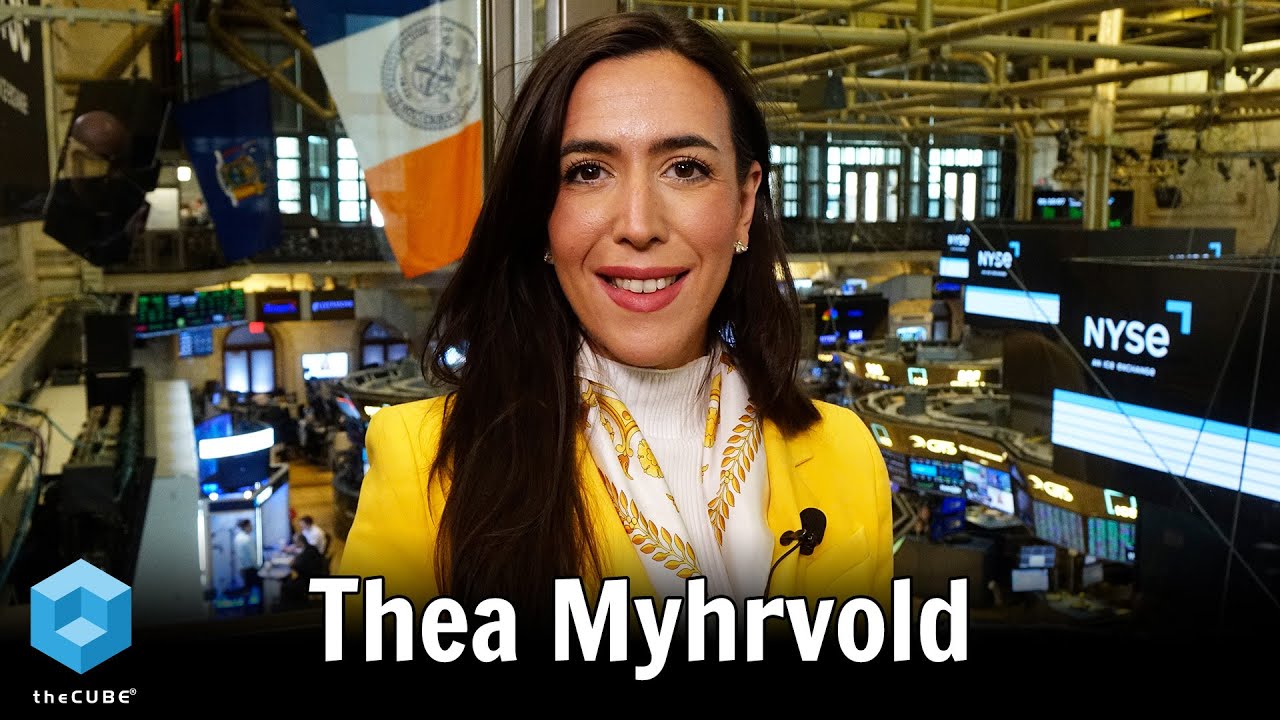










 Gemma Allen