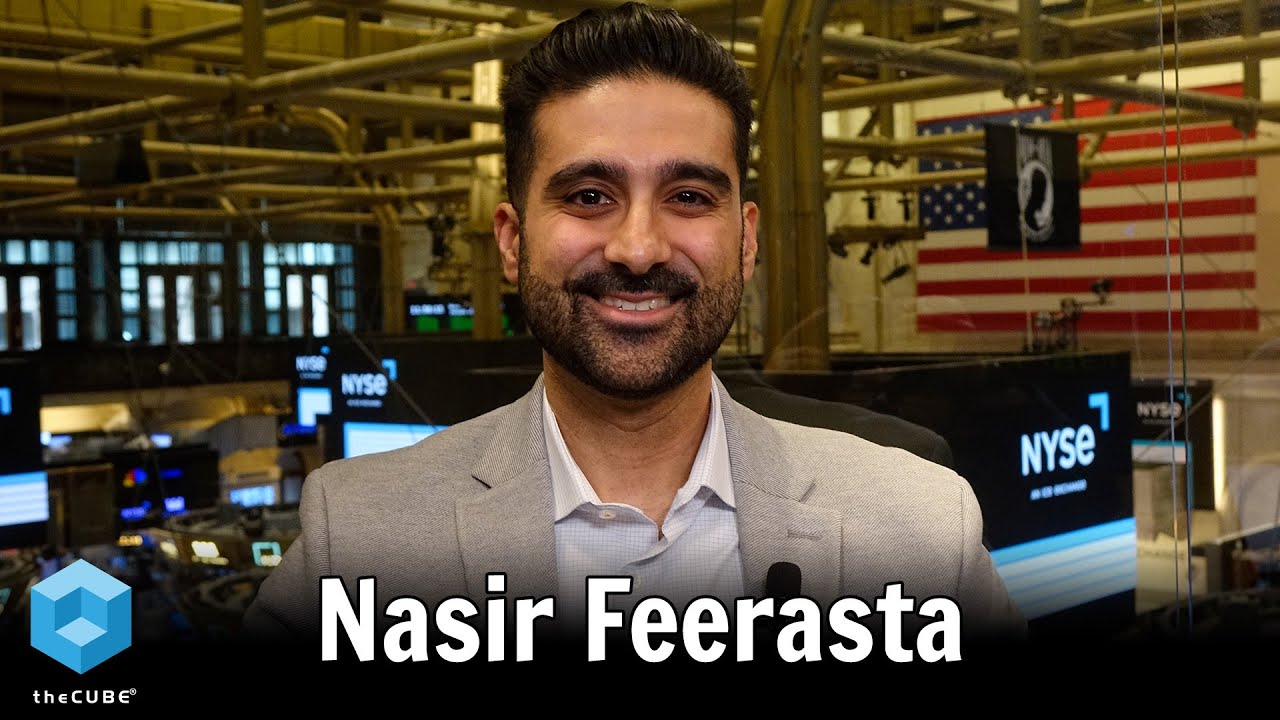
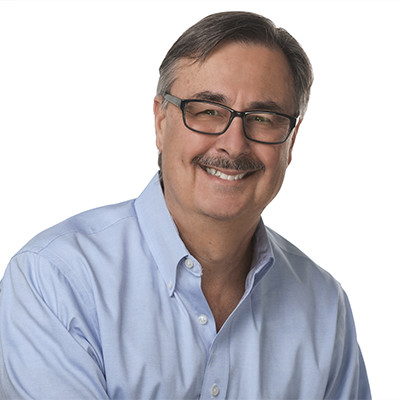
Larry Lunetta, VP of HPE Networking, discussed the importance of networking in the retail industry at NRF Media Week in NYC. The focus was on AI, IoT, and edge computing transforming retail. A strong network infrastructure is needed for tracking merchandise with RFID, enhancing user experience, and improving security against cyber threats. AI in networking and network security for AI were emphasized, highlighting the need for efficient management systems and security measures. The conversation covered challenges and opportunities in interconnected systems in retail, with networks crucial for seamless operations. Networking plays a vital role in the industry's digital transformation. Customers are adopting private 5G solutions, while service providers at Mobile World Congress seek support for delivering products. End-to-end workflows and Polyglot protocol are important. HPE has a strong history in networking and AI's role in networking is growing. The impact is evident across industries, from apps to distributed computing platforms. TheCUBE covers these topics comprehensively.
Forgot Password
Almost there!
We just sent you a verification email. Please verify your account to gain access to
theCUBE + NYSE Wired: AI & Retail Trailblazers. If you don’t think you received an email check your
spam folder.
Sign in to theCUBE + NYSE Wired: AI & Retail Trailblazers.
In order to sign in, enter the email address you used to registered for the event. Once completed, you will receive an email with a verification link. Open this link to automatically sign into the site.
Register For theCUBE + NYSE Wired: AI & Retail Trailblazers
Please fill out the information below. You will recieve an email with a verification link confirming your registration. Click the link to automatically sign into the site.
You’re almost there!
We just sent you a verification email. Please click the verification button in the email. Once your email address is verified, you will have full access to all event content for theCUBE + NYSE Wired: AI & Retail Trailblazers.
I want my badge and interests to be visible to all attendees.
Checking this box will display your presense on the attendees list, view your profile and allow other attendees to contact you via 1-1 chat. Read the Privacy Policy. At any time, you can choose to disable this preference.
Select your Interests!
add
Upload your photo
Uploading..
OR
Connect via Twitter
Connect via Linkedin
EDIT PASSWORD
Share
Forgot Password
Almost there!
We just sent you a verification email. Please verify your account to gain access to
theCUBE + NYSE Wired: AI & Retail Trailblazers. If you don’t think you received an email check your
spam folder.
Sign in to theCUBE + NYSE Wired: AI & Retail Trailblazers.
In order to sign in, enter the email address you used to registered for the event. Once completed, you will receive an email with a verification link. Open this link to automatically sign into the site.
Sign in to gain access to theCUBE + NYSE Wired: AI & Retail Trailblazers
Please sign in with LinkedIn to continue to theCUBE + NYSE Wired: AI & Retail Trailblazers. Signing in with LinkedIn ensures a professional environment.
Are you sure you want to remove access rights for this user?
Details
Manage Access
email address
Community Invitation
Larry Lunetta, HPE
Larry Lunetta, VP of HPE Networking, discussed the importance of networking in the retail industry at NRF Media Week in NYC. The focus was on AI, IoT, and edge computing transforming retail. A strong network infrastructure is needed for tracking merchandise with RFID, enhancing user experience, and improving security against cyber threats. AI in networking and network security for AI were emphasized, highlighting the need for efficient management systems and security measures. The conversation covered challenges and opportunities in interconnected systems in retail, with networks crucial for seamless operations. Networking plays a vital role in the industry's digital transformation. Customers are adopting private 5G solutions, while service providers at Mobile World Congress seek support for delivering products. End-to-end workflows and Polyglot protocol are important. HPE has a strong history in networking and AI's role in networking is growing. The impact is evident across industries, from apps to distributed computing platforms. TheCUBE covers these topics comprehensively.
Larry Lunetta, VP of HPE Networking, discussed the importance of networking in the retail industry at NRF Media Week in NYC. The focus was on AI, IoT, and edge computing transforming retail. A strong network infrastructure is needed for tracking merchandise with RFID, enhancing user experience, and improving security against cyber threats. AI in networking and network security for AI were emphasized, highlighting the need for efficient management systems and security measures. The conversation covered challenges and opportunities in interconnected systems in ...Read more
exploreKeep Exploring
What are some industries and markets that are increasingly benefiting from the development of intelligent edge technologies, driven by advancements in AI and business pressures for faster and more actionable processes?add
What is HPE doing to be retail ready with technology?add
What are some ways in which AI is impacting networking and network management systems?add
What is the perspective on networking challenges in the modern world of interoperability and cohesion, particularly in the context of AI and high velocity scale?add
What is the significance of retail becoming a technical play and the importance of the CIO and CISO in the industry?add
What is the difference between distributed computing 20 years ago and today in terms of networking perspective?add
>> Hello. Welcome back to theCube. We are here in New York City for NRF Media Week. I'm John Furrier, your host of theCube with Bob Laliberte. He's out on the floor with theCUBEResearch. Dave Vellante will be in here tomorrow. Three days of coverage. Larry Lunetta is here, VP of HPE Networking, back in enterprise. Larry, great to see you. Thanks for coming in.
Larry Lunetta
>> Great to be here.>> We'll see you guys at HPE Discover coming up this year. Can't wait. I think it's going to be our 14th consecutive HPE Discover. HPE, now HPE. Quite a journey it's been in the computer industry these days.
Larry Lunetta
>> Well yeah. The latest innovation was weaving the networking business into Discover, and we did that very successfully last year. We inaugurated the Sphere from a business standpoint, so a lot of good things happened.>> Yeah, it's great stuff. We've been following HPE Networking for a long time. Obviously, Telco, industrial Edge, IoT, retail is a huge edge, huge market. It's a big market. It's been around for a while as a connected point, as an edge. But now, as it gets more intelligent, the "intelligent edge" in quotes has been around for a while. But now with AI and everything else, the business pressure to make things go faster, more actionable, the apps are getting smarter. You got agents coming soon. You got big companies like Amazon pushing just walk out, which leaves the impression of things are just magically going to happen.
Larry Lunetta
>> Exactly.>> And that's all great, but at the end of the day, packets got to move from point A to point B.
Larry Lunetta
>> That's right. And if there's no network, retail doesn't work anymore.>> So the retail show's going on. I love this show. I've always liked it as an edge. Hasn't really hit the mainstream this year. I think we're at the beginning of NRF. I call it mainstream tech, because it was always about retail, how to merchandise stuff. There's no tech component. But I think now with the AI wave and the bubble, people are energized. And so that's putting a lot of pressure on the architects and saying, "Okay. Are we ready? Do we have the security posture? Are the speeds and feeds meeting our minimum thresholds?" These are the kinds of questions that are now on the table. And then by the way, who's collecting the data?
Larry Lunetta
>> Exactly.>> So again, this is networking. We're back to basics.
Larry Lunetta
>> That's right. Yeah.>> This is where we were.
Larry Lunetta
>> It's->> Distributed computing. Hello.
Larry Lunetta
>> Well, as organizations reorganized for AI, and Nvidia just released a report saying 90% plus, not surprising, of retailers are investing in AI, it's not just about the servers with the GPUs. They have to have the matchup network in order to capture the data, deliver it to where it needs to go.>> At HPE Discover every year, Dave Vellante and I and our team, we always talk about how the systems are now the thing. And it always been in infrastructure, networking, storage and compute. Now you've got GPUs, you mentioned, XPUs, all kinds of compute paradigms are here. Okay. Now put them back together, now this distributed computing, we're back full circle, reminds me of the '90s. It feels like we're back in the '90s again. So retail is a sweet spot. Healthcare and retail, in my opinion, look the same. Nascent industries from a tech perspective with more opportunities to innovate, but I won't say laggards, but always had different data policies and they were there, but they were still relevant. But now with AI, those are being fully rebooted.
Larry Lunetta
>> Well, they look similar because a lot of the data's coming from IoT, from things. In the medical world, it could be diagnostic machines and things like that. In retail, it's sensors, it's cameras, it's scanners. IoT is flooding onto the network. And one of the strengths that we bring, especially with wireless, is our wireless access points are designed to provide the best connectivity for IoT the market can get. Not just physical connectivity, but also the performance.>> Yeah. And one of the things that's not talked about much in the AI world, it is inside the ropes is multimodal. You mentioned cameras. Computer vision is going to be a big deal. Obviously, a lot of bandwidth required to go there, a lot of thinking around that. So retail can be transformed. So I have to ask what you guys are doing at HPE for being retail ready with the tech? What are some of the things you guys got going on?
Larry Lunetta
>> Well, it's across the portfolio. So I'll start with the network and we do business with most of the leaders in retail across the industry, whether it's big box, quick serve restaurants, e-tailers, even large public venues like stadiums. So we get a lot of input in terms of shaping our product direction. So we come pretty much out of the box ready to support retail. But at the show this week, we're featuring a couple of enhancements beyond the center product that focuses on, as I mentioned, better IoT connectivity, better IoT security, AI to support some specific AI retail use cases. And then on the flip side, you mentioned servers. Increasingly that data is processed at the edge. So we just announced a very compact, experimentally easy server that packs a GPU punch that can be installed in a local store to process that video that's coming out of those cameras.>> Yeah. It's funny, the computer industry, we were joking before we came on camera about we've seen a few waves of these innovations. Companies used to have core competencies. Oh I'm great at , but not really good at networking. We know they are. Yet, HP's always had good core competency in all the areas, storage, networking and compute and servers. Now with retail, there's more demand. What are some of the news announcements you guys have right now? Because at the end of the day, I want my user experience to be great. So I need speed, low latency, because AI is doing multimodal. So there's language models. I just was interviewing a company here this morning around using GenAI to change how they get sku information for tagging on analytics. So you're seeing every area of the retail value chains innovating with AI, which is going to put more pressure on the network.
Larry Lunetta
>> That's absolutely right. And interestingly enough, one of the key themes at the show, and I can show you, is RFID. And now merchandise is flooding into the store->> And you got props in your pocket. Look at that....
Larry Lunetta
>> starting with the suppliers and this is how you track your merchandise now. So those are unique for every piece of merchandise.>> This is real.
Larry Lunetta
>> This is real. Those are RFID tags. And basically, you can scan them and track merchandises. It runs through your supply chain and all the way out to the consumer.>> All right. So the use case for this is stick it out to the products
Larry Lunetta
>> Right. And then capture that data wirelessly and then move it through the inventory system, move it through the loss prevention system, the shrinkage prevention system, and also make the personal shopping experience more unique. So that's where the data's starting. That's one of the new trends. But what we're introducing at the show, as I mentioned, new access points, Wi-Fi 7, leading edge, they have great IoT connectivity, a new switch that matches up with that new DL145 server I just talked about, half width, put two of them in a rack. 100 gig. Can really move video especially into those servers for processing. And then some specific AI capabilities around tuning the network for the retail environment.>> One of the things, when I talk to other entrepreneurs and other companies that are in the customer satisfaction area, the theme of listen to the customer. You can't help but observe a customer when you're watching them.
Larry Lunetta
>> That's right.>> Video is a killer app for that. You can see they look at the price and walk away with a frown on their face. That's actually language.
Larry Lunetta
>> It is.>> Right? So you capture that. So as you look at this, density matters. So you mentioned Wi-Fi 7, 5G. What are some of the latest advances on that? Can you just share some speeds and feeds? Just like on terms of the impacts, what does that mean for the customer? Faster data, more dense?
Larry Lunetta
>> Yeah. So Wi-Fi for a while has provided guest access in the store adequately. Where it now has to provide better performance is, like I said, with IoT and things like that. Interestingly enough, it's Wi-Fi at the front of the house with customers and things like that. And then you look at the warehouse, where there are robots and things like that. It's private 5G because you need, like you said, lower latency, broader coverage. So we're seeing a mix of different types of wireless protocols. And then finally, if the network goes down, the store goes down. So we've just introduced a public cellular bridge, nice little small box that if you can't get the broadband, the broadband connection gets cut, you can use public cellular to continue to get to the cloud and other transactions.>> It's interesting, Larry. You mentioned factory and back in the supply chain, mentioned robots. I instantly went to CES. Robots were the rage, and robots are coming. Jensen Wong is... And he threw a lot of haymakers in his keynote, but for the most part, robots are there. He did put a wet blanket on quantum. I thought that was a little over the top, my opinion. But when you talk about manufacturing and supply chain and retail, it's not always obvious to the average person that it's an end-to-end construct. And one of the things that's clear to Dave and I and our team is that in the AI wave, it's end to end. The workflows are end-to-end. So the old days of that's not my department is over.
Larry Lunetta
>> Exactly.>> What's your reaction to that, and what's your perspective on thinking systematically as an end-to-end?
Larry Lunetta
>> Well, that's what's reinventing the shopping experience, especially in a store. So it's interesting. Turns out my brother-in-law is in the grocery business. And I saw him last night and we started to talk about what he uses in his stores and he's got robots in the aisles. This is not coming. This is here because->> Robots stacking supplies?
Larry Lunetta
>> No, no. This is surveilling->> Yeah, the RFIDs or inventory.
Larry Lunetta
>> Right. Exactly. What's on the shelf. Is it in the right place? Does it match the counts that we have? Do we need to change it? He uses electronic shelf labels. So there are a lot of things that customers are going to see just happen that some may look strange like the robot. And others, they're going to go, "Oh, that's cool. I can see the price a little easier." Promotions can be generated on those tags and things like that. So ->> And by the way, I'm a user. I have a phone. I have a device. I could maybe interface with product.
Larry Lunetta
>> Exactly. But you don't even need that now, because that information is being brought out. It's being brought out to the shelf in the form of messages on the shelves and things like that. So the shopping experience is going to get a lot more efficient.>> That's the key.
Larry Lunetta
>> It's going to get a lot more efficient for the associate because they're going to have a handheld device that they can do inventory tracking, they can find lost merchandise and things like that. They can communicate with their coworkers on a single device. It's like a Swiss Army device.>> I can't wait for the holograms to pop up. Sean, good to see you back again.
Larry Lunetta
>> There you go.>> You got robots. Why not have holograms, help me with my purchases? Yeah.
Larry Lunetta
>> So it's efficiency for the associate, which is really, really important. And it's efficiency for the shopper because they get better information. You don't buy it online thinking it's in inventory and show up and the associate says, "I can't find it." That goes away because of the interconnected systems in the store.>> This is why I love this retail show. We tend not to cover the shows if it doesn't crossing in our cube, our little prism of how we look at the world. But this is operations. You're talking about operations. Yeah, the user experience is great. We love talking about user experience, don't get me wrong. We love that, but we don't really cover the best new merchandising strategy. That's not what we do. But we love IoT. We love robots. We love tech.
Larry Lunetta
>> So do stores because that's what's allowing them to get more share of wallet, reduce shrinkage and make, like I said, their associates more efficient. So if their associates are doing less manual work, they're spending more time with customers.>> Yeah. We've been doing theCUBE for 15 years now. I think it's our 16th year. Every year, when Stuart Miniman was here, he's now at Red Hat, he and I were the network nerds. Now we have Bob Laliberte and we're geeking out last night. We always say this is the year of networking. Every year is the year of networking. And all kidding aside, but at the end of the day, when it comes down to whether it's security or performance, the network is where the source of truth is and that's where the latency is because you can't change really the laws of physics. Yeah, Wi-Fi 7 is great, but networking is where the action is.
Larry Lunetta
>> Well it is. And it's never seen. You don't see it. You can't feel it, can't touch it. But if it's not there, you know immediately. And the other big trend is how AI impacts networking. So there's AI for networking and networking for AI. So I talked about the networking for AI, the switching that matches up with these GPU-laden servers to move the information in for inferencing or training, whatever it happens to be. Well, let's turn it around. AI for networking, improving the network administrator's efficiency. And We have built a whole range of AI capabilities in HPE Aruba Networking Central. It's our network management system. So one of those is particularly interesting to retail and we're highlighting it this week. As retail pushes their Wi-Fi signals out, put access points under the eaves for the parking lot and things like that, there's a phenomenon occurs called passerby traffic. And when you walk by a store, you're not necessarily trying to connect to the network, but your phone doesn't know that. So they're looking for signals. That tugs on the network and we've seen up to 40% of our retail customers have that problem. So we built an AI model to detect that condition and make recommendations on changing the settings so you cut down the passerby traffic.>> So you make the access point smarter because it now knows this is really not a user looking to connect.
Larry Lunetta
>> Exactly.>> It's a packet just trying to get into whatever's beaconing to it or whatever the air interface is, or the transceiver.
Larry Lunetta
>> Well, get this for the ROI. We've seen up to 25% improvement in network performance after those changes are made. So think about that.>> That's huge.
Larry Lunetta
>> That's like getting another one-fourth of your network for free.>> That's like a car driving through the parking lot just randomly that clogs up everything but you know wouldn't go there.
Larry Lunetta
>> Exactly.>> It's like why clog the roads up?
Larry Lunetta
>> Exactly.>> If you don't have to? Just stay in your lane.
Larry Lunetta
>> Right. So AI for networking, networking for AI, we're extremely well positioned for both of those. And it's not just retail obviously, but the example I gave you is very much retail focused.>> Well, that also highlights our riff on the whole operational impact because not only does that operational impact change the role of the network administrator and the architects, it actually saves the network, which is time and money too. All right. Let's get into the network security piece because one of the things you mentioned integrating into some of the models. Now you got computer vision, you got language models, you're tightly coupled in there, you got some AI interactions. Security is a huge concern.
Larry Lunetta
>> Very much so.>> Prompt injections and inference. Is that going to be context poisoning as an issue? There's a slew of things around security that people, I won't say forget about it, but they need to have peace of mind. What are you guys doing with IoT security? Because again, to your point about access to the networks and the drive-bys or the fly-bys, whatever you called it, the passerbyers, the same thing could happen from a threat actor.
Larry Lunetta
>> Exactly.>> I want to inject-
Larry Lunetta
>> Yeah. The bad guys love IoT because they're vulnerable.>> Give us the IoT perspective.
Larry Lunetta
>> So you know since you've been watching us for a long time, that security's always been a priority for the network for us. And we call it security-first networking. And we believe very much that the network has to be a security partner for whatever organization. So what are we doing for IoT? One of the problems is a lot of IoT shows up outside the purview of IT. They don't even know they're there. So there's a concept called zero trust, which means that anything that comes onto the network should get only the access it needs and no more. Well, you have to know it's there before you can assign a policy. So what do we do? We use AI to find rogue devices. So we see them, we fingerprint them, we assign a policy and we enforce that access policy throughout the network. So if a bad guy does compromise an IoT device, it's very->> You isolate it right away.
Larry Lunetta
>> Absolutely. It's firewalled out. There's no beachhead to go attack the rest of the network. And we added some new AI this year to watch the behavior. So we've introduced behavioral analytics. So it's not just the device gets on the network, we can flag if it's all of a sudden the camera's talking to the payroll system. Why is that? That shouldn't be happening.>> That doesn't compute. You're in the wrong. Stay in your lane.Exactly.
Larry Lunetta
>> So we prevent that, but if it happens that they get out of their lane, we can find it, flag it and deal with it.>> Zero trust actually has been really strong paradigm for the perimeterless environment we live in.
Larry Lunetta
>> Exactly.>> This is where we are. What's the next step in security and just overall networking? And again, like you said, hiding, you got to at least move. Movement is key. Lateral movement. You got to look at lateral movement.
Larry Lunetta
>> Right.>> Network sees everything.
Larry Lunetta
>> Exactly.>> So this is where the opportunities are. What's next?
Larry Lunetta
>> Well, I think mining that data lake basically. Making AI for networking more efficient, reducing truck rolls, reducing time to troubleshoot, optimizing the network, all of those things are going to just continue. On the networking for AI side, again, as things move to the edge, you're going to see customized switches and other capabilities that match up with those compute resources.>> Larry, you might not know this, but I started my career at IBM for a few years, then I worked at HP for nine years back in the late '80s, early '90s.
Larry Lunetta
>> There you go.>> That's why I said we feel like we're back to the '90s. And I remember clearly at that time when TCPIP came out, it was open standard, changed the game. It moved us to a heterogeneous interoperability world. So we're now in that world full circle just through the computing. We just talked about that earlier. Now you have all these new paradigms. You guys are building AI to modernize all the high velocity, a lot of scale. We are now in a world where you have to interoperate.
Larry Lunetta
>> Exactly.>> Okay? So now this opens up more modern versions of interoperability, cohesion. You got supply chains, but guess what? There might be different companies. So that's a networking challenge. What's your perspective on this whole-
Larry Lunetta
>> That's where RFID comes in because you can count on at least that kind of information. And what's behind that is the lingua franca of the whole supply chain. But the interesting thing is you mentioned TCPIP. A lot of these IoT devices don't speak that. The shelf labels, they're 900 hertz special purpose protocols. So->> Licensed spectrum or unlicensed?
Larry Lunetta
>> Unlicensed .>> Okay. So it's open?
Larry Lunetta
>> Right. It's open, but the point is a standard wireless access point doesn't support that. Ours does. So one of the trends is going to be continuing to operate in a polyglot protocol environment with these IoT devices and more and more are going to keep flooding on the network. So yes->> So centralized data, having more intelligence seems to be the key there.
Larry Lunetta
>> That's exactly right. And the retailer, sorry, needs to get more share of wallet, grow revenue, reduce costs, increase ROI. And again, the robot doesn't roll, the sensor doesn't sense, the scanner doesn't supply information if the network isn't there.>> Retail's got robots, it's got AI, but the game is still the same. I'm coming looking for something, I need to buy it. I need to browse, prospect, find what I'm looking for, maybe get a surprise and delight, maybe pick up some candy on the way out or sweets or whatever vice I have, if it's grocery. This is the world we live in. What's the big change that you see this year at NRF going forward with retail? Is it more of a tech show? Is it going to still be balanced? How would you scope?
Larry Lunetta
>> So that's a great point. I think 10 years ago if you went to NRF, almost all the booths and all the displays were about managing inventory or whatever the current retail solution was. Now you walk the show and all the technology companies are there. So retail is becoming a technical play. And the CIO and the CISO are as important to retailing as the merchandiser.>> It's a data play and the data needs to run on networks, wireless, wired, whatever protocol makes it work at the edge.
Larry Lunetta
>> Exactly. And increasingly .>> It's like last mile.
Larry Lunetta
>> Right. It's hard to ship video to the cloud and actually get it back and get conclusions back in time to do something with it.>> Well, Larry, great to have you on theCube as always. Great to have HPE on. It's fun. Obviously, we're here for retail, but like I said, this is an edge. This applies to healthcare. Again, great point on your call out there with the IOT devices, mobile operators, they're suppliers to retail.
Larry Lunetta
>> Exact;y. Right.>> They're networking. So you guys have been in this world. Is there a master plan emerging, taking out all of your... You've seen many cycles of innovation. You've seen the waves. Is there a pattern emerging that you see that's consistent across all industries right now from a networking perspective?
Larry Lunetta
>> Well, we talk a lot about what happens at the edge all the way into the cloud. So it takes a network that has everything from local wireless access to wide area connectivity to the cloud. And then HPE, as you know, is very strong in hybrid cloud. So I think that's the difference between distributed computing 20 years ago and today. It's an integrated system, where some->> Green Lake. You got the Green Lake.
Larry Lunetta
>> That's where Green Lake fits in. So Green Lake will allow a customer to put something in the cloud, something in a data center, something local, and have it all work together and be able to manage it seamlessly.>> I think HPE was the first company, before even HPE existed, to actually use the word hybrid, if I remember correctly.
Larry Lunetta
>> Yeah.>> I think so.
Larry Lunetta
>> And it's a big part of our business now and it used to be everything was going to the cloud. Not so fast. People were starting to bring things back, as we just talked about.>> Yeah. One of the luxuries of doing this for 15 years, I can say, "Hybrid. You were the first one that said that. You didn't say that." Yeah. This is very cool, and I think one of the things that we're excited about coming up to MWC, in fact I'll maybe I'll use you as a mentor to mentor me on MWC coming up because that's going to be a very big show this year too. We already identified supercomputing four years ago at theCUBE as an AI show before HPC flipped fully HPC now for the masses, which is basically AI infrastructure. What should I be looking for, Larry, at MWC, in your opinion, at theCUBE? What should we be scouring to connect the dots around these industry verticals running on a hybrid distributed infrastructure? Because at the end of the day, it's operations. It's not fashion. It's not like public cloud this. It's like, "I got to run my ops." What should I look for?
Larry Lunetta
>> I think for service providers, especially those in the telco part, there's two things. There's what they use to deliver their own services. And then increasingly, what they deliver for the enterprise. So they're customers of ours and they take solutions like private 5G and install those alongside of whatever others networking solutions the customer has. So I think you're going to see more and more at Mobile World Congress is the service providers looking for people like us to help them deliver those products and services.>> Yeah. It's an end-to-end. Again, end-to-end workflows are, been saying it for four years now, and now, everyone's realizing this is a systems game. This is not a tool game. You can buy boxes but they got to work.
Larry Lunetta
>> Right. Right.>> Polyglot protocol, you said. Great to have you on, Larry. Not too bad for our new CUBE studios here east here, huh?
Larry Lunetta
>> I love it. It's a great venue and it's a great opportunity.>> We got Palo Alto and here, connecting tech and business. We'll see a lot more coverage, and of course, we'll see you at HPE Discover. Thanks for coming on. Appreciate it.
Larry Lunetta
>> Yeah. I'll look forward to that.>> Thank you. All right.
Larry Lunetta
>> Good to see you, John.>> Larry's in the house here. HPE, again, been doing networking for a very, very long time. We've been covering it, and more and more AI for networking and networking for AI is the dynamic. It's impacting all industries at the app level, all the way down to actually the platform itself, which is distributed computing. Of course theCUBE's got you covered. I'm John Furrier, your host. Thanks for watching.