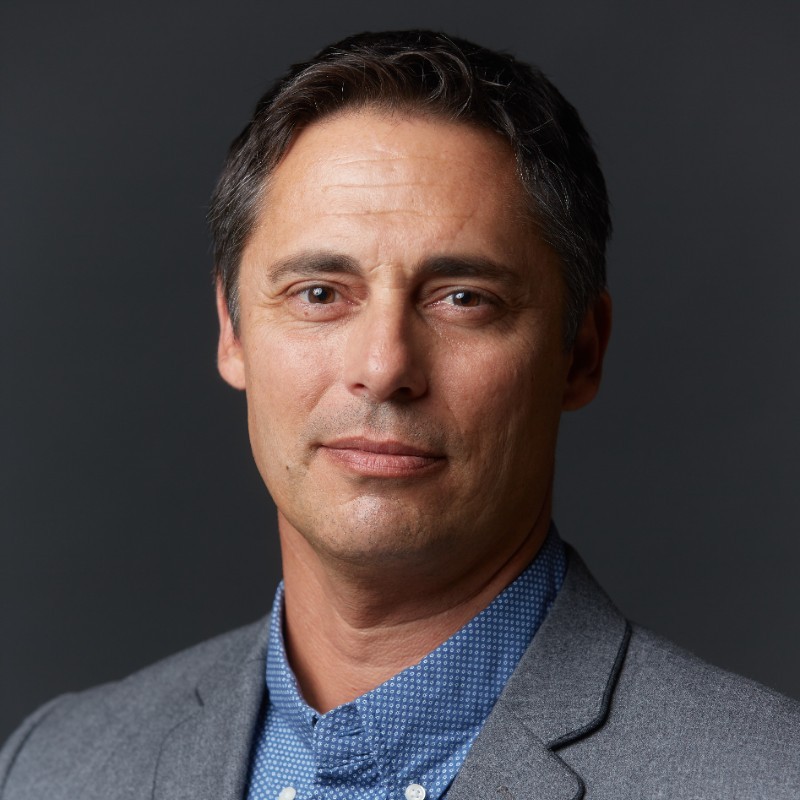
David Lazovsky, founder and Chief Executive Officer of Celestial AI, discusses their company's groundbreaking work in AI technology with host John Furrier at theCUBE, part of an ongoing series in collaboration with NYSE Wired. Lazovsky shares insights into Celestial AI’s recent achievements and innovative strides in artificial intelligence and interconnectivity within the semiconductor industry.
Lazovsky elaborates on Celestial AI’s successful $250 million Series C-1 financing round, emphasizing the participation of prominent investors such as Fidelity, BlackRock, Maverick, Tire Global, and Intel’s new Chief Executive Officer Lip-Bu Tan, who has joined their board. John Furrier of theCUBE, along with theCUBE Research analysts, moderates this pivotal discussion, uncovering Lazovsky's perspectives on the expanding role of photonics in enhancing AI systems and reducing latency and energy consumption across vast AI workloads.
The discussion highlights Celestial AI's technologically advanced Photonic Fabric, a platform enabling processor-to-processor interconnectivity, which is crucial for handling complex AI models. Lazovsky provides insights on current industry trends and forecasts an increase in AI-driven innovations, as identified through Furrier’s inquiries. The conversation underscores the value of collaboration with prominent semiconductor firms, expanding the understanding of AI infrastructure and its ongoing evolution.
#CelestialAI #theCUBE #NYSEWired #Photonics #AI #Semiconductors #Innovation #FundingSuccess
Find more SiliconANGLE news and analysis https://siliconangle.com/.
Follow theCUBE's wall-to-wall event coverage https://siliconangle.com/events/
Learn about the latest theCUBE events https://www.thecube.net/
00:00 - Intro
00:06 - Unveiling theCUBE: Introducing David Lazovsky, Celestial AI, and Strategic Financing
02:17 - Advancing Through AI: Technology, Growth, and Supercomputers
05:40 - Market Perspective on AI Financing
07:53 - The Role of Network Fabric
11:23 - Memory and AI Inference
14:35 - Strategic Alignments: Operational Excellence and Leadership Synergies
Forgot Password
Almost there!
We just sent you a verification email. Please verify your account to gain access to
theCUBE + NYSE Wired: Mixture of Experts Series. If you don’t think you received an email check your
spam folder.
Sign in to theCUBE + NYSE Wired: Mixture of Experts Series.
In order to sign in, enter the email address you used to registered for the event. Once completed, you will receive an email with a verification link. Open this link to automatically sign into the site.
Register For theCUBE + NYSE Wired: Mixture of Experts Series
Please fill out the information below. You will recieve an email with a verification link confirming your registration. Click the link to automatically sign into the site.
You’re almost there!
We just sent you a verification email. Please click the verification button in the email. Once your email address is verified, you will have full access to all event content for theCUBE + NYSE Wired: Mixture of Experts Series.
I want my badge and interests to be visible to all attendees.
Checking this box will display your presense on the attendees list, view your profile and allow other attendees to contact you via 1-1 chat. Read the Privacy Policy. At any time, you can choose to disable this preference.
Select your Interests!
add
Upload your photo
Uploading..
OR
Connect via Twitter
Connect via Linkedin
EDIT PASSWORD
Share
Forgot Password
Almost there!
We just sent you a verification email. Please verify your account to gain access to
theCUBE + NYSE Wired: Mixture of Experts Series. If you don’t think you received an email check your
spam folder.
Sign in to theCUBE + NYSE Wired: Mixture of Experts Series.
In order to sign in, enter the email address you used to registered for the event. Once completed, you will receive an email with a verification link. Open this link to automatically sign into the site.
Sign in to gain access to theCUBE + NYSE Wired: Mixture of Experts Series
Please sign in with LinkedIn to continue to theCUBE + NYSE Wired: Mixture of Experts Series. Signing in with LinkedIn ensures a professional environment.
Are you sure you want to remove access rights for this user?
Details
Manage Access
email address
Community Invitation
Dave Lazovsky, Celestial AI
David Lazovsky, founder and Chief Executive Officer of Celestial AI, discusses their company's groundbreaking work in AI technology with host John Furrier at theCUBE, part of an ongoing series in collaboration with NYSE Wired. Lazovsky shares insights into Celestial AI’s recent achievements and innovative strides in artificial intelligence and interconnectivity within the semiconductor industry.
Lazovsky elaborates on Celestial AI’s successful $250 million Series C-1 financing round, emphasizing the participation of prominent investors such as Fidelity, BlackRock, Maverick, Tire Global, and Intel’s new Chief Executive Officer Lip-Bu Tan, who has joined their board. John Furrier of theCUBE, along with theCUBE Research analysts, moderates this pivotal discussion, uncovering Lazovsky's perspectives on the expanding role of photonics in enhancing AI systems and reducing latency and energy consumption across vast AI workloads.
The discussion highlights Celestial AI's technologically advanced Photonic Fabric, a platform enabling processor-to-processor interconnectivity, which is crucial for handling complex AI models. Lazovsky provides insights on current industry trends and forecasts an increase in AI-driven innovations, as identified through Furrier’s inquiries. The conversation underscores the value of collaboration with prominent semiconductor firms, expanding the understanding of AI infrastructure and its ongoing evolution.
#CelestialAI #theCUBE #NYSEWired #Photonics #AI #Semiconductors #Innovation #FundingSuccess
Find more SiliconANGLE news and analysis https://siliconangle.com/.
Follow theCUBE's wall-to-wall event coverage https://siliconangle.com/events/
Learn about the latest theCUBE events https://www.thecube.net/
00:00 - Intro
00:06 - Unveiling theCUBE: Introducing David Lazovsky, Celestial AI, and Strategic Financing
02:17 - Advancing Through AI: Technology, Growth, and Supercomputers
05:40 - Market Perspective on AI Financing
07:53 - The Role of Network Fabric
11:23 - Memory and AI Inference
14:35 - Strategic Alignments: Operational Excellence and Leadership Synergies
In this theCUBE + NYSE Wired: Mixture of Experts segment, theCUBE’s John Furrier sits down with Dave Lazovsky, founder and CEO of Celestial AI, to unpack fresh financing and the market dynamics powering next-gen AI infrastructure. Lazovsky shares details on Celestial AI’s just-announced $250M Series C-1 round led by Fidelity with participation from BlackRock, Maverick, Tire Global and others, plus the news that Lip-Bu Tan – recently named Intel’s CEO – joined the company’s board and invested in the round. The discussion explores how interconnectivity, not jus...Read more
exploreKeep Exploring
What is driving the increased pressure on the scale up network in relation to processors and AI models?add
What is the business model of partnering with customers at a deeper level for joint collaborative development at the architectural level?add
What are some advantages of deeper levels of integration for optical interconnectivity, specifically in relation to alternative technologies like co-packaged optics?add
>> Welcome to theCUBE everyone. I'm John Furrier, host of theCUBE in our Palo Alto Studios. We always got great news coming on, especially from our community. We have our mixture of experts series, MOE, a little pun intended there, obviously AI would love the term mixture of experts, chain of thought. It's an AI driven world. And of course theCUBE has got you covered. And of course we've got our East Coast studio and then show floor, the New York Stock Exchange connecting tech, finance and business together in partnership with the NYSE and the fast-growing NYSE Wired community, founded by Brian Bauman. Great connections. David Lazovsky is here, founder and CEO of Celestial AI. David, great to see you. And you've got some big news, one, and news that happened around you. We'll get to that in a second. Intel's new CEO, Lip-Bu Tan, is on your board invested. We'll get back to that, but tons going on. You've got fresh financing. Let's jump into it. Welcome to theCUBE.
Dave Lazovsky
>> Thanks for me having, John.>> What's the amount? 250 you guys raised for the total funding.
Dave Lazovsky
>> Yeah, we just closed and announced yesterday at $250 million series C-1 round of financing.>> So that came through what? A week ago?
Dave Lazovsky
>> It actually was announced yesterday. So it was led by Fidelity with BlackRock, Maverick, Tire Global, as well as many of our existing investors participating.>> So good validation, growth funding, all the pedigree on the financing. The new Intel CEO is on your board and invested as well?
Dave Lazovsky
>> He is, yeah. Lip-Bu participated in the round of financing and joined our board. We announced a couple of weeks ago. Thrilled to have Lip-Bu involved. He's an icon in our industry.>> Yeah, he's one of the who's who in the semiconductor area. Obviously on theCUBE we've talked in the past around clustered systems, the validation that's coming in across the board. Certainly this financing recognizes what you guys are doing. What was the big part of the financing? Was it validation? Was it the revenue growth? Was it future values? How did this all come together in your mind? And what are you going to do with the funds?
Dave Lazovsky
>> Yeah. So I think we certainly have the right technology and the right team at precisely the right time to address this opportunity in artificial intelligence. So we have created a technology platform for optical interconnectivity for AI processors called the Photonic Fabric, and what that is doing is enabling the ability to scale larger scale systems to support artificial intelligence workloads that are growing in complexity exponentially far more efficiently. So higher performance, lower latency, lower energy consumption, as well as lower cost.>> One of the things that Dave and I have been talking about on theCUBE and our CUBE pod is these clustered systems and these AI factories, whatever you want to call them, it's the next gen supercomputing. They're not just a server stacked on a rack, there's a lot of integration involved, chips to chips, relationships, memories. Reminds me of the '90s back in the day when you had the new architecture growing so fast and changing so fast. What is the biggest change in growth driver do you see in this new AI supercomputer clustered systems that are rolling out? Is it the interconnections? Is it the role of the processors? Obviously you guys play a huge role in that link connecting all this together. What is the driver?
Dave Lazovsky
>> Yeah, so if you think about it starting at the application or at the AI model level, you have more advanced reasoning models. Those that, for example, have been released very recently from OpenAI like o3, DeepSeek-R1, you've got Gemini from Google and recent cloud announcement from Anthropic. So what's happening here is it's putting an increased pressure on the what's called a scale up network. So if you think about it at the most fundamental level, these models are growing exponentially in size. They're now trillions of parameters which are orders of magnitude larger than the largest amount of memory capacity in a single processor. So that drives a requirement then to partition the model over hundreds now of processors, which then drives the need for better interconnectivity of these processes. Again, thinking at the most simplistic level, you've got a processor that's doing the work that has to move across the network to grab parameters out of the memory of another processor, bring it back across the network to get the work done. So it is now the network interconnectivity, speed and bandwidth and latency that is driving performance much more so than the compute itself.>> So when you were pulling together this financing, what was the main theme? What was the market like on the finance side? And how did you tell that story because was it obvious to everyone? Obviously on the growth side you see Nvidia stock is up, you look at what they've done, you're seeing a lot of the chips are skyrocketing. Is it well known that this is now a system, it's not just one company? Take me through the mindset of the market, specifically investors as they look at these growth phases. What was some of the observations?
Dave Lazovsky
>> Yeah, I think if you look at the end market, I think it's increasingly understood, especially now that Nvidia has become one of the largest companies on earth. That data center infrastructure is what's driving, it's the capability that is driving artificial intelligence forward. The growth in AI is really multi-fold. The challenges are, again, not just the compute infrastructure, but interconnectivity and from the standpoint of the investor days, I think one of the things that drove the demand for this highly oversubscribed round was the size of the market, the rate of growth in the market. But we happen to be in the sweet spot of what is arguably the largest highest growth market in history in artificial intelligence, which is interconnectivity. And we are alone right now in terms of the differentiation of our technology. Today we have the only optical interconnectivity technology that has the ability to provide NVLink or superior-level bandwidth, reduce latency, reduce power for processor-to-processor interconnectivity.>> Yeah, I remember when we talked last on theCUBE we were talking about this. So I want to ask you a follow-up, if you don't mind, on this whole network fabric. As you start to see these preferred architectures come out, what's your vision and how do you see the deployments? Because the AI infrastructure is moving so fast, and when that gets completed, the agent wave comes in. So we're in this moment where it's about to unleash massive innovation. Where are we? What are you seeing in terms of deployments? What does that architecture look like? Because you're seeing open systems like Ethernet be a fabric, and you have the high interconnects between the core systems, power is a big issue, power and cooling. Is that changing the nature of what people are doing with interconnects? Could you take me through your vision on the role of the network fabric in these highly processor-connected systems?
Dave Lazovsky
>> Yeah, I think you hit on exactly the challenges that the hyperscalers are dealing with. So there are two fundamental networks that interconnect artificial intelligence processors. There is what's called scale-out networks, which is, as you pointed out, Ethernet connectivity or Nvidia speed that's InfiniBand, that handles about 15% of the data traffic. The other 85% is direct processor-to-processor interconnectivity which is called the scale-up network. Today, 100% of that scale-up network is copper and the gold standard for scale-up networks is in Nvidia. It's NVLink and NVSwitch. Alternatives are PCIe which is far more inefficient, higher latency, lower bandwidths, much, much higher power. So what we are doing is we're focused entirely on that scale-up network on processor-to-processor interconnectivity and we're taking it to a totally different level, enabling the reach of photonics, enabling the ability to move information at the speed of light based on photonics, enabling the efficiency of photonics from an energy efficiency standpoint. So it's literally an order of magnitude advancement across all of those metrics.>> Is there a pattern you're seeing in how things are moving on and relative to subsystems around you? Because you get a unique vantage point in the playbook and the architecture you're seeing the interconnects, is the role of memory, highest bandwidth memory, I mean, seeing that flash will play a more critical role in capacity management for memory? You're going to start to see some of that DeepSeek like innovation, people have been talking about. It's not so much that they did anything special other than we're clever with how they configured things. Is there a configuration pattern to an optimal deployment for these AI systems because you're at the center of it?
Dave Lazovsky
>> Yeah, so absolutely John. So memory capacity requirements actually scale quadratically for these reasoning models, these more advanced models. And if you think about it, it's early, early days in artificial intelligence. So the training that drove the limitations and capability is the investment, the "I" in the ROI equation. What you're seeing right now, and what you'll see through the balance of this decade through 2030 is the investment in inference, which is where the return the "R" and the ROI equation comes. And there the scale is a different level. The volumes are tremendous. So you may have one large training cluster, but you need to serve the global community with inference. So what we're seeing in the customers that we're engaged with is huge volumes that will come over the course of the next couple of years. And our business model is, again, as you had pointed out, John, is one of deeper levels of joint collaborative development with our customers at the architectural level. So we're partnering with customers to design our photonic fabric directly into their AI compute systems to serve precisely the requirements that they have for their artificial intelligence workloads.>> Well, you got some good funding, news went out yesterday. Still going to have a great story on it. I have to ask you, what's the use of fund strategy, more R&D, more engineering, go to market? What's the vision on how you want to deploy that capital?
Dave Lazovsky
>> Yeah, John, it's all about scale at this point. So the technology is validated and we are working through the course of 2025 and into the first half of next year to ensure that we can stand up the supply chain and the manufacturing capacity to scale to support our customer demand. So it's more of an operational focus at this point. It's very, very tactical, very operative.>> How to make the product. I mean, it's a good product. It takes a lot of precision. Talk about the precision real quick. I think it's important for folks to know the quality requirements that you guys have to deliver. Could you just take a minute to explain that piece of the product?
Dave Lazovsky
>> Yeah. I mean, there are a variety of quality, reliability, resiliency requirements. The beautiful thing about deeper levels of integration for our Photonic Fabric and in general for optical interconnectivity that's coming with alternative technologies like co-packaged optics, is that it eliminates a lot of the micro optics shortcomings in pluggable data center transceivers that have had historically over the last decade plus been plagued with reliability and resiliency issues. With integrated devices you inherently have far more reliable systems. And in our case, what we're bringing to the equation is thermally stable silicon photonics, which addresses one of the most significant weaknesses inherently in optical interconnectivity. So yeah, that's an area that->> Just for people to know, transceiver, you mean the connectors.
Dave Lazovsky
>> Yeah, the transceiver is like the .>> The connector that breaks all the time versus silicon in the chip itself.
Dave Lazovsky
>> Sorry. That's exactly right. The transceiver is what converts the electrical signals to optical and the optical signals back to electrical. In large part that's being done today with pluggable data center transceivers at the back of the rack. So what's happening is that that electrical to optical link or the optical to electrical conversion is now moving closer and closer to the processor. At Celestial AI with our Photonic Fabric, what we have created is the ability to deliver data optically directly to the point of consumption within the chip. You can't get any more deeply integrated than our technology.>> I think it's important to point that out because people who aren't in the industry might not know that. And I think it's important everyone knows when you have a connection it can break down, there's always reliability and you can always throw more ports at it, but that doesn't solve the problem. You're going directly in silicon. So good call out there. I do want to ask you if you can explain, you mentioned co-packaged optics. What does that mean? Is that just half silicon, half... Explain . What is co-packaged optics?
Dave Lazovsky
>> It just means that you are bringing the optics directly to the package. So there's a series of startups and other larger scale companies that have released or in the process of releasing products now for co-packaged optics, that is bringing optical interconnectivity to the package where the processors reside. In fact, we wouldn't be surprised to hear from Nvidia next week at GTC the implementation of co-packaged optics for InfiniBand for their data center transceivers for top .>> Why would they be doing that? What's your take on there? If that happens, what's the rationale there?
Dave Lazovsky
>> Well, because there is no better way to move information than to move it optically, and I think the world knows that. You're leveraging the laws of physics rather than trying to fight it with copper. So what they're doing in their case would be in the same vein that the optical systems division at Broadcom has released a Bailey for co-packaged optics top-of-rack switch for Tomahawk. They're providing a deeper level of optical interconnectivity, again, to the scale-out network, which handles roughly 15% of the data traffic. Again, we don't compete with scale-out, we're very complimentary with co-packaged optics. Where we are focused is scale-up direct processor to processor interconnectivity, leveraging our Photonic Fabric.>> I love the vision. I love the execution. It's getting down to the actual silicon itself, and then again, these are clustered systems. Final question. Explain the relationship between you and the new Intel CEO announced today, minutes ago, Lip-Bu Tan, he's taken over for Intel. He's connected to you guys. He's on your board. He's an investor. Can you just clarify the relationship the new Intel CEO has with your company?
Dave Lazovsky
>> Yeah, so Intel, he did join this round of financing, our series C-1, and he joined our board as we announced a couple of weeks ago. I personally don't think that Intel could have made a wiser decision to bring somebody in the right that ship. I think there are very few people who cannot just bring strategic know-how, the right experience base to develop the right strategy to enable Intel to grow their business, but has the ability to shift the flow of talent from a flow into out at Intel to bringing the right talent into that organization, which I think is going to be absolutely crucial for those guys to succeed. So yeah, we're thrilled to have personally Lip-Bu Tan involved with Celestial AI and wishing him the absolute best. I'm sure he's going to crush it at Intel.>> Yeah, I mean, Intel is such a brand. It's really part of the industry foundation of the computer industry. I have to ask you, what's he like as a person? You've interacted with him, obviously he's done due diligence, he's on your board, you have to work with him. What's he like as a leader, as a person? Can you share some thoughts on him? Not to get the word out there, but I mean a lot of people are going to want to know what's he like.
Dave Lazovsky
>> I mean, he's brilliant. He's brilliant. He's an icon as I've mentioned before. So he has a level of technical acumen that is nearly unparalleled for someone at his level. He is one of the best listeners I've ever met in my life, which has probably enabled him to excel throughout his career. He's got some of the deepest networks of relationships that he has developed and nurtured over the course of three decades plus in the semiconductor industry that are absolutely invaluable. So he's a gem. He's one of the wisest people that I've been exposed to in our industry.>> He's well-known. I don't know him personally, not yet. Certainly get him on theCUBE. I know a lot of people that worked with him, all the Intel OGs in semis, a lot of people in the industry. So looking forward to seeing what happens there. Dave, thank you so much for coming in on the breaking news piece here, part of a mixture of experts, theCUBE plus NYC Wired. Thanks for coming on.
Dave Lazovsky
>> Thanks for having me, John.>> Okay. I'm John Furrier here in theCUBE in Palo Alto, bringing you all the action breaking news. And then other news with Intel, also related to Celestial AI and all the action in semiconductors. Great stuff going on. Thanks for watching.