In this insightful episode of theCUBE's Mixture of Experts series from the New York Stock Exchange, we explore the transformative developments at Oracle with Juan Loaiza. Hosted by Dave Vellante, the conversation highlights the complexities and innovations within Oracle's database technologies, emphasizing challenges and novel solutions in a rapidly evolving technological landscape.
Juan Loaiza, executive vice president for Oracle Database Technologies, shares their journey from leading mission-critical database efforts to overseeing all of Oracle's database engineering following the retirement of Andy Mendelsohn. The discussion, facilitated by Dave Vellante of SiliconANGLE Media, explores Loaiza's new responsibilities and the strategic initiatives Oracle is pursuing. The dialogue highlights the dual focus of Oracle's events in New York on business and technology, showcasing Oracle's global reach through its CloudWorld tour and interactive client engagements.
The conversation examines Oracle's multifaceted strategy, addressing issues such as cybersecurity, AI integration, and multi-cloud ecosystems that drive high-level innovation. Loaiza elaborates on Oracle's Zero Data Loss Recovery Appliance, indicating its growing importance as enterprises adopt advanced recovery strategies. The discourse also touches upon interoperability across multiple cloud providers and introduces Oracle's groundbreaking JSON Relational Duality model, which promises to revolutionize data management by offering unmatched flexibility across data formats.
Intriguing insights are offered, particularly regarding the impact of AI on future enterprise transformations. Loaiza discusses the Oracle database’s integration with AI for enhanced security and efficiency, enabling seamless natural language processing and AI-assisted coding. Furthermore, Oracle's strategy of not limiting itself to a single large language model allows customers to leverage diverse AI models according to their business needs, ensuring customized, cutting-edge solutions.
Forgot Password
Almost there!
We just sent you a verification email. Please verify your account to gain access to
theCUBE + NYSE Wired: Mixture of Experts Series. If you don’t think you received an email check your
spam folder.
Sign in to theCUBE + NYSE Wired: Mixture of Experts Series.
In order to sign in, enter the email address you used to registered for the event. Once completed, you will receive an email with a verification link. Open this link to automatically sign into the site.
Register For theCUBE + NYSE Wired: Mixture of Experts Series
Please fill out the information below. You will recieve an email with a verification link confirming your registration. Click the link to automatically sign into the site.
You’re almost there!
We just sent you a verification email. Please click the verification button in the email. Once your email address is verified, you will have full access to all event content for theCUBE + NYSE Wired: Mixture of Experts Series.
I want my badge and interests to be visible to all attendees.
Checking this box will display your presense on the attendees list, view your profile and allow other attendees to contact you via 1-1 chat. Read the Privacy Policy. At any time, you can choose to disable this preference.
Select your Interests!
add
Upload your photo
Uploading..
OR
Connect via Twitter
Connect via Linkedin
EDIT PASSWORD
Share
Forgot Password
Almost there!
We just sent you a verification email. Please verify your account to gain access to
theCUBE + NYSE Wired: Mixture of Experts Series. If you don’t think you received an email check your
spam folder.
Sign in to theCUBE + NYSE Wired: Mixture of Experts Series.
In order to sign in, enter the email address you used to registered for the event. Once completed, you will receive an email with a verification link. Open this link to automatically sign into the site.
Sign in to gain access to theCUBE + NYSE Wired: Mixture of Experts Series
Please sign in with LinkedIn to continue to theCUBE + NYSE Wired: Mixture of Experts Series. Signing in with LinkedIn ensures a professional environment.
Are you sure you want to remove access rights for this user?
Details
Manage Access
email address
Community Invitation
Juan Loaiza, Oracle
In this insightful episode of theCUBE's Mixture of Experts series from the New York Stock Exchange, we explore the transformative developments at Oracle with Juan Loaiza. Hosted by Dave Vellante, the conversation highlights the complexities and innovations within Oracle's database technologies, emphasizing challenges and novel solutions in a rapidly evolving technological landscape.
Juan Loaiza, executive vice president for Oracle Database Technologies, shares their journey from leading mission-critical database efforts to overseeing all of Oracle's database engineering following the retirement of Andy Mendelsohn. The discussion, facilitated by Dave Vellante of SiliconANGLE Media, explores Loaiza's new responsibilities and the strategic initiatives Oracle is pursuing. The dialogue highlights the dual focus of Oracle's events in New York on business and technology, showcasing Oracle's global reach through its CloudWorld tour and interactive client engagements.
The conversation examines Oracle's multifaceted strategy, addressing issues such as cybersecurity, AI integration, and multi-cloud ecosystems that drive high-level innovation. Loaiza elaborates on Oracle's Zero Data Loss Recovery Appliance, indicating its growing importance as enterprises adopt advanced recovery strategies. The discourse also touches upon interoperability across multiple cloud providers and introduces Oracle's groundbreaking JSON Relational Duality model, which promises to revolutionize data management by offering unmatched flexibility across data formats.
Intriguing insights are offered, particularly regarding the impact of AI on future enterprise transformations. Loaiza discusses the Oracle database’s integration with AI for enhanced security and efficiency, enabling seamless natural language processing and AI-assisted coding. Furthermore, Oracle's strategy of not limiting itself to a single large language model allows customers to leverage diverse AI models according to their business needs, ensuring customized, cutting-edge solutions.
In this theCUBE + NYSE Wired: Mixture of Experts conversation from the floor of the New York Stock Exchange, theCUBE’s Dave Vellante sits down with Juan Loaiza, executive vice president for Oracle Database Technologies, to explore how mission-critical data platforms are evolving amid rising security pressure and AI adoption. Loaiza details his expanded remit leading Oracle’s database engineering organization, takeaways from the CloudWorld Tour’s New York stop and why security, ransomware and new regulations dominate customer conversations – especially in fina...Read more
exploreKeep Exploring
What were the differences in responsibilities between Juan and Andy in their previous roles at Oracle?add
What are some new challenges and opportunities that have arisen in the tech industry, particularly in regards to AI, security, ransomware, cyber attacks, and state-sponsored actors, since setting up at CloudWorld in Vegas?add
What are some of the challenges involved in making AI enterprise ready for handling sensitive data in industries such as healthcare and finance?add
What considerations need to be taken into account when implementing AI in data management to ensure data security and consistency?add
What is being done to bring AI to the data and handle the vast amount of data across different locations?add
What is the benefit of bringing AI directly to the data and baking it into the Oracle database?add
What are some of the biggest use cases for AI in software development?add
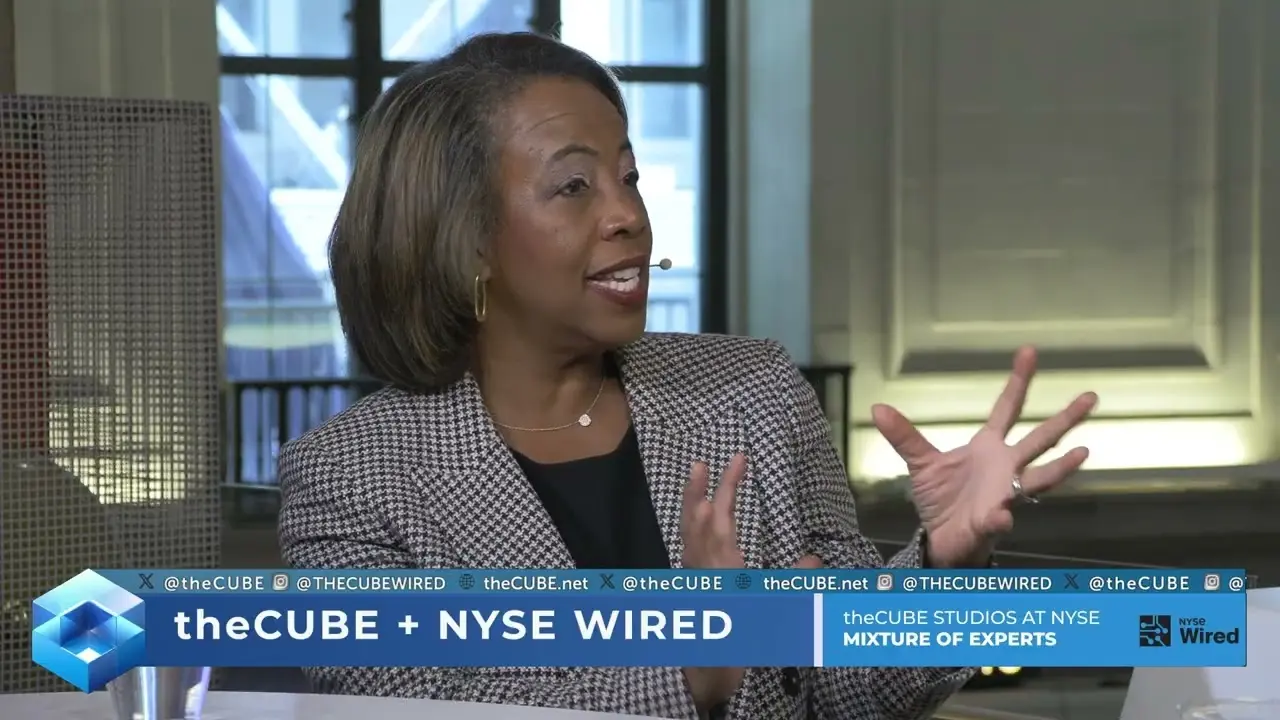
>> Hi, everybody. Welcome back to the New York Stock Exchange. My name is Dave Vellante. We're here with our continuing Mixture of Experts series. Juan Loaiza is here. He's executive vice president for Oracle Database Technologies. Juan, it's good to see you face to face.
Juan Loaiza
>> Yeah, it's been a while since we talked actually for real, in a real setting as opposed to virtually.
Dave Vellante
>> Yeah, we've had a lot of Zoom. New role for you, similar title. You had kind of mission-critical database before. Andy Mendelsohn, for those of you who follow Oracle, he's retired. You guys were two in the box you were telling me, and now you've taken on more responsibility.
Juan Loaiza
>> Yeah, taken on the whole role of running all of database engineering at Oracle.
Dave Vellante
>> So what was the difference? What was Andy doing? You guys were two in the box. What were you doing? What was Andy doing? I mean, you guys have had that sort of two in a box before with co-CEOs and... What was it like in the technical side? What were the responsibilities that now you're picking up?
Juan Loaiza
>> I was primarily focused on mission-critical, so primarily OLTP but in our engineered systems, that kind of stuff. He was doing a lot more of the analytics and various other functions, but we were both really running the whole thing and we worked very closely together. Some people don't believe that two people can work together cooperatively for a dozen years, but we did it. It was unusual, but it worked really well.
Dave Vellante
>> So I last... I think I saw you face-to-face in Vegas at Oracle CloudWorld, which was a great show. And then you guys are on a tour now. So what's going on in New York? You had two events, right? You had sort of more of a business-oriented and a technical event. Explain that.
Juan Loaiza
>> Yeah. So this Tuesday we had our CloudWorld tour event where we go out to... We're going out to some of the major cities in the world and we have our executives speak to customers where they live. So that's really good. So I've been going... I've been in Australia, I've been in Singapore, I'm here in New York, so I do a bunch of them. Some of our other execs do a bunch of them, and that's great because we can get a lot more people that can just come for a day. Going to Las Vegas for a big event, it's a bigger investment. You have to invest 3, 4, 5 days. But when you come to New York and they come for a day, you get a lot more attendance, some of the higher level people. So it's worked really well. It was a very well-run, very successful event.
Dave Vellante
>> So what are you hearing from customers that's new that you're kind of... maybe we're setting up at CloudWorld in Vegas and now you're sort of starting to deliver? What's changed since then?
Juan Loaiza
>> Tech is always fun because things are always changing. So there's always new challenges. There's always new opportunities. Of course, AI is huge. Interesting here, and I think because in New York I'm having a lot of conversations around security, ransomware, cyber attacks. Everyone is very concerned about these things, especially financial industry, but pretty much every industry. So that has welled up because it's been around forever, but there's a lot new regulations, there's a lot more concern about that kind of stuff. Even state-sponsored actors. So people are really working on making sure that they can recover and protect themselves.
Dave Vellante
>> So I'm going to stay there because Larry makes a big deal with security.
Juan Loaiza
>> Yeah.
Dave Vellante
>> He had an awesome keynote at CloudWorld. First of all, he declared the multi-cloud era is beginning, so we'll come back to that. But he also went on a sort of a little bit of a Larry rant on security and passwords. Like, "Saffron knows who I am, why do I have to retype my password every time?"
So security obviously is more than just MFA and passwords, but you guys have always prided yourself on having a pretty solid security stack. What is it that enables that? Is that because you have control of the whole Red Stack and the hardware and software integration, or is it just a mindset, a combination?
Juan Loaiza
>> All of that. All of that. So we pay a lot of attention. We run most of the mission-critical systems in the world. So if we stop running hospitals, stop running airlines, stop running stock exchanges, stop running banking, starts running retail, everything. So this has always been a key focus of ours. And the threats are constantly changing. They're constantly increasing. There's a lot of concern now about AI attacks, people using AI to find new venues about speeding up protection and about recovering. One of the big conversations I had this week with a lot of customers was the worst case scenario. So if some cyber attack breaches the defenses and gets into the data center, what do you do? Right? What's the last line of resort? And interestingly enough, it's erase everything because you don't know where they got... You're not going to be able to figure that out. These systems have to come back online, so you can't try to fix it. So the main strategy is just wipe the whole thing clean and build it from scratch and do that extremely quickly to get back online. So it's not something that a lot of people know about, but that's the last line of defense.
Dave Vellante
>> I have not heard that strategy before because what... That's interesting because for a while people were saying, "Look, you got to have an air gap and you got to protect the backup corpus and then you'll be able to recover." But the problem with that became they still had your data and they could leak it. So using, make sure I get the acronym, the Zero Data Loss Recovery Appliance. Did you name that? ZDLRA?
Juan Loaiza
>> Oh, that was Larry.
Dave Vellante
>> Now, I know it was Larry. Zero Data Loss Recovery Appliance, which is... There's really no such thing, I guess, as zero data loss. Could be really bad disasters, but as close to possible as zero data loss and zero RPO. Is that recovery appliance fundamental to that strategy that you just mentioned?
Juan Loaiza
>> Yeah, that's right. So I mean, we've had the Zero Data Loss Recovery Appliance on the market for about a decade. And actually, interestingly enough, recently the sales have taken off and a lot of our biggest customers in the world are adopting it. And there's a number of reasons. One is that zero data loss thing that you mentioned because one thing that's unique about it is as transactions enter the database, as you make any change, it's immediately backed up to that Zero Data Loss Recovery Appliance. So there's no nightly backup or hourly backup. It's instantaneous, continuous backup with very low overhead. So that's a huge deal. And the other thing that's become a huge deal is this thing that I just mentioned, which is you do the air gap thing, but then worst case, you have to erase everything. You got to be back online as quickly as possible. You need an ultra-fast recovery, ultra-fast restore of 10, hundreds petabytes of data. So that's the trick. You have giant amounts of data, you need to get back online, how do you restore the good copy of the data in less than one, two hours at most with this gigantic amount of data? So that's a lot of the conversations I'm having this week, along with lots of other ones.
Dave Vellante
>> Is it the bottleneck there though, Juan? The network?
Juan Loaiza
>> Yeah, so you need an ultra-fast network. That's another thing. I mean, the whole thing, you're only as fast as your slowest component, but we've optimized our Zero Data Loss Recovery Appliance to be ultra-fast, many times faster than any other product in the market. And like I said, zero data loss also.
Dave Vellante
>> So it's related, but not about fast recovery. But am I mistaken, did you guys acquire Exana, that company? Do you know? You hear those... The black box, right? Never mind.
Juan Loaiza
>> I don't think so.
Dave Vellante
>> Do you ever see this product? It's essentially a black box for IT in case there's terrible disaster. Anyway, I thought you guys picked that asset up, but maybe I'm wrong. Let's talk about multi-cloud.
Juan Loaiza
>> Okay.
Dave Vellante
>> So as I said, Larry Ellison at last year's Oracle CloudWorld declared the era of multi-cloud has begun. It's kind of ironic, isn't it? That Oracle has probably the most comprehensive multi-cloud strategy because you have your own cloud, you have on-prem, you now finally... I remember last year at the database summit, I asked you, "Would you ever put your stuff into AWS?" You said you'd be open to it. And that has obviously happened. The Microsoft was the first announcement with the Azure database announcement. And of course you're in Google as well, so you've ticked all the boxes. How has the uptake been? How is that working for customers?
Juan Loaiza
>> Yeah, that's been a huge thing for us and for our partners in the multi-cloud. But yeah, as you said, we got Azure, we got Google, we have AWS, and our own cloud, on-prem. We also have our on-prem Cloud@Customer. So yeah, we run everything everywhere now. It's been very successful. We have tremendous interest in that. There's a lot of customers that have been waiting for this for years and saying, "Please, please can I have Oracle on those clouds?" But yeah, it's a huge thing.
Dave Vellante
>> We were at Oracle headquarters when you announced Exadata and all the other kind of integrated boxes. That was a while ago now. I mean, that must have been, what, 15 years ago?
Juan Loaiza
>> About 15 years. That's right.
Dave Vellante
>> Yeah. And the messaging at the time, one of the messaging, Cloud@Customer, as well was same-same. You guys were really the first to really talk about same-same. And so now if I understand it correctly, that experience is virtually identical across all those clouds and on-prem, is that right?
Juan Loaiza
>> Yeah. No, that's right. It's the exact same Exadata, Exadata cloud, autonomous database across all these platforms. And very importantly, our Cloud@Customer where we build a cloud in a customer's data center is also very unique. Now, everyone has a Cloud@Customer, Amazon, Google, everybody; however, they don't take their premier products to customer. So if you're Amazon, they don't have RDS or Aurora. Google doesn't have Bigtable or Spanner. Same thing with Azure. They don't have Azure SQL. So we're the only ones that have the premier data products everywhere: on-premises, in the cloud, in all the different clouds. So it's very unique and that means customers have full choice, so they can... And what I'm seeing more and more is... At one point there was this thought that everyone was just going to go to cloud, and yeah, some people have gone to cloud, all cloud, but the vast number have everything. So they have some on-prem, some on-prem Cloud@Customer, some on public cloud. They might have two, three public clouds. They have Oracle cloud. And there's been... That thought that a lot of people had of going a hundred percent seems to have mostly gone away because they're like, "Hey, there's different things that are better for different functions." And I think that's going to be the new normal, is everyone's spread out everywhere. There's no one thing that everyone's going to do.
Dave Vellante
>> So just to follow up on that, to put a finer point on that, so you said all these hyperscalers have their version of cloud? For instance, outposts?
Juan Loaiza
>> Yes.
Dave Vellante
>> Or the Amazon's version?
Juan Loaiza
>> Right.
Dave Vellante
>> But you're saying you have full stack, whereas outposts, it might be a smaller ecosystem, partners, you don't necessarily get all the 15 data stores, et cetera.
Juan Loaiza
>> Yeah, you don't get any of the premier data stores.
Dave Vellante
>> You're saying with Cloud@Customer, you get access to everything.
Juan Loaiza
>> Yeah. With our Cloud@Customer, you get our premier stuff, Exadata, our autonomous database, our Oracle database, the same thing that runs the New York Stock Exchange, the same thing that runs all the banks, telecoms, retailers around the world. Yeah.
Dave Vellante
>> The flip side. So what enabled you to have your mission-critical capabilities in the clouds? You put Exadata in the clouds, and I can run RAC now in the clouds?
Juan Loaiza
>> Yes. And in the cloud-
Dave Vellante
>> So that's a huge -
Juan Loaiza
>> ... we have Exadata and we have RAC data guard, all our mission-critical technologies. Yeah.
Dave Vellante
>> I wanted to switch topics and ask you about your MongoDB, a... I saw you call it like a JSON jailbreak, which is kind of interesting. So-
Juan Loaiza
>> I don't remember that term. That's a good one.
Dave Vellante
>> It's a good marketing. It's a marketing.
Juan Loaiza
>> That's a good one.
Dave Vellante
>> Some of the marketing. He was a sales guy I saw.
Juan Loaiza
>> I like it.
Dave Vellante
>> It was pretty good. But the whole idea is that you can get JSON and MongoDB compatibility. You're not necessarily... A lot of people complain about the Mongo licensing. It's kind of interesting, you're freeing people from lock-in. People sometimes associate Oracle with lock-in, but you're opening up and allowing people to actually have more flexibility with all the mission-criticality. Explain the whole strategy around that.
Juan Loaiza
>> Yeah. So this is really interesting. Document databases like JSON databases have become very popular with developers.
Dave Vellante
>> Right.
Juan Loaiza
>> Now, we added JSON capability to Oracle database almost a dozen years ago. So we've had it in production for a long time, but we've done a lot more recently. So we've now added a super-fast binary version of JSON, which I think is the fastest in the industry. Nobody has that same performance. We've added what you mentioned, which is full compatibility with Mongo apps. So if you like the Mongo application development, if you like their development environment and how they do things, you can take a running Mongo app and just move it to Oracle and it'll run better than on Mongo, and you'll get all the capabilities of Oracle: analytics, parallel SQL, scale-out data disaster recovery. You can run it on any cloud, all that stuff. You get all that stuff. But we're going well beyond that. In our latest release, we've introduced something that's much better than document database. It's really a very radical change for the entire industry. So we've had relational for many years. I mentioned we have documents. We supported XML, JSON. We've had graph in our database now. What we've done in our latest releases, we've unified all these things. So instead of saying, "Okay, I have all three," but you still have to pick one. So it's like, "Okay, your data has to go either as a document or as a table or as a graph." We've unified these models. So now you can access... It's the same data, it's just different storage methods. So we've unified these models. So you can store your data once, and then each app can choose, "Hey, I'm going to see the data as a document." Or, "I'm going to see the data as a graph." Or, "I'm going to see it as a bunch of tables."
So you can choose maybe for analytics, you choose relational. For certain kinds of OLTP apps, you choose a document. For walking different relationships across data, you choose graph. So this is a radical new thing that no one else has ever done before, and I firmly believe it's the future of the entire industry because nobody wants to pick one model and then have all the limitations of that model. You want all three, and it's the same data, it's the same thing. And importantly, you get native APIs and you can both read and write the data in any model you want. So it's this thing new.
Dave Vellante
>> So you abstract the query, methodology, the access methods?
Juan Loaiza
>> Access methodology. That's right.
Dave Vellante
>> Okay. And so what do you call this? You announced this at, maybe you announced it before Open CloudWorld. You use the name for it.
Juan Loaiza
>> We call it JSON Relational Duality.
Dave Vellante
>> Duality. That's-
Juan Loaiza
>> Duality because it's a-
Dave Vellante
>> Marketing term, right?
Juan Loaiza
>> It's kind of like physics where it's both things at the same time. It's both JSON document and a relational table and the graph, all these things exist at the same time. So it's not one or the other. It's all of them.
Dave Vellante
>> Sounds very quantum.
Juan Loaiza
>> It is. It's a breakthrough. It's kind of like the physics of data. We've had a breakthrough in the physics of data, which is, "Hey, it's quantum. You can choose anything you want." It's whatever way you want to look at it. That's what you get.
Dave Vellante
>> What struck me when I first heard about that is because there's so much buzz around agentic, and I'm like, "Okay, but these agents aren't going to be able to do much unless they have harmonized data because they have all these different access methods, and the data is just very different everywhere." Is a correct premise that that is a building block for this vision of agentic?
Juan Loaiza
>> Yeah. So AI comes into this whole picture also, so it's a big deal to have all the data that AI can work on. I mean, you really want all the data in your enterprise so that AI can basically learn from that and give you better value. And so you don't want to break up your data into little pieces and say, "Well, we got this piece over here that's in this and this piece over there," and then the AI has to figure it all out. So yeah. Another really big thing that we're working on in the AI space is making AI enterprise ready, ready for enterprise data. When you're running an enterprise, when you're running a financial institution or anything else, almost all data has very strict security requirements and complex security requirements. If you think of health data, who can see health data? I can see my health data. Maybe I can see my underage children. My spouse, sometimes; if I have an elderly parent. Which doctors get to see your data? Which nurses? What about the phlebotomist? What about this? What about that? So there's a whole set of regulations. Same thing for employment data. As an employee, who gets to see your data, right? Well, the finance people see some of it, the HR people, the benefits people, your boss sees some of it. There's all sorts of different relationships there. They're complex. If you want to turn AI loose on the data, which is what everybody wants, they say, "Look, AI is going to give me more value for data," you still have to make sure that only the right people see the right data. And so that's going to be a big thing. We're working on a lot of things like that where AI, you can't just turn it loose. You can't just say, "Hey, go write a bunch of code," and then run it against the database because you can't guarantee it's not going to leak data. It's not going to corrupt the data. It's not going to cause problems for future evolution of the data, for compatibility with existing applications. So those are the big areas that we're working on, is making AI suitable for enterprise apps. You see lots of demos on the web where somebody types something and the AI writes a bunch of code, and then you can run this little app. The trouble is, in the enterprise world, there's things that you cannot hallucinate.
Dave Vellante
>> That's a leaky bucket right there.
Juan Loaiza
>> Yeah, exactly. And if you leak financial data, if you leak health data, if you leak private data, you go to jail. It's not optional. So you can't just kind of say, "Yeah, it mostly works or it works 99% of the time." It has to be a hundred percent.
Dave Vellante
>> I want to come back to something you were saying before, is that the move to cloud, everybody thought the world was going to go cloud, and now it's more balanced. I'm interested in what you're seeing with data sovereignty. I know you guys are building data centers all over the place. I heard this morning, I guess, it was yesterday, the Trump administration is re-looking at the diffusion laws. I don't know if you saw that policy, but it had... For those of you don't know, there were three tiers of countries, our friends, our foes, and then a big chunk of people in countries in between. A weird list like Switzerland, Israel, Malaysia, India, really not foes. But anyway, and I know you guys build a lot of data centers in Malaysia and other places around the world. So I'm happy to see they're at least re-looking at that. I think that's a smart move. My question is, are you seeing a trend to bring AI to the data on-prem? And what does that on-prem stack look like? Because most companies don't have really... most vendors don't have really an on-prem stack. And they go to the cloud for that stack, and it's expensive and maybe they're concerned about scaling. So when I talk to some of the banks around here, they're bringing sort of their own expertise on-prem. You guys probably have a differentiated strategy there. Are you seeing that trend and how do you address it?
Juan Loaiza
>> Yeah. So I think you had two questions there. One about data sovereignty, another one about the AI. So data sovereignty... Both are huge, okay. Those are both huge areas for data management. So data sovereignty is already a huge deal and it's only becoming bigger. So the large corporations of the world are mostly global. So they have operations in tens, dozens, hundreds of countries around the world. And what we're seeing already, and it's only going to increase, is the desire for each country to have its data privately. So up to now, in many cases, we've been able to store data, to keep central databases, let's say, in the United States or in Europe, that contain data from all around the world. Well, more and more countries are going to say, "Hey, this is my citizens' health data. I don't want you pulling that out of my country. This is my citizens' financial data, I want that data in my country."
Dave Vellante
>> Right.
Juan Loaiza
>> And so there's a big problem there, which is, how do you break up these databases so that they can store the data locally, but you can still get a global view of the data and you can still act on it as a single thing as opposed to having to go manage hundreds of databases? So that's a big area with our distributed database technology where we're saying, "Hey, we'll let you place data anywhere you want but we'll treat it as a single logical database. So you still get all the capabilities. You can run apps. You don't have to duplicate everything you do."
And also it has availability benefits, because once you've spread your data across all these databases, then you have smaller faults that can happen. So if something happens in one country, it doesn't affect every country, and you can have replicas of the data so you can recover extremely quickly. So all that is a big deal. I think in the next decade, pretty much every country is going to have data sovereignty loss. It's just going to happen. I always say... We're here at the New York Stock Exchange. If I could invest in something, it'd be increased regulation, because that's kind of like... You can't lose money on increased regulation.
Dave Vellante
>> Well, but you're right. They're not going to want this data to go outside the United States.
Juan Loaiza
>> Yeah.
Dave Vellante
>> No way.
Juan Loaiza
>> Yeah.
Dave Vellante
>> And what you described with the distributed database, that's a strictly consistent-
Juan Loaiza
>> Yes.
Dave Vellante
>> ... model?
Juan Loaiza
>> Yes.
Dave Vellante
>> What's the technical challenge there? Is it the latency? I mean, some people do eventually consistent. That's not what you're talking about here. What's the technical challenge of achieving that and how does it scale?
Juan Loaiza
>> Yeah. There's a bunch of technical challenges, but a lot of it is what you mentioned, which is the locality of the latency. So when you have data in one database, it's all together and you can query across it instantly, essentially. Once you've broken up the database across different countries or regions, you have speed of light. And speed of light is kind of a small problem that we haven't cracked just yet.
Dave Vellante
>> We're working on it.
Juan Loaiza
>> We're working on it, yeah. At some point with quantum maybe, I don't know. We'll see. Not tomorrow, I can guarantee you that. So yeah, so a lot of it has to do with running your SQL, your queries, your execution to optimize locality to only go across the network as infrequently as possible, to keep multiple copies; so try to choose a close one; to make sure that all these things stay online. So yeah, there's a bunch of challenges there.
Dave Vellante
>> So we've kind of been geeking out here on the technology, which is, I mean, really is your wheelhouse. Help me understand what this means for humans, for society, for laypeople. How are they going to see the impact of AI, all this great mission-critical, high-performance technology? What does it mean for a consumer? Is it better fraud detection? Is it better consumer experiences? What can we expect in the future?
Juan Loaiza
>> Yeah, everything. Everything you just said. So-
Dave Vellante
>> AI everywhere all at once?
Juan Loaiza
>> We have probably four dozen AI projects going on just inside the database: on management, on analysis, on ease of use, on diagnostics, on acceleration, on optimization, on everything. But yeah, the concept we were just talking about, bringing AI to the data. AI... As you mentioned, data's everywhere. There's data on-prem, there's data in this cloud, there's data in that cloud. There's data across the countries. You can't move terabytes, petabytes of data to AI every time you want to ask the AI something. So the AI has to come to the data, and that's the big thing we're doing. We're baking AI directly into our Oracle database. So you can run any kind of AI operation directly against the data inside the database where it gets the fastest, basically instantaneous access to the data. And there's so many things that are going to benefit from AI, but a big one's going to be you no longer need to speak the language of databases. The database will speak your language. So up to now, you've had to learn the language of databases, which is the SQL language, and you have to know how to write those things. It's not easy. That doesn't come natural to human beings. So now AI is letting humans... really letting the database understand the language of humans. So now you can just ask questions in whatever language you speak, either verbally or writing them down, and then the AI will translate them into the language of database and then we'll execute the query and give you back a result in your natural language. So it's kind of like the thing that bridges the mind of human to the mind of the database, and it's happening now and it's great. It's like nothing before, and we see it also with human languages. You can translate English to German, to Japanese, to anything you want. AI's fantastic at that.
Dave Vellante
>> I did a roundtable the other night and it was a bunch of international journalists and one of the guys from Japan said, "Normally, I have..." he used the term secretary with me, "to translate." Now he held up his phone, this is what I use, and it was pretty amazing. You have a fairly large engineering team.
Juan Loaiza
>> Yes.
Dave Vellante
>> How much of the code that's being written by that team is now AI generated?
Juan Loaiza
>> We're doing more and more with AI. At this point, we're actually focusing AI on... Everyone focuses on writing code. Actually, probably the biggest use case is understanding the code. That's probably our biggest use case. We have tens of millions of lines of code. Oracle database is a very sophisticated product and just trying for... Human mind can't really remember tens of millions of lines of code. So understanding the code, so you're looking at a piece of code, you ask the AI to explain it to you. Also, testing, generating tests. A huge amount of our time is not writing code, it's actually testing because that thing has to work or diagnosing errors. More time goes into all that stuff than goes into writing the code.
Dave Vellante
>> And developers hate that stuff. They hate the testing. They hate trying to figure out what the code actually does. So you're saying now I just ask AI and it's giving me answers to what the code does.
Juan Loaiza
>> Yeah. What does it do? Explain it to me. Write the test for me, diagnose this error for me. Those are actually the three biggest things. Writing code is actually pretty far down the list of time-consuming tasks.
Dave Vellante
>> And it's still the fun part maybe for a lot of developers.
Juan Loaiza
>> Yeah. No, that's the part that everybody wants to do, and when we free them up from these other things, they get to spend more time doing it.
Dave Vellante
>> So that's the productivity boost you're getting for your developers. Have you quantified it at all? Did you gut feel it? What kind of unlock are you getting there?
Juan Loaiza
>> We quantify some things. For example, how many of the tests... Is the test covering all the cases, that kind of stuff? And there's a lot of... This is evolving very rapidly. Even in the last year, the technology, AI technology has advanced so quickly. So this natural language translation, it's advancing extremely quickly. So whatever we measure yesterday... I mean, you've seen the AI. Every week there's a new leader in the leaderboard. It's insane. We think we're going to get a lot of productivity out of this. Right now, we're just trying to get it used. I mean, my thing is get your hands... Just start using it. Start using it everywhere because it's not a fake thing. There's so many fake revolutions that people come up with. This is the real deal, so we got to get everybody using it for everything possible.
Dave Vellante
>> Well, you guys are a beneficiary of all this money that's being poured into... You're helping clearly with the CapEx, but you're also the beneficiary of all the software that's coming out of LLM vendors. I asked you last year at the database... I didn't make it this year to the database summit unfortunately. I said, "Are you guys going to develop your own LLM?" That was kind of the thing at the time. You said, "I don't think so. I never know what Larry's going to do." But you didn't think so at the time, and it doesn't make sense. That seems to be a race to who can spend the most and charge the least.
Juan Loaiza
>> Yeah. I think at this point, we don't have our own LLM, and I kind of like it that way because it allows our database to work with any LLM.
Dave Vellante
>> Right.
Juan Loaiza
>> So most customers have some preference or they've signed a contract and things. And so it's frictionless for us. You're like, "Whatever you're using, we love it." Also, what we see is different LLMs are better for different purposes. There's some code understanding, some English understanding, there's... Some LLMs are better than others. So because now you can choose whichever LLM you want for whichever purpose, it's actually great for customers.
Dave Vellante
>> It's interesting, I mean, I'm trying to figure this out because I hear Google talk about, "We're the only hyperscaler with a frontier model." I hear Amazon say, "Hey, we are all about choice." And yet they're developing their own Nova models. I think you see Snowflake and Databricks developing their own models, and I'm truly trying to understand what the benefit of... The IBM has its own Granite model. I'm trying to understand what the real benefit is for customers of having that model. Maybe it makes them smarter, I don't know. But you guys have chosen a different path. You feel like you get the technology that you need from the industry and it doesn't hamper you in any way. Is that right?
Juan Loaiza
>> That's right. Right. And what we're doing is we're fine-tuning models for things like Java and SQL. So the things that matter to our customer base, we're doing an extra level of tuning, of training on top of the models.
Dave Vellante
>> So you're adding IP-
Juan Loaiza
>> Yes.
Dave Vellante
>> ... to those existing models, and then that gives you competitive advantage and differentiation.
Juan Loaiza
>> Well, it gives us better results for our customers.
Dave Vellante
>> Yeah.
Juan Loaiza
>> Yeah, that's right.
Dave Vellante
>> Yeah. Which delivers competitive advantage, right? I get it. You're starting with the customer. That's fair.
Juan Loaiza
>> Yeah. Absolutely.
Dave Vellante
>> Juan, great to see you again. Thanks so much-
Juan Loaiza
>> All right. The NY-
Dave Vellante
>> ... for coming to the NYC. Really appreciate it. All right, thank you for watching. Keep it right there. For more action from the Mixture of Experts series, this is Dave Vellante. You're watching theCUBE.













































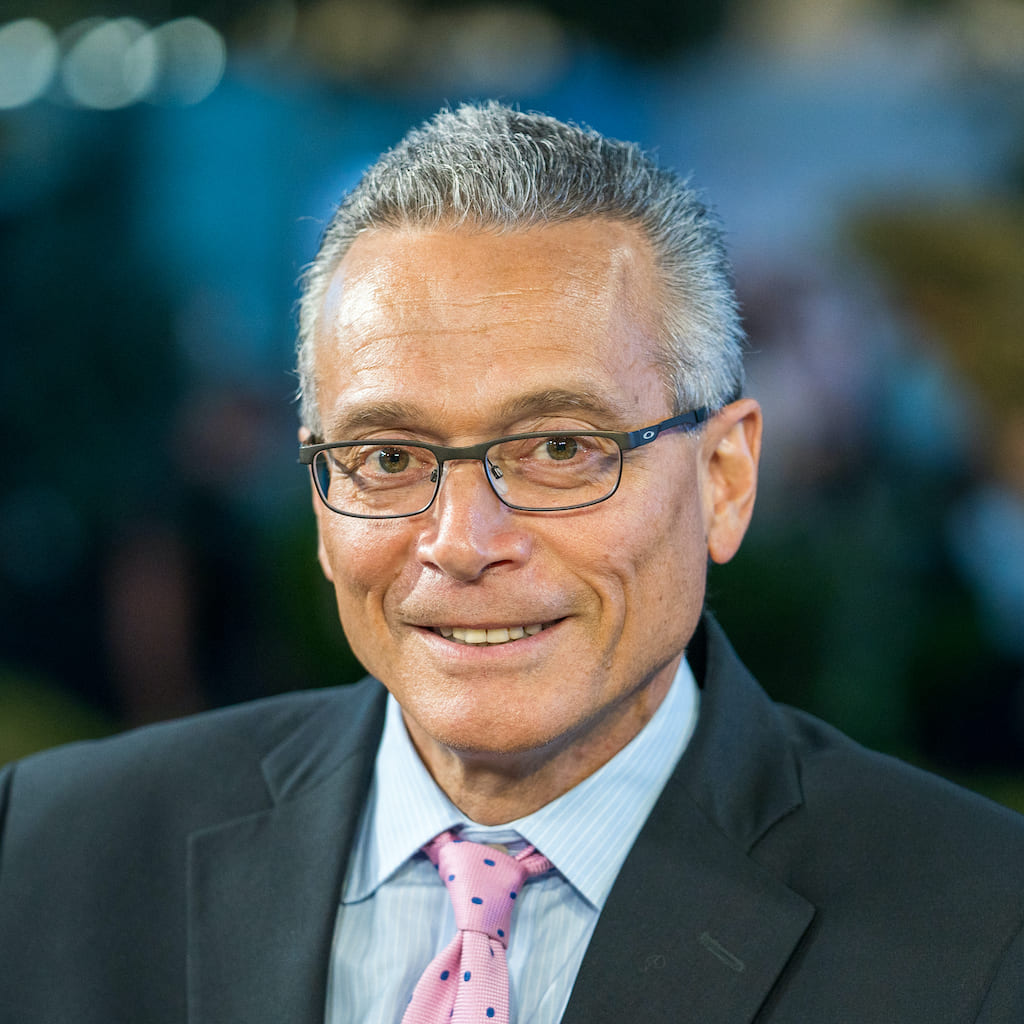 Dave Vellante