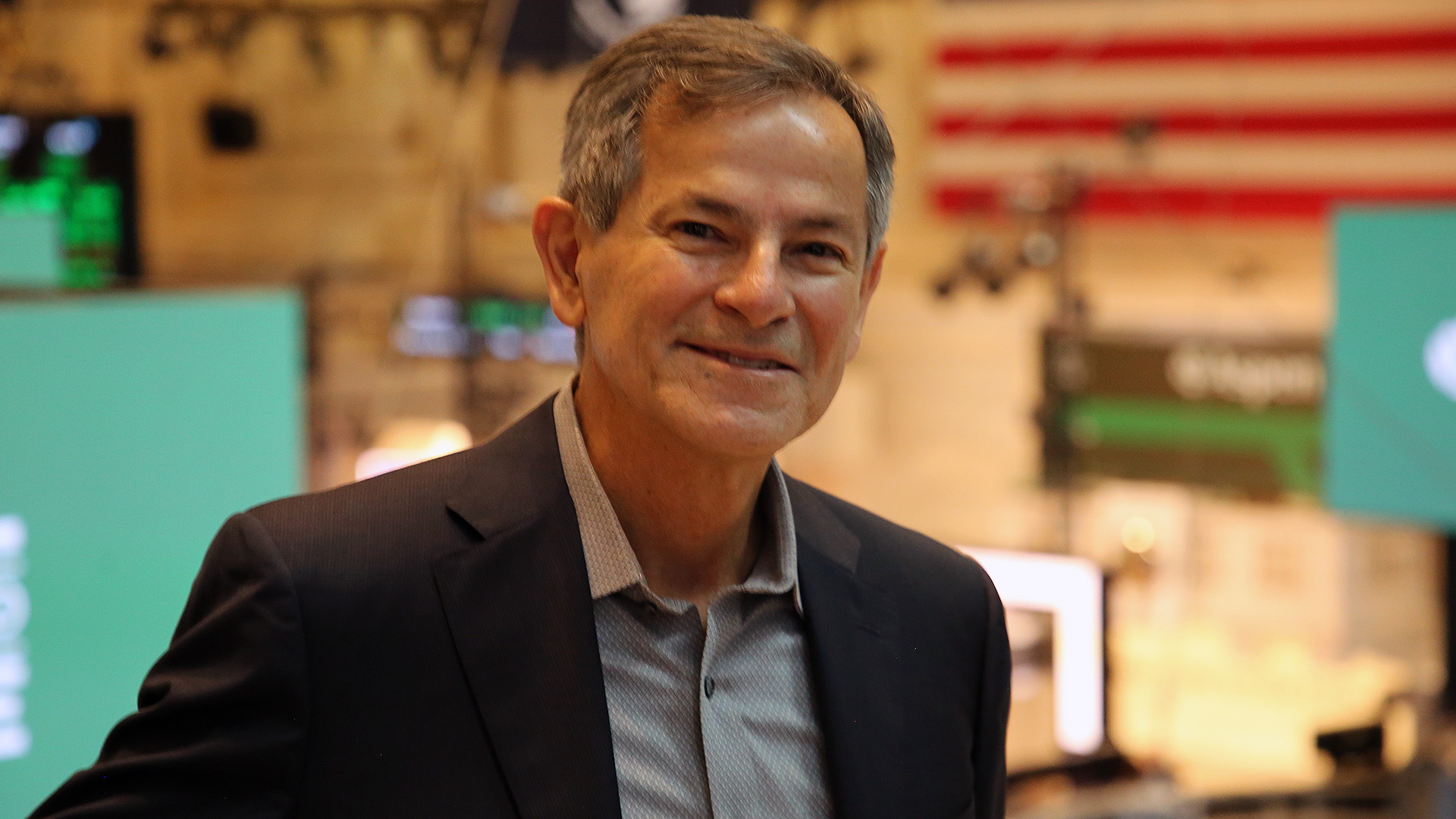
Join us for an insightful episode featuring Raj Verma, CEO of SingleStore, as he shares his expertise in the rapidly-evolving landscape of data infrastructure and Artificial Intelligence. Hosted by theCUBE's John Furrier, this conversation takes place at the prestigious New York Stock Exchange, spotlighting SingleStore's strategic position and the innovative partnerships shaping the future of AI infrastructure. Verma's insights reveal the dynamic intersection of Wall Street and Silicon Valley.
In this episode, Verma discusses the transformative role of databases in AI development and the critical importance of modernizing data estates to capitalize on new AI capabilities. According to Verma, integrating data effectively can significantly enhance AI's operational efficiency, emphasizing the need for organizations to harness their own data. theCUBE analysts explore the future of enterprise technology, echoing Verma's predictions for AI-driven disruption across various industries. Don't miss out on the key takeaways from this engaging discussion. Learn more about SingleStore here: [SingleStore](https://singlestore.com). #AI #Cybersecurity #DataInfrastructure #SingleStore #NYSE
Stay connected with the latest in tech innovation by following the full series with theCUBE at NYSE Wired.
00:00 - Intro
00:06 - Launching into New Ventures: A Market and Partnership Overview
04:31 - AI Evolution: Infrastructure Trends and Applications Across Markets
08:57 - Modernizing Data Estates for the Future of AI and Agents
11:58 - Challenges with AI Hallucinations and Data Reliability
16:11 - Advancements in Data Technologies and Enterprise AI Integration
19:32 - Shifts in Enterprise Data Usage for AI
23:30 - The Future of System Software and Applications
31:24 - Disruption in Professional Services and SaaS Models
35:15 - Navigating the Future: AI, Innovation, and Strategic Roadmaps
Forgot Password
Almost there!
We just sent you a verification email. Please verify your account to gain access to
theCUBE + NYSE Wired: Mixture of Experts Series. If you don’t think you received an email check your
spam folder.
Sign in to theCUBE + NYSE Wired: Mixture of Experts Series.
In order to sign in, enter the email address you used to registered for the event. Once completed, you will receive an email with a verification link. Open this link to automatically sign into the site.
Register For theCUBE + NYSE Wired: Mixture of Experts Series
Please fill out the information below. You will recieve an email with a verification link confirming your registration. Click the link to automatically sign into the site.
You’re almost there!
We just sent you a verification email. Please click the verification button in the email. Once your email address is verified, you will have full access to all event content for theCUBE + NYSE Wired: Mixture of Experts Series.
I want my badge and interests to be visible to all attendees.
Checking this box will display your presense on the attendees list, view your profile and allow other attendees to contact you via 1-1 chat. Read the Privacy Policy. At any time, you can choose to disable this preference.
Select your Interests!
add
Upload your photo
Uploading..
OR
Connect via Twitter
Connect via Linkedin
EDIT PASSWORD
Share
Forgot Password
Almost there!
We just sent you a verification email. Please verify your account to gain access to
theCUBE + NYSE Wired: Mixture of Experts Series. If you don’t think you received an email check your
spam folder.
Sign in to theCUBE + NYSE Wired: Mixture of Experts Series.
In order to sign in, enter the email address you used to registered for the event. Once completed, you will receive an email with a verification link. Open this link to automatically sign into the site.
Sign in to gain access to theCUBE + NYSE Wired: Mixture of Experts Series
Please sign in with LinkedIn to continue to theCUBE + NYSE Wired: Mixture of Experts Series. Signing in with LinkedIn ensures a professional environment.
Are you sure you want to remove access rights for this user?
Details
Manage Access
email address
Community Invitation
Raj Verma, SingleStore
Join us for an insightful episode featuring Raj Verma, CEO of SingleStore, as he shares his expertise in the rapidly-evolving landscape of data infrastructure and Artificial Intelligence. Hosted by theCUBE's John Furrier, this conversation takes place at the prestigious New York Stock Exchange, spotlighting SingleStore's strategic position and the innovative partnerships shaping the future of AI infrastructure. Verma's insights reveal the dynamic intersection of Wall Street and Silicon Valley.
In this episode, Verma discusses the transformative role of databases in AI development and the critical importance of modernizing data estates to capitalize on new AI capabilities. According to Verma, integrating data effectively can significantly enhance AI's operational efficiency, emphasizing the need for organizations to harness their own data. theCUBE analysts explore the future of enterprise technology, echoing Verma's predictions for AI-driven disruption across various industries. Don't miss out on the key takeaways from this engaging discussion. Learn more about SingleStore here: [SingleStore](https://singlestore.com). #AI #Cybersecurity #DataInfrastructure #SingleStore #NYSE
Stay connected with the latest in tech innovation by following the full series with theCUBE at NYSE Wired.
00:00 - Intro
00:06 - Launching into New Ventures: A Market and Partnership Overview
04:31 - AI Evolution: Infrastructure Trends and Applications Across Markets
08:57 - Modernizing Data Estates for the Future of AI and Agents
11:58 - Challenges with AI Hallucinations and Data Reliability
16:11 - Advancements in Data Technologies and Enterprise AI Integration
19:32 - Shifts in Enterprise Data Usage for AI
23:30 - The Future of System Software and Applications
31:24 - Disruption in Professional Services and SaaS Models
35:15 - Navigating the Future: AI, Innovation, and Strategic Roadmaps
In this theCUBE + NYSE Wired: Mixture of Experts segment from the New York Stock Exchange, theCUBE’s John Furrier sits down with Raj Verma, CEO of SingleStore, to unpack how the intersection of technology and finance is shaping enterprise strategy. Verma shares why SingleStore is “on course” for the public markets, reflects on brand-building through the company’s partnership with golf Hall of Famer Padraig Harrington and connects that ethos to how SingleStore helps organizations fix struggling data “swings.” The discussion zeroes in on what’s next as Wall Str...Read more
exploreKeep Exploring
What is the role of the database in scaling AI with all the databases in the current AI infrastructure boom?add
What needs to happen in the database to make it ready for mission-critical workloads that require hardcore security resilience protocols, such as those used by large financial institutions like Goldman Sachs or JP Morgan?add
What are the implications of advancements in AI on the commoditization of data at rest and the importance of the query layer in combining data in motion with data at rest for organizations?add
What is the current trend regarding enterprises using their own data versus public data to train their AI models, especially in relation to technologies like ChatGPT and other new models?add
What is your vision on the future trends in software applications, considering the shift towards low code, no code, democratization, and the emergence of new innovative layers in the technology stack?add
What are some examples of professional services that could potentially face disruption due to AI technology advancements?add
What are some key statistics and updates about the growth and performance of the company mentioned in the passage?add
>> Hello everyone. Welcome to theCUBE here in New York City, the New York Stock Exchange. I'm John Furrier, host of theCUBE. We are here as part of our East Coast CUBE region, our super node, super point of president, super pop, we call it. Look, you're part of Media Week as part of the partnership week going on, NYSE is having a big partnership event. All the top media companies coming in, of course theCUBE with our podcast styles here on the floor in New York City, connecting Wall Street, the Silicon Valley in Palo Alto. Our great guest here is Raj Verma, CEO of Single Star, CUBE alumni. Raj, thanks for coming in and being part of our inaugural kickoff year of NYSE Wired CUBE collaboration. Not a bad luck here.
Raj Verma
>> Not at all. Thanks for having me. So good to see you again. It's a really a place of heritage and I'm just soaking it all in, so thanks for having me.>> The prestige here is pretty impressive. I mean, this is the center of all conversations around finance impact, always has been. Now with digital completely scaling, this is a place that's home to a lot of the hottest IPOs and now it's got all the requirements for other companies to get in, so it's not like it used to be like the NASDAQ used to get all the IPOs because anyone could list there. Here it's a little bit more structured. NYSE has got prestige. I guess my first question is when are you going to go public?
Raj Verma
>> Straight into it. Well, I think we are definitely on our way there. It's just the milestones and the entire thing got shifted due to COVID and all the rest of it. I think if we were in the year 2021, we would've been a public company. We have the size, we have the unit economics, but we just want to make sure that we are... Not only do we go public, but we stay public for a very, very long time. But let's just say that we are on course. How about that, Joe?>> You guys are good. I had to ask that question because it's always fun to pick at CEOs that are not yet public, especially with being here. We're friends. We've been knowing each other for over a decade. It may not be known for some of the folks out there watching, but you sponsor Padraig Harrington with a big logo. He's always on Instagram, his Instagram doing tips, but Padraig, he's a Hall of Famer now in the Golf Hall of Fame on the Champions Tour. I had a chance to play with you and him at the SAS Championship, obviously in North Carolina with SAS, another pre-IPO company, probably go public here, but he has been such a great steward to single store. For the golf fans out there, I got to tell you, he's incredibly polite. He's engaging. He's a cool dude. He's a Hall of Famer, Rowan the caddy. Share a little story about Padraig Harrington partnership that you did, and I just find it interesting that you get great brand visibility. He was winning a lot last year. He had a great year. Proud to see him have such great success, continuing to go.
Raj Verma
>> So firstly, I agree with everything that he said about Padraig and then some. He's just a standup person, just a hall of fame professional, a great family man, a great father, a great member of the community and over the years has become a very, very dear friend of mine. This is more than a business partnership for me and for Single Store. When I was in the process of identifying who should be the ambassador for Single Store. We just had a persona in mind who is a persona that works with the community for the community is really wants to up the level of golf worldwide and that's why he does these awesome testimonials. Not testimonials, tutorials. And as you know, when you and I were playing with him, he corrected your swing, I remember, and you were striping it.>> That was-
Raj Verma
>> You were hitting it 260, 270 yards and that wasn't the case in the first three tee boxes.>> I was struggling.
Raj Verma
>> And that's really what Padraig does to you and I hope in some way people see that that's what Single Store does to companies who are struggling with their data. We get them the ability to hit 270 off the tee.>> You guys certainly enable obviously open source databases. You guys started from that heritage, continue to be key infrastructure. We'll get into that in a second, but just to kind of finish the Harrington story, you did call me the Beast of Technology. That was a testimonial.
Raj Verma
>> I did put on Instagram.>> If you're watching, you should check out Padraig Harrington's Instagram handle. A lot of free tips, a lot of great authentic content on there. A great community guy, dog lovers, got two great big dogs he loves. But again, great person to follow. If you love golf, check out Padraig Harrington. Okay, so had to get that plug in. Shout out to Padraig, great guy and thanks to you for inviting me to hang out with you guys on that. That was the pro-ams. Let's get into more of the CEO kind of conversation because you just came back from Davos. You guys are at the center of this what we call AI infrastructure boom. This is what's happening. People are trying to figure out what their data's going to look like. Certainly everyone wants the fastest chips. That's going crazy. You got Nvidia, you got Broadcom, you got AWS, you got Azure, Google Cloud and others, even Oracle, OpenAI. They're all building as much data center and new kinds of systems that actually going to scale up and basically be supercomputing. Well, we've been covering extensively here in the NYSC as well as in Palo Alto and on the events. Okay, great. Everyone kind of sees that Nvidia stock as a proxy for that. So here, Wall Street, we hear the trades all the time on the floor, Nvidia put, buy. All the things happening. But at the end of the day, like any wave with this computer industry, you got to run software on it. So this is where you come in. You guys run a lot of database software and a lot of the glue around it. This is the next discussion point because now that the hardware, chips, and systems are built, the next layer that's going to be fully talked about and standardized is how do you scale AI with all the databases? There's tons of data. This is where you play unpack one, what's going on in this new wave, the shift, and how does the role of the database and Single Store fit into all that?
Raj Verma
>> Sure. I do think that it is unprecedented wave. So I'm not telling you anything new. That we haven't seen anything like this in the history of civilization. These sort of productivity gains that we have already seen in the last 18 months. I was talking to IBM and we were talking about this earlier as well. At first, they seem on the investor day claim that they had saved three and a half billion in productivity gains in the last 12 to 18 months and investing, if not all, but a large part of it back into innovation, et cetera. And they're not the exception. There are basically a lot of other companies who are following suit. The real premise of where we come into this entire AI, John, is the fact that there is consumer AI. So open AI and ChatGPT that my kids use or friends use and the common person uses is one thing, which is akin to Google search. So yeah, consumer search is fantastic, but what about enterprise search where you do not want your data to be leaked into the larger ether? And I do think that organizations using the consumer version of whether it's ChatGPT or whether it's Llama or whatever else is utterly useless unless you can provide that LLM with your organizational corporate governance compliance templates and that entire motion known as RAG is something that allows your own corporate data to then go augment, if not train the LLMs to have more of your organizational context. That's where single store or databases like ours come into play. As you know the database market, whatever, 120 to $150 billion has existed for 60 years, what's happened now is there was no urgency for corporate or corporations to modernize their database. So they were like, look, it works. Why screw with it? Now with AI, if you do not have green data estates versus the brown data estates, if I was to take the analogy from commercial real estate, you've got to modernize your data estates so that you can provide the context of your organization, what's acceptable, what is not, what is governance, what is the compliance regulations to the general purpose LLM and make it more contextual to what is available. And that's where we are seeing a huge uptake in our database market and revenues, et cetera. The other aspect I'll quickly touch upon John, we are at the infancy of AI. We are seeing a little bit of chat applications and bots and all the rest of it and it's interesting and we do a lot of that. The one that I am particularly interested about is the agent , right? Because agents are just going to be game-changing for not only the economy but the software industry. Because one thing that surprised me about AI, if you had asked me this time last year if I thought that AI will have as much of a disruption to skilled labor, I'm talking about software development, I would've said no. I thought it was going to automate manual tasks more than it would software development. But we were in Davos, like you said, and Thomas Korean, we were having a chat and he said that 25 is public knowledge, 25% of all software developed by Google is developed by AI. Imagine this, 25% of all software that Google->> Your labor savings right there.
Raj Verma
>> Labor saving.>> And shifting the other workers to other tasks.
Raj Verma
>> Yes. And you got to understand, unlike us, I mean you are fatiguable, I know, but me agent is infatigable, you do not have any fatigue. So it's not as if someone writes a better set of code between 9:00 and 1:00 and then after that the productivity declines. So agents once you set them on, they can run for years, decades. So this agency->> Assuming no hallucinations.
Raj Verma
>> Correct. I mean->> They could be no fatigue, but they could be high. They could be high as reference to the drug, but hallucinations not getting it. This is a huge security concern. Again, you mentioned RAG, good use case. This is where the data matters because hallucinations happen when there's not enough data or the training was using data that wasn't appropriate. So again, to your point, I'm kind of making a joke of hallucinations, but the point is that yes, agents will be doing operating tasks, but domain-specific knowledge, who trains the agents? Now, again, I agree with you on the agents, but the question now is, okay, agents are going to happen. There's a lot of hype with agents. I see it. We hype it up all the time. I truly believe agents will happen. Period. Full stop. Now what's the order of operations? Okay, infrastructure's being worked on, but this data layer where you play in the database, that will feed what enables agentics infrastructure and ultimately software agents, whether it's building software code or doing tasks, check my calendar, remind me what's going on. Whatever it is.
Raj Verma
>> Correct.>> That's going to be the domain workflow.
Raj Verma
>> Correct.>> Okay, so let's not get ahead of ourselves. Okay, now connect those two dots because right now they're going to solve the hallucination problem, which is what's the nutrients in the data, so to speak.
Raj Verma
>> Yeah. Nurturing the data.>> You got to have the right data to be reliable.
Raj Verma
>> So I think there's no dearth of data. I think the data issue and hallucination issues, come to think of it, how many times have humans made a bad judgment? So people do not... They are a lot tougher when the machine hallucinates versus when humans hallucinate of sorts. There have been, and history is riddled with the fact of humans hallucinating as well on business decisions, but it doesn't capture that much of media as much as it does when it's data. And by the way, if you see the sort of examples of hallucinations initially to what is happening now, it's dropping like a lead balloon. So we are getting really, really good about that. I do think that the agents are... It's not a question of... It's happening as we speak, so there is->> It's already automation. I mean look at OpenAI's operating function. It's kind of happening in the public side, but enterprise is a whole different ball game.
Raj Verma
>> Yeah, you're right. I do think that agents right now are doing mundane work. So you point it in a direction and like you said, it's an automated workflow and because it doesn't have fatigue, it'll keep doing it and all the rest is interesting. All that is interesting. For me, where this will get extremely interesting, John, is when agents develop the ability to reason. Now that is by the way, 18 months away and I think I'll be surprised, we'll all be surprised it'll be less than 18 months away. When agents start reasoning, they will then go and look for data that makes them more efficient. So rather than data being used to train agents, agents will go look for data that makes them more efficient. And that is when, if you come to think of it, agents would decide what database is to use and naturally where we feel really good about this is I think agents like humans will choose a database that is vast, that is fast, that's multimodal, and that is not limiting.>> Take me through that. First of all, I love that explanation. The old days used to call that metadata about metadata. You got to telegraph, I'm available. So you almost have to not necessarily move data around that kind of meta-layer if you will, a new kind of signaling, "Hey, I'm a database ready to go." What changes in the database infrastructure formula, lack of a better description, to make them aware? RAG is a good example because it's a retrieval augmentation generation, super popular because all it does is put vector embeds and allows you to have neural network and it does great retrieval, no keywords involved. It's all math. It's smart, it's intelligent retrieval. That's solve search. Killer app, check. That's why everyone's going crazy about it. Okay. That's not a production workload in a banking application. So that's kind of like down here. So hop from one lily pad to the other. After RAG comes what? Because now you're starting to see the low-hanging fruit of these somewhat mission-critical workloads because they run the business, but they're not running the hardcore security resilience protocol that needs to be approved for production. If I'm Goldman Sachs or JP Morgan, I'm not going to let anything into production. So what has to happen in the database to make it aware, to make it ready for what you're saying, which I think RAG is going to have routing protocols like hey, when in need go here. That we replenish the data here. It could be some sort of high availability capability. What's your thoughts on that? Because I think everyone's trying to figure this out. I'm the semantic layer, I'm the control plane, I'm the harmonization layer. Every company says they do that. And is that even true or what happens in the weeds there?
Raj Verma
>> Yeah, all of them are lying. I'm telling you the truth.>> Do you see Single Store as that harmonization layer and is that-
Raj Verma
>> Yeah, I think if you were to take a step back, John, the short answer is yes, I do. However, there is a explanation required for that. First, I would say that the perceived limitations of AI, one of the notions is that they are a lot more durable than they genuinely are. I mean, if you saw the difference between ChatGPT 3.5 to 4.0, it was just chalk and cheese. I mean, the advancements were just surreal. So I do think that most of these things will happen upon us a lot faster than we think they will. I can go into the weeds on the databases, but just to keep it at the highest of level, my prediction is the data at rest is commoditized. So whether it is a data warehouse or a single lake or a Delta lake or a iceberg or what-have-you, the fact of open table formats has made this into a commodity. So the data at rest is, and holding of data is no longer a competitive advantage for a organization. So let's establish that. And by the way, I think the world of snowflake and data bricks, I think those two have executed phenomenally great technologies. However, if they do not build upon their data and risk capabilities, then after a while it's not going to be that differentiated. What we say is that the query layer on top of your data at rest, the data warehouses really, which combines the data in motion with the data at rest, is that layer which will ultimately prevail in this AI world of agents, of reasoning agents as well. And that's where we start to feel fairly optimistic about our future. Would there be certain security protocols which have to be tightened, certain governance requirements that would require? Yes, but those are low-hanging fruit. But overall at the big picture, data address, data in motion and the fast query lab.>> You do a lot of enterprise business with customers. That's the enterprise who are. Consumers, but they're consuming AI to roll it out. You mentioned RAG, which is one use case. Last year, the theme was that only about 1% of enterprises were using their data for their AI. 99% of the time they're using public data. What's ChatGPT, all these new models? Are you seeing a shift and can you comment either anecdotally or just kind of gut feeling, has that pendulum swung more towards the enterprise using their own data? Obviously, I think that has to be the case. That's my personal opinion. But the statistics weren't there because they weren't ready. So you saw only 1% adoption of training and reinforced learning of their own data. They're using public data using the models to train their stuff or whatever. What do you see there? Because are enterprises leaning more towards using their own data to train their AI and how much of public data are they using to train their AI? Could you comment on that? Because they've got treasure troves of information. Dave pointed this out. ChatGPT crawled the internet and a certain hundreds of petabytes. Morgan Stanley's got like a thousand petabytes or an exabyte of their own data. So they would need the totality of OpenAI, ChatGPT just to train their own data. So you're starting to see that movement. We're feeling it. Can you comment about that trend because that would mean the database market's going to explode in value because now as that data cranks out, what do you think about that? Am I off base or am I on target?
Raj Verma
>> No, no, I don't think you're off base at all. There are a couple of questions that you asked around this, right? So you said 1% of the corporations were using AI, their own data to train AI. For example, we are a smallish company, a mid-size company I would say. We've started using a lot more AI in the last 12 months around our own data. In fact, we were talking about GLEAN for example, and we use GLEAN and it's actually been really, really, really helpful for us. Now, I do think that GLEAN can use us as well, and we are talking to them about it because I do think that for them to be able to do what they want to do going forward, something like us would be useful. Now whether they use us or someone else, they would use another database for their future versions. So yes, I think a lot more corporations are using their own data for AI in the last 12 months than in any time in the history right now. The thing about, and I don't want to get specific about Morgan Stanley or Goldman or what have you, even though both of them are clients of ours, a lot of the data that is under the custodianship is because of compliance and governance reasons.>> Regulations.
Raj Verma
>> Regulations. So they may or may not be helpful in training a model. Having my history for the last 30 years of how I have banked is mildly interesting. I ask in interview questions, if you work for 25 years, tell me that first 22 years and two minutes and then spend 20 minutes in the last three years because that is the most relevant data. So yes, stats, yeah.>> Yeah. Recency matters.
Raj Verma
>> Recency matters like nothing else. So yes, even with that recency, I do think that there is going to be, to your point, enough data for it to be arduous. There's no doubt about it. And the older the company or the more heritage the company has, the greater that aspect would be. However, I am one of those people who don't think that that is the limiting factor because the computer is going to be so fast and so readily available. I actually think that things to worry about are more energy, more what do you want to do with data? What is the inherent bias with data that is in your corporations? Those are more data governance issues, data quality, lineage, all the rest which will get sorted over time. But that is outside the domain of databases. However, from a database alone perspective, I do feel that without having a speedy at scale, multi-modal data layer, you have almost no chance of being able to do what you and I are talking about. And whether it's us or someone else, I think that is a given that that's what's going to happen.>> You've been a student of the industry. I'm making that statement because you've been around for a while. Like me, you've had a great career. I always brag about your role there. One of the most historic companies that no one knows about, that they were early web services, they connected systems together. We're kind of coming back to distributed computing again, Raj. I mean, this is full circle moment for the first generation computer industry because the concepts of computer science and distributed computing are all now in play. No one talks about on-prem versus public cloud in context to just different environments. It's all one thing. You're either in the public cloud or on-prem is running cloud operations edge. We had NRF, we covered retail. So we're seeing all that. So we are talking about system software that runs everything. And so the big companies, this is what's happening. This is your wheelhouse. Looking at knowing that as you look at the trends, that's going to be a tell sign for how the preferred future will look like from a software application. So assume low code, no code feeds the top of the stack, a lot more democratization, a tsunami of apps. I saw Trinity here at NYC TV interviewing in a former NBA who's basically building his own app. So it's going to be a creator culture, it's going to be more democratization, but all the alpha and the code is going to move down the stack and a new middle layer is going to come merge. I hate to use the word middle layer, but like a middle layer of innovation. What is your vision on that? Because I think you've got all the same storage, networking, compute things, just doing different patterns. Patterns will emerge as durable paradigms. What's your vision?
Raj Verma
>> Yeah, I do think that systems engineering. I'm a computer science engineer, and when I graduated way back when it was all about systems engineering.>> I had no shoes. I walked in the snow with no shoes barefoot. It was so brutal. You know how hard it was for us?
Raj Verma
>> Exactly right. But I was saying when we graduated, we came out systems engineering and putting that infrastructure in place on which corporations could then build decades of IT was the most paying jobs. And then it kind of went out of favor for the last decade and a half because the infrastructure that some of us laid out three decades ago was good enough for people then to come out and hack.>> Buy more boxes, scale it up and then run IT departments.
Raj Verma
>> Exactly right. And I do think that a lot of that was done at the system level to have the governance and compliance in place. I do think systems engineering and its new form, whatever the new age of systems engineering->> Clustered AI systems basically.
Raj Verma
>> Clustered AI systems is coming back and it's coming back in a hurry. So there is no if and what about that. I do think that one area of the market that I'm personally the most excited about is that famous quote that Microsoft and Satya have made popular, the death of SaaS. Sure, it's an exaggeration, but the point is that if you were to take SaaS as a three-layered cake, and you were going to say that bottom is the data layer, the middle is the business logic, and then it's the UI. The UI, you're right, it's going to be the no-code, low-code. And the interface would be very conversational. Now the middle layer, which was the business logic is going to be run by agents. Now that leaves the data layer. Now the data layer has to be flexible, has to be self-governing, it has to be self-learning, it has to be self-healing. So what you and I did by way of tight processes, which needed governance as a, not even an afterthought, as an appendage, so that we could make sure that there was a checklist. That checklist has to be part of that data layer or that data fabric. And that's what we are seeing in our world where systems engineering required for data processing is built-in.>> Data processing was a department that I used to call the mainframe. Remember the data processing? Back to full circle. And again, it's funny, I watched in the news obviously had a lot of aviation problems. Recently, the Delta crash in Toronto, upside down crash there, and the big conversation from the Elon Musk crowd and the DOGE team that's in there said, and we all know this, they're all running COBOL, correct? I mean, all of those systems are antiquated and about to be extinct, but they're running mission-critical infrastructure as is some of the IT stuff. So now you've got to bring in AI infrastructure as well as new software layers as you point out this data layer while running everything. This is massive transformation. And by the way, that business logic layer, that is the IP for agents.
Raj Verma
>> Correct.>> That's the domain specifics. So I think we're on a business transformation wave, not digital transformation because all the value in the enterprise is going to come from workflows and data, and at least that's what we're seeing on theCUBE. And so yeah, that's going to make... Once you guys do your job with the data layer and the semis make the best chips in those clustered systems, you have to run an operating system on top of it. That's going to be an AI-like operating system. Then magic happens, business transformation. What's your thoughts or reaction to that?
Raj Verma
>> I actually think I'll probably offer a opinion from being an insider in the industry. Like you mentioned Tipco and all the rest of it, which found its home in a private equity Vista and all the rest. I do think that there is an entire industry, and it's a multi-billion dollar industry that has minted a lot of billionaires, which was essentially taking sticky technology, a Tipco or Informatica, what have you, infrastructure typically, even applications and just betting on the fact that customers will not switch and hence they can keep raising the on customers. I mean, the entire thing that you're hearing about VMware and Broadcom and AT&T and $1.2 billion sort of demands being made. With AI, John->> You talking about switching costs?
Raj Verma
>> Switching costs.>> They're so high, they know they got leverage. It's like extortion.
Raj Verma
>> Sort of like modern day extortion.>> Your choice is pay the tax or good luck switching, which you can calculate quantify cost of ownership to switch, disruption of business, lie to pay the tax.
Raj Verma
>> Absolutely.>> Taxation without representation,
Raj Verma
>> 100%. I mean, if you ask most CEOs that I interact with in the Valley, I think the last two or three quarters have been good with corporate America, but three or four quarters prior to that, we were all scratching our heads, figuring out why isn't there spend in corporate America in the IT industry. And then someone explained that to me that you take a hundred units of budget, you put 30 to 40 into AI, which people are figuring out what to do, and then you have to pay the VMware tax because of Broadcom, which is huge, ginormous. What is left? You can barely keep your lights on. Now that that is settling in, I think the spend is happening, but where I'm going with this is switching costs because of AI, especially for vendors that you actually don't like, is going to be a trend that people will ditch their long-standing vendors and switch over to brighter systems.>> Or build their own.
Raj Verma
>> Or build their own, right? Yeah. Correct.>> You can build a CRM now for a couple hundred thousand if you know your workflows.
Raj Verma
>> I mean, that's the entire... ServiceNow has just launched that, so it's going to get extremely interesting.>> All right, so back to your point. You said the history says you're making a bet on... What's the bet? I'm looking at incumbents that you're betting on. You're betting on disruption.
Raj Verma
>> Disruption.>> Okay, so the disruptive enabler that dislodges the incumbent.
Raj Verma
>> Exactly right.>> And I think that is where people made their billions.
Raj Verma
>> Well, yes, and I think this entire->> Give me an example.
Raj Verma
>> That entire industry that was built on the fact, which is banking on the fact that the switching costs are way too high for people to switch is going to be tested. There's no ifs, ands, buts about it.>> Yeah. I think an innovator is going to come in and dislodge a Salesforce or a Workday or... These are big players, I'm just picking them because they're big, but they may make systems that have a huge recurring tax. You could do the math and say, I'm paying X per year for a system like a Workday and be like, what are we doing? We're doing basically beautiful payroll checks.
Raj Verma
>> Workday and CRM or Salesforce are whatever, second generation of software as well. But there are a lot. I mean, we've talking about IBM for example. There are certain products which were written in the early sixties, which are still multi-billion dollar value propositions for IBM. And I'm talking about software. Just because you aren't able to take them out. So I do think, and IBM's a great partner, but I am using that more as an example. The fact is there is probably two to $3 trillion worth of stuff that is lying around which people have just not moved because of switching costs.>> If I was a hedge fund or a big equity company looking for that next billion dollar gold mine, I would look at how the software industry's changing. You mentioned SaaS. I love how you brought up SaaS. SaaS is certainly changing. I have a huge opinion on that. Watch theCUBE, you'll hear me rant about it this Friday, this Thursday or tomorrow, but Bruce Cleveland was on, he's ex Tom Siebel lieutenant back in the day. He's never retired. He's got a book called the Traction Gap. He was just on our CMO program last week in Palo Alto. He brought up the comment, I asked him the same question in a kind of different way. He said, software as a service is dead, but what's coming on with AI, some of your point is that it's service as software. And he actually said that word and he goes, let me kind of unpack it. I'll simplify it. The professional services are now software driven enabled and software defined or whatever you want to call it, but it's service as software because what's happening is professional services would implement software and just project manage things and deploy the ERP system or whatever. Now the service is actually with operating leverage software. So software's powering a service. So I mean, IBM Mohammed over there at IBM running consulting is booming because he's got operating leverage with the platform. So his services are better, but they're software enabled. I think there's going to be a whole category of professional services. I think this might dislodge some of the companies because I can provide the service and the software. Now, you know that in Silicon Valley, if I was going out to raise venture capital back in the old days, if I even said professional services, the door would hit me on the way out. They don't invest in software service, they invest in software that has scale.
Raj Verma
>> I would say, John->> What's your take on this service as software?
Raj Verma
>> So I mean, I remember a lot of VCs that I was dealing with. They always said, is this software as a service or services as a software? Which meant that you give them this software and then customize it, but that's 5, 7, 10 years ago. I do think that professional services, when it means IT services, they will have their own disruption with AI.>> Yeah, Accenture did it.
Raj Verma
>> Yeah.>> They can scale, but it's linear.
Raj Verma
>> However, the one that I feel will be up for the maximum disruption, John, is professional services, which are industry-based audits, right? Taxes.>> Yeah. Because they're leveraging technology.
Raj Verma
>> IPO services. All right, legal services. All of these as a... I mean, the Harvey, the entire app Harvey, which is legal app, which has taken the world by storm, and that is probably a lowly version of it. I'm just saying those... We were talking to a big four consulting firm there, vice chair, and he was saying that of the 40,000 employees that we have doing a services business, we would probably need 4,000 in the next three years. However, for that to happen, they have to be able to bottle that into a software and then sell that software as a subscription, which will mean that their revenue may or may not shift. The margins will improve, but the model will be disrupted.>> Raj, great to chat with as always. We're obviously going way over time, but again, podcast format. We got unlimited digital TV to go with. Put a plug in for Single Store. What's the latest momentum, stats? Take a few minutes to put the plug out there and give an update.
Raj Verma
>> Yeah. It's one of the things that I find hardest to do, but now we are growing with a three handle, so about 32, 33% growth a year over year. We are going to be cash flow break even in the next two quarters. We are in the vicinity of about $135 million in revenue ARR. Our gross dollar retention rates are about 98%. Our net dollar retention in the cloud business is about 130. Almost 50% of our business is now in the cloud. We land almost three new customers a day now, and about three years ago, we were landing probably 10 a quarter. So that entire shift in the business has been massive, and we just watched the space for more as to what we announce on the AI aspects of our technology, and that should happen in the next two months. So some big news coming your way, John, and I'll be back here and I'll make some announcements.>> Raj, thanks for coming on.
Raj Verma
>> Thank you very much for having me.>> Welcome to New Studio here in New York City. It's the NYSE, theCUBE is here, east coast point of presence. We're going to have a subnet here. We're going to do a lot more local team activity events. Of course, content. There's tons of entrepreneurship going on in New York. Huge tech scene that is blossoming from enterprise to even the hot consumer starts with a lot of enterprise action. Of course, we've got Palo Alto and our Boston . Of course, we cover over 70 events a year in the enterprise. You know theCUBE, we're bringing you all the signal and extracting it from the noise. Thanks for watching.