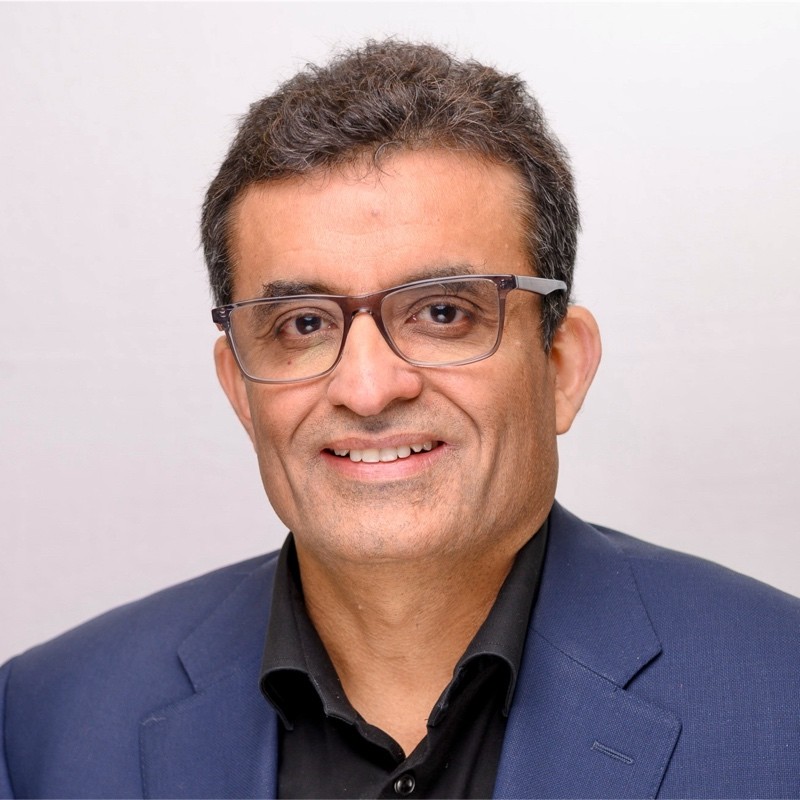
In this Mixture of Experts segment, Rajiv Khemani, co-founder and CEO of Auradine, joins theCUBE’s John Furrier in Palo Alto for a breaking-news CUBE Conversation. Khemani details Auradine’s $153M Series C – led by StepStone Group with participation from Samsung Catalyst, Qualcomm Ventures and Mayfield – and explains how strong Bitcoin momentum and an upcoming AI networking product line are fueling both R&D and working-capital needs. Now a three-year-old company with a > $150M revenue run rate, Auradine ships silicon, systems and software into data centers and sees standards-driven back-end networking as the next frontier for AI scale.
Listeners will hear clear insights on scale-up vs. scale-out clusters, the rise of back-end networks connecting thousands of GPUs and why Ethernet – accelerated by RoCE/RDMA – is set to dominate even as InfiniBand shapes latency expectations. Khemani digs into the power and cooling realities (from ~30–40kW racks to ~140kW and discussion of ~1MW), liquid/immersion approaches, and how Bitcoin-honed demand-response maps to AI data centers. He outlines industry convergence around the Ultra Ethernet Consortium and Ultra Accelerator Link, notes Auradine as the only shipping U.S. vendor in its Bitcoin segment with 3nm in volume and previews the new AuraLinks AI business group focused on open-standard switching for AI networking – plus why open-source models such as Llama and DeepSeek accelerate industry innovation.
Forgot Password
Almost there!
We just sent you a verification email. Please verify your account to gain access to
theCUBE + NYSE Wired: Mixture of Experts Series. If you don’t think you received an email check your
spam folder.
Sign in to theCUBE + NYSE Wired: Mixture of Experts Series.
In order to sign in, enter the email address you used to registered for the event. Once completed, you will receive an email with a verification link. Open this link to automatically sign into the site.
Register For theCUBE + NYSE Wired: Mixture of Experts Series
Please fill out the information below. You will recieve an email with a verification link confirming your registration. Click the link to automatically sign into the site.
You’re almost there!
We just sent you a verification email. Please click the verification button in the email. Once your email address is verified, you will have full access to all event content for theCUBE + NYSE Wired: Mixture of Experts Series.
I want my badge and interests to be visible to all attendees.
Checking this box will display your presense on the attendees list, view your profile and allow other attendees to contact you via 1-1 chat. Read the Privacy Policy. At any time, you can choose to disable this preference.
Select your Interests!
add
Upload your photo
Uploading..
OR
Connect via Twitter
Connect via Linkedin
EDIT PASSWORD
Share
Forgot Password
Almost there!
We just sent you a verification email. Please verify your account to gain access to
theCUBE + NYSE Wired: Mixture of Experts Series. If you don’t think you received an email check your
spam folder.
Sign in to theCUBE + NYSE Wired: Mixture of Experts Series.
In order to sign in, enter the email address you used to registered for the event. Once completed, you will receive an email with a verification link. Open this link to automatically sign into the site.
Sign in to gain access to theCUBE + NYSE Wired: Mixture of Experts Series
Please sign in with LinkedIn to continue to theCUBE + NYSE Wired: Mixture of Experts Series. Signing in with LinkedIn ensures a professional environment.
>> Hello, I am John Furrier with theCUBE here in our Palo Alto offices for some breaking news CUBE conversation. The areas of blockchain and AI are a big part of this decentralized open internet evolution that's happening now, or revolution. It's a systems revolution. I had a great conversation with Rajiv Khemani, who's the co-founder and CEO of Auradine. Got great funding news today on SiliconANGLE, so exclusive news break as well as a breakthrough. Thanks for coming on theCUBE. Appreciate it.
Rajiv Khemani
>> Well, thanks a lot, John, for having me on this, and exciting to be here to tell you about our funding.>> So I brought the news, I want to get the news out of the way right away because it's super great news. 153 million in a Series C funding round, you guys disclosed and released. We covered on SiliconANGLE. Our writer calls you a data center hardware startup. Today just closed there, just raised your money. Again, led by StepStone Group, who participates from Samsung Catalyst, Qualcomm Ventures, other backers like Mayfield Fund and the folks over there which we know very well, friends of theCUBE. Congratulations. And give us some story. What was the catalyst? Was it the momentum? Was it tech breakthrough? What was the catalyst for the Series C? Was it a breakout funding round? Give us the scoop.
Rajiv Khemani
>> Yeah. Well, so we are a three-year-old company, ramping revenues very nicely. So we're doing more than 150 million revenue run rate. We started out with a Bitcoin product line. And so we built a chip, the system, the software, and we sell it into data centers. And then AI is a new product line that's upcoming. But the reason for this funding was clearly our momentum in the Bitcoin space. Very exciting new products in the AI networking space that caught the attention of investors. We needed really to propel the R&D and to get working capital to scale our revenue growth.>> So is it a go-to-market, accelerate the revenue and R&D both at the same time? That's the way you're looking at it?
Rajiv Khemani
>> Yeah, I mean, working capital, when you're growing very fast, you need working capital. You got to buy the wafers, you got to procure the inventory, and so forth. So that's a big portion of the spend. And then in both areas we continue the R&D. So on the Bitcoin we have a very interesting roadmap as we keep executing on it. And then AI networking is a new area where, as you said earlier, people starting to think like systems as opposed to chips, and we are building some interesting stuff that is going to come out very soon.>> Talk about the networking piece. Because something that we cover, Bob Laliberte, our staff, he covers networking, we've got Jackie McGuire who also covers some infrastructure side on security, also Bitcoin as well. Energy's a huge deal, okay? Scale-up, scale-out, it's been talked about. So GTC, Jensen Huang probably spent the most time talking about hit the scale up, and almost like a master class. But he's also one of the only CEOs on these major keynotes that use the word computer science three times. I think it was three times, maybe been four. But there's a lot of science involved. Talk about what's going on with the scale-up, scale-out phenomenon and networking, and how is that energy piece affecting the data center?
Rajiv Khemani
>> Yeah. I mean, networking, if you step back and look at it, it has gone through various periods. Many, many years ago it used to be enterprise and telco networks and people really used to connect servers, PCs, printers to each other. Then it went into cloud networks, and in the cloud networking era it was big cloud companies driving, connecting servers, storage again to each other. But more recently there is this notion of backend networks, and with the rise and let's call it explosion of AI, what has happened is that there's a lot of AI chips, GPUs, accelerators and the like that need to be connected to each other because the models are becoming bigger and bigger, the data sets are very big, and to map it onto GPUs, you can't fit it within a single GPU or a single AI chip, and you've got to connect all of these to each other, and that's where these backend networks come into play. Scale-up networks are typically networks that are inside of a rack, although people are trying to get them to be outside of racks as well, where you connect all these GPUs into one single pod. And then scale-out networks take many of these pods and connect them into even larger clusters. So when you hear about hundred thousand GPU cluster, that's kind of what the network looks like.>> It's interesting, when we started covering this as a research item a couple of years ago, Dave Vellante and I called it clustered systems. Now if you go to Google and type in clustered systems, it's almost a definition. I think it's a symmetrical system, it's SMP-based, but that's not what we meant. We saw this idea of servers, the old-school server, a box, these systems being connected together, as you mentioned, but they're becoming bigger, bigger and badder I should say, in a good way. They're bad because they've got a lot of horsepower. NVIDIA calls it democratization, which we're seeing that powering the AI wave. Talk about the scale-out piece, because I think what I find fascinating this year at GTC was MV cache odyssey, this concept of how do I coordinate across clusters. What does that mean to you? Are you impacted by that? Do you help facilitate that? Because the clusters are going to do all this inference. What's going on there? How is that going to be working? What runs on all this? Is it heterogeneous? Is it homogeneous? What is the vision that you have on how the scale-out's going to work?
Rajiv Khemani
>> Yeah, I think the boundaries between scale-up, scale-out, and maybe even to some extent front end are not fixed and different people will define them somewhat differently, and then different AI chips and different GPU guys have their own story in terms of what the software layer on top of it. So from our point of view, we are agnostic to the AI compute. What we want to do is today, because of the fact that AI expanded so fast, there are no standards, right? And more recently there's a couple of big standards that have come out in the networking space, in particular the Ultra Ethernet Consortium and the Ultra Accelerator Link. Both very exciting standards, both have the potential to become massive just like Ethernet has been in the traditional networking era. And I think that that is all going to come together as part of this big cluster network. Now, the software on top of it is going to be exciting. Different people would write different software, and we'll enable all of them, but what we want to do is provide that platform to enable innovation of all types.>> Since you brought up standards, I want to hold Ethernet in a second and interconnects and all. InfiniBand, big debate on that. Hold that thought. We'll put a pin in that. Talk about the role of standards, because in every wave that I've been involved in, it's now my thirty-something year in the industry, standards play a role at the right time, and I think we saw that with OSI model back in the '90s, and now, more than ever, there's a lot of competing things happening. What's the role of standards right now in the systems revolution? What's your view on this? Because standards seem to be important. There's a lot of different approaches. And now we're talking about scale now. The big part of AI is the scale aspect of what's happening. What is the role of standards? What's your vision around standards?
Rajiv Khemani
>> Yeah, I think the standards are super important. I mean, if you look at the history of the computing industry, we started with mainframes where there were very few standards, right?Aand you see how that story evolved.>> Proprietary too.
Rajiv Khemani
>> Right? Proprietary solution.>> And SNA, IBM had SNA and...
Rajiv Khemani
>> All of those, right?>> Token ring.
Rajiv Khemani
>> ATM, you know, all of those kinds of things, and then eventually it became all standards. But what standards have done is really driven the innovations velocity, because it's not just one company but the whole industry that's innovating simultaneously, right? And so if you look at, for example, we have Ethernet PCI Express, on the software side we have Linux, so there's all these standards that have driven innovation so fast. We're in the very early innings of AI. AI is going to be with us for a long time, okay? And so what's happening now is that if you look at just the AI architectures on connecting various AI chips to each other, some people designed without thinking about the scale, some people designed mesh networks, some people designed switch networks. There's actually a plethora of different fabrics or connectivity fabrics in this area. But I think the industry is converging very fast. So if you look at the people that have become part of these two bodies that I mentioned, it's practically everybody. And some of the companies, like Apple and Amazon, they typically don't join standards. They're part of them, okay? So you see that a desire for the industry to create these standards.>> And everyone wins with standards. That's my opinion.
Rajiv Khemani
>> Yeah.>> I want to get your thoughts on Ethernet and InfiniBand. I have some big debate. Nvidia just announced Spectrum-X, which is kind of their Ethernet version. I see a role for InfiniBand, short distances connecting systems together, but it's still different. Ethernet has a longevity to it. What is happening with Ethernet in your mind? Is it good? It's going in the right direction? Are you happy with it?
Rajiv Khemani
>> Yeah, I think Ethernet is going to be here for a long, long time, right? And InfiniBand did some interesting things in terms of latency, in terms of lossless capabilities, and really I would say spurred innovation in Ethernet. Ethernet is one protocol that absorbs a lot of innovation from other places. And so what has happened is now things like RoCE and RDMA, and people are focusing on latency. We were talking about latency 10 years ago in my previous company, Innovium, but now all of a sudden latency has become like the super critical piece of it, and that's all driven by what InfiniBand provided to the AI world. I think Ethernet is going to definitely be the dominant in the scale-up, in the scale-out, and the front-end network.>> Because in the tech world, it's like a neighborhood. You got to keep up with your neighbors. "Oh, they got a better lawn than I do, or got a better car." It's interesting how the pace of play has changed, and I want to get your thoughts on the speed of innovation. You guys have done a lot in three years you've been around. What has changed in your journey? Has the speed of innovation changed? How are you guys looking at the pace of play right now in the tech business? And is this system architecture transcending to, say, the developer market? Because now I'm going to these CUBE events, and in 10 years doing the CUBE, 15 years doing the CUBE, I don't think I've heard the word compiler. Maybe a handful of times, maybe three. In the past month, I've heard the word compiler in the software stack being mentioned multiple times. So it seems like the developers are going lower into the kernel levels, micro-coding. A lot of action happening at the physical layer in all areas. Layer one on crypto infrastructure, you got a lot of coding going on around the chips, the glue layer, whatever you want to call it. What is the impact of the pace of play in some of the new developer trends that you're seeing?
Rajiv Khemani
>> Yeah. I mean, we are obviously closer to the infrastructure and the platform side of things, so, I mean, beyond a certain layer, we let the rest of the industry innovate.>> That's where the agents come in.
Rajiv Khemani
>> Yeah, that's right. I mean, we enable agents, right? So we want to do that, but we want to build an infrastructure and the plumbing and the picks and shovels of this new age. The things that we worry about, frankly, are, like we spoke a lot about, I think you spoke about power, and I want to come back to that for a second. The racks that we have today, if I just go back five years ago, people would say 30, 40 kilowatts a rack was massive, okay? You saw the NVL72 at about 140 or so kilowatts per rack, okay? And people are talking about a megawatt per rack in the future. So it's incredible. And so the cooling technologies over here become very critical at the platform layer, and what we are doing is, of course, bringing some of that Bitcoin data center cooling technology into the AI area. And so we are super excited about that aspect of it. In terms of the pace, which is the other question you asked, I think the speed is fast, and you have to make it fast because AI is not stopping.>> Yeah, it's just pace of play is fast. It's almost mind-blowing. Well, you mentioned energy. I want to come back to the energy a second, because how is the energy configuration changing the system architecture? Because not everyone has the power racks and not everyone can stack GPUs. If they do, they can maybe bogart all the GPUs and then next thing you know, not enough power in the rack. Okay, NVIDIA solved that, but still, is configuration of the system around the power a big concern? How are people thinking about it? Can you share your thoughts on that?
Rajiv Khemani
>> Huge, huge. This is one of the biggest things in the network infrastructure space. So first of all, the reason people want to pack so many GPUs close to each other is for a few reasons, right? One is obviously you want to keep the latency low. The second thing that you want to do is people want to extend the life of copper as much as possible because copper is still the cheapest way to connect different devices, okay? And the thing is that the other issue that keeps happening is that the reach of the technologies keeps getting shorter and shorter as the speeds get faster and faster, so that's driving that density within that rack, okay? And people are trying to say, "Okay, now..." There are other people who are trying to bring the cost of optics down to be able to enable bigger things. But the minute you pack all the stuff, that's when you get challenges with the heat, right? And that's really solving. And so that's where things like liquid cooling and immersion cooling come into play, and that's again->> Density is a huge problem.
Rajiv Khemani
>> Density is->> One that have to be solved.
Rajiv Khemani
>> Yeah.>> Okay, let's talk about the company. You get the funding, Series C, a lot more to do. Again, fundings are almost you celebrate. It's like winning in one of the games of a seven-series set. You got to go to the next game. The next game is the next round. You got the growth, you get R&D, you go to market, you're kind of growing up fast. What's going on with the company? What market are you targeting? What specific market are you going after? And what is the product?
Rajiv Khemani
>> Yeah. Two different markets and two different product lines. We have a Bitcoin product line where we sell silicon systems and software, and we sell it to data center operators. So these guys are Bitcoin data center companies that are co-located next to energy sources, and what they do is they provide a useful value, not just through Bitcoin mining, but load balancing the grid in terms of the energy. So when there's excess energy, you can put it into Bitcoin. When you have to give it back to the grid, you can by turning off, because Bitcoin provides a flexible load capability. Within this space, we are the only shipping US vendor. A hundred percent of the supply comes from Chinese vendors and we are all entangled in this geopolitical situation in the world. So we are providing a US-based alternative there and we are providing resilient data center scale solutions with energy demand response capabilities and with advanced cooling, okay? So that's product line one. Leveraging our leading-edge silicon... By the way, we are shipping three nanometer in volume production. Leveraging the leading edge silicon and the cooling technologies and building upon our prior histories in the networking industry, we saw this AI networking as a tremendous opportunity. So here we are in the development phase. Products are being developed. We'll bring those to market later this year, really with a goal of focusing on networking for the AI era.>> So how did you get into the networking side of it? Was it because you were already in these large-scale environments that were under a lot of pressure with the Bitcoin? Bitcoin's a money machine, so got to keep that humming. Or was it from a previous life? You mentioned that you sold a company to Marvell. Connect the dots. Tell us how you got into networking. Was it an adjacency for you? Was it a net new opportunity? Can you share some color commentary on how that came together?
Rajiv Khemani
>> Yeah, I've been in Silicon Valley for a long time and my career has been almost entirely networking, right? So I ran the network processor business at Intel many, many years ago. I spent 10 years at a company called Cavium which did networking processors and security processors. I founded a company called Innovium, which is now part of Marvell and Marvell switching product line. And so that's my background, but if you look at my co-founders and the team that we have in the company, they previously worked at Cisco, Juniper, Palo Alto Networks, built systems that power our internet today. And so we love networking.>> Who doesn't love networking?
Rajiv Khemani
>> Networking is in our DNA, right? So some of these biggest companies. And so when the AI exploded on the scene in 2023, we saw what are places where we can make an impact, what's different, where is the disruption, and that's how we started to think about it and got started.>> You know, when the whole hyperscaler wave came, hyperconvergence was a big term. You probably remember that term. I think Wikibon, our research team, now called theCUBE Research, was, I think, one of the persons that coined that term. But networking was always like the last area in cloud to get innovated on, but now it's the most important. You hear storage fabric and networking fabrics are the most impacted. Compute, kicking ass, taking names, no problem. Storage and networking fabric is the hottest area. So storage is becoming more network-aware because of its role in the architecture. It's not just a sidecar thing. It's critical part because memory is storage.
Rajiv Khemani
>> Yep.>> So networking ties, so we're seeing networking in the AI equation being the central tech area that's exploding innovation. What's your vision on one? I like how you got into it because it's in your DNA, but what are you working on? What's the coolest thing? What's the hottest area? Where are we going to see the explosive innovation needle-moving moment? Is it here already? Is it coming? What's your vision?
Rajiv Khemani
>> I think, like I said, few things are going to happen in this. So as I said earlier, standards will be big. We are still in the early days, and so standards will be massive. Second is that there will be huge innovation in connecting various AI chips to each other, what people refer to as scale-up, and I think there's a lot of innovation needed in that area. Frankly, I would say Nvidia has done an outstanding job, as we all know, and they keep executing and showing compelling roadmaps, but I think the rest of the industry is going to catch up to that aspect. And then the third thing is going to be system-level solutions, as you said earlier, right? And so this era of making chips and delivering it to someone else who will build the system and write the software is slowly going away and you need more system-level solutions, and that's where you'll see a tremendous amount of migration in the next few years.>> Rajiv, you're such an expert. Brian Baumann, who we just did a FaceTime with online, he's not here, he is in New York, he's the founder of NYSE Wired. He and I were joking. We didn't know whether to put this video into our mixture of Expert series, because, one, you're an expert, or our Crypto Trailblazers. It's almost like maybe we put you in both playlists. But I'd have to ask you as an expert, because this is coming up a lot, if you're in old-school networking, you hear east-west, north-south a lot, okay? That's more of like the Cisco days and whatnot, packets move from point A to point B. What has changed in networking right now? You mentioned scale up, scale out. Let's unpack that a little bit for the next few minutes. What's the most change? How is east-west, north-south relate to scale-up, scale-out? Is it the same? Is it different? What should people know?
Rajiv Khemani
>> Yeah. East-west, I mean, let's keep scale-up, scale-out away for a second. East-west really refer to the traffic inside the data center, right? And north-south was the traffic that went in and out of data centers, right? And typically people said east-west traffic is substantially greater than north-south traffic because each web query or each application spawns lots of things in the background, right? And that was a concept. I remember talking about this 10 years ago. But this notion of scale-up, scale-out didn't exist. Scale-up, scale-out is a traffic where one GPU with its own HBM is talking to another GPU with its own HBM and wants to do reads and writes to the other GPU's HBM, okay? And the connectivity is actually an order of magnitude more. So in the servers, the connectivity was like 50,000 gig connectivity and people said, "Wow, that's a lot." Now each GPU is 400-gig connectivity going soon to 1.6 terabyte to each GPU. The bandwidth is incredible. In fact, what people are predicting is very soon, one year, two year, three years, the bandwidth inside of a rack, let alone a data center, is going to be greater than the bandwidth of the internet. So we are going into an era where those east-west numbers are going to pale in comparison to what we are going to->> I'm really glad you brought this up because this is one of the things I wanted to highlight. This is the game-changer right now, is that the world has changed. The way databases were built, web apps, you mentioned web apps, you write an app, it calls a database. That's all gone, and now there's all kinds of traffic within its own little subsystem.
Rajiv Khemani
>> Yeah.>> This seems like a new category of market. Is it a new category?
Rajiv Khemani
>> It is, it is. I would say that even the networking analysts themselves, they have been doing forecasts and trending of the front-end network. I don't think they have a handle on how big this back-end network is going to be, the scale-up, scale-out network, and this->> Explain back-end, because it's important. This is basically part of the scale.
Rajiv Khemani
>> Back-end is a combination of scale-up and scale-out. It's referred to as back-end, okay? So back-end is scale-up plus scale-out, okay? And so that portion is coming and going to be as big because we'll have these AI chips everywhere and the scale of the data is not reducing. I mean, we as humans keep creating more and more data. We are creating it right now as we speak. And so you need all that data to be used as input into training the AI.>> So I have to ask you, when I think about what you're saying and I think about things like coherency, old concepts that have been in computer science, I mentioned Jensen mentioned a lot on stage. I think he's intentional about it because who doesn't love to talk about computer science? What are some of the computer science first principles that you see driving this system revolution? Is it the coherency? Is it the latency? What are some of the concepts that people should pay attention to and really adopt this first principle? Because you're talking about massive bandwidth speeds. Essentially it's a new kind of server-like system. So it's all packed in there, a lot that's going on. What are some of the key first principles?
Rajiv Khemani
>> Yeah. I mean, let's start with the fact that we need to build dense systems that have to work together as a cluster, right? Let's start with that. And now looking at that, the first principles that really come to play here are what you want to do is you want to obviously have the lowest latency. Coherency is important because the data is spread across a lot of different places and you want to be able to read and write to it very fast. The other thing that is also happening is specialization, right? And we all are moving from general purpose compute to specialized compute or accelerated compute, and that's a big trend that's happening in the world. Now, just similar to the fact that you don't want to run that software on a CPU, but you want to run it on a GPU. You also want to make sure that you're not wasting GPU cycles. So some of the computation can be shifted into the network to offload the GPU, and that's the best use in terms of reducing power, reducing latency, and extracting the maximum compute for the AI application.>> It's like computer engineering and computer science are coming together now more than ever.
Rajiv Khemani
>> Yes.>> And a lot's changed.
Rajiv Khemani
>> Yeah. I mean, this is a exciting time to be alive, you know?>> Kind of wish I was 20 years old again back out of college. I feel like I'm back in the '80s again. But great question. Final point. Let's put the plug in for the company. What are you working on right now? What's on your roadmap? Put a plug in for the company. What's the most exciting thing you got going on? What are your plans?
Rajiv Khemani
>> Yeah, so along with our funding, we also announced the formation of a business group that we are calling AuraLinks AI, right? And we are scaling this team. So we are all looking for the best talent in this team, and we want the best folks to come call us and talk to us about it. We are also working with customers and partners. Great engagements going on. Anybody that is thinking of attaching that AI chips into a next-generation open standard switch, we want to partner with you. So that's an important aspect of it. And then we want to keep executing on the crypto business and keep scaling that revenue.>> Final question since you brought up open source. Open Compute, one of the conferences, we were at the inaugural event almost a decade ago, has grown into quite the force. Obviously, you got supercomputing and you got GTC, the kind of killer shows we cover. Open source, what does that mean to you and the industry?
Rajiv Khemani
>> Very important, okay? Open source is what's driving innovation. I mean, I think we've seen it in the models with Llama and DeepSeek, right? And they have driven so much advancement for everybody. I think without open-source models, AI compute would be floundering, silicon would be floundering because it would be bottled up among a few large companies. So I think open drives innovation in the long term, and I think that's->> Rack standards have helped, too. I mean, I've seen some great structural things, again, is the gift that keeps on giving.
Rajiv Khemani
>> Exactly, yeah.>> Rajiv, thank you for coming on. Our mixture of Experts and the Crypto Trailblazers are the twofer, double bottom-line benefit today. Thanks for coming in. Again, congratulations on the funding. We'll see you again soon. We'll definitely, certainly have you back. Thanks for coming on.
Rajiv Khemani
>> It's been a pleasure. Thank you so much for having me.>> All right. Great. Thanks so much. I'm John Furrier, host of theCUBE here at Palo Alto for breaking news, but also CUBE conversation around the biggest stories in tech. Thanks for watching.
>> Hello, I am John Furrier with theCUBE here in our Palo Alto offices for some breaking news CUBE conversation. The areas of blockchain and AI are a big part of this decentralized open internet evolution that's happening now, or revolution. It's a systems revolution. I had a great conversation with Rajiv Khemani, who's the co-founder and CEO of Auradine. Got great funding news today on SiliconANGLE, so exclusive news break as well as a breakthrough. Thanks for coming on theCUBE. Appreciate it.
Rajiv Khemani
>> Well, thanks a lot, John, for having me on this, and exciting to be here to tell you about our funding.>> So I brought the news, I want to get the news out of the way right away because it's super great news. 153 million in a Series C funding round, you guys disclosed and released. We covered on SiliconANGLE. Our writer calls you a data center hardware startup. Today just closed there, just raised your money. Again, led by StepStone Group, who participates from Samsung Catalyst, Qualcomm Ventures, other backers like Mayfield Fund and the folks over there which we know very well, friends of theCUBE. Congratulations. And give us some story. What was the catalyst? Was it the momentum? Was it tech breakthrough? What was the catalyst for the Series C? Was it a breakout funding round? Give us the scoop.
Rajiv Khemani
>> Yeah. Well, so we are a three-year-old company, ramping revenues very nicely. So we're doing more than 150 million revenue run rate. We started out with a Bitcoin product line. And so we built a chip, the system, the software, and we sell it into data centers. And then AI is a new product line that's upcoming. But the reason for this funding was clearly our momentum in the Bitcoin space. Very exciting new products in the AI networking space that caught the attention of investors. We needed really to propel the R&D and to get working capital to scale our revenue growth.>> So is it a go-to-market, accelerate the revenue and R&D both at the same time? That's the way you're looking at it?
Rajiv Khemani
>> Yeah, I mean, working capital, when you're growing very fast, you need working capital. You got to buy the wafers, you got to procure the inventory, and so forth. So that's a big portion of the spend. And then in both areas we continue the R&D. So on the Bitcoin we have a very interesting roadmap as we keep executing on it. And then AI networking is a new area where, as you said earlier, people starting to think like systems as opposed to chips, and we are building some interesting stuff that is going to come out very soon.>> Talk about the networking piece. Because something that we cover, Bob Laliberte, our staff, he covers networking, we've got Jackie McGuire who also covers some infrastructure side on security, also Bitcoin as well. Energy's a huge deal, okay? Scale-up, scale-out, it's been talked about. So GTC, Jensen Huang probably spent the most time talking about hit the scale up, and almost like a master class. But he's also one of the only CEOs on these major keynotes that use the word computer science three times. I think it was three times, maybe been four. But there's a lot of science involved. Talk about what's going on with the scale-up, scale-out phenomenon and networking, and how is that energy piece affecting the data center?
Rajiv Khemani
>> Yeah. I mean, networking, if you step back and look at it, it has gone through various periods. Many, many years ago it used to be enterprise and telco networks and people really used to connect servers, PCs, printers to each other. Then it went into cloud networks, and in the cloud networking era it was big cloud companies driving, connecting servers, storage again to each other. But more recently there is this notion of backend networks, and with the rise and let's call it explosion of AI, what has happened is that there's a lot of AI chips, GPUs, accelerators and the like that need to be connected to each other because the models are becoming bigger and bigger, the data sets are very big, and to map it onto GPUs, you can't fit it within a single GPU or a single AI chip, and you've got to connect all of these to each other, and that's where these backend networks come into play. Scale-up networks are typically networks that are inside of a rack, although people are trying to get them to be outside of racks as well, where you connect all these GPUs into one single pod. And then scale-out networks take many of these pods and connect them into even larger clusters. So when you hear about hundred thousand GPU cluster, that's kind of what the network looks like.>> It's interesting, when we started covering this as a research item a couple of years ago, Dave Vellante and I called it clustered systems. Now if you go to Google and type in clustered systems, it's almost a definition. I think it's a symmetrical system, it's SMP-based, but that's not what we meant. We saw this idea of servers, the old-school server, a box, these systems being connected together, as you mentioned, but they're becoming bigger, bigger and badder I should say, in a good way. They're bad because they've got a lot of horsepower. NVIDIA calls it democratization, which we're seeing that powering the AI wave. Talk about the scale-out piece, because I think what I find fascinating this year at GTC was MV cache odyssey, this concept of how do I coordinate across clusters. What does that mean to you? Are you impacted by that? Do you help facilitate that? Because the clusters are going to do all this inference. What's going on there? How is that going to be working? What runs on all this? Is it heterogeneous? Is it homogeneous? What is the vision that you have on how the scale-out's going to work?
Rajiv Khemani
>> Yeah, I think the boundaries between scale-up, scale-out, and maybe even to some extent front end are not fixed and different people will define them somewhat differently, and then different AI chips and different GPU guys have their own story in terms of what the software layer on top of it. So from our point of view, we are agnostic to the AI compute. What we want to do is today, because of the fact that AI expanded so fast, there are no standards, right? And more recently there's a couple of big standards that have come out in the networking space, in particular the Ultra Ethernet Consortium and the Ultra Accelerator Link. Both very exciting standards, both have the potential to become massive just like Ethernet has been in the traditional networking era. And I think that that is all going to come together as part of this big cluster network. Now, the software on top of it is going to be exciting. Different people would write different software, and we'll enable all of them, but what we want to do is provide that platform to enable innovation of all types.>> Since you brought up standards, I want to hold Ethernet in a second and interconnects and all. InfiniBand, big debate on that. Hold that thought. We'll put a pin in that. Talk about the role of standards, because in every wave that I've been involved in, it's now my thirty-something year in the industry, standards play a role at the right time, and I think we saw that with OSI model back in the '90s, and now, more than ever, there's a lot of competing things happening. What's the role of standards right now in the systems revolution? What's your view on this? Because standards seem to be important. There's a lot of different approaches. And now we're talking about scale now. The big part of AI is the scale aspect of what's happening. What is the role of standards? What's your vision around standards?
Rajiv Khemani
>> Yeah, I think the standards are super important. I mean, if you look at the history of the computing industry, we started with mainframes where there were very few standards, right?Aand you see how that story evolved.>> Proprietary too.
Rajiv Khemani
>> Right? Proprietary solution.>> And SNA, IBM had SNA and...
Rajiv Khemani
>> All of those, right?>> Token ring.
Rajiv Khemani
>> ATM, you know, all of those kinds of things, and then eventually it became all standards. But what standards have done is really driven the innovations velocity, because it's not just one company but the whole industry that's innovating simultaneously, right? And so if you look at, for example, we have Ethernet PCI Express, on the software side we have Linux, so there's all these standards that have driven innovation so fast. We're in the very early innings of AI. AI is going to be with us for a long time, okay? And so what's happening now is that if you look at just the AI architectures on connecting various AI chips to each other, some people designed without thinking about the scale, some people designed mesh networks, some people designed switch networks. There's actually a plethora of different fabrics or connectivity fabrics in this area. But I think the industry is converging very fast. So if you look at the people that have become part of these two bodies that I mentioned, it's practically everybody. And some of the companies, like Apple and Amazon, they typically don't join standards. They're part of them, okay? So you see that a desire for the industry to create these standards.>> And everyone wins with standards. That's my opinion.
Rajiv Khemani
>> Yeah.>> I want to get your thoughts on Ethernet and InfiniBand. I have some big debate. Nvidia just announced Spectrum-X, which is kind of their Ethernet version. I see a role for InfiniBand, short distances connecting systems together, but it's still different. Ethernet has a longevity to it. What is happening with Ethernet in your mind? Is it good? It's going in the right direction? Are you happy with it?
Rajiv Khemani
>> Yeah, I think Ethernet is going to be here for a long, long time, right? And InfiniBand did some interesting things in terms of latency, in terms of lossless capabilities, and really I would say spurred innovation in Ethernet. Ethernet is one protocol that absorbs a lot of innovation from other places. And so what has happened is now things like RoCE and RDMA, and people are focusing on latency. We were talking about latency 10 years ago in my previous company, Innovium, but now all of a sudden latency has become like the super critical piece of it, and that's all driven by what InfiniBand provided to the AI world. I think Ethernet is going to definitely be the dominant in the scale-up, in the scale-out, and the front-end network.>> Because in the tech world, it's like a neighborhood. You got to keep up with your neighbors. "Oh, they got a better lawn than I do, or got a better car." It's interesting how the pace of play has changed, and I want to get your thoughts on the speed of innovation. You guys have done a lot in three years you've been around. What has changed in your journey? Has the speed of innovation changed? How are you guys looking at the pace of play right now in the tech business? And is this system architecture transcending to, say, the developer market? Because now I'm going to these CUBE events, and in 10 years doing the CUBE, 15 years doing the CUBE, I don't think I've heard the word compiler. Maybe a handful of times, maybe three. In the past month, I've heard the word compiler in the software stack being mentioned multiple times. So it seems like the developers are going lower into the kernel levels, micro-coding. A lot of action happening at the physical layer in all areas. Layer one on crypto infrastructure, you got a lot of coding going on around the chips, the glue layer, whatever you want to call it. What is the impact of the pace of play in some of the new developer trends that you're seeing?
Rajiv Khemani
>> Yeah. I mean, we are obviously closer to the infrastructure and the platform side of things, so, I mean, beyond a certain layer, we let the rest of the industry innovate.>> That's where the agents come in.
Rajiv Khemani
>> Yeah, that's right. I mean, we enable agents, right? So we want to do that, but we want to build an infrastructure and the plumbing and the picks and shovels of this new age. The things that we worry about, frankly, are, like we spoke a lot about, I think you spoke about power, and I want to come back to that for a second. The racks that we have today, if I just go back five years ago, people would say 30, 40 kilowatts a rack was massive, okay? You saw the NVL72 at about 140 or so kilowatts per rack, okay? And people are talking about a megawatt per rack in the future. So it's incredible. And so the cooling technologies over here become very critical at the platform layer, and what we are doing is, of course, bringing some of that Bitcoin data center cooling technology into the AI area. And so we are super excited about that aspect of it. In terms of the pace, which is the other question you asked, I think the speed is fast, and you have to make it fast because AI is not stopping.>> Yeah, it's just pace of play is fast. It's almost mind-blowing. Well, you mentioned energy. I want to come back to the energy a second, because how is the energy configuration changing the system architecture? Because not everyone has the power racks and not everyone can stack GPUs. If they do, they can maybe bogart all the GPUs and then next thing you know, not enough power in the rack. Okay, NVIDIA solved that, but still, is configuration of the system around the power a big concern? How are people thinking about it? Can you share your thoughts on that?
Rajiv Khemani
>> Huge, huge. This is one of the biggest things in the network infrastructure space. So first of all, the reason people want to pack so many GPUs close to each other is for a few reasons, right? One is obviously you want to keep the latency low. The second thing that you want to do is people want to extend the life of copper as much as possible because copper is still the cheapest way to connect different devices, okay? And the thing is that the other issue that keeps happening is that the reach of the technologies keeps getting shorter and shorter as the speeds get faster and faster, so that's driving that density within that rack, okay? And people are trying to say, "Okay, now..." There are other people who are trying to bring the cost of optics down to be able to enable bigger things. But the minute you pack all the stuff, that's when you get challenges with the heat, right? And that's really solving. And so that's where things like liquid cooling and immersion cooling come into play, and that's again->> Density is a huge problem.
Rajiv Khemani
>> Density is->> One that have to be solved.
Rajiv Khemani
>> Yeah.>> Okay, let's talk about the company. You get the funding, Series C, a lot more to do. Again, fundings are almost you celebrate. It's like winning in one of the games of a seven-series set. You got to go to the next game. The next game is the next round. You got the growth, you get R&D, you go to market, you're kind of growing up fast. What's going on with the company? What market are you targeting? What specific market are you going after? And what is the product?
Rajiv Khemani
>> Yeah. Two different markets and two different product lines. We have a Bitcoin product line where we sell silicon systems and software, and we sell it to data center operators. So these guys are Bitcoin data center companies that are co-located next to energy sources, and what they do is they provide a useful value, not just through Bitcoin mining, but load balancing the grid in terms of the energy. So when there's excess energy, you can put it into Bitcoin. When you have to give it back to the grid, you can by turning off, because Bitcoin provides a flexible load capability. Within this space, we are the only shipping US vendor. A hundred percent of the supply comes from Chinese vendors and we are all entangled in this geopolitical situation in the world. So we are providing a US-based alternative there and we are providing resilient data center scale solutions with energy demand response capabilities and with advanced cooling, okay? So that's product line one. Leveraging our leading-edge silicon... By the way, we are shipping three nanometer in volume production. Leveraging the leading edge silicon and the cooling technologies and building upon our prior histories in the networking industry, we saw this AI networking as a tremendous opportunity. So here we are in the development phase. Products are being developed. We'll bring those to market later this year, really with a goal of focusing on networking for the AI era.>> So how did you get into the networking side of it? Was it because you were already in these large-scale environments that were under a lot of pressure with the Bitcoin? Bitcoin's a money machine, so got to keep that humming. Or was it from a previous life? You mentioned that you sold a company to Marvell. Connect the dots. Tell us how you got into networking. Was it an adjacency for you? Was it a net new opportunity? Can you share some color commentary on how that came together?
Rajiv Khemani
>> Yeah, I've been in Silicon Valley for a long time and my career has been almost entirely networking, right? So I ran the network processor business at Intel many, many years ago. I spent 10 years at a company called Cavium which did networking processors and security processors. I founded a company called Innovium, which is now part of Marvell and Marvell switching product line. And so that's my background, but if you look at my co-founders and the team that we have in the company, they previously worked at Cisco, Juniper, Palo Alto Networks, built systems that power our internet today. And so we love networking.>> Who doesn't love networking?
Rajiv Khemani
>> Networking is in our DNA, right? So some of these biggest companies. And so when the AI exploded on the scene in 2023, we saw what are places where we can make an impact, what's different, where is the disruption, and that's how we started to think about it and got started.>> You know, when the whole hyperscaler wave came, hyperconvergence was a big term. You probably remember that term. I think Wikibon, our research team, now called theCUBE Research, was, I think, one of the persons that coined that term. But networking was always like the last area in cloud to get innovated on, but now it's the most important. You hear storage fabric and networking fabrics are the most impacted. Compute, kicking ass, taking names, no problem. Storage and networking fabric is the hottest area. So storage is becoming more network-aware because of its role in the architecture. It's not just a sidecar thing. It's critical part because memory is storage.
Rajiv Khemani
>> Yep.>> So networking ties, so we're seeing networking in the AI equation being the central tech area that's exploding innovation. What's your vision on one? I like how you got into it because it's in your DNA, but what are you working on? What's the coolest thing? What's the hottest area? Where are we going to see the explosive innovation needle-moving moment? Is it here already? Is it coming? What's your vision?
Rajiv Khemani
>> I think, like I said, few things are going to happen in this. So as I said earlier, standards will be big. We are still in the early days, and so standards will be massive. Second is that there will be huge innovation in connecting various AI chips to each other, what people refer to as scale-up, and I think there's a lot of innovation needed in that area. Frankly, I would say Nvidia has done an outstanding job, as we all know, and they keep executing and showing compelling roadmaps, but I think the rest of the industry is going to catch up to that aspect. And then the third thing is going to be system-level solutions, as you said earlier, right? And so this era of making chips and delivering it to someone else who will build the system and write the software is slowly going away and you need more system-level solutions, and that's where you'll see a tremendous amount of migration in the next few years.>> Rajiv, you're such an expert. Brian Baumann, who we just did a FaceTime with online, he's not here, he is in New York, he's the founder of NYSE Wired. He and I were joking. We didn't know whether to put this video into our mixture of Expert series, because, one, you're an expert, or our Crypto Trailblazers. It's almost like maybe we put you in both playlists. But I'd have to ask you as an expert, because this is coming up a lot, if you're in old-school networking, you hear east-west, north-south a lot, okay? That's more of like the Cisco days and whatnot, packets move from point A to point B. What has changed in networking right now? You mentioned scale up, scale out. Let's unpack that a little bit for the next few minutes. What's the most change? How is east-west, north-south relate to scale-up, scale-out? Is it the same? Is it different? What should people know?
Rajiv Khemani
>> Yeah. East-west, I mean, let's keep scale-up, scale-out away for a second. East-west really refer to the traffic inside the data center, right? And north-south was the traffic that went in and out of data centers, right? And typically people said east-west traffic is substantially greater than north-south traffic because each web query or each application spawns lots of things in the background, right? And that was a concept. I remember talking about this 10 years ago. But this notion of scale-up, scale-out didn't exist. Scale-up, scale-out is a traffic where one GPU with its own HBM is talking to another GPU with its own HBM and wants to do reads and writes to the other GPU's HBM, okay? And the connectivity is actually an order of magnitude more. So in the servers, the connectivity was like 50,000 gig connectivity and people said, "Wow, that's a lot." Now each GPU is 400-gig connectivity going soon to 1.6 terabyte to each GPU. The bandwidth is incredible. In fact, what people are predicting is very soon, one year, two year, three years, the bandwidth inside of a rack, let alone a data center, is going to be greater than the bandwidth of the internet. So we are going into an era where those east-west numbers are going to pale in comparison to what we are going to->> I'm really glad you brought this up because this is one of the things I wanted to highlight. This is the game-changer right now, is that the world has changed. The way databases were built, web apps, you mentioned web apps, you write an app, it calls a database. That's all gone, and now there's all kinds of traffic within its own little subsystem.
Rajiv Khemani
>> Yeah.>> This seems like a new category of market. Is it a new category?
Rajiv Khemani
>> It is, it is. I would say that even the networking analysts themselves, they have been doing forecasts and trending of the front-end network. I don't think they have a handle on how big this back-end network is going to be, the scale-up, scale-out network, and this->> Explain back-end, because it's important. This is basically part of the scale.
Rajiv Khemani
>> Back-end is a combination of scale-up and scale-out. It's referred to as back-end, okay? So back-end is scale-up plus scale-out, okay? And so that portion is coming and going to be as big because we'll have these AI chips everywhere and the scale of the data is not reducing. I mean, we as humans keep creating more and more data. We are creating it right now as we speak. And so you need all that data to be used as input into training the AI.>> So I have to ask you, when I think about what you're saying and I think about things like coherency, old concepts that have been in computer science, I mentioned Jensen mentioned a lot on stage. I think he's intentional about it because who doesn't love to talk about computer science? What are some of the computer science first principles that you see driving this system revolution? Is it the coherency? Is it the latency? What are some of the concepts that people should pay attention to and really adopt this first principle? Because you're talking about massive bandwidth speeds. Essentially it's a new kind of server-like system. So it's all packed in there, a lot that's going on. What are some of the key first principles?
Rajiv Khemani
>> Yeah. I mean, let's start with the fact that we need to build dense systems that have to work together as a cluster, right? Let's start with that. And now looking at that, the first principles that really come to play here are what you want to do is you want to obviously have the lowest latency. Coherency is important because the data is spread across a lot of different places and you want to be able to read and write to it very fast. The other thing that is also happening is specialization, right? And we all are moving from general purpose compute to specialized compute or accelerated compute, and that's a big trend that's happening in the world. Now, just similar to the fact that you don't want to run that software on a CPU, but you want to run it on a GPU. You also want to make sure that you're not wasting GPU cycles. So some of the computation can be shifted into the network to offload the GPU, and that's the best use in terms of reducing power, reducing latency, and extracting the maximum compute for the AI application.>> It's like computer engineering and computer science are coming together now more than ever.
Rajiv Khemani
>> Yes.>> And a lot's changed.
Rajiv Khemani
>> Yeah. I mean, this is a exciting time to be alive, you know?>> Kind of wish I was 20 years old again back out of college. I feel like I'm back in the '80s again. But great question. Final point. Let's put the plug in for the company. What are you working on right now? What's on your roadmap? Put a plug in for the company. What's the most exciting thing you got going on? What are your plans?
Rajiv Khemani
>> Yeah, so along with our funding, we also announced the formation of a business group that we are calling AuraLinks AI, right? And we are scaling this team. So we are all looking for the best talent in this team, and we want the best folks to come call us and talk to us about it. We are also working with customers and partners. Great engagements going on. Anybody that is thinking of attaching that AI chips into a next-generation open standard switch, we want to partner with you. So that's an important aspect of it. And then we want to keep executing on the crypto business and keep scaling that revenue.>> Final question since you brought up open source. Open Compute, one of the conferences, we were at the inaugural event almost a decade ago, has grown into quite the force. Obviously, you got supercomputing and you got GTC, the kind of killer shows we cover. Open source, what does that mean to you and the industry?
Rajiv Khemani
>> Very important, okay? Open source is what's driving innovation. I mean, I think we've seen it in the models with Llama and DeepSeek, right? And they have driven so much advancement for everybody. I think without open-source models, AI compute would be floundering, silicon would be floundering because it would be bottled up among a few large companies. So I think open drives innovation in the long term, and I think that's->> Rack standards have helped, too. I mean, I've seen some great structural things, again, is the gift that keeps on giving.
Rajiv Khemani
>> Exactly, yeah.>> Rajiv, thank you for coming on. Our mixture of Experts and the Crypto Trailblazers are the twofer, double bottom-line benefit today. Thanks for coming in. Again, congratulations on the funding. We'll see you again soon. We'll definitely, certainly have you back. Thanks for coming on.
Rajiv Khemani
>> It's been a pleasure. Thank you so much for having me.>> All right. Great. Thanks so much. I'm John Furrier, host of theCUBE here at Palo Alto for breaking news, but also CUBE conversation around the biggest stories in tech. Thanks for watching.