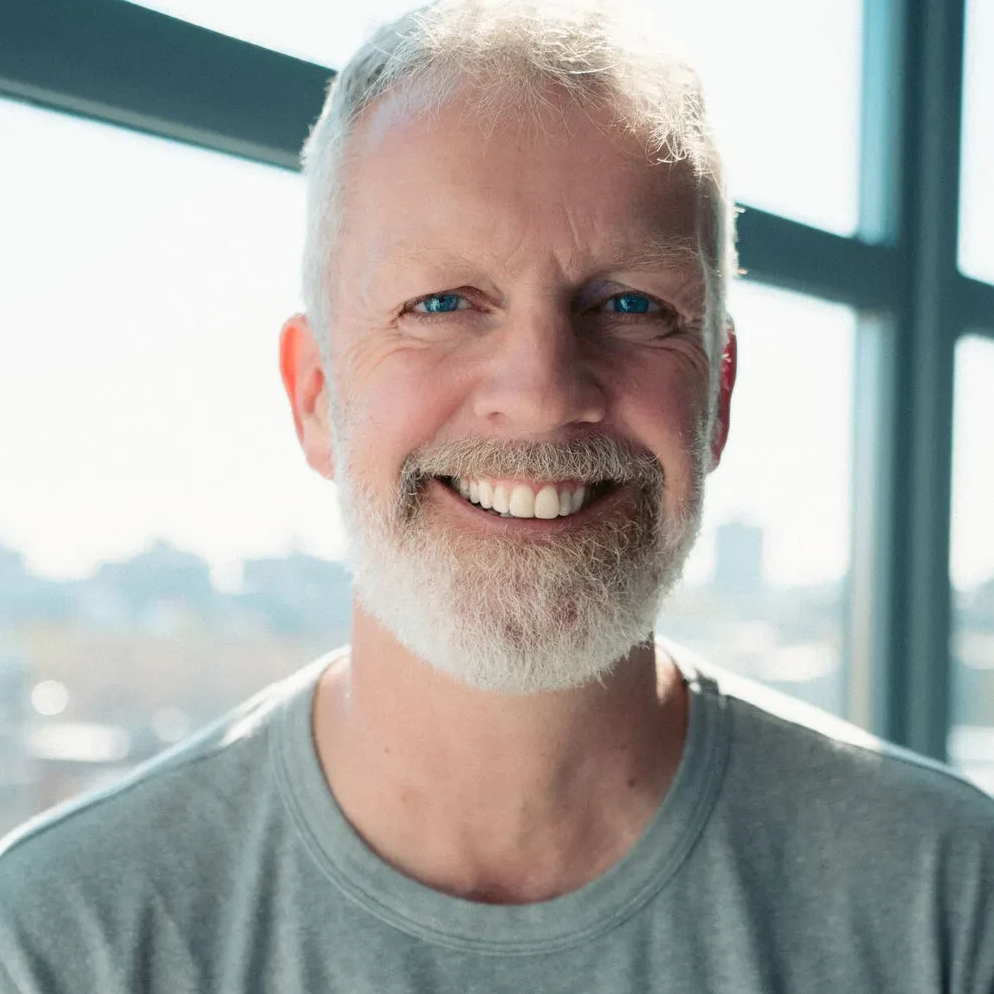
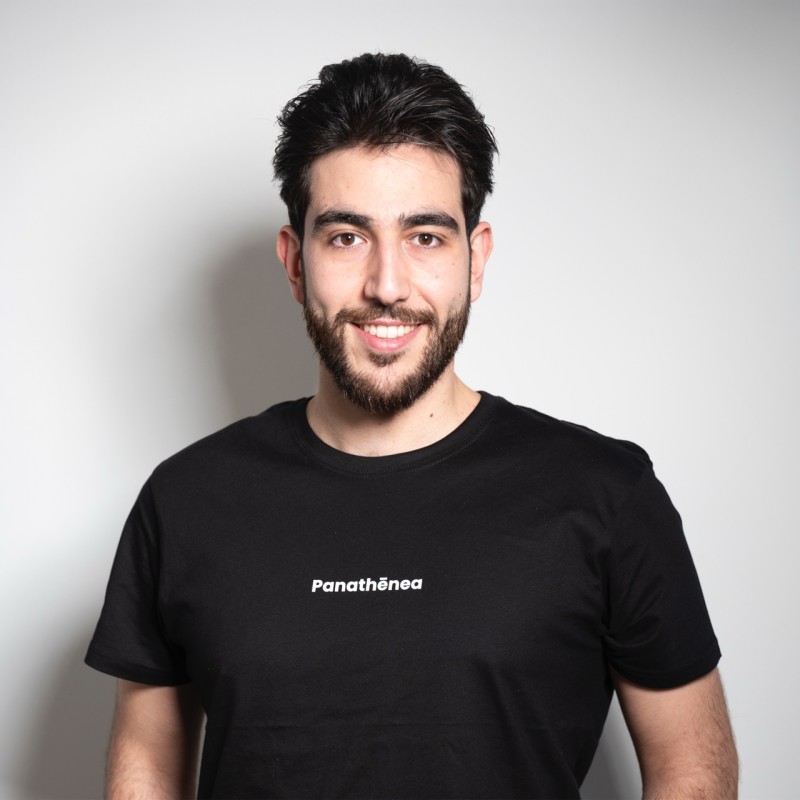
In this Mixture of Experts interview from the NYSE Studios, Panathēnea co-founders, Lefteris Katsiadakis and Lars Rasmussen, join theCUBE’s John Furrier to share how they’re building a new kind of innovation festival at the intersection of technology, culture and entrepreneurship. Drawing inspiration from the ancient Athenian celebration of Athena, Panathēnea is reimagined as a global gathering of creators, founders, investors and artists aiming to spark serendipitous collisions and world-changing ideas.
Katsiadakis and Rasmussen recount how their collaboration began at Slush, leading to Panathēnea’s inaugural event in Athens with 3,100 attendees from 44 countries. They discuss the event’s unique format: morning conference sessions, 34 curated side events across the city and an unforgettable street party under the Parthenon. Highlights included appearances by Hugging Face’s Thomas Wolf, holographic keynotes from Canva’s founders and the formation of Kesha’s new startup, Smash, live on-site.
The conversation also explores why Greece’s post-crisis resilience and deep mathematical talent are fueling its emergence as one of Europe’s fastest-growing innovation ecosystems. Rasmussen shares his belief that recent breakthroughs in AI, including generative models, mark the most profound technological shift of our lifetimes and how Panathēnea aims to channel that momentum toward meaningful impact.
Forgot Password
Almost there!
We just sent you a verification email. Please verify your account to gain access to
theCUBE + NYSE Wired: Mixture of Experts Series. If you don’t think you received an email check your
spam folder.
Sign in to theCUBE + NYSE Wired: Mixture of Experts Series.
In order to sign in, enter the email address you used to registered for the event. Once completed, you will receive an email with a verification link. Open this link to automatically sign into the site.
Register For theCUBE + NYSE Wired: Mixture of Experts Series
Please fill out the information below. You will recieve an email with a verification link confirming your registration. Click the link to automatically sign into the site.
You’re almost there!
We just sent you a verification email. Please click the verification button in the email. Once your email address is verified, you will have full access to all event content for theCUBE + NYSE Wired: Mixture of Experts Series.
I want my badge and interests to be visible to all attendees.
Checking this box will display your presense on the attendees list, view your profile and allow other attendees to contact you via 1-1 chat. Read the Privacy Policy. At any time, you can choose to disable this preference.
Select your Interests!
add
Upload your photo
Uploading..
OR
Connect via Twitter
Connect via Linkedin
EDIT PASSWORD
Share
Forgot Password
Almost there!
We just sent you a verification email. Please verify your account to gain access to
theCUBE + NYSE Wired: Mixture of Experts Series. If you don’t think you received an email check your
spam folder.
Sign in to theCUBE + NYSE Wired: Mixture of Experts Series.
In order to sign in, enter the email address you used to registered for the event. Once completed, you will receive an email with a verification link. Open this link to automatically sign into the site.
Sign in to gain access to theCUBE + NYSE Wired: Mixture of Experts Series
Please sign in with LinkedIn to continue to theCUBE + NYSE Wired: Mixture of Experts Series. Signing in with LinkedIn ensures a professional environment.
Are you sure you want to remove access rights for this user?
Details
Manage Access
email address
Community Invitation
Lefteris Katsiadakis & Lars Rasmussen, Panathēnea
Alexander Gallego, founder and Chief Executive Officer of Redpanda Data, discusses the company's recent developments and strategic positioning at the forefront of data streaming technology in theCUBE's "Mixture of Experts" series, filmed at the New York Stock Exchange.
In this insightful episode hosted by Dave Vellante, co-founder and co-Chief Executive Officer of SiliconANGLE Media Inc., Gallego shares the latest updates at Redpanda Data, highlighting its Series D funding led by Google Ventures. The conversation delves into the challenges and innovations within data streaming, as well as Redpanda's position in the market, particularly through its significant partnerships and technological advances such as the rollout of Apache Iceberg.
Key takeaways from the discussion include Redpanda's strategic milestones and growth, as highlighted by Gallego. Notably, Redpanda now powers the New York Stock Exchange's cloud data feeds, underscoring its capability in mission-critical environments. Furthermore, the conversation addresses the shift from batch processing to real-time streaming, an essential change driven by new capabilities in AI and the innovative use of data for business process improvements, which Redpanda enables, as Gallego explains.
In this Mixture of Experts interview from the NYSE Studios, Panathēnea co-founders, Lefteris Katsiadakis and Lars Rasmussen, join theCUBE’s John Furrier to share how they’re building a new kind of innovation festival at the intersection of technology, culture and entrepreneurship. Drawing inspiration from the ancient Athenian celebration of Athena, Panathēnea is reimagined as a global gathering of creators, founders, investors and artists aiming to spark serendipitous collisions and world-changing ideas.
Katsiadakis and Rasmussen recount how their coll...Read more
exploreKeep Exploring
What is the new venture being discussed by the guests?add
What can you tell us about the new venture called Panathenea?add
What took place during the last day of Slush last December involving Lars and a start-up event?add
What is the significance of the festival mentioned in the text?add
What distinguishes the atmosphere of the event described in the text from that of a typical tech conference?add
>> Hello, I'm John Furrier with theCUBE. We are here at the NYSE CUBE Studios on the East Coast. This is our access point for the NYSE Wired. Of course, we have our Palo Alto studio connecting Silicon Valley and Wall Street. Of course soon, CUBE Global, the connecting from around the world as entrepreneurship and innovation and innovators are leveraging all the new hottest super-computing from NVIDIA and the Cloud, a new software paradigm that essentially is going to change the world. We get two great guests here, Lars Rasmussen, co-founder of Panathenea, a legend in the industry. He's done many, many things and he's got a new venture. Lefteris how do you say that?
Lefteris Katsiadakis
>> Yeah. Katsiadakis.>> Okay. It's a tough one. Co-founder and CEO of Panathenea. You guys are doing some really incredible work. Love your mission. Thanks for coming on. Appreciate it, Lars. Thanks for spending the time.
Lars Rasmussen
>> Absolutely.>> All right so, talk about the new venture. Okay, so, I want to hear about what you guys are working on. Of course, we'll get into some of the tech trends. Talk about the new venture.
Lars Rasmussen
>> Well, look. So Panathenea is probably the most exciting thing I worked on for a decade. That was actually an ancient festival in Greece, a sister of the ancient Olympic Games. And Lefteris was our young CEO and his amazing team. They're re-imagining this ancient festival into a modern festival of innovation, in both technology and culture. They had their inaugural event this year. Lefteris will tell us more. It was amazing, and I think, I'm obviously not Greek, but I live in Athens because my wife is Greek and she gave me a nice ticket to the city. But I think Greece has the potential to build one of the world's best and most important innovation festivals. So they'll do for innovation what the Olympic Games have done for sports.>> Yeah. I mean tech athletes, a term we've been saying since day one. It's like a sport. Athletes, people who are smart, they work hard, they build ventures. You know how hard it is. It's like an athlete, you have almost like a four-year contract to get it off the ground. You vest on a four-year basis with stock in the classic sense, but it's just hard work. You got to do the work. It's a grind. You got to get the reps in, you got to get customers, you got to have a product. Talk about the innovation because in Greece, I mean it's well known that there's a math community there. Super smart, talented people. The history, talk about the festival, the motivation, how you guys met. You guys met at the Slush Festival, which is legendary. Talk about the story.
Lefteris Katsiadakis
>> So, we met with Lars at Slush last December. We were together with a Greek delegation and many people from the Greek ecosystem went there. I went, as I volunteered the event. And the last day of Slush we met, I wanted to create a start-up event. Lars tried and wanted to create a startup event in Greece. is really small, so I've heard something about it. And the last day of Slush, I went to Lars to meet and he was like, "Let's do that." I have an idea about Panathenea, and I think that this was the last day that we slept because since then, we were working day and night for the inaugural event. So, in four and a half months we created the inaugural event, which was this May for more than 3,100 attendees from all over the world.>> Yeah. Talk about the event that just happened and how it went down. There's a rise of what some people call, "micro communities" emerging. We're starting to see that old incubator model that we saw in the entrepreneurship side. Hey, if you get people into a space and they create work, physical face-to-face. Now with these micro communities, you're starting to see people come together. Bill Tai, a mutual friend, runs ACTAI, kite surfing and entrepreneurship kind of coming together, melting pot. Is it similar, thinking around this event and what you guys are going for? Is it creators of startups? Is it investors? What is the thesis of the plan? How did it go down this year? Can you share?
Lefteris Katsiadakis
>> So, our vision is to create a hub that brings together all those crazy mindsets that want to change the world. So even if they are from the tribes of tech, business, or culture. So we bring together both creators and founders, and investors and all those ecosystems. This year, we focused more on the startup sector. We had also some creators and art, but it was a distinct sort of festival. Next year, we are focusing also to expanding the cultural sector more. So imagine film, music, and many, many more.>> Is it sessions? Is it kind of like an unstructured event? Is it like an un-conference? Is it like, are there talks? What's the format?
Lefteris Katsiadakis
>> So, the format this year was a three-day event and basically we had from the morning, like nine till three o'clock all in one venue. So, three stages, parallel sessions, panels, speeches and all of that. So the conference that we all know. And after three o'clock, we scatter across Athens and we added in dedicated side events. So 34 side events, super dedicated from robotics, crypto, to defense, even to poker for founders and investors, and kite surf side event. So that brought together people in each sector.>> One of the things, Lars, I'd love to get your thoughts because if you study entrepreneurship over the decades and the different waves, it's the serendipity of things. So when you have smart people colliding in a room or an event, magic happens. We used to joke that all the action happens in the hallways, right? So, you have some curated content, but now you have a global entrepreneurship model. It's not just Silicon Valley, it's everywhere now. And so when you put people together, the thinking is, because these big ideas you guys are going after, these changing the world kind of opportunities, they're not like, "Hey, I want to get to ARR." It's a little bit different mindset, right? And it's not like, "Hey, I want to build an app for my calendar." It's different. What's your thoughts on this? Because you start to see kind of a new approach to venture formation, capital raising, different motions are happening. Can you share your view on some of the dynamics that happen and what's the playbook?
Lars Rasmussen
>> I mean, look, the purpose of a festival is exactly to create those serendipitous moments, those connections, but also in an environment that's just crazy inspiring, like under the Acropolis. So Panathenea, the ancient festival, was done in honor of the goddess Athena. Athena is a Greek right? And being under her temple in springtime Athens, talking about tech and we, or Lefteris' team has created this incredible vibe. You can't describe how electric it felt those three days. All those people coming from, I think about 44 different countries, all put together in like five months by five 22-year-olds, who by the way, are the hardest-working, most exciting team I worked with in my entire life. And a good example of what happened, so Kesha... We're actually in town because Kesha has a concert at Madison Square Garden. She invited us all. She was one of our headline speakers. She's obviously one of the world's top rock stars, pop stars, but she also wants to build an app. She went through a bunch of trouble, legal trouble with her label and so on. She wants to build an app that makes it easier for young musicians to stay independent longer called Smash. And I'd heard about it through Bill Tire, our common friend. I'd introduced Kesha to one of my top programming friends who really loves music, they had met. But then we invited them both to Panathenea. So she came from LA, Alan, my friend, the techie came from San Francisco. And at Panathenea, they really gelled in that environment and they decided to become co-founders. And they've announced it as a great article on TechCrunch. She actually put out a video, Kesha and her team, they put out a video about her experience at Panathenea from the kite surfing we did after the festival, to how it felt in Athens, and then of course her mission in the world. And then there she also met the founder of Slush, who's a mentor to our young team and teaching us how to build a festival like this with a student-led team. He was there, he has a background in gaming. Kesha wants a game. And so now Peter is also in town with a Finnish gaming studio developer and they're going to make a game. So it's all of these things are happening because of this crazy festival.>> Yeah, I mean the mashup of smart people, because it's hard to manufacture that moment. I mean, there's no playbook. You can't say, "Hey, we're going to structure this. You're going to meet so-and-so. Let's sit down for lunch, let's do a coffee." I mean, that's not how it works.
Lars Rasmussen
>> Yeah, you bring the right people together, all the crazy ones, like Lefteris was saying, right? You bring the right people together in the right environment, and these insane things happen.>> You know, the original motto of SiliconANGLE when I started, it's still the motto today is, where computer science and social science intersect. Of course we saw the Apple's technology, liberal arts, kind of the crossroads. That's been a thesis, obviously, the crazy ones, the famous commercial from Apple and Steve Jobs. This is kind of where we're at right now. We're starting to see, I mean, in my entire life, I've never seen it this awesome, where you have technology, money, and culture intersecting. And so I have to ask, what is the profile of a crazy one? Because you want to attract the crazy ones. Are these radical entrepreneurs? Are they just pragmatic? I mean, what's the makeup of a crazy entrepreneur? Crazy good, I mean. Crazy, not crazy, crazy. But like, you know.
Lefteris Katsiadakis
>> I think that Lars, like I've seen many founders that are super crazy .>> Lars, you're kind of crazy. What's the makeup? Mini Lars? I mean, what is the, because people want to contribute and sometimes you just don't know what to do, right?
Lars Rasmussen
>> Yeah. So, I've been in tech for a while, you can probably tell. And I started as an entrepreneur, myself. Google Maps was my baby, what? 20, 25 years ago. And now I'm an investor. I'm an angel investor operating out of Athens, probably the most fun, most vibrant ecosystem in Europe, if not the world. And one thing I have seen, I have to say that typically, when people come with a vision and idea and they're willing to go through the crazy rollercoaster ride of a startup journey, it's often someone who's been through some hardship in their life, of an immigrant story, of a difficulty. You know, Kesha herself, right? So she's had this crazy success in music, but also a difficult time, legally speaking, with a contract that didn't work out, an abusive producer, and so on. And she's taken all of that hardship and turning it into something really powerful, progressive, useful for the world, in particular, in her case, to help young musicians not end up in a situation that she was in. And in a sense, actually, the reason I'm so excited about Athens, most people probably still think of Greece, Greece's recent history as being economic crisis. The global financial crisis hit really hard in Greece. And now Greece is coming out of that crisis, and I don't want to wish a crisis like that on anyone, but on the other hand...>> Crisis are great opportunities.
Lars Rasmussen
>> You shouldn't let a good crisis go to waste.>> Yeah, exactly.
Lars Rasmussen
>> Greece has done in insane job reorganizing itself, changing mentalities. And I think, if you look at Europe, the Greek startup ecosystem, both in tech and in culture. It is one of the youngest and smallest ecosystems, but by far the fastest growing. Like, you know when interest rates started rising a few years ago because of inflation? Any ecosystem, certainly in Europe, I think in the US too, any ecosystem took like 60 to 80% cut in the total amount of money invested into that ecosystem the following year. Not Greece. So Greece actually grew its total amount of money invested because the natural growth rate of the young ecosystem is faster than a macroeconomic downturn. And that's part of why Panathenea works so well. I mean, there's this historic context that...>> Let's talk about the culture because one of the things I've observed in visiting Greece and my friends from Greece, they got thick skin. They've been through a lot, and they're resilient and they're also, they know math. So like, in early days of SiliconANGLE, we had a lot of machine learning conversations before AI was hot. A lot of machine learning and a lot of the tech contributors are coming from Greece, Turkey, Europe, where the grounded discipline of education is translating directly into tech. And now, math is, now everyone's saying, "I'm not going to computer science, going to math." I mean, you go back 10 years ago, everyone should be coding. Now it's like, get into math. So, AI is perfect storm to enable really good disruptive enablement. So, how do you guys view that in the culture of what you guys are working on? I'm sure there's a lot of young guns coming up through the ranks who are like, okay, I don't have to worry about how do we get this mess? The boomers created it. My young kids are like, what'd you guys leave us? And so there's a lot of mindset of impact in philanthropy, but they're not doing it for philanthropy purposes. There's a lot of young folks into this. That's why I say the cultural aspect of tech is not even a sidecar. It's almost embedded in most of the missions. Talk about the Greek culture and how that's kind of a tailwind for some of these emerging trends.
Lefteris Katsiadakis
>> Yeah. So, it's a great combination. The Greek culture and also what happens with the technical system, and also what you're describing with the math background, all of that. So that's why we also have many researchers from Greece in those sectors. So, yes. So, Panathenea, we're trying to bridge that and bring together those people from the different backgrounds.>> What are some cool examples from the event that you can share? Obviously love the music one because no one wants to get sucked in because you got all kinds of thorny issues right now with AI around rights. Love that story. Are there other examples and stories that's come out of the event that you could share?
Lefteris Katsiadakis
>> So, we had the founder of Hugging Face, Thomas Wolf had an amazing session about AI and also about angel investing. We had the founders of Canva, Melanie and Cliff, that came from a virtual hologram box, which was one of my favorite sessions because they had a chat with Lars. And of course, many startups, even from Greece and abroad that got funding and met investors at Panathenea.>> Talk about the importance of the side events because you mentioned kite surfing. I know Bill Tai has got a great community, you guys brought that in. When you add in something that's athletic and/or artistic to check, it creates a fusion, okay? And it kind of activates new things in the brain. I mean, go to a tech conference, most of them are boring, right? When you get that kind of input, people kind of chill, they lower their barriers, they're more authentic. Talk about the impact of the side events. I mean, the curated content, great. Check, check, check. Run a good event. Kind of got to do that. Get the good speakers. But the side events, to me, is where the fun is. But it's good fun.
Lefteris Katsiadakis
>> Exactly, because it creates a totally different vibe from a typical tech conference. So, when you walk in the springtime Athens and you attend dedicated side events with some cool people that you want to meet, it's like in a chill place. Imagine like the kite surf, or a poker night. So, it's amazing. And also, we did that back in Panathenea, and everything ended up with a big procession. So they ended up on the Parthenon dancing all night. And so, we did our kind of that. So it was a street party with the back to the Parthenon. And I imagine all the founders, investors, and people from the startup ecosystem in the street party, with the backdrop of the Parthenon, exactly under the Parthenon. So it was an amazing vibe, an amazing experience. And everyone mentioned that it was the place that they had the most amazing networking.>> You know, one of the things I love about some of these new trends is that they're very relationship focused, not transactional. "Hey, what can you do for me" is very transactional. But when you have these experiences where people can get to know each other, and we were talking at breakfast around, founders sometimes fight, you know, starting a company is like a marriage. You're going to be living with these people. So, there's an intimacy, Lars, around this, around the formation stage. It's really a critical part of entrepreneurship, not just for the ideation, but what could come around the table, literally, in these experiences. Talk about the value of that. Because if, say we had an idea and we were trained to say, hey, let's get an idea and then, now we got to get support. You got to have meetings with people. This is the formation process of ideation to coding. And in some of these events that I've been to that have great side events, people are coding in the hall, like the, I have an idea, and they just bang out a prototype instantly, like, whoa.
Lars Rasmussen
>> Look, we learned a lot from Slush in Finland. I can see you're a fan. We're a fan. That's where we met one of our great men, Peter Vesterbacka, who helped start Slush in Finland, what, 15 years ago. And what's core to the festival we're building is that it's about the founders and the artists, the crazy people that are going to change the world. And everything we do is to help them. So what does a founder need? They need inspiration, they need connections, and they need funding, they need their co-founders, they need their team, all of those things. And again, we're not programming that, but we're trying to bring all of those people together in the right environment. And actually, the ancient festival was exactly like that. Look, Plato has a famous quote about how every city should build festivals like this because it creates the environment where people have the conversations that leads to a better future. And that's what we're trying to create. And I think Lefteris and his team did a crazy good job.>> Super great mission. Okay, so what's next? What's the playbook? What's the plan? Again, event next year, is it once a year? Are there digital events? Are there things going on? Is it always on? What's the venture plan?
Lefteris Katsiadakis
>> Yeah. So, now we are growing the team and also planning for next year. So next year our goal is 10,000 attendees, three days expand also, in the cultural part, and also in sports, some sports. So, this is our goal. Last week of May. And of course, we are not only one per year, but we want to do some smaller events and smaller gatherings for founders. So we started a series of satellite events that we do for...>> Outside of Greece?...
Lefteris Katsiadakis
>> for the ecosystem. Inside Greece we started, but we also want to do some abroad, and to help the community and founders and bring together all those people.>> Lars, as an experienced, you've seen the waves. How important is this AI wave, in your mind? Because it really is an enablement because human capital is the conversation we always have here on theCUBE. There's a lot of automation involved. The humans drive the AI, there's an opportunity here. But also, there's a dark side, potentially. And we've covered some of those stories, I mean, not in a dark way, but it's a huge opportunity. I mean, there's a spectrum, it's symmetrical. You can do great things or bad things with tech. So, on the good side, there's a lot of opportunity. Talk about the opportunity that AI gives, from your perspective.>> Yeah, look, in my experience, and yes, I've been around for a bit, these recent breakthroughs in AI, basically ChatGPT launching, right? That's the most impactful, the most important technological breakthrough, certainly in my lifetime. It beats the internet, it beats all of the things that we grew up with. And to be perfectly honest, if you had asked me a few years earlier, "How far are we from making software that can read and write better than most humans?" I would've predicted it much further out into the future. It blew my mind. It still blows my mind. And I think the impact on the world is going to be immeasurable. We don't even begin to see this. Now, to your point about downside, this is true for any technology. You can use a kitchen knife for good, make a nice meal, and for not so good. Then of course, the more powerful the technology is, the more dangerous that is. And so it is probably, from a technological point of view, the most exciting time to be alive.>> Yeah. And the community aspect of it. When you have a community that's tied together, you see things, there's faster information travel, there's sharing, there's signaling, there's nuances. And if you have people connected in kind of a connective tissue in a community, not only does magic happen, it's kind of self-governance. I mean, that's the beautiful thing about some of these events that you're running and we're seeing as becoming new templates. It's now a connected system. We get wired developing. You guys have your community. This, to me, is a fast traversal of data. So, the old days was, "Hey, get an event, promote it, charge for tickets, buy some ads, come to my event." Not so much. I mean, there's a new playbook. Got the word of mouth kicking in. I mean, Slush was a great example of that, what you guys are doing. Talk about that impact. You guys seeing that as well?
Lefteris Katsiadakis
>> The impact of...>> Open networking and just kind of the different approach to promoting it and running events. Do you guys doing anything different?
Lefteris Katsiadakis
>> Yeah. Now, the one that we see it helps in the promoting is the word of mouth. So, when people leave from the event and they're happy because they found value, they met their co-founders, they found investors, and they got inspired. So, this is the way that we approach Panathenea. Imagine even for the first year, we spent zero money in marketing spend and advertisement. So, this is the way that we approach it and we see, because as you said, they love the human connections. So, we see that the events are basically a gathering of human connections.>> Yeah. It's like music. If I go to a festival, I'm not there for the commercials, I'm there for the bands. Well, there's a luxury if there's some vendors there. Okay, cool. You're a part of the tribe. So, there's the business model for events that work great, that don't compromise the mission. So, I'm a huge fan of the festivals and anything we could do to help you guys, let us know. Final question, how do people get involved? If someone sees this video and they say, "Hey, I'm living in San Francisco. I want to be involved. I'm in New York." What's the outreach? What do they do?
Lars Rasmussen
>> Panathenea.org, go pre-register. You opened pre-registers?
Lefteris Katsiadakis
>> Yeah.>> Yeah, okay.
Lefteris Katsiadakis
>> It's open. They can pre-register, and of course they can send us an email at info@panathenea.org or every social media platform, and we'll contact directly with that.>> All right. Well, we'll certainly look for that next event. Is it on the calendar for next year?
Lefteris Katsiadakis
>> Yes.>> Date is?
Lefteris Katsiadakis
>> It's the last week of May. 27th till 29th of May.>> Great time to visit Greece, as well.
Lars Rasmussen
>> It's perfect, yes. Our not-so-secret weapon. Everyone loves to come to Greece. In fact, we've carefully placed it right after the film festival in Cannes, right? So when you're done with the film stars, you just fly straight to Athens.>> All right. Got to block off the calendar. Lars, thanks so much. Guys, thanks for coming in. Lefteris, appreciate it. Congratulations and looking forward to keeping in touch. Thanks so much.
Lefteris Katsiadakis
>> Thank you very much.
Lars Rasmussen
>> Thank you.>> I'm John Furrier with theCUBE here at the NYSC. theCUBE and the NYSC, NYC Wired, a new community they're developing. The micro communities are really intimate. They're high impact, high value. And again, a big trend is getting involved and just contributing and enjoying the network. Thanks for watching.