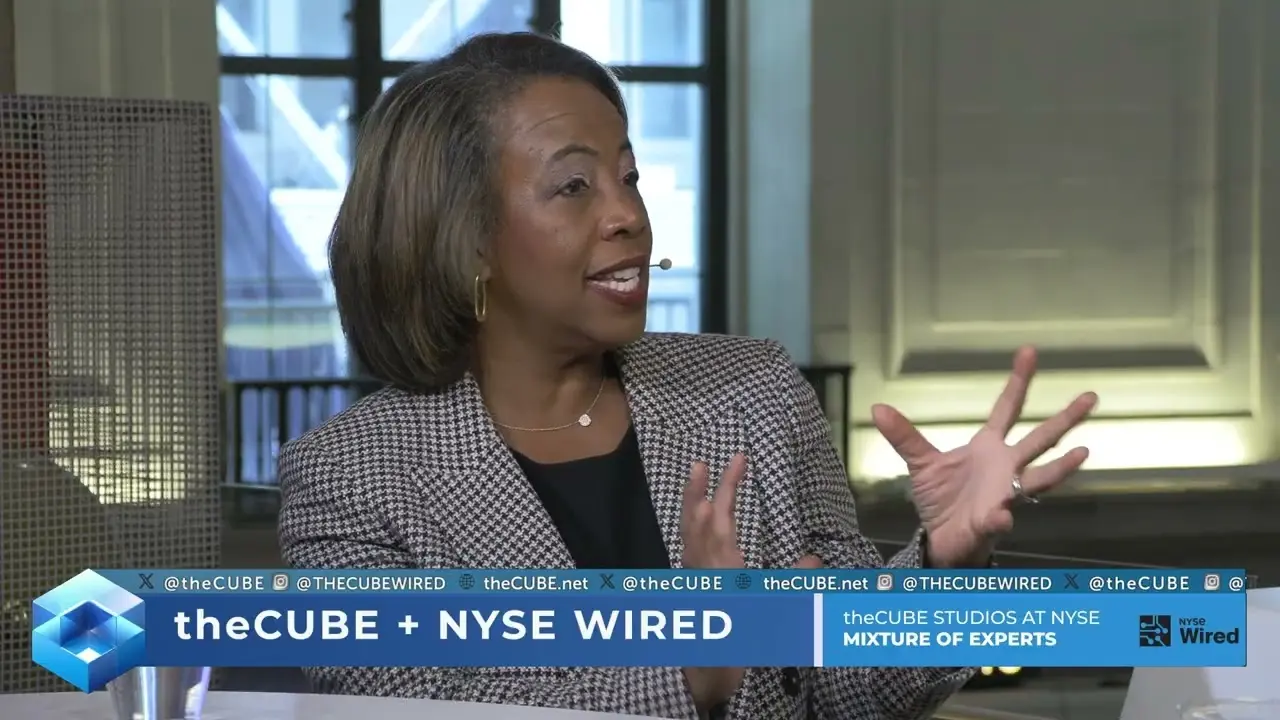
In this theCUBE + NYSE Wired: Mixture of Experts interview, John Furrier sits down with Robin Chiang, chief growth officer at OpenTable, and Deepak Shrivastava, chief executive officer of Sunrise AI, for a wide-ranging discussion on how enterprises are moving from AI experimentation to execution. Against the backdrop of the upcoming Agent Conference in May, the conversation examines why agentic systems are becoming core infrastructure – and why established platforms with deep data and strong customer relationships are uniquely positioned to capture the upside.
Chiang and Shrivastava answer on what it takes to make AI native without disrupting core operations, from building human-augmented workflows to embedding security and compliance from day one. They explore OpenTable’s pragmatic approach to deploying custom agents, measuring ROI and scaling self-service automation, as well as Sunrise AI’s “build with” model for enterprise transformation. From governance and data stewardship to productivity gains and time-to-value, the interview highlights how results – not hype – are now defining the next phase of AI adoption.
Forgot Password
Almost there!
We just sent you a verification email. Please verify your account to gain access to
theCUBE + NYSE Wired: Mixture of Experts Series. If you don’t think you received an email check your
spam folder.
Sign in to theCUBE + NYSE Wired: Mixture of Experts Series.
In order to sign in, enter the email address you used to registered for the event. Once completed, you will receive an email with a verification link. Open this link to automatically sign into the site.
Register For theCUBE + NYSE Wired: Mixture of Experts Series
Please fill out the information below. You will recieve an email with a verification link confirming your registration. Click the link to automatically sign into the site.
You’re almost there!
We just sent you a verification email. Please click the verification button in the email. Once your email address is verified, you will have full access to all event content for theCUBE + NYSE Wired: Mixture of Experts Series.
I want my badge and interests to be visible to all attendees.
Checking this box will display your presense on the attendees list, view your profile and allow other attendees to contact you via 1-1 chat. Read the Privacy Policy. At any time, you can choose to disable this preference.
Select your Interests!
add
Upload your photo
Uploading..
OR
Connect via Twitter
Connect via Linkedin
EDIT PASSWORD
Share
Forgot Password
Almost there!
We just sent you a verification email. Please verify your account to gain access to
theCUBE + NYSE Wired: Mixture of Experts Series. If you don’t think you received an email check your
spam folder.
Sign in to theCUBE + NYSE Wired: Mixture of Experts Series.
In order to sign in, enter the email address you used to registered for the event. Once completed, you will receive an email with a verification link. Open this link to automatically sign into the site.
Sign in to gain access to theCUBE + NYSE Wired: Mixture of Experts Series
Please sign in with LinkedIn to continue to theCUBE + NYSE Wired: Mixture of Experts Series. Signing in with LinkedIn ensures a professional environment.
Are you sure you want to remove access rights for this user?
Details
Manage Access
email address
Community Invitation
Deepak Shrivastava, Sunrise AI & Robin Chiang, OpenTable
In this theCUBE + NYSE Wired: Mixture of Experts segment from the New York Stock Exchange, theCUBE’s John Furrier sits down with Raj Verma, CEO of SingleStore, to unpack how the intersection of technology and finance is shaping enterprise strategy. Verma shares why SingleStore is “on course” for the public markets, reflects on brand-building through the company’s partnership with golf Hall of Famer Padraig Harrington and connects that ethos to how SingleStore helps organizations fix struggling data “swings.” The discussion zeroes in on what’s next as Wall Street watches the AI infrastructure buildout: after chips and systems, the software and data layers set the pace for value creation.
Verma outlines why enterprises must modernize “brown” data estates into “green” ones to safely bring corporate context, governance and compliance into LLM workflows via RAG – and why commoditized data-at-rest puts the advantage at the query layer that unifies data in motion with data at rest. He predicts agentic AI will gain reasoning capabilities in roughly 18 months, cites industry indicators like Google reporting ~25% of its software now built by AI and argues that high switching costs will give way to disruption as buyers reassess legacy vendors. The conversation closes with concrete momentum: ~33% YoY growth, ARR in the ~$135M range, gross dollar retention ~98%, cloud NDR ~130, ~50% of business now in the cloud, landing ~3 new customers per day, a path to cash-flow breakeven in the next two quarters and a teaser for AI-related announcements in the next two months. Listeners will find notable stats, real-world use cases and forward-looking views on how databases power reliable AI at enterprise scale.
Deepak Shrivastava, Sunrise AI & Robin Chiang, OpenTable
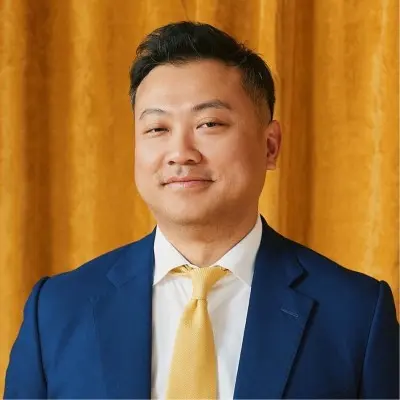
Deepak Shrivastava
CEOSunrise AI
Robin Chiang
Chief Growth OfficerOpenTable
In this theCUBE + NYSE Wired: Mixture of Experts interview, John Furrier sits down with Robin Chiang, chief growth officer at OpenTable, and Deepak Shrivastava, chief executive officer of Sunrise AI, for a wide-ranging discussion on how enterprises are moving from AI experimentation to execution. Against the backdrop of the upcoming Agent Conference in May, the conversation examines why agentic systems are becoming core infrastructure – and why established platforms with deep data and strong customer relationships are uniquely positioned to capture the upside...Read more
exploreKeep Exploring
How is OpenTable approaching the shift from a SaaS application to an AI-enabled platform (including automation/agentic AI), and how does that influence its growth strategy and relationships with restaurants, users, and partners?add
How should organizations approach deploying AI—especially human‑augmented, agentic/task‑based systems—and what does that imply for the build vs. buy (or “build with”) decision and the role of platforms versus feature‑heavy products?add
How is your company experimenting with and rolling out automation and AI agents internally?add
How should enterprises take into account delegation, trust, and security posture — including privacy and compliance — when adopting AI agents, and is security posture the primary concern for production-ready agentic workflows?add
Is there enough proprietary data (for example, CRM data) to train models and make agentic workflows effective for OpenTable, and how will data confinement/security, signal selection, and success metrics (e.g., productivity per head count) be handled?add
Deepak Shrivastava, Sunrise AI & Robin Chiang, OpenTable
search
John Furrier
>> Welcome back everyone to theCUBE here at our NYSE studio. Of course, we have our Palo Alto studio connecting Silicon Valley and Wall Street. I'm John Furrier, host of theCUBE. We got a great segment previewing the agent conference happening on May 4th and 5th. Simon and his team at firsthand VC really kind of putting on an event that started as a small community event. Now growing into a mainstream event, of course, theCUBE and the NYSC Wired program and community are supporting it. And again, it's where the leaders get together and talk, I've got Robin here from OpenTable and Deepak from Sunrise AI. You're the Chief Growth Officer and CEO. We got the chiefs here. Welcome to theCUBE. Appreciate it.
Deepak Shrivastava
>> Thank you.
Robin Chiang
>> Thank you for having us.
John Furrier
>> So Simon and his team really put together what I think is a phenomenal conference. It's at the Hilton this year, which means it's probably going to blow up. I could see the online... They're doing some good targeting, of course. But it really grew out of an organic demand side of the agents. Well early on the agents, now it's mainstream. But the agent work is a platform activity. And I think a lot of the SaaS stocks that got hit recently and people freaking out, not understanding what's happening is a tell sign, to me, that there's a little bit of arbitrage opportunity for the developers and people who have positions. Robin, OpenTable, obviously significantly strong app, gold standard in terms of what you guys do. I've been using it since the beginning. It's gotten better and better. You got the supply side, you got the user side, you got tons of data. You guys are in the middle of the , but you're also on the wave. You're participating.
Robin Chiang
>> Super excited about the opportunity here. For us, it's around, sitting where I'm sitting. Companies that have established positions and our ability to move much faster. It's like the dream and it gives us a chance to move at the speed of startups, which historically has been hard when you have start gaining a larger team. But that's been great to see over the last two, three years.
John Furrier
>> And a lot of the activity that's happened in the agent sides, it's been very bullish. People have been very bullish on it, super hyped up in a good way, maybe a little bit over hyped. But when you see the Claude bot now called Moltbook because of the whole kind of like who owns the name. To me, that was like a DeepSeek moment in the agent world. DeepSeek showed that you can do things with GPUs. What came out of China was interesting that said, Hey, we don't need to worry about maybe buying NVIDIA straight up. We can actually configure the system. And that changed how the open source software were rolling out. So it's created a ton of innovation. The Moltbook thing is interesting because it's a similar vibe in the sense of, hey, we did something. It went crazy. It was kind of like a meme in its own way. It's kind of fun, kind of crazy. One hand looks like SkyNet's happening. They're going to sell your human, all these kind of things. But it shows what could be possible. And I think that speaks to the power of agents. So when you have a platform like OpenTable and you have these new opportunities with users and businesses, everyone's looking at this. Is that the template? Is that where we think it's going to go? Because it's coming in from the growth on more MCP servers, more software being written. We're going to have folks from Arcade and LangChain in later today. They're going to talk about this operating model for agents, a framework, patterns. All kinds of new stuff is happening. How are you guys looking at that?
Deepak Shrivastava
>> Yeah. I think what you're saying here, John, is absolutely correct. I think the foundational architecture to really supercharge and accelerate this whole advent of agentic infrastructure is all the pieces are in place. You have models and LLMs that can be very enterprise ready. You have consumer proliferation with like the cloud bots of the world. So people are getting more and more comfortable with it. I do think that there is an interesting inflection point, and this is maybe where the "SaaS is dead" mantra with the markets taking that swing last week, maybe a little bit overwrought. But to get to enterprise ready, production ready, and I know Robin, we've worked a ton on this, that's a different ballgame. And that is going to require a level of expertise, but still moving at the same speed. But the consumerization of all things Agentic I think is amazing because it gets one people comfortable, but two, it starts to paint a picture of what the art of the possible is.
John Furrier
>> Robin, talk about from the open table perspective. You have a unique perspective. One, install position competitively. You guys are nested in there beautifully. You got the supply side, restaurants and venues, and you got the users. Massive amount of data. You got a data. It's a platform. It's not just a SaaS app anymore. So you kind of are living what people are trying to figure out. And again, the stock market, I wrote multiple pieces on LinkedIn, wrote multiple blog posts on this. I think everyone got it wrong. I think they just don't understand the gap between value creation and extraction and then how the infrastructure is building up. But you're technically a SaaS app by definition, but now moving super fast into AI intelligence layer. How are you thinking about this into your growth strategy? What's your view?
Robin Chiang
>> The value coming from automation agents accrues to mobile places and to everyone. We're super excited about what the next 12, 24 months bring. We're working with folks like Deepak who are on the cutting edge, not just with implementation, but with ideas. And the ironic thing about the agenetic era for us is relationships are even more important. Relationships with our customers, our restaurants, relationships with partners where we ideate with them on what technology they should be building on top of platforms. And last piece is we spend a lot of time, our greater OpenTable team with Deepak. And to be able to extract, "Hey, what are the priority projects you need to work on? " He spends a lot of time at our offices just talking to people. So the relationship piece is so important in the age of Agentic AI because while implementation is commodity, creativity is where basically it's going to be differentiating.
John Furrier
>> Yeah. That's going to be a growth opportunity for it. Deepak, talk about Sunrise AI, what you're working on because again, the opportunities that are emerging are ... And if you look at agents and AI, it's exposing things you couldn't do before more than it is eliminating positions.
Deepak Shrivastava
>> 100%.
John Furrier
>> So that's clearly coming out of the narrative, but there's still a lot of work on it. What are you guys doing? Talk about the firm and how you guys see the approach with OpenTable.
Deepak Shrivastava
>> We live in the space of human augmented AI. I think that's what we've been throwing around. We forward deploy, I wouldn't even say just AI agents, but AI systems. I see agentic work, task-based work to be very feature heavy, which is awesome, which you need features to essentially accomplish tasks, jobs, right? However, the platform and the overall intelligence for teams like Robin's is ultimately critical. And what I mean by that is that human augmented AI piece, it's us coming in. It's not consultancy. It's not just buying generic software. And there's always this conversation around build versus buy, and I'm sure those are internal conversations that you were overall with, but it really is now build with. And I think that's the new wave. So probably justified while there may have been a market swing around "SaaS is dead" and that talk back around SaaS models, but it's going to evolve.
John Furrier
>> What's your take on the experimentation to production? You mentioned some of those stats there. I think there's a lot of excitement, confidence levels are getting better, but still not at the bar. I think that people are going to be rolling out massive systems. I think the agent fiasco we saw that was a great demo with Cloudbot was, I think its tell sign again in DeepSeek moment. To get the confidence, what is needed? Because the cliche of, we got to do more AI, which is kind of like more people hand waving, but everyone is infusing AI into things, which means it's native into whatever workflow you have or whatever. What's your view on this? How do you bring that AI in? How do you bring AI in, not as a bolt on, "Hey, we got AI, look at us. We've got some retriever capabilities with vector embeds. It's all great," versus real deal production.
Deepak Shrivastava
>> It can't be hand wavey. It can't be a bolt on. It has to be AI native from the start. Now, one thing that I think is contrarian is that working with folks like Robin and our customers, if I go in and we go in and say, "Hey, you have to change everything to morph into AI native," that's a huge change management issue. That's just not going to get done. The right way to do it is to build the right relationships, get buy-in from teams. And I think Robin and the OpenTable team have done a fantastic job of rallying the troops. And perhaps Robin, you should talk a little bit about what that looks like-
John Furrier
>> Talk about the relationship and how you're embedding this, because again, we hear different success stories and failures. We document them both. The trend is failure tends to be more boil the ocean over and success is knock down some wins and see the value and understand where the value points are. Are you guys taking that kind of approach? How are you guys thinking about taking this in? Is there a priority list? Is there a selection criteria? How does that work?
Robin Chiang
>> We're still in the experimentation phase. We're already seeing really good results. So I think about it as automation like any other automation. What are the things that you hate about your job? Everyone, we have well over a thousand employees now. We send out a survey, what are the things you hate about your job? And we take that in and say, "Hey, which of these are perfect for agents?" And then we go out and implement them. The beauty of the agent era is even if the process is not great, but it works, it doesn't matter because as long as you can push it enter into the agent, we custom build that agent and they can take the whole process. And once you get a few of those wins like we have with Deepak, then everyone gets excited. So then we have a couple of layers. So Deepak's working on custom agents and now we're thinking about how do we self-serve agents? That's the next layer.
John Furrier
>> Self-serve for the users.
Robin Chiang
>> Yeah. So within OpenTable, we have platforms where you can build simple bots and then you always have champions that are excited about using some of these platforms. And then obviously the more complicated stuff we bring some experts, whether it's internal through Deepak's team.
John Furrier
>> What's the big learnings that you've had so far in putting your toe in the water and rolling the stuff out?
Robin Chiang
>> You have to institute a mind shift in that you don't need to get everything perfect before you deploy the agent. Just like when you hire someone new, they're here to fix the process or be another resource. You don't need to fix it and do change management beforehand. And that's been the hardest thing to think about actually. And that mindset shift is really, really interesting.
John Furrier
>> Yeah. You got to be comfortable with that out of the gate. So you can't be like, give me the proposal, we'll evaluate it and then maybe give it the green light. I mean, I see people deploy that all the time. It's like, it always fails. Deepak, I want to get your thoughts on some of the execution side of it, because we were talking before we came on camera. This year is not a strategy risk, it's an execution risk. And that's pretty much consistent with everyone we talk to that's leading this wave. I had a guest come on this week, former friend and leader of AWS's public sector, Theresa Carlson, and we were talking about cloud and how cloud was similar to AI infrastructure, obviously different acceleration rates. And she made a good point we were riffing on, which is the cloud inhibitor to Amazon was not the fact that you could provision with a credit card, which every startup did 25 years ago. I mean, I did it. It was like we're born in the cloud. It was the fact that they cracked the code on the enterprise. And she made a comment, and I'd love to get your reaction, is it was security and compliance that made it happen because the deals with the CIA, the large enterprise and the banks, they had the hurdle over the security bar and compliance. Agents is a compliance nightmare if you don't do it right. There's delegation involved, there's trust. I mean, there's a slew of factors. How do you take that into consideration? Do you agree with that, that's a key thing? Not like cybersecurity, like threat detection, but like the posture, the security resilience bar.
Deepak Shrivastava
>> The security posture is paramount. It is table stakes when you're talking about execution risk at an enterprise level, right? We have to go through the right security reviews to make sure that our infrastructure is sound. AI agents, a lot of the failures around agentic work, especially over last year, has really circled around security. These copilots that are out there, they're generic, they don't necessarily do what they're supposed to do. And even so, they do it in an insecure way where what is happening with the data? I have to be able to look at Robin in the eye and say, "Your data is safe and secure." If I can't do that, it's a no-go. And justifiably so, which is where I think in 2026, production-ready enterprise AI agentic workflows will have to be privacy and compliance led. That infrastructure is paramount. And I will say maybe I'm being a little bit, let's call it racy with a lot of other AI native company founders like myself where we are hungry for data.
The more data that we get, the better our models are, the more efficient, the more accuracy there is, right? But I'm happy to give up precision or even efficiency on our model or on our workflows if I can look at every customer of ours and say, "Your data is ring-fenced, it's single tenant models, it's not going anywhere. We are behind your firewall."
John Furrier
>> So you're saying there's a bar that's good enough to hurdle over and get the win maintaining those key things.
Deepak Shrivastava
>> I would say we want to be striving to clear that bar. And it's actually very interesting. I was early days at Dropbox, the advent and proliferation of cloud software, like talking to IT folks and saying, "Hey, you're going to take my data off prem? What is this thing, the cloud?" It is very much the same reverberations of those conversations today. And I think when it comes to execution risk, yes, you can clear and over-clear those security hurdles, but what will essentially get someone like Robin and our customers comfortable with the execution is showing quick time to value and actual ROI. It can't just be feature heavy and a cool thing. It's not sexy generative AI -
John Furrier
>> But actually It's interesting, it's refreshing that the trend out of Silicon Valley is not the shiny new toy anymore, it's results.
Deepak Shrivastava
>> 100%.
John Furrier
>> And the shiny new toy is results. So it's interesting how it's flipped a little bit from, look how cool this is to, it's cool and relevant, it makes money and it's not so much only business that's got some tech involved. It's interesting. I mean, do you agree with that too?
Robin Chiang
>> Yeah. And like I said, the relationship component is super important. Deepak's built a great relationship with our technology and security team as well. And that day one clear the hurdle on security and the next piece is like, how do we get to a very high standard of comfort? So like I said, that piece is super important.
John Furrier
>> I love the AI native vibe because I think that culture is a cultural thing right now and it's faster and it's data centric and data hungry to use your words. So with that in mind, what are you eating up for data from OpenTable there? Because they have a lot of data. So how do you scope the data opportunity? How do you attack that and turn that into value?
Deepak Shrivastava
>> Well, I think there was always a question is there enough data to train your models and actually make those agentic workflows like effective? Nearly three decades of data, like take for example, your CRM. There's a lot of stuff in there. I don't even think that's a question. There's more than enough data. What's important again is that we're keeping it confined specifically and exclusively to the use cases of OpenTable. We're not sharing that, right? That's number one. Again, going back to the security clearance, but most importantly, what are those signals? I like to think of agentic workflows as swarms of agents. We have a library of agents that do 1,001 different things. Go into town on that stack, getting those signals, understanding what should be the right action. Again, going back to the concept of human augmented AI, we're not replacing people. We're amplifying their current work, right? That productivity per head count, that should be the right KPI. That's what we're seeing more.
John Furrier
>> And the human augmentation is actually a good strategy because you reduce the risk of anything happening because you're now scoping it on some workloads, some process that you could manage, get the wins. And in fact, it's interesting to see Anthropic and OpenAI kind of different positions on this. Anthropic really wants to see the human. I mean, most of their contracts, this may be information that may not be written yet, but I know from firsthand data that Anthropic won't sign certain contracts unless a human is in the loop, mainly because they know more. So that kind of does cause fear, but it does bring up the point of like agents are in their own way, like their own workflow. And they're also going to take action. So it does open up questions of security, compliance, governance, but the productivity, if unlocked, the juice is worth the squeeze, as they say.
Deepak Shrivastava
>> That's the bet, right? And yes, all things AI agentic are the buzzword, but I think there's a bifurcation going on in terms of how AI native companies are producing their workflows and working with customers, right? I think that old adage of West Coast tech companies worry about raising money out here in New York, maybe I'm biased because I'm from Queens, but we're worried about making money, right? And I think the proof is going to be in the pudding. Robin should never talk to me again if I can't show them ROI and 2026 is the year to prove that.
John Furrier
>> Well, it's interesting. I grew up in New Jersey, been California for 25 years, just moved here to open up our set here.
Deepak Shrivastava
>> Welcome back.
John Furrier
>> It's interesting, 10 years ago, you couldn't walk around Manhattan hear anyone talk about Kubernetes. Last summer, I was in Chinatown and I'm just literally randomly walking and I hear two guys talking, "Kubernetes." I'm like, "What?" So New York tech scene is booming. Yes. Clearly, certainly with COVID and the migration in, it is a tech hub because the customers are here.
Deepak Shrivastava
>> Yes.
John Furrier
>> And I think there's more of a platform thinking vibe here in New York than I've ever seen in the past decade. And now with agents, I mean, most of the hot startups are in New York. Why? Because there's a lot of enterprise customers and enterprise customers with consumerizations has happened now with wearables and physical AI, hospitals, every vertical is going to have a piece of it. This is where, again, the transformation story, what you're sitting in this position is either going to ride that wave or someone else will, but I think you're in a good position with OpenTable. From an unbiased perspective, you guys are pretty locked in.
Robin Chiang
>> Yeah. Also a huge SME internal client base here in New York City as well. And there's a lot of really interesting startups I'm seeing that, especially in restaurant tech where I sit, that are servicing small media enterprises in this city. So everything's sort of here, the ecosystems already popping and I think that's why things like the Asian AI conference is going to be here.
John Furrier
>> It's going to be The SME angle is a good one. And I think if you look at that and you unpack it a bit, you say, okay, go back a decade or two or 15 years. If I had an idea to say service a restaurant, I'd have to go get a prototype, raise some money. What's the TAM? What's the execution? Now with low code, no code, business model, business logic, domain expertise, someone who actually had a restaurant could say, "Hey, I see opportunity and for very little capital, be in business." This is going to open up potentially growth for you guys I see as an ecosystem. Are you thinking ecosystem developers? What's your vision on that piece? Because I think that would open up massive use case opportunity and fill in, help serve your customers through OpenTable.
Robin Chiang
>> Yeah. We have hundreds of integrations already and we're adding more and more each day actually. So one of our more recent sectors that we've been integrating with is Voice AI. And I think that's been the fastest uptake of any integration that we've had. It's the speed of uptake of voice AI in restaurants has been credible just in the last six months. And if you look back 12 months, almost out of standing start now, it's a significant part of restaurant operations in New York.
John Furrier
>> Yeah. That's why I really like what Simon and the team have done with Agent Conference. It really had a humble beginning. It was a community of developers and entrepreneurs hanging out, changing notes, building stuff. Now the wave is there. How do you guys see that developing? Because I see a lot of similarity between what Nvidia was doing with CUDA a decade ago. I mean, not a decade ago, but now Age is a much shorter timeframe. I see a similar agentic infrastructure mindset where it's like there's some core people getting together working on stuff that's going to move the needle. What's your opinion?
Deepak Shrivastava
>> I think it's going to get bigger and it's reflective of the shift from this vibe coding consumer based methodology to like, how do you actually... Like where does the rubber hit the road, especially when you're talking about enterprise, right? So it's only natural like these types of summits, the AI agent conference, like you're going to have to get the right folks in the room. We're looking forward to in May. Let's get to the around what is OpenTable doing in terms of implementing and deploying AI in the right way with an ROI constructive methodology. That's the exciting part. People will want to know that. And to your point, in New York, that's where enterprise customers are.
John Furrier
>> It's interesting, the whole SaaS software's changing. It's actually growing. It's just getting more invisible. We have a voice prompt, that's an interface, you can kind of hide, but there's actually more software coming online than we've ever seen before. So the whole thesis of something's replacing something else is with softwares replacing software. So the net is net growth better software.
Robin Chiang
>> Better software, you can now ... It's more easy for different pieces of software to talk to each other. As you mentioned, integrations, startups beating on top of our platform. That's really changed in the last two, three years. The typical restaurateur I think on average is 10 to 15 pieces of technology they use in their restaurant. Crazy for like a mom and pop. It's almost like a tech company. And now with agentic, now with ability to write code faster, all the systems have start talking each other.
John Furrier
>> Well, you guys got a great opportunity to congratulation and look forward to seeing at the event. Thanks for coming into theCUBE here at our NYC Wired Cube Studios. CUBE original program we've been kicking off for over a year. It's getting bigger and bigger. Thanks for coming on.
Robin Chiang
>> Thank you.
Deepak Shrivastava
>> Thanks, I appreciate it.
John Furrier
>> John Furrier, host of theCUBE. That's a preview of the Agent Conference coming up in May. Again, this is where the leaders are convening, talking about what they're building, what tech they're doing. Integrations, trust, relationship, delegation. This is the new, I call it the new API. Agents need to talk to each other. They need to be managed. They need to have compliance and security. All that's going on super fast and the end result is benefits to people, applications, owners, businesses, enterprises, and so on. So keep it here in theCUBE. Thanks for watching.














































 John Furrier