This episode examines mixture of experts architectures and how enterprise artificial intelligence agents coordinate complex workflows across logistics, telco, utilities and financial services. Pablo Palafox of HappyRobot, co-founder and CEO, explains how the company builds AI agents using a voice-first approach and a platform architecture composed of execution, context/Twin and applications. theCUBE Research frames the conversation with Gemma Allen of NYSE Wired and co-hosts John Furrier and Dave Vellante.
Key takeaways include that voice agents unlock high-volume human-to-human processes and that deployments led by forward deployed engineers enable rapid integration sometimes in under four weeks. Palafox explains that HappyRobot's three-part model of platform, deployment services and consumption credits and its focus on earning the right to do more create enterprise stickiness as context and intelligence compound across agents. They address data sovereignty and multi-model interoperability and describe how small language models distill intelligence for operational workflows.
Forgot Password
Almost there!
We just sent you a verification email. Please verify your account to gain access to
theCUBE + NYSE Wired: Mixture of Experts Series. If you don’t think you received an email check your
spam folder.
Sign in to theCUBE + NYSE Wired: Mixture of Experts Series.
In order to sign in, enter the email address you used to registered for the event. Once completed, you will receive an email with a verification link. Open this link to automatically sign into the site.
Register For theCUBE + NYSE Wired: Mixture of Experts Series
Please fill out the information below. You will recieve an email with a verification link confirming your registration. Click the link to automatically sign into the site.
You’re almost there!
We just sent you a verification email. Please click the verification button in the email. Once your email address is verified, you will have full access to all event content for theCUBE + NYSE Wired: Mixture of Experts Series.
I want my badge and interests to be visible to all attendees.
Checking this box will display your presense on the attendees list, view your profile and allow other attendees to contact you via 1-1 chat. Read the Privacy Policy. At any time, you can choose to disable this preference.
Select your Interests!
add
Upload your photo
Uploading..
OR
Connect via Twitter
Connect via Linkedin
EDIT PASSWORD
Share
Forgot Password
Almost there!
We just sent you a verification email. Please verify your account to gain access to
theCUBE + NYSE Wired: Mixture of Experts Series. If you don’t think you received an email check your
spam folder.
Sign in to theCUBE + NYSE Wired: Mixture of Experts Series.
In order to sign in, enter the email address you used to registered for the event. Once completed, you will receive an email with a verification link. Open this link to automatically sign into the site.
Sign in to gain access to theCUBE + NYSE Wired: Mixture of Experts Series
Please sign in with LinkedIn to continue to theCUBE + NYSE Wired: Mixture of Experts Series. Signing in with LinkedIn ensures a professional environment.
Are you sure you want to remove access rights for this user?
Details
Manage Access
email address
Community Invitation
Pablo Palafox, HappyRobot
This episode examines mixture of experts architectures and how enterprise artificial intelligence agents coordinate complex workflows across logistics, telco, utilities and financial services. Pablo Palafox of HappyRobot, co-founder and CEO, explains how the company builds AI agents using a voice-first approach and a platform architecture composed of execution, context/Twin and applications. theCUBE Research frames the conversation with Gemma Allen of NYSE Wired and co-hosts John Furrier and Dave Vellante.
Key takeaways include that voice agents unlock high-volume human-to-human processes and that deployments led by forward deployed engineers enable rapid integration sometimes in under four weeks. Palafox explains that HappyRobot's three-part model of platform, deployment services and consumption credits and its focus on earning the right to do more create enterprise stickiness as context and intelligence compound across agents. They address data sovereignty and multi-model interoperability and describe how small language models distill intelligence for operational workflows.
In this interview from theCUBE + NYSE Wired: Mixture of Experts Series, Pablo Palafox, co-founder and chief executive officer of HappyRobot, joins theCUBE + NYSE Wired's Gemma Allen to discuss how AI agents are moving beyond answering questions to actually executing the messy coordination work that keeps enterprises running. Palafox explains how HappyRobot evolved from a freight-focused startup into a horizontal coordination platform after realizing that logistics, telecom and utilities all share the same handoff problems between humans and systems. He detail...Read more
exploreKeep Exploring
What prevents enterprises from fully automating their messy business processes with AI/large language models?add
Who are some examples of your top customers?add
How can a solution help a large parcel company handle 20,000–40,000 daily outbound calls and follow-up texts, reduce repetitive agent work, and recover parcels with unpaid duties?add
Is the key advantage of using small language models cost efficiency—i.e., lower token usage, reduced compute, and lower latency?add
What are the company's plans for the next 6–12 months, and how will the $150 million in the bank be allocated?add
>> Palo Alto Studio Connection, Silicon Valley and Wall Street.
Pablo Palafox
>> I'm John Furrier, co-host here with Dave Vellante, my co-host.
Gemma Allen
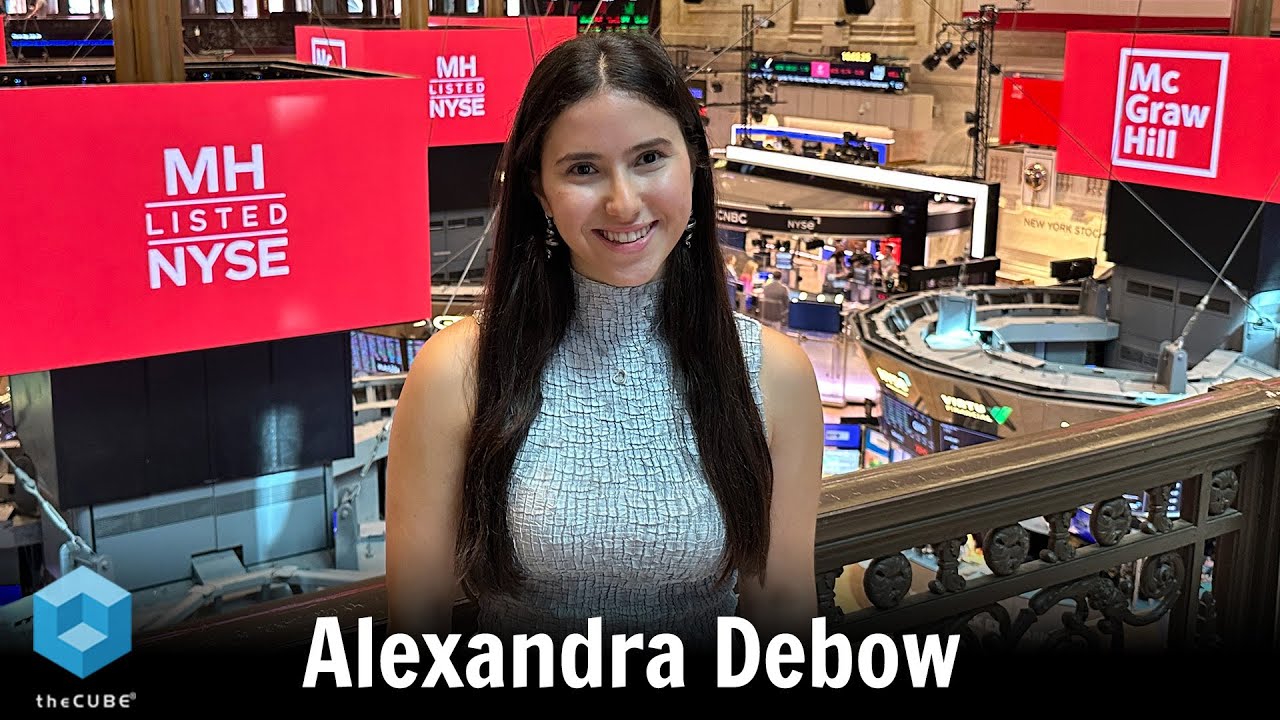
>> Welcome back to theCUBE Studio here at the New York Stock Exchange. I'm Gemma Allen, host of NYSE Wired. We are connecting Silicon Valley to Wall Street today. We are talking mixture of experts with an expert in the space around how agents are moving beyond answering questions to actually doing the work. HappyRobot is building AI agents that handle the calls, emails, and messy coordination that keep business running, from logistics to energy to telecom. They've just raised $150 million at a $1.2 billion valuation. Joining me now is their co-founder and CEO, Pablo Palafox. Welcome, Pablo.
Pablo Palafox
>> Thank you so much. Super excited to be here.
Gemma Allen
>> So, interesting company, interesting time. Maybe just to start level set with me, give me the 101 on HappyRobot.
Pablo Palafox
>> Super. We basically help enterprises put agents to work in some of the most complex environments. We work with telcos, utilities, financial services, and supply chain, which is actually where we started. We've been operating for a couple years, raised over $200 million in funding, and very excited to have announced our Series C a few weeks ago.
Gemma Allen
>> So Series C, August 4th, I believe you guys announced that, but you have had a couple of raises in a pretty short space of time, correct?
Pablo Palafox
>> Yes, we went through Y Combinator Summer '23. We pivoted away from what we were doing back then. We started the business early '24.
Gemma Allen
>> Wow.
Pablo Palafox
>> And we had our first sale April of 2024. And then we raised from Andreessen Horowitz our Series A, and we did our Series B last year with Base10 Partners.
Gemma Allen
>> Wow
Pablo Palafox
>> . A fun couple of years.
Gemma Allen
>> 2 years post-YC, first unicorn in the intake.
Pablo Palafox
>> Yes, first unicorn in our batch.
Gemma Allen
>> Yes. First of all, congratulations.
Pablo Palafox
>> Thank you.
Gemma Allen
>> that's incredible. But let's get into what made you a unicorn.
Pablo Palafox
>> Sure
Gemma Allen
>> . Let's talk about this company and this product. So first, it's an interesting time in the world of AI and enterprise AI, right? We hear a lot from different companies, different models, different service providers claiming that they can solve all sorts of enterprise problems, automate, save money, save time, save headcount. You started this business, so it's kind of a unique enough problem space, right? You were looking at freight.
Pablo Palafox
>> Yeah
Gemma Allen
>> , it has evolved. Talk to me about the trajectory and the decision to start something that had a very vertical focus.
Pablo Palafox
>> Yeah. So there's a very interesting take here, which is intelligence is not the limiting factor. How you wield that intelligence is the key. So basically, LLMs are out there. You can use them in your company. Theoretically, everyone should be able to already automate all of their messy, clunky processes with AI, right? But the reality is different. The reality is that these enterprises, which is what we are focused on, have a lot of coordination issues, to put it one way. There's a lot of handoff of information from one party to the other. Customers are reaching out, you have an issue with that customer, that customer service representative might actually have to turn around and reach out to the finance team and figure out the problem with that customer. Then, let's say a trucking company that is delivering your parcel, if we're in the supply chain space, has to actually move that shipment. So there's all of this coordination in those industries that we kind of have under the umbrella of the real economy. No, and what we saw serving the logistics side is, well, these enterprises, the problems they have, they're not really supply chain specific. They're just a coordination problem that an enterprise suffers from. And when we were working with folks like DHL, which is one of our early customers, and they connected us with folks like Deutsche Telekom, we started to learn that coordination problem across the enterprise was what we could solve with AI, with a platform really that could wield and coordinate these agents. So that's really all we're doing. We're coordinating agents, doing the work, executing, gathering the insights from the real world, and serving customers and really anyone across the enterprise environment, employees, partners.
Gemma Allen
>> So I want to get into some of those examples of customers you gave, but first, What was truly unique from the perspective of what you could standardize was the fact that it was human-to-human interactions, that they were repetitive, that there was a whole lot of data, which is very live, right? Very instantaneous data, especially in the world of freight logistics that needs to be managed. What was it that you thought, okay, this is the aha moment. If we can solve for this, it's a transferable solution.
Pablo Palafox
>> We probably built one of the first voice agents back in 2024, January 2024. That was the unlock to a lot of the processes that traditionally have been run on phone. Today we do any channel, voice, email, WhatsApp, chatbots. But voice was really the key unlock. We have put a lot of care into that. We actually have a research team building text-to-speech models for our own voice agents. And that was the unlock because in particular, freight moves a lot of their shipments through voice, through calls and emails. But that was the key unlock. Today we work with 9 of the top 10 US freight forwarders and freight brokers, sorry. Those folks have a lot of those communications through phone. So that was the key unlock.
Gemma Allen
>> Give me some examples of some of your top customers. I know you're here in New York meeting with some folks just today alone. Give me your best customer proof point and talk me through the before and the after of their relationship with HappyRobot.
Pablo Palafox
>> We work with a large parcel company who has to run anywhere from 20,000 to 40,000 customer phone calls and follow-up texts every day. So imagine to run 20,000 to 40,000 phone calls plus follow-up texts every day, you need a lot of folks doing very repetitive stuff. And if you're working for one of those companies as a customer service rep, you probably don't want to spend your time doing the repetitive and mundane stuff. You want to add value to the company. So that's really what we help these customers, our customers with. We help them with an execution layer really to put agents to work in these very repetitive and mundane and complex tasks many times, really enabling their humans to elevate themselves as the new guardians of exception and manage the exception. So with these customers, this parcel company, those 20,000 to 40,000 calls, they're basically outbound to customers that haven't maybe paid duties on a parcel.
Gemma Allen
>> Wow.
Pablo Palafox
>> That is very interesting because it unlocks a lot of ineffi— it reduces a lot of inefficiencies. When you haven't paid duties on a parcel and you're waiting for your parcel to arrive, you might not even know you have to pay those duties on that parcel, right? But you might just think that it's lost. In reality, it's actually waiting in a warehouse and you just forgot to pay those duties. If an agent actually follows up with you every day or whenever in a very formal fashion, orderly fashion and just checks in every other day with you. And you end up paying those duties, you end up getting your package. The customer, our customer, also saves space in the warehouse and that package doesn't have to go to origin. That's one example in the supply chain space. Now, another example in the telco and utility side. We help our customers in the telco and utilities with basic customer support. But that customer support is not a shallow customer support, it's actually a type of customer support that requires agents to turn around and figure out who, what technician is gonna go fix your router issue or your leaky boiler. That is a sort of coordination problem that our agents can help with. You call in with a leaky boiler, but in reality that problem needs some physical labor, to go to your house and fix it. That is a coordination that an agent today can do very efficiently with humans as that escalation point, which is Really, really interesting.
Gemma Allen
>> How plug and play is this technology? talk me through the example of that parcel company, right? That's a huge ecosystem. They're managing daily a lot of different workflows, a lot of different humans also, I'm sure, all over the world.
Pablo Palafox
>> Mm-hmm
Gemma Allen
>> . How quickly can you integrate this and how quickly can you realize value from a product like HappyRobot? But I presume it takes a lot of API integrations, a lot of— talk me through it.
Pablo Palafox
>> Fun fact, this use case that I mentioned was deployed in less than 4 weeks.
Gemma Allen
>> Wow.
Pablo Palafox
>> So that was a pretty fast one. What we see typically is the fastest we can deploy is when the customer is leaning in the most. And you need to have executive leadership really leaning in first. So you need top-down decision making. So that is really the key unlock for us to move fast. When you are aligned at the exec level, everyone is really going towards the same place. Our key proposition here is we bring a platform and a deployments team. And this is when executives get really excited because many times they just get a platform for building agents. Let's say from one of the hyperscalers, they just get a platform to build their agents and then they're left alone really to use that platform, maybe train their teams to use it, which is something they can definitely do. But we do think that the deployment side of the house, having experts, what we call forward deployed engineers, which is now a very fancy term that everyone uses and Palantir pioneered, no? Having an engineer that can also think business on site with the customer for weeks, as much as needed, that is really what's unlocking speed in our deployments. We assign full-time forward deployed engineers to our customers to really be the drivers of the value, and that is really what's unlocking the speed of execution.
Gemma Allen
>> So some time ago, I used to work in supply chain for Microsoft Windows, right? We would bring on a new client or a new customer, and it would feel like we reinvent— we reinvented the wheel every time because not everyone is as strong in their governance and knowledge documentation as others, right? There's varied levels of documentation and context capture across organizations. How do you solve for that? You mentioned 4 weeks, but in the more complex scenarios where maybe the ducks haven't been in the exact row you would hope for, especially from the perspective of structured data and even documenting workflows full stop, how do you solve for that in these complex environments?
Pablo Palafox
>> Maybe going to the point before about FDEs being that catalyst. These forward deployed engineers are the catalyst to make things happen. That complex workflow you're mentioning, that really requires someone to sit down next to the operators, but also next to the exec team and kind of bridge the gaps. The reason why even companies like our size, we're like a 200-person company and we internally realize we almost need 4 deployed engineers to bridge a lot of the missing pieces that we had internally, if that makes sense. Imagine if a small company like ours needs some form of catalyst to make things happen. Imagine a 200,000-people company. You need to have some form of bridge, some form of catalyst between the operators, what's going down in the— what's going on in the field, what's going on in that warehouse, what's going on in the energy plant, and bring it back to leadership and then make a decision. So that is where a deployment motion like ours really unlocks the value of AI. Because again, intelligence is not the limiting factor. You cannot just throw LLMs at the problem, right?
Gemma Allen
>> Absolutely.
Pablo Palafox
>> You actually need someone to wield that intelligence and make it useful and rethink processes. That's actually another piece that is interesting for customers. Just rethinking the process might even allow you to make it more efficient on its own. You might not even need AI for certain things, which is also a bit of a contradictory or interesting take, no?
Gemma Allen
>> So what's the business model here? what you're describing is a certain amount of service spend too, right? It is advisory spend as well as platform spend. Explain it to me. Is it consumption-based? Is it seat-based? How do you— what's the market position for this?
Pablo Palafox
>> We talk about a transformation. We talk about, hey customers, Mr. Customer, this is a transformation, and as such, we're going to drive you somewhere. We're going to drive somewhere together. So our model really is a combination of three pillars. We have a platform, We have the driver of that platform, which is the forward deployed engineer of the services. And then the consumption, the credits.
Gemma Allen
>> Okay.
Pablo Palafox
>> The platform is that expensive car that is going to drive you somewhere. The credits is that gas that you need just to move somewhere. It ends up being an afterthought really for our customers. And then the driver is someone that's going to teach you to drive that car, that platform somewhere. Eventually you're going to be able to drive it on your own. So we actually try to create a lot of these workshops with customers to bring them all in the same room, teach their data scientists and engineers and business folks how to use the product. So yes, initially it is heavy on our deployment motion. We don't really see it as consulting. It's a deployment motion because we're deploying agents across the company. And then we try to, again, give the keys to the Ferrari to the customer so that they can start building on their own.
Gemma Allen
>> Let's go under the hood of the platform for a second from a tech perspective. What you're building, is it 100% proprietary? Do you use various other models within your stack? I guess it's totally cloud-based. Are you seeing cases where companies want to have a certain amount of data sovereignty for particular workloads? Break that down for me a little bit.
Pablo Palafox
>> So let's look at the platform from the three layers that compose it. We have the execution layer that's Agentic workflows. Okay, that's really a place where our agents live or the agentic workflows live because agents is a bit too fancy of a word.
Gemma Allen
>> I can't believe you said this.
Pablo Palafox
>> We try to demystify it a little bit. It's just workflows. Everything in a company really is a combination of some workflows, some process, some data, and really executing on that. So we start with that workflow layer. That's where you build your agents, maybe an agent that is fielding an inbox, an email inbox, and looking at what's coming in. That's a workflow. You can have an agent that is fielding all of the inbound phone calls coming into a warehouse or coming into your utility or telco and navigating that conversation and doing whatever the customer needs you to do. Is it sending a technician over to you? That's the workflows. Now, Agents or agentic workflows need data. So that data layer sits on top. That's what we call Twin. In our case, Twin is really our data layer, our context layer, to put it more fancy. That context layer integrates to systems of record of the customer, your CRM, your data lakes, whatever existing system of record you already have data in and you want to keep data in. So we have two layers right now. The third layer is how do you surface the insights that your agents are gathering and how do you know how to improve that human in the loop almost. That's our interface layer. We call that apps. In our platform, you can go and vibe code applications, UIs to put it simply, interfaces. To show the work that agents are doing so that human teams can actually either guide agents or learn from what agents are doing.
Gemma Allen
>> Wow.
Pablo Palafox
>> So those are the three layers. For our proprietary, what is proprietary today for us is our voice agents. We've built, as I mentioned before, on our own compute, text-to-speech models, which are, really fantastic. And we have a small 7-person team in our research team, which is fantastic. Today, with a mix of transformer models and open-source models— I come from a research background, I was doing my PhD in deep learning, and transformers were just getting started back in 2017 when they started. Today, you can have a small team of 7 machine learning engineers build your own text-to-speech models. We're looking into SLMs, small language models, to distill a lot of the LLM knowledge into the day-to-day work. If you think about it, you don't need a PhD to be calling a driver to see where they're at.
Gemma Allen
>> Makes sense. And the key advantage there in terms of small language models would be what, cost efficiency? You don't need to spend, like, the token usage would be lower, the compute lower latency. Yeah, okay.
Gemma Allen
>> So ownership.
Gemma Allen
>> Absolutely. Absolutely.
Pablo Palafox
>> To the customer. That's another point. You brought it up before on the data side. We sometimes deploy single tenancy to customers that want to make sure that we don't have a multi-tenant solution, a cloud solution. We can also deploy on-prem for our customer. So, yeah, data ownership is key.
Gemma Allen
>> Let me ask you a question I ask a lot of folks that come on the show that have started in the space, which is quite vertically aligned like you and your team at HappyRobot have. When you think about some of the conversations that are happening right now around SaaSpocalypse, and this one huge orchestrator right there. It's rumored that this week Dario Amodei went on the record and said Anthropic might be the only private company that exists in 20 years. No one can actually verify that source. A lot of headlines are running it. How do you think about the competitive force of these large language models? once they break into enterprise, they start to control certain workflows. They're very horizontally aligned. How do you think about that from a competitive perspective?
Pablo Palafox
>> I think it goes back to the point that intelligence itself is not going to auto-deploy itself in a business. Maybe unfortunately, maybe we would all be better off if we could just have an LLM explore everything in a company. The reality is that you do need a platform to wield that intelligence. And today's intelligence from Anthropic might be better or worse than today's intelligence from OpenAI. Gemini. So you don't wanna marry yourself to an intelligence provider. You wanna marry yourself, I guess, to potentially multiple orchestration platforms. We acknowledge we're not gonna be the only orchestration platform or agent platform our customers are gonna use. I would love that, but we acknowledge we need to be interoperable. What we do best is X, maybe company Y does something else really well. We all are gonna serve the industries that we tackle or we serve in different ways. And I think as such, the orchestration concept is key. It's not, again, back to your point, oh, you just throw an LLM from Anthropic at the problem and it magically fixes everything.
Gemma Allen
>> And Pablo, in that scenario, the stickiness, the moat of 5, 10 years from now, is it that early customer loyalty, early context, a real niche understanding of a specific workflow within an enterprise?
Pablo Palafox
>> Mm-hmm
Gemma Allen
>> . you're kind of there, you're really in the weeds of it. Or is it cost? Like, how do you think about what makes it sticky in a world, like you said, where people can move between models quite easily, right? It's not like the world of cloud. It's a different beast.
Pablo Palafox
>> AgreedWe talk about intelligence compounding in your enterprise. When you build Agent 1, maybe it takes, let's say, 4 weeks, but building Agent N+1 takes less time because you already have a lot of the company context, you already have the integrations done. So that stickiness comes really from earning the right to do more. We talk a lot about how do we earn the right to do more for our customers? Because we've demonstrated that building a certain agent for customer support is adding value. Well, how do we move on to building a sales agent? We do a lot of sales for our customers. Now, interestingly enough, The sales agent will be talking to the same person as the customer support agent. That's why we don't see ourselves as a point solution for any particular function, but rather as an orchestration platform across functions because we believe that all agents in your company should actually tap into the same context. So to your point, really the stickiness comes from earning the right to do more and serving our customers in a better way.
Gemma Allen
>> I love the term earning the right because I feel like tech, especially this wave, can be quite self-righteous, and quite, I guess in some respects sometimes almost patronizing from the perspective of enterprise. So I think that's a great message to leave with. Pablo, last question to you. $150 million in the bank. Nice bit of runway there, I'm sure. What's ahead? What are you going to spend that money on? What does the next 6, 12 months look like for you and the team?
Pablo Palafox
>> Products and deployment.
Gemma Allen
>> I love it
Pablo Palafox
>> . The product team, continuing to grow that team and building better models, focus a lot on the SLM side of the house to distill a lot of the intelligence into SLMs. And deployments. Again, the catalyst in the enterprise is our deployments team. They make the magic happen. They uncover value, they deliver that value, and they make sure that we are earning the right to do more.
Gemma Allen
>> Love it. Well, Pablo, always love to see a Spaniard in the US doing so well.
Gemma Allen
>> Thank you.
Gemma Allen
>> Thank you so much for joining us on theCUBE and NYSE Wired.
Pablo Palafox
>> Thank you so much.
Gemma Allen
>> I'm Gemma Allen here at theCUBE Studio at the New York Stock Exchange. This is Mixture of Experts, one of our programs with NYSE Wired. Thanks for watching.









































 Gemma Allen