In this theCUBE + NYSE Wired: Mixture of Experts segment from the New York Stock Exchange, theCUBE’s John Furrier sits down with Raj Verma, CEO of SingleStore, to unpack how the intersection of technology and finance is shaping enterprise strategy. Verma shares why SingleStore is “on course” for the public markets, reflects on brand-building through the company’s partnership with golf Hall of Famer Padraig Harrington and connects that ethos to how SingleStore helps organizations fix struggling data “swings.” The discussion zeroes in on what’s next as Wall Street watches the AI infrastructure buildout: after chips and systems, the software and data layers set the pace for value creation.
Verma outlines why enterprises must modernize “brown” data estates into “green” ones to safely bring corporate context, governance and compliance into LLM workflows via RAG – and why commoditized data-at-rest puts the advantage at the query layer that unifies data in motion with data at rest. He predicts agentic AI will gain reasoning capabilities in roughly 18 months, cites industry indicators like Google reporting ~25% of its software now built by AI and argues that high switching costs will give way to disruption as buyers reassess legacy vendors. The conversation closes with concrete momentum: ~33% YoY growth, ARR in the ~$135M range, gross dollar retention ~98%, cloud NDR ~130, ~50% of business now in the cloud, landing ~3 new customers per day, a path to cash-flow breakeven in the next two quarters and a teaser for AI-related announcements in the next two months. Listeners will find notable stats, real-world use cases and forward-looking views on how databases power reliable AI at enterprise scale.
Forgot Password
Almost there!
We just sent you a verification email. Please verify your account to gain access to
theCUBE + NYSE Wired: Mixture of Experts Series. If you don’t think you received an email check your
spam folder.
Sign in to theCUBE + NYSE Wired: Mixture of Experts Series.
In order to sign in, enter the email address you used to registered for the event. Once completed, you will receive an email with a verification link. Open this link to automatically sign into the site.
Register For theCUBE + NYSE Wired: Mixture of Experts Series
Please fill out the information below. You will recieve an email with a verification link confirming your registration. Click the link to automatically sign into the site.
You’re almost there!
We just sent you a verification email. Please click the verification button in the email. Once your email address is verified, you will have full access to all event content for theCUBE + NYSE Wired: Mixture of Experts Series.
I want my badge and interests to be visible to all attendees.
Checking this box will display your presense on the attendees list, view your profile and allow other attendees to contact you via 1-1 chat. Read the Privacy Policy. At any time, you can choose to disable this preference.
Select your Interests!
add
Upload your photo
Uploading..
OR
Connect via Twitter
Connect via Linkedin
EDIT PASSWORD
Share
Forgot Password
Almost there!
We just sent you a verification email. Please verify your account to gain access to
theCUBE + NYSE Wired: Mixture of Experts Series. If you don’t think you received an email check your
spam folder.
Sign in to theCUBE + NYSE Wired: Mixture of Experts Series.
In order to sign in, enter the email address you used to registered for the event. Once completed, you will receive an email with a verification link. Open this link to automatically sign into the site.
Sign in to gain access to theCUBE + NYSE Wired: Mixture of Experts Series
Please sign in with LinkedIn to continue to theCUBE + NYSE Wired: Mixture of Experts Series. Signing in with LinkedIn ensures a professional environment.
Are you sure you want to remove access rights for this user?
Details
Manage Access
email address
Community Invitation
Anushka Salinas, Nanit
In this theCUBE + NYSE Wired: Mixture of Experts segment from the New York Stock Exchange, theCUBE’s John Furrier sits down with Raj Verma, CEO of SingleStore, to unpack how the intersection of technology and finance is shaping enterprise strategy. Verma shares why SingleStore is “on course” for the public markets, reflects on brand-building through the company’s partnership with golf Hall of Famer Padraig Harrington and connects that ethos to how SingleStore helps organizations fix struggling data “swings.” The discussion zeroes in on what’s next as Wall Street watches the AI infrastructure buildout: after chips and systems, the software and data layers set the pace for value creation.
Verma outlines why enterprises must modernize “brown” data estates into “green” ones to safely bring corporate context, governance and compliance into LLM workflows via RAG – and why commoditized data-at-rest puts the advantage at the query layer that unifies data in motion with data at rest. He predicts agentic AI will gain reasoning capabilities in roughly 18 months, cites industry indicators like Google reporting ~25% of its software now built by AI and argues that high switching costs will give way to disruption as buyers reassess legacy vendors. The conversation closes with concrete momentum: ~33% YoY growth, ARR in the ~$135M range, gross dollar retention ~98%, cloud NDR ~130, ~50% of business now in the cloud, landing ~3 new customers per day, a path to cash-flow breakeven in the next two quarters and a teaser for AI-related announcements in the next two months. Listeners will find notable stats, real-world use cases and forward-looking views on how databases power reliable AI at enterprise scale.
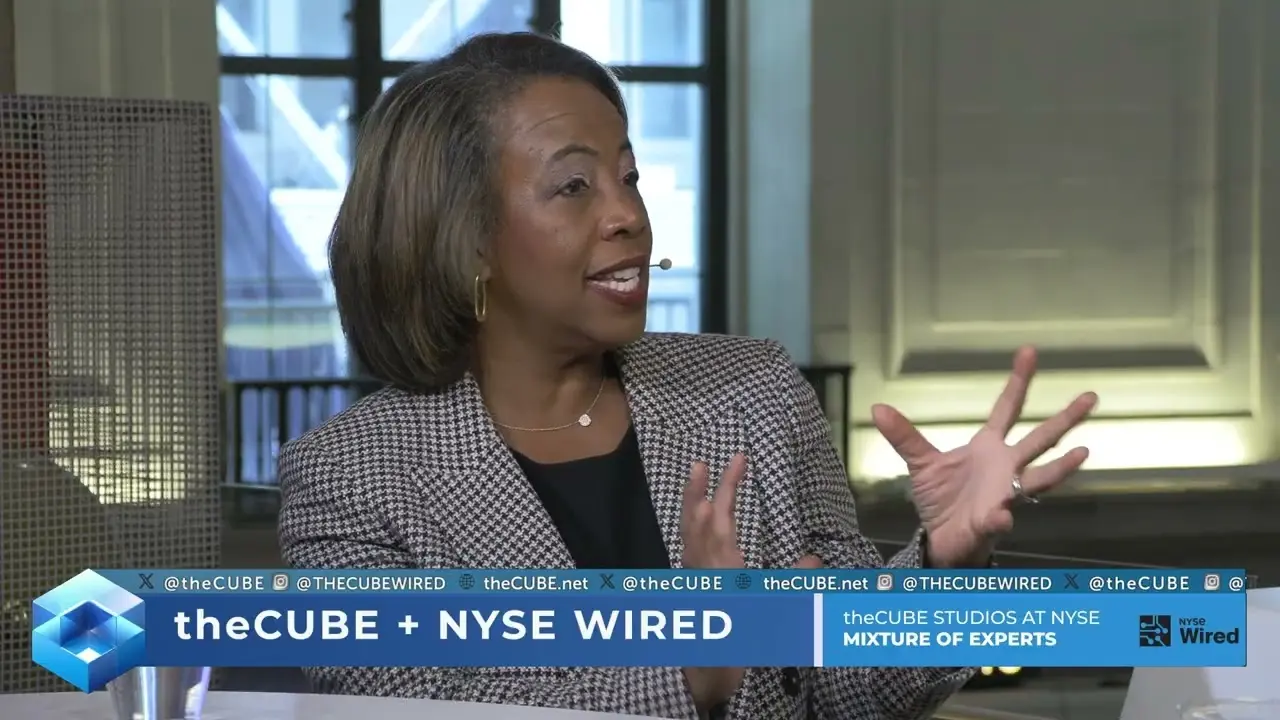
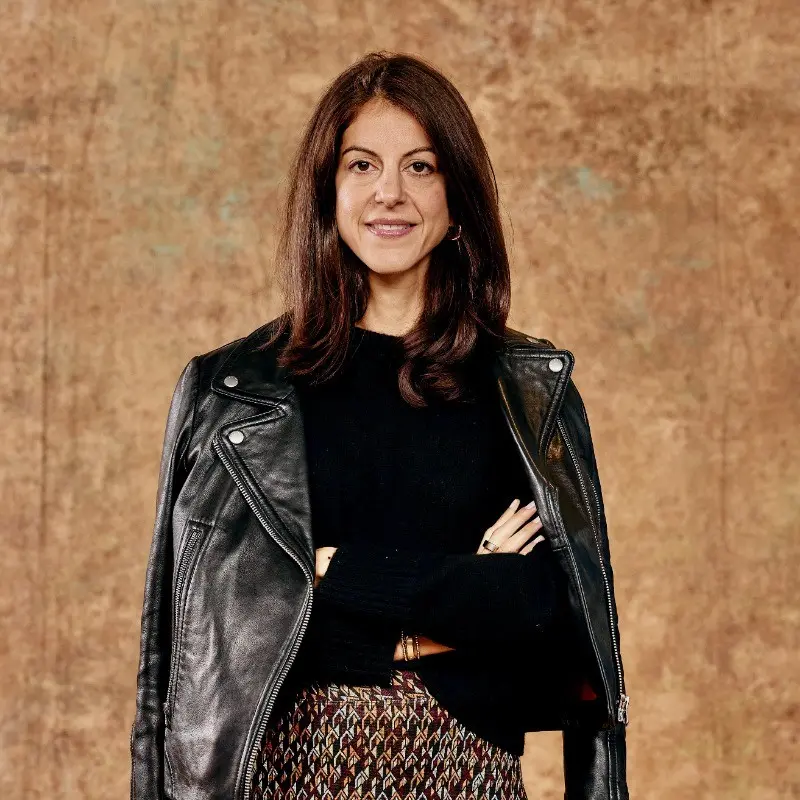
>> Welcome back to theCUBE here at our studio at the New York Stock Exchange. I'm Gemma Allen, and this is our show connecting Wall Street to Silicon Valley. Joining me today have a lady who is no stranger to the world of AI, connecting consumer technology to one of life's most universal experiences, which is parenting. Joining me in studio, Anushka Salinas CEO of Nanit. Welcome, Anushka.
Anushka Salinas
>> Thanks for having me.
Gemma Allen
>> So tell me, I know you've got some big news to talk about in the show today and we're very excited to learn about it. Before we go there, tell me a little bit about your own career journey. You've had an interesting trajectory, fashion, Rent the Runway, Hudson Bay. Now you're in the world of parenting and baby technology. Do we ever think we'd say that, baby technology? But talk to me about the journey you've been on.
Anushka Salinas
>> Yeah. Well, I think the through line of my career, as you said, I spent about 20 years in the consumer space, a lot of that time in kind of fashion and apparel businesses, but the through line has really been designing kind of game changing consumer experiences. And certainly Run the Runway was that. Building a completely new category, being a category creator. And Nanit, although it seems like it's a very different business, and baby technology and AI and a hardware and software business is actually quite similar. The company was founded 11 years ago by two dads, which I actually think is amazing. And with AI at the core of the business, but really about creating a category in one that was really antiquated before, which was baby monitors. Historically, and for decades, they were kind of staticky, two-way walkie-talkies. And the founders of Nanit really innovated the category with smart baby monitor technology that brought sleep insights to children and families for the first time.
Gemma Allen
>> Well, let's talk a little about the product because I think with a lot of us ... I have two little kids. When I think about baby monitors, I think about like nanny cams, more just like a video watching the child, checking to make sure that the kid is asleep when you're out, et cetera, during the night. But this is about something far deeper and far more technically innovative than that. It's about really understanding your child's pathology, their sleep, their health. Talk to us about exactly what the product does.
Anushka Salinas
>> Yeah. So when the company was founded, it really was about being able to provide that always on window into your child and really to help children get back to sleep and get better quality sleep so that also parents could sleep and the entire family could sleep. And they delivered on that. Nanit family sleep 10% more on average than non-Nanit families. So that's 36 more nights of sleep, which is amazing.
Gemma Allen
>> Wow. I wish I had that.
Anushka Salinas
>> I know. We all do as parents of young children. But really we're innovating the category for a second time with the creation of this early childhood intelligence system. And through computer vision and machine learning capabilities, we're really shining a light on not just sleep with our personalized sleep coach, but in motor milestones, speech, health, and breathing and memories as well and sort of bringing memory capture in. Because as a working parent, you know this as well as I do, there's lots of moments that you miss and milestones that you miss. So we're able to really do that as well.
Gemma Allen
>> Well, I think I shared it to you off camera. I miss my daughter's first step. So again, like such a powerful thing, right?
Anushka Salinas
>> Yeah.
Gemma Allen
>> It's a powerful moment.
Anushka Salinas
>> It is.
Gemma Allen
>> So tell me a little about the company. Founded by two dads. Been around how many years? How big are you guys? Where are you based?
Anushka Salinas
>> Yeah. So we're headquartered right here about a mile away down in Tribeca in New York. We have global operations. We have obviously a large business in the US, but we're in 25 countries around the world as well. And we manufacture our products in Asia, outside of China. And we have about 150 employees.
Gemma Allen
>> Wow. And I know one of the reasons you're here with us, like I said at the beginning is you've got some very big news this week, right? Show us in on what's been going on.
Anushka Salinas
>> Yeah. So we're really excited to announce that we've closed a growth round of $50 million led by Springcoast Partners with participation from Upfront and JVP. And that funding is really to help us build out our AI capabilities and really build out that early childhood intelligence system.
Gemma Allen
>> Well, congratulations.
Anushka Salinas
>> Thank you.
Gemma Allen
>> That's wonderful news.
Anushka Salinas
>> Thank you.
Gemma Allen
>> Let's talk a little bit about the technology developments in this space. Like we said at the start, I never thought I'd really be saying baby technology, right? But it feels like now, the future is so uncertain, but also so technically charged, that it seems as though anything is possible. What sort of ways in which are you guys building, integrating AI and machine learning into the product roadmap? How do you picture the next five years from a baby consumer tech, parenting consumer tech landscape?
Anushka Salinas
>> Well, the world is such an interesting place now. I think you and I both fall into the majority of Americans that track sleep, stress, even glucose. Adults are using wearables at a really fast pace, and yet the population that could benefit the most from early interventions, which is babies and young children, there's kind of this huge gap in the data and tracking. And so, when you look at what's happening today, pediatricians have very little time with a child, sometimes only once a year, and they're relying on these quick couple of minute check-ins and then whatever a parent may remember of what happened over the last several months, which if you're me, is not everything. And so it gives this really large gap in the data and children are developing at a very fast pace. So we believe that technology has the power, technology like Nanit, to really be that partner to parents to help fill in some of those gaps of objective data and science-based insights that really help bolster parent instinct instead of replace it.
Gemma Allen
>> And I guess data is so powerful. And you guys will have a huge amount of data on children, on their patterns. It's also a very personal and an increasingly concerning space in terms of where that data goes, what's happening to some of our most precious information.
Anushka Salinas
>> Yes.
Gemma Allen
>> Talk to me a little bit about that side of your business in terms of how that's protected, who owns it, where does it live?
Anushka Salinas
>> Yeah. Well, as a mother of two young kids, first and foremost, I can tell you that privacy and security is of utmost importance to us at Nanit. We take it very seriously that families trust us to be in their most intimate places in their home. And I think you see that we've delivered on that trust. So independent research has validated that 97% of Nanit families feel that we are fundamentally a brand that they can trust. And so we have what I like to call bank level security. So 256 bit encryption and no personalized information or data that is shared outside of the individual family. So we deliver personalized insights to you about your child, and only you can see those insights or that data.
Gemma Allen
>> Wow. And it's subscription based, I assume, in terms of-
Anushka Salinas
>> It's subscription based, yes.
Gemma Allen
>> Okay, monthly. And tell me a little bit about that world too, about subscription revenue, how that's playing out. I feel like there's been, from even your background at Rent the Runway, the subscription curve has been somewhat of a roller coaster for a lot of industries.
Anushka Salinas
>> Yeah.
Gemma Allen
>> How do you think about that from a commercial perspective?
Anushka Salinas
>> Yeah, subscription is a really important piece of our business model, and we've continued to build that business all the way since 2020, so it's been part of our business model for a long time and I think that's a big differentiator for us in this space. But the subscription model allows us to continue to innovate at an extremely fast pace. So bringing in new AI capabilities, again, in a closed loop, very secure system, but that provides those insights. So personalized sleep coaching. So this week we're rolling out our sleep score, which helps give a really clear snapshot for families into what happens last night, and then that helps them plan out the day ahead of them. So really amazing innovations.
Gemma Allen
>> I guess what really interests me about the wearable space, like I wear an Oura ring, I look at my sleep, I certainly take in, I ingest that data. Do you see a future whereby some of these platforms, some of these models like Nanit and others, that it would be like a two-way conversation where you will be like asking your wearable device for advice on situations? How far away do you think we are from that?
Anushka Salinas
>> I think we're very close. I think that is a goal for us. We see that the 364 days of the year that you're not with your pediatrician to answer questions, that quiet space is not quiet. Parents have questions every single day. I'm sure we both do. Is this normal? What can I expect next? Should I worry about this? these are the questions that, as parents of young children, we have every moment. And what we see now is that parents of young children are going to ChatGPT and other programs at twice the rate of non-parents. And I think that's really showing you that parents are already relying on AI to help answer the questions that they have every day. I think what we can provide, and what we will continue to provide, is context on what's happening with your child. So whereas you could go to ChatGPT and say, "I have an 18 month old, is it normal that they're not walking yet?" You're going to get really generic information and a very wide band of what's, quote unquote, "Normal."
In a closed loop system where we have all the context on your child, you could chat with us to know, based on all the context that we have around how they're sleeping, how they're growing, how their weight is tracking, how the interactions with the parent are, how their speech is tracking, whether it's normal for your child. So I think that two way conversation is where the world is going in health and I think it's really exciting. Certainly the things that we're seeing with the adult sort of proactive health space, I think is, I think, paving a really exciting way for the future.
Gemma Allen
>> It's interesting, like a few years ago, a lot of people became a Google doctor. You ask Google a question, then you ... I personally convinced myself I had all sorts of ailments, right?
Anushka Salinas
>> Yeah.
Gemma Allen
>> But I think in the world of LLMs and generative AI, there's certainly a lot of opportunity for people to self-inform and there's a lot of noise. There's a lot of non-factual information, confusion. And when I think about some of these platforms like Nanit or any of these really micro communities around B2C tech, how do you think the audience engagement side of that remains stable and consistent? How do you think about that? How do you separate the signal from the noise in a marketing landscape that's so noisy right now?
Anushka Salinas
>> Yeah. Well, listen, we see incredible engagement with our product and I think that all comes back to the value that we're providing to families every single day and the clarity that they're getting from this sort of objective data and science based insights that we provide. So we have what I would say are best in class engagement metrics. So we have over a million monthly active users and those users are engaging every single day. So our DAU to MAU is north of 70%.
Gemma Allen
>> Wow. Okay. Wow.
Anushka Salinas
>> Yeah.
Gemma Allen
>> Let's talk about the supply chain. I know it's a harder product and it's both, but it is a harder device. It's a tough time for ODMs. It's a tough time for that whole ecosystem. We've seen a lot of political challenge around tariffs and what they might mean, and what it means to have FPP models coming in from Asia, et cetera. Talk to me a little bit about your model and how you've, I guess, circumvented some of the challenges this year.
Anushka Salinas
>> Yeah. I think 2020 and the prior Trump administration was maybe good training wheels for people, and certainly for us, on supply chain resiliency and ability to strategically optimize your supply chain in various ways based on the rules of the road at that time. So we moved manufacturing out of Asia, I'm sorry, out of China at that point in time. And of course with kind of some of the changes that happened this year, have worked a lot to kind of make sure we could optimize our supply chain. I think for us, it's a great at moment to reinforce the value of the hardware software model. And I certainly hope that consumers begin to understand that more and more over time, which is, it's increasingly challenging to have a business that's just based on hardware alone, and the hardware software models help provide the, I think margin cushion, to be able to continue invest and innovate. People have our products for five plus years, so really the hardware is just the beginning of the relationship with the family.
Gemma Allen
>> So talk to me a little about the leadership side of this. And I know one topic that's close to both of our hearts is the whole area of women. Women leaders, women in the workplace. We've spoken in the past about how, in a way, this product helps working women, right? It helps you feel like you're not missing those milestone moments, et cetera. But it's a tough time for women right now. There was some very ... The Sandberg survey that went out this week was quite upsetting, I think, but real, right? It's great to see the data back up how I think a lot of us are feeling. You've been on quite a journey professionally. How do you think about this moment? How do you treat this place or in the perspective of female leadership within Nanit? And how do you think about things broadly?
Anushka Salinas
>> Yeah. Listen, I think that study that was released earlier this week is tough for female leaders like us to see, because I certainly want to create an environment at any company that I work for and lead where we do lift young women up and create opportunities, and you hope that they want those opportunities too. So I think it's so tough when you see this kind of data. I think it reinforces the passion I have for the mission that we're on at Nanit because the product is, in many ways, about equalizing the load between, that mental load that so often mom, who's usually default parent, feels, it helps to equalize that load because almost half of our users are on the platform are dads. And what that means is it's not just up to mom to keep the mental to do list. When did the child last eat? How much did they sleep last night? Did they nap? Actually, it's all in one platform that can be shared by both parents, caregivers, grandma, whoever it is that's sort of part of the digital village, as I like to call it, kind of helps to equalize the playing field. And one of the things that was brought up in that study, I think is that women are citing not wanting to go back into the office or having challenges in work flexibility. And I think a platform like Nanit, as I said, sort of allows you to be at the office, but still know what's going on at home. And I think a lot of transitioning back into being in the office, which has caused a lot of anxiety for moms, is about still feeling like they're connected and still feeling like they know what's happening at home and not feeling like they're all of a sudden abandoning their family.
Gemma Allen
>> Absolutely.
Anushka Salinas
>> So I love that mission for that reason.
Gemma Allen
>> You have a sense of control, I guess, right? Even if it is somewhat , at least you feel like you're staying in the group, right?
Anushka Salinas
>> Yeah. And that you're not missing the first steps.
Gemma Allen
>> Oh, yeah. I know. It sucks.
Anushka Salinas
>> Those things that I think can be like a stab in the gut as a mom, if you feel like you're missing a milestone, at least you can still hold onto it.
Gemma Allen
>> 100%. Well, listen, Anushka, close us out here, tell us, exciting week for you guys with the next new round of money. What's ahead for you and the team for the next 12 months? What are the big bets?
Anushka Salinas
>> Yeah.
Gemma Allen
>> Give us the pitch.
Anushka Salinas
>> Yeah. We're really excited about what we're building. I think I look at the world of accelerating proactive health with adults and I think it's super exciting. And I look at what we are doing at Nanit, which is shining the light and providing objective data and science-based insights for children ages zero to five, where 90% of the brain is developing. And I think it's necessary and we must do it. We must fill the gap of information of child development. And so we're excited to be using AI to do that and to put this fresh capital to work, to bring Nanit to millions of families around the world.
Gemma Allen
>> Well, we'll be watching. Thank you so much for coming on theCUBE.
Anushka Salinas
>> Thank you so much.
Gemma Allen
>> I'm Gemma Allen here at theCUBE Studio at the New York Stock Exchange, where we're connecting Silicon Valley to Wall Street. Thanks so much for watching.
>> Welcome back to theCUBE here at our studio at the New York Stock Exchange. I'm Gemma Allen, and this is our show connecting Wall Street to Silicon Valley. Joining me today have a lady who is no stranger to the world of AI, connecting consumer technology to one of life's most universal experiences, which is parenting. Joining me in studio, Anushka Salinas CEO of Nanit. Welcome, Anushka.
Anushka Salinas
>> Thanks for having me.
Gemma Allen
>> So tell me, I know you've got some big news to talk about in the show today and we're very excited to learn about it. Before we go there, tell me a little bit about your own career journey. You've had an interesting trajectory, fashion, Rent the Runway, Hudson Bay. Now you're in the world of parenting and baby technology. Do we ever think we'd say that, baby technology? But talk to me about the journey you've been on.
Anushka Salinas
>> Yeah. Well, I think the through line of my career, as you said, I spent about 20 years in the consumer space, a lot of that time in kind of fashion and apparel businesses, but the through line has really been designing kind of game changing consumer experiences. And certainly Run the Runway was that. Building a completely new category, being a category creator. And Nanit, although it seems like it's a very different business, and baby technology and AI and a hardware and software business is actually quite similar. The company was founded 11 years ago by two dads, which I actually think is amazing. And with AI at the core of the business, but really about creating a category in one that was really antiquated before, which was baby monitors. Historically, and for decades, they were kind of staticky, two-way walkie-talkies. And the founders of Nanit really innovated the category with smart baby monitor technology that brought sleep insights to children and families for the first time.
Gemma Allen
>> Well, let's talk a little about the product because I think with a lot of us ... I have two little kids. When I think about baby monitors, I think about like nanny cams, more just like a video watching the child, checking to make sure that the kid is asleep when you're out, et cetera, during the night. But this is about something far deeper and far more technically innovative than that. It's about really understanding your child's pathology, their sleep, their health. Talk to us about exactly what the product does.
Anushka Salinas
>> Yeah. So when the company was founded, it really was about being able to provide that always on window into your child and really to help children get back to sleep and get better quality sleep so that also parents could sleep and the entire family could sleep. And they delivered on that. Nanit family sleep 10% more on average than non-Nanit families. So that's 36 more nights of sleep, which is amazing.
Gemma Allen
>> Wow. I wish I had that.
Anushka Salinas
>> I know. We all do as parents of young children. But really we're innovating the category for a second time with the creation of this early childhood intelligence system. And through computer vision and machine learning capabilities, we're really shining a light on not just sleep with our personalized sleep coach, but in motor milestones, speech, health, and breathing and memories as well and sort of bringing memory capture in. Because as a working parent, you know this as well as I do, there's lots of moments that you miss and milestones that you miss. So we're able to really do that as well.
Gemma Allen
>> Well, I think I shared it to you off camera. I miss my daughter's first step. So again, like such a powerful thing, right?
Anushka Salinas
>> Yeah.
Gemma Allen
>> It's a powerful moment.
Anushka Salinas
>> It is.
Gemma Allen
>> So tell me a little about the company. Founded by two dads. Been around how many years? How big are you guys? Where are you based?
Anushka Salinas
>> Yeah. So we're headquartered right here about a mile away down in Tribeca in New York. We have global operations. We have obviously a large business in the US, but we're in 25 countries around the world as well. And we manufacture our products in Asia, outside of China. And we have about 150 employees.
Gemma Allen
>> Wow. And I know one of the reasons you're here with us, like I said at the beginning is you've got some very big news this week, right? Show us in on what's been going on.
Anushka Salinas
>> Yeah. So we're really excited to announce that we've closed a growth round of $50 million led by Springcoast Partners with participation from Upfront and JVP. And that funding is really to help us build out our AI capabilities and really build out that early childhood intelligence system.
Gemma Allen
>> Well, congratulations.
Anushka Salinas
>> Thank you.
Gemma Allen
>> That's wonderful news.
Anushka Salinas
>> Thank you.
Gemma Allen
>> Let's talk a little bit about the technology developments in this space. Like we said at the start, I never thought I'd really be saying baby technology, right? But it feels like now, the future is so uncertain, but also so technically charged, that it seems as though anything is possible. What sort of ways in which are you guys building, integrating AI and machine learning into the product roadmap? How do you picture the next five years from a baby consumer tech, parenting consumer tech landscape?
Anushka Salinas
>> Well, the world is such an interesting place now. I think you and I both fall into the majority of Americans that track sleep, stress, even glucose. Adults are using wearables at a really fast pace, and yet the population that could benefit the most from early interventions, which is babies and young children, there's kind of this huge gap in the data and tracking. And so, when you look at what's happening today, pediatricians have very little time with a child, sometimes only once a year, and they're relying on these quick couple of minute check-ins and then whatever a parent may remember of what happened over the last several months, which if you're me, is not everything. And so it gives this really large gap in the data and children are developing at a very fast pace. So we believe that technology has the power, technology like Nanit, to really be that partner to parents to help fill in some of those gaps of objective data and science-based insights that really help bolster parent instinct instead of replace it.
Gemma Allen
>> And I guess data is so powerful. And you guys will have a huge amount of data on children, on their patterns. It's also a very personal and an increasingly concerning space in terms of where that data goes, what's happening to some of our most precious information.
Anushka Salinas
>> Yes.
Gemma Allen
>> Talk to me a little bit about that side of your business in terms of how that's protected, who owns it, where does it live?
Anushka Salinas
>> Yeah. Well, as a mother of two young kids, first and foremost, I can tell you that privacy and security is of utmost importance to us at Nanit. We take it very seriously that families trust us to be in their most intimate places in their home. And I think you see that we've delivered on that trust. So independent research has validated that 97% of Nanit families feel that we are fundamentally a brand that they can trust. And so we have what I like to call bank level security. So 256 bit encryption and no personalized information or data that is shared outside of the individual family. So we deliver personalized insights to you about your child, and only you can see those insights or that data.
Gemma Allen
>> Wow. And it's subscription based, I assume, in terms of-
Anushka Salinas
>> It's subscription based, yes.
Gemma Allen
>> Okay, monthly. And tell me a little bit about that world too, about subscription revenue, how that's playing out. I feel like there's been, from even your background at Rent the Runway, the subscription curve has been somewhat of a roller coaster for a lot of industries.
Anushka Salinas
>> Yeah.
Gemma Allen
>> How do you think about that from a commercial perspective?
Anushka Salinas
>> Yeah, subscription is a really important piece of our business model, and we've continued to build that business all the way since 2020, so it's been part of our business model for a long time and I think that's a big differentiator for us in this space. But the subscription model allows us to continue to innovate at an extremely fast pace. So bringing in new AI capabilities, again, in a closed loop, very secure system, but that provides those insights. So personalized sleep coaching. So this week we're rolling out our sleep score, which helps give a really clear snapshot for families into what happens last night, and then that helps them plan out the day ahead of them. So really amazing innovations.
Gemma Allen
>> I guess what really interests me about the wearable space, like I wear an Oura ring, I look at my sleep, I certainly take in, I ingest that data. Do you see a future whereby some of these platforms, some of these models like Nanit and others, that it would be like a two-way conversation where you will be like asking your wearable device for advice on situations? How far away do you think we are from that?
Anushka Salinas
>> I think we're very close. I think that is a goal for us. We see that the 364 days of the year that you're not with your pediatrician to answer questions, that quiet space is not quiet. Parents have questions every single day. I'm sure we both do. Is this normal? What can I expect next? Should I worry about this? these are the questions that, as parents of young children, we have every moment. And what we see now is that parents of young children are going to ChatGPT and other programs at twice the rate of non-parents. And I think that's really showing you that parents are already relying on AI to help answer the questions that they have every day. I think what we can provide, and what we will continue to provide, is context on what's happening with your child. So whereas you could go to ChatGPT and say, "I have an 18 month old, is it normal that they're not walking yet?" You're going to get really generic information and a very wide band of what's, quote unquote, "Normal."
In a closed loop system where we have all the context on your child, you could chat with us to know, based on all the context that we have around how they're sleeping, how they're growing, how their weight is tracking, how the interactions with the parent are, how their speech is tracking, whether it's normal for your child. So I think that two way conversation is where the world is going in health and I think it's really exciting. Certainly the things that we're seeing with the adult sort of proactive health space, I think is, I think, paving a really exciting way for the future.
Gemma Allen
>> It's interesting, like a few years ago, a lot of people became a Google doctor. You ask Google a question, then you ... I personally convinced myself I had all sorts of ailments, right?
Anushka Salinas
>> Yeah.
Gemma Allen
>> But I think in the world of LLMs and generative AI, there's certainly a lot of opportunity for people to self-inform and there's a lot of noise. There's a lot of non-factual information, confusion. And when I think about some of these platforms like Nanit or any of these really micro communities around B2C tech, how do you think the audience engagement side of that remains stable and consistent? How do you think about that? How do you separate the signal from the noise in a marketing landscape that's so noisy right now?
Anushka Salinas
>> Yeah. Well, listen, we see incredible engagement with our product and I think that all comes back to the value that we're providing to families every single day and the clarity that they're getting from this sort of objective data and science based insights that we provide. So we have what I would say are best in class engagement metrics. So we have over a million monthly active users and those users are engaging every single day. So our DAU to MAU is north of 70%.
Gemma Allen
>> Wow. Okay. Wow.
Anushka Salinas
>> Yeah.
Gemma Allen
>> Let's talk about the supply chain. I know it's a harder product and it's both, but it is a harder device. It's a tough time for ODMs. It's a tough time for that whole ecosystem. We've seen a lot of political challenge around tariffs and what they might mean, and what it means to have FPP models coming in from Asia, et cetera. Talk to me a little bit about your model and how you've, I guess, circumvented some of the challenges this year.
Anushka Salinas
>> Yeah. I think 2020 and the prior Trump administration was maybe good training wheels for people, and certainly for us, on supply chain resiliency and ability to strategically optimize your supply chain in various ways based on the rules of the road at that time. So we moved manufacturing out of Asia, I'm sorry, out of China at that point in time. And of course with kind of some of the changes that happened this year, have worked a lot to kind of make sure we could optimize our supply chain. I think for us, it's a great at moment to reinforce the value of the hardware software model. And I certainly hope that consumers begin to understand that more and more over time, which is, it's increasingly challenging to have a business that's just based on hardware alone, and the hardware software models help provide the, I think margin cushion, to be able to continue invest and innovate. People have our products for five plus years, so really the hardware is just the beginning of the relationship with the family.
Gemma Allen
>> So talk to me a little about the leadership side of this. And I know one topic that's close to both of our hearts is the whole area of women. Women leaders, women in the workplace. We've spoken in the past about how, in a way, this product helps working women, right? It helps you feel like you're not missing those milestone moments, et cetera. But it's a tough time for women right now. There was some very ... The Sandberg survey that went out this week was quite upsetting, I think, but real, right? It's great to see the data back up how I think a lot of us are feeling. You've been on quite a journey professionally. How do you think about this moment? How do you treat this place or in the perspective of female leadership within Nanit? And how do you think about things broadly?
Anushka Salinas
>> Yeah. Listen, I think that study that was released earlier this week is tough for female leaders like us to see, because I certainly want to create an environment at any company that I work for and lead where we do lift young women up and create opportunities, and you hope that they want those opportunities too. So I think it's so tough when you see this kind of data. I think it reinforces the passion I have for the mission that we're on at Nanit because the product is, in many ways, about equalizing the load between, that mental load that so often mom, who's usually default parent, feels, it helps to equalize that load because almost half of our users are on the platform are dads. And what that means is it's not just up to mom to keep the mental to do list. When did the child last eat? How much did they sleep last night? Did they nap? Actually, it's all in one platform that can be shared by both parents, caregivers, grandma, whoever it is that's sort of part of the digital village, as I like to call it, kind of helps to equalize the playing field. And one of the things that was brought up in that study, I think is that women are citing not wanting to go back into the office or having challenges in work flexibility. And I think a platform like Nanit, as I said, sort of allows you to be at the office, but still know what's going on at home. And I think a lot of transitioning back into being in the office, which has caused a lot of anxiety for moms, is about still feeling like they're connected and still feeling like they know what's happening at home and not feeling like they're all of a sudden abandoning their family.
Gemma Allen
>> Absolutely.
Anushka Salinas
>> So I love that mission for that reason.
Gemma Allen
>> You have a sense of control, I guess, right? Even if it is somewhat , at least you feel like you're staying in the group, right?
Anushka Salinas
>> Yeah. And that you're not missing the first steps.
Gemma Allen
>> Oh, yeah. I know. It sucks.
Anushka Salinas
>> Those things that I think can be like a stab in the gut as a mom, if you feel like you're missing a milestone, at least you can still hold onto it.
Gemma Allen
>> 100%. Well, listen, Anushka, close us out here, tell us, exciting week for you guys with the next new round of money. What's ahead for you and the team for the next 12 months? What are the big bets?
Anushka Salinas
>> Yeah.
Gemma Allen
>> Give us the pitch.
Anushka Salinas
>> Yeah. We're really excited about what we're building. I think I look at the world of accelerating proactive health with adults and I think it's super exciting. And I look at what we are doing at Nanit, which is shining the light and providing objective data and science-based insights for children ages zero to five, where 90% of the brain is developing. And I think it's necessary and we must do it. We must fill the gap of information of child development. And so we're excited to be using AI to do that and to put this fresh capital to work, to bring Nanit to millions of families around the world.
Gemma Allen
>> Well, we'll be watching. Thank you so much for coming on theCUBE.
Anushka Salinas
>> Thank you so much.
Gemma Allen
>> I'm Gemma Allen here at theCUBE Studio at the New York Stock Exchange, where we're connecting Silicon Valley to Wall Street. Thanks so much for watching.



















































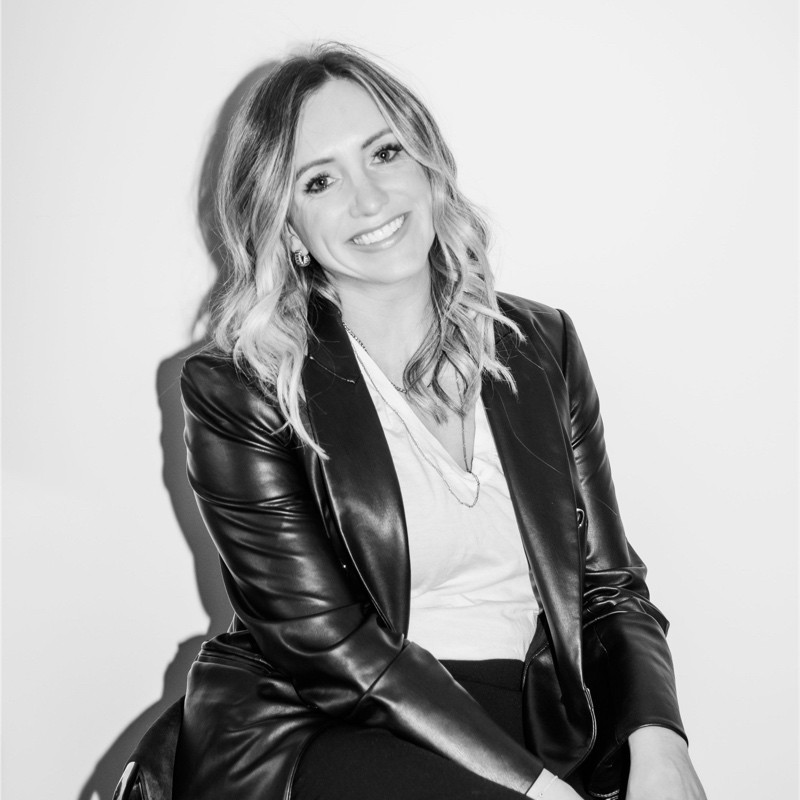 Gemma Allen