In this theCUBE + NYSE Wired: Mixture of Experts segment, theCUBE’s Dave Vellante sits down with Jim McNiel, Chief Growth Officer at TAE Technologies, to demystify fusion vs. fission and explore how proton–boron fusion could reshape energy economics for enterprise and Wall Street alike. McNiel explains why TAE targets abundant, low-cost boron fuel and how its approach avoids long-lived radioactive waste, requires only light shielding and eliminates meltdown risk. He breaks down siting and regulation – fusion treated more like medical isotopes than fission – and outlines first-gen levelized energy costs in the 7–9¢ range with a path to sub-5¢ as the technology matures. The conversation ties these fundamentals to market dynamics: dispatchable, carbon-free baseload power for data centers, safer urban siting and a financing narrative that aligns with investor expectations and hyperscaler demand.
Listeners also get a clear milestone roadmap: Copernicus (commissioned to operate in 2028) targeting net energy out; Da Vinci as a 50-MW commercial prototype; and TAE Fusion 1 designed for 350 MW—scalable units that could colocate with gigawatt-scale AI facilities. McNiel details how AI already governs plasma stability via TAE’s “Optometrist Algorithm” developed with Google and notes strategic investors (e.g., Chevron, Sumitomo) plus near-term revenue from TAE Power Solutions and TAE Life Sciences. The discussion frames emerging trends in enterprise strategy – from energy as a core input to AI-driven productivity gains – and why the go-to-market has shifted from utility-first to hyperscaler-led demand for dispatchable, clean power.
Forgot Password
Almost there!
We just sent you a verification email. Please verify your account to gain access to
theCUBE + NYSE Wired: Mixture of Experts Series. If you don’t think you received an email check your
spam folder.
Sign in to theCUBE + NYSE Wired: Mixture of Experts Series.
In order to sign in, enter the email address you used to registered for the event. Once completed, you will receive an email with a verification link. Open this link to automatically sign into the site.
Register For theCUBE + NYSE Wired: Mixture of Experts Series
Please fill out the information below. You will recieve an email with a verification link confirming your registration. Click the link to automatically sign into the site.
You’re almost there!
We just sent you a verification email. Please click the verification button in the email. Once your email address is verified, you will have full access to all event content for theCUBE + NYSE Wired: Mixture of Experts Series.
I want my badge and interests to be visible to all attendees.
Checking this box will display your presense on the attendees list, view your profile and allow other attendees to contact you via 1-1 chat. Read the Privacy Policy. At any time, you can choose to disable this preference.
Select your Interests!
add
Upload your photo
Uploading..
OR
Connect via Twitter
Connect via Linkedin
EDIT PASSWORD
Share
Forgot Password
Almost there!
We just sent you a verification email. Please verify your account to gain access to
theCUBE + NYSE Wired: Mixture of Experts Series. If you don’t think you received an email check your
spam folder.
Sign in to theCUBE + NYSE Wired: Mixture of Experts Series.
In order to sign in, enter the email address you used to registered for the event. Once completed, you will receive an email with a verification link. Open this link to automatically sign into the site.
Sign in to gain access to theCUBE + NYSE Wired: Mixture of Experts Series
Please sign in with LinkedIn to continue to theCUBE + NYSE Wired: Mixture of Experts Series. Signing in with LinkedIn ensures a professional environment.
Are you sure you want to remove access rights for this user?
Details
Manage Access
email address
Community Invitation
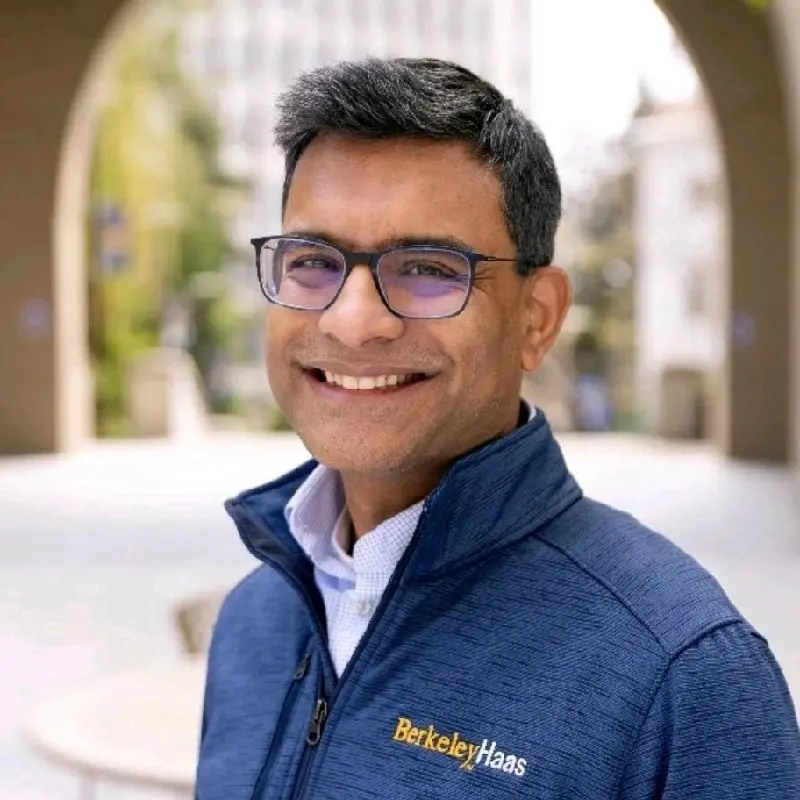
Saikat Chaudhuri, UC Berkeley
In this theCUBE + NYSE Wired: Mixture of Experts segment, theCUBE’s Dave Vellante sits down with Jim McNiel, Chief Growth Officer at TAE Technologies, to demystify fusion vs. fission and explore how proton–boron fusion could reshape energy economics for enterprise and Wall Street alike. McNiel explains why TAE targets abundant, low-cost boron fuel and how its approach avoids long-lived radioactive waste, requires only light shielding and eliminates meltdown risk. He breaks down siting and regulation – fusion treated more like medical isotopes than fission – and outlines first-gen levelized energy costs in the 7–9¢ range with a path to sub-5¢ as the technology matures. The conversation ties these fundamentals to market dynamics: dispatchable, carbon-free baseload power for data centers, safer urban siting and a financing narrative that aligns with investor expectations and hyperscaler demand.
Listeners also get a clear milestone roadmap: Copernicus (commissioned to operate in 2028) targeting net energy out; Da Vinci as a 50-MW commercial prototype; and TAE Fusion 1 designed for 350 MW—scalable units that could colocate with gigawatt-scale AI facilities. McNiel details how AI already governs plasma stability via TAE’s “Optometrist Algorithm” developed with Google and notes strategic investors (e.g., Chevron, Sumitomo) plus near-term revenue from TAE Power Solutions and TAE Life Sciences. The discussion frames emerging trends in enterprise strategy – from energy as a core input to AI-driven productivity gains – and why the go-to-market has shifted from utility-first to hyperscaler-led demand for dispatchable, clean power.
Innovation, Strategy and Engineering ProfessorUC Berkeley
In this interview from theCUBE + NYSE Wired: Mixture of Experts series, Saikat Chaudhuri, faculty director of management, entrepreneurship and technology program at UC Berkeley, joins theCUBE's John Furrier to discuss how AI is reshaping entrepreneurship, education and the role of the human workforce. Chaudhuri draws parallels to the internet era, arguing that while job displacement grabs headlines, the far bigger story is the explosion of new opportunities across healthcare, finance, climate and beyond. He highlights Berkeley's "question the status quo" cult...Read more
exploreKeep Exploring
How will advances in AI and related technologies affect jobs, entrepreneurship, and education, and how should people respond or prepare?add
How does the Haas School of Business (UC Berkeley) foster a "question the status quo" culture and respond to technological change like AI, including concerns about job loss and the benefits it can bring?add
Is the curriculum cross-disciplinary, and how do you structure it (including use of AI) to prepare students for interdisciplinary work and to adapt project scope/timelines?add
How should students and entrepreneurs adapt to AI-driven change and democratized technology — what is the “old way” versus the “new way” in education and entrepreneurship, and how should they approach learning, skills development, opportunity recognition, and execution?add
>> Welcome back. I'm John Furrier, host of theCUBE. We're here at our New York Stock Exchange CUBE Studio. Of course, we have our Palo Alto Studio connecting Silicon Valley and Wall Street. The technology is the market. Doing our part here as part of the NYSE Wired program. It's a CUBE original and an open network of collaboration of leaders. We've got a great guest here who's going to contribute to the community, Saikat Chaudhuri. He's the Faculty Director of Management, Entrepreneurship, and the technology program and the entrepreneurial Hub at UC, Berkeley, known as Cal in the Bay Area, anywhere else as UC, Berkeley. Saikat, great to have you on theCUBE here at our NYSE Wired studio of theCUBE.
Saikat Chaudhuri
>> It's awesome to be here. Thanks for having me, John.
John Furrier
>> So we have obviously a studio in Palo Alto, been on part of the entrepreneurial scene in the Valley for 25 years. Seen the movie many times, money cycles of innovation, but you're at Cal. It really is one of the hotbeds right now. It's the track record coming out of there from the tech side is off the charts. Perplexity, Databricks, AnyScale, many more. Their data program, their labs, entrepreneurship is smoking hot. You have the convergence of technology, not just in the classic, get some VC funding and go. There's a rapid acceleration in all aspects of this market. So I have to first ask you, as faculty and the technology program in the Hub, what are you seeing? What's the big change right now in the accelerated technology business, opportunity recognition, entrepreneurship?
Saikat Chaudhuri
>> Well, first of all, John, let me give you some credit because a lot of what Cal's done. And not everybody knows we're not as good at marketing ourselves, but Perplexity, OpenAI, those are ours. But like you say, they're exciting times right now. Mean entrepreneurship is changing. Education's changing at the moment. I think the biggest shift right now that we see is people are confused about where the world is headed and they're looking for some guidance. I mean, for me, it's about thinking about, "Well, what do we do during the internet?" And which some of us can experience and I can relate to because we experienced it. So I think about it as, yes, there's some things going away, but all kinds of new opportunities being created. So I look at it as we have to embrace uncertainty. I can't tell you what that is all about, but the future will hold lots of new jobs. That's what happened last time. We decimated perhaps brick and mortar, but many more jobs were created.
John Furrier
>> Well, my bias on Cal, obviously I live in Palo Alto where Stanford is. My daughter went to Cal, so I'm a Bear father. But I will say that-
Saikat Chaudhuri
>> Good choice.
John Furrier
>> Go, Bears.
Saikat Chaudhuri
>> Go, bears.
John Furrier
>> I would say also if you go back in the history books, Bill Joy was an admin in the computer science department, became the co-founder of Sun Microsystems. Berkeley was part of the computer revolution. UCLA, Berkeley, schools like Northeastern, Carnegie Mellon, even throw MIT in there. They weren't really part of the computer revolution as much as Berkeley. Unix comes out of there, Linux is formed after. I mean, Berkeley's heritage of being kind of revolutionaries that brings that protest vibe has really changed the culture and it's kind of a rebel market right now with AI.
Saikat Chaudhuri
>> Very much so. Right.
John Furrier
>> What's your thoughts on this? Do you agree? I mean obviously I think that's accurate with Bill Joy, but the rebel culture with AI is like go fast, smaller teams, not bigger teams, smaller funding, go faster, take territory.
Saikat Chaudhuri
>> For sure. Look, I'll throw in Intel and Apple were also part of Berkeley co-founding. But you're right, our motto is question the status quo. Our chancellor, Rich Lyons really coined that as part of its culture revolution back at Haas. Everything is changing right now. I completely agree with you. The rebel culture is very much alive because we're rethinking every single sector, right? Earlier in information technology, it was all about computer, computer-related stuff. Today, we're going to redo how finance works, how healthcare works, how the environment works, how we tackle climate change, how we do pharma. All of these things, transportation, sustainability, all of these areas are really difficult nuggets to crack. Unless you take a revolutionary new approach and you just question everything, you're never going to get there. And it is very much part of our culture. AI is questioning everything because all of a sudden it's pushing our limits of imagination also. I mean, people have all these thoughts around the fantastical side. Will machines take over the world and thinking about all these movies like The Matrix and stuff like that. And so I think that is really what's exciting here. So we have to have that approach rethink the world. The only thing I will say is there's a lot of negativity because we hear about the job losses. There's not enough talk about all the cool new products and services it'll enable and how it's going to enable you to lower the cost of healthcare or everybody to be part of a financial system. Those are the things which are exciting to me.
John Furrier
>> And what is your view on the job thing? Because a lot of people are looking at what I call current situation, not understand that there's another system order effect of productivity. I remember back when we started theCUBE 17 years ago, big data was hot, Hadoop was hot. Michael Olson, a grad from Cal started a database company, then Cloudera with Amr Awadallah. Everyone's like, "Oh, this is going to kill jobs." All it did was made analytics better. And even before then, ATMs from banks were supposed to kill the bank tellers. I think there's more banks tellers now than ever before. So you don't always know. So what is your opinion on the whole framing of how think about productivity, the role of the human? Obviously that changes curriculum, problem solving, directing, orchestrating becomes kind of the concepts that we're seeing. What's your thoughts on this? How do you frame the people opportunity?
Saikat Chaudhuri
>> I'm much more optimistic than others are because while we can easily envision what will go away, it's much harder for people to think about all the things that will come. The internet created way more jobs than it actually killed through brick and mortar and the decimation thereof. The same thing will happen now. So if you think about that, where will the human be valuable? Obviously some areas, like coding, which are well-defined and they were even before this, they will see an increase in productivity by you basically saying, "Okay, I have two people instead of 10 and I use an AI tool." But in other areas, the judgment, the consciousness, thinking about prioritization, that becomes important. This is a tool. AI is a tool. It's not some sort of magic. So think about the insurance company. An insurance CEO came to me and said, "What am I going to do with all my actuaries?" And I'm like, "Yeah, what do you mean?" He is like, well, they do risk assessment. The computer can do that." I'm like, "Yeah, but today you have a very boring product. You have three options for me. Tomorrow I want to call you and say, 'I want to go to Lake Tahoe this weekend, from Friday to Sunday. Give me an insurance that covers my health. Give me an insurance that covers my rental car, my lodging, and anything else that can-
John Furrier
>> By the way, you need avalanche insurance now.
Saikat Chaudhuri
>> Yeah, that's right.
John Furrier
>> This inside joke for the Bay Area that got pounded. That brings up a good point of the value proposition. How do you as a faculty member in the technology program and looking at the Hub, which is the action and the tactics, how does that change skill sets? Because now you're thinking, "Okay, if the human is driving the AI as a tool or using it like a car, Ferrari, whatever, they're going to be directing." So you could see someone who's naturally a systems thinker, who's not a computer science major, could architecturally patch an app together without even knowing an ounce of code.
Saikat Chaudhuri
>> Totally agree.
John Furrier
>> This is where domain expertise... So how do you look at that curriculum? Is it cross discipline? How you guys think-
Saikat Chaudhuri
>> We do. I think we were a little ahead of the curve. Berkeley's MET program is basically about a dual degree. So 50 to 60 of our students each year get to do two degrees. One in any engineering they choose and one in business. Why? Because interdisciplinary is the name of the game. You got to be cross-functional in order to solve the biggest problems today, whether it's the climate side or anything else. So we train them that way, but we embrace AI. What we say is that assume it's there. So I give them a project that normally would've taken six months to do and now they get two months to do it. So the assumption is use it as a productivity tool. You have no choice.
John Furrier
>> So you met them where they were and said, "Okay, let's just change the scope of the assignments."
Saikat Chaudhuri
>> Yeah.
John Furrier
>> Okay. I mean, six months is like a thesis. It's like a major project.
Saikat Chaudhuri
>> That's right.
John Furrier
>> Okay. Use tools, make it go faster. Because that's what's actually happening.
Saikat Chaudhuri
>> That's the acceleration that you were talking about, right? And that's just the tip of the iceberg. You're talking about systems thinking. I tell people computer science is still a great field. It's just don't do the pure coding part. Don't expect the software engineering role. Think about the math part. Think about the prom and the definition of the problem part. Think about prioritizing and the algorithm and how it makes judgments and decisions. That's the holy grail.
John Furrier
>> Actually Berkeley has a root DNA and OS's systems. I want to talk about that because being a student of history in Silicon Valley and tech for 25 years in Silicon Valley, 35 in tech, you always had these waves, open interconnect, open internet. Then you had web 2.0, then you had mobile, and each one had their own flavor. Agile, designed first. What is the school of thought in terms of the vibe? Because I call it systems thinking, but I think that is the error, I'm not sure it's the right name, but agile, mean, iterate, push bad code, make it go faster. No craft, just iterate, get functionality, design first. But agile now systems. Is this a generational shift? Is that the right way to think about systems thinking? Because I mean, I don't even know how to write code, but if I'm thinking as a system, how do you guys look at that new? Do you agree and what would it be called?
Saikat Chaudhuri
>> Yeah, I think every technological revolution brings with it a new paradigm and a new mindset that has to come with it. I think you've formulated it really well. For me, I think systems is part of it. I think that systems thinking and the pieces is really important. The other piece for me is just being able to have a vision around what the impact could be and to dream big. We're able to dream big right now. I think that AI can't quite do all the fantastical things that we imagine it does already, but at the same time, it has the potential. For instance, I was not able to develop drugs. If I'm Pfizer, it took me 10 years and maybe I'd get a blockbuster out of it. Now, probably a few years, we'll be able to simulate a bunch of stuff and do compounds. So I think the holistic thinking, I think more than that, it's blending your left and your right brain. That's going to be the thinking. It's qualitative and quantitative analytical prowess and being able to experience and think about that side and the design as well as the technical solution.
John Furrier
>> Saikat, it's great to have you on this because there's so many threads. There's an educational thread, there's a practical entrepreneur thread. There's a technology transformation thread. You don't need to be an expert to do something impactful, whether it's philanthropy or for profit. But I want to ask you, because I think this is the big question. If you look at the job market now, the so-called young people who are getting cut by AI. If you look at the people coming out of college, you go back, the first generation of COVID students, they drop into a workforce almost on old DNA academic education. You guys got out front with the interdisciplinary. So the new product coming out of university looks different the way you're describing it. Yet the people that's 23 to 25 right now are like, "Wait a minute. I went to XYZ school. I have pedigree. I learned about political science. Where's my job?" Or whatever their major was. So even seeing computer science majors even be like, "Well, we don't really do it that way."
So every discipline is kind of the old way, new way. Describe to the students out there when they come out, what does that old way, new way? What changes so we don't have this, "I learned a lot of stuff, now AI's changed all that"? How would you talk about that?
Saikat Chaudhuri
>> I would look at it in a couple of ways. One is things get obsolete very fast. What you learn in college is not really a particular language or a particular approach. It's how to think. Critical thinking is the most important part. So I tell people, I tell students these days all the time, "Keep learning." For me, the vision of education to your larger point is not something static. We should be doing on-demand learning. I should offer you a degree where you get to keep on learning, not just periodically, episodically go back for an exec ed program, but where you get to do modules and get pieces as you need them. That would be my fantasy when it comes to a future vision of education, not just... You need some basics, a few years, and then we send you out there and you get the rest as you need it.
John Furrier
>> On entrepreneurship, that's changed a lot. Back in the day, they even called the rounds different, pre-seed, seed super seed, Series A. Series A used to be the big financing. So the role of founders are also involved. So you're starting to see an abstraction on a social networking basis of influence and funding. Startups don't need to take that big funding check, the role of the founder, other founders. So I think a whole ecosystem is changing over. Your thoughts on the entrepreneurial equation as technology becomes democratized for any entrepreneur?
Saikat Chaudhuri
>> I think it's a great thing because we can do innovation and entrepreneurship much faster, much better than we ever could. We run many more experiments than we ever run before. It's all a probability game. So what happens now is you can essentially outsource many of your tasks, whether it's to another human or to AI. You get to put it together much faster. You get to try things much more quickly, and that's exciting. I totally agree with you, the way funding works has to change in some ways as well. Those classic rounds don't make as much sense. But the good thing is you can bootstrap a lot more. So an individual can say, "You know what? I don't need to go get money and dilute my equity. What I can do is I can try these things myself." That's one big piece. I think in the education side, what I'd love to see is more modularized content as a result. Rather than the classic, you need three months to develop a business plan, how about I give you the piece that you need, the IP piece or the marketing piece or something else? That's the kind of thing that I want to work on.
John Furrier
>> That kind of personalization and that's facilitated by learning online. We've seen the stats there. Entrepreneurship's interesting. My view being an entrepreneur over the past 25 years is opportunity recognition to execution and capture was a time series. Idea to capture or beachhead, whatever you want to call it, that was a duration. Now that's accelerated this way. AI's making it faster. You mentioned that you changed the assignments from six months to 72 hours or a week. Okay. How does this opportunity capture piece? Because now is it more opportunity recognition? You mentioned earlier, get some ideas. What's your vision? So talk about this window of I see an opportunity because that's what they're great at, but the capture piece is where it could be accelerated.
Saikat Chaudhuri
>> You hit the nail on the head, which is basically that the execution piece is key. People have lots of ideas. You got to jump into it. My view on opportunity recognition is if you see something that seems halfway sensible, just try it out. Producing a prototype has become so much easier nowadays. Jump in and see. The cost of experimentation is really low. The risk is really low for your career. In fact, it'll probably augment it. So you go and jump and do it faster. The other piece though is you can do a lot more research much faster. So in terms of understanding the market, maybe we don't need as many customer discovery interviews anymore because we can do a lot of that and get that done much more quickly by AI.
John Furrier
>> All the old mechanisms change. Let's get some references. Well, let's just put it out there and just let people use it.
Saikat Chaudhuri
>> Absolutely.
John Furrier
>> All right. What's the biggest goal you're working on now? Share some of the things you're working on for the folks watching at UC, Berkeley, what's going on?
Saikat Chaudhuri
>> Various things. I mean, one is we want to, at UC, Berkeley, keep building the institution. We want to accelerate what we're doing in terms of entrepreneurship. That e-hub that you mentioned, the entrepreneurship hub, the goal is to actually increase the pipeline. We see that the biggest challenge is not having enough entrepreneurial resources. We have a lot of them. It's to help personalize pathways to be created for individual entrepreneurs, for people who may not know how to go through the system. So that's one piece we're working on. The second is, just on the technology side, more applications. We've done enough models and underlying technology, get the applications.
John Furrier
>> And you have alumni too. I noticed there's a lot of alumni. Pete's on scene, the alumni with us, he's got a lot of ventures. He does a lot of investing in Berkeley, so there's a lot of sharing. Ben Horowitz and Pete team up all the time at a16z and Loud Ventures. There's an ecosystem in Berkeley. I mean, "Go, Bears," is kind of dog whistle, bear whistle, whatever you want to call it amongst Cal grads. Talk about that ecosystem and how that's changed. Now you have advisor mentorship funding sources that could be almost risk-free-
Saikat Chaudhuri
>> Absolutely.
John Furrier
>> ... given the success of funders out there that are alumni.
Saikat Chaudhuri
>> Yeah, absolutely. The irony has always been that because we're on the other side of the Bay Bridge, it's been hard to connect sometimes with Silicon Valley, and even our own alums tend to go to another university in the South Bay first, but we're changing that equation.
John Furrier
>> You've got a lot of students here. There's a little network developing in New York.
Saikat Chaudhuri
>> We do, we do. I think tying that network together is maybe the biggest piece that we're working on right now. The university is large and broad as a public university as well, and we're working on that very actively.
John Furrier
>> Like I said to Ali Ghodsi, who came in, he's been a CUBE alumni since the beginning. We've been following Databricks since they were small, very small, handful of people, and I told him we're bringing technology from Silicon Valley, Bay Area to New York. He says, "I love it. Keep it going." Been great to have you. We're going to certainly connect those hubs with theCUBE and our NYC Wired program. Saikat, thanks for coming. I'd love to talk more about how you see some of the action because on the front lines with the talent, with the entrepreneurs, with the thinkers creating the future.
Saikat Chaudhuri
>> Thank you so much. It's been such a pleasure.
John Furrier
>> Appreciate it. I'm John Furrier with theCUBE. Part of our mixture of expert series, again in New York Stock Exchange Studio. Our NYC Wired program is CUBE Original, connecting the capital markets and technology, and we're doing our part to bring it there. Everything is accelerated, entrepreneurship, innovation. Time to capture is shrinking, so opportunity recognition, capture, big part of it. Of course, the infrastructure is booming. AI native apps are coming on in spades. Thanks for watching.











































 John Furrier