This discussion explores how artificial intelligence, AI, agents transform research-to-trade workflows in capital markets. Pulkit Jaiswal of AgentSmyth, chief executive officer, discusses how agents convert research into actionable trades while maintaining human oversight. Jaiswal explains that their agents generate opinionated trade ideas with confidence scores yet require human approval, shortening idea-to-trade time from hours to seconds and improving measurable profit and loss outcomes.
The conversation on theCUBE and NYSE Wired covers agent architectures, integration with legacy data sources such as Bloomberg and low-latency number crunching and on-prem deployment requirements for large financial institutions. The segment addresses enterprise deployment, compliance considerations and the operational factors to consider when adopting AI agents in a regulated trading environment.
Key takeaways emphasize that AgentSmyth functions as a companion to existing trading platforms rather than a direct replacement. Jaiswal highlights the company’s moat as compliance-first, on-prem deployments for banks and frames the product as an AI harness and infrastructure focused on actionable research-to-trade execution and measurable financial outcomes.
Forgot Password
Almost there!
We just sent you a verification email. Please verify your account to gain access to
theCUBE + NYSE Wired: Mixture of Experts Series. If you don’t think you received an email check your
spam folder.
Sign in to theCUBE + NYSE Wired: Mixture of Experts Series.
In order to sign in, enter the email address you used to registered for the event. Once completed, you will receive an email with a verification link. Open this link to automatically sign into the site.
Register For theCUBE + NYSE Wired: Mixture of Experts Series
Please fill out the information below. You will recieve an email with a verification link confirming your registration. Click the link to automatically sign into the site.
You’re almost there!
We just sent you a verification email. Please click the verification button in the email. Once your email address is verified, you will have full access to all event content for theCUBE + NYSE Wired: Mixture of Experts Series.
I want my badge and interests to be visible to all attendees.
Checking this box will display your presense on the attendees list, view your profile and allow other attendees to contact you via 1-1 chat. Read the Privacy Policy. At any time, you can choose to disable this preference.
Select your Interests!
add
Upload your photo
Uploading..
OR
Connect via Twitter
Connect via Linkedin
EDIT PASSWORD
Share
Forgot Password
Almost there!
We just sent you a verification email. Please verify your account to gain access to
theCUBE + NYSE Wired: Mixture of Experts Series. If you don’t think you received an email check your
spam folder.
Sign in to theCUBE + NYSE Wired: Mixture of Experts Series.
In order to sign in, enter the email address you used to registered for the event. Once completed, you will receive an email with a verification link. Open this link to automatically sign into the site.
Sign in to gain access to theCUBE + NYSE Wired: Mixture of Experts Series
Please sign in with LinkedIn to continue to theCUBE + NYSE Wired: Mixture of Experts Series. Signing in with LinkedIn ensures a professional environment.
Are you sure you want to remove access rights for this user?
Details
Manage Access
email address
Community Invitation
Pulkit Jaiswal, AgentSmyth
This discussion explores how artificial intelligence, AI, agents transform research-to-trade workflows in capital markets. Pulkit Jaiswal of AgentSmyth, chief executive officer, discusses how agents convert research into actionable trades while maintaining human oversight. Jaiswal explains that their agents generate opinionated trade ideas with confidence scores yet require human approval, shortening idea-to-trade time from hours to seconds and improving measurable profit and loss outcomes.
The conversation on theCUBE and NYSE Wired covers agent architectures, integration with legacy data sources such as Bloomberg and low-latency number crunching and on-prem deployment requirements for large financial institutions. The segment addresses enterprise deployment, compliance considerations and the operational factors to consider when adopting AI agents in a regulated trading environment.
Key takeaways emphasize that AgentSmyth functions as a companion to existing trading platforms rather than a direct replacement. Jaiswal highlights the company’s moat as compliance-first, on-prem deployments for banks and frames the product as an AI harness and infrastructure focused on actionable research-to-trade execution and measurable financial outcomes.
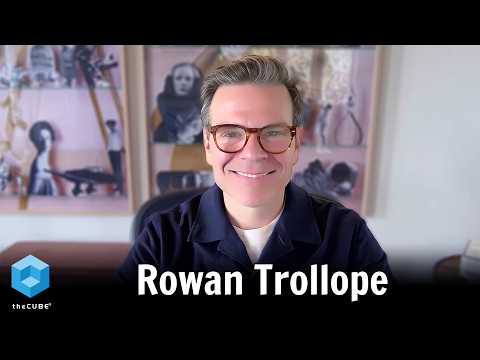
In this interview from theCUBE + NYSE Wired: Mixture of Experts Series, Pulkit Jaiswal, chief executive officer of AgentSmyth, joins theCUBE + NYSE Wired's Gemma Allen to discuss how AI agents are compressing the journey from market research to executable trades. Jaiswal details AgentSmyth's recent partnership with BNY Mellon, a 250-year-old institution, which fully automated workflows spanning macro, quant, earnings, FX and fixed income. He positions the company as a companion to Bloomberg rather than a replacement, using low-latency AI agents to answer the ...Read more
exploreKeep Exploring
What motivated you to start this company, and what does the company do?add
Can your AI trading agents autonomously execute trades and allocate capital, or do they only generate trade recommendations that require human approval?add
Why did you exit your previous company before founding AgentSmyth?add
How does the company define its product and business model, how is it priced, and how are compliance and data-security concerns handled for institutional/financial customers?add
>> theCUBE Studios, Silicon Valley and Wall Street.
Pulkit Jaiswal
>> I'm John Furrier, co-hosting here with Dave Vellante, my co-host.
Gemma Allen
>> Welcome back to theCUBE Studio here at the New York Stock Exchange. I'm Gemma Allen with NYSE Wired's Mixture of Experts. And joining me today for a conversation on the intersection of AI, and capital markets right here on Wall Street is Pulkit Jaiswal, CEO of AgentSmyth. Welcome, Pulkit.
Pulkit Jaiswal
>> Thanks for having me, Gemma.
Gemma Allen
>> So you are a 3-time exited founder. This isn't your first rodeo, some might say. You also have just signed a very interesting deal. A young AI company signs one of the oldest and most iconic banks in the world, BNY Mellon. Talk me through exactly what AgentSmyth is and what BNY saw in this company.
Pulkit Jaiswal
>> Yeah, so after selling my last company, I decided to apply all of my learnings from understanding the capital markets world. And I realized that, eventually at some point in time, all of the market research about stocks and equities and options, it's going to be done by AI agents. LLMs are arguably going to do a better job of telling the story than a sell-side researcher. And for a buy-side person, all they want to do, especially folks here, They basically just want to figure out how I can take that research and turn that into a trade. And that is sort of what we focus on. And so when we partnered up with BNY Mellon, we modeled out exactly what their workflows are— macro, quant, earnings, FX, fixed income, anything that involves taking a bunch of data and turning that into some sort of an output. We fully automated that process. So we're super excited for the partnership. We're barely 18 months old. We are on an amazing journey, but signing a 250-year-old bank was a pretty big deal.
Gemma Allen
>> So, wow. Okay. So AI meets capital markets. It's hard not to think about the world of data technology and capital markets by thinking about the Bloomberg Terminal, right? A product that has long legacy, longstanding, expensive to run or expensive to own, I guess, but also perhaps ripe for some level of disruption, one might consider. Talk about, your product and how it fits into that picture. Is it replacing the analysts? Is it replacing the data, or is it pulling data from Bloomberg to make more informed decisions? bring that to life a bit.
Pulkit Jaiswal
>> Sure. I'm a huge fan of Bloomberg, by the way. I have a tremendous amount of respect for Michael Bloomberg. I think they sort of have a monopoly in the space for the last 40-plus years. And there's a reason why nobody has been able to replace them, even though there are a lot of young upstarts who claim that they can replace Bloomberg. And the reason, again, is Bloomberg has incredible data and they have the best fidelity of data, super low latency. We're not trying to replace that. We are trying to work with customers who already have like petabytes of data, like large banks, their own internal research notes, their models, their portfolios, their watchlists or trade lists. And essentially the tab safari that happens on Bloomberg where something crazy happens, the president tweets something or there's a CPI data drop and all of a sudden everybody's scurrying for answers. The most common thing we see is why is NVIDIA down today? Or why is NVIDIA up today? Nobody has clear answers, not on Bloomberg, but we have the answers because we can do all of that number crunching in super low latency and give the customers the answer in precisely the manner they want to read it. And so again, not a replacement for Bloomberg, although you never know.
Gemma Allen
>> Love it. So is this fundamentally a research output or is it also actually a system which takes action, which makes suggestions? For example, will this give advice on whether or not it's a good idea to buy Tesla today or is it fundamentally just aggregating data at a scale that's never been possible before?
Pulkit Jaiswal
>> So, great question. We built these agents who actually pretend— we have them pretend to be actual traders on our trading floor. And traders are extremely opinionated, and opinions are highly subjective in nature. So yes, we do put out opinions that are extremely polarizing sometimes. the agents have a confidence score, but ultimately it requires a human being to act on those insights. For example, we can produce a trade ticket with let's say we're buying a call option on a certain stock with a certain expiration date, and we're going to allocate X% of the portfolio. Somebody still needs to approve it. But the process of going from the idea, a bunch of loose words, to an actual trade with an opinion has now been shortened to 30 seconds. It used to take 7 to 8 hours, even at the largest banks in the world. So that's the future I'm excited for. I am not ready for a future where agents can just allocate capital and just trade because that would just blow up accounts and we want to be a little bit careful. So to answer your question, yes, we do produce opinions and obviously somebody has a finger on the trigger.
Gemma Allen
>> WowOkay. So let's talk about the role of context because when we think about analysts and hedge fund managers and portfolio managers, they are high knowledge workers, right? There is, bar maybe doctors and lawyers. it's as high knowledge as you can get and it's all built on context that's built up over a very long time. How do you see this tool either supporting them with scale, or does it, in some respects maybe replace some of the work of some junior analysts? Where does it fit into their P&L?
Pulkit Jaiswal
>> Sure. Again, the whole idea of that AI is going to be a replacement, that idea was overblown. And we've seen that it literally had zero impact on jobs, net-net, over a period of time. Obviously, certain roles are bound to get replaced. Anything that requires basic number crunching, producing a model. A lot of people used to take pride in making Excel models until 4 a.m. in the morning. I think all of that's done. I think the ability to wake up early in the morning around 3:30 and 4, and all the portfolio manager is really doing is looking at Bloomberg, looking at China open, close, what's happening in Europe, and using that to write a morning macro note that goes out to everybody on Wall Street. I think that's done. Most of our customers are increasingly using our agents to do all of the above. But at a broader level, what we're seeing is a single PM on a desk with like 4 junior analysts, instead of just managing a sleeve of let's say $2 billion, they're upsizing to $20 billion. It's because now you can cover more stocks and equities and options that you previously could not. So it's more of a scaling power thing, more so than a replacement tool.
Gemma Allen
>> So my background is more tech than capital markets, right? But I've learned a lot about capital markets this last year. And one thing I know is that a lot of this data, it's not necessarily democratized, right? It's pay-to-play data. And in a world where, LLMs or harness layers like this can potentially give that at scale, there's also, I imagine, a lot of financial implications as to how you price that, how you cost that out, how you scale that in any real, large and repeatable way. How do you think about that from the perspective of, building a sustainable and financially predictable model?
Pulkit Jaiswal
>> Yeah, it's a great question. we, I— the company that I worked on previously before I started AgentSmyth, it was a perfect exit because I think over a period of time database products get commoditized. I know that I said that earlier on, we're not comparable to Bloomberg. We're actually a companion. Bloomberg, ultimately is presenting that data. But now the data layer gets commoditized because AI agents can go behind paywalls, supposedly. They can browse for you. They can take screenshots. They can turn a graph into a structured table. So over a period of time, that layer gets peeled away. And what truly matters is how quickly can you go from that data to some sort of a creative action. And now nobody really cares about dashboards even. People want to make decisions. They want to allocate capital. They want to make a trade. Most of our customers do want to make a trade. So data to data commoditization to trade generation layer is sort of where our focus
Gemma Allen
>> is.And how is the— what is the business model? Is it usage-based? Is it seat-based? Consumption-based? And how are you thinking about that as well, especially from the perspective of tokenomics? Because I imagine you have to run a lot of separate tools yourself and infrastructure layers to make this plausible and scalable, right?
Pulkit Jaiswal
>> Yeah, it's another great question. So the way we treat our, or sort of observe ourselves from an optics perspective is we are an AI harness company. So an AI harness again is what it does is it casts a net around super large state-of-the-art models like obviously OpenAI, Anthropic's models, and then a lot of smaller models, orchestrating them. Using some sort of agents and a ton of data to produce actionable insights. That harness is what we're selling to the customer. Now, how we price it is we are effectively an AI infrastructure company. So our customers pay for their own tokenomics, their own inference. We help them optimize, of course. But ultimately what they're doing is they're renting out our infrastructure so they can operate like a true hedge fund, like a Jane Street-level hedge fund on day zero.
Gemma Allen
>> Wow.
Pulkit Jaiswal
>> And so, essentially we're like an infrastructure as a service company. So, we sign multi-year agreements with most of our customers. We have signed quite a few large institutions already where compliance has to be a feature, not just a demand, because none of their data can ever leave their firewalls. So, again, the models exist. You could probably use them as a bank to generate some ideas, but ultimately the banks and the employees would not be allowed to use said models. Without proper guardrails and without some sort of ability to make sure that none of the data ever leaves. Nobody wants their trades to get out. Nobody wants their watchlists and their research notes to ever get out to OpenAI and Anthropic. We ensure that everything stays on-prem.
Gemma Allen
>> So I think you kind of answered this, but I want to push you a little bit here, right? So we talk a lot about orchestrators and harness layers on the show. We also talk a lot about the SaaSpocalypse, because as you can imagine, as we're running a tech show, we have a lot of folks on here that have, had a lot of legacy business, right? Sometimes some CFOs say, or some buyers might say, well, look, is Anthropic or ChatGPT, or even an open-weight model 5 years from now coming for this anyway, right? Is there going to be a mass convergence, one core orchestrator? What you do is quite niche, similar to other industries where I feel like knowledge and trust and context is more important than most. But how do you respond to that? What are your thoughts to the potential assumption that Anthropic could just also become your kind of hedge fund agent 3, 5 years from now?
Pulkit Jaiswal
>> The interesting thing is we talk to all of the frontier model companies regularly because we're actually one of their biggest power users. We massively consume tokens.
Gemma Allen
>> I'm sorry.
Pulkit Jaiswal
>> We built this entire company with just 10 people.
Gemma Allen
>> Wow.
Pulkit Jaiswal
>> In 18 months. Massively scalable. I think we spent a lot of money on tokens for coding. So as you can imagine, we keep in touch with these folks. Without naming specific names on which model companies, all of them have unanimously said that there's a difference between making these models work externally for some SaaS company that charges consumers money, monthly premium, and then doing it for large banks where none of these banks would ever allow them to even come in and deploy the product. And, making the models work on-prem without it ever leaving the firewalls is a completely different animal. We sort of conquered that animal. That is the only moat we have. I completely agree with the whole SaaSpocalypse narrative. I think over a period of time, people are going to get tired of clicking on one dashboard to go to another interface to look at a chart and then using that to drive some sort of a trade idea and then executing it on whatever platform they have. I think all of that's done. so anybody who's selling outcomes is going to win, and our goal is to just sell outcomes. we measure ourselves on How much of the whale-sized P&L did we move today? How much alpha did we generate? What was the net impact of the book? That is all we care about.
Gemma Allen
>> I love it. And I guess it's more like similar to Sovereign AI play, right? Because trust and ownership and owning the control plane is so core to a bank or to any other large institution. So yourself, your journey, 3-time founder, exited a company last year. What made you decide, hey, I'm going to go all in on this again? You didn't just want to go live in Miami and have a great life. Talk a little bit about your own decision to take this on and I guess chase this new venture.
Pulkit Jaiswal
>> Well, I consider myself to be a bit of a tech hippie, I would say, 5-time Burning Man guy. I think I've had a tremendous life even in spite of the fact that I built these companies. I think a great founder, and I hope I can be great someday, but ultimately I have a very high tolerance for pain and suffering. And that is the number one thing that any founder needs to have. I also don't really enjoy a lot of downtime. When I'm away in Europe, I think about how much I want to come back and build this company. So yeah, basically I took a 2-month sabbatical and without wasting any time, started AgentSmyth. 4 weeks later we got funded.
Gemma Allen
>> Wow
Pulkit Jaiswal
>> . And 9 months after that we signed Bank of New York and a few other customers.
Gemma Allen
>> A high tolerance for pain and suffering. I love that. I'm going to reuse that. So talk about the funding. Where are you guys at? What stage? Whatever you can share, you're comfortable to share. How large is the company and what's on the product roadmap? What are you guys building towards?
Pulkit Jaiswal
>> Yeah, sure. So we are basically just 10 people, raised close to about $20 million as of today. I would say post-seed heading into our Series A, backed by Thomson Reuters, FinTech Collective, the founding team of Robinhood. It's a lot of great investors, superstar angels, just a tremendous ecosystem. And I would say really in our space, it takes the first big institution that is extremely, I would say conservative to battle test you and tell you that you're awesome before everybody else even remotely wants to take a look. So the domino effect again started with, we're grateful for the partnership with BNY. And then shortly after that, the next few are what are you guys up to? We got to talk to you. And then we sign them.
Gemma Allen
>> Great. In the next kind of 6 to 12 months, what does it look like? Are you raising money? Is there anything you want to share?
Pulkit Jaiswal
>> Well, cap-wise at the moment, no comments on fundraising plans. Definitely going heavily, I would say very deep in the bank vertical. Sell side, a lot of hedge funds in the $1 to $10 billion range that don't have the resources that Jane Street has or Two Sigma has. I think signing them up and working with them, I think what I'm pretty excited for is agentic trading. Agents being able to, again, with certain guardrails, manage an entire book for a hedge fund and then actually execute trades. That is scary and also very exciting. And we have some customers who want to pilot that.
Gemma Allen
>> Well, Pulkit, we'll certainly be watching you from the sidelines. I wish you guys all the best. Look forward to having you back on the show. Maybe a year from now you can fill us in. Thanks so much for joining us.
Pulkit Jaiswal
>> Thanks, Gemma. Cheers.
Gemma Allen
>> I'm Gemma Allen here at the New York Stock Exchange with theCUBE's NYSE Wired, mixture of experts. Thanks so much for watching.














































 Gemma Allen