Alex Gallego & Tyler Akidau, Redpanda | theCUBE + NYSE Wired: Mixture of Experts - Redpanda Series
Forgot Password
Almost there!
We just sent you a verification email. Please verify your account to gain access to
theCUBE + NYSE Wired: Mixture of Experts Series. If you don’t think you received an email check your
spam folder.
Sign in to theCUBE + NYSE Wired: Mixture of Experts Series.
In order to sign in, enter the email address you used to registered for the event. Once completed, you will receive an email with a verification link. Open this link to automatically sign into the site.
Register For theCUBE + NYSE Wired: Mixture of Experts Series
Please fill out the information below. You will recieve an email with a verification link confirming your registration. Click the link to automatically sign into the site.
You’re almost there!
We just sent you a verification email. Please click the verification button in the email. Once your email address is verified, you will have full access to all event content for theCUBE + NYSE Wired: Mixture of Experts Series.
I want my badge and interests to be visible to all attendees.
Checking this box will display your presense on the attendees list, view your profile and allow other attendees to contact you via 1-1 chat. Read the Privacy Policy. At any time, you can choose to disable this preference.
Select your Interests!
add
Upload your photo
Uploading..
OR
Connect via Twitter
Connect via Linkedin
EDIT PASSWORD
Share
Forgot Password
Almost there!
We just sent you a verification email. Please verify your account to gain access to
theCUBE + NYSE Wired: Mixture of Experts Series. If you don’t think you received an email check your
spam folder.
Sign in to theCUBE + NYSE Wired: Mixture of Experts Series.
In order to sign in, enter the email address you used to registered for the event. Once completed, you will receive an email with a verification link. Open this link to automatically sign into the site.
Sign in to gain access to theCUBE + NYSE Wired: Mixture of Experts Series
Please sign in with LinkedIn to continue to theCUBE + NYSE Wired: Mixture of Experts Series. Signing in with LinkedIn ensures a professional environment.
Are you sure you want to remove access rights for this user?
Details
Manage Access
email address
Community Invitation
Alex Gallego & Tyler Akidau, Redpanda
In this interview from the theCUBE + NYSE Wired: Mixture of Experts series, James White, CTO at CalypsoAI, joins theCUBE’s John Furrier to unpack CalypsoAI’s newly launched Security Index – the first comprehensive safety ranking of major generative AI models. White explains how the weekly updated leaderboard and the CASI (CalypsoAI Security Index) score enable apples-to-apples comparisons that blend quality and security, helping enterprises move beyond POC purgatory and toward ROI. The discussion connects model selection and risk posture to enterprise strategy at the intersection of tech and finance – where governance, vendor constraints and performance/latency considerations shape deployment choices at scale.
White details CalypsoAI’s Red-Team product and three attack lenses: signature attacks, operational attacks (e.g., overwhelming outputs that mimic denial-of-service) and “agentic warfare,” which uses autonomous agents to probe for jailbreaks and prompt-injection gaps. He breaks down CASI’s inputs across severity, complexity, decay of older tactics (like DAN variants) and defensive breaking points, alongside an average performance column so teams can weigh capability vs. security. Highlights include Anthropic models leading the safety pack (with Microsoft among the leaders), Claude 3.5 scoring 96.25, Claude 3.7 trending into the #2 slot with different security trade-offs, DeepSeek-R1 landing mid-table and GPT-3.5 Turbo dropping from the top 12. White also previews a human-in-the-loop Purple-Team approach, and shares guidance for continuous testing in CI/CD, model family choices across cloud stacks and real-world implications for POCs, benchmarks and production hardening.
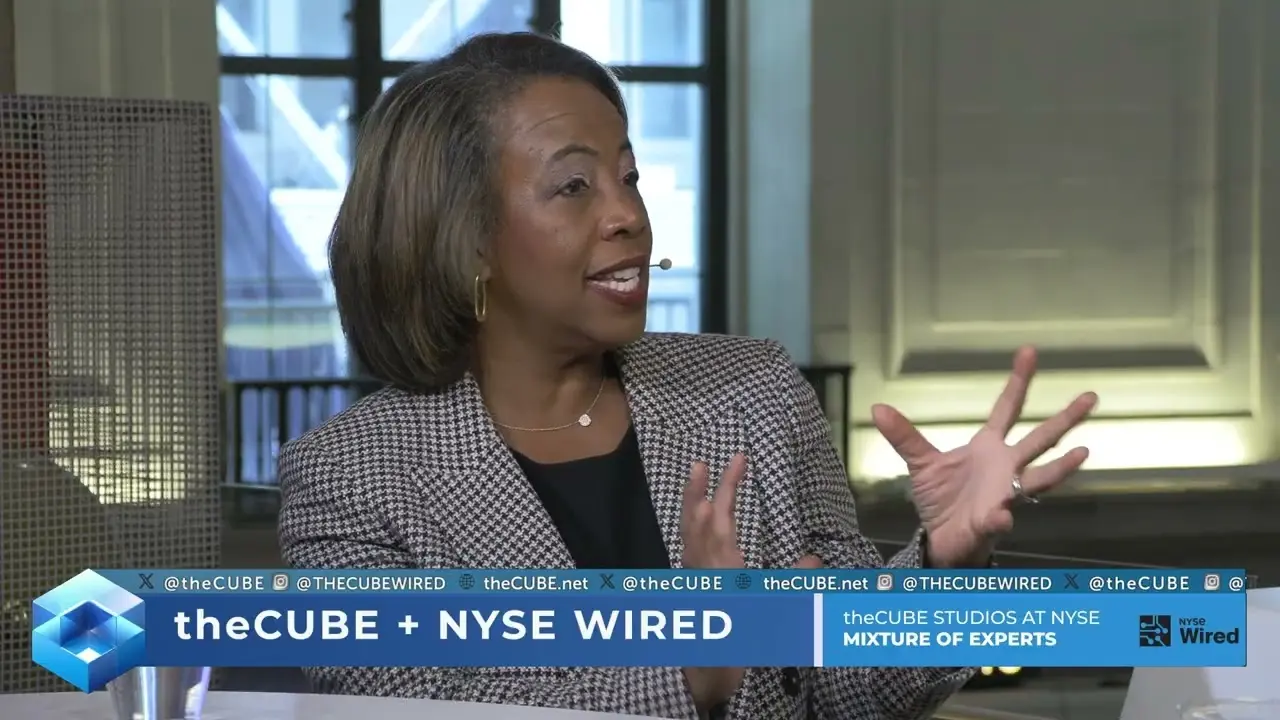
>> Welcome back to theCUBE here at... live at the New York Stock Exchange. This is our Redpanda Series with Mixture of Experts. And joining me today, connecting Silicon Valley to Wall Street, we have two experts, Alex Gallego, CEO of Redpanda, and CTO Tyler Akidau. Welcome folks.
Alex Gallego
>> Thanks for having us.
Gemma Allen
>> Thanks-
Tyler Akidau
>> Yeah.
Gemma Allen
>> ... so much for being on. So you both there just before we went live, said that you guys have known each other a long time, and finally, the stars aligned for you to work together. So tell me a little bit about the cross paths you guys have had over the years.
Alex Gallego
>> We've known each other for, gosh, 12 years now.
Tyler Akidau
>> Something like that. Yep.
Alex Gallego
>> We've been trying to work together for a long time.
Gemma Allen
>> I love it.
Alex Gallego
>> And so, finally, it was a good time for both of us to get together and try to tackle some really gnarly problems. And so, personally, I'm stoked that I get the privilege to work with some of my most talented friends at Redpanda. It's kind of a perk of building your own company is that you get to bring your most talented friends together. And so, anyways, for me it's a pleasure really and an honor to be partnering with Tyler here on this journey.
Gemma Allen
>> And Tyler, it's a very exciting time at Redpanda. We've heard some very exciting news today, but I think the journey and the trajectory has been pretty phenomenal. Tell us a little bit about what made you decide to join now and what you're most excited about at this intersection.
Tyler Akidau
>> Yeah. So I mean, as Alex said, we've known each other for a long time. I've always really respected Alex's approach to building systems. He has... We have kind of a kindred spirit towards high performance, building really stable, simple systems that just work, and kind of a passion for really digging in deep. So that was really what kind of kept me interested as we kind of talked through the years. But I also think streaming I see as a key foundation for a lot of things. And so I knew coming to Redpanda, I would have a lot of good foundation work there, and I knew Alex and I both had this passion to kind of build something bigger and go beyond streaming. And so I just knew it was it going to be a good place. And with AI having its moment right now, it just felt like the stars were aligning.
Gemma Allen
>> For sure. And I guess in terms of something bigger, it's this AI agentic data plane, right, that you guys have announced. Tell me a little bit about that from a technical perspective, Tyler. Unpack that for me, for the laymen and the non-super technical folks listening.
Tyler Akidau
>> So, at a high level, it's really about connecting agents and data and doing so in a safe way so that you can deploy this in the modern enterprise. If you think about agents today, they have these superhuman capabilities. You want to plug them directly into your private networks and data, but they're really chaotic and unpredictable. And so you can't just... you build an agent really quickly in an afternoon, but you don't want to just put it out there on your private networks because who knows what it's going to do. So the agentic data plane is really this idea of tying this all together and doing it in a safe way. And so the foundations of it for us, and why we're a good company for this, is that you need to connect all the data, which is one thing we're good at with Redpanda Connect. You need to build these interconnections between lots of systems across this technological sprawl of the modern enterprise. Redpanda Streaming is really good at that. You need to build to query this context and transform it. That's the Oxla acquisition that we announced recently is that other key piece. And you tie it all together with this governance layer that gives you observability and manageability of data accesses and things like that. And that's how you get the bigger picture that enables you to take these agents that are amazing what they can do, but kind of not super trustworthy all the time, and allow them to access your private data and really help drive your business.
Gemma Allen
>> And it seems as though a big part of this new technical strategy is built on open standards, which is quite different to Snowflake, where you came from, and others. Tell me a little bit about what that means, I guess, from an engineering perspective and also from a market reach perspective. How do you see that as a differentiator?
Tyler Akidau
>> So, open standards are super important because, again, going back to kind of the technological sprawl of the enterprise, there's no way in reality that an enterprise can focus everything on their business on one tech stack, right. You're going to have this plurality of tech stacks from acquisitions and different teams and whatnot. So in order to govern AI uniformly, you need to be able to reach all those systems, but with kind of a common access layer. And since there's so much sprawl, the only thing that enterprises can do to kind of try to attain that is align on standards. Standards at least give you this opportunity to say, "Look, we're fine going down the lake path, but we're going to use Iceberg. Or from a query perspective, we're going to use SQL. It's sort of the de facto standard."
And so for us as a company who's general pitch is, "We bring AI to all of your data, all of your systems, and we help connect them," aligning on standards is critical because that's the place where the majority of the systems are going to be, and then there's going to be a long tail of things that don't apply to the standards so you pick out the important ones. But standards are kind of the way that you reach the broadest group and the way that companies feel like they're not locked in.
Alex Gallego
>> And you do risk for, let's take the example of NSYE and Sridhar here, who's the CIO at the New York Stock Exchange.
Gemma Allen
>> Yes.
Alex Gallego
>> For him, he doesn't really want to be locked into a particular vendor. And so what a standard gives you is you really get to choose the best of breed in whatever particular domain you are. And so if we show up authentically and we happen to be the best query engine to Iceberg, then people should use us. If we happen to be the best streaming in the world, then people should use us, and we are, which is why we with the New York Stock Exchange. And same thing with connectors, right. You want to... It is a way to de-risk the execution so that if something happens or if there's a better technology or there's a new technology, but bring it in and expand the design capabilities of what the engineering team can do. And so, really open a standard. I think it's sort of this cultural shift away from the systems that came before Redpanda, of everyone always makes the joke that no one gets fired for choosing Oracle. I was like, "Yeah, well, you didn't get fired, but you spent all your money."
Gemma Allen
>> You got locked in for 40 years, right.
Alex Gallego
>> Yes.
Gemma Allen
>> Or longer.
Alex Gallego
>> Exactly.
Gemma Allen
>> No, vendor lock is definitely a big issue. So tell me a little bit about the technical roadmap for you guys are on. Obviously, you've had some acquisitions. I'm sure it's very busy. There's a lot of integration happening, well, culturally, I guess, at Redpanda and also from a technical roadmap perspective. Talk to me about the next six months, 12 months out? What are you guys really honing in on?
Alex Gallego
>> We are trying to really help enterprises mediate all agentic access to private data. And so what we'll share later tonight is really this big architectural components, I think something that we've been thinking for gosh, the last year, really deeply about.
Tyler Akidau
>> Yeah.
Gemma Allen
>> And from your perspective, when these acquisitions happen, Tyler, how do you think about the, I guess, both cultural and commercial integration with the teams? Are these... What's the kind of, I guess, approach here?
Tyler Akidau
>> Yeah, that was really important for us, actually. I think there's a lot of large-scale data processing systems out there that are not built to the same level of standards as far as performance and scalability, and those sorts of things. And so that was one of the things that really struck us with Oxla. The very first time I spoke with Adam, the founder, I just lit up with a smile on my face because of the things he was talking about of optimizing down to cache line memory accesses and things. You could just tell these were our people. And so, that combined with it being a really solid piece of technology and the kind of thing that we needed to augment our company, is what made it really the perfect fit for us.
Gemma Allen
>> And when we talk about people and culture, I think one thing we're all aware of right now is this sense of an AI height cycle and the dystopian narrative that is, I guess, prevailing AI. You say, Tyler, that you're once an AI skeptic. I guess, now you're somewhat all in. Talk to me a little bit about how you think about AI and the kind of next-gen, especially from a talent perspective and from a company growth perspective.
Tyler Akidau
>> So, for me, being an AI skeptic meant it was never skepticism that we would get there, but it was skepticism that we were there yet or that we were close enough that it was viable. And I think this year for me, it's really kind of turned around to the point where I'm like, "Okay, I see the path."
And then for us as a company, I see a really important problem that needs to be solved to make it successful in businesses that we're actually really well-positioned to help solve. And so that was kind of what made me go all in.
Gemma Allen
>> And you said, I think you wanted to make sure that streaming was boring again, right? That's your line.
Tyler Akidau
>> That has been my crusade for almost 20 years.
Gemma Allen
>> Well, tell me what that means right now. In this market we're in, we're suddenly, I mean, as a company, I guess this whole journey right from the Hadoop era to where we're at right now, which seems like in some ways generations apart from 10 years ago. What does that actually mean for you? What does next frontier of streaming look like?
Tyler Akidau
>> So what I've always wanted us to get to with streaming is you can describe streaming real easily. I just want to... I want to process events really quickly as they happen. I want to react quickly. Everybody can understand that. It's always been this thing that required a team of engineers to spend weeks or months on to get you there. And so I think what AI is enabling is we are getting to the point where anyone who knows what they want to describe can come to those systems. And if we build kind of all the infrastructure that you need necessary, they can literally just go and say, "Hey, I've got these events coming in. I want you to help me detect fraud in them. Go." And it just happens. And so that's... it's really the next step in just making it as simple as describing what you want, and it happens.
Gemma Allen
>> It's like the old additive IT, right. You only know about it if it's not working.
Tyler Akidau
>> Yep.
Gemma Allen
>> The help desk challenge. So, in terms of the partnership strategy, I know you guys have a big announcement today with Poolside. Tell me a little bit how you think about the partnership space, right. There seems as though in this world of AI right now and agentic and enterprise, there's a lot of marrying up happening, a lot of collegiality, and maybe a little bit of conflict. Talk to me about how you guys approach that.
Alex Gallego
>> To me, there's really a couple of pillars of this question. I think one, this is probably the best level playing field to compete where smaller companies with better ideas can actually out-execute incumbents and create market shift. You clearly have seen that with... Well, they're not so small now, OpenAI and Anthropic, and other kinds of once smaller companies. And so, for us, as we tend to approach this data plane idea, this agentic data plane idea, we really need a partnership with a frontier model company. And so Poolside is obsessed with the same primitives that gave rise to Redpandas BYOC. This idea of owning your own data. This idea of operating with confidentiality. They also believe that the next frontier really for this reasoning layer at the top is being able to access private data. It's like, "Okay, well, you need a thing. You need a layer that goes and fetches this data in a way that is compliant with your access controls and your policies. And that's the audit controls and fires up the right events." And so that's really the partnership is they are the reasoning layer, the frontier model. Redpanda sort of feeds that model with data that has the right access. So the agents that are supposed to access data to the right things, access the data, but at some point, you need to reason, right. The whole point of AI is that you ship it to a model. So they're the model in this architecture. And so I think it's critical for us because we're not focused on that, right. We are really very focused on the data layer. That's what we're good at. That's the DNA that you talked earlier with Adam. Those are our people, people that are obsessed with sort of cache line and cache line coherency and computing them and all that stuff. That's what Redpanda's DNA is about.
Tyler Akidau
>> Yeah. And I think the other thing I really would emphasize is that they have this big focus on the sovereignty piece.
Gemma Allen
>> Yeah.
Tyler Akidau
>> Of course, there's major players with the SaaS model services. Those are always going to be relevant, but there's so much value to businesses, and being able to keep your data in your ownership, have your AI running within your boundaries, businesses, government, all that sort of stuff. So we really see that as super key going forward too.
Alex Gallego
>> They'll-
Gemma Allen
>> The coverage of synthetic data that can bring, right, in terms of-
Alex Gallego
>> Well, I think it's more than that, and we'll have Jason join us in just a second. But I think they just launched this thesis of going from owning everything from dirt like data centers all the way up to the model. And you really kind of need that ownership to be able to deliver the right enterprise value. And so we'll have him join us and share-
Gemma Allen
>> Yeah. -
Alex Gallego
>> ... a little bit more about, "Okay. Well, what's your thesis?" But it really requires a different way of thinking. And so it requires, I think, the evolution that we talked about from data warehouses to how's this agentic data plane on the data layer? And then it requires a company that wants to own it end-to-end to deliver, I think, the right value for enterprises.
Gemma Allen
>> So, before Jason joins us, so Tyler, for the next kind of six to 12 months out, what are you most excited about? What's on your kind of technology roadmap for you and the team?
Tyler Akidau
>> I think we have an amazing roadmap. And so just delivering all these pieces that we've talked about of the data connectivity, the messaging aspects, the querying aspects, all wrapped up in this governance layer, and really seeing it in people's hands just as we've been building out some demos for tonight for the event we have, just seeing the engineers light up and being like, "This is amazing. Look what I can do."
As I think Alex has said in the past, it feels like the birth of the internet, that kind of level of importance of what's happening. And so I'm just excited to be a part of it, and I think we are building what is going to be a critical piece from the enterprise perspective, and just happy to be along for the ride.
Gemma Allen
>> And I'm excited to see and see the excitement to remembering that humans are still leading on this journey, which is the most important thing right now. Thanks so much for coming on. I'm Gemma Allen here at the NY Stock Exchange with theCUBE. This is our Redpanda Mixture of Expert Series. Stay tuned.
>> Welcome back to theCUBE here at... live at the New York Stock Exchange. This is our Redpanda Series with Mixture of Experts. And joining me today, connecting Silicon Valley to Wall Street, we have two experts, Alex Gallego, CEO of Redpanda, and CTO Tyler Akidau. Welcome folks.
Alex Gallego
>> Thanks for having us.
Gemma Allen
>> Thanks-
Tyler Akidau
>> Yeah.
Gemma Allen
>> ... so much for being on. So you both there just before we went live, said that you guys have known each other a long time, and finally, the stars aligned for you to work together. So tell me a little bit about the cross paths you guys have had over the years.
Alex Gallego
>> We've known each other for, gosh, 12 years now.
Tyler Akidau
>> Something like that. Yep.
Alex Gallego
>> We've been trying to work together for a long time.
Gemma Allen
>> I love it.
Alex Gallego
>> And so, finally, it was a good time for both of us to get together and try to tackle some really gnarly problems. And so, personally, I'm stoked that I get the privilege to work with some of my most talented friends at Redpanda. It's kind of a perk of building your own company is that you get to bring your most talented friends together. And so, anyways, for me it's a pleasure really and an honor to be partnering with Tyler here on this journey.
Gemma Allen
>> And Tyler, it's a very exciting time at Redpanda. We've heard some very exciting news today, but I think the journey and the trajectory has been pretty phenomenal. Tell us a little bit about what made you decide to join now and what you're most excited about at this intersection.
Tyler Akidau
>> Yeah. So I mean, as Alex said, we've known each other for a long time. I've always really respected Alex's approach to building systems. He has... We have kind of a kindred spirit towards high performance, building really stable, simple systems that just work, and kind of a passion for really digging in deep. So that was really what kind of kept me interested as we kind of talked through the years. But I also think streaming I see as a key foundation for a lot of things. And so I knew coming to Redpanda, I would have a lot of good foundation work there, and I knew Alex and I both had this passion to kind of build something bigger and go beyond streaming. And so I just knew it was it going to be a good place. And with AI having its moment right now, it just felt like the stars were aligning.
Gemma Allen
>> For sure. And I guess in terms of something bigger, it's this AI agentic data plane, right, that you guys have announced. Tell me a little bit about that from a technical perspective, Tyler. Unpack that for me, for the laymen and the non-super technical folks listening.
Tyler Akidau
>> So, at a high level, it's really about connecting agents and data and doing so in a safe way so that you can deploy this in the modern enterprise. If you think about agents today, they have these superhuman capabilities. You want to plug them directly into your private networks and data, but they're really chaotic and unpredictable. And so you can't just... you build an agent really quickly in an afternoon, but you don't want to just put it out there on your private networks because who knows what it's going to do. So the agentic data plane is really this idea of tying this all together and doing it in a safe way. And so the foundations of it for us, and why we're a good company for this, is that you need to connect all the data, which is one thing we're good at with Redpanda Connect. You need to build these interconnections between lots of systems across this technological sprawl of the modern enterprise. Redpanda Streaming is really good at that. You need to build to query this context and transform it. That's the Oxla acquisition that we announced recently is that other key piece. And you tie it all together with this governance layer that gives you observability and manageability of data accesses and things like that. And that's how you get the bigger picture that enables you to take these agents that are amazing what they can do, but kind of not super trustworthy all the time, and allow them to access your private data and really help drive your business.
Gemma Allen
>> And it seems as though a big part of this new technical strategy is built on open standards, which is quite different to Snowflake, where you came from, and others. Tell me a little bit about what that means, I guess, from an engineering perspective and also from a market reach perspective. How do you see that as a differentiator?
Tyler Akidau
>> So, open standards are super important because, again, going back to kind of the technological sprawl of the enterprise, there's no way in reality that an enterprise can focus everything on their business on one tech stack, right. You're going to have this plurality of tech stacks from acquisitions and different teams and whatnot. So in order to govern AI uniformly, you need to be able to reach all those systems, but with kind of a common access layer. And since there's so much sprawl, the only thing that enterprises can do to kind of try to attain that is align on standards. Standards at least give you this opportunity to say, "Look, we're fine going down the lake path, but we're going to use Iceberg. Or from a query perspective, we're going to use SQL. It's sort of the de facto standard."
And so for us as a company who's general pitch is, "We bring AI to all of your data, all of your systems, and we help connect them," aligning on standards is critical because that's the place where the majority of the systems are going to be, and then there's going to be a long tail of things that don't apply to the standards so you pick out the important ones. But standards are kind of the way that you reach the broadest group and the way that companies feel like they're not locked in.
Alex Gallego
>> And you do risk for, let's take the example of NSYE and Sridhar here, who's the CIO at the New York Stock Exchange.
Gemma Allen
>> Yes.
Alex Gallego
>> For him, he doesn't really want to be locked into a particular vendor. And so what a standard gives you is you really get to choose the best of breed in whatever particular domain you are. And so if we show up authentically and we happen to be the best query engine to Iceberg, then people should use us. If we happen to be the best streaming in the world, then people should use us, and we are, which is why we with the New York Stock Exchange. And same thing with connectors, right. You want to... It is a way to de-risk the execution so that if something happens or if there's a better technology or there's a new technology, but bring it in and expand the design capabilities of what the engineering team can do. And so, really open a standard. I think it's sort of this cultural shift away from the systems that came before Redpanda, of everyone always makes the joke that no one gets fired for choosing Oracle. I was like, "Yeah, well, you didn't get fired, but you spent all your money."
Gemma Allen
>> You got locked in for 40 years, right.
Alex Gallego
>> Yes.
Gemma Allen
>> Or longer.
Alex Gallego
>> Exactly.
Gemma Allen
>> No, vendor lock is definitely a big issue. So tell me a little bit about the technical roadmap for you guys are on. Obviously, you've had some acquisitions. I'm sure it's very busy. There's a lot of integration happening, well, culturally, I guess, at Redpanda and also from a technical roadmap perspective. Talk to me about the next six months, 12 months out? What are you guys really honing in on?
Alex Gallego
>> We are trying to really help enterprises mediate all agentic access to private data. And so what we'll share later tonight is really this big architectural components, I think something that we've been thinking for gosh, the last year, really deeply about.
Tyler Akidau
>> Yeah.
Gemma Allen
>> And from your perspective, when these acquisitions happen, Tyler, how do you think about the, I guess, both cultural and commercial integration with the teams? Are these... What's the kind of, I guess, approach here?
Tyler Akidau
>> Yeah, that was really important for us, actually. I think there's a lot of large-scale data processing systems out there that are not built to the same level of standards as far as performance and scalability, and those sorts of things. And so that was one of the things that really struck us with Oxla. The very first time I spoke with Adam, the founder, I just lit up with a smile on my face because of the things he was talking about of optimizing down to cache line memory accesses and things. You could just tell these were our people. And so, that combined with it being a really solid piece of technology and the kind of thing that we needed to augment our company, is what made it really the perfect fit for us.
Gemma Allen
>> And when we talk about people and culture, I think one thing we're all aware of right now is this sense of an AI height cycle and the dystopian narrative that is, I guess, prevailing AI. You say, Tyler, that you're once an AI skeptic. I guess, now you're somewhat all in. Talk to me a little bit about how you think about AI and the kind of next-gen, especially from a talent perspective and from a company growth perspective.
Tyler Akidau
>> So, for me, being an AI skeptic meant it was never skepticism that we would get there, but it was skepticism that we were there yet or that we were close enough that it was viable. And I think this year for me, it's really kind of turned around to the point where I'm like, "Okay, I see the path."
And then for us as a company, I see a really important problem that needs to be solved to make it successful in businesses that we're actually really well-positioned to help solve. And so that was kind of what made me go all in.
Gemma Allen
>> And you said, I think you wanted to make sure that streaming was boring again, right? That's your line.
Tyler Akidau
>> That has been my crusade for almost 20 years.
Gemma Allen
>> Well, tell me what that means right now. In this market we're in, we're suddenly, I mean, as a company, I guess this whole journey right from the Hadoop era to where we're at right now, which seems like in some ways generations apart from 10 years ago. What does that actually mean for you? What does next frontier of streaming look like?
Tyler Akidau
>> So what I've always wanted us to get to with streaming is you can describe streaming real easily. I just want to... I want to process events really quickly as they happen. I want to react quickly. Everybody can understand that. It's always been this thing that required a team of engineers to spend weeks or months on to get you there. And so I think what AI is enabling is we are getting to the point where anyone who knows what they want to describe can come to those systems. And if we build kind of all the infrastructure that you need necessary, they can literally just go and say, "Hey, I've got these events coming in. I want you to help me detect fraud in them. Go." And it just happens. And so that's... it's really the next step in just making it as simple as describing what you want, and it happens.
Gemma Allen
>> It's like the old additive IT, right. You only know about it if it's not working.
Tyler Akidau
>> Yep.
Gemma Allen
>> The help desk challenge. So, in terms of the partnership strategy, I know you guys have a big announcement today with Poolside. Tell me a little bit how you think about the partnership space, right. There seems as though in this world of AI right now and agentic and enterprise, there's a lot of marrying up happening, a lot of collegiality, and maybe a little bit of conflict. Talk to me about how you guys approach that.
Alex Gallego
>> To me, there's really a couple of pillars of this question. I think one, this is probably the best level playing field to compete where smaller companies with better ideas can actually out-execute incumbents and create market shift. You clearly have seen that with... Well, they're not so small now, OpenAI and Anthropic, and other kinds of once smaller companies. And so, for us, as we tend to approach this data plane idea, this agentic data plane idea, we really need a partnership with a frontier model company. And so Poolside is obsessed with the same primitives that gave rise to Redpandas BYOC. This idea of owning your own data. This idea of operating with confidentiality. They also believe that the next frontier really for this reasoning layer at the top is being able to access private data. It's like, "Okay, well, you need a thing. You need a layer that goes and fetches this data in a way that is compliant with your access controls and your policies. And that's the audit controls and fires up the right events." And so that's really the partnership is they are the reasoning layer, the frontier model. Redpanda sort of feeds that model with data that has the right access. So the agents that are supposed to access data to the right things, access the data, but at some point, you need to reason, right. The whole point of AI is that you ship it to a model. So they're the model in this architecture. And so I think it's critical for us because we're not focused on that, right. We are really very focused on the data layer. That's what we're good at. That's the DNA that you talked earlier with Adam. Those are our people, people that are obsessed with sort of cache line and cache line coherency and computing them and all that stuff. That's what Redpanda's DNA is about.
Tyler Akidau
>> Yeah. And I think the other thing I really would emphasize is that they have this big focus on the sovereignty piece.
Gemma Allen
>> Yeah.
Tyler Akidau
>> Of course, there's major players with the SaaS model services. Those are always going to be relevant, but there's so much value to businesses, and being able to keep your data in your ownership, have your AI running within your boundaries, businesses, government, all that sort of stuff. So we really see that as super key going forward too.
Alex Gallego
>> They'll-
Gemma Allen
>> The coverage of synthetic data that can bring, right, in terms of-
Alex Gallego
>> Well, I think it's more than that, and we'll have Jason join us in just a second. But I think they just launched this thesis of going from owning everything from dirt like data centers all the way up to the model. And you really kind of need that ownership to be able to deliver the right enterprise value. And so we'll have him join us and share-
Gemma Allen
>> Yeah. -
Alex Gallego
>> ... a little bit more about, "Okay. Well, what's your thesis?" But it really requires a different way of thinking. And so it requires, I think, the evolution that we talked about from data warehouses to how's this agentic data plane on the data layer? And then it requires a company that wants to own it end-to-end to deliver, I think, the right value for enterprises.
Gemma Allen
>> So, before Jason joins us, so Tyler, for the next kind of six to 12 months out, what are you most excited about? What's on your kind of technology roadmap for you and the team?
Tyler Akidau
>> I think we have an amazing roadmap. And so just delivering all these pieces that we've talked about of the data connectivity, the messaging aspects, the querying aspects, all wrapped up in this governance layer, and really seeing it in people's hands just as we've been building out some demos for tonight for the event we have, just seeing the engineers light up and being like, "This is amazing. Look what I can do."
As I think Alex has said in the past, it feels like the birth of the internet, that kind of level of importance of what's happening. And so I'm just excited to be a part of it, and I think we are building what is going to be a critical piece from the enterprise perspective, and just happy to be along for the ride.
Gemma Allen
>> And I'm excited to see and see the excitement to remembering that humans are still leading on this journey, which is the most important thing right now. Thanks so much for coming on. I'm Gemma Allen here at the NY Stock Exchange with theCUBE. This is our Redpanda Mixture of Expert Series. Stay tuned.