In this Crypto TrailBlazers interview from the New York Stock Exchange, Chris Lynch, CEO of AtScale, joins theCUBE’s John Furrier to discuss why the semantic layer has become mission-critical for the next phase of enterprise AI and blockchain innovation. Lynch explains how AtScale’s open, universal semantic layer is designed to connect disparate data platforms, BI tools and AI agents, delivering a single source of truth without forcing customers into a single database or vendor lock-in. He details why openness, interoperability and coordination are essential for scaling decentralized, AI-driven ecosystems and how these principles align with the future of Web3 infrastructure.
The conversation explores how AtScale is positioning itself at the intersection of agentic AI, data harmonization and enterprise blockchain adoption. Lynch shares insights on the rise of prescriptive AI agents, the challenges of integrating AI into multi-platform environments and why SaaS companies, data platforms and hyperscalers will need a common interoperability layer to compete. He also touches on AtScale’s recently open-sourced semantic markup language and the role it could play in unifying standards across the industry.
Beyond technology, Lynch talks about resilience in the startup world and his philanthropic initiative, Tech Tackles Cancer, which has raised over $5 million for pediatric cancer research. From unifying enterprise data strategies to driving social impact, this conversation captures the dual focus on building transformative tech and giving back to the community.
Forgot Password
Almost there!
We just sent you a verification email. Please verify your account to gain access to
theCUBE + NYSE Wired: Mixture of Experts Series. If you don’t think you received an email check your
spam folder.
Sign in to theCUBE + NYSE Wired: Mixture of Experts Series.
In order to sign in, enter the email address you used to registered for the event. Once completed, you will receive an email with a verification link. Open this link to automatically sign into the site.
Register For theCUBE + NYSE Wired: Mixture of Experts Series
Please fill out the information below. You will recieve an email with a verification link confirming your registration. Click the link to automatically sign into the site.
You’re almost there!
We just sent you a verification email. Please click the verification button in the email. Once your email address is verified, you will have full access to all event content for theCUBE + NYSE Wired: Mixture of Experts Series.
I want my badge and interests to be visible to all attendees.
Checking this box will display your presense on the attendees list, view your profile and allow other attendees to contact you via 1-1 chat. Read the Privacy Policy. At any time, you can choose to disable this preference.
Select your Interests!
add
Upload your photo
Uploading..
OR
Connect via Twitter
Connect via Linkedin
EDIT PASSWORD
Share
Forgot Password
Almost there!
We just sent you a verification email. Please verify your account to gain access to
theCUBE + NYSE Wired: Mixture of Experts Series. If you don’t think you received an email check your
spam folder.
Sign in to theCUBE + NYSE Wired: Mixture of Experts Series.
In order to sign in, enter the email address you used to registered for the event. Once completed, you will receive an email with a verification link. Open this link to automatically sign into the site.
Sign in to gain access to theCUBE + NYSE Wired: Mixture of Experts Series
Please sign in with LinkedIn to continue to theCUBE + NYSE Wired: Mixture of Experts Series. Signing in with LinkedIn ensures a professional environment.
Are you sure you want to remove access rights for this user?
Details
Manage Access
email address
Community Invitation
Chris Lynch, AtScale
In this Crypto TrailBlazers interview from the New York Stock Exchange, Chris Lynch, CEO of AtScale, joins theCUBE’s John Furrier to discuss why the semantic layer has become mission-critical for the next phase of enterprise AI and blockchain innovation. Lynch explains how AtScale’s open, universal semantic layer is designed to connect disparate data platforms, BI tools and AI agents, delivering a single source of truth without forcing customers into a single database or vendor lock-in. He details why openness, interoperability and coordination are essential for scaling decentralized, AI-driven ecosystems and how these principles align with the future of Web3 infrastructure.
The conversation explores how AtScale is positioning itself at the intersection of agentic AI, data harmonization and enterprise blockchain adoption. Lynch shares insights on the rise of prescriptive AI agents, the challenges of integrating AI into multi-platform environments and why SaaS companies, data platforms and hyperscalers will need a common interoperability layer to compete. He also touches on AtScale’s recently open-sourced semantic markup language and the role it could play in unifying standards across the industry.
Beyond technology, Lynch talks about resilience in the startup world and his philanthropic initiative, Tech Tackles Cancer, which has raised over $5 million for pediatric cancer research. From unifying enterprise data strategies to driving social impact, this conversation captures the dual focus on building transformative tech and giving back to the community.
In this Crypto TrailBlazers interview from the New York Stock Exchange, Chris Lynch, CEO of AtScale, joins theCUBE’s John Furrier to discuss why the semantic layer has become mission-critical for the next phase of enterprise AI and blockchain innovation. Lynch explains how AtScale’s open, universal semantic layer is designed to connect disparate data platforms, BI tools and AI agents, delivering a single source of truth without forcing customers into a single database or vendor lock-in. He details why openness, interoperability and coordination are essential ...Read more
exploreKeep Exploring
What is the current trend and significance of the semantic layer in the context of data infrastructure and AI?add
What is the difference between agentic AI and RPA, and how has the perception of their value changed over time?add
What is the AtScale position and how is it described in relation to semantic layers and interoperability?add
What are the current competitive dynamics among major companies in the data and analytics industry?add
What distinguishes AtScale from its competitors in terms of experience and expertise in the marketplace?add
What is the current state of the market regarding vector databases and the strategic necessity for major players to adopt them?add
What is the difference in business models between certain companies regarding data platforms, and how does this impact their relationships within the ecosystem?add
>> Welcome back, everyone, to theCUBE here at our New York Stock Exchange studio. We are in the prestigious Buttonwood podium room, part of the NYSE Wired: Mixture of Experts series. Along with Dave Vellante, my co-host, co-founder of SiliconANGLE, and an old friend of theCUBE. Been there from day one. Chris Lynch, who's also the CEO of AtScale. Chris, great to see you. Semantic layer, you were talking about it before it was fashionable. Now it's all the rage. Welcome back to theCUBE. Good to see you.
Chris Lynch
>> Thank you.>> You got John and Dave both.
Chris Lynch
>> I know.
Dave Vellante
>> How you doing, brother?
Chris Lynch
>> I feel very privileged. Great. It's great to see you guys.>> Obviously, we've been covering all the action, Snowflake, Databricks, data infrastructure's hot, AI infrastructure from semiconductors, gen AI is pumping up all this enablement. You're starting to see the data layer really with agenetic on the horizon just exploding and value creation with tons of extraction opportunities. It is the hottest area right now in the business. You guys are right there for a while at AtScale. What's the update? Give us a taste of what's going on. I mean, everyone's seeing the infrastructure, open table formats. You're starting to see the wave clearly on the agent, but you got to get your act together on the data side first. We're hearing that all the time. What's the update with you at AtScale?
Chris Lynch
>> Well, there's a lot of update, but you're right. We're like the leisure suit. You wear it long enough, it will be in fashion, so now we're in fashion.>> You were early, but you're right on target.
Chris Lynch
>> Yeah. And I'm old enough that I have leisure suits. I don't wear them anymore, but I have them. So a lot happening in the market, obviously, and also with AtScale. I think what I see is spreadsheets aren't going away. BI tools aren't going away. There's over a billion active users of Excel. That said, people are broadening how they're going to access data and analytics. That's why now you're seeing natural language query, things like this that are coming out, but they create more of a demand for a semantic layer because you need context. You need business context. You need access to as much of the data as you can get. We're seeing a big boom in our business that really is being driven by this agentic revolution. And if you think about agentic, where it's going, and first of all, a lot of this is marketing and hype, as you all know, and we've seen enough of these because we've been around. But the end of the day, what's the difference between agentic AI and RPA? Isn't that what we called it a couple years ago? Right? Now we put this label on it and now it's worth 10 times more.
Dave Vellante
>> Shoot, I hope it's different.
Chris Lynch
>> Yeah, I hope it's different too.>> RPA set the table and the generative side makes the data more runtime. So I think what we're seeing is the semantic layer is the important conversation because it has to enable, like RPA on steroids, which is agentic. I think that's what you're getting at.
Chris Lynch
>> Yes.>> And so this is whatever it's trying to solve. What's the... Back at the end of the day, the analytics world against SQL, querying and search. The data platforms are hot. What do you see as the hottest area that you guys are in right now that makes you in the center of the action? What's the AtScale position? How would you describe that?
Chris Lynch
>> It's simple, right? There are semantic layers and there's one open universal semantic layer. The open universal semantic layer is AtScale.
Why is that important? Because if you're really going to drive this agentic revolution, if you're going to drive gen AI, you need to be open because you need access to all the data in all its forms. You need to be interoperable because at the end of the day, all these tools are not going away, and they're certainly not going away anytime soon, so you need interoperability. You have DAX, you have SQL, you have all these tools. They're not going away. You have all these BI tools. And lastly, they have to be coordinated because you still need a single source of truth. What does that mean? It means you need an open semantic letter, a universal one that connects with all the BI tools, all the backend systems, all the LLMs, not just one data lake. The problem is everyone's coming out. I know you guys are going to ask me this, so I'm going to answer it and then I'll let you ask the question because I do everything, as you know, ass backwards. I should have probably started with an open source.>> You're a prompt engineer.
Chris Lynch
>> Yeah, I'm a prompt engineer.
Dave Vellante
>> Reverse prompt engineer.
Chris Lynch
>> I'm always late. But anyway, where was I?
The challenge is inside the database, so now everyone's going to have a semantic layer. You have UC metrics, you have semantic views, but at the end of the day, that's so 1980s. At the end of the day, it's not going to live in a database because there's many databases. And think about, are you going to really build a disparate connection to every AI agent that you have to fuel in the market? That won't work, and no one's going to take all their information and put it into Snowflake, into Databricks, into any one system. And I love them both. I love all of them because they drive my business. But at the end of the day, it's never going to live in one place. So a loosely connected system, so they can have their semantic layers, but it's got to roll up into one where no matter where you're getting access, it's open, it's interoperable, and it's coordinated so you get one result, one answer, no matter if you're a CEO that isn't smart enough to use a BI tool or Python or anything, and you're basically doing text-to-SQL, great. You still need the same answer as the guy that's using Tableau-
Dave Vellante
>> Talk to the data.
Chris Lynch
>> ... as the guy that's using Power BI.
Dave Vellante
>> You're right about they're not going to throw away their tools. We've got a $50 billion business just built up around BI. However, the value equation's shifting, so I'm going to go right for the red meat. I mean, Snowflake was hottest company on the planet when it IPO'd. Ali Goetze comes out and says, "Hey, bring any data or any compute to any data," all of a sudden the locus of control is moving out of the database up into the data catalog and the open governance layer. Those are all open source, so the value's even going further upstream. As you know, we had Justin in here yesterday, Justin Borgman, and Justin was saying, "You know, Dave"-
Chris Lynch
>> One of my wayward sons.
Dave Vellante
>> Yeah, that's right, with Hadapt. We brought up Hadapt.
Chris Lynch
>> I was the chairman of Hadapt.
Dave Vellante
>> That was his first company, right? You funded that company, right?
Chris Lynch
>> Correct.
Dave Vellante
>> And so he was saying, "Yeah, I think that those SaaS companies are coming into the domain of the data platforms." And I said, "Well, what about the reverse?"
The data platforms, they got the BI vendors who want context. They've got the process logic sits up at the SaaS layer, which Snowflake doesn't have access to. They need, you would think, a harmonization layer so that they can ingest the BI data, what you said was business context. That was a key phrase. Without that, I would think that they get pushed down to data infrastructure, which is more of a race to the bottom versus the value up top. So how do you see that and where do you see you guys fitting in that value equation?
Chris Lynch
>> Sure, sure. So first of all, I was joking. You know I love Borgman.
Dave Vellante
>> Of course.
Chris Lynch
>> He's a great guy.
Dave Vellante
>> Yeah, awesome guy. Doing great with Starburst.
Chris Lynch
>> Yeah, but they're a virtualization company and they're basically a hyperscaler. They're going to compete against Databricks and Snowflake, right?
Dave Vellante
>> Yeah, yeah. All day long.
Chris Lynch
>> I don't love that, Justin, but I wish you godspeed. And by the way, this year you better support Tech Tackles Cancer. He backed out last year, so he's in my doghouse right now.
Dave Vellante
>> Does he sing?
Chris Lynch
>> He doesn't sing, but he can donate.>> He's got a checkbook.
Chris Lynch
>> I don't sing either. You've seen me perform.
Dave Vellante
>> Oh, I've seen you sing. Yeah, yeah, yeah.
Chris Lynch
>> But anyway, he's an astute guy and I do love him. And I think he's right. You're right. I think the real fight, today it's Databricks versus Snowflake. Tomorrow it's Salesforce versus Databricks and Snowflake. It's Workday. It's the SaaS companies, right?>> Microsoft.
Chris Lynch
>> Well, Microsoft is everywhere and nowhere in this. I mean, they perfume the pig around fabric. They basically cobble together all these broken toys. Remember? What was that Christmas show? Remember they used to have the Land of Misfit Toys?
Dave Vellante
>> Misfit Toys, yeah.>> Yeah.
Chris Lynch
>> Yeah. That's Microsoft in Seattle and their BI strategy. They put all these things, put them together, and they claim it's a -
Dave Vellante
>> Nobody wants a Charlie in the Box.
Chris Lynch
>> Yeah, but they've got a billion Excel users. They're not going away.
Dave Vellante
>> They're everywhere.
Chris Lynch
>> So this whole idea of there's going to be one super lake that's got everything, I don't buy it. It's never happened. People have tried it. You have dominant players. Oracle's not going away. How much operating stuff runs on Oracle? Good luck challenging those workloads. So the point is, you need to have something->> You got to connect to the Oracles.
Chris Lynch
>> Connect it, right?>> Yeah.
Chris Lynch
>> So it's okay to have a semantic fuse and all that inside the lake house, but it's got to be connected to that superset, which is what AtScale is. But to me, that's going to be the fight because the SaaS vendors own the application. So they, in a lot of ways, own the high ground.
Dave Vellante
>> All the process logic, the workflows, everything. Yep.
Chris Lynch
>> And you don't think that they're not designing, "How are we going to capture that compute?" Because they're letting that go out the door. I think that the SaaS players are going to drive more aggressively agentic strategies in what you're going to see them come out with, I think, over the next 12, 24 months, particularly if they use AtScale. Prescriptive agents. It's one thing to say, "Okay, I've got this agentic platform. It's telling me what to do." Well, once it's trusted, you're going to have to do it. And how does it get trusted? AtScale. Well, no hallucinations, no compute expense hangover.>> I would say this.
Chris Lynch
>> Because we deliver, AtScale delivers, another important point for these SaaS companies, we deliver an order of magnitude performance on any lake at 20% the cost, order of magnitude performance at 20% the cost. And when I talk to-
Dave Vellante
>> 20% of the cost?
Chris Lynch
>> Of the compute cost.
Dave Vellante
>> Not 20% lower, 20% of the cost?
Chris Lynch
>> Of the cost.
Dave Vellante
>> Okay, so 80% lower.
Chris Lynch
>> It's a game-changer.
Dave Vellante
>> Well, actually the math is, well, 20%. Yeah, okay. Do the math and... Yeah, yeah.
Chris Lynch
>> And order of magnitude performance at 20% the cost you're paying in compute.
Dave Vellante
>> Compute cost. I think, let's take Salesforce as an example, I think Benioff doesn't want to go down into the data infrastructure weeds. I think he's happy to say, "Hey, leave that to Databricks and Snowflake. Great. I will own the high ground," you called it.
Chris Lynch
>> Yep.
Dave Vellante
>> So where does that leave Databricks and Snowflake? Snowflake in particular, if they don't have some kind of harmonization layer, and I know they're working with relational AI, which I like that relationship, but in order for them to move up the stack, they have to have that. Otherwise, they get relegated to that data layer, which gets pushed down. Now they're really head-to-head with the hyperscalers.
Chris Lynch
>> Yes.
Dave Vellante
>> At least Justin has a hybrid AI strategy. We can do on-prem. There's a market there that Snowflake's not going after. So that, to me, is one of the most important pieces of real estate, that system of intelligence that we talk about, the data harmonization, the semantic layer helps power that, along with the knowledge graph. And that feeds the agents. Thoughts on that?
Chris Lynch
>> Yeah. So I think that, well, you just saw Salesforce made a purchase. I think it was this week.
Dave Vellante
>> Informatica? Oh, no. Oh, you're talking about other than Informatica. You mean... What'd they buy?
Chris Lynch
>> Yeah, they just bought something this week.
Dave Vellante
>> What'd they buy?
Chris Lynch
>> I think it was this week. You can pull it up. But to me, it's an indication of what they're thinking. But basically they bought something that I think they're going to plug into Tableau.>> Talk about that acquisition because I think what we're seeing outside-
Dave Vellante
>> Informatica, or are we talking Informatica here, or no?
Chris Lynch
>> Well, Informatica, we can start with Informatica while you're looking it up.
Dave Vellante
>> But that gets them out of their walled garden, in theory anyway, so that expands their TAM. I think they're more interested in going out and up versus going down into the data layer, but-
Chris Lynch
>> Well, here's the way to think about it, and this goes for Salesforce or any of the SaaS platforms-
Dave Vellante
>> Oh, Waii, W-A-I-I. I don't know how you pronounce that, Waii. "To enhance SQL analytics in Agentforce." There you go. SQL, it's the killer app, still.
Chris Lynch
>> Right, yeah. Right.>> Yeah. Something you guy's have been focused on. So I want to ask you, we're seeing a lot of companies trying to race to fill their platforms with point solutions that are not adequate. We were just commenting on our CUBE pod this morning. Palo Alto Networks bought CyberArk. Why? Because it was a good solution, it works, and they get a big piece of the puzzle. And this is becoming like a product roadmap kind of challenge and platformization.
Do you fit... How do you talk about that when you compete against companies that have something similar in their platform? What does AtScale do differently? What's the counter to that? How would you talk about that?
Chris Lynch
>> Yeah. I mean, well, as you know, we work with all the data lakes and we enhance their value and we drive new workloads to them. That's why they like us, but we're super efficient in what we do. We're a magnitude performance at 20% the cost. They don't love that. That's why I always say, AtScale, you want to use an LLM, no hallucinations, and no hangover when you get the compute bill.
Dave Vellante
>> Wait, they don't love it because they sell less compute? Is that what you're saying? I mean, what happened to Jevons paradox?
Chris Lynch
>> Well, they grow their compute workloads because we're bringing new workloads to them that they would not have had before.
Dave Vellante
>> Right, because the customer can afford it.
Chris Lynch
>> But it's much more efficient.
Dave Vellante
>> Yeah, so they can do more.
Chris Lynch
>> Yeah, yeah.
Dave Vellante
>> I mean, Jevons paradox is at play here, the whole DeepSeq narrative.>> Well, I just think the platformization is coming to the data world because you're going to need to have the best products. So either composability-wise AtScale end, or plug in deeper integrations. So that's a CorpDev opportunity for you to go in and do deals, or is that the thinking on your end?
Chris Lynch
>> Yeah.>> Because it's a connection world now. People are connecting.
Chris Lynch
>> A hundred percent. Couple of thoughts. First, the reason I think that Salesforce, I don't know how to pronounce the name of the company-
Dave Vellante
>> W-A-I-I, Waii. Waii?
Chris Lynch
>> They made that buy, and what they're doing, they're absolutely the SaaS vendor's going to have to compete against the hyperscalers, data lakes. Because at the end of the day, what's happening? That data has to get sucked off from Salesforce onto Databricks, onto Snowflake, and they don't want that. So to me, it's part defensive and part offensive strategy. But they're going to need to control that data and they want it staying on their platform. So how are they going to do that?
Dave Vellante
>> It's a text-to-SQL capability, which of course everybody has to have. Well, I want to come back to the whole notion of, I mean, if you're a hyperscaler or you're a Snowflake or you're Databricks, what's the path for them? Is it to partner with you guys? You're just talking about them building some of their own. Why would they? Does it make sense for them to build their own internally? I mean, you guys have been at this for how long? You got Dave at the-
Chris Lynch
>> Yeah, 13 years.
Dave Vellante
>> ... technical helm.
Chris Lynch
>> I've been here seven years. It's a hard problem to solve. dbt announced, bought a company, announced that they were doing it. In less than a year, they retracted it and ran away. CUBE recently walked away from the business and they were funded to be the next semantic layer. Matter of fact, I think Databricks may have invested.>> A lot of people are dying on that hill.
Chris Lynch
>> Say it again?>> A lot of people are going for that market and not making it.
Chris Lynch
>> Yeah, yeah. It's hard.>> What's the reason?
Chris Lynch
>> It's hard. If I knew how hard it was, I wouldn't have done it, but here we are. You know?>> All right. So where are you guys at? Because right now, I was talking with some insiders. MCP is hot, you guys have got a good rap. Word on the street is you guys have a great MCP execution. SQL is the lingua franca, big-time automation opportunities for agents and agentic. That's obviously a great vector for you guys.
Chris Lynch
>> Correct.>> Where are you guys now in terms of state-of-the-art AtScale?
Chris Lynch
>> It sounds like you know about our MCP announcement. We're doing that. That opens up a giant market for us because now we can drive any open source tool, any tool that people want to use, they can use it with Cortex, they can use it with Genie, and we make that happen. So that is definitely->> That's a gift to you guys because MCP is a-
Chris Lynch
>> It's a big-time gift.>> ... really great win this year for the market.
Chris Lynch
>> And deploying a universal semantic layer is not trivial, but being able to drive this integration with the agentic agents is simple. It's contained. So it gives us the velocity that we didn't really have two years ago when we have to go and sell this big monolithic software, enterprise software, to a Fortune 500 company, but now we have 50 of those.>> Yeah. I mean, it's a game-changer because the trust equation, delegating trust across the semantic layer is huge.
Chris Lynch
>> Correct.>> A huge game-changer in terms of capabilities. So agents won't work without this kind of connection.
Chris Lynch
>> Bingo. And nevermind when I'm talking about prescriptive agents where they're actually doing something, so that's something. But I think as significant, we've introduced the semantic markup language. We've open-sourced it to the world. That language is tantamount to MCP, but it's basically connecting every BI tool and every semantic. If people use the semantic markup language, they can connect all the semantic layers together so you have one unified semantic. You can still have, so Databricks can have their in-database thing, Snowflake can have theirs, but the semantic markup language, as it gets adopted, then everyone is using the same tool set.>> You know what's interesting, Chris? Not to go on a throwback, but if you look at Dave's background, it goes back to the old unstructured big data days. All the successes like Databricks, Snowflake have come out of some derivative version of something there, like Databricks Spark, that was a dupe alternative, and then data lake. It seems like the winners today are coming having a DNA. So okay, that's you guys. So props to you guys on that. The question is, what does that give you guys as an advantage today? Because you're surviving and thriving in the market pivot right now.
Chris Lynch
>> Correct.>> The market's changing significantly with the MCP and the new intelligence layer. And SQL can be automated. Agents can handle all the SQL queries, just like querying it with voice for instance.
Chris Lynch
>> Correct.>> So you see in ChatGPT-5 out there, that's a signal to the user experience. Coding's the hottest thing in generative AI. You're in a sweet pole position here. What's that past experience do for you guys now as the fog lifts up, the complexity's gone, the failures are behind you on the other companies who have tried to get to the finish line? It's like Mount Everest, the oxygen gets tight and then only if you make it.
Chris Lynch
>> A few things. First of all, we've got 14 years' experience. We have semantic engineers. Snowflake does not. Databricks does not. We have the expertise, 14 years of working through a lot of stuff with Fortune 500 companies. There's no one in the marketplace, including all the people you mentioned, that has more deployed Fortune 500 customers with a semantic layer than AtScale. Period, end a story. A modern one. I'm not talking about the->> Yeah, and the evolution of the technologies too. As you said-
Chris Lynch
>> Well, we've evolved.>> ... there's been advances come along the way.
Chris Lynch
>> We've pivoted, but we've evolved, and we've grown with the market. And I think that's a big distinction between people opportunistically trying to come in and get out of the market. It's definitely hard stuff and it's not for the faint of heart.
Dave Vellante
>> Obviously you see a lot of consolidation. I mean, vector databases were a standalone thing for a while. Everybody's now got a vector database. I mean, at what point does it make sense? I mean, what's the window of time when these, whether it's hyperscalers or the data platform, the guys say, "We have to own this"? It doesn't make sense to go through the slog that you guys went through. I mean, has that become a strategic necessity for these major players?
Chris Lynch
>> Well, I'm still here, so they haven't taken it. Hey, Ali, call me, or Sridhar, you can call me. Actually, both of you call me. I think that my guess is they think AI's just going to figure this out, right?
Dave Vellante
>> Yeah, that's kind of what you get from them.
Chris Lynch
>> I think they're waiting. I think that's one thing. I think a second thing is structurally, the way that they've run their businesses, both in different ways are trying to put everything on their platform. Google and Microsoft are their threat and they point at them for their proprietary big stack, but aren't they doing the same thing or trying to?
Dave Vellante
>> Yeah, and it's interesting you say that because when you think about AI itself, it's almost like they forget about the data. They think about the algorithms and the LLMs and the agents on top, but it's all about the data and being able to understand that data and interpret that data.
Chris Lynch
>> Exactly.
Dave Vellante
>> You mentioned you're dealing with a lot of large Fortune 500 companies. What are you seeing? Our research shows, and we talked about this with Justin, these guys are building on-prem AI stacks and hybrid stacks because they have the data that's proprietary. They don't want it leaking into LLMs. It's too expensive for them to put it into the cloud. They're not going to move their high-volume transaction systems into the cloud for the most part, so they're going to bring the AI to the data, and then they're going to build a digital representation of their enterprise that's going to feed that system of intelligence. What are you seeing from the Fortune 500, the Fortune 1000 crowd?
Chris Lynch
>> Yeah, a bunch of things. First of all, with regard to finish the thought on the question of, well, is there strategic interest or why isn't there more? I think their business model is to drive everything to their platforms. Our business model is leave it where it is and we'll sew all that context together. Fundamentally, do they want to make friends with everybody in the ecosystem and allow them to connect into this, or did they want to fight it out that one data lake's better than the other one? I think that's a challenge.
Dave Vellante
>> Well, it might be a play for the hyperscalers though, like in AWS, right?
Chris Lynch
>> Yep. Hyperscalers could be a different story, but I think what they've done or they're attempting to do that is right that addresses this SaaS platform versus data lake or hypervisor, is that Snowflake has a pretty robust application ecosystem verticalized, if you will.
Dave Vellante
>> And it's growing, yeah.
Chris Lynch
>> I think that they've done that to counterbalance what you're suggesting. They really don't touch the application, the customer. So how do they do that? Well, if they can build an application ecosystem, that's a indirect competition for those SaaS platforms, and they need enough shiny applications to say, "All right, I'm going to pull the data off of Salesforce. I'm going to put it into this, or Workday, or whatever."
Dave Vellante
>> It's actually very AWS-like, John, when you think about an ecosystem approach.>> Yeah. I mean, I think, to me, I love this market because everything's up in the air and it's going to come back down again. So it's like you said, it's been over the years up in the air, it comes down, up, it goes down. And I'm curious on what your strategy on the BizDev side is because you're seeing a lot more partnerships on the BizDev, CorpDev with a serious integration, not just Barney deals, doing some revenue sharing, and go to market. There's integration deals where there's actual protocols, real integration, which makes them a little bit meatier deals. So what are you seeing for you guys? What are you getting into? What are some of the use cases? Can you take us through some of the conversations, some targets in the landscape where you're fitting in and where that explodes the value?
Chris Lynch
>> Absolutely. Sure. A couple things. In terms of, and this is my view, so what I think should happen, we're far and away the most advanced platform out there for semantics. Not even close. Not even close. And I know this is being recorded, so if anyone wants to challenge me on it, bring it.>> What's the key differentiator in your mind? If you say you're far and away, what area?
Chris Lynch
>> We're open, we interoperate with everything, and we coordinate everything. No hallucinations, no compute hangover. It's that simple.>> So efficient and high-performing and low-cost?
Chris Lynch
>> Efficient, high-performing, and we bring the context when no one else can.>> All right. So if you had to look at the landscape, where would you plug in the ecosystem?
Chris Lynch
>> What I would like to see, I'd like to see, and I am actively, I'm going to advertise it now, I think that we should lead a consortium, and all of these players, Databricks, Snowflake, Google, IBM, Oracle, I don't know, who did I miss?
Dave Vellante
>> Amazon.
Chris Lynch
>> You throw them all in.>> All the data people?
Chris Lynch
>> They should all participate in this. Remember the Open Software Foundation?
Dave Vellante
>> Sure, OSF. Yeah.>> Yeah.
Chris Lynch
>> Right? That drove Unix adoption. But there was Unix, there was Altrix, there was everything. I believe we can do the same thing with an open semantic layer if all of these guys support it. We've already open-sourced the semantic engine. We're open-sourcing the design studio, all the tools they need. And if they did that and they paid me, I'd build them a proper semantic layer in database->> And you'd make it open?
Chris Lynch
>> I'd make it->> If you ?
Chris Lynch
>> Well, theirs doesn't have to be open, right?>> Yeah.
Chris Lynch
>> I'd build it for them. It could be whatever they want. But to exploit the functionality, the unique functionality of each data lake, but have it loosely coupled, connected into the open semantic layer so that the customers get the benefit. They still can compete, my lake's better than your lake, but you get one source of truth, one->> Interoperability.
Chris Lynch
>> Yes.>> You get unification. I mean, all standards. If you think about it, Dave, we talk about this on theCUBE pod all the time. There's always a de facto moment, whether that's TCP/IP or Open Software Foundation, Linux Foundation, the developers need to rally around something that everyone can agree on. That's why MCP is the biggest surprise this year because that was an organic evolution from the community that said, "Let's just use this."
Now, some will complain that A2A's better, but that's going to be figured out in Linux Foundation. They're going to take on that. So we'll see. I mean, but these are the moments where you have to have a layer that's interoperable, otherwise it doesn't work.
Dave Vellante
>> Well, I think too, Chris, your vision, and John, it aligns with the whole movement toward open table formats and Iceberg. What you just described, I mean, that's what customers want. Why are they taking-
Chris Lynch
>> To answer your question, Fortune 500 customers, they bring us in because they use an internal semantic that's marketed to them, Google Looker or Semantic Views, UC metrics. It's not a semantic layer. It doesn't work. It only works inside in the context of their database.
Dave Vellante
>> I'll tell you something.
Chris Lynch
>> And customers don't want that, even if they're huge fans of one or the other or both. And so what do we see? We see more and more customers that are using both Databricks and Snowflake.
Dave Vellante
>> Yeah, the overlaps. I mean, it's almost 50%.
Chris Lynch
>> And you're talking about vector databases and what's the next thing coming? So what we know is there's always going to be a faster car. There's always going to be a new tool.>> Yeah, but they got to ride in the right-
Chris Lynch
>> So how do you rationalize that?>> They got to have standards, right? Standards are key. I mean, fragmentation's a problem, but we drive on the right side of the road in America for a reason. So I mean, there's got to be some standards there. But good to know that you're announcing a consortium on theCUBE.
Dave Vellante
>> But your point, I mean, your point was interesting and it reminded me that I had J.P. Morgan on recently, and we had this kind of conversation, "Well, how do you harmonize this data?" They said, "We built it ourselves because we wanted to own that.">> Yeah, fragmentation.
Dave Vellante
>> "We see that as a strategic advantage," and->> For them.
Dave Vellante
>> For them.>> But now if they want to talk to another bank, they'll go through an MCP server. The agent's going to-
Dave Vellante
>> Well, it's just interesting that they saw that as a way to get their data act together so that they could apply AI. You got to believe they're ahead of most.>> Right. If I'm going to have an agent book me a flight, I go through, say, my site, Expedia, whatever, it's going to jump through a payment rail. How's it going to jump to a payment rail? It could go in and make a flight for me. It can go in if there's an MCP server. Okay, go to Delta. I book a flight, now I got to make a payment. That's a payment rail. That's got to go do something else. We're just going to delegate that authority. This is where it gets complicated. Everything breaks down when you start hopping over environments, and so this is the agent problem that no one's talking about.
Dave Vellante
>> Well, that's what Google wants to solve with A2A because it's got state.
Chris Lynch
>> You need to be able, in Fortune 500, you have to be able to support AI and BI workloads. Actually, I think the last time I was in your studio talking about this stuff and not Tech Tackles Cancer, we were talking about this. And when you think about what's happening in the marketplace, a Fortune 500 company, there's no way they're standardizing. Unless they already are standardized on Microsoft, they're not standardizing on anything. And by the way, and I didn't mention them, but I'd love Microsoft to participate and I think they should.
Dave Vellante
>> Speaking of Tech Tackles Cancer, we're rolling in again.>> Yeah, let's plug into that.
Dave Vellante
>> This is something->> Explain what it is for people who don't know about it.
Dave Vellante
>> Yeah, it's your philanthropy and you've helped this get off the ground. You do live karaoke. Explain the history of it and how much money you've raised. It's caused for pediatric cancer.>> Tech Tackles Cancer, that's the name.
Dave Vellante
>> Amazing. Yeah, TTC.
Chris Lynch
>> That's the name. And originally started it to build a muscle memory around young people that are so fortunate and blessed to be in this industry. I mean, everything we're talking about, I mean, think about, we've been around long enough. We used to sell computers the size of this room at Digital, right?
Dave Vellante
>> Yeah, right.
Chris Lynch
>> So you think about where we are, what an exciting time. It's so easy to be absorbed in your good fortune and not look around you. And even for myself, I was nearly 50 when I sort of looked around and said, "You know what? There's a world outside of me and I need to be involved in it," because I've been blessed with a beautiful family, great fortune in my career. You got to keep it real. You got to give back. And as I did, I found it was just amazing, the people I met with. And startups are tough. I'm in this thing seven years, poor Dave's 13 years, slugging it out, and we've survived COVID, the stock market crash. A lot of stuff, right?>> Yeah, you've seen a lot.
Chris Lynch
>> And you find the resilience in these people. You meet a family that either has a child with cancer or has lost a child to cancer. And when I say in these things, I say, "You know what? I look around the room at these events. None of you, unless you've experienced that, have ever had a bad day in your life. Pursue life that you wake up, pursue it with vigor, help other people, smile, make a difference.">> Yeah, and everyone is touched by cancer.
Chris Lynch
>> And I'm trying to get people at 25, not wait till they're 55 to do that. So that's why I started it, and because other than the US government, drug companies don't invest in pediatric cancer research because it's too small a market. Shame on them.>> Yeah, yeah. And I think-
Dave Vellante
>> That's right, yeah. I remember you telling me that.
Chris Lynch
>> And we've raised over $5 million to date. It's our 10th anniversary. We now have Joey Kramer, Hall of Fame drummer from Aerosmith, involved and his manager, Keith Garde. We're actually, before the next event, we're recording a record that I'm hoping that Joey can fit into his schedule, hopefully perform a little bit on it. Junior will be handling most of the drums.
Dave Vellante
>> Amazing.
Chris Lynch
>> And probably most of the vocals if it's going to be listenable. But Joey's been such an awesome supporter. He came to one of the events. He just got up. He's like, "Hey, this is simple. Kids need our help." If I can say this, you can bleep this, right?>> And you have an annual party too. So it's tech people getting involved and donating to cancer, being involved as well. You have a party every year. Is it around the same time? You guys do like a live band?
Dave Vellante
>> It's in November, right?
Chris Lynch
>> Yeah, it's typically in the fall and the spring.
Dave Vellante
>> And you do one in London too.
Chris Lynch
>> Yeah, we did one in London a couple springs ago. We've got offers to go to Paris, to Madrid. We also want to go to all the NFL cities in the US, but we've got access now to a music studio where we can simulcast performances.>> I like the music angle.
Dave Vellante
>> Ah, cool.>> Give a plug for the folks watching that's in the tech field. If they want to get involved and maybe build a satellite country group, how do they get involved? Does it work like that or is it just all... I mean, what's the engagement if someone wants to get involved and really lean in, what do they do?
Chris Lynch
>> Yeah. They should reach out to me at lynch.arpt@gmail.com. That's my personal email if they reach out. But we have it down to a science. So if you wanted to run an event anywhere in the world, Nicole can show you how to do everything and->> It's like building a chapter, someone can spook one up in Spain.
Chris Lynch
>> And if you raise a lot of money, I won't attend or perform. If you don't, I'll come.>> That's an incentive. That's an incentive.
Chris Lynch
>> Yeah, or a dis-incentive.>> Chris, great-
Chris Lynch
>> We'll have to raise the money.
Dave Vellante
>> Well, and it's just so awesome.
Chris Lynch
>> Well, hold on. I've got something because you guys have been long-term supporters.>> Thank you very much.
Dave Vellante
>> Thank you, yeah.
Chris Lynch
>> You guys invest a lot of time and money-
Dave Vellante
>> Appreciate that.
Chris Lynch
>> ... in this thing.>> It's a great cause.
Chris Lynch
>> And I got you 3XL for the hat for you, John.>> I got a big head, I got a big head.
Dave Vellante
>> Oh, I love it.>> I'm going to need this in New York, actually.
Chris Lynch
>> Winter hat?>> Winter's coming.
Dave Vellante
>> It is coming.>> California, although people do wear these in California.
Chris Lynch
>> And there's a video. If you go to the Deep Vibe website, they're another supporter. You know those guys. They made it a video of the last event. It's really cool and well-done.
Dave Vellante
>> Yeah, yeah. We collaborated with those guys, Ark and Schiffman and Alex.
Chris Lynch
>> Yes. You guys worked on the event. You've seen the video.
Dave Vellante
>> Yeah, amazing.>> Yeah, great shirt. I love the design work.
>> That's for you.>> All right. Well, Chris, thanks for coming on and thanks for the update. And I think, again, congratulations to you and the team. Seeing these waves and building on them, not only surviving and thriving, now we're at a pinnacle mark in the industry and I think the semantic layer or whatever harmonization layer, there's different terms Dave and George Gilbert have been documenting, it has to stabilize and scale. And by the way, AtScale's a great name for that at this point in time. Thanks for coming on and-
Chris Lynch
>> It's my pleasure. Great to see you guys.>> ... Tech Tackles Cancer is a great cause.
Chris Lynch
>> Thank you for all the support.>> And if you want to get a chapter, put a group together, it's a great mission to get behind, Tech Tackles Cancer. It makes a difference. We've all been touched by cancer in our lives from some family member or friend. And there's tech actually being built out there with some of the great life sciences innovation with some of the large-scale AI factories out there from Nvidia, from Dell. There's a ton of action happening. We're seeing a renaissance of new discovery. Again, tech will impact cancer, but as a tech participant, great cause. Chris, thank you so much. See you at @Scale. I'm John Furrier with Dave Vellante. Thanks for watching.







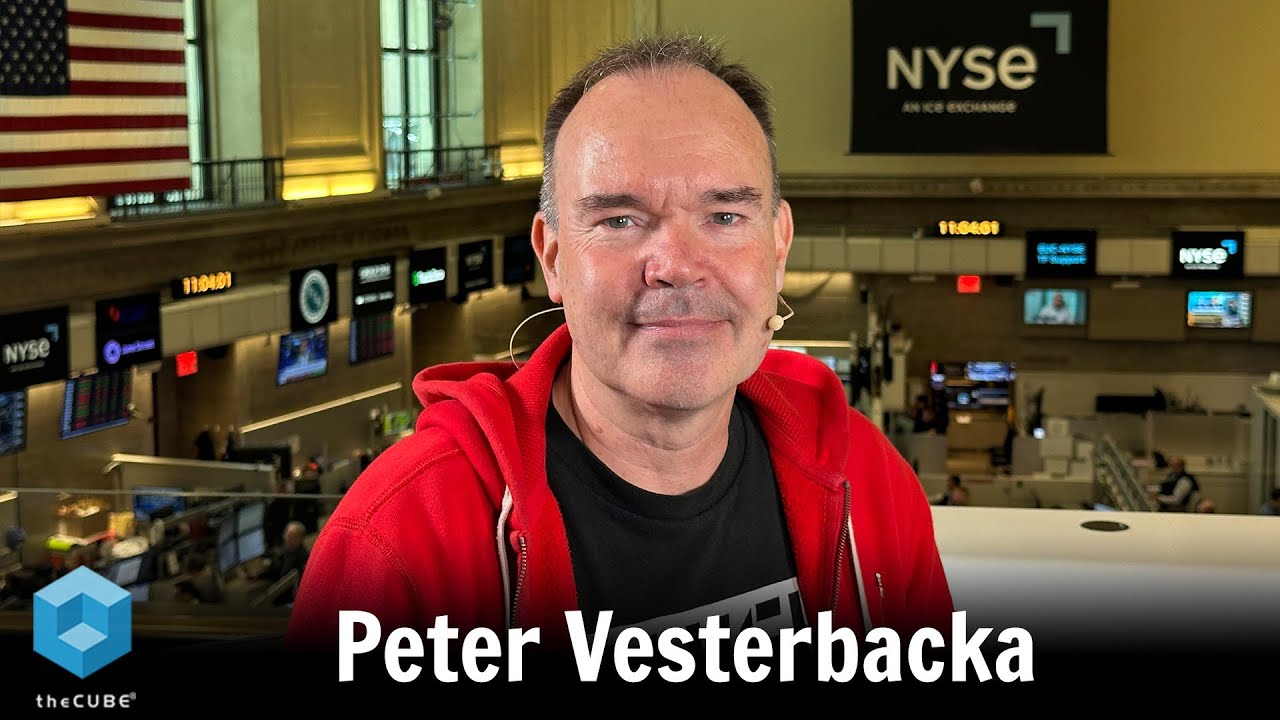







































 Dave Vellante