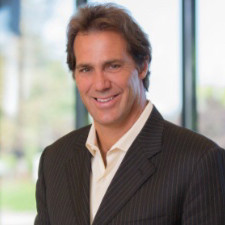
In this engaging interview, David DeWalt, managing director of NightDragon Capital Management, shares insights from the trading floor of the New York Stock Exchange. A visionary in management circles, DeWalt is known for creating significant value across the technology industry, with pivotal roles at McAfee and FireEye. Against the backdrop of an evolving market characterized by high trading volumes, DeWalt discusses revolutionary shifts in cybersecurity and capital markets.
David DeWalt brings decades of experience in navigating technological innovation's waves. In this discussion, hosted by John Furrier of theCUBE, DeWalt outlines the transformation of data infrastructure and the emergence of new opportunities in the cybersecurity, defense, and government sectors. They delve into the importance of the "three T's" – team, tech, and total addressable market – in evaluating investment potential and highlight NightDragon's focus on disruptive security technologies across multiple domains.
Key takeaways from the conversation include the emergence of new security paradigms in areas such as space and cyber domes, which are set to redefine defense strategies globally. According to DeWalt, the explosion of artificial intelligence and decentralized infrastructure presents both challenges and opportunities that demand strategic alignment and agile innovation. As the industry faces an era of unprecedented change, these insights offer a vital perspective on the intersection of technology and investment opportunities.
Forgot Password
Almost there!
We just sent you a verification email. Please verify your account to gain access to
theCUBE + NYSE Wired: Mixture of Experts Series. If you don’t think you received an email check your
spam folder.
Sign in to theCUBE + NYSE Wired: Mixture of Experts Series.
In order to sign in, enter the email address you used to registered for the event. Once completed, you will receive an email with a verification link. Open this link to automatically sign into the site.
Register For theCUBE + NYSE Wired: Mixture of Experts Series
Please fill out the information below. You will recieve an email with a verification link confirming your registration. Click the link to automatically sign into the site.
You’re almost there!
We just sent you a verification email. Please click the verification button in the email. Once your email address is verified, you will have full access to all event content for theCUBE + NYSE Wired: Mixture of Experts Series.
I want my badge and interests to be visible to all attendees.
Checking this box will display your presense on the attendees list, view your profile and allow other attendees to contact you via 1-1 chat. Read the Privacy Policy. At any time, you can choose to disable this preference.
Select your Interests!
add
Upload your photo
Uploading..
OR
Connect via Twitter
Connect via Linkedin
EDIT PASSWORD
Share
Forgot Password
Almost there!
We just sent you a verification email. Please verify your account to gain access to
theCUBE + NYSE Wired: Mixture of Experts Series. If you don’t think you received an email check your
spam folder.
Sign in to theCUBE + NYSE Wired: Mixture of Experts Series.
In order to sign in, enter the email address you used to registered for the event. Once completed, you will receive an email with a verification link. Open this link to automatically sign into the site.
Sign in to gain access to theCUBE + NYSE Wired: Mixture of Experts Series
Please sign in with LinkedIn to continue to theCUBE + NYSE Wired: Mixture of Experts Series. Signing in with LinkedIn ensures a professional environment.
Are you sure you want to remove access rights for this user?
Details
Manage Access
email address
Community Invitation
Dave DeWalt, NightDragon
In this engaging interview, David DeWalt, managing director of NightDragon Capital Management, shares insights from the trading floor of the New York Stock Exchange. A visionary in management circles, DeWalt is known for creating significant value across the technology industry, with pivotal roles at McAfee and FireEye. Against the backdrop of an evolving market characterized by high trading volumes, DeWalt discusses revolutionary shifts in cybersecurity and capital markets.
David DeWalt brings decades of experience in navigating technological innovation's waves. In this discussion, hosted by John Furrier of theCUBE, DeWalt outlines the transformation of data infrastructure and the emergence of new opportunities in the cybersecurity, defense, and government sectors. They delve into the importance of the "three T's" – team, tech, and total addressable market – in evaluating investment potential and highlight NightDragon's focus on disruptive security technologies across multiple domains.
Key takeaways from the conversation include the emergence of new security paradigms in areas such as space and cyber domes, which are set to redefine defense strategies globally. According to DeWalt, the explosion of artificial intelligence and decentralized infrastructure presents both challenges and opportunities that demand strategic alignment and agile innovation. As the industry faces an era of unprecedented change, these insights offer a vital perspective on the intersection of technology and investment opportunities.
In this NYSE Wired: Mixture of Experts conversation, theCUBE’s John Furrier sits down with Dave DeWalt, founder of NightDragon, to unpack how the convergence of AI and modern infrastructure is reshaping enterprise strategy at the intersection of tech and finance. DeWalt frames today’s market as a “perfect storm meets perfect opportunity,” drawing on decades of cycles to explain why speed, data velocity and hyperscale architecture are redefining competitiveness. He breaks down his “three T’s” (team, tech and TAM) and why intellectual property is often a game o...Read more
exploreKeep Exploring
What was discussed regarding the performance of tech stocks and options trading in the market today?add
What are the key factors for a CEO to achieve success in today's business environment?add
What are the key criteria an investor looks for when evaluating a potential investment opportunity?add
What changes have occurred in the investment landscape over the last decade?add
What is the history and mission of NightDragon as a company?add
What is the speaker's perspective on the current opportunities in the defense technology sector?add
>> Hello, I'm John Furrier with theCUBE and SiliconANGLE here in our New York Stock Exchange studio. Of course, we've got Palo Alto and New York connecting technology and Wall Street together as we bring our digital communities together with the NYSE and Wired community with Brian Baumann and theCUBE, creating a trust network. And of course, we always talk to the leaders and we've got a great leader here inside theCUBE, out over the trading floor. Big day in the market today. Options are trading heavily. You can hear the outcries behind us. David DeWalt. He's with NightDragon Capital Management, known as the legend in the industry in the management circles. Creates lots of value, billions of dollars. McAfee, FireEye. David, thanks for joining, coming in. You're an exchanger. Thanks for coming in.
Dave DeWalt
>> John, thank you for having me. It's fun to be here, right? New York Stock Exchange live. It's almost a record for the New York Stock Exchange, so pretty cool.>> And they got the outcry. The options again, Tesla's leading that note. NVIDIA's up going crazy. So NVIDIA, Tesla seemed to top the charts. Most volatile. Tech stocks just run the market. I mean, this is like the wave we're in right now.
Dave DeWalt
>> It's almost like a perfect storm meets a perfect opportunity I like to think about. So we have all these issues happening around the world, but we have all this tailwind that's going on too, and it's like dot com 1999 again. So I'm pretty excited.>> I got to ask you, because one of the things we'd love to track is the historian perspective, the computer industry. You lived the multiple cycles, multiple waves of innovation. You've seen it in the trenches. You've built companies, create a lot of value, took companies public here and there. Now we're in kind of like AI, you got decentralized infrastructure, everything's kind of coming together. Software and infrastructure and data are back, and we used to call it the Holy Trinity, compute, storage and networking, but if you add a fourth pillar, database, you're seeing data and infrastructure which brings software and agents are all in there. So you have this new intersection of multiple databases, so you have databases and infrastructure. This is changing the game, it's creating new opportunities, cyber in particular, your focus and as well as other areas and defense and the government. What's the opportunity do you see? Because as you look on this next wave, a 20-mile steer, what is your vision of what's going to be enabled as supercomputer gets democratized, software models come in, you've got foundation models, computer vision just kicking the scene. What is your vision of these, this next wave of disruptive enablement?
Dave DeWalt
>> Yeah, John, I mean, I think you just hit on something. Having been in this market for 30-plus years, I hate to date myself now, but you watch these waves, right? I watched the internet come. I mean, I hate to date myself on that, but dot com came. And yeah, there was a bubble, but what was it? Infrastructure, right? It was a systemic record that we all got to use. And then I think about the mobile phones and what happened there and then applications on the phones, it changed the way we're doing things. So here we are in this era. It's been amazing to see what AI meets compute meets infrastructure is doing right now in a way that can hyperscale companies so quickly. And that's what's so exciting for me, to watch this even after a couple of decades of being a CEO, I'm more excited than I've ever been before watching all this trends.>> I mean, the growth curves hitting are interesting because you have speed as a competitive advantage. Velocity of data is one we see on the tech side, but companies, you got change management going on, you got technology shifts, and you got new software models and supercomputing kind of all happening at the same time. How does a CEO, I know you're on a lot of boards, you're advising, of course you're in cyber, but all this is kind of connecting and the game is still the same. The bad guys are still out there. People want to create value. They want to extract that value. What's the keys to success as a CEO these days to run a company in this era?
Dave DeWalt
>> Yeah, I mean, I'll start with being an investor for a second, John. I look for, I call them the three T's. I always have easy things to remember, but team, tech and TAM, so total addressable market. Can you see a market that you can disrupt a brown field of an older technology or is there a green field of an entire new application set? If the TAM is there, you then got to look at the tech can the tech scale, right? With all the things that compute and storage and AI and machine learning that we've talked about, now agentic as well, you got to look at can the tech scale, can it cross oceans? Can it scale up and down enterprises, can it sell to the government? And then it's a team there as well. Do you have the right leaders, the right CEO, the right board, the right investors? And when you start to get all the T's right, you create a real opportunity. And then the thing I always say is intellectual property is oftentimes a game of inches. You see a lot of companies have very similar tech, but go to market can be a game of miles. You can win the game if you get your distribution right, your partnerships right. And that's what we try to do at NightDragon is create a whole platform to scale companies with go to market.>> I love the T's. Cross your T's and dot your I's, I for investors. You got to have the cash. We're seeing rounds like solo founders, that's a big discussion. I'm not a big fan of that. I think that'll be kind of one-off, but I think you still need a team. The investment cycles are changing different vehicles here in the stock exchange. We're seeing a lot of crypto going mainstream. Has that changed your view on some of the capital markets in terms of how entrepreneurs should tap the resource on the investment side?
Dave DeWalt
>> Absolutely. It's changed it. This last decade has been amazing to watch. When I was CEO taking FireEye public or I was CEO of McAfee, I had a very specific Wall Street group I went to, and mostly here in New York. And we now have a global set of markets. Sovereign funds are an amazing new investment vehicle. If you look at the largest funds in the world in the Middle East and Asia and Europe, these are very active investors. You look at the pension funds today, you start to look at the endowment funds, you start to look at the capital that's around the world from billionaires, it's a very different community than we had before. So fundraising is, I hate to say fun again, but it's fun again. And it was different than it was before.>> A lot of options for entrepreneurs, but also as an investor now, you're making bets, right? Talk about the firm, what you guys are doing, the focus, what you're optimizing for. Obviously cyber is hot and that's a data play too, but it's not just your old classic cyber security software business.
Dave DeWalt
>> No.>> It's a much different. Explain what your thesis is and what you're optimizing for.
Dave DeWalt
>> Yeah, I founded this company NightDragon about eight years ago now, and I really focused in on building something different in the world of capital fundraising, venture capital, and I did so to really focus on a new market segment I call security tech. So think about FinTech or biotech or insurance tech. I sold a market for security tech and if I thought, if I could be a specialist, really deep domain expertise in one area, I could become a big platform. And that's really my goal was not only to put capital to work, but also help as an operator. And having all the scars of being a CEO, I knew what it was like to operate. So how could we think about being strategic, being operators, being investors focused on security tech and being the best in the world at it. And here's the market opening up to us now at NightDragon. So we look at all five domains, space, air, oceans, land and cyber. So wherever a threat or risk is in the world, we see opportunity to invest, and it's been paying off. We have some hot companies, and many of them will go public here eventually.>> I love the space angle, because I interviewed the founder of Space Force and he's now at Amazon. He wrote the paper, and space is highly congested and contested. It's a cyber challenge. I mean, you could launch a VSAT for a hundred K, maybe 50. So-
Dave DeWalt
>> Yeah. And then the size of this table.>> And so, I mean, that's basically a DDoS attack. I mean, you could actually put stuff in space. So security paradigm comes into space, it's hard to do break-fix in space too. You got to run into software. So talk about the space piece, because we see Starlink, we see stuff launching. Who owns space? I mean, it's international. What's the cyber risks there? What's the posture? What are people doing? And if GPS goes out, we'd all be screwed, I mean, basically. Space is very strategic militarily, commercially.
Dave DeWalt
>> All the reasons you just said, right? So where's the next internet 2.0? It's up there. Not fiber optic on the ocean floor, right? We know that's coming, right? The telecommunication models are of the past now. So it's the Starlink worlds, the OneWeb worlds, it's the now Kuiper Amazon world. And we're seeing next generation applications come from it, but also next generation risk threats and security from it as well. So we have two really cool companies. One's called Hawkeye 360 who's now launched 12 clusters of satellites. They do radio frequency analytics from space. So now the art of the possible of earth observation->> Observability, a whole other level.
Dave DeWalt
>> A whole other level from low earth orbit. And the military intelligence use, but also the dual use commercial is amazing. Another one does synthetic aperture radar, what's called SAR. There's a company called Capella Space, and we can take pictures from space using basically hyper-waves that enable us to look at images through clouds at night and we can see things all the way down to small, small things. So it's amazing what tech's doing. It's incredible.>> It's funny, because we always talk about the intelligent edge. Space is, I mean, there's no edge anymore because space is actually out there. What I like about your firm and what you're focused on is that in the old days, software was the enterprise, security. You're looking at the infrastructure more broadly. You mentioned space, you got defense, you now have global sovereignty, you got sovereign cloud, now you got private clouds out there. So now you've got geopolitical things. Cyber like FinTech is a great example, because FinTech is now all commerce. Payment rails and settlement is just now software infrastructure. It's not like a vertical anymore. So I think security also is kind of going that way. But as new infrastructure changes, it's like the global enterprise. So as an operator, how do you view that space, that environment from an investment standpoint, and just what are the challenges that entrepreneurs can look at and maybe go after, because private-public partnerships are booming. The government can't move as fast as say private companies. National security, you're starting to see sovereignty certainly here in the US, it's top of mind. I know that's important to your heart. Everyone knows I'm a hawk when it comes to defense. That's a whole nother game, but it's got security opportunities and challenges. Can you share your vision on this new environment?
Dave DeWalt
>> Well, I mentioned earlier all five major domains from space to air to oceans, land and cyber all have new systems of record that are being built. We just talked about space. It is an entire world of a new infrastructure that's being built, and all the security and safety wrapped around it can be an infrastructure as well. You're going to see a mega company the size of a Palantir, a Palo Alto networks be a space company. It's coming. The same with air. If you look at drones and counter drones and now what it takes to defend the airspace, what we call cyber domes now I believe are going to be built. We're going to have cyber domes built over every airport, every city, because we've got to protect those areas from drones. And you're going to let good drones in, bad drones out, and you're going to protect. So it's going to become an entire infrastructure I call cyber domes. The same with oceans, John. Now we're seeing drones and swarm drones in oceans that can protect the oceans in a way and land just like we see elsewhere. And this is a company called Saronic building thousands of vessels for the ocean, all using autonomous robotics. And each one of these has a new infrastructure. It's incredible. And then you look at what quantum brings us, what AI is bringing us. It's an exciting time.>> I mean, you could put, I mean, I remember I interviewed the founder of Saildrone. They were a huge success the way they did it. That's the template that's driving all this investment. You could put essentially a supercomputer in these things.
Dave DeWalt
>> Absolutely.>> And so you got the horsepower, you got the software, you got the telemetry in space, you got air. So everything's kind of connected.
Dave DeWalt
>> All the intelligence on the edge is there now, the coordination, and they're all remote sensors basically on the ocean. And now we're putting them submerged and surface. So it's a whole new world.>> I like the cyber dome, because I think we are all watching what's going on in Israel. Obviously you see the Iron Dome, they've been working 25 years for this moment, and shout out to the Israelis for the tech achievements. They're proud and loud about it, but it's actually helped them. And I think that's a good way to look at it, and I can see that being implemented everywhere.
Dave DeWalt
>> Well, our president's seen that. I mean, now called the Golden Dome. But we're going to build infrastructure in America because the technology's here for us. And by the way, the threat's here too. So I'm a big believer that America needs to build a dome as well. We may build them in pockets, like I said, Cyber Domes over infrastructure to protect them. And we can do so now by geofencing the area, using what's called directed energy as well now. We invested in a company called Epirus that instead of shooting things down with missiles, it shoots it down with high-performance microwave. So you basically shoot electron beams in the air and it just drops the drones.>> It's energy pulse. It's like Star Trek.
Dave DeWalt
>> It's energy pulse. Exactly. EMP.>> It's like a stun gun.
Dave DeWalt
>> It's amazing what happened, and safely.>> So I have to ask you again, I love having you on, just the experience you have and then you're actually deploying capital, you're in the arena. What is the opportunity for entrepreneurs out there? We're seeing this whole new generation come in, even the young guns coming into the market. They have a different orientation, obviously. They're like, who left us this mess on one end of the spectrum. The other ones, they got multi-discipline degrees. You're seeing a lot more applied mechanical engineering for the drones and software converging. They're writing code like it's nobody's business. You got code assistants. So you're going to have this kind of systems thinking mindset as this new generation comes in. What are the opportunities for people? Because one thing entrepreneurs are good at is opportunity recognition. So if you lay out that new infrastructure, it's mind-blowing, but it's a whole shift and we've never done this before. So there's going to be opportunities. What would you share? White spaces, opportunities, green field categories, what would you share for folks watching that'd be like, hey, I really want to contribute to the safety and peace of the world and maybe a good military force and good defense is good deterrent.
Dave DeWalt
>> John, it's the golden age. I really believe that. I think this administration has created opportunities in defense tech world we've never seen, almost akin to the dot com. The NATO nations as well as the Asian markets are really opening up to private companies, directly sourcing to them. So here we are with this incredible opportunity to sell defense to the world and protect the world. Our whole motto, you probably know, at NightDragon is securing our world for tomorrow. That's what I believe in. So if I can find companies and help them scale quickly, but to your point on the advice, I always say, know your window. What window of opportunity do you have? Because the inertia of tech is so fast right now, and if you can't get the capital, deploy the capital and become a system of record within a window, you'll have too much competition.>> When you say window, you mean market window?
Dave DeWalt
>> Like a market window.>> Okay, so yeah. And can you attain that window?
Dave DeWalt
>> Yeah, can you maintain it? Can you create a moat around it? But today, it's all luck.>> And what's a good benchmark for someone to kind of test that thesis against window opportunities? What would be a good thing? Viability of the product itself, customers?
Dave DeWalt
>> Tech and the TAM, again, you got to have those two down, but you also got to have that go-to-market engine. And that go-to-market engine is really key because when I was growing FireEye, it was about 10, 11 million when I got there. It was a billion when I left in four years. So what I took advantage of from 10 million to a billion in revenue in four years was all the partner community. You can't do it on your own. I can't go hire enough salespeople to go become a billion in revenue company, but partners can multiply you, and if you know the partner community, you can get there.>> It's like get the beachhead, secure it, bring partners in, take territory, share in the opportunity.
Dave DeWalt
>> And share in it. It's a win-win for them and for you as an entrepreneur. And that's how you win the security war.>> I was riffing on a podcast the other day with the entrepreneur. We were talking about geopolitical. So I was talking about sovereign cloud actually, and the grid came up. Energy, because blockchain and AI are bounded by energy. So what we came to the conclusion was China, the Middle East and the US will be dominant in energy. Middle East, love their oil. They're probably going to get their AI for their native language, but really China and the US will be the power players. And then we said, whoa, who else in the regions would have power and that could alter the geopolitical relationships? Because if I'm a country, I don't have a lot of good power, I might want to align and play the game Survivor and say, "Hey, I'll align with you, power source country." So the opportunity for shifting alliances globally around the energy, grid stability, grid safety. So we're kind of in the early innings of this transformation of how energy is architected technically, how it's distributed and managed and monetized or capitalized.
Dave DeWalt
>> I can't agree more with what you're saying, John, because I saw this problem of energy coming a few years ago. Jensen Huang at Nvidia has been talking about it for a couple of years as well as you see GPU compute requiring so much energy, so much so I joined an energy board, which is kind of unique. I joined Exelon. And I learned a lot already in that, what kind of power generation problems does America have? What kind of power delivery problems do we have? And what I'm realizing is this could be one of the biggest national security problems America has, because we don't have enough capacity. We had a lot of clean energy come, we shut down most of our nuclear, a lot of our coal. We weren't able to build the capacity data centers and AI need now because we're measured instead of kilowatts to megawatts to gigawatts, the Middle East has this capability. We don't have it. China has it. We don't have it. So if America doesn't catch up and catch up fast, we will lose a lot of the edge of tech that we once had. So it's an important area.>> Yeah, I mean, France has a lot of nuclear.
Dave DeWalt
>> Same, yeah.>> I was talking to Bill Tai, I was talking about energy, obviously his business models, but he was saying that just the data center capacity that's on the docket to be built, not what's needed, just kind of what people are scrambling for would power about 40 million homes in the US, and there's about a hundred million, around that number. I don't know the exact number, but that's just massive. That's just what's being built. That's 40 million homes.
Dave DeWalt
>> Oh, yeah.>> So just to put it in the scope, the opportunity and challenge is, okay, that's a lot of power. So I mean, if I'm an investor, I'd love to target these areas, and if I wanted to disrupt America, I'd be like, okay, target them now.
Dave DeWalt
>> Well, by the way, we saw this. We had a whole series of Chinese attacks called bolt typhoon, which was targeting our energy utility areas. And we realized we're very, very vulnerable to cyber attacks. We're also very vulnerable to resiliency of those energy sources. And we've got to get better. I mean, this is an area that I always say the two E's, education and energy is America's weaknesses. We got to get better at education and we got to get better at energy. And if we can fix those two, we'll be at the power we want to be.>> Yeah. Well, you and I were talking before we jumped onto the podcast here about defense. And I've always was perplexed by this. I'm not a government person. I've learned a lot over the past decade covering public sector with AWS, CIA and DOD projects. And I've always asked the dumb question, I don't understand. If troops landed on our shores of Long Island, the government would react and send troops to stop the bad guys. So if they drop it to my bank, digitally, where's the forces? So I always ask the question, why aren't there digital Navy SEALs? So yeah, well, we have cyber command, but I'm like, yeah, but they're paying for, they're building their own militias. So these enterprises have to build their own armies basically.
Dave DeWalt
>> You bet.>> So I just don't get that. Explain where the government is on this. Do they see the national security opportunity as, hey, they have a role in this and they should do more, or do they understand? Or is it more let the private sector fend for itself?
Dave DeWalt
>> They do. I think this government administration and the last couple have begun to really understand the risk and the threat problem that's occurred. You know this from my background, I helped build Mandiant, which is basically the police force for cyber. We did most of the incident response, but eventually the government built what's called cyber mission forces. That was out of the NSA. The cyber crime division of the FBI grew. CIS as an agency grew, the Homeland Security. So all of these have been growing. But to your point, I mean, this is one of the biggest existential threats we have because it's an asymmetric theater. The smallest of attackers can bring down the biggest of companies, and it's very hard to stop them. And we've seen it with a group called Scattered Spider lately, which is bringing ransomware to the biggest companies in the world, and it's a handful of individuals doing it. So we need to get better at this for sure.>> It's a lot of money involved in that too.
Dave DeWalt
>> And a lot of money.>> It's a cutting edge industry. It's actually billions.
Dave DeWalt
>> Oh, they're asking 40 million, 70 million, a hundred million dollars per ransom. And this is small groups. Talk about capitalism.>> I interviewed Kevin Mandia a bunch of times at his event. A couple of years ago, he talked about that you can break up the groups, but they'll reconstitute. And his mission was to get the government to arrest and put them away. You're seeing a lot more of that now. You're starting to see the government not only identify the adversaries, but actually take them off the so-called digital streets, which is a good trend. How do you see that progress? Good? B, would you give them an A? Would you give them a C? What would letter grade would you give? Because that's a good momentum, I think. But I think, how far are they along at actually being really great at it?
Dave DeWalt
>> We've gotten better and better, no doubt about it. But I would give them a C minus, I would. Only because it's very difficult. You need cross-border cooperation. You need a lot of nations working together. Not all nations work together. One of the biggest epiphanies we all had in the cyber industry happened when the Russia-Ukraine War broke out because the Russians, Ukrainians had done a lot of collusion around crime in cyber prior to this. And one of the takedowns was called the Hydra marketplace, which was a ransomware operating marketplace. And it all happened due to the disruption of those two nations. So you start to see how big the business is, how hard it is to arrest people, but we're getting better, but we're up to a passing grade, barely.>> I heard someone gave a talk, she's a New York Times writer, I've forgot her name, and she wrote a book, Is This How the World Ends?
Dave DeWalt
>> Oh, Nicole Perlroth. Yeah.>> Nicole. She's at Ballistic Ventures now, I think. She said that Ukraine was a test kitchen for Russia. I'm like, okay, what's a test kitchen? That's where they kind of would do that. So you have the systematic adversaries that are now identifiable. I mean, what's out there now? What is your view of these test kitchens? It's hard for the average person to get their arms around what's going on in cyber, I've even heard the term the other day, minus zero days. So using AI to use predictive analytics to see them forming on the dark web. Hey, look at that. We're starting to move. Joe and Mike are getting together. We know what they do. So it's like, we're getting to new levels of protection, but they're still moving out there and there's all test kitchens. Explain this underbelly for the folks out there, how that all works.
Dave DeWalt
>> What we've seen is this era of AI, it's become an arms race, AI, and the arms race is the good guys and the bad guys fighting. So on the bad guy side, AI has become a powerful tool just like you mentioned. Now the world's information is at your fingertips. You can access it. I can ask ChatGPT how to build a malware kit to attack my neighbor and you pretty much get it. And so the defensive side's promising too though, because now all the machine learning that we get from AI, all the process speed improvements, the data processing is all good too. But can offense and defense, who's going to win that game? And right now it's been the offense winning, and that's the scary part. And we see it with spearfishing, deep fakes, misinformation, things that are happening online that are pretty scary.>> Yeah. The spearfishing is phenomenal.
Dave DeWalt
>> It's an oldie but a goodie, but it's really effective.>> They've corrected their English.
Dave DeWalt
>> It's not Nigerian anymore. Yeah.>> It's not Nigerian English. I mean, this whole conversation even two years ago was, the vibe was that the good guys would get an advantage, that the scales would tip in the favor of the good guys. And then it's kind of shifted. The bad guys have gotten better. You think we've gotten, has it shifted again? How would you, because the scales have been tipped for a long, long time, and a little bit catch up. Is there still a ratchet game of leapfrogging, and what's your take?
Dave DeWalt
>> I called it a perfect storm for 25 years for a reason. Just hear me for one minute. We have all this technology inertia, which is amazing, all that stuff we talked about, AI, quantum, mobile phones, the internet all the way going back. But every time we create a new technology, we create vulnerabilities, because we don't design security into the new technology very well because capitalism is amazing thing.>> Get public.
Dave DeWalt
>> So why secure it? Get public, right? And all these vulnerabilities create a really big attack surface, which creates a lot of attackers, which creates a lot of success. But the one ingredient that's different, geopolitical tensions. When we get the world arguing and fighting and not cooperating, cyber problems come out at a much bigger level. And you can see it with China up 200% this past year with attacks on America alone, cyber crime way up, ransomware way up. If we had peace treaties around the world in the digital universe, we wouldn't have these problems. But the world's not cooperating very well.>> Is that rise just on the tension or is it just feeding more angst or is it actually to make more money? Is it the funding? What's the driver of those increases?
Dave DeWalt
>> Each nation state's different. Each group's different. I mean, China, we rarely ever find them steal money. You don't find China's state-owned enterprises stealing money.>> They're already rich.
Dave DeWalt
>> They steal IP, they steal information, they steal something different. Then you watch the Russian Business Network and you watch the GRU. They're a lot about espionage and activity and also a lot about crime. So each group in->> And North Korea, they print money.
Dave DeWalt
>> And they print money off of it.>> They're doing the ransomware. That's a big revenue driver.
Dave DeWalt
>> It's a big business for them. And so each one's a little different, but we're vulnerable. We need cooperation. I always say, cyber is a team sport, right? We've got to work together, public-private together, private-private, public-public. And that's how we solve the problem. The less we work together, the more the adversary wins.>> David, the work you're doing is phenomenal. Grateful that you're doing it, especially the defense side. And I think your view of this infrastructure is the right one. And I think that's opportunity for everyone out there. You're watching, they're writing checks. What kind of checks are you guys writing? How do you get involved? How does someone engage you? What's the-
Dave DeWalt
>> We look for the biggest threats and risks in the world. We study it closely. We work with the governments. We have big advisory teams. They help us understand, here comes the post-quantum threat and risk as an example. Okay, what companies can we find that solve the post-quantum encryption problem? And then we go look for them. And now that we've got a bigger and bigger brand than a bigger and bigger capital platform, they come to us a lot more too. But we're always looking for the next big threat to solve. And then we go and find the companies that go solve it. And that's our motto.>> And that's the T's.
Dave DeWalt
>> And that's the T's.>> Those are the T's. Yeah. Well, I got you here because you're a master at many things. Building companies, stuff you're doing now is cutting edge, but you're also really a great go-to-market master. It's hard, one, to take a technology to the market just generally, but now it's even harder, right? So what would you say is the secrets to taking product market fit or product that has future fit that you know is going to have a fit? You got to prime the pump. I mean, there's right strategies. Assume you have something good, you identify the problems, got the T's. What is the go-to-market best practice in your mind? What have you learned? Obviously FireEye, love that. Success with McAfee and many more. Scaling is fast. That's where the competitive advantage is going to come in. We're seeing that as the new moat.
Dave DeWalt
>> Here's what I found, John. So I meet these amazing founders and I've taken over for three founders as a professional CEO of my career. They build amazing product, every time. It's amazing product, but they don't always design the product to go to market scale. So what do I teach them? You got to build a product that is fit for the go-to-market model, not just for a customer. And that's the difference. They're like, "Well, my ICP, my ideal customer looks like this." Well, that's great, but how do you reach tens of thousands of them easily? Well, that's where you got to get to go to market. So did you design your product to do government selling? Which means you got to do FedRAMP and StateRAMP and different types of compliance. Oh, did you build your product for the channel? That means you got to create an easy proof of concept, proof of value->> Yeah, and make it easy....
Dave DeWalt
>> and margin model, and programs for the channel. Oh, did you build your product for consultancy groups and service-led? Well then you've got to build a statement of work to help them build a service-led motion. What about a managed service motion? If you can get those all working together, multi-vector, go-to-market model I call it, and simultaneously ship your product for all of them in all languages, you go from 10 million to a billion. That's how Wizz did it. That's how some of the hottest companies in the world did it.>> It's a tweak to the product at the, it's an abstraction layer that you just designed for the motions and-
Dave DeWalt
>> But you got to design it early. Because if you have to wait until later and go, "Wow, I got to get FedRAMP," it's going to take you two years to get FedRAMP. Oh wait, I got to build Asian language into my product. Well, it's going to take you a while to build multi-byte. But you got to design your product to win the markets, not just win a customer. And that's a different strategy, and that's what I look for.>> Yeah, that's a great best practice. Well, thanks for coming in. I just was taking notes. I'm glad we got that on camera. Multiple channels. I mean, it's like security, you said. It's like you're building it from day one and know what you got to do. And also, there's a go-no-go decision. You got to say, "Well, I'm not going to do government."
Dave DeWalt
>> That's true too.>> You got to make those calls too.
Dave DeWalt
>> That's true.>> You say, "Okay, well, this would fit government." I mean, obviously broad market opportunities is the home run. That's the T. TAM.
Dave DeWalt
>> But if you want to build something worth tens of billions, you got to get all that right. You got to build the platform, you got to scale the platform, you got to get to go to market.>> So it's product markets fit.
Dave DeWalt
>> That's right. That's right.>> All right. Dave, thanks for coming on theCUBE. Appreciate it.
Dave DeWalt
>> Thank you, John. Appreciate you.>> Great conversation.
Dave DeWalt
>> Yeah.>> I'm John Furrier with theCUBE. We're at the NYSE studio. And again, the world is changing super fast. You've got the convergence of supercomputing AI, decentralized infrastructure, chip software, geopolitical all coming together at the same time. Of course, we've got it covered on SiliconANGLE and theCUBE. Thanks for watching.