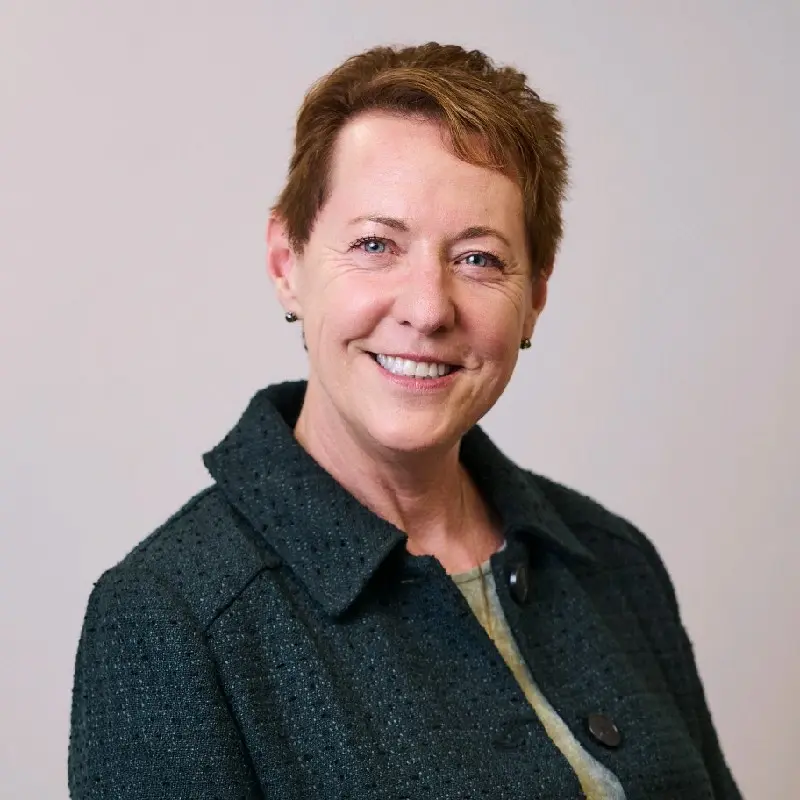
This episode, Mixture of Experts, examines artificial intelligence-native infrastructure open source and sovereign resilience. Margaret Dawson of SUSE is a seasoned marketing leader and chief marketing officer with deep experience across open source cloud and enterprise software. The theCUBE Research conversation at New York Stock Exchange CUBE Studios is hosted by John Furrier and Dave Vellante.
Dawson emphasizes that resilience — security reliability and stability — is a foundational requirement for AI deployments. They caution against proprietary lock-downs of open source capabilities and highlight containers and Kubernetes as essential for modular distributed AI workloads. Analysts on theCUBE note broadened buyer groups heightened executive urgency and the critical need for governance to balance innovation cost and risk.
This conversation provides actionable insights on AI infrastructure cloud native patterns open source strategy sovereignty security governance and operational resilience for enterprise deployments.
Forgot Password
Almost there!
We just sent you a verification email. Please verify your account to gain access to
theCUBE + NYSE Wired: Mixture of Experts Series. If you don’t think you received an email check your
spam folder.
Sign in to theCUBE + NYSE Wired: Mixture of Experts Series.
In order to sign in, enter the email address you used to registered for the event. Once completed, you will receive an email with a verification link. Open this link to automatically sign into the site.
Register For theCUBE + NYSE Wired: Mixture of Experts Series
Please fill out the information below. You will recieve an email with a verification link confirming your registration. Click the link to automatically sign into the site.
You’re almost there!
We just sent you a verification email. Please click the verification button in the email. Once your email address is verified, you will have full access to all event content for theCUBE + NYSE Wired: Mixture of Experts Series.
I want my badge and interests to be visible to all attendees.
Checking this box will display your presense on the attendees list, view your profile and allow other attendees to contact you via 1-1 chat. Read the Privacy Policy. At any time, you can choose to disable this preference.
Select your Interests!
add
Upload your photo
Uploading..
OR
Connect via Twitter
Connect via Linkedin
EDIT PASSWORD
Share
Forgot Password
Almost there!
We just sent you a verification email. Please verify your account to gain access to
theCUBE + NYSE Wired: Mixture of Experts Series. If you don’t think you received an email check your
spam folder.
Sign in to theCUBE + NYSE Wired: Mixture of Experts Series.
In order to sign in, enter the email address you used to registered for the event. Once completed, you will receive an email with a verification link. Open this link to automatically sign into the site.
Sign in to gain access to theCUBE + NYSE Wired: Mixture of Experts Series
Please sign in with LinkedIn to continue to theCUBE + NYSE Wired: Mixture of Experts Series. Signing in with LinkedIn ensures a professional environment.
Are you sure you want to remove access rights for this user?
Details
Manage Access
email address
Community Invitation
Margaret Dawson, SUSE
This episode, Mixture of Experts, examines artificial intelligence-native infrastructure open source and sovereign resilience. Margaret Dawson of SUSE is a seasoned marketing leader and chief marketing officer with deep experience across open source cloud and enterprise software. The theCUBE Research conversation at New York Stock Exchange CUBE Studios is hosted by John Furrier and Dave Vellante.
Dawson emphasizes that resilience — security reliability and stability — is a foundational requirement for AI deployments. They caution against proprietary lock-downs of open source capabilities and highlight containers and Kubernetes as essential for modular distributed AI workloads. Analysts on theCUBE note broadened buyer groups heightened executive urgency and the critical need for governance to balance innovation cost and risk.
This conversation provides actionable insights on AI infrastructure cloud native patterns open source strategy sovereignty security governance and operational resilience for enterprise deployments.
>> Palo Alto Studio connecting Silicon Valley and Wall Street. I'm John Furrier your here with Dave Vellante, my co-host. Hello, I'm John Furrier with theCUBE here at our New York Stock Exchange CUBE Studios, connecting Silicon Valley and Wall Street, of course, with our Palo Alto Studio. I got a great guest here. Part of our mixture of expert series of our NYSE Wired program, Margaret Dawson, CMO of SUSE. CUBE alumni going back, I'd say back to the early days, OG, CUBE alumni, industry leader now in a growth market with SUSE, open source, obviously driving, continuing to drive the innovation. We saw that in the cloud wave, DevSecOps, now we got AI-native, which is essentially an extension of cloud. Margaret, great to see you. Thanks for coming into our studio.
Margaret Dawson
>> Great to be here. I love the energy. I love the energy.
John Furrier
>> Energy's great. But also, we just saw Wyndham Clark, the winner of the US Open. Everyone comes through here. It's a symbol of capitalism, the NYSE, of course, Palo Alto symbol of tech. But technology's the market. It's interesting. We put our historian hats on. We've been through a lot together, seen a lot of the waves. Technology is the market. If you look at all the action, every domain vertical where there's domain expertise, where AI is shining, that's thriving. NVIDIA, the chips, all the AI infrastructure build out is really thundering up massive tide of innovation. Open source, again, in the middle of it. This is where you play. You've been playing for a long time back in the Red Hat days, go back to OpenStack. What's different from your perspective right now? Because you're seeing a lot of things starting to get visibility. You got physical AI right around the corner. You got the agents everyone's hyped up about, but that's with coding bringing in an era of value. What's the big change that you've seen?
Margaret Dawson
>> It's so interesting, because when you were going through all that, my first reaction was what hasn't changed. And so I almost need to back up and think about that, because if we look at early 2000s, the dot-com era, for those of us that were there, we keep seeing history repeat itself. The difference is the valuations are now in the trillions instead of the billions. So I guess that's changed. We were not talking about a company being valued in the trillions of dollars, but there's so much that feels a little bit the same. The hypes feel the same. The overvaluations feel the same. When we see an IPO going and everyone's asking, "Is it an AI bubble, or is it not?" Same questions we were asking in 1999. So I think there's some things that some of us tech veterans are going, "All right, let's just breathe through this. Let's stay calm."
I think what's changed is the urgency. I have never, in 25 years in IT, felt such an urgency from IT leaders, from business leaders all focused on AI. And what's odd is that there is both this need that I have to do this today, but it's also creating almost this inertia where people are sitting back a little bit going, "I'm not sure what to do. I can't get hardware. I have to implement AI. I have more cybersecurity threats than ever before. By the way, my tech debt hasn't gone away." That Hasn't changed .
John Furrier
>> The data growth volume.
Margaret Dawson
>> The data volume, the amount of telemetry, the absolute complexity of the data and the intelligence around it. So everything has been more, more, more. The urgency is greater and yet nothing foundationally has changed. And so we're still in this balancing act of, "How do I reduce costs, optimize, make things more secure? How do I implement AI faster? How do I innovate faster?" And AI just kind of builds on content.
John Furrier
>> It's interesting, because one of the things that ... I love the internet example because I think of all the interviews I've done, the veterans that come on the Mixture of Experts series and other series, we did talk about the internet as the one inflection point that kind of matches.
Margaret Dawson
>> It does.
John Furrier
>> Because there was a lot of hype. It all happened, but it didn't happen at the speed on the demand side. It wasn't a lot of population of internet users. They came online, there was dial-up, you got broadband. Here it seems there's more demand for AI because of the values driving revenue, not just enablement. And also, if you look at those early days of the infrastructure, Cisco came out of that wave and enabled that wave. So pre-internet, Cisco had to connect and create internet. So a lot of AI infrastructure has that same kind of vibe. Sovereign cloud turns into sovereign AI. That's a geopolitical, but yet geographical boundary, network boundary.
Margaret Dawson
>> And it's global. It's a global thing.
John Furrier
>> This is a build out on the infrastructure. So I think there's more to come. So I'd like to get your thoughts on that because I know you're in the middle of it. At your event, we recently broadcasted that. Sovereignty came up, but the sovereign's changing, but I think it's an AI infrastructure opportunity, because now you have intelligence coming in. You have open source booming. What's your thoughts on the whole-
Margaret Dawson
>> I mean, the word that keep coming up, and we started talking about this back in April, is resilience, which encompasses a lot of these different things. It's security, it's reliability, it's stability. So as you're all trying to figure out the AI chaos almost because everyone's just kind of throwing a little bit of noodles at the wall right now, right? It does feel like early cloud in that way. The bills are out of control. People are saying, "Oh, go use AI. Oh wait, stop. We just got a million dollar cloud bill."
John Furrier
>> We have 10,000 employees, they all upgraded to $200 a month.
Margaret Dawson
>> Exactly, exactly. But it reminded me of early cloud where the developers were like, "Oh, I'm just going to go use my credit card and I don't have to wait six weeks for a VMware, VM to be spun up." So I think in that way, it's the same. And I think foundationally you're right. I mean, I always say Linux is still there. You go to any data center, any cloud, any AI stack, it's still built on Linux, and so it's under the covers. And if you look at some of that infrastructure stack of the software, foundationally it's the same.
John Furrier
>> Yeah. It's interesting. You hear NVIDIA and all the AI suppliers on the infrastructure chip side and even some of the integrators when AI ops comes in. You hear Kubernetes.
Margaret Dawson
>> 100%.
John Furrier
>> You hear containers. All cloud native-
Margaret Dawson
>> AI workloads are container workloads.
John Furrier
>> Explain that.
Margaret Dawson
>> Why we not containerize an AI workload. Okay. You think about it and that's why you've seen NVIDIA do the GPU slicing. Everything needs to be modular and distributed and decentralized and you're not going to put this massive monolithic workload to run your AI. It's got to be more agile and flexible. So everything that containers gave us, it's perfect for AI. And then you're seeing the GPUs and the chips that go with it almost like repeating the architectural flexibility of containers.
John Furrier
>> What's interesting about your role at SUSE as a CMO, you've seen products being born from scratch, zero to one, go-to-market scale plans. It's interesting when you look at IT, you mentioned IT. I mean, we've always had an IT culture. Now, IT is the business.
Now, it's not just IT projects because unlike the cloud where the IT guys were putting their credit card down and doing shadow IT, you have everyone putting their so called credit card down doing shadow AI, so the scale's different. Talk about that piece of it, because now you have business transformation, not just IT projects. So the IT project was, "Hey, let's do this. We'll do a pilot out in the fringes of the organization, get some use data, bring it in." Now, people are taking AI and saying, "Hey, let's tackle our hardest problem." So you're involved in a lot of these projects with SUSE, because you've been working on those IT, but now they're-
Margaret Dawson
>> And my team is one of those areas.
John Furrier
>> Seeing this transformation shift beyond the ITs, because IT is still involved because you got CISO, CIO, CFOs involved, chief human resource officers involved. You have the entire C-suite.
Margaret Dawson
>> Absolutely. No, I think you just said something really powerful where in our digital transformation, maybe you had the chief digital officer, the chief data officer, the CIO, but it didn't feel like it was the entire company. It was still a technology focused group. Whereas now, I mean, if I think about every executive meeting, everyone is talking about AI, whether it be, "How is productivity changing in your team with AI? What tools are implementing AI?" And to be honest, IT is almost becoming the governance arm of it. And you've got to be a little bit careful, because my fear is if we look to IT to do too much governance, you're going to lose the innovation side of it. So they have to be balancing that ability to move fast and innovate, but somebody's got to be watching where are we putting AI. Are there any standards? Are there certain tools we shouldn't bring in to our system? Let's make sure maybe our source code doesn't go into the agents. What are the boundaries? But right now, I think there is so much exploration. And I'll just say where I live on the intersection of marketing and the products, it's everywhere. And the thing you've got to be careful of is we're now talking about a multi-agent or an agent community system. And I'm thinking even about how do you brand that? How do you think about the interactions with the customer? You want those agents to all feel like they're the same company, right? Because otherwise, if they come into one tool, let's say they go into your documentation and you have an agent or they go to your support team and they have an agent. They come to your website, they have an agent. They come to your community site with your open source, they have a different agent. Maybe that's right, maybe that's not. But literally, my branding team is putting together this very comprehensive agent, community of agents or ecosystem of agents. And then you've got MCP servers that are being the gateway and the proxy for all these agents. It's just a whole new world.
John Furrier
>> What's interesting about agents is that, and again, we've lived through the cloud growth years where shift left was a security thing where you get it in the CI/CD pipeline for developers. So the stakeholders were, "Okay, infrastructure folks, managing operations being more agile." But really, their target customer, if you will, was the developer and they would serve DevSecOps to them. Now, you have AI builders, which just aren't just developers. So now, you have agentic playbook, you have now new stakeholders that are building agents that look a lot like developers, but there's now a huge amount of people doing it. It's a much larger scale.
Margaret Dawson
>> Do you remember when we were using that term community developer, like in early widgy-widge days of even B2B integration? Some of those other things we'd say, "Oh, the ideal is anybody could do this."
John Furrier
>> Citizen developer.
Margaret Dawson
>> Exactly, citizen developer. Right. That's even a better word. And so now, you literally have citizen developers. You have CEOs that are going in and saying, "Oh, I'll build just an app with that." And it's all wonderful and a little terrifying, because going back to, what do you want your people focusing on? And I am an optimist and you probably remember this and I'm always thinking, what can AI do that allows us to move up the stack literally and physically, literally and figuratively? So that humans are doing this. We're engaging, we're creating, we're innovating, we're thinking about the next wave. Because remember, AI is only as smart as what it can find and what exists. Our job is to think about the next thing.
John Furrier
>> And it's interesting too. When you look at like the IT projects, the old cliche was we need buy-in from executive management. Now, you have executive management leaning in directing, infuse AI into our organization because that CFO, that chief human resource officer, they're actually seeing value in their vibe coding and they can actually feel the value. They see the benefits. Again, revenue's now on the table, not just cost takeout. So now, you have executive sponsorship like really forcing change. How has that changed some of the projects you guys are working on? Does it make it easier? Does it make it harder? Does it change the scope and execution?
Margaret Dawson
>> I think in some ways, it's more complex because the buyer group has grown. So because this technology is foundational now to the entire organization, it's not just CIO, CTO, procurement, maybe your platform engineering team, maybe your cloud leader. Literally, the entire business now is touching technology. And when you start hearing people way outside of IT talking about containers or Kubernetes, you know that something has changed. I mean, go to a KubeCon show and you'll feel it, right? Literally, it's touching everyone. So I think what we're seeing is the community within an organization that you work with, that you touch, that you have to bring into the meetings has evolved.
John Furrier
>> I was saying with Frank and Brian Baumann, we were at Databricks event and also with the founder, I mean, the chief architect, Jonathan Frankel, and he's like ... I said to him, "In the past eight months, I've said the word governance on theCUBE more than the past 15 years combined."
Governance was kind of regulated to IT, master data management or some sort of database role. Now, it's everything in agents because of the governance is so critical and combined that with what we heard at your conference, sovereignty, shared responsibility, public private partnership, governments are digging in, in their nationalistic view to kind of dig in their infrastructure, but it's not to be protection, it's because they're running distributed computing networks with the hyperscalers, the neocloud. So you have now this global infrastructure. What does that change for SUSE as a business model? Because now, you guys have a larger aperture, bigger TAM, you have people like governments, like executives now looking at it, so the consequences are higher in the sense of looking where's the value. How has that changed the scope of how you guys execute?
Margaret Dawson
>> I mean, it's why I'm at SUSE, because I think the opportunity is huge, because the intersection of everything you're talking about, AI, sovereignty, data, security, open source is what is going to allow us to really take full advantage of all of those areas. And sometimes people will say, "Wait a minute, how does sovereignty and open source come together?" And I always go back to what you can't see, how do you know you have control of? And the beauty of open source has always been that it's not a black box. It's the antithesis of that, right? You have the transparency, you have the visibility. And in fact, I was thinking of a funny analogy because someone was talking about castles and the old thing. We were talking about history and in the old days we would build the highest castle wall we could to look out and see when our enemy or friends were coming. And if you think about sovereignty in that era, it was physical. The only way I could protect my people, my data, my castle was to have this incredible wall where my people could look over and see the ships coming in. Well, now, it's the same thing. We have to see what we can protect. If it is a black box, be it a cloud or software or whatever, you can't be sure you can control it and protect it. So open source and sovereignty, open source and AI go perfectly together. And I think the one thing if I had a warning or a fear I have in this AI huge era is we are already seeing companies taking open source AI capability and locking it down. And as soon as we see that happening, that should be a warning bell, right? Because the moment we give up that transparency and visibility, that's when we go back to ... It's just the next black box.
John Furrier
>> Well, Margaret, thank you so much for coming in theCUBE. What's next for SUSE? What's going on? Give us the roadmap. What's the key things you're optimizing for? What's your focus?
Margaret Dawson
>> So much. Yeah. So we are a European company, so sovereignty and sovereign AI are just huge for us right now, but we are doing more and more in North America. We just hired two new amazing North American sales leaders. So it's continued globalization and helping literally governments, organizations, enterprises all over the world have that resilience, that stability and the ability to innovate at the same time. Just meet them where they are and take them to the future.
John Furrier
>> Sovereign is taught. Obviously, we'll be at the RAISE Summit in a couple of weeks in Paris. It's going to be the number one conversation.
Margaret Dawson
>> Yep, we will be there. Yep.
John Furrier
>> We'll see you in Paris. Thanks for coming on theCUBE.
Margaret Dawson
>> Thank you.
John Furrier
>> In our CUBE new studio.
Margaret Dawson
>> Great to be here.
John Furrier
>> I'm John Furrier here for the mixture of experts. All the experts are saying the same thing, especially the veterans who have been through many ways of innovation. Governance, getting the data, large scale. Again, the infrastructure drives everything. Cloud native is hitting AI native. We're doing our best to bring you all the data here on theCUBE. I'm John Furrier, your host. Thanks for watching.
>> Palo Alto Studio connecting Silicon Valley and Wall Street. I'm John Furrier your here with Dave Vellante, my co-host. Hello, I'm John Furrier with theCUBE here at our New York Stock Exchange CUBE Studios, connecting Silicon Valley and Wall Street, of course, with our Palo Alto Studio. I got a great guest here. Part of our mixture of expert series of our NYSE Wired program, Margaret Dawson, CMO of SUSE. CUBE alumni going back, I'd say back to the early days, OG, CUBE alumni, industry leader now in a growth market with SUSE, open source, obviously driving, continuing to drive the innovation. We saw that in the cloud wave, DevSecOps, now we got AI-native, which is essentially an extension of cloud. Margaret, great to see you. Thanks for coming into our studio.
Margaret Dawson
>> Great to be here. I love the energy. I love the energy.
John Furrier
>> Energy's great. But also, we just saw Wyndham Clark, the winner of the US Open. Everyone comes through here. It's a symbol of capitalism, the NYSE, of course, Palo Alto symbol of tech. But technology's the market. It's interesting. We put our historian hats on. We've been through a lot together, seen a lot of the waves. Technology is the market. If you look at all the action, every domain vertical where there's domain expertise, where AI is shining, that's thriving. NVIDIA, the chips, all the AI infrastructure build out is really thundering up massive tide of innovation. Open source, again, in the middle of it. This is where you play. You've been playing for a long time back in the Red Hat days, go back to OpenStack. What's different from your perspective right now? Because you're seeing a lot of things starting to get visibility. You got physical AI right around the corner. You got the agents everyone's hyped up about, but that's with coding bringing in an era of value. What's the big change that you've seen?
Margaret Dawson
>> It's so interesting, because when you were going through all that, my first reaction was what hasn't changed. And so I almost need to back up and think about that, because if we look at early 2000s, the dot-com era, for those of us that were there, we keep seeing history repeat itself. The difference is the valuations are now in the trillions instead of the billions. So I guess that's changed. We were not talking about a company being valued in the trillions of dollars, but there's so much that feels a little bit the same. The hypes feel the same. The overvaluations feel the same. When we see an IPO going and everyone's asking, "Is it an AI bubble, or is it not?" Same questions we were asking in 1999. So I think there's some things that some of us tech veterans are going, "All right, let's just breathe through this. Let's stay calm."
I think what's changed is the urgency. I have never, in 25 years in IT, felt such an urgency from IT leaders, from business leaders all focused on AI. And what's odd is that there is both this need that I have to do this today, but it's also creating almost this inertia where people are sitting back a little bit going, "I'm not sure what to do. I can't get hardware. I have to implement AI. I have more cybersecurity threats than ever before. By the way, my tech debt hasn't gone away." That Hasn't changed .
John Furrier
>> The data growth volume.
Margaret Dawson
>> The data volume, the amount of telemetry, the absolute complexity of the data and the intelligence around it. So everything has been more, more, more. The urgency is greater and yet nothing foundationally has changed. And so we're still in this balancing act of, "How do I reduce costs, optimize, make things more secure? How do I implement AI faster? How do I innovate faster?" And AI just kind of builds on content.
John Furrier
>> It's interesting, because one of the things that ... I love the internet example because I think of all the interviews I've done, the veterans that come on the Mixture of Experts series and other series, we did talk about the internet as the one inflection point that kind of matches.
Margaret Dawson
>> It does.
John Furrier
>> Because there was a lot of hype. It all happened, but it didn't happen at the speed on the demand side. It wasn't a lot of population of internet users. They came online, there was dial-up, you got broadband. Here it seems there's more demand for AI because of the values driving revenue, not just enablement. And also, if you look at those early days of the infrastructure, Cisco came out of that wave and enabled that wave. So pre-internet, Cisco had to connect and create internet. So a lot of AI infrastructure has that same kind of vibe. Sovereign cloud turns into sovereign AI. That's a geopolitical, but yet geographical boundary, network boundary.
Margaret Dawson
>> And it's global. It's a global thing.
John Furrier
>> This is a build out on the infrastructure. So I think there's more to come. So I'd like to get your thoughts on that because I know you're in the middle of it. At your event, we recently broadcasted that. Sovereignty came up, but the sovereign's changing, but I think it's an AI infrastructure opportunity, because now you have intelligence coming in. You have open source booming. What's your thoughts on the whole-
Margaret Dawson
>> I mean, the word that keep coming up, and we started talking about this back in April, is resilience, which encompasses a lot of these different things. It's security, it's reliability, it's stability. So as you're all trying to figure out the AI chaos almost because everyone's just kind of throwing a little bit of noodles at the wall right now, right? It does feel like early cloud in that way. The bills are out of control. People are saying, "Oh, go use AI. Oh wait, stop. We just got a million dollar cloud bill."
John Furrier
>> We have 10,000 employees, they all upgraded to $200 a month.
Margaret Dawson
>> Exactly, exactly. But it reminded me of early cloud where the developers were like, "Oh, I'm just going to go use my credit card and I don't have to wait six weeks for a VMware, VM to be spun up." So I think in that way, it's the same. And I think foundationally you're right. I mean, I always say Linux is still there. You go to any data center, any cloud, any AI stack, it's still built on Linux, and so it's under the covers. And if you look at some of that infrastructure stack of the software, foundationally it's the same.
John Furrier
>> Yeah. It's interesting. You hear NVIDIA and all the AI suppliers on the infrastructure chip side and even some of the integrators when AI ops comes in. You hear Kubernetes.
Margaret Dawson
>> 100%.
John Furrier
>> You hear containers. All cloud native-
Margaret Dawson
>> AI workloads are container workloads.
John Furrier
>> Explain that.
Margaret Dawson
>> Why we not containerize an AI workload. Okay. You think about it and that's why you've seen NVIDIA do the GPU slicing. Everything needs to be modular and distributed and decentralized and you're not going to put this massive monolithic workload to run your AI. It's got to be more agile and flexible. So everything that containers gave us, it's perfect for AI. And then you're seeing the GPUs and the chips that go with it almost like repeating the architectural flexibility of containers.
John Furrier
>> What's interesting about your role at SUSE as a CMO, you've seen products being born from scratch, zero to one, go-to-market scale plans. It's interesting when you look at IT, you mentioned IT. I mean, we've always had an IT culture. Now, IT is the business.
Now, it's not just IT projects because unlike the cloud where the IT guys were putting their credit card down and doing shadow IT, you have everyone putting their so called credit card down doing shadow AI, so the scale's different. Talk about that piece of it, because now you have business transformation, not just IT projects. So the IT project was, "Hey, let's do this. We'll do a pilot out in the fringes of the organization, get some use data, bring it in." Now, people are taking AI and saying, "Hey, let's tackle our hardest problem." So you're involved in a lot of these projects with SUSE, because you've been working on those IT, but now they're-
Margaret Dawson
>> And my team is one of those areas.
John Furrier
>> Seeing this transformation shift beyond the ITs, because IT is still involved because you got CISO, CIO, CFOs involved, chief human resource officers involved. You have the entire C-suite.
Margaret Dawson
>> Absolutely. No, I think you just said something really powerful where in our digital transformation, maybe you had the chief digital officer, the chief data officer, the CIO, but it didn't feel like it was the entire company. It was still a technology focused group. Whereas now, I mean, if I think about every executive meeting, everyone is talking about AI, whether it be, "How is productivity changing in your team with AI? What tools are implementing AI?" And to be honest, IT is almost becoming the governance arm of it. And you've got to be a little bit careful, because my fear is if we look to IT to do too much governance, you're going to lose the innovation side of it. So they have to be balancing that ability to move fast and innovate, but somebody's got to be watching where are we putting AI. Are there any standards? Are there certain tools we shouldn't bring in to our system? Let's make sure maybe our source code doesn't go into the agents. What are the boundaries? But right now, I think there is so much exploration. And I'll just say where I live on the intersection of marketing and the products, it's everywhere. And the thing you've got to be careful of is we're now talking about a multi-agent or an agent community system. And I'm thinking even about how do you brand that? How do you think about the interactions with the customer? You want those agents to all feel like they're the same company, right? Because otherwise, if they come into one tool, let's say they go into your documentation and you have an agent or they go to your support team and they have an agent. They come to your website, they have an agent. They come to your community site with your open source, they have a different agent. Maybe that's right, maybe that's not. But literally, my branding team is putting together this very comprehensive agent, community of agents or ecosystem of agents. And then you've got MCP servers that are being the gateway and the proxy for all these agents. It's just a whole new world.
John Furrier
>> What's interesting about agents is that, and again, we've lived through the cloud growth years where shift left was a security thing where you get it in the CI/CD pipeline for developers. So the stakeholders were, "Okay, infrastructure folks, managing operations being more agile." But really, their target customer, if you will, was the developer and they would serve DevSecOps to them. Now, you have AI builders, which just aren't just developers. So now, you have agentic playbook, you have now new stakeholders that are building agents that look a lot like developers, but there's now a huge amount of people doing it. It's a much larger scale.
Margaret Dawson
>> Do you remember when we were using that term community developer, like in early widgy-widge days of even B2B integration? Some of those other things we'd say, "Oh, the ideal is anybody could do this."
John Furrier
>> Citizen developer.
Margaret Dawson
>> Exactly, citizen developer. Right. That's even a better word. And so now, you literally have citizen developers. You have CEOs that are going in and saying, "Oh, I'll build just an app with that." And it's all wonderful and a little terrifying, because going back to, what do you want your people focusing on? And I am an optimist and you probably remember this and I'm always thinking, what can AI do that allows us to move up the stack literally and physically, literally and figuratively? So that humans are doing this. We're engaging, we're creating, we're innovating, we're thinking about the next wave. Because remember, AI is only as smart as what it can find and what exists. Our job is to think about the next thing.
John Furrier
>> And it's interesting too. When you look at like the IT projects, the old cliche was we need buy-in from executive management. Now, you have executive management leaning in directing, infuse AI into our organization because that CFO, that chief human resource officer, they're actually seeing value in their vibe coding and they can actually feel the value. They see the benefits. Again, revenue's now on the table, not just cost takeout. So now, you have executive sponsorship like really forcing change. How has that changed some of the projects you guys are working on? Does it make it easier? Does it make it harder? Does it change the scope and execution?
Margaret Dawson
>> I think in some ways, it's more complex because the buyer group has grown. So because this technology is foundational now to the entire organization, it's not just CIO, CTO, procurement, maybe your platform engineering team, maybe your cloud leader. Literally, the entire business now is touching technology. And when you start hearing people way outside of IT talking about containers or Kubernetes, you know that something has changed. I mean, go to a KubeCon show and you'll feel it, right? Literally, it's touching everyone. So I think what we're seeing is the community within an organization that you work with, that you touch, that you have to bring into the meetings has evolved.
John Furrier
>> I was saying with Frank and Brian Baumann, we were at Databricks event and also with the founder, I mean, the chief architect, Jonathan Frankel, and he's like ... I said to him, "In the past eight months, I've said the word governance on theCUBE more than the past 15 years combined."
Governance was kind of regulated to IT, master data management or some sort of database role. Now, it's everything in agents because of the governance is so critical and combined that with what we heard at your conference, sovereignty, shared responsibility, public private partnership, governments are digging in, in their nationalistic view to kind of dig in their infrastructure, but it's not to be protection, it's because they're running distributed computing networks with the hyperscalers, the neocloud. So you have now this global infrastructure. What does that change for SUSE as a business model? Because now, you guys have a larger aperture, bigger TAM, you have people like governments, like executives now looking at it, so the consequences are higher in the sense of looking where's the value. How has that changed the scope of how you guys execute?
Margaret Dawson
>> I mean, it's why I'm at SUSE, because I think the opportunity is huge, because the intersection of everything you're talking about, AI, sovereignty, data, security, open source is what is going to allow us to really take full advantage of all of those areas. And sometimes people will say, "Wait a minute, how does sovereignty and open source come together?" And I always go back to what you can't see, how do you know you have control of? And the beauty of open source has always been that it's not a black box. It's the antithesis of that, right? You have the transparency, you have the visibility. And in fact, I was thinking of a funny analogy because someone was talking about castles and the old thing. We were talking about history and in the old days we would build the highest castle wall we could to look out and see when our enemy or friends were coming. And if you think about sovereignty in that era, it was physical. The only way I could protect my people, my data, my castle was to have this incredible wall where my people could look over and see the ships coming in. Well, now, it's the same thing. We have to see what we can protect. If it is a black box, be it a cloud or software or whatever, you can't be sure you can control it and protect it. So open source and sovereignty, open source and AI go perfectly together. And I think the one thing if I had a warning or a fear I have in this AI huge era is we are already seeing companies taking open source AI capability and locking it down. And as soon as we see that happening, that should be a warning bell, right? Because the moment we give up that transparency and visibility, that's when we go back to ... It's just the next black box.
John Furrier
>> Well, Margaret, thank you so much for coming in theCUBE. What's next for SUSE? What's going on? Give us the roadmap. What's the key things you're optimizing for? What's your focus?
Margaret Dawson
>> So much. Yeah. So we are a European company, so sovereignty and sovereign AI are just huge for us right now, but we are doing more and more in North America. We just hired two new amazing North American sales leaders. So it's continued globalization and helping literally governments, organizations, enterprises all over the world have that resilience, that stability and the ability to innovate at the same time. Just meet them where they are and take them to the future.
John Furrier
>> Sovereign is taught. Obviously, we'll be at the RAISE Summit in a couple of weeks in Paris. It's going to be the number one conversation.
Margaret Dawson
>> Yep, we will be there. Yep.
John Furrier
>> We'll see you in Paris. Thanks for coming on theCUBE.
Margaret Dawson
>> Thank you.
John Furrier
>> In our CUBE new studio.
Margaret Dawson
>> Great to be here.
John Furrier
>> I'm John Furrier here for the mixture of experts. All the experts are saying the same thing, especially the veterans who have been through many ways of innovation. Governance, getting the data, large scale. Again, the infrastructure drives everything. Cloud native is hitting AI native. We're doing our best to bring you all the data here on theCUBE. I'm John Furrier, your host. Thanks for watching.