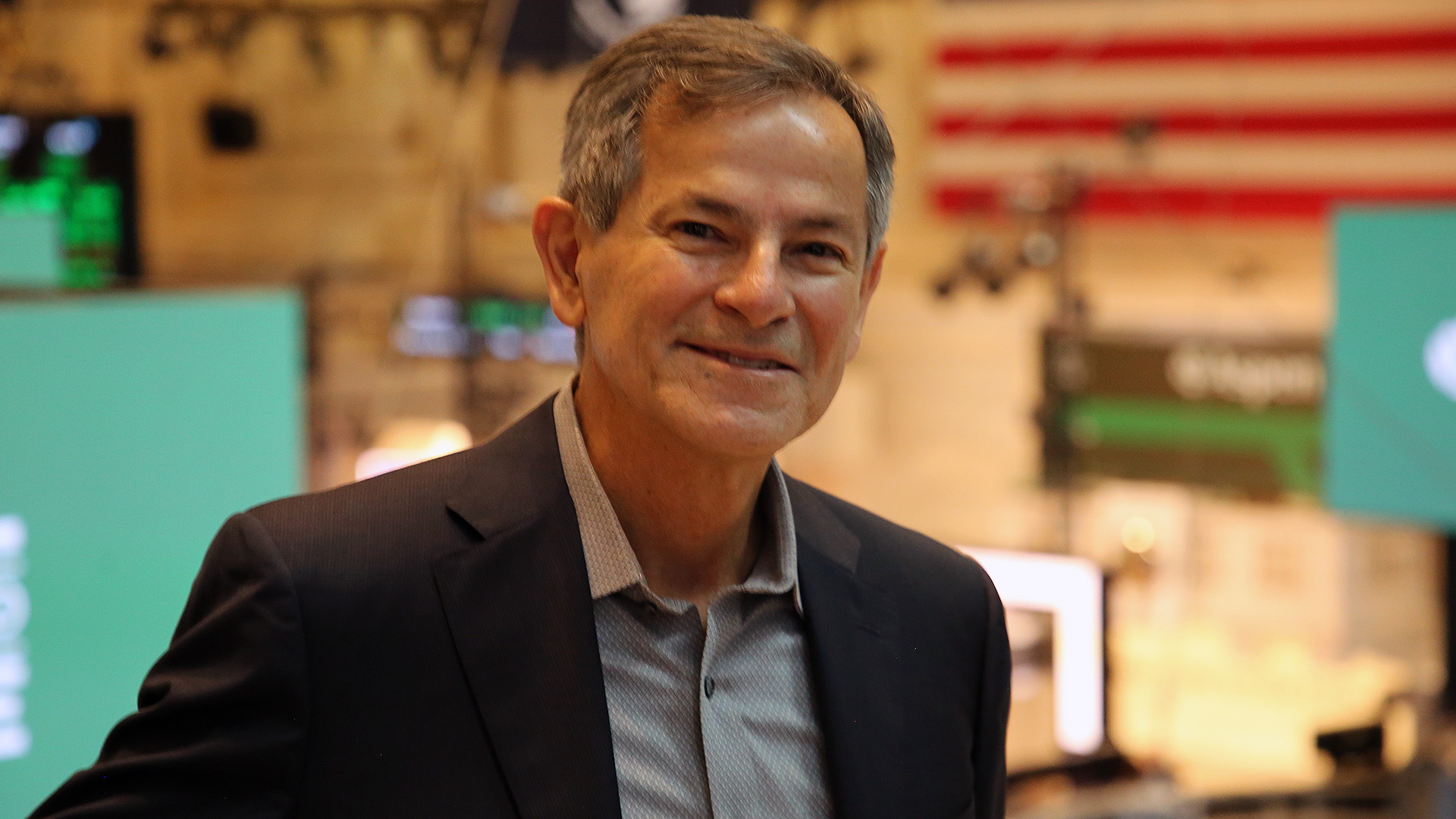
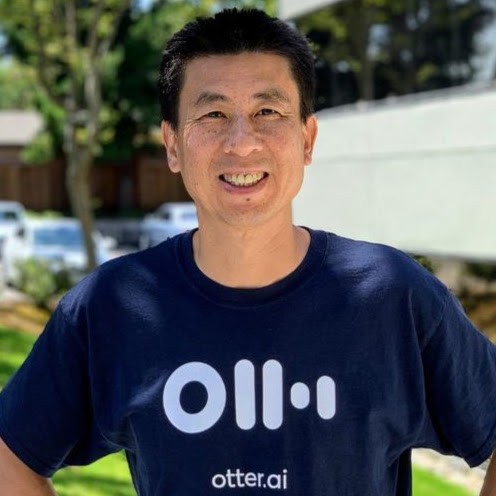
Sam Liang, CEO of Otter.ai, joins theCUBE with John Furrier to discuss the exciting developments and milestones achieved by Otter.ai in voice transcription and artificial intelligence. The conversation takes place at the New York City Studio at the New York Stock Exchange, focusing on the company's innovative journey from its inception to its current success in reaching a significant milestone of $100 million in Annual Recurring Revenue.
In this interview, Sam Liang shares their expertise and the strategic vision behind Otter.ai, a leading service known for real-time voice transcription capabilities. Joined by John Furrier of theCUBE and insights from theCUBE Research team, the discussion explores the evolution of Otter.ai from its early days in 2016 to its current position as a pioneer in the field. Liang sheds light on overcoming industry skepticism and outlines the dedication that leads to key breakthroughs in AI-driven speech recognition.
The video highlights Liang's insights on the transformative power of voice data and the introduction of Otter's AI meeting agent. They share compelling anecdotes and valuable lessons on staying true to one's vision in the face of challenges, emphasizing the importance of user experience and seamless integration with existing data systems. Key takeaways include Otter.ai’s path of innovation and the expanding role of AI agents in enhancing productivity and communication within the corporate landscape, according to industry experts and analysts.
Find more SiliconANGLE news and analysis https://siliconangle.com/
Follow theCUBE's wall-to-wall event coverage https://siliconangle.com/events/
Learn about the latest theCUBE events https://www.thecube.net/
00:00 - From Inception to Innovation: The Journey of Otter and its CEO, Sam Liang
03:11 - Triumph Through Innovation: Conquering Doubts and Leading the Industry
07:45 - User Experience and Technology
13:15 - Speech and AI Innovation
19:51 - Vision for AI Meeting Agents
22:12 - Business Insights and Otter's Culture
27:04 - Otter's Product Roadmap
29:58 - Exploring Integration and Future Opportunities
34:09 - Empowering the Future: Intelligent Business Agents and Voice Data
#OtterAI #theCUBE #NYSEWired #CryptoTrailblazers #VoiceTranscription #AIInnovation #BusinessProductivity #AImeetingAgent #ArtificialIntelligence #SiliconANGLE #ARRGrowth #TechInnovation #CUBEConversation
Forgot Password
Almost there!
We just sent you a verification email. Please verify your account to gain access to
theCUBE + NYSE Wired: Mixture of Experts Series. If you don’t think you received an email check your
spam folder.
Sign in to theCUBE + NYSE Wired: Mixture of Experts Series.
In order to sign in, enter the email address you used to registered for the event. Once completed, you will receive an email with a verification link. Open this link to automatically sign into the site.
Register For theCUBE + NYSE Wired: Mixture of Experts Series
Please fill out the information below. You will recieve an email with a verification link confirming your registration. Click the link to automatically sign into the site.
You’re almost there!
We just sent you a verification email. Please click the verification button in the email. Once your email address is verified, you will have full access to all event content for theCUBE + NYSE Wired: Mixture of Experts Series.
I want my badge and interests to be visible to all attendees.
Checking this box will display your presense on the attendees list, view your profile and allow other attendees to contact you via 1-1 chat. Read the Privacy Policy. At any time, you can choose to disable this preference.
Select your Interests!
add
Upload your photo
Uploading..
OR
Connect via Twitter
Connect via Linkedin
EDIT PASSWORD
Share
Forgot Password
Almost there!
We just sent you a verification email. Please verify your account to gain access to
theCUBE + NYSE Wired: Mixture of Experts Series. If you don’t think you received an email check your
spam folder.
Sign in to theCUBE + NYSE Wired: Mixture of Experts Series.
In order to sign in, enter the email address you used to registered for the event. Once completed, you will receive an email with a verification link. Open this link to automatically sign into the site.
Sign in to gain access to theCUBE + NYSE Wired: Mixture of Experts Series
Please sign in with LinkedIn to continue to theCUBE + NYSE Wired: Mixture of Experts Series. Signing in with LinkedIn ensures a professional environment.
Are you sure you want to remove access rights for this user?
Details
Manage Access
email address
Community Invitation
Sam Liang, Otter.ai
Sam Liang, CEO of Otter.ai, joins theCUBE with John Furrier to discuss the exciting developments and milestones achieved by Otter.ai in voice transcription and artificial intelligence. The conversation takes place at the New York City Studio at the New York Stock Exchange, focusing on the company's innovative journey from its inception to its current success in reaching a significant milestone of $100 million in Annual Recurring Revenue.
In this interview, Sam Liang shares their expertise and the strategic vision behind Otter.ai, a leading service known for real-time voice transcription capabilities. Joined by John Furrier of theCUBE and insights from theCUBE Research team, the discussion explores the evolution of Otter.ai from its early days in 2016 to its current position as a pioneer in the field. Liang sheds light on overcoming industry skepticism and outlines the dedication that leads to key breakthroughs in AI-driven speech recognition.
The video highlights Liang's insights on the transformative power of voice data and the introduction of Otter's AI meeting agent. They share compelling anecdotes and valuable lessons on staying true to one's vision in the face of challenges, emphasizing the importance of user experience and seamless integration with existing data systems. Key takeaways include Otter.ai’s path of innovation and the expanding role of AI agents in enhancing productivity and communication within the corporate landscape, according to industry experts and analysts.
Find more SiliconANGLE news and analysis https://siliconangle.com/
Follow theCUBE's wall-to-wall event coverage https://siliconangle.com/events/
Learn about the latest theCUBE events https://www.thecube.net/
00:00 - From Inception to Innovation: The Journey of Otter and its CEO, Sam Liang
03:11 - Triumph Through Innovation: Conquering Doubts and Leading the Industry
07:45 - User Experience and Technology
13:15 - Speech and AI Innovation
19:51 - Vision for AI Meeting Agents
22:12 - Business Insights and Otter's Culture
27:04 - Otter's Product Roadmap
29:58 - Exploring Integration and Future Opportunities
34:09 - Empowering the Future: Intelligent Business Agents and Voice Data
#OtterAI #theCUBE #NYSEWired #CryptoTrailblazers #VoiceTranscription #AIInnovation #BusinessProductivity #AImeetingAgent #ArtificialIntelligence #SiliconANGLE #ARRGrowth #TechInnovation #CUBEConversation
In this theCUBE + NYSE Wired: Mixture of Experts interview, Sam Liang, CEO of Otter.ai, joins theCUBE’s John Furrier at the New York Stock Exchange studio to explore how voice-first AI and meeting agents are reshaping enterprise productivity and go-to-market execution. Liang shares hard news and milestones – including surpassing $100M in ARR and recording over a billion meetings – while tracing Otter’s journey from its 2016 founding through the 2018 product launch and the COVID-era tipping point that drove viral adoption. Framed at the intersection of tech an...Read more
exploreKeep Exploring
What is the story behind the success of the company discussed in the text?add
What are some potential future capabilities of personalized avatar agents for individuals?add
What are some examples of how users are utilizing Otter for personal situations in addition to business use cases?add
What is the benefit of using our own product every day and involving all team members in the product design process?add
What are some examples of specialized Otter AI agents that have been developed to assist specific types of professionals in their work tasks?add
What systems can the new AI meeting agent connect to and how can users make additional connections if needed?add
What is the potential solution to the problem of OpenAI and Anthropic running out of data to train their foundation model?add
>> Hello. Welcome to theCUBE here at the New York City Studio at the NYSE. I'm John Furrier, host of theCUBE of course. This is our Wall Street News super pop. It's our location here on the East Coast. Of course, we've got Palo Alto and Silicon Valley, connecting tech and finance and business together. This is part of our CUBE conversation, a mixture of expert series, pun intended. Love that AI vibe. Sam Liang is here. He's the CEO of Otter, one of the fastest growing services. We've probably all seen that on meetings, really innovative service, big milestones to report in terms of revenue, but more importantly, as we enter in this next age of productivity, what they have done going back to their origins to now has been quite phenomenal. Sam, thanks for coming on theCUBE. Appreciate you taking the time before you go see Jim Cramer at Mad Money.
Sam Liang
>> Thank you. Thank you for having me here.>> It's great to have you. We're very familiar with the company, of course. We all use it inside SiliconANGLE and theCUBE and our CUBE research team, but you started, it wasn't just recently that you started this company. You're hitting a major milestone of a hundred million, but you go back a few years when you were cracking the code on the voice transcription kind of play with AI and agents, pre-hype, pre-market that we're seeing now. Let's just get into the hard news. A hundred million ARR barrier has been hit, over a billion meetings recorded, probably a lot more on a personal basis. Talk about the milestone and what it means for Otter.
Sam Liang
>> It means a lot, right? As you mentioned, we started back in 2016 before AI became a household buzzword. When we started, we tell the investors that we're going to record the world's conversations, everything. They were scared. They said, "Hey, can you handle the privacy concern? Can you handle the storage cost? How do you compete against the Microsoft, Google, and others, Siri or Alexa in terms of speech recognition?" We say, "Hey, we're going to build better technologies. We're going to record everything in the world." Most people didn't believe in us. So the first few years, we were hands down building a new generation of speech recognition technologies. After a few years, we launched our first Otter app. It instantly got tremendous traction, but hey, we didn't generate any revenue until maybe five years ago. We barely had $1 million in revenue. Five years later, now we grew like a hundred times to a hundred million. So it's a good milestone, but hey, we have big goals. We say, "Hey, let's grow another 10X in maybe 10 years." I mean, five years. It should take five years to grow another 10X.>> It's a great story, and again, congratulations. I love the journey story because I've interviewed all the top executives. One of them that jumps out is Andy Jassy. When he was the CEO of AWS, he said to me once, "You have to be misunderstood for a long time when you're doing something big." And Zoom has a similar story, the founder there. When you have the big idea and you know you have to stay to your convictions. Amazon Web Services did that. They could have zigged and zagged based upon market sentiment, fashion I call it, the fashionable thing. I'm sure the VC conversations, all those objections. I mean, how many nos did you get? There's so many holes to potentially shoot in the thesis there by the herd mentality. Talk about the journey, because I think this is a great use case of where you see the vision. It makes so much sense. You get the linguistics, you record it, there's value, and then talk about the tipping point when you knew it was going because you're grinding away with the team, sticking to the course. Talk about the journey and then that tipping point.
Sam Liang
>> Just on the first point you just made regarding most people follow the herd, follow the fat. Again, when we started, it was a very unconventional idea that scared a lot of people. So if you're a founder, you've got to do something that most people haven't recognized the value yet. Otherwise, it's just too crowded. So it took us a few years to build the technology, to build the app, and then after we launched it back in 2018, a lot of early adopters adopted the product first. But when you talk about the tipping point, it might be during the COVID period when suddenly everybody's moving. It's meeting on online video conferencing system. Everybody is suffering from a Zoom fatigue. They're inundated by tons of meetings, right? There's a lot of studies that show that corporate workers spend at least 30% of their time in meetings, but if you are a manager, you are a VP, you probably spend 50% or even 70, 80% of your time in meetings. People just can't handle that type of information overload. So it's very natural for them to adopt a tool like Otter to take automatic meeting notes, generate the summaries, and track action items. And also a hidden benefit is that it makes it super easy to share the content with their colleagues. In the past, they have to write the meeting notes, send the email, or send a Slack message. But now with Otter, the meeting notes and the summaries is automatically generated, and it's actually shared with your colleagues in real time, even when the meeting is happening for people who are not in the meeting, but if the information is useful for them, they can actually follow the conversation in real time.>> It's a great way for productivity. I have to ask, because one of the things you see a lot in these waves, I've been 30 years in the industry, and there's always these breakthrough moments where the timing's perfect, and sometimes you have the best technology, but if it's not usable and simple to understand and easy to use, you guys seem to have got that virality going. So yeah, fatigue hits in, markets ready, all that work. Talk about what you guys go through and what you guys did to make it simple, easy. The technology innovation, was it understanding the user use cases? Did you spend a lot of time on that piece? And was it user experience work or technology or both? Could you share your insight onto that piece of it? Because you guys seem to have gotten that right.
Sam Liang
>> Yeah, absolutely. It's both. It's both the technology, it has to work, it has to work better, it needs to be accurate, and it'll be fast. So from day one, we focus on building the most accurate real-time transcription, and then later we added automatic meeting summary, automatic action item detection, automatic email drafting. For salespeople, right after their customer call, they need to send a follow-up email. In the past, they have to spend 10, 15, or half an hour to write a nice email, but now it's completely automated. Right after you end the meeting, the follow-up email is already drafted. So in terms of product, I'm really obsessed with building the best user experience. We want to build a product people love. First of all, we use Otter every single day in every single meeting in our company. So we are our own customers. We don't want to build a shitty product for us to use. So that actually gave us the ultimate motivation to build the best product in the world. People ask us, "How do you compete against the Microsoft? How do you compete against Google?" I would ask them, is there a product that Microsoft built that you really love? Who in Microsoft would be so obsessed with building the best, most beautiful product that people love? Who actually in Microsoft actually designing this product in their dreams? That's what we do. Even when I'm sleeping, I'm thinking about the product.>> That could be a new feature, my dreams being transcribed.
Sam Liang
>> I thought about that. I thought about that. Actually, one of our users I heard actually told me, this is a very unusual use case, she actually, when she woke up, she actually turned on Otter immediately to record what she saw in her dreams. It's not a business use case, but->> It's a utility. It proves the utility of why you got it right. I want to ask you a personal question, obviously on business because it's kind of related. You mentioned Stanford. We were talking about Stanford before we came on here, the podcast. It's so fundamental what you're doing. You're recording conversations and speech linguistics. Now, in the AI practition, the AI world, linguistics have value, language, and so obviously Stanford was involved as well as Cal and other schools around large language models. Deep learning was around for a while and hit the scene kind of around 2018 hardcore, OpenAI and all those things happened. The mainstream saw it with ChatGPT. Was there a moment where you said, "This LLM thing is language, and we have the perfect product for vectoring into this future." Because speech, we know, we do theCUBE, we study linguistics all the time. Words, combination of words, jargon. It's a gold mine for AI, because AI is such a beautiful format, it's math. Was there a moment where you, or did you already know, or you said, this is going to be big for AI?
Sam Liang
>> We knew it was going to be big for many reasons. One angle is to think about the human evolution. People have been talking with each other to communicate for a hundred thousand years. The written language was only invented about 5,000 years ago. So most of our human history, people just rely on voice, and then even after the written language was invented, basically all the voice data actually all lost until audio recorder was invented by Thomas Edison in 1877. So as you said, there's a gold mine of knowledge and intelligence in human conversation, but most of that data is lost. Today, though people spend 50, 70% of their time in meetings, still most of the voice data is actually all lost. If you do the math, an average corporate worker may spend more time speaking and listening than they actually read or write emails or document. But most of that voice data is all lost. This is a huge loss of human intelligence. So what we do is we want to capture that data, turn that unstructured data into structured insights so that we use a large language model to achieve that. And then this week, we're announcing an AI meeting agent. During a meeting, you can just ask, "Hey Otter, what's our growth rate last quarter?" Otter will pull that data from the database and give you the answer instantly during the live meeting. So that actually basically adds an AI co-worker into your meeting. It is not just a passive note taker anymore. It becomes an active participant in your meeting.>> I had a chance to interview John Chambers many times, but most recently, a couple of years ago at his home in Silicon Valley, obviously John Chambers, the former CEO of Cisco, has a venture fund now. I asked him, "What's the killer app for this next wave?" He said, "The voice is the killer app." And other people have said that, but take it to the next level here, okay, linguistics, language being stored, that's good value. User interface. We speak to the computer. I always say, "Everything on Star Trek will be invented." Hey, computer, respond back. So voice is the killer app here, and you now have this context of data, okay? Talk about that context. You have agents now, you go over a hundred million in ARR, which is great revenue because it's annual recurring. So that's a bigger number than what it looks like on paper. As the business is succeeding today, there's more value you're going to unlock. Agents is just the beginning. Take me through your vision on today's announcement. What's there today, and where does that go? Connect the dots for us. What's your vision?
Sam Liang
>> Yes. I think most people still haven't seen the power of this voice user interface. Again, this is the most natural user interface that has lasted hundreds of thousands of years. The power of it is that it's actually faster than writing. It's easier to do than writing. It can actually accomplish a lot more now with a large language model. Now with our AI meeting agent, you can ask Otter to just do a lot of jobs. It can draft emails. You can say, "Hey, create action items for me, or schedule a follow-up meeting for me, 10:00 AM next Friday." Otter will just do it instantly. So it's actually reduced the amount of time you need to write. Even if you are commuting from Palo Alto to San Francisco, for example, you can just talk to the agent and get a lot of job done. So I think we're just at the beginning of this agentic era. Not only you can do this sort of a generic task, but also we created a specialist agent for sales and we'll create more specialists for other professionals as well. The next generation, what we see will happen is not only you can have this generic agent that join your meeting, but we can have a lot of specialist agent, but also personalized agent. I'm sure, John, you have a lot of meetings every week. Sometimes you're double booked, sometimes you're sick, sometimes you are on vacation so that you cannot join some meetings. We'll begin to build a personalized avatar agent for you that has your knowledge, has your context, has your intelligence that can go to meetings on your behalf. It will talk just like you. It can answer questions. It can ask questions about things you care about. It can accomplish a lot more even without you being there. So then it will multiply you by 10X or 100X. So that's what we see will happen pretty soon. Actually, we already built a prototype avatar for me that can answer a lot of questions and do a lot of things.>> I know you're recording on your Otter right here so you've got this interview. Next time you do a podcast, say, "I already did a great podcast with John. I'll have my semi-agent."
Sam Liang
>> Yeah, this is actually very important. ChatGPT is great, Claude is great, but they actually don't have your data, your context, what happened in your company? All my recurring meetings with our sales team, our marketing team, our product team, ChatGPT has no knowledge. But Otter, once you integrate it with your system, it has the enterprise context. It can integrate with your CRM, integrate with your applicant tracking system for recruiting, integrate with your MySQL database or Snowflake so that when it participates in meetings, it is highly intelligent. It can give you the facts, give you the metrics instantly. So it's super exciting.>> It's next level human intelligence. My mind likes to wander a little bit, certainly when the conversation is this cool, because it's a data challenge. You mentioned personalization, AI, meetings, get company information. Yeah, productivity, sales, productivity. It checks a lot of boxes right out of the gate, hence the revenue. You're getting at some real big headroom. One, corpus of data. I could have my own corpus, I got corpus of data from my meetings. That's context. Is it your vision that we should use Otter personally and then blend it with other data? Because I can imagine if I use Otter, I'll have my own corpus. If I'm going to have an avatar, I might as well train it, right? So if I'm going to have meetings where I say the same thing over and over again, or if you do another media interview with someone, another press person or another analyst, you get your talking points, right? But you don't need to be there. Just send in your avatar. And then, but this context picture is interesting because there are two realities. I have my work reality and I have me. Do you see the future where I should use both or can I use both today? Do they blend? Will my personal corpus of information blend in with say my work reality or my play reality?
Sam Liang
>> We are currently focusing on the business use case, but we do see a lot of users use it for personal situation as well. When they go to parent-teacher meetings, when they go to their doctor's office, they actually use Otter to capture the conversation for their personal use. I think we give the users a control whether they want to use the same account for both work and life, or they have two separate account so that the data is separated to create that boundary. But in general, my view is that the more data you share with AI, the better AI can help you because the more AI understands you, the better they can recommend things for you to do. So of course, I mean, there's a privacy concern, there's data security. We take that super seriously. Everything is encrypted. We don't have access to your data, and if you delete anything, you erase everything.>> Yeah. I mean, I guess I was a little bit futuristic there, but the trend in AI right now is data integrates with other data, agents will talk to other agents. You're going to see efficiencies. But back to kind of the core product, you've got the business side. What's your life like now as a CEO? Remember, you're now hitting escape velocity, right? So, okay, I'm sure you're still developing product because it's still early days and you created the category. So what's the business like now for you, and give us a feel for what's happening with Otter on the business side, business model, the people, the business goals. What are some of the things going on with Otter on the business front?
Sam Liang
>> Yeah, we, as I mentioned, we use Otter ourselves to make ourselves more efficient. We use it for almost all the meetings in the company that enable us to share the information broadly with every team instantly. So that breaks down information silos. It is speed up business decision process. It has all the context, right? So that actually enabled us to be super efficient. We achieved a hundred million dollars in ARR with less than 200 people. That's probably, you know, three or five times more efficient than most SaaS companies. So we want to create that efficiency for our customers as well. Secondly, this is actually changing the corporate business culture. In the past, most meetings, number one, they're not even recorded. People take manual notes. People forget things all the time. When you forget the action items, what they do is actually they have to schedule more meetings to->> Sync up.
Sam Liang
>> To sync up, and to follow up and say, "Did we decide on that? I'm not sure we promised to do that last week." But hey, if you had Otter, you can check.>> How many times do you see in your subject line, let's sync up? We had that meeting already.
Sam Liang
>> Yeah, people misunderstood each other all the time. People forget. This is just human nature. So we see the culture will change.>> You mentioned earlier about Microsoft and using them as an example. When you create a new category and a market shift like this, I find the pattern seems to be the pioneers tend to be misunderstood. I mentioned that earlier, but the people that solve the problems are in the problem. They're not like just some product manager saying, "Hey, let's talk to some customers and get some requirements," but they've never actually done the problem that they're trying to solve. Being immersed in the problem space, which you said is what you do, and you live it every day, what have you learned? What are you seeing coming out of that? Because we kind of live in our problem too. A lot of live-streaming, a lot of data for us, and we do it a little bit differently with the media piece. So we see things, we get economies of scale, we get unique perspectives. What kind of benefit are you seeing from that? Obviously besides having domain expertise, what advantage does that give Otter compared to others who might want to copy? Or what kind of scale or economies of scale or trajectory competitive advantage do you get out of that?
Sam Liang
>> As I mentioned earlier, we eat our own dog food. We use our own product every single day, so we get the benefit and the value out of the product. In the meantime, we feel the pain if anything doesn't work. If there is bugs or the user interface is not friendly enough or any new features, every team member in our company actually are product designers because they use it every day and say, "Hey, I wish I can do this. I wish I can do that." So a lot of the product roadmap was actually designed internally. Of course, now we have so many customers. Just this morning, I visited a big financial company in New York City who are our customer and visited them and they were super happy about Otter, and in the meantime they told us a number of new things they wish to have. It makes a lot of sense. So for us, a lot of new product features are actually proposed by our own team, and another set of product requests come from our existing customers. So we blend them and we say, hey, we make a judgment call, which one to prioritize? The third is actually we look at the future of AI and see what AI can do next year, next five years. We also try to move ahead of the curve. This is why we are the first to launch this AI meeting agent ahead of Microsoft, ahead of Google or other competitors. So they could copy us, but hey, that's fine. It's->> Well, you've got some groundbreaking capabilities. Again, congratulations on the distribution. It's not a top-down sell, although I'm sure you probably got subscriptions coming in from companies that have adopted it. It grew organically. That was a great success. In the news, you're announcing a hundred million, but also you're announcing the meeting agent, sales agent and the SDR agent. These are the beginnings of the Otter wave coming. Obviously that comes from meetings, so I see that. How is that going with the customers? Because obviously productivity, that frees the human to do more, but sales is revenue. So I can see where you're going with this. So give us an update on where the hot areas are for you. Obviously sales means revenue, meetings means productivity, which frees up free time. Some people call it beer time or food time or free time. So a lot of good value there. And then the SDR, that gets into operations. So you got operational benefits, revenue benefits, and free time.
Sam Liang
>> Yeah. Our flagship product, the Otter AI meeting agent, it's a generalist. It helps every knowledge worker no matter what you do. But hey, we see that a lot of our customers are actually salespeople. They have tons of calls with customers. They need to push data into Salesforce or HubSpot. They need to write follow up emails. So we say, "Hey, let's build a specialist Otter AI agent to help them." So that's why we create this Otter sales agent and Otter SDR agent. Just recently, Marc Benioff of Salesforce are saying that they're hiring more salespeople to sell their agents. Well, Salesforce has the deepest pocket. Obviously they can afford to hire more salespeople. Most companies->> They make a lot of money in their big tower.
Sam Liang
>> Most companies cannot afford to hire more salespeople. We say, "Hey, we can give you a sales agent to do sales for you." This is, the Otter SDR agent is a completely autonomous agent that can conduct a sales call completely on its own, and not only they can talk, it actually can give a visual product demo using a video conferencing platform. Nobody has ever done this before. The Otter SDR agent gave you a live demo. Actually, we put it on our own website. People can just visit our website, click a button and talk to the SDR agent and see the live demo on the product, ask any questions, and hey, do you support this feature? Do you have integration with CRM or not? The agent can answer all those questions, and then at the end, if the customer is interested and say, "Okay, can I talk to a human agent now?" The SDR agent will say, "Yeah, sure. Let me just schedule a meeting right now." So on the spot, the meeting is scheduled. This is just the beginning. We'll build other vertical specialist agent as well. There could be support. It could be recruiting. So now, hey, maybe you don't have a big budget. You can hire a lot of Otter agents to do the job for you.>> Sales costs get dropped, more efficiency. I love the direction. I know you got to go, but I want to ask you, kind of getting in the technology side for a second, as you look at the success of where you're at now, again, I think it's just the beachhead of the beginning of a big movement because recording conversations is super valuable. AI helps to hit the low-hanging fruit use cases, good for revenue. Business is great. Up and to the right. Wall Street loves it, of course. But now I go, okay, I'm thinking next step is I'm going to incorporate this. I've proven, I see the data, it's showing me value. I want to integrate this into my other database. I want to abstract away the complexity of my business logic that's in databases, other databases. So I imagine there's a connection, integration, play with other data, with a control plane. As you start thinking about that wave coming, because this is the step you're taking in, you're now getting into the semantic layer some call it, or harmonization layer. What are you guys doing in this area to kind of extend the value into connecting into other data sources? Because, well, I've demoed today, you're just going used to increase the intelligence of the agents, and that implies that there's more data involved, and a lot of enterprises don't have the most sophisticated systems. Sometimes it might be brittle, manual hooks, whatever. Some are more sophisticated than others, obviously. But you mentioned Salesforce. They're very complex systems. What is your thinking around the integration play? Are you guys doing anything you can share? Is that too confidential? Could you give us a little feel for how you're thinking about that broader sequencing to that broader opportunity of fully integrating in whether it's semi-autonomous and maybe even autonomous in the future?
Sam Liang
>> Yeah, absolutely. First of all, as we just discussed, Otter enable you to capture the voice data, which most companies actually completely lost. This is a set of data that contains so much intelligence, and then we have been doing the integration with a lot of different systems, Google Calendar, Microsoft Outlook, Salesforce, HubSpot. Now with the new AI meeting agent, it's connecting with other data systems as well. You can connect it with your MySQL, Snowflake, Slack. We have a Slack integration as well. We also created a Zapier API that if we don't have a specific integration, the user can use Zapier to make the connection themselves as well. So we see that everything will be connected, and then your AI meeting agent in the meeting can get access to all this tremendous amount of data that's spread across multiple system so that it has the most, can generate the most power that can help you in real time. So I see in the future, probably maybe 90% of the business can be conducted completely by voice. I see people will write less now that the voice agent can do so much.>> It's a great business. Congratulations, and thank you for spending time with me here in theCUBE podcast. Final question, just because it's random, and I want to get your expert thoughts on this. In the data conversation, there's a lot of talk about synthetic data, because people are using synthetic data for like digital twins and whatnot, but that means they don't have enough data. You have the data, right? So when you get the actual data, that's a lot different than synthetic data, which is just simulations. Just from a tech perspective, just the importance of having authentic data, I mean, obviously it could be on-premise, maybe some in the cloud, but the value of the data, the quality, speak to that for a second because a lot of people are learning now about the quality, not just storing and hoarding data, but having data that's accessible and usable is valuable. Share your thoughts on this.
Sam Liang
>> Yeah, people are saying that OpenAI and Anthropic are running out of data to train their foundation model. However, as we discussed earlier, 99.99% of the world's voice data is actually, is all lost. So tremendous voice data hasn't been captured or hasn't been used yet. So we actually, with 25 million users and tremendous voice data that we have, for example, our sales team, our own internal team are generating huge amount of data. We actually use our own sales team's customer to train the sales agent so that the agent knows how to do a sales conversation. If the customer say, "Oh, you know, your product is too expensive, your product is not as good as Microsoft," but with our AI sales agent, it actually has the right answer, or it has the intelligence of our best salesperson. It can give the answer instantly.>> Remember the Silicon Valley 10X engineer meme that was going around? Now you got the 10X sales rep. You hire one great salesperson and it trains all the agents.
Sam Liang
>> Yeah, so as I said, it is not limited to sales specialty. There will be the best customer support agent, the best recruiting agent, the best->> Every area, every department.
Sam Liang
>> ... marketing agent. So->> Sales is just good for revenue because why would you, we start there. Make more money. Sam, thank you so much, and again, pleasure to see you and talk with you again. We've been following your journey on SiliconANGLE since the founding of the company, and again, love how you broke through, the way you guys stayed on your mission, and thanks for coming into our new Wall Street studio here at the NYSE.
Sam Liang
>> Thank you. Thank you, John.>> Thank you very much.
Sam Liang
>> Great, thank you.>> Okay, I'll get to my meeting. I'm missing all my meetings today. And by the way, we're doing our part in recording some voice here. Recording right here on the Otter app that Sam has, of course, here on theCUBE. We're getting all the conversations. We're recording them, we're sharing them, we're making them public. I'm John Furrier here in our East Coast Wall Street point of presence, bringing all the digital coverage. Thanks for watching.