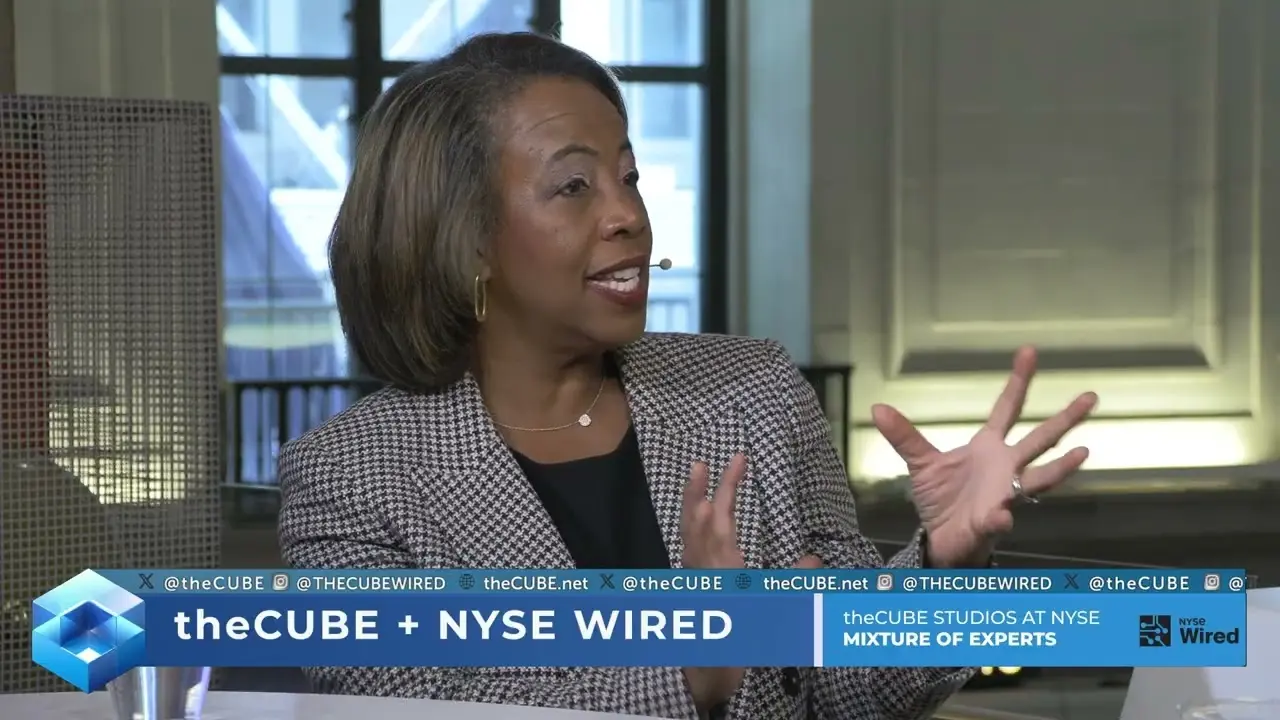
Wen Sang of Genspark.ai, cofounder and chief operating officer, discusses Genspark's agentic artificial intelligence strategy and Genspark 6.0 for knowledge workers in a conversation recorded for theCUBE and NYSE Wired Mixture of Experts series. John Furrier of theCUBE Research and Dave Vellante of NYSE Wired host the discussion.
Sang outlines Genspark's mission to automate busywork for knowledge workers by orchestrating more than 70 frontier models and delivering agentic workflows. They describe the Genspark 6.0 release and the company's product suites Office, Creative and Builder, as well as integrations with OpenAI, Anthropic and Gemini and a streamlined enterprise onboarding process.
Sang explains the mixture-of-agents architecture that cross-checks models to reduce hallucinations and the approach to ground outputs with paid data sources such as PitchBook and S&P. They emphasize enterprise-ready controls including ISO 27001 and SOC 2 Type 2 compliance, zero-training policies with frontier labs and governance measures that support secure deployment. They highlight faster workflows that shift employees from repetitive tasks to strategic work and the productivity benefits of agentic AI for knowledge workers.
This discussion provides practical insights on product architecture, integrations, compliance and enterprise adoption for organizations evaluating AI solutions.
Forgot Password
Almost there!
We just sent you a verification email. Please verify your account to gain access to
theCUBE + NYSE Wired: Mixture of Experts Series. If you don’t think you received an email check your
spam folder.
Sign in to theCUBE + NYSE Wired: Mixture of Experts Series.
In order to sign in, enter the email address you used to registered for the event. Once completed, you will receive an email with a verification link. Open this link to automatically sign into the site.
Register For theCUBE + NYSE Wired: Mixture of Experts Series
Please fill out the information below. You will recieve an email with a verification link confirming your registration. Click the link to automatically sign into the site.
You’re almost there!
We just sent you a verification email. Please click the verification button in the email. Once your email address is verified, you will have full access to all event content for theCUBE + NYSE Wired: Mixture of Experts Series.
I want my badge and interests to be visible to all attendees.
Checking this box will display your presense on the attendees list, view your profile and allow other attendees to contact you via 1-1 chat. Read the Privacy Policy. At any time, you can choose to disable this preference.
Select your Interests!
add
Upload your photo
Uploading..
OR
Connect via Twitter
Connect via Linkedin
EDIT PASSWORD
Share
Forgot Password
Almost there!
We just sent you a verification email. Please verify your account to gain access to
theCUBE + NYSE Wired: Mixture of Experts Series. If you don’t think you received an email check your
spam folder.
Sign in to theCUBE + NYSE Wired: Mixture of Experts Series.
In order to sign in, enter the email address you used to registered for the event. Once completed, you will receive an email with a verification link. Open this link to automatically sign into the site.
Sign in to gain access to theCUBE + NYSE Wired: Mixture of Experts Series
Please sign in with LinkedIn to continue to theCUBE + NYSE Wired: Mixture of Experts Series. Signing in with LinkedIn ensures a professional environment.
Are you sure you want to remove access rights for this user?
Details
Manage Access
email address
Community Invitation
Wen Sang, Genspark.ai
Wen Sang of Genspark.ai, cofounder and chief operating officer, discusses Genspark's agentic artificial intelligence strategy and Genspark 6.0 for knowledge workers in a conversation recorded for theCUBE and NYSE Wired Mixture of Experts series. John Furrier of theCUBE Research and Dave Vellante of NYSE Wired host the discussion.
Sang outlines Genspark's mission to automate busywork for knowledge workers by orchestrating more than 70 frontier models and delivering agentic workflows. They describe the Genspark 6.0 release and the company's product suites Office, Creative and Builder, as well as integrations with OpenAI, Anthropic and Gemini and a streamlined enterprise onboarding process.
Sang explains the mixture-of-agents architecture that cross-checks models to reduce hallucinations and the approach to ground outputs with paid data sources such as PitchBook and S&P. They emphasize enterprise-ready controls including ISO 27001 and SOC 2 Type 2 compliance, zero-training policies with frontier labs and governance measures that support secure deployment. They highlight faster workflows that shift employees from repetitive tasks to strategic work and the productivity benefits of agentic AI for knowledge workers.
This discussion provides practical insights on product architecture, integrations, compliance and enterprise adoption for organizations evaluating AI solutions.
>> John Furrier here with theCUBE here at theCUBE's NYSE Wired Studio, New York Stock Exchange. Of course, we're at Palo Alto Studio connecting Silicon Valley And Wall Street. Wen Sang is the co-founder And chief operating officer of Genspark.ai, fast-growing company from zero to 250 million in ARR in 12 months. And there's more behind it, rapidly growing AI startup. Wen, great to have you. And you have a big event happening here at the NYSE upstairs. You got a lot of folks coming in, close to 70 people. Welcome to theCUBE And NYSE Wired.
Wen Sang
>> Thank you, John. Super excited to be here.
John Furrier
>> Wen, you guys got some big activities here. You mentioned the NYSE. What are you guys announcing? What's the big news? You got a big preview. Press are here. Analysts are here. What's going on? What are you announcing?
Wen Sang
>> Yes, John. We're gathered today at the NYSE to reveal our next generation product, Genspark 6.0, with a group of media friends like yourself from 14 Mainstream Media, as well as a group of growth equity investors, crossover funds, sovereign wealth funds, big family offices here in the big New York City. We're gonna show to the world now, not only you can talk to your AI, you can ask your AI to code, you can ask your AI to work for you session by session, your AI would know who you are And think on your behalf, have a memory And true understanding with multi-dimensional context holistically about you in order to work for you on an ongoing basis.
John Furrier
>> Well, it's super hot. Injecting intelligence into the business is the number one story we're seeing here in tech. It's been great.
Wen Sang
>> Absolutely, John. Super excited to launch our product And hear feedback from our customers, users from around the globe.
John Furrier
>> So one of the things I like about your company, I want you to explain your mission And what you guys do, is that you're targeting a specific part of the AI market, knowledge workers. Explain what you guys do.
Wen Sang
>> Yeah, absolutely, John. So essentially, we see there is a fundamental shift happening in our world that in the past, we human beings are the production engine. We have to do work hands on. In order to achieve the business goals, we have to go through so much busy work. We may be spending too much time on copying And pasting the same piece of business context from a meeting note to an email to a Slack message. It's just way too much. Now, for the first time ever in humanity's history, we have this opportunity to leverage platforms like Genspark to skip through all the busy work so we human beings can focus on the strategic, the valuable, creative work. And the way we do it is we work with all the frontier labs, OpenAI, Anthropic, Google, all the open-weight model providers. And we sit on top of 70 -plus AI models, state-of-the-art AI models. And we orchestrate the models, take advantage of the strength of each model. And we built tools for these AI models to use in order to deliver real -world work. If you wanted to do research on a stock, you just say the word, you talk to your Genspark agent, And it'll get all the research done And give you the financial model, the presentation, the investment memo, And everything. So with that, you can work like a Jamie Dimon. You don't see Jamie typing to get work done, right? He just calls his agents.
John Furrier
>> And he's a hard worker. And what I like about Jamie Dimon is he's like, he wants people to work harder And smarter. And the smarter piece is key. When I look at your site, one thing that jumps out at me, you're speaking to the business user, slides, presentation, kind of the business office suite. It feels like a Microsoft Office vibe, but it's all AI. Explain specifically that intention. Why did you do it that way? What was the data? How did that come about?
Wen Sang
>> 100%. So initially, John, we really built it for ourselves. Because as busy founders, we found ourselves spending way too much time fixing the pixels on a presentation, trying to figure out how to build out that financial model cell by cell And crafting the documents word by word. It's just a lot of busy work. So we thought, wow, what if we could leverage AI not only just to get the information, but really go steps further And get the work done so we could have the time to think strategically And creatively. That's how it all got started. Initially, our company was founded two years ago in Palo Alto. And initially, we built a search product, but then we realized, we thought, We should push the AI steps further to not just collect the information, but get the work done. So beyond that, though, after we launched our first version, we saw that so many people loved it. Within 45 days, I think we got to 2 million users globally. And we're like, OK, something's working. Let's do more. So now beyond the office suite, we also have a creative suite. You could do AI video, image, music, podcast, everything, as well as a builder suite. You could just talk to Genspark And then build out a full application, not only for individuals, but also for enterprises. So, we're seeing an opportunity to level the playing field to take the latest And greatest AI to the one billion plus knowledge workers who don't know how to code. It's not just a toy for the most tech savvy Silicon Valley folks. It should be available for everybody.
John Furrier
>> Democratizing the work is a huge deal. And I remember the PC revolution when Lotus 1-2-3 came out, it was the first spreadsheet you can imagine. Then everyone knows Excel, Google Sheets. It was easy to use, but then the super users used macros. And then if you were in finance, you knew all that stuff. And that was essentially domain expertise. what you're doing is essentially creating leverage from the domain expertise of the user, And they're dealing with all these systems that are disparate, that they want to cobble together.
Wen Sang
>> Yeah.
John Furrier
>> And this is where the agents And AI shine. Explain how you guys are thinking about this, because there is a metaphor there saying, hey, what spreadsheets And Word did for productivity in the office, you're taking agents And AI And making that better, because we're all dealing with Slack channels over here, I got Google Sheets there, I got Docs everywhere, I've got databases. It's all spread out And not connected.
Wen Sang
>> 100%.
John Furrier
>> Connecting that together drives intelligence. Explain the rationale.
Wen Sang
>> Yeah, absolutely, John. So you nailed it. Essentially, we're living in a world where it used to be just so tool -centric. Each of us would have to go through 20, 30, 40 tools to get the work done. And information is scattered all around. And the reality of that is we're just, it's a death by a thousand tools. We're just spending more time juggling around different tools than doing the actual work. So, the way we look at the world is we're not building the next generation software. We're not doing that. We're building the next generation users of the software. So all the amazing software tools that were built in the last decades, our agent is going to jump on And then start using them on your behalf. So you don't have to get certified for being good at Excel. Your agent would be learning all the things that it requires to really become a powerful assistant, a fleet of Goldman Sachs analysts in your pocket is how we see it.
John Furrier
>> All right, take me through the onboarding because I think one of the things I've noticed on some of these tools is, I won't say they overplay their hand, but a lot of the times you have to be somewhat savvy at knowing what an MCP server is or knowing what an API is, even at the most elementary level. Some users don't even know what an API is. So most business users, they just know that they want to connect a shared drive, connect to a database. They know where the reports are. So in their job, they're stuck.
Wen Sang
>> Yes.
John Furrier
>> And they have to spend time cobbling together, like I said. So you've got your search piece connects to the AI. So you're connecting everything. Take us through the onboarding. What's it like? How easy is it? How does someone get started?
Wen Sang
>> 100%, John. So essentially, if you can use Google, you can use Genspark. It's that simple. Why? Because we understand when the frontier models just came out, it's like you have an extremely powerful engine And a lot of good Frontier Labs they built a Formula 1 racing car around it to drive that car to get the full power out of it you have to be really good at exactly the things you talked about the APIs, MCPs, all the technical stuff And you got to understand when the Formula 1 racing car AI asks you if it could download these 10 things from GitHub. You got to know what those things are. Otherwise, I'd be worried, right? So what we did is, we thought, We believe the vast majority of the one billion plus global knowledge workers, they don't know how to do that. So we wanted to essentially package it up And we built a full FSD package for them. You don't need to know how to drive. You just tell the car, you just tell it where you want it to go And we will deliver you to your destination. You don't even have to touch the steering wheel And the specific onboarding is really you just sign up with your email And then just talk to Genspark what do you want just say the words And then say hey go to my email And let me know what's happening today I don't look at my inbox anymore i talk to my Genspark Claw all the time either on WhatsApp or just verbally i ask my Genspark Claw who emailed me what are the most important things what are the urgencies And then draft responses read it out loud And then I'll ask my client to tune it up a little bit or be more specific on certain issues And then just get back to the emails. And I don't have to look at the 70 emails. I'm just being CC'd for no reason. That is a life we believe everybody deserves. And with that, we can all have a lot more freedom to actually follow the sparks of our creativity instead of just getting trapped, let our talent get trapped in this busy work.
John Furrier
>> I have to ask because, well, first of all, what's the most important, I'm sorry, let me rephrase. What is the most popular application of yours right now, if you look at the data?
Wen Sang
>> Well, that is a great question And hard question, John, because we've been on this streak to release new products on a weekly And biweekly basis. From the data, it looks like the stuff we released earlier naturally has more users. But what we're also seeing is people are expanding on the things that they're doing with us, seeing the new possibilities. A lot of things that we made possible just weren't possible before because the capabilities were just not there. I'll give you a couple of examples.
John Furrier
>> Yeah, share some examples. People might not understand some of the simple things that could be done that's magical in some of the advanced use cases.
Wen Sang
>> 100%. So I talked to a gentleman, Scott Williamson, sixth generation Texan. He's a bank loan broker, consultant. He helps local restaurants to secure bank loans. When they wanted to do a patio project, he helps them to secure a million, $2 million from the bank. So the way he did it before was he would hire someone to count the foot traffic in order to build a market analysis himself. And then he would hire a CPA firm analyst to build a financial model talking about a payment plan. And he would then build the presentation himself. He would walk into the bank meeting with his clients to talk to the banks, to pitch the banks. Now, with that, he had to pay them $15,000 probably out of his pocket in order to make that $30,000, $40,000 for him. Today, he doesn't do any of that. He just talks to Genspark. Hey, Genspark, here's the restaurant. Here's the zip code. Do full market analysis for me. Give me the full report. I'm going to pitch to a bank. Hey, Genspark, here are the historical P&L, balance sheet, cash flow statements for the past three years for this restaurant. Build me the payment plan And give me the best, worst, most probable scenarios. And make sure that it looks all good, but substantiate it. And Genspark built me the full presentation with the same set of context. He would polish the work up. He would walk into the bank meeting. Same thing. Now, the amount of time it takes him to do this now is hours or days before it was weeks or months. With this, he gets to deliver a lot more for his clients, get loans a lot faster. He gets paid probably the same amount. He might lower his fee, but he doesn't have to pay out of pocket for all the people he used to have to hire And manage. And his margin just went up 90%.
John Furrier
>> What about accuracy?People might say, hey, what about hallucinations? What is he relying on? What data? So take me through how you guys mitigate the hallucinations And make sure it's accurate data.
Wen Sang
>> Such an amazing question, John. So we think about this a lot because at the end of the day, we're living in a human world And human beings take responsibility. So when AI does the work, one, we release the world's first Mixture-of-Agents tech architecture. What that does is we call on different models, not only to take advantage of their strength to do different things, the perfect model for the right task at the right time. we call on these models to check on each other so that not only they're accurate, but they all have bias. Yeah, so we want to make sure they're checking on each other secondly We understand you can't just rely on what people say on Reddit. You have to provide reliable Accurate factual data so we pay to get access to private databases like PitchBook Crunchbase S&P And so on And so forth we're in conversation with NYSE to see if we could take advantage of the data. They have a big data business as I've learned. So it would be important for the knowledge workers to be able to rely on this sort of information instead of just the fast web search. At the end -
John Furrier
>> So you're grounding it with data sources?
Wen Sang
>> Yes, 100%, yeah.
John Furrier
>> So what if we recorded this conversation now on Genspark And let it record, which should tell me the best highlights. Is that a use case?
Wen Sang
>> 100%, so as a matter of fact, you can do that with your phone, with your watch. We have a Genspark WhatsApp. You could do that. And we have something secret coming out just today at the NYSE. We're going to reveal it with a group of VIPs, investors, major media, And we'll share it with the whole world next week on the 21st. So I'm excited to, yeah.
John Furrier
>> I would love a WhatsApp tool to get all my WhatsApp messages And summarize them for me.
Wen Sang
>> Yeah.
John Furrier
>> Talk about some other use cases. Again, this is good for people to understand how simple it could make their lives. What other areas are popular from a use case standpoint that you see usage of?
Wen Sang
>> Absolutely, John. So for enterprises, we've seen a lot of adoption lately. So we launched the product initially last April just for individuals. By summertime, a lot of corporations started calling us. These are oil And gas companies from Bogotá, Colombia, investment banks from London, private equity companies from Japan, government agencies from Dubai, UAE, And a bunch of companies here at the home base. So then we went into the effort to build out the Genspark for Business And launch it in November. And as of today, I think, within six months, we got to 6 ,000 plus business customers. And many of them are, for example, consulting firms, consumer brands. And one of the major household name system integrators told us, in the past, when they build something, build a full application for some of their clients with hundreds of billions of dollars of market cap, they would have to work with their developer center offshore in order to build a prototype, charging the client probably a quarter million dollars just to see a prototype over a time period of two months. And today with Genspark, they don't do that anymore. They just throw the meeting notes into Genspark And say, hey, turn those meeting notes into a full product requirement document. Turn that document into designs And turn those designs into prototype applications. And within a week, they would walk into the meeting with the client, giving them three options, charging them a lot less. And most importantly, AI is not about saving costs or in our view, to replace human work. It is about accelerating production cycles And deal cycles.
John Furrier
>> All right, so I'm going to put my enterprise IT buyer hat on CIO hat, CISO hat. Whoa, I see Claude's in there. I got building, I got AI agents running around wild. Let's put the brakes on this. let's create a little certification pilot.
Wen Sang
>> Yeah.
John Furrier
>> I'm nervous. How do you manage the objection on the enterprise where they got a lot of data, they got a lot of data lakes.
Wen Sang
>> Yes.
John Furrier
>> And, they're turning to the graph databases.
Wen Sang
>> Yeah.
John Furrier
>> We're seeing a lot more intelligence being injected in.
Wen Sang
>> Yes.
John Furrier
>> Build off that data.
Wen Sang
>> Yeah.
John Furrier
>> But they don't want rogue agents running around. we're seeing token costs go out of control, which is a sign of the demand curve. But they might be worried about, one, security. Who's touching what data? How do you handle that objection?
Wen Sang
>> I think, John, that I wouldn't call it an objection, but more of a concern. I think it's an important step to take because AI is really capable. We're working with Genspark like how we're working with a human being, but a lot faster, 24 -7, nonstop. We wanted to make sure the agents are in check. They're not just doing whatever they want. So to do that, we believe in all the compliance frameworks, for example, we went through ISO 27001, SOC 2 Type II, we got certified. Very important. We understand the considerations there And we follow those requirements. And when it comes to what is new in the AI arena, when it comes to security, safety And privacy, we understand people are learning And doing it at the same time as well. So for that, we follow zero training policy. For example, when we work with Frontier Labs, like OpenAI, Anthropic, And Google, when we sign contracts with them, we make sure they promise to us that they will not train our clients' data for their models. So all of these things are extremely important, And we take the steps to make sure that the CIOs, the CISOs, the CAIOs are comfortable with the solution. That is very important.
John Furrier
>> So talk about your relationship with the Frontier models. And there's a lot of new Frontiers emerging. we heard open weights is becoming a new frontier. I was talking with Fireworks AI CEO, she was on theCUBE at RAISE Summit, And there's the specialized models emerging. You have general intelligence And specialized intelligence, which is getting into more of the domain specific, but also changing the model framework. What does that do to your, explain your relationship with OpenAI And Anthropic And the cloud providers. What's the relationship? IP sharing, using the model, you guys have your own differentiation.
Wen Sang
>> Yeah.
John Furrier
>> How do you differentiate? What's your relationship?
Wen Sang
>> Absolutely. So we work very closely with all the Frontier Labs in the world, John, including the ones that are currently working on new models that have not been released to the world yet. So we're a top partner for both OpenAI And Anthropic. Matter of fact, if you were in New York, you probably have seen some of the big billboards Anthropic put up with my co-founder, Kay's image, on it. Penn Plaza, I think. And if you're flying out of Terminal 1 from SFO, you probably have seen that big billboard as well. And OpenAI does amazing marketing campaigns with SFO. So we work very closely with them. We get early access to the models. And we actually provide feedback to the Frontier Labs so that their agentic team could, based off that feedback, fine -tune their model before it's released. And we typically release the same model capabilities on the same day, if not the same hour.
John Furrier
>> So you're not sharing any enterprise data with the Frontier Labs?
Wen Sang
>> So we do not allow any Frontier AI labs to train their models on our clients' data. But the nature of the technology is for you to interact with AI models, you have to send snippets of data. But when that happens, we de -identify the data naturally. And because of our Mixture-of-Agents tech architecture, we're calling on so many models at the same time. The models don't even know what the context is. Only our customers know. So I also wanted to say not only do we work with the leading Frontier Lab models, we do also work with, you mentioned, Fireworks. Fireworks is a great partner of ours. We do fine -tuning work with them. Not only that, we're having amazing conversations with FAIR Labs, led by Yann LeCun. We were just at Ray Summit. We had a great conversation. I'm super excited about their new model. Reflection here in New York. I bump into Joseph, who's responsible for their partnerships all the time. I'm super excited about their new models as well.
John Furrier
>> the work that they're doing is pretty phenomenal. And I love these specialized models because they're not mutually exclusive. A lot of people don't understand that the large frontier models are not the end -all, be -all. They're a big part of it. That's why they're up on the power curve. But as you go down, you see a long tail emerging.
Wen Sang
>> Yeah. Yeah, you can ask. So if you wanted to visualize data in a presentation, you can ask Claude to code, ask GPT to reason And build the work plan. You can't ask Google just to create an image of that data. You got to ask another possibly open-weight model to write Python code in Jupyter Notebook, And then visualize data And then put it back. Google is great with image videos And so on. That's for creativity. So all of these models have things that they're good at And they're not so good at. The important thing is being able to harness all the power where models are the engine.
John Furrier
>> So it sounds like you're creating this workspace, workbench for the knowledge worker. And you'll use whatever model is best to achieve that. So it's not about saying Claude or Genspark. It's not the right question or comparable. I'm sure you get this all the time with investor meetings.
Wen Sang
>> I think you nailed it, John. So, yes, the models give us the core intelligence power. But intelligence by itself is not sufficient. We need to build out the tools. We need to make sure the data And output are reliable, useful, And that is building the full package of the car, the autonomous driving car, to take people to their destinations. That's what we do.
John Furrier
>> That's awesome. Let's wrap up by just sharing what are some of your goals for the next, let's say, 6 to 12 months. Talk about some of the stats, funding, some of the milestones, share what you're up to. Put a plug in for the company.
Wen Sang
>> So thank you, John. So we've been fortunate that we're backed by world -class AI And SaaS investors, our B round was $485 million led by Emergence Capital Partners. They put the first checks into companies like Salesforce, Box, Zoom. And we are also backed by investors from around the globe. SBI Investment from Japan, LG And Mirae Asset from Korea, Pavilion Capital from Temasek in Singapore. So we see the world as our oyster. we're just getting started. We started. History today, the last two years, we raised $645 million. But we're truly just getting started because we see a trillion-dollar opportunity.
John Furrier
>> Yeah.
Wen Sang
>> A trillion-dollar opportunity. The whole knowledge work market around the globe is about $30 to $50 trillion. Yeah. And imagine if we could build the next generation of tools for the software to really autopilot a lot of the busy work. Yeah. So, yeah.
John Furrier
>> And I think the mixture of agents is a great extension of Mixture of Experts.
Wen Sang
>> Yes.
John Furrier
>> So, that's the name of our program here.
Wen Sang
>> Yeah.
John Furrier
>> Because now you can have agents working on your behalf from a single pane of glass, or in this case, voice activation. Users can consolidate their interface to AI And have AI work on their behalf.
Wen Sang
>> Yeah. And with, I'd say, John, all the technologies we've built, all the money we've raised, we actually just onboarded our chief revenue officer, Jamison Powell. He's basically here in New York, actually. He took monday.com. You know monday.com?
John Furrier
>> Of course.
Wen Sang
>> From eight digits of top line to over a billion dollars And went through IPO. And he has a playbook. We're globally only about 70 people right now. Most of us are in Palo Alto. We have a team in Japan. But he's going to build out our team here in New York, And we're going to add another 55 heads on our GTM (go-to-market) team. So just before the end of the year.
John Furrier
>> Great. We have our Palo Alto studio. We have our New York Stock Exchange studio for the Cube. So it sounds like we're going to be busy working with him.
Wen Sang
>> Yes.
John Furrier
>> And you can come by anytime in Palo Alto. I'll be there next week if you want to stop by.
Wen Sang
>> I would love that. Yes.
John Furrier
>> All right. Genspark really successful company. Congratulations on the momentum. I think you really cracked the code on this interface to the AI And making it easier, reducing the friction, allowing people to get to the value of their domain tasks as fast as possible. But there is kind of a search paradigm in there because you got to search stuff to know what is out there And then have the agents learn And work.
Wen Sang
>> Yeah, the whole core piece of knowledge work is really collecting information, processing information, deliver output. The reality of this is for tens of years, we've just spent way too much time on the busy stuff. Now what we do is to take over the busy stuff, the grunt work so that human beings could get the strategic work done. So yeah, that's absolutely the case.
John Furrier
>> Automating intelligence, connecting intelligence. Wen, thanks for coming on theCUBE. I'm John Furrier. It's our Mixture of Experts series, part of our NYSE Wired program powered by theCUBE. And of course, it's an open community of leaders sharing what they're working on because we're in a whole nother world. We've crossed the threshold from the old way to the new way. AI is driving a lot of change And it's helping people do their jobs, change society, of course, making productivity. Of course, more technology is coming. We're doing our part to bring that to you. Thanks for watching.
>> John Furrier here with theCUBE here at theCUBE's NYSE Wired Studio, New York Stock Exchange. Of course, we're at Palo Alto Studio connecting Silicon Valley And Wall Street. Wen Sang is the co-founder And chief operating officer of Genspark.ai, fast-growing company from zero to 250 million in ARR in 12 months. And there's more behind it, rapidly growing AI startup. Wen, great to have you. And you have a big event happening here at the NYSE upstairs. You got a lot of folks coming in, close to 70 people. Welcome to theCUBE And NYSE Wired.
Wen Sang
>> Thank you, John. Super excited to be here.
John Furrier
>> Wen, you guys got some big activities here. You mentioned the NYSE. What are you guys announcing? What's the big news? You got a big preview. Press are here. Analysts are here. What's going on? What are you announcing?
Wen Sang
>> Yes, John. We're gathered today at the NYSE to reveal our next generation product, Genspark 6.0, with a group of media friends like yourself from 14 Mainstream Media, as well as a group of growth equity investors, crossover funds, sovereign wealth funds, big family offices here in the big New York City. We're gonna show to the world now, not only you can talk to your AI, you can ask your AI to code, you can ask your AI to work for you session by session, your AI would know who you are And think on your behalf, have a memory And true understanding with multi-dimensional context holistically about you in order to work for you on an ongoing basis.
John Furrier
>> Well, it's super hot. Injecting intelligence into the business is the number one story we're seeing here in tech. It's been great.
Wen Sang
>> Absolutely, John. Super excited to launch our product And hear feedback from our customers, users from around the globe.
John Furrier
>> So one of the things I like about your company, I want you to explain your mission And what you guys do, is that you're targeting a specific part of the AI market, knowledge workers. Explain what you guys do.
Wen Sang
>> Yeah, absolutely, John. So essentially, we see there is a fundamental shift happening in our world that in the past, we human beings are the production engine. We have to do work hands on. In order to achieve the business goals, we have to go through so much busy work. We may be spending too much time on copying And pasting the same piece of business context from a meeting note to an email to a Slack message. It's just way too much. Now, for the first time ever in humanity's history, we have this opportunity to leverage platforms like Genspark to skip through all the busy work so we human beings can focus on the strategic, the valuable, creative work. And the way we do it is we work with all the frontier labs, OpenAI, Anthropic, Google, all the open-weight model providers. And we sit on top of 70 -plus AI models, state-of-the-art AI models. And we orchestrate the models, take advantage of the strength of each model. And we built tools for these AI models to use in order to deliver real -world work. If you wanted to do research on a stock, you just say the word, you talk to your Genspark agent, And it'll get all the research done And give you the financial model, the presentation, the investment memo, And everything. So with that, you can work like a Jamie Dimon. You don't see Jamie typing to get work done, right? He just calls his agents.
John Furrier
>> And he's a hard worker. And what I like about Jamie Dimon is he's like, he wants people to work harder And smarter. And the smarter piece is key. When I look at your site, one thing that jumps out at me, you're speaking to the business user, slides, presentation, kind of the business office suite. It feels like a Microsoft Office vibe, but it's all AI. Explain specifically that intention. Why did you do it that way? What was the data? How did that come about?
Wen Sang
>> 100%. So initially, John, we really built it for ourselves. Because as busy founders, we found ourselves spending way too much time fixing the pixels on a presentation, trying to figure out how to build out that financial model cell by cell And crafting the documents word by word. It's just a lot of busy work. So we thought, wow, what if we could leverage AI not only just to get the information, but really go steps further And get the work done so we could have the time to think strategically And creatively. That's how it all got started. Initially, our company was founded two years ago in Palo Alto. And initially, we built a search product, but then we realized, we thought, We should push the AI steps further to not just collect the information, but get the work done. So beyond that, though, after we launched our first version, we saw that so many people loved it. Within 45 days, I think we got to 2 million users globally. And we're like, OK, something's working. Let's do more. So now beyond the office suite, we also have a creative suite. You could do AI video, image, music, podcast, everything, as well as a builder suite. You could just talk to Genspark And then build out a full application, not only for individuals, but also for enterprises. So, we're seeing an opportunity to level the playing field to take the latest And greatest AI to the one billion plus knowledge workers who don't know how to code. It's not just a toy for the most tech savvy Silicon Valley folks. It should be available for everybody.
John Furrier
>> Democratizing the work is a huge deal. And I remember the PC revolution when Lotus 1-2-3 came out, it was the first spreadsheet you can imagine. Then everyone knows Excel, Google Sheets. It was easy to use, but then the super users used macros. And then if you were in finance, you knew all that stuff. And that was essentially domain expertise. what you're doing is essentially creating leverage from the domain expertise of the user, And they're dealing with all these systems that are disparate, that they want to cobble together.
Wen Sang
>> Yeah.
John Furrier
>> And this is where the agents And AI shine. Explain how you guys are thinking about this, because there is a metaphor there saying, hey, what spreadsheets And Word did for productivity in the office, you're taking agents And AI And making that better, because we're all dealing with Slack channels over here, I got Google Sheets there, I got Docs everywhere, I've got databases. It's all spread out And not connected.
Wen Sang
>> 100%.
John Furrier
>> Connecting that together drives intelligence. Explain the rationale.
Wen Sang
>> Yeah, absolutely, John. So you nailed it. Essentially, we're living in a world where it used to be just so tool -centric. Each of us would have to go through 20, 30, 40 tools to get the work done. And information is scattered all around. And the reality of that is we're just, it's a death by a thousand tools. We're just spending more time juggling around different tools than doing the actual work. So, the way we look at the world is we're not building the next generation software. We're not doing that. We're building the next generation users of the software. So all the amazing software tools that were built in the last decades, our agent is going to jump on And then start using them on your behalf. So you don't have to get certified for being good at Excel. Your agent would be learning all the things that it requires to really become a powerful assistant, a fleet of Goldman Sachs analysts in your pocket is how we see it.
John Furrier
>> All right, take me through the onboarding because I think one of the things I've noticed on some of these tools is, I won't say they overplay their hand, but a lot of the times you have to be somewhat savvy at knowing what an MCP server is or knowing what an API is, even at the most elementary level. Some users don't even know what an API is. So most business users, they just know that they want to connect a shared drive, connect to a database. They know where the reports are. So in their job, they're stuck.
Wen Sang
>> Yes.
John Furrier
>> And they have to spend time cobbling together, like I said. So you've got your search piece connects to the AI. So you're connecting everything. Take us through the onboarding. What's it like? How easy is it? How does someone get started?
Wen Sang
>> 100%, John. So essentially, if you can use Google, you can use Genspark. It's that simple. Why? Because we understand when the frontier models just came out, it's like you have an extremely powerful engine And a lot of good Frontier Labs they built a Formula 1 racing car around it to drive that car to get the full power out of it you have to be really good at exactly the things you talked about the APIs, MCPs, all the technical stuff And you got to understand when the Formula 1 racing car AI asks you if it could download these 10 things from GitHub. You got to know what those things are. Otherwise, I'd be worried, right? So what we did is, we thought, We believe the vast majority of the one billion plus global knowledge workers, they don't know how to do that. So we wanted to essentially package it up And we built a full FSD package for them. You don't need to know how to drive. You just tell the car, you just tell it where you want it to go And we will deliver you to your destination. You don't even have to touch the steering wheel And the specific onboarding is really you just sign up with your email And then just talk to Genspark what do you want just say the words And then say hey go to my email And let me know what's happening today I don't look at my inbox anymore i talk to my Genspark Claw all the time either on WhatsApp or just verbally i ask my Genspark Claw who emailed me what are the most important things what are the urgencies And then draft responses read it out loud And then I'll ask my client to tune it up a little bit or be more specific on certain issues And then just get back to the emails. And I don't have to look at the 70 emails. I'm just being CC'd for no reason. That is a life we believe everybody deserves. And with that, we can all have a lot more freedom to actually follow the sparks of our creativity instead of just getting trapped, let our talent get trapped in this busy work.
John Furrier
>> I have to ask because, well, first of all, what's the most important, I'm sorry, let me rephrase. What is the most popular application of yours right now, if you look at the data?
Wen Sang
>> Well, that is a great question And hard question, John, because we've been on this streak to release new products on a weekly And biweekly basis. From the data, it looks like the stuff we released earlier naturally has more users. But what we're also seeing is people are expanding on the things that they're doing with us, seeing the new possibilities. A lot of things that we made possible just weren't possible before because the capabilities were just not there. I'll give you a couple of examples.
John Furrier
>> Yeah, share some examples. People might not understand some of the simple things that could be done that's magical in some of the advanced use cases.
Wen Sang
>> 100%. So I talked to a gentleman, Scott Williamson, sixth generation Texan. He's a bank loan broker, consultant. He helps local restaurants to secure bank loans. When they wanted to do a patio project, he helps them to secure a million, $2 million from the bank. So the way he did it before was he would hire someone to count the foot traffic in order to build a market analysis himself. And then he would hire a CPA firm analyst to build a financial model talking about a payment plan. And he would then build the presentation himself. He would walk into the bank meeting with his clients to talk to the banks, to pitch the banks. Now, with that, he had to pay them $15,000 probably out of his pocket in order to make that $30,000, $40,000 for him. Today, he doesn't do any of that. He just talks to Genspark. Hey, Genspark, here's the restaurant. Here's the zip code. Do full market analysis for me. Give me the full report. I'm going to pitch to a bank. Hey, Genspark, here are the historical P&L, balance sheet, cash flow statements for the past three years for this restaurant. Build me the payment plan And give me the best, worst, most probable scenarios. And make sure that it looks all good, but substantiate it. And Genspark built me the full presentation with the same set of context. He would polish the work up. He would walk into the bank meeting. Same thing. Now, the amount of time it takes him to do this now is hours or days before it was weeks or months. With this, he gets to deliver a lot more for his clients, get loans a lot faster. He gets paid probably the same amount. He might lower his fee, but he doesn't have to pay out of pocket for all the people he used to have to hire And manage. And his margin just went up 90%.
John Furrier
>> What about accuracy?People might say, hey, what about hallucinations? What is he relying on? What data? So take me through how you guys mitigate the hallucinations And make sure it's accurate data.
Wen Sang
>> Such an amazing question, John. So we think about this a lot because at the end of the day, we're living in a human world And human beings take responsibility. So when AI does the work, one, we release the world's first Mixture-of-Agents tech architecture. What that does is we call on different models, not only to take advantage of their strength to do different things, the perfect model for the right task at the right time. we call on these models to check on each other so that not only they're accurate, but they all have bias. Yeah, so we want to make sure they're checking on each other secondly We understand you can't just rely on what people say on Reddit. You have to provide reliable Accurate factual data so we pay to get access to private databases like PitchBook Crunchbase S&P And so on And so forth we're in conversation with NYSE to see if we could take advantage of the data. They have a big data business as I've learned. So it would be important for the knowledge workers to be able to rely on this sort of information instead of just the fast web search. At the end -
John Furrier
>> So you're grounding it with data sources?
Wen Sang
>> Yes, 100%, yeah.
John Furrier
>> So what if we recorded this conversation now on Genspark And let it record, which should tell me the best highlights. Is that a use case?
Wen Sang
>> 100%, so as a matter of fact, you can do that with your phone, with your watch. We have a Genspark WhatsApp. You could do that. And we have something secret coming out just today at the NYSE. We're going to reveal it with a group of VIPs, investors, major media, And we'll share it with the whole world next week on the 21st. So I'm excited to, yeah.
John Furrier
>> I would love a WhatsApp tool to get all my WhatsApp messages And summarize them for me.
Wen Sang
>> Yeah.
John Furrier
>> Talk about some other use cases. Again, this is good for people to understand how simple it could make their lives. What other areas are popular from a use case standpoint that you see usage of?
Wen Sang
>> Absolutely, John. So for enterprises, we've seen a lot of adoption lately. So we launched the product initially last April just for individuals. By summertime, a lot of corporations started calling us. These are oil And gas companies from Bogotá, Colombia, investment banks from London, private equity companies from Japan, government agencies from Dubai, UAE, And a bunch of companies here at the home base. So then we went into the effort to build out the Genspark for Business And launch it in November. And as of today, I think, within six months, we got to 6 ,000 plus business customers. And many of them are, for example, consulting firms, consumer brands. And one of the major household name system integrators told us, in the past, when they build something, build a full application for some of their clients with hundreds of billions of dollars of market cap, they would have to work with their developer center offshore in order to build a prototype, charging the client probably a quarter million dollars just to see a prototype over a time period of two months. And today with Genspark, they don't do that anymore. They just throw the meeting notes into Genspark And say, hey, turn those meeting notes into a full product requirement document. Turn that document into designs And turn those designs into prototype applications. And within a week, they would walk into the meeting with the client, giving them three options, charging them a lot less. And most importantly, AI is not about saving costs or in our view, to replace human work. It is about accelerating production cycles And deal cycles.
John Furrier
>> All right, so I'm going to put my enterprise IT buyer hat on CIO hat, CISO hat. Whoa, I see Claude's in there. I got building, I got AI agents running around wild. Let's put the brakes on this. let's create a little certification pilot.
Wen Sang
>> Yeah.
John Furrier
>> I'm nervous. How do you manage the objection on the enterprise where they got a lot of data, they got a lot of data lakes.
Wen Sang
>> Yes.
John Furrier
>> And, they're turning to the graph databases.
Wen Sang
>> Yeah.
John Furrier
>> We're seeing a lot more intelligence being injected in.
Wen Sang
>> Yes.
John Furrier
>> Build off that data.
Wen Sang
>> Yeah.
John Furrier
>> But they don't want rogue agents running around. we're seeing token costs go out of control, which is a sign of the demand curve. But they might be worried about, one, security. Who's touching what data? How do you handle that objection?
Wen Sang
>> I think, John, that I wouldn't call it an objection, but more of a concern. I think it's an important step to take because AI is really capable. We're working with Genspark like how we're working with a human being, but a lot faster, 24 -7, nonstop. We wanted to make sure the agents are in check. They're not just doing whatever they want. So to do that, we believe in all the compliance frameworks, for example, we went through ISO 27001, SOC 2 Type II, we got certified. Very important. We understand the considerations there And we follow those requirements. And when it comes to what is new in the AI arena, when it comes to security, safety And privacy, we understand people are learning And doing it at the same time as well. So for that, we follow zero training policy. For example, when we work with Frontier Labs, like OpenAI, Anthropic, And Google, when we sign contracts with them, we make sure they promise to us that they will not train our clients' data for their models. So all of these things are extremely important, And we take the steps to make sure that the CIOs, the CISOs, the CAIOs are comfortable with the solution. That is very important.
John Furrier
>> So talk about your relationship with the Frontier models. And there's a lot of new Frontiers emerging. we heard open weights is becoming a new frontier. I was talking with Fireworks AI CEO, she was on theCUBE at RAISE Summit, And there's the specialized models emerging. You have general intelligence And specialized intelligence, which is getting into more of the domain specific, but also changing the model framework. What does that do to your, explain your relationship with OpenAI And Anthropic And the cloud providers. What's the relationship? IP sharing, using the model, you guys have your own differentiation.
Wen Sang
>> Yeah.
John Furrier
>> How do you differentiate? What's your relationship?
Wen Sang
>> Absolutely. So we work very closely with all the Frontier Labs in the world, John, including the ones that are currently working on new models that have not been released to the world yet. So we're a top partner for both OpenAI And Anthropic. Matter of fact, if you were in New York, you probably have seen some of the big billboards Anthropic put up with my co-founder, Kay's image, on it. Penn Plaza, I think. And if you're flying out of Terminal 1 from SFO, you probably have seen that big billboard as well. And OpenAI does amazing marketing campaigns with SFO. So we work very closely with them. We get early access to the models. And we actually provide feedback to the Frontier Labs so that their agentic team could, based off that feedback, fine -tune their model before it's released. And we typically release the same model capabilities on the same day, if not the same hour.
John Furrier
>> So you're not sharing any enterprise data with the Frontier Labs?
Wen Sang
>> So we do not allow any Frontier AI labs to train their models on our clients' data. But the nature of the technology is for you to interact with AI models, you have to send snippets of data. But when that happens, we de -identify the data naturally. And because of our Mixture-of-Agents tech architecture, we're calling on so many models at the same time. The models don't even know what the context is. Only our customers know. So I also wanted to say not only do we work with the leading Frontier Lab models, we do also work with, you mentioned, Fireworks. Fireworks is a great partner of ours. We do fine -tuning work with them. Not only that, we're having amazing conversations with FAIR Labs, led by Yann LeCun. We were just at Ray Summit. We had a great conversation. I'm super excited about their new model. Reflection here in New York. I bump into Joseph, who's responsible for their partnerships all the time. I'm super excited about their new models as well.
John Furrier
>> the work that they're doing is pretty phenomenal. And I love these specialized models because they're not mutually exclusive. A lot of people don't understand that the large frontier models are not the end -all, be -all. They're a big part of it. That's why they're up on the power curve. But as you go down, you see a long tail emerging.
Wen Sang
>> Yeah. Yeah, you can ask. So if you wanted to visualize data in a presentation, you can ask Claude to code, ask GPT to reason And build the work plan. You can't ask Google just to create an image of that data. You got to ask another possibly open-weight model to write Python code in Jupyter Notebook, And then visualize data And then put it back. Google is great with image videos And so on. That's for creativity. So all of these models have things that they're good at And they're not so good at. The important thing is being able to harness all the power where models are the engine.
John Furrier
>> So it sounds like you're creating this workspace, workbench for the knowledge worker. And you'll use whatever model is best to achieve that. So it's not about saying Claude or Genspark. It's not the right question or comparable. I'm sure you get this all the time with investor meetings.
Wen Sang
>> I think you nailed it, John. So, yes, the models give us the core intelligence power. But intelligence by itself is not sufficient. We need to build out the tools. We need to make sure the data And output are reliable, useful, And that is building the full package of the car, the autonomous driving car, to take people to their destinations. That's what we do.
John Furrier
>> That's awesome. Let's wrap up by just sharing what are some of your goals for the next, let's say, 6 to 12 months. Talk about some of the stats, funding, some of the milestones, share what you're up to. Put a plug in for the company.
Wen Sang
>> So thank you, John. So we've been fortunate that we're backed by world -class AI And SaaS investors, our B round was $485 million led by Emergence Capital Partners. They put the first checks into companies like Salesforce, Box, Zoom. And we are also backed by investors from around the globe. SBI Investment from Japan, LG And Mirae Asset from Korea, Pavilion Capital from Temasek in Singapore. So we see the world as our oyster. we're just getting started. We started. History today, the last two years, we raised $645 million. But we're truly just getting started because we see a trillion-dollar opportunity.
John Furrier
>> Yeah.
Wen Sang
>> A trillion-dollar opportunity. The whole knowledge work market around the globe is about $30 to $50 trillion. Yeah. And imagine if we could build the next generation of tools for the software to really autopilot a lot of the busy work. Yeah. So, yeah.
John Furrier
>> And I think the mixture of agents is a great extension of Mixture of Experts.
Wen Sang
>> Yes.
John Furrier
>> So, that's the name of our program here.
Wen Sang
>> Yeah.
John Furrier
>> Because now you can have agents working on your behalf from a single pane of glass, or in this case, voice activation. Users can consolidate their interface to AI And have AI work on their behalf.
Wen Sang
>> Yeah. And with, I'd say, John, all the technologies we've built, all the money we've raised, we actually just onboarded our chief revenue officer, Jamison Powell. He's basically here in New York, actually. He took monday.com. You know monday.com?
John Furrier
>> Of course.
Wen Sang
>> From eight digits of top line to over a billion dollars And went through IPO. And he has a playbook. We're globally only about 70 people right now. Most of us are in Palo Alto. We have a team in Japan. But he's going to build out our team here in New York, And we're going to add another 55 heads on our GTM (go-to-market) team. So just before the end of the year.
John Furrier
>> Great. We have our Palo Alto studio. We have our New York Stock Exchange studio for the Cube. So it sounds like we're going to be busy working with him.
Wen Sang
>> Yes.
John Furrier
>> And you can come by anytime in Palo Alto. I'll be there next week if you want to stop by.
Wen Sang
>> I would love that. Yes.
John Furrier
>> All right. Genspark really successful company. Congratulations on the momentum. I think you really cracked the code on this interface to the AI And making it easier, reducing the friction, allowing people to get to the value of their domain tasks as fast as possible. But there is kind of a search paradigm in there because you got to search stuff to know what is out there And then have the agents learn And work.
Wen Sang
>> Yeah, the whole core piece of knowledge work is really collecting information, processing information, deliver output. The reality of this is for tens of years, we've just spent way too much time on the busy stuff. Now what we do is to take over the busy stuff, the grunt work so that human beings could get the strategic work done. So yeah, that's absolutely the case.
John Furrier
>> Automating intelligence, connecting intelligence. Wen, thanks for coming on theCUBE. I'm John Furrier. It's our Mixture of Experts series, part of our NYSE Wired program powered by theCUBE. And of course, it's an open community of leaders sharing what they're working on because we're in a whole nother world. We've crossed the threshold from the old way to the new way. AI is driving a lot of change And it's helping people do their jobs, change society, of course, making productivity. Of course, more technology is coming. We're doing our part to bring that to you. Thanks for watching.