Natasha Di Ciano of NXT Technology Inc., founder and executive managing director, joins theCUBE Research discussion to outline NXT Technology's end-to-end building system and global expansion plans. Di Ciano explains how the team unifies substructure and superstructure to accelerate residential and commercial construction. They address scalability, licensing and manufacturing models, resilience and sustainability and the development of NXT IQ, the company's artificial intelligence enabled digital platform.
Key takeaways include NXT's end-to-end concrete-and-steel system that unifies below- and above-grade components and enables up to 90% faster residential builds and 50% faster commercial projects, according to Di Ciano. They highlight a licensing and manufacturing approach to scale globally, reduced onsite labor requirements, improved resilience to extreme weather and ongoing digitalization of planning and structural compliance using AI. The discussion emphasizes factors to consider for housing affordability and modular construction adoption and how construction technology and proptech support scalable resilient building delivery.
Forgot Password
Almost there!
We just sent you a verification email. Please verify your account to gain access to
theCUBE + NYSE Wired: Mixture of Experts Series. If you don’t think you received an email check your
spam folder.
Sign in to theCUBE + NYSE Wired: Mixture of Experts Series.
In order to sign in, enter the email address you used to registered for the event. Once completed, you will receive an email with a verification link. Open this link to automatically sign into the site.
Register For theCUBE + NYSE Wired: Mixture of Experts Series
Please fill out the information below. You will recieve an email with a verification link confirming your registration. Click the link to automatically sign into the site.
You’re almost there!
We just sent you a verification email. Please click the verification button in the email. Once your email address is verified, you will have full access to all event content for theCUBE + NYSE Wired: Mixture of Experts Series.
I want my badge and interests to be visible to all attendees.
Checking this box will display your presense on the attendees list, view your profile and allow other attendees to contact you via 1-1 chat. Read the Privacy Policy. At any time, you can choose to disable this preference.
Select your Interests!
add
Upload your photo
Uploading..
OR
Connect via Twitter
Connect via Linkedin
EDIT PASSWORD
Share
Forgot Password
Almost there!
We just sent you a verification email. Please verify your account to gain access to
theCUBE + NYSE Wired: Mixture of Experts Series. If you don’t think you received an email check your
spam folder.
Sign in to theCUBE + NYSE Wired: Mixture of Experts Series.
In order to sign in, enter the email address you used to registered for the event. Once completed, you will receive an email with a verification link. Open this link to automatically sign into the site.
Sign in to gain access to theCUBE + NYSE Wired: Mixture of Experts Series
Please sign in with LinkedIn to continue to theCUBE + NYSE Wired: Mixture of Experts Series. Signing in with LinkedIn ensures a professional environment.
Are you sure you want to remove access rights for this user?
Details
Manage Access
email address
Community Invitation
Natasha Di Ciano, NXT TECHNOLOGY INC
Natasha Di Ciano of NXT Technology Inc., founder and executive managing director, joins theCUBE Research discussion to outline NXT Technology's end-to-end building system and global expansion plans. Di Ciano explains how the team unifies substructure and superstructure to accelerate residential and commercial construction. They address scalability, licensing and manufacturing models, resilience and sustainability and the development of NXT IQ, the company's artificial intelligence enabled digital platform.
Key takeaways include NXT's end-to-end concrete-and-steel system that unifies below- and above-grade components and enables up to 90% faster residential builds and 50% faster commercial projects, according to Di Ciano. They highlight a licensing and manufacturing approach to scale globally, reduced onsite labor requirements, improved resilience to extreme weather and ongoing digitalization of planning and structural compliance using AI. The discussion emphasizes factors to consider for housing affordability and modular construction adoption and how construction technology and proptech support scalable resilient building delivery.
play_circle_outlineNXT Unifies Substructure and Superstructure: Concrete-and-Steel System Delivers 90% Faster Homes, 50% Faster Commercial, Cyclone, Hurricane and Fire Resilience
replyShare Clip
play_circle_outlineNXT IQ digital platform uses AI for structural design compliance and scaling
replyShare Clip
play_circle_outlineCall for strategic partners and investors; contact via founder's website
Founder & Executive Managing DirectorNXT TECHNOLOGY INC.
search
>> Palo Alto Studio Connection, Silicon Valley and Wall Street. I'm with Dave Vellante, my co-host.
Gemma Allen
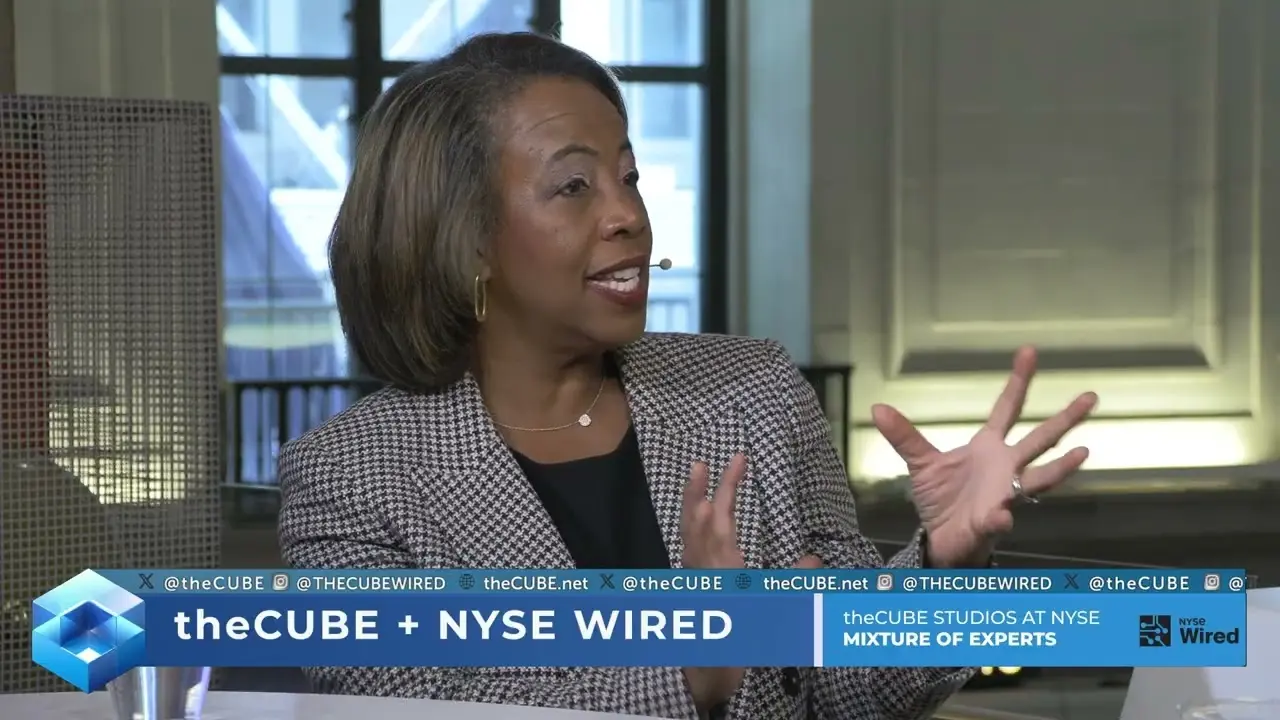
>> Welcome back to theCUBE Studio here at the New York Stock Exchange. I'm Gemma Allen with NYSE Wired: Mixture of Experts, and today we are talking to an expert who wants to solve the housing crisis. Joining me now is Natasha Di Ciano, founder and exec managing director at NXT Technology Inc. Welcome, Natasha.
Natasha Di Ciano
>> Hey, welcome. Thank you very much.
Gemma Allen
>> So solve the housing crisis. I mean, I would say that's the broad ethos of this company, but maybe talk to me a little bit about how, what it is exactly that you guys do?
Natasha Di Ciano
>> Okay. So NXT is a building technology company. We have developed and owned our own building system technology. It's the world's first complete building system that unifies the substructure of a building to the superstructure. So we have a technology for every element of that structure as a complete build. It ticks four boxes. So by creating the technology and having a total solution, we speed up construction timelines significantly. So for residential, we've developed projects that have enabled us to build 90% faster than traditional construction in residential, 50% faster in commercial, but also at a higher quality using concrete and steel. So our technology is based on concrete and steel structures. It's more resilient. So very high fire rating and very high rating for cyclones and hurricanes as well. So resilient building. We're also more sustainable from an environmental perspective. So we build more sustainably at high quality faster, and more affordable because we're faster.
Gemma Allen
>> So Natasha, you're based in Australia right now. This is an Australian born and bred company with global ambition.
Natasha Di Ciano
>> Yes.
Gemma Allen
>> Talk to me about the moment or the trigger that led to creating this company. Was there a specific event? I mean, the housing crisis is global, but it feels like it's an ongoing problem with no end in sight.
Natasha Di Ciano
>> Yeah.
Gemma Allen
>> Take me back to the origin story.
Natasha Di Ciano
>> Yeah. Well, look, I'm one of the founders of the company. I co-founded the company with Mataki O'Goshi Lim, who's a technical director, and he spent his career as an architect builder and developer and engineer, experiencing firsthand the issues in the construction industry that create all of these inefficiencies, which have led essentially to the housing crisis globally, which has really just come from, we have population growth always occurring and we've got worse weather conditions over time. So it has just created this need for housing consistently all around the world. So our model is that we've decided to focus on the housing market globally because it's a volume market. It's a market that is so large that you can have multiple building providers trying to solve it, but I think everybody should be involved in helping the industry. The market is so large and it's getting harder and harder to supply into that market, because the gap is getting greater and greater over time. Yeah, so Mataki and I, when we formed the company over 13 years ago, he'd experienced firsthand the issues in housing and we knew that we had a solution that would enable more houses to get built. Because that's how you're going to solve the housing crisis, by enabling more houses to be built on the market. And we knew that technology needed to be created to do that. And so, our technology essentially is changing the workflow in a construction process. It's taking construction out of a traditional process. It's bringing into a manufacturing environment and an assembly process. So we don't construct, we actually license our technology. With licensing, we're able to identify multiple licensees in the world, who then will construct using the technology or manufacture an assembly using the technology, and we will as a company be able to supply that technology to more licensees in the world. And I think that is how we get that scale into the market.
Gemma Allen
>> So I try and think of a tech reference for most things. It's almost like you're the arm of construction in terms of you provide the structure, the physics, the science, the IP, the license.
Natasha Di Ciano
>> That's right.
Gemma Allen
>> And then different franchisees or different companies or partners basically buy this from you and work to create homes and retail premises.
Natasha Di Ciano
>> Yes. Our model is really simple. So we license the manufacturing out to a licensee. A licensee is most likely to be a large developer who has major land holdings and is focusing on getting housing built and optimizing their land. So rather than holding onto the land, they're building out. And they're going to need technology to do that, because they've got 20,000 homes that they're looking to build, 30,000 homes in different locations. So we license that licensee, the manufacturing rights, the use rights, so they manufacture the technology. We license out the manufacturing process to them. We mobilize that manufacturing with them. We work with those licensees so that they understand the specification. We control the design side, and so we're really architecture and engineering and we supply the technology, and they then also become a licensee for a region as a distributor. So that means that they have technology in their hands in building to enable them to build multiple projects and really complete their projects a lot faster.
Gemma Allen
>> So we know that there is a growing list of bottlenecks it seems like in the housing crisis globally. We hear about labor shortages, supply chain shortages, planning challenges. It varies location by location. But what you're essentially saying is there's also somewhat of a physics problem here, right? There is a scientific side to this. And when we think about construction, it's really interesting that you say this is the first ever end-to-end scientific formula for construction, because I guess from an outside perspective, it seems as though it's something that happens in a set way. Talk me through the before and after. A builder building a house the old-fashioned way per se, and a builder building a house using this technology, what is fundamentally different?
Natasha Di Ciano
>> Yeah. What is different is a lot of modular and prefab or even traditional construction processes rely on multiple contractors and products. And a lot of construction, a lot of people focus what's above the ground in construction. So they look at a completed home and they look at just what's above the ground, whereas our technology starts with below the ground. So we have our own piling system that goes into the ground. We have our own footing, which is a precast footing, and then we have a column and beams that connect to the footing. So all of a sudden you're starting to build up a structure from what's below the ground and you're connecting it to above the ground. So from an end-to-end perspective, we have a technology for every component of the building structure that enables you to complete a building from manufacturing those components to assembling them as a total end-to-end solution. In traditional construction, it's all above the ground, or you're going to have to work with a contractor to do all your civil works. Excuse me. But you don't ever get your money back from what's below the ground. You never sell what's under the ground in a building. You never get that. So it's all above the ground what you're actually selling. So people don't focus on that full system and full solution and that's what we provide.
Gemma Allen
>> So when you say you help folks mobilize that technology, do you also though see those same challenges and constraints that we hear about, like supply chain, like cost of goods, like labor?
Natasha Di Ciano
>> Yes.
Gemma Allen
>> How do you solve for those or is that just an ongoing challenge?
Natasha Di Ciano
>> Yeah. So in our construction, without using our technology, there's less people on a construction site. So for a 10-level building, for example, we had six people assemble that building. So there's just less people in a construction site. With our technology, we control the supply chain, we're not dealing with multiple contractors. But our technology is just a structure, and so we focus on locking up a building structurally. And then the rest of it, the fit-out is done by builders. Our technology doesn't get involved in the fit-out process, it just gets involved in getting that structure up, getting it completed. And if you can imagine, we've got a housing crisis all over the world, if you can just get structures completed, then you can have builders finish those structures and you can have multiple buildings completed. So it's really about getting structures out there completed, and so we're able to deal with the housing crisis because we're putting more structures out there in the market.
Gemma Allen
>> It's almost like that first step towards a solution, right?
Natasha Di Ciano
>> Yes.
Gemma Allen
>> So 13 years ago we didn't have AI. We did not have the world of generative AI and all of the madness and opportunity that surrounds us right now. But there has been a lot of promise in AI around things like housing as it relates to planning, permission, regulation, supply chain, discoverability of land, even as an example. What sorts of things are you seeing in this space? Are you using more and more AI in your own technology? What role is it playing?
Natasha Di Ciano
>> Yeah. Alongside what we call our industrial technology, we've developed NXT IQ, which is in development, still in development, but that's where we're bringing AI, I guess into our digital environment. So we're creating a digital platform to enable our licensees to scale and to bring the supply chain right into a digital environment. And AI plays a role in our ecosystem to enable us to plan for the integrity of building. So we're really focused again on the structural engineering aspect. So AI plays a role in making sure that when you're designing a building as a non, let's say not a qualified architect, that AI is guiding you through that process to make sure that that building will comply structurally. So again, everything we do is about structure, and there's a structure in every building.
Gemma Allen
>> So Natasha, you're here because you also have global ambition for this company.
Natasha Di Ciano
>> Yes.
Gemma Allen
>> You have raised Series A in Australia, but you plan to expand into the US. Maybe talk to us about that plan, what's ahead. Share the details.
Natasha Di Ciano
>> Yes, so we are currently in a capital-raising process. We're looking at an IPO in '27, 2027. And we've been in the market for 13 years, so we've spent a lot of time in the earlier days on focusing on our compliance, focusing on implementing technology into different regions around the world, multiple different projects, and now we're bringing the technology into the US market. We're looking to scale it from the US perspective, where we're going to domestically list as a US company, and we've got huge ambitions for this technology to be licensed all around the world to regional licensees.
Gemma Allen
>> Wow, that's certainly exciting.
Natasha Di Ciano
>> And we're bringing the IP into the US market.
Gemma Allen
>> Okay. And you yourself are planning-
Natasha Di Ciano
>> To move over.
Gemma Allen
>> Wow. Okay. That'll be an interesting move.
Natasha Di Ciano
>> It will be
Gemma Allen
>> A whole new hemisphere.
Natasha Di Ciano
>> Yes. As founders of the company, we're here to guide the company through the next process. And that's an exciting phase for NXT, because the NXT technology was developed for large scale markets, so this technology is focused on scale. And so, Australia has been great for our commercialization part of our company's journey, but bringing it into the US market will mean that we can really put it on a platform and really take it global.
Gemma Allen
>> Wow.
Natasha Di Ciano
>> Yes.
Gemma Allen
>> A built environment is certainly a huge asset class. So last question, I guess to anyone who might be watching this, who might be interested in partnering with you or even investing, maybe give us a 30-second pitch to close us out, Natasha.
Natasha Di Ciano
>> So yes, so NXT is an exciting US-based company now who's looking to list in 2027. We are acquiring licensees right now and we're looking to really scale the technology globally and we're looking for strategic partners and investors that want to be part of that journey and want to see real technology in the building industry disrupting the housing market and providing a better solution so that we can provide housing, accessible housing to those that need it the most.
Gemma Allen
>> And how should people get in touch?
Natasha Di Ciano
>> They can get in touch with me.
Gemma Allen
>> Great.
Natasha Di Ciano
>> Through my website. Yes.
Gemma Allen
>> Okay, great.
Natasha Di Ciano
>> Yeah.
Gemma Allen
>> Well, Natasha, thank you so much for joining us on theCUBE. We wish you all the best in this move and the road ahead.
Natasha Di Ciano
>> Thank you.
Gemma Allen
>> I'm Gemma Allen here at theCUBE Studio at the New York Stock Exchange. This is NYSE Wired's Mixture of Experts. Thanks for watching.
>> Palo Alto Studio Connection, Silicon Valley and Wall Street. I'm with Dave Vellante, my co-host.
Gemma Allen
>> Welcome back to theCUBE Studio here at the New York Stock Exchange. I'm Gemma Allen with NYSE Wired: Mixture of Experts, and today we are talking to an expert who wants to solve the housing crisis. Joining me now is Natasha Di Ciano, founder and exec managing director at NXT Technology Inc. Welcome, Natasha.
Natasha Di Ciano
>> Hey, welcome. Thank you very much.
Gemma Allen
>> So solve the housing crisis. I mean, I would say that's the broad ethos of this company, but maybe talk to me a little bit about how, what it is exactly that you guys do?
Natasha Di Ciano
>> Okay. So NXT is a building technology company. We have developed and owned our own building system technology. It's the world's first complete building system that unifies the substructure of a building to the superstructure. So we have a technology for every element of that structure as a complete build. It ticks four boxes. So by creating the technology and having a total solution, we speed up construction timelines significantly. So for residential, we've developed projects that have enabled us to build 90% faster than traditional construction in residential, 50% faster in commercial, but also at a higher quality using concrete and steel. So our technology is based on concrete and steel structures. It's more resilient. So very high fire rating and very high rating for cyclones and hurricanes as well. So resilient building. We're also more sustainable from an environmental perspective. So we build more sustainably at high quality faster, and more affordable because we're faster.
Gemma Allen
>> So Natasha, you're based in Australia right now. This is an Australian born and bred company with global ambition.
Natasha Di Ciano
>> Yes.
Gemma Allen
>> Talk to me about the moment or the trigger that led to creating this company. Was there a specific event? I mean, the housing crisis is global, but it feels like it's an ongoing problem with no end in sight.
Natasha Di Ciano
>> Yeah.
Gemma Allen
>> Take me back to the origin story.
Natasha Di Ciano
>> Yeah. Well, look, I'm one of the founders of the company. I co-founded the company with Mataki O'Goshi Lim, who's a technical director, and he spent his career as an architect builder and developer and engineer, experiencing firsthand the issues in the construction industry that create all of these inefficiencies, which have led essentially to the housing crisis globally, which has really just come from, we have population growth always occurring and we've got worse weather conditions over time. So it has just created this need for housing consistently all around the world. So our model is that we've decided to focus on the housing market globally because it's a volume market. It's a market that is so large that you can have multiple building providers trying to solve it, but I think everybody should be involved in helping the industry. The market is so large and it's getting harder and harder to supply into that market, because the gap is getting greater and greater over time. Yeah, so Mataki and I, when we formed the company over 13 years ago, he'd experienced firsthand the issues in housing and we knew that we had a solution that would enable more houses to get built. Because that's how you're going to solve the housing crisis, by enabling more houses to be built on the market. And we knew that technology needed to be created to do that. And so, our technology essentially is changing the workflow in a construction process. It's taking construction out of a traditional process. It's bringing into a manufacturing environment and an assembly process. So we don't construct, we actually license our technology. With licensing, we're able to identify multiple licensees in the world, who then will construct using the technology or manufacture an assembly using the technology, and we will as a company be able to supply that technology to more licensees in the world. And I think that is how we get that scale into the market.
Gemma Allen
>> So I try and think of a tech reference for most things. It's almost like you're the arm of construction in terms of you provide the structure, the physics, the science, the IP, the license.
Natasha Di Ciano
>> That's right.
Gemma Allen
>> And then different franchisees or different companies or partners basically buy this from you and work to create homes and retail premises.
Natasha Di Ciano
>> Yes. Our model is really simple. So we license the manufacturing out to a licensee. A licensee is most likely to be a large developer who has major land holdings and is focusing on getting housing built and optimizing their land. So rather than holding onto the land, they're building out. And they're going to need technology to do that, because they've got 20,000 homes that they're looking to build, 30,000 homes in different locations. So we license that licensee, the manufacturing rights, the use rights, so they manufacture the technology. We license out the manufacturing process to them. We mobilize that manufacturing with them. We work with those licensees so that they understand the specification. We control the design side, and so we're really architecture and engineering and we supply the technology, and they then also become a licensee for a region as a distributor. So that means that they have technology in their hands in building to enable them to build multiple projects and really complete their projects a lot faster.
Gemma Allen
>> So we know that there is a growing list of bottlenecks it seems like in the housing crisis globally. We hear about labor shortages, supply chain shortages, planning challenges. It varies location by location. But what you're essentially saying is there's also somewhat of a physics problem here, right? There is a scientific side to this. And when we think about construction, it's really interesting that you say this is the first ever end-to-end scientific formula for construction, because I guess from an outside perspective, it seems as though it's something that happens in a set way. Talk me through the before and after. A builder building a house the old-fashioned way per se, and a builder building a house using this technology, what is fundamentally different?
Natasha Di Ciano
>> Yeah. What is different is a lot of modular and prefab or even traditional construction processes rely on multiple contractors and products. And a lot of construction, a lot of people focus what's above the ground in construction. So they look at a completed home and they look at just what's above the ground, whereas our technology starts with below the ground. So we have our own piling system that goes into the ground. We have our own footing, which is a precast footing, and then we have a column and beams that connect to the footing. So all of a sudden you're starting to build up a structure from what's below the ground and you're connecting it to above the ground. So from an end-to-end perspective, we have a technology for every component of the building structure that enables you to complete a building from manufacturing those components to assembling them as a total end-to-end solution. In traditional construction, it's all above the ground, or you're going to have to work with a contractor to do all your civil works. Excuse me. But you don't ever get your money back from what's below the ground. You never sell what's under the ground in a building. You never get that. So it's all above the ground what you're actually selling. So people don't focus on that full system and full solution and that's what we provide.
Gemma Allen
>> So when you say you help folks mobilize that technology, do you also though see those same challenges and constraints that we hear about, like supply chain, like cost of goods, like labor?
Natasha Di Ciano
>> Yes.
Gemma Allen
>> How do you solve for those or is that just an ongoing challenge?
Natasha Di Ciano
>> Yeah. So in our construction, without using our technology, there's less people on a construction site. So for a 10-level building, for example, we had six people assemble that building. So there's just less people in a construction site. With our technology, we control the supply chain, we're not dealing with multiple contractors. But our technology is just a structure, and so we focus on locking up a building structurally. And then the rest of it, the fit-out is done by builders. Our technology doesn't get involved in the fit-out process, it just gets involved in getting that structure up, getting it completed. And if you can imagine, we've got a housing crisis all over the world, if you can just get structures completed, then you can have builders finish those structures and you can have multiple buildings completed. So it's really about getting structures out there completed, and so we're able to deal with the housing crisis because we're putting more structures out there in the market.
Gemma Allen
>> It's almost like that first step towards a solution, right?
Natasha Di Ciano
>> Yes.
Gemma Allen
>> So 13 years ago we didn't have AI. We did not have the world of generative AI and all of the madness and opportunity that surrounds us right now. But there has been a lot of promise in AI around things like housing as it relates to planning, permission, regulation, supply chain, discoverability of land, even as an example. What sorts of things are you seeing in this space? Are you using more and more AI in your own technology? What role is it playing?
Natasha Di Ciano
>> Yeah. Alongside what we call our industrial technology, we've developed NXT IQ, which is in development, still in development, but that's where we're bringing AI, I guess into our digital environment. So we're creating a digital platform to enable our licensees to scale and to bring the supply chain right into a digital environment. And AI plays a role in our ecosystem to enable us to plan for the integrity of building. So we're really focused again on the structural engineering aspect. So AI plays a role in making sure that when you're designing a building as a non, let's say not a qualified architect, that AI is guiding you through that process to make sure that that building will comply structurally. So again, everything we do is about structure, and there's a structure in every building.
Gemma Allen
>> So Natasha, you're here because you also have global ambition for this company.
Natasha Di Ciano
>> Yes.
Gemma Allen
>> You have raised Series A in Australia, but you plan to expand into the US. Maybe talk to us about that plan, what's ahead. Share the details.
Natasha Di Ciano
>> Yes, so we are currently in a capital-raising process. We're looking at an IPO in '27, 2027. And we've been in the market for 13 years, so we've spent a lot of time in the earlier days on focusing on our compliance, focusing on implementing technology into different regions around the world, multiple different projects, and now we're bringing the technology into the US market. We're looking to scale it from the US perspective, where we're going to domestically list as a US company, and we've got huge ambitions for this technology to be licensed all around the world to regional licensees.
Gemma Allen
>> Wow, that's certainly exciting.
Natasha Di Ciano
>> And we're bringing the IP into the US market.
Gemma Allen
>> Okay. And you yourself are planning-
Natasha Di Ciano
>> To move over.
Gemma Allen
>> Wow. Okay. That'll be an interesting move.
Natasha Di Ciano
>> It will be
Gemma Allen
>> A whole new hemisphere.
Natasha Di Ciano
>> Yes. As founders of the company, we're here to guide the company through the next process. And that's an exciting phase for NXT, because the NXT technology was developed for large scale markets, so this technology is focused on scale. And so, Australia has been great for our commercialization part of our company's journey, but bringing it into the US market will mean that we can really put it on a platform and really take it global.
Gemma Allen
>> Wow.
Natasha Di Ciano
>> Yes.
Gemma Allen
>> A built environment is certainly a huge asset class. So last question, I guess to anyone who might be watching this, who might be interested in partnering with you or even investing, maybe give us a 30-second pitch to close us out, Natasha.
Natasha Di Ciano
>> So yes, so NXT is an exciting US-based company now who's looking to list in 2027. We are acquiring licensees right now and we're looking to really scale the technology globally and we're looking for strategic partners and investors that want to be part of that journey and want to see real technology in the building industry disrupting the housing market and providing a better solution so that we can provide housing, accessible housing to those that need it the most.
Gemma Allen
>> And how should people get in touch?
Natasha Di Ciano
>> They can get in touch with me.
Gemma Allen
>> Great.
Natasha Di Ciano
>> Through my website. Yes.
Gemma Allen
>> Okay, great.
Natasha Di Ciano
>> Yeah.
Gemma Allen
>> Well, Natasha, thank you so much for joining us on theCUBE. We wish you all the best in this move and the road ahead.
Natasha Di Ciano
>> Thank you.
Gemma Allen
>> I'm Gemma Allen here at theCUBE Studio at the New York Stock Exchange. This is NYSE Wired's Mixture of Experts. Thanks for watching.




























































 Gemma Allen