In this theCUBE + NYSE Wired: Mixture of Experts segment, theCUBE’s Dave Vellante sits down with Jim McNiel, Chief Growth Officer at TAE Technologies, to demystify fusion vs. fission and explore how proton–boron fusion could reshape energy economics for enterprise and Wall Street alike. McNiel explains why TAE targets abundant, low-cost boron fuel and how its approach avoids long-lived radioactive waste, requires only light shielding and eliminates meltdown risk. He breaks down siting and regulation – fusion treated more like medical isotopes than fission – and outlines first-gen levelized energy costs in the 7–9¢ range with a path to sub-5¢ as the technology matures. The conversation ties these fundamentals to market dynamics: dispatchable, carbon-free baseload power for data centers, safer urban siting and a financing narrative that aligns with investor expectations and hyperscaler demand.
Listeners also get a clear milestone roadmap: Copernicus (commissioned to operate in 2028) targeting net energy out; Da Vinci as a 50-MW commercial prototype; and TAE Fusion 1 designed for 350 MW—scalable units that could colocate with gigawatt-scale AI facilities. McNiel details how AI already governs plasma stability via TAE’s “Optometrist Algorithm” developed with Google and notes strategic investors (e.g., Chevron, Sumitomo) plus near-term revenue from TAE Power Solutions and TAE Life Sciences. The discussion frames emerging trends in enterprise strategy – from energy as a core input to AI-driven productivity gains – and why the go-to-market has shifted from utility-first to hyperscaler-led demand for dispatchable, clean power.
Forgot Password
Almost there!
We just sent you a verification email. Please verify your account to gain access to
theCUBE + NYSE Wired: Mixture of Experts Series. If you don’t think you received an email check your
spam folder.
Sign in to theCUBE + NYSE Wired: Mixture of Experts Series.
In order to sign in, enter the email address you used to registered for the event. Once completed, you will receive an email with a verification link. Open this link to automatically sign into the site.
Register For theCUBE + NYSE Wired: Mixture of Experts Series
Please fill out the information below. You will recieve an email with a verification link confirming your registration. Click the link to automatically sign into the site.
You’re almost there!
We just sent you a verification email. Please click the verification button in the email. Once your email address is verified, you will have full access to all event content for theCUBE + NYSE Wired: Mixture of Experts Series.
I want my badge and interests to be visible to all attendees.
Checking this box will display your presense on the attendees list, view your profile and allow other attendees to contact you via 1-1 chat. Read the Privacy Policy. At any time, you can choose to disable this preference.
Select your Interests!
add
Upload your photo
Uploading..
OR
Connect via Twitter
Connect via Linkedin
EDIT PASSWORD
Share
Forgot Password
Almost there!
We just sent you a verification email. Please verify your account to gain access to
theCUBE + NYSE Wired: Mixture of Experts Series. If you don’t think you received an email check your
spam folder.
Sign in to theCUBE + NYSE Wired: Mixture of Experts Series.
In order to sign in, enter the email address you used to registered for the event. Once completed, you will receive an email with a verification link. Open this link to automatically sign into the site.
Sign in to gain access to theCUBE + NYSE Wired: Mixture of Experts Series
Please sign in with LinkedIn to continue to theCUBE + NYSE Wired: Mixture of Experts Series. Signing in with LinkedIn ensures a professional environment.
Are you sure you want to remove access rights for this user?
Details
Manage Access
email address
Community Invitation
Bryan Mistele, INRIX
In this theCUBE + NYSE Wired: Mixture of Experts segment, theCUBE’s Dave Vellante sits down with Jim McNiel, Chief Growth Officer at TAE Technologies, to demystify fusion vs. fission and explore how proton–boron fusion could reshape energy economics for enterprise and Wall Street alike. McNiel explains why TAE targets abundant, low-cost boron fuel and how its approach avoids long-lived radioactive waste, requires only light shielding and eliminates meltdown risk. He breaks down siting and regulation – fusion treated more like medical isotopes than fission – and outlines first-gen levelized energy costs in the 7–9¢ range with a path to sub-5¢ as the technology matures. The conversation ties these fundamentals to market dynamics: dispatchable, carbon-free baseload power for data centers, safer urban siting and a financing narrative that aligns with investor expectations and hyperscaler demand.
Listeners also get a clear milestone roadmap: Copernicus (commissioned to operate in 2028) targeting net energy out; Da Vinci as a 50-MW commercial prototype; and TAE Fusion 1 designed for 350 MW—scalable units that could colocate with gigawatt-scale AI facilities. McNiel details how AI already governs plasma stability via TAE’s “Optometrist Algorithm” developed with Google and notes strategic investors (e.g., Chevron, Sumitomo) plus near-term revenue from TAE Power Solutions and TAE Life Sciences. The discussion frames emerging trends in enterprise strategy – from energy as a core input to AI-driven productivity gains – and why the go-to-market has shifted from utility-first to hyperscaler-led demand for dispatchable, clean power.
play_circle_outlineINRIX: From GPS Traffic Pioneer to Global Transportation Intelligence Using Connected Cars, Mobile Phones, Fleets and Anonymized Data
replyShare Clip
play_circle_outlineAI Mines Massive Continuous Traffic Data to Answer Complex Questions and Retime Signals to Cut Congestion
replyShare Clip
play_circle_outlineGeospatial AI for Autonomous Vehicles: 1,300 Customers, $70M+ Revenue, Routing, Parking, Pricing and City Charging
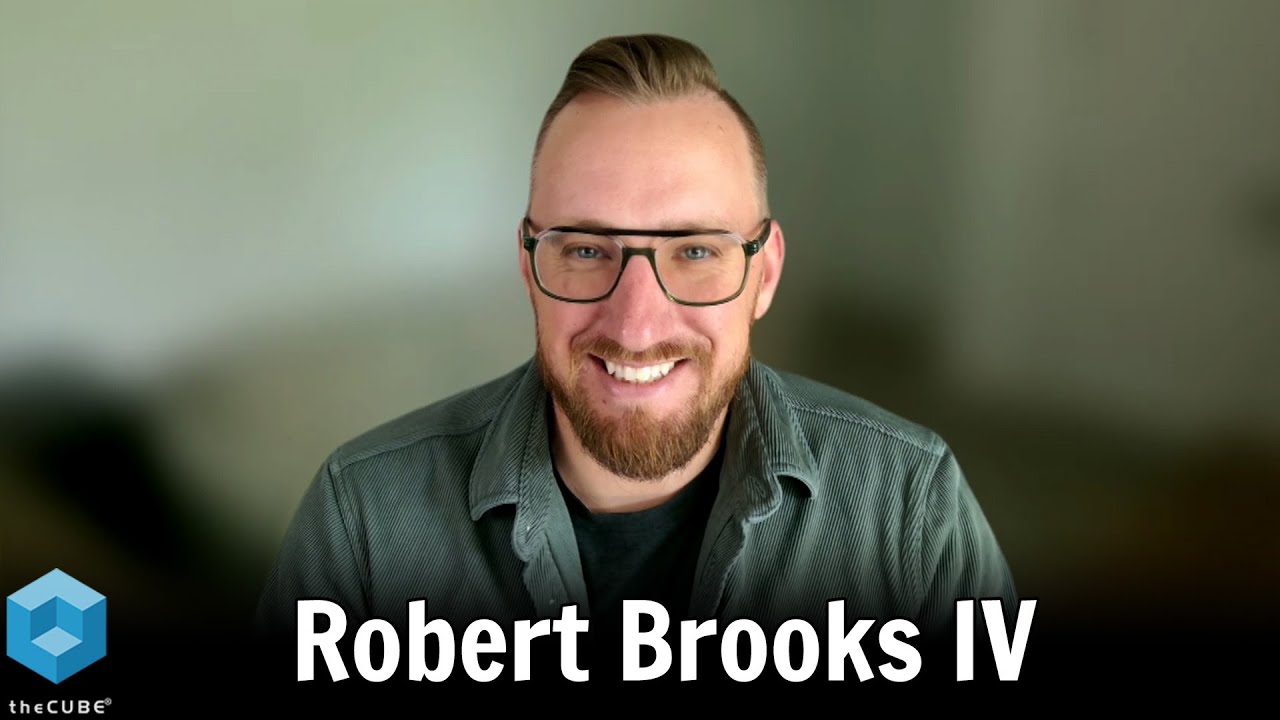
In this interview from the Mixture of Experts series, Bryan Mistele, chief executive officer of INRIX, joins theCUBE's John Furrier to discuss how real-world mobility data is being transformed by AI into actionable intelligence for safer, smarter cities. Mistele traces INRIX's origins as the inventor of GPS-based traffic data to its current scale — processing more than 60 petabytes of data across six million miles of road in 140 countries. He explains how AI is now putting that data to work, giving transportation professionals the ability to interrogate root ...Read more
exploreKeep Exploring
How does your company generate and collect transportation data (e.g., traffic, parking, signal info), and how is that data used in real-world applications like optimizing delivery routes?add
How has AI changed your market?add
What are your company's customer numbers and growth momentum, and how are you leveraging AI—specifically a geospatially aware foundation model—in your roadmap and products (for example, in logistics and autonomous-vehicle use cases)?add
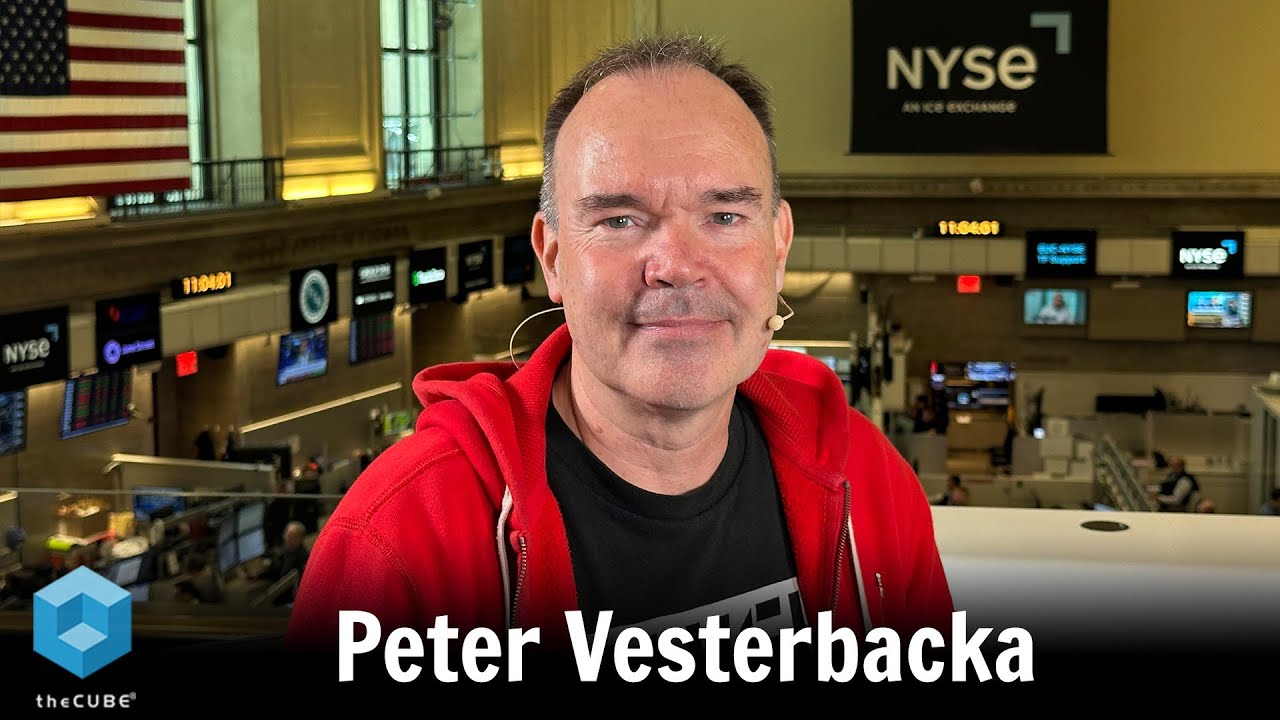
>> Welcome back. I'm John Furrier, host of theCUBE here at NYSE Studios. Of course, we have our Palo Alto studio connecting Silicon Valley and Wall Street. This is our NYSE Wired program, a Cuba original where we talked to the leaders, making it happen. This is our mixture of expert series. But this next interview also kind of crosses over into physical AI and also robotics because cars are involved. Bryan Steele's here, CEO of INRIX. Bryan, thanks for coming in.
Bryan Mistele
>> Happy to be here.
John Furrier
>> Love your story. Let's get into it. You guys have a really compelling data story. It involves cars, data. We all have used our Google Maps, Apple Maps, Ubers, seeing where we're going to be landing, how long it's going to take to get there. All that data, you guys power. Connected car, all that data. Talk about what you guys do.
Bryan Mistele
>> Yeah. So we invented the idea of using GPS signals to create traffic data. Now we've expanded to really any type of transportation information globally, from traffic information to parking information, traffic signal management, safety information, really anywhere where we can get data, and then help improve the transportation system.
John Furrier
>> So give it an example of a use case where we would see this data in action.
Bryan Mistele
>> Sure. GrubHub. They make a delivery to your house. They're doing that and helping optimize the delivery schedule and the route using our data.
John Furrier
>> So how do you guys engage to get that data? Is it just they have wireless, they have apps. What's the mechanism for the data capture?
Bryan Mistele
>> Yeah. So a lot of cases we're getting data from our customers. So we're helping them optimize their deliveries or their fleet or whatever, and we're getting data back from them. We also collect data from mobile phones and a broad variety of other sources. All of it's anonymized. We don't see any individuals, but it all then helps us create traffic data, or whatever it is we're looking at.
John Furrier
>> Connected car has been a theme at CES since I could remember. Even going back to like 2000, the smart living room, the connected car. But now in the age of AI, things are now being attained, because you have the GPUs, you have the large scale systems, you get the cloud computing is at scale, production scale, all the securities there, privacy and governance. Now you have a data opportunity. How has AI changed your market?
Bryan Mistele
>> Well, so now, as you said, you have the majority of cars that are now shipping are connected. So you can now use that data. The challenge is it's an enormous amount of data coming off of cars and mobile devices. So you need AI. If you're going to ask an interesting question like, "What's the most dangerous road in New York and what should I do to fix it?" You've got to use AI to analyze that data because it's just too much for any one person to look at individually.
John Furrier
>> Yeah. One of the things that we've been covering on the crypto side, we're seeing on the AI side, we're seeing is the real world, physical world and digital coming together. You mentioned roads. What is the unlock from the data's perspective as you guys look at the market opportunity? What does that look like? How big is it? And are there new things that are emerging?
Bryan Mistele
>> Yeah. So for us, our biggest customer base are the public sector agencies. These are folks like New York City, trying to understand what's happening in their network, and how they can do things like retirement traffic signals, or add capacity, or redesign different areas, to improve overall throughput or help improve safety. So for us, the biggest unlock with AI is putting a tool in the hands of these transportation professionals that allow them to ask these questions like, "What's the root cause of the fatalities on this road and what should I do about it?" You couldn't really do that before. You needed a consultant and six month studies, whereas now you can do it instantaneously using data.
John Furrier
>> So they can solve the gridlock problem.
Bryan Mistele
>> That's right. That's right.
John Furrier
>> In theory.
Bryan Mistele
>> Well, good example. Austin, Texas used our data to re-time all of their traffic signals and saw a 7% reduction in congestion by doing nothing other than re-timing traffic signals.
John Furrier
>> Most people don't know, but their cars are emitting signals. Wireless devices are everywhere. You see IoT now as just connected devices. You mentioned Grubhub, you got Uber. With all that proliferation, now the opportunity is to get that data in. How big is your data set? Give us a scope of the operations involved in making all the maps update fast, get all that data. What's the size? Take us in through your eyes and scope how big that is.
Bryan Mistele
>> Sure. So first of all, start with 140 countries around the world, and then look at six million miles of road that you then need to update multiple times a minute. We have more than 60 petabytes of data that we're crunching through in real time, across the road network. And not just one type of data, it's dozens and dozens of types of data. So it's a very large scale data management, data processing problem.
John Furrier
>> Share a story or observation that surprised you. You got all that data. Is there anything that jumped out and, "Whoa! I didn't expect to see that."
Bryan Mistele
>> Well, probably one of my earlier insights was when we started crunching data to understand the root causes of congestion. In a lot of cities, it's public school schedules. The traffic patterns, since all the school schedules start at 8:30 in the morning or whatever, that's what was the biggest contributing factor to congestion. So the number one thing, I had a governor ask me they can do to reduce congestion, and I said, "Just stagger the school schedules."
John Furrier
>> On the safety side, you mentioned looking at root cause analysis of, say, accidents. There's a public safety benefit here. Any thoughts on what you're seeing in that area?
Bryan Mistele
>> Yeah. So there's about 40,000 people just in the US that get killed in accidents every year. These are all preventable. So, what we're seeing is, first of all, cities really care. There's a big program called Vision Zero funded by the federal government to reduce fatalities. The challenge is, they don't always know where the fatalities are, or if they do, they don't know where things like near misses, hard braking, pedestrian accidents. This is data that spans different silos. So what we're trying to do is make it easy, for the first time, to integrate all these data silos together and answer the questions on, what should I do to reduce fatalities? What's the biggest bang for the buck?
John Furrier
>> One of the things that comes out of this year's conference events we go to is simulation, synthetic data. NVIDIA talks about this all the time around their Omniverse product, digital twins. So you're starting to see the advancement of simulation. Any thoughts on how you guys see that going? Do you guys do simulations? Does that play into it? Because you have all the data. You can actually start simulating real world data, maybe augment it with synthetic data. What's that look like?
Bryan Mistele
>> Yeah. So most of what we do is we have an enormous amount of this real time data. So then, it's fairly easy to then extrapolate and say, okay, we know across all the roads, how many pedestrians are coming into the city, or how many people are commuting and things like that. So that's where we use models to help us understand real world behavior. Simulation in our world means something very different. It's, if I add a freeway here, what will the impact be on congestion? And that requires a lot of other levers and things that we don't do ourselves, but a lot of our partners do do.
John Furrier
>> Another trend that we've been covering is smart cities. You obviously have a play there. You mentioned some of the planning opportunities. I mean, you could really look at, okay, how do we expand, what's going on with the city? Congestion means it's got to expand. What does the smart cities look like now that you start to get data acquisition, smarter devices at the edge, more and more Grubhubs are out there. How does that factor into some of the towns and cities and regions you work with from a planning perspective?
Bryan Mistele
>> Oh, sure. So we're well on our way to the smart city. We have more than 250 customers and New York's a good example. So here there's an operation center. It's got 40, 50 people working in it. They're looking at everything from when there's a big concert or a snowstorm or an event or even a mundane accident, and how to improve behavior. But now they've got levers. I can dynamically change traffic signals to move people out of a certain area if I need to, or I can dynamically close lanes in a variety of different cities. So we're getting there and more and more infrastructure now is giving us data. Things like smart parking meters, parking sensors, right? Parking operators. All this data then comes in that you can then analyze.
John Furrier
>> Talk about how the consumption of the product, because this is like a very interesting tool, platform for folks to do that. Are they consuming a dashboard? You mentioned levers. Are they looking at real-time data? So say I'm planning it for a concert or some event. I want to time the lights and do those things. What's that look like?
Bryan Mistele
>> Yeah, so we're providing both data as a service and software as a service. So there's a product we sell called Interns IQ that is the dashboard. It's that real time screen people are looking at in mission-critical environments to figure out how to respond to certain behaviors. So, it's interesting when there's a hurricane about to hit Florida, when the bridge collapsed in Baltimore, the usage of our product just skyrockets, because people really need to understand how to respond.
John Furrier
>> Yeah. What the routes are, those kinds of things.
Bryan Mistele
>> Exactly.
John Furrier
>> Talk about the business models. You mentioned subscription. Is there the SaaS pricing, pay as you go? What's the...
Bryan Mistele
>> Yeah, everything we do is either Dash or SaaS on a subscription, but not on a per seat model. It's basically a subscription price tied to how big a city is, and how big the geography is that they're buying services from us.
John Furrier
>> All right. Now talk about the momentum. Can you share some stats on customers, momentum?
Bryan Mistele
>> Yeah. So we have about 1300 customers. Again, this is global. We provide services globally. And in the last year, we grew by 21%. So we've been around for about 20 years. The company now is at a good scale. And now just sort of looking at, okay, how do we capitalize on AI to make it even easier for people to use our services?
John Furrier
>> Yeah. And as CEO, you got to look at around the corner, with AI now accelerating the physical side obviously happening. You're in a good position. What are you focused on now? What's the roadmap look like? What are you optimizing for?
Bryan Mistele
>> Yeah. So I think that the most interesting opportunity since we've already deployed AI models to kind of answer some of these questions, is we've created our own foundation model that's geospatially aware. So what does that mean? Folks like OpenAI or Anthropic, these are language models, but they don't understand road networks, road behavior, traffic signal timing. So we've created our own model that's geospatially aware. And now we're trying to decide, do we keep that for ourselves or do we sell that as a product? These are kind of the next generation questions.
John Furrier
>> Give an example, because most people don't know LLMs, large language models, thing call them frontier models. Computer vision, for instance, is not language. You have other factors than language. Talk about that geospatial. What does that look like? How does that play out as a value proposition? Do you query it? It's like, "Hey, give me local data. Is it fenced?" I mean, share how that would play out as an application.
Bryan Mistele
>> Yeah. So to answer a simple question like, how do I get from New York to Newark? You need to understand road configuration. You need to understand how many lanes, you need to understand what's a one-way lane, you need to understand how overpasses interact with tunnels and things like that. So then when I say geospatially aware model, that's what I'm referring to. It's learned how roads connect, and how to optimize people through a network.
John Furrier
>> So logistics AI, basically.
Bryan Mistele
>> Exactly.
John Furrier
>> So that must mean that all this autonomous truck conversations come into play. So there's been a big conversation around, "Hey, we can have autonomous trucking."
Bryan Mistele
>> Well, that's right. I mean, we have a lot of customers that are in the autonomous space. And again, they need to... I mean, these are data hogs. They need to know not just what's the best route, but they need to understand that the road's closed three miles ahead. Or if I'm an autonomous taxi, if I'm not picking up a driver, I need to know where I can go park and how to pay for the parking until my next driver summons me. So these are interesting problems that really were on the very-
John Furrier
>> So do you do that now or is that kind of a future opportunity?
Bryan Mistele
>> Yeah, we provide data now to several of the AV companies that are using it in their real-time implementations.
John Furrier
>> So the robo taxi says, "Oh, I need to park and relax until my next gig." That's right. So they figure out where to park. Is it safe? Who pays for it? All that goes...
Bryan Mistele
>> Exactly. And now cities understand the need and they do want to charge the taxis for pulling over in certain areas. So, we have a tool that helps these AVs understand where they can go, how much they pay, and then helps the cities charge them based on number of trips.
John Furrier
>> That's great. What's some of the revenue? Can you share the revenue numbers, where you guys are at on revenue?
Bryan Mistele
>> Yeah, we're north of 70 million now in terms of revenue.
John Furrier
>> Awesome. All right. Well, my final question for you is that when you look at the future and you see the momentum of the AI hype, where do you see the reality from value? Because value creation market is here. You're starting to see people who have data do well, people who lean into compliance and governance tend to do well. What's your view on the whole AI space?
Bryan Mistele
>> Yeah. So I mean, AI is a big enabler for us. Large language models are very good at certain things. They're not very good at other things. So I think what you're going to see over the next five years, where language is really important, like I'm editing a book or something, AI is going to completely transform that. In these vertical areas though, you really have to understand the use cases and the specialized learning, and that's what we're trying to figure out. So for us, I think the next five years are about how do you take AI, not just large language models, but AI in general, to understand whether it's healthcare, financial services, or transportation, and how to optimize them.
John Furrier
>> I mean, your product resonates with towns, public sector, obviously, and enterprises you mentioned. Do you find that the users are leaning into it on the skills side? What's your view on the AI native communities? Because anyone under the age of 30 is doing Open Claw and they've got programming and most people that are coming from a traditional IT background are like, someone does that work for them, give me the dashboard. What's that look like from a skillset on the customer side? Because towns and cities aren't known for whipping up AI agents.
Bryan Mistele
>> Well, so to be honest, what we found is, it's very bifurcated, right? You have civil engineers, transportation engineers. At the end of their career, they're typically not embracing the new technology. But then you have newer people that have, they don't have the history, they don't have time, they don't have the budget. So anything that's going to help them do their job faster or better, they're willing to embrace. So it's definitely bifurcated.
John Furrier
>> It's an exciting opportunity. Thanks for coming into theCUBE. Appreciate it. Thanks for coming in. Thank you for having me. All right. I'm John Furrier, host of theCUBE. We are here at the NYSC, part of the NYC Wired program and community. The real world assets and digital coming together, driving cars, all that data contributing to how we work, how we live, and how we play. So more and more data is coming in. AI is going to create that value. We're here doing our best to bring you the data. Thanks for watching.
















































 John Furrier