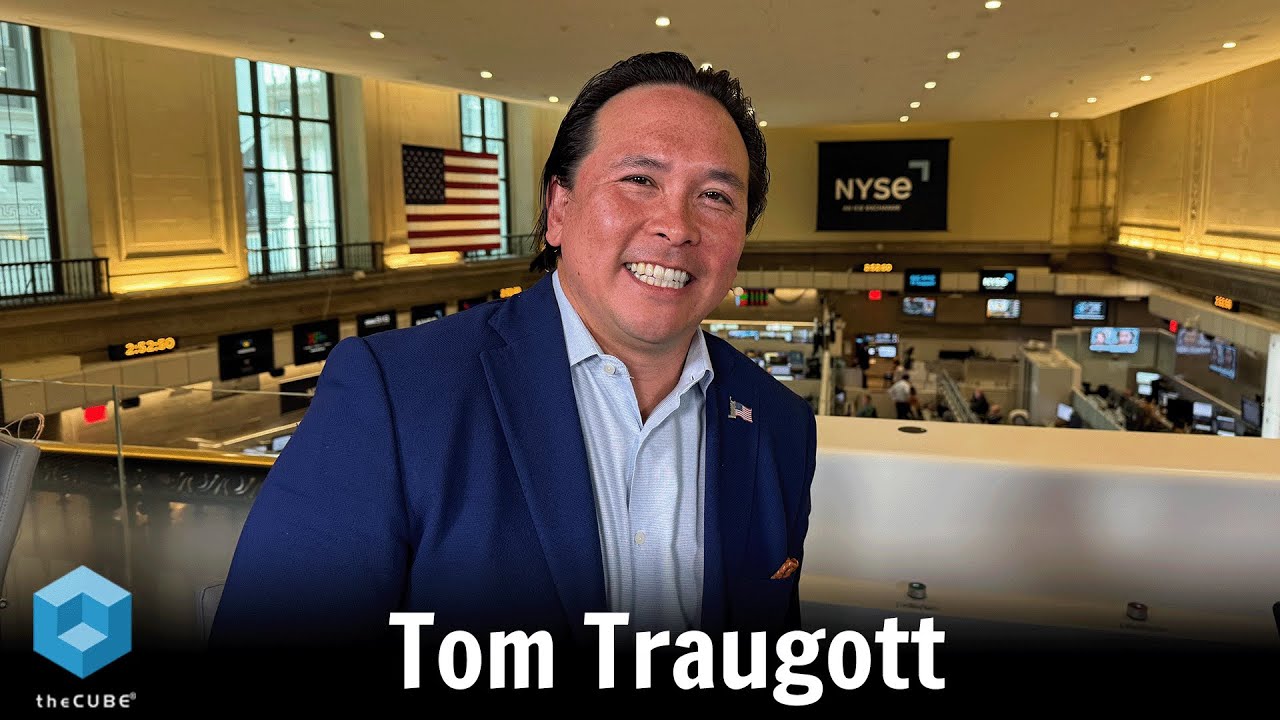
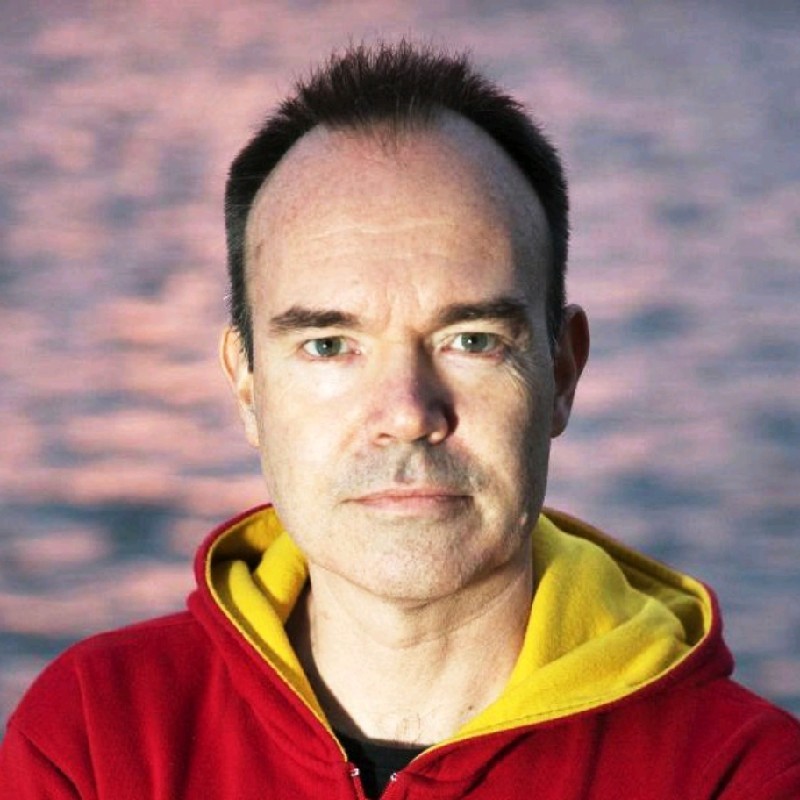
Peter Vesterbacka, founder of Finest Bay Area in Finland, shares insights with John Furrier at theCUBE's studio within the New York Stock Exchange. With a rich history in technological innovation, notably recognized for their work with Angry Birds, Vesterbacka details the evolution and significance of Slush, a premier entrepreneurial event in Helsinki, Finland. This event has become a central hub for the startup ecosystem, fostering connections and growth among entrepreneurs and venture capitalists globally.
In this segment, Vesterbacka delves into the transformation of Finland’s entrepreneurial landscape initiated by Slush and its impact on aspiring entrepreneurs across Europe. The discussion, moderated by John Furrier of SiliconANGLE Media, highlights theCUBE Research's dedication to uncovering dynamic industry shifts. Vesterbacka underscores the importance of building a supportive ecosystem and nurturing innovation, illustrating how Slush has championed a cultural and economic revolution within Finland.
Vesterbacka articulates key insights gathered from the event, emphasizing the role of education and community support in developing a thriving startup environment. They highlight the necessity of fostering a mindset conducive to innovation and entrepreneurship. Vesterbacka attributes the success of Slush to the collaborative spirit it inspires among young and seasoned entrepreneurs alike. Furrier adds their perspective on the global entrepreneurial landscape, cementing the conversation as an enlightening discourse on fostering innovation.
Forgot Password
Almost there!
We just sent you a verification email. Please verify your account to gain access to
theCUBE + NYSE Wired: Mixture of Experts Series. If you don’t think you received an email check your
spam folder.
Sign in to theCUBE + NYSE Wired: Mixture of Experts Series.
In order to sign in, enter the email address you used to registered for the event. Once completed, you will receive an email with a verification link. Open this link to automatically sign into the site.
Register For theCUBE + NYSE Wired: Mixture of Experts Series
Please fill out the information below. You will recieve an email with a verification link confirming your registration. Click the link to automatically sign into the site.
You’re almost there!
We just sent you a verification email. Please click the verification button in the email. Once your email address is verified, you will have full access to all event content for theCUBE + NYSE Wired: Mixture of Experts Series.
I want my badge and interests to be visible to all attendees.
Checking this box will display your presense on the attendees list, view your profile and allow other attendees to contact you via 1-1 chat. Read the Privacy Policy. At any time, you can choose to disable this preference.
Select your Interests!
add
Upload your photo
Uploading..
OR
Connect via Twitter
Connect via Linkedin
EDIT PASSWORD
Share
Forgot Password
Almost there!
We just sent you a verification email. Please verify your account to gain access to
theCUBE + NYSE Wired: Mixture of Experts Series. If you don’t think you received an email check your
spam folder.
Sign in to theCUBE + NYSE Wired: Mixture of Experts Series.
In order to sign in, enter the email address you used to registered for the event. Once completed, you will receive an email with a verification link. Open this link to automatically sign into the site.
Sign in to gain access to theCUBE + NYSE Wired: Mixture of Experts Series
Please sign in with LinkedIn to continue to theCUBE + NYSE Wired: Mixture of Experts Series. Signing in with LinkedIn ensures a professional environment.
Are you sure you want to remove access rights for this user?
Details
Manage Access
email address
Community Invitation
Peter Vesterbacka, FinEst Bay Area
Join us for an insightful episode featuring Raj Verma, CEO of SingleStore, as he shares his expertise in the rapidly-evolving landscape of data infrastructure and Artificial Intelligence. Hosted by theCUBE's John Furrier, this conversation takes place at the prestigious New York Stock Exchange, spotlighting SingleStore's strategic position and the innovative partnerships shaping the future of AI infrastructure. Verma's insights reveal the dynamic intersection of Wall Street and Silicon Valley.
In this episode, Verma discusses the transformative role of databases in AI development and the critical importance of modernizing data estates to capitalize on new AI capabilities. According to Verma, integrating data effectively can significantly enhance AI's operational efficiency, emphasizing the need for organizations to harness their own data. theCUBE analysts explore the future of enterprise technology, echoing Verma's predictions for AI-driven disruption across various industries. Don't miss out on the key takeaways from this engaging discussion. Learn more about SingleStore here: [SingleStore](https://singlestore.com). #AI #Cybersecurity #DataInfrastructure #SingleStore #NYSE
Stay connected with the latest in tech innovation by following the full series with theCUBE at NYSE Wired.
00:00 - Intro
00:06 - Launching into New Ventures: A Market and Partnership Overview
04:31 - AI Evolution: Infrastructure Trends and Applications Across Markets
08:57 - Modernizing Data Estates for the Future of AI and Agents
11:58 - Challenges with AI Hallucinations and Data Reliability
16:11 - Advancements in Data Technologies and Enterprise AI Integration
19:32 - Shifts in Enterprise Data Usage for AI
23:30 - The Future of System Software and Applications
31:24 - Disruption in Professional Services and SaaS Models
35:15 - Navigating the Future: AI, Innovation, and Strategic Roadmaps
In this Mixture of Experts segment from theCUBE + NYSE Wired at the New York Stock Exchange, Peter Vesterbacka – founder of FinEst Bay Area, co-creator of Slush and of Angry Birds fame – joins theCUBE’s John Furrier to unpack how ecosystems at the intersection of tech and finance accelerate innovation. Vesterbacka traces Slush’s origins from a 2007 talk to 600 students (only three raised their hands to start a company) to a youth-powered movement that reshaped Finland’s mindset around entrepreneurship. He shares how Slush now convenes 20,000 attendees from 16...Read more
exploreKeep Exploring
What is the origin and significance of the Slush event?add
What was the motivation behind starting the Slush event in 2008?add
What significant change occurred in the mindset towards entrepreneurship within the Finnish educational system over a five-year period?add
What is necessary for fostering innovation and entrepreneurship in young people?add
What are the details and activities planned for Slush this year?add
>> Welcome back everybody to theCUBE. We're here at our New York Stock Exchange studio. Of course, this is theCUBE's East Coast hub. And of course we've got our Palo Alto studio connecting Wall Street and Silicon Valley, the Bay Area to Wall Street, and, of course, theCUBE Global going forward over the next few years. Got a great luminary OG in tech here in theCUBE. Peter, Mr. Vakka, founder of Finest Bay Area, Finland. Estonia together holds the premiere event for founders money and entrepreneurship in Finland representing kind of the, I would say, the center of the action in Europe. Peter, great to have you on of course, famous for many other things, Angry Birds, as well as other games. We've got a little prop here behind me. Thanks for coming on theCUBE.>> Hey.>> Appreciate you.>> Fantastic to be here.>> So Slush, you got the shirt there. Love that. You've got the red on, a big day here and the IPO wearing in red too. Thanks for coming on. First of all, Slush is, I want to get that first because that's become a premiere event. Martin Micos and I had a great dinner talking about this in Paris. It's on my list. I just could never go from the US but it has become the leading event and it's not obvious. It's a time of the year where it's cold and also, but it attracts the best of the best.>> Totally. And, it's even say that it's the premiere event globally. So being modest Finnish person.>> Yeah, of course.>> But anyway.>> Let's say globally, of course.>> But what is very important, and I mean this is also why we do it in November. I mean if you look at Slush and why we started Slush, we started Slush not to make fantastic event, which it has become. But the story actually started 2007. I'm giving a talk to 600 students at Aalto University, one of our top universities in Europe. And I talk about startups, entrepreneurship, all of that. My own entrepreneurial journey, you might not know, but I started at the original tech startup that Bill and Dave started in the garage in Palo Alto in California in 1939. But I wasn't there. But I met with both Bill and Dave when they were still around and they were fantastic entrepreneurs because not only did they start HP in that famous garage, but they started the Silicon Valley because after HP, Intel, apple, Google, you name it.>> The first place of Silicon Valley.>> Totally.>> The monument Palo Alto.>> Totally, yeah. And that's where I started. So I was sharing my story with the 600 students and then during my talk I asked them that, "Okay, how many of you are going to start a company or join a startup?" And Finland, 2007 out of 600, our brightest minds, three raised their hand, pathetic. I mean everybody wanted to go work for Nokia, Kone, Wärtsilä, maybe even the government.>> The big company.>> Exactly. And if everybody wants to do that, then there's not going to be any progress, no innovation or nothing because people just want to maintain the status quo. And of course, I mean we have a nice status quo to maintain in Finland, happiest nation on the planet, eight years in a row and all of that stuff. But of course we can never be content even though we're happy, but we can't be happy about, we need to progress. So we started Slush to fix this little attitude, a mindset problem. So 2008 together with a few friends, first Slush event, 300 people I invited. Ristoshe, Rasmo, We had Monty Videnius who worked with Morten at MySQL. We had Ilkka Paananen, founder of Supercell, we had Sampo Karjalainen started something called Sulake and Habbo Hotel. We had Ilja Lau, started Getchar. Later, got a big investor from Accel over here. He is from Vilnius Lithuania. But people in the region and sharing their experience, why it's cool to be an entrepreneur and might want to consider doing your own company rather than going to work for Nokia and all of that. And it was huge success. Even one of the guys came after the event, he had moved back to Finland and I said, "There's nothing going on here." He had a startup in UK, he's going to move back. But he said, "Hey, now there's a room full of crazy people like me. I'm going to stay." And he started his next company. But anyway, so that's why we started. We needed to change the mindset. And then five years after Slush back to Aalto, same talk, same question. More than half the hands went up. So now if I go to any university in Finland or any high school, even, in Finland, and ask the same question, how many want to start a company during a startup? More than half the hands go up. So we did a cultural revolution in just five years. And it's of course never ending. It's always ongoing. But the really cool thing then about Slush is that everybody else is doing what I call this wannabe Silicon Valley events. You pick a sunny place, say Lisbon, or you do, I don't know, Miami or something like that. And then you think that though, it's like Silicon Valley, actually those places are where all people go to die. It has nothing to do with Silicon Valley. But we wanted to make clear that this is different. So we organized Slush in November, and when you come to Helsinki, November and you should, you will immediately notice that it's cold, it's dark, and there is slush on the ground. You have that in New York also in the winter.>> It's during slush here.>> So you realize that it's not the Silicon Valley, it's better. It's much, much better because it's different. Okay. The biggest and best startup event, I mean last year we attracted over 4 trillion in venture capital. So it's the biggest gathering of venture capital any given time, anywhere in the planet, the whole thing.>> It's like a festival.>> Yeah. Whole thing is run by young people. So last year we had 20,000 people from 160 countries, but the whole thing is run by 1600 young people and they are there not because somebody told them or paid them, but they're there because they love to be there because they want to be part of starting the next big thing. And what we have seen now, you join Slush as a volunteer, as a young person, you do that for a year, two, three years. You learn how to build the biggest and best startup event. And then you go out and you build the biggest and best startups like Vault for example, that Mickey and the guy started and then 8 billion acquisition by DoorDash. So we have many, many examples. You do Slush, you learn how to do the biggest and best, and then you go out and build the biggest and best startup. So it's learning by doing and it's like transforming the region. And it might come as a surprise to you guys here in America, Europe has already won. Sorry about that.>> Oh, we'll see about that. But we can debate that all day long. But I'm very grateful for what you are doing because I love entrepreneurship. I think it's the most rewarding. It's challenging, but it's democratized.>> Totally.>> You can do whatever you want, but you got to understand how it works. It ain't guarantee, it's a big company.>> Totally.>> It's funny you brought up HP because I started my career at Hewlett Packard.>> Fantastic.>> When Bill and Dave were still in charge and working. Actually John Young was the CEO.>> Hey. Yeah, yeah, yeah. I remember those times. So yes, very good.>> And they had a saying, Bill and Dave, and I'll quote this, I think this is going to be a good point. "Our job is to train you to start a company.">> Yes, exactly>> Exactly. No, "We will train you so you can be good at your job. And if you want to leave, we hope you start a company.">> Exactly.>> Our job as management is to keep you.>> Yes.>> And that was their philosophy.>> Very good. Yes, exactly.>> IBM had a good training program, but HP, they wanted to train people to be the best person they could be. And they believed that would translate to the company. And if they wanted to leave, they wanted them to be prepared to start their own company.>> Very, very, very good.>> It was their job to keep them.>> Exactly. And this is why I always start saying that, "Hey, I started there, the company that Bill and Dave started, Palo Alto, California." And because the thing is, many people nowadays don't remember where Silicon Valley got started. Now we just, okay, we see all these somewhat crazy companies sometimes. But the thing is that the important thing, Bill and Dave, I mean they did so many things. They laid the foundation for what is now Silicon Valley. And in many ways, that is still there. But also we have in some areas lost our way. I think this also important to look back at history and what Bill and Dave did because they had this management by walking around, why did they have open offices? Because you could just walk around, talk to people, how are you doing? What are you working on? Oh yeah, you should support the company.>> What do you need?>> What do you need? Exactly. And how can I help make that happen? And that's why I spent many years at HP. And that's like I love the original Silicon Valley culture because it was all about enabling the success of others.>> And I want to kind of trudge this into the next point there is because HP had those cultural values of what can I do to help? They built a system of trust.>> Exactly.>> Built a system of support.>> Yep, totally.>> And what happened in Silicon Valley when the semiconductors and the Fairchild, the traitorous eight, they called them, when the venture capitals realized that Stanford and Cal the university systems.>> Exactly.>> And then a support system was built. And there's unwritten rules.>> Exactly.>> As HP had, as you know.>> Totally.>> Not always written down, but they had the principles. So when you try to replicate that and you don't take your approach, which is, I call it the money ball of entrepreneurship, you got to have service providers, you need to have mentors, have the therapists when people fail and say, "Hey, start again.">> Totally.>> So I think that's where I see now with the democratization of social media and what we're doing like streaming podcasting, a global fabric has now formed. So I think it's a lot easier now to replicate if you know it.>> Yeah, exactly. But this is, what I always say that, okay, if you look at Silicon Valley, so Bill and Dave, where did they meet? Stanford, their professor suggested they wanted to start a company, then they went to their garage and okay, HP happened. Many years later, Sergey and Larry, Stanford again, they went to garage, Menlo Park and Google happened. So I will say that you meet at one of the universities, Stanford, Berkeley, Cal, and then after that you go to your garage and magic happens. That's the Silicon Valley model. That's how it works. It's as simple as that on a high level. And this is what governments around the world don't understand that if you don't have the universities, if you don't have the education, no companies, you can't like, "Oh, please do a startup." And then, "Yeah, but I don't really know how, and I didn't go to university," or whatever. I mean universities are part of this.>> Part of this. Peter, that's a great point. If you don't have the universities, you fail and you laid it out. It's a very simple algorithm.>> Yeah, very.>> Now the failure comes, I've seen the failure and I'd love to give your reaction to this. I've seen this movie before. "Hey, I want to replicate Silicon Valley. Let's bring money in. All we need is money. So they throw money at the problem.">> I was in Tokyo, they have this SAS high-tech event there. And then I was told by the mayor of Tokyo, Koike-san, that the Japanese government will invest, I don't know, billions or trillions, and they will have guess what, 100 unicorn companies. And then I looked around there and I said that, "Hey guys, this is doomed to fail. Why?" They were like all this, like why? And I said, "Hey, where are all the young people that will build all of these thousands of startups that will lead to the hundred unicorns? They're not here." So you can throw unlimited money at the problem, but money is not the problem.>> Money for the problem.>> Unlimited amounts.>> It's the system. It's the community.>> Mindset. The young people, we need to also, and parents, we need to train the, and that's what we did with Slush. We need to change the mindset, not just of this startup people, but the whole community, the whole nation.>> Talk about failure, because I've said this to some young entrepreneurs about over a decade ago when they came to Silicon Valley, I'm like, "Failure is part of the process." So you got to understand that. But when the big companies go for the big brass ring or the big idea, they fail usually first time, they become the fertilizer. If you look at Silicon Valley, another data point to support our thesis and your thesis, our joint thesis is that failure, that fertilizer are companies like Go. The people, the alumni that come out of the failure start other big companies. So if you look at the big failures in Silicon Valley, they actually worked because they went, they got distributed out. And then as individuals, they grew like crops.>> Yes, exactly.>> So this is where I think you have to have the right environment, the community and the nurturing around the failure.>> Totally.>> And of course double down on the success, the support system's illegal. The accounting. The banking.>> Yes. And this is what people have to understand that this is not about like, "Okay, let's take, okay, how much do you want? A hundred billion, trillion?" Like Paul signed the check, go do it. The thing is that that's the easy part. And this is what governments most for the most part don't understand. And I always say that first of all, we need to make sure that we get governments and all people out of the way while young people change the world. Meaning building these companies that will change the world because entrepreneurship is the most effective way of transforming. But then the interesting thing here, and you are absolutely right, is that if I look at my former Rovio colleagues, I think that there's, I don't know, 7,000 studios, companies that come out of people who used to work at Rovio, they went and built even bigger things. And I think that this is something that we need to realize that. And these kind of things come when you have like you do an IPO, people get money, they pay back, they put into new companies. And I think that this is something that is very, very important. And also failure, as you said, that is really big like fertilizer. But even before this, what we also need to tell governments that we need to invest in the young people. Namely we need to invest in education of the young people. Coming from Finland, we have the best educational system on the planet. So with Slush it was very easy, or let's say it was easier to make this happen because we started with the foundation of fantastic education. Then we threw in the entrepreneurship and then know voila, now we have highest number of starters per capita, highest number of unicorns per capita. And the money follows the highest amount of venture capital invested into local starters per capita. And now we're just going to increase the talent pool dramatically. And when I look around what's happening here in the US, it seems like not everybody understands that it's about the people and the talent no matter where they come from.>> Well I really want to spend some time on , so I think that's a result of the system you built and we're working on. It's not only a template, I think it's a best practice. So congratulations.>> What works.>> What's the dates on the events that we can get that out there?>> So basically Slush this year, 19th and 20th of November. But we take over Helsinki for the whole week. So basically there's ->> Plenty of rooms then.>> Yeah, there's->> How many people last year? 20,000?>> 20,000. So the city is really like Slushified->> You've got to get your hotels early.>> Yeah. You should, yes.>> And the attire obviously, boots.>> Yeah, boots are warm.>> Hat. Some good gloves.>> Very good. Yeah.>> What about the side events? There's always, I noticed that your event and others that are successful have great main stage programs, good content of course, but there's always the serendipity.>> Yes, exactly.>> Explain some of serendipity moments that you have there. Are they curated events? Is it ad hoc?>> Yeah, we have actually a bit of everything. So there are hundreds of official side events. So it's very easy. You just register, you do an event, you register, it's on the Slush site. It's easy to find. Day before day one, there is unicorn night. That's already tradition. So we invite few local unicorn founders to share their experiences because it's not only about building lots and lots of startups, but we also need to see that the ecosystem mature enough so that we know how to go from zero to billion plus in valuation. So that's another skill set. Anyway, unicorn night is one example. Then if you have let's say very specific interest that you want to know about, I don't know, AI in multiplayer games, then you probably can find an event around that. And then there's a lot of these of course informal dinners and smaller events and everybody's involved. I remember when maybe a second or third year or Slush. And then one of the government ministers, we had actually a housewarming party of Supercell, their new offices. And then he said that, hey, three of us came and the prime minister and minister of foreign trade, I think it was. And then him, I said, "Yeah, so I mean last time I checked we had 17 ministers in the government. What are all the other ministers doing? Because they're not that Slush. You are telling me that they have something more important." And now when you come to Slush, every single minister has to be there because otherwise they're not doing their job. We had->> It's the most important global event happening right there in their territory, they're asleep at the wheel if they don't care.>> Everybody's there. Exactly, exactly.>> All right, so I'd love to spend another hour talking about Angry Birds and Rovio, you mentioned that earlier, but we can put a pin in that. We'll maybe come back to that. I want to talk to you about something that I've been saying a lot of, and I've been kind of yelling at the top of my lungs for years, but now it's obvious and I want to get your thoughts on this. We are living in a really great time for entrepreneurship.>> Totally.>> The supercomputing democratizing with NVIDIA Cloud technology, AI changing the software paradigm, just amazing amount of change.>> Yeah, they agree.>> Yeah. Thank you very much.>> Very good.>> We have a trader who's retiring after 40 years, so he's going to bring the bell from up here tonight.>> Cool.>> So special day for, it's option floor here. So a lot of change.>> Yes.>> I see. And I've been calling this over a decade ago. What's happening now? There seems to be a cultural revolution for young people right now. And I want to get your thoughts because I'm seeing it now everywhere and Slush I think is just a proof point. You got out early and you nurtured it.>> Young people make the biggest and best startup event happen.>> If you're under the age of 30 or even 25, you're looking at a world that you don't have pre-existing dogma or any attitude. You have pure intellect, prime of your game. And now you have a systems revolution that us old people could help with because I lived in the systems revolution. So you have old and young coming together for the first time at this level of where competency, because if you went to Cal or Northeastern when I went to school in the eighties, you learned systems. You had to build computers from scratch, everything. OS is everything. So you know systems, there seems to be a revolution from the younger generation. What are you seeing there? Is there any evidence or stories you can share? How do they view the world?>> Yes.>> What's their appetite for innovation and entrepreneurship and what can we do to make it so it's peaceful and profitable?>> Yeah, I think that we are seeing exactly what you described. So now it's even more democratized. And I don't know if you've been following Loveable, but I mean that's fast-growing startup. They growing faster, even faster than Chat GPT. Anybody can now prompt their way into an app and service and all of that. And it's a company out of Stockholm in Sweden, our part of the world. And it's again, a great example of innovation happening everywhere. And we are all about freedom and democracy. That's very important. But I think that values, this is what is very important for young people, that it's not that, okay, let's make lots of money fast, that will follow. But I think that we've been through that. Yes, exactly. And I think now that young people are looking for meaning. You have to provide young people with meaningful things to do. This is something that is super, super important. And it's not about then going and sitting in a factory and pressing a button at regular intervals and, exaggerating maybe a little bit. But we are not robots. We are human. So we need to provide our young people with meaningful things to do. Okay. It starts with giving everybody not, just a few, fantastic education and also entrepreneurial skill as part of that education. Then it's very important. And I said that and I will repeat it. We need to keep all people and governments out the way while our young people change the world, even America. So this is something that we have to make sure that can happen. And then it comes to these values that without freedom you have nothing. So you have to have the freedom to make things happen. I think that there's something about pursuing happiness. Coming from Finland, happiest nation on the planet eight years in a row. So we are doing something right. But I think that this is kind of like what it's all about, that we need to provide our young people with the ability to then maybe prompt their way into success. If that's the thing.>> Now we're going to see a thousand flowers bloom from this generation.>> Totally. Totally. And young people need to also understand that they can do this and they can do it everywhere. So young people will vote with their feet. If they don't like the regime in their country, they will come to another place. And this is something that I think is a very important message for America today that don't take success as something that is granted to.>> Yeah, you got to earn it. And it's hard. And also it's not about just money making, it's about the mission.>> Exactly. Because I mean, if you're making money, but you're destroying the planet, I mean nobody will, or let's say hopefully nobody will sign up to that.>> Yeah. I think people get smart. You're seeing impact in the mission, technology, money and impact are converges and impact meaning to life society.>> And we want to make the world a better place. I think this is kind of like the thing that if you ask any good entrepreneur, what do they want to do? They want to change the world. I mean, it's a bit of a cliche, but I mean it's really true. It might be a small part of the world or the whole thing. And I think that's what I want to do. I want to change the world through education. I want to provide everybody, not just a few, with the opportunity to do what we just described. And there's absolutely no reason why you couldn't do that walking down the streets of Dar es Salaam in Tanzania or Manhattan here or whatever.>> Well, you've been very successful in, what I love about your mission is that you've replicated Silicon Valley the right way. And now with Lovables of the world and new technology, it can be adopted. I think we want to see a lot more. So congratulations and thank you for coming into theCUBE. We have to end by explaining what this is because it's been in the shot. We have a prop, explain what this is and why it exists here on theCUBE.>> So this is actually TUN 35, AKA TUNES, and it's a robot from an upcoming game. It's going to come out next year. And it's not just a game, it's like a whole universe. And I can't share too much detail on this, but it's going to be amazing. It's going to be->> You're developing this game?>> I'm part of the team making this happen, and that's one reason why we're here.>> It's a little teaser then.>> Yeah, it's a little teaser. You hear it here first. Hey, fantastic.>> Peter, great to have you on, again, legend. I love what you've done with your career, what you do. I'm grateful for your event and your passion for entrepreneurship.>> And I'll see you in Helsinki, right?>> Yeah, I'll be there. I'm going to be->> I'll bring you to all the best events.>> Okay. I'll hang with you and all the ministers.>> Excellent.>> I'm John Furrier with theCUBE mixture of experts here again, the world is changing and you're seeing entrepreneurship really become the leveler of economic stability. But more importantly, growth and the changes that are coming with all the supercomputing and the AI are all going to be a perfect storm of innovation. And what will happen if we do it right is peace and prosperity for all. Keep watching here. We're doing our part in theCUBE, sharing it with you. Thanks for watching.