In this theCUBE + NYSE Wired: Mixture of Experts segment, theCUBE’s Dave Vellante sits down with Jim McNiel, Chief Growth Officer at TAE Technologies, to demystify fusion vs. fission and explore how proton–boron fusion could reshape energy economics for enterprise and Wall Street alike. McNiel explains why TAE targets abundant, low-cost boron fuel and how its approach avoids long-lived radioactive waste, requires only light shielding and eliminates meltdown risk. He breaks down siting and regulation – fusion treated more like medical isotopes than fission – and outlines first-gen levelized energy costs in the 7–9¢ range with a path to sub-5¢ as the technology matures. The conversation ties these fundamentals to market dynamics: dispatchable, carbon-free baseload power for data centers, safer urban siting and a financing narrative that aligns with investor expectations and hyperscaler demand.
Listeners also get a clear milestone roadmap: Copernicus (commissioned to operate in 2028) targeting net energy out; Da Vinci as a 50-MW commercial prototype; and TAE Fusion 1 designed for 350 MW—scalable units that could colocate with gigawatt-scale AI facilities. McNiel details how AI already governs plasma stability via TAE’s “Optometrist Algorithm” developed with Google and notes strategic investors (e.g., Chevron, Sumitomo) plus near-term revenue from TAE Power Solutions and TAE Life Sciences. The discussion frames emerging trends in enterprise strategy – from energy as a core input to AI-driven productivity gains – and why the go-to-market has shifted from utility-first to hyperscaler-led demand for dispatchable, clean power.
Forgot Password
Almost there!
We just sent you a verification email. Please verify your account to gain access to
theCUBE + NYSE Wired: Mixture of Experts Series. If you don’t think you received an email check your
spam folder.
Sign in to theCUBE + NYSE Wired: Mixture of Experts Series.
In order to sign in, enter the email address you used to registered for the event. Once completed, you will receive an email with a verification link. Open this link to automatically sign into the site.
Register For theCUBE + NYSE Wired: Mixture of Experts Series
Please fill out the information below. You will recieve an email with a verification link confirming your registration. Click the link to automatically sign into the site.
You’re almost there!
We just sent you a verification email. Please click the verification button in the email. Once your email address is verified, you will have full access to all event content for theCUBE + NYSE Wired: Mixture of Experts Series.
I want my badge and interests to be visible to all attendees.
Checking this box will display your presense on the attendees list, view your profile and allow other attendees to contact you via 1-1 chat. Read the Privacy Policy. At any time, you can choose to disable this preference.
Select your Interests!
add
Upload your photo
Uploading..
OR
Connect via Twitter
Connect via Linkedin
EDIT PASSWORD
Share
Forgot Password
Almost there!
We just sent you a verification email. Please verify your account to gain access to
theCUBE + NYSE Wired: Mixture of Experts Series. If you don’t think you received an email check your
spam folder.
Sign in to theCUBE + NYSE Wired: Mixture of Experts Series.
In order to sign in, enter the email address you used to registered for the event. Once completed, you will receive an email with a verification link. Open this link to automatically sign into the site.
Sign in to gain access to theCUBE + NYSE Wired: Mixture of Experts Series
Please sign in with LinkedIn to continue to theCUBE + NYSE Wired: Mixture of Experts Series. Signing in with LinkedIn ensures a professional environment.
Are you sure you want to remove access rights for this user?
Details
Manage Access
email address
Community Invitation
Brandon Cooper, Aphid
In this theCUBE + NYSE Wired: Mixture of Experts segment, theCUBE’s Dave Vellante sits down with Jim McNiel, Chief Growth Officer at TAE Technologies, to demystify fusion vs. fission and explore how proton–boron fusion could reshape energy economics for enterprise and Wall Street alike. McNiel explains why TAE targets abundant, low-cost boron fuel and how its approach avoids long-lived radioactive waste, requires only light shielding and eliminates meltdown risk. He breaks down siting and regulation – fusion treated more like medical isotopes than fission – and outlines first-gen levelized energy costs in the 7–9¢ range with a path to sub-5¢ as the technology matures. The conversation ties these fundamentals to market dynamics: dispatchable, carbon-free baseload power for data centers, safer urban siting and a financing narrative that aligns with investor expectations and hyperscaler demand.
Listeners also get a clear milestone roadmap: Copernicus (commissioned to operate in 2028) targeting net energy out; Da Vinci as a 50-MW commercial prototype; and TAE Fusion 1 designed for 350 MW—scalable units that could colocate with gigawatt-scale AI facilities. McNiel details how AI already governs plasma stability via TAE’s “Optometrist Algorithm” developed with Google and notes strategic investors (e.g., Chevron, Sumitomo) plus near-term revenue from TAE Power Solutions and TAE Life Sciences. The discussion frames emerging trends in enterprise strategy – from energy as a core input to AI-driven productivity gains – and why the go-to-market has shifted from utility-first to hyperscaler-led demand for dispatchable, clean power.
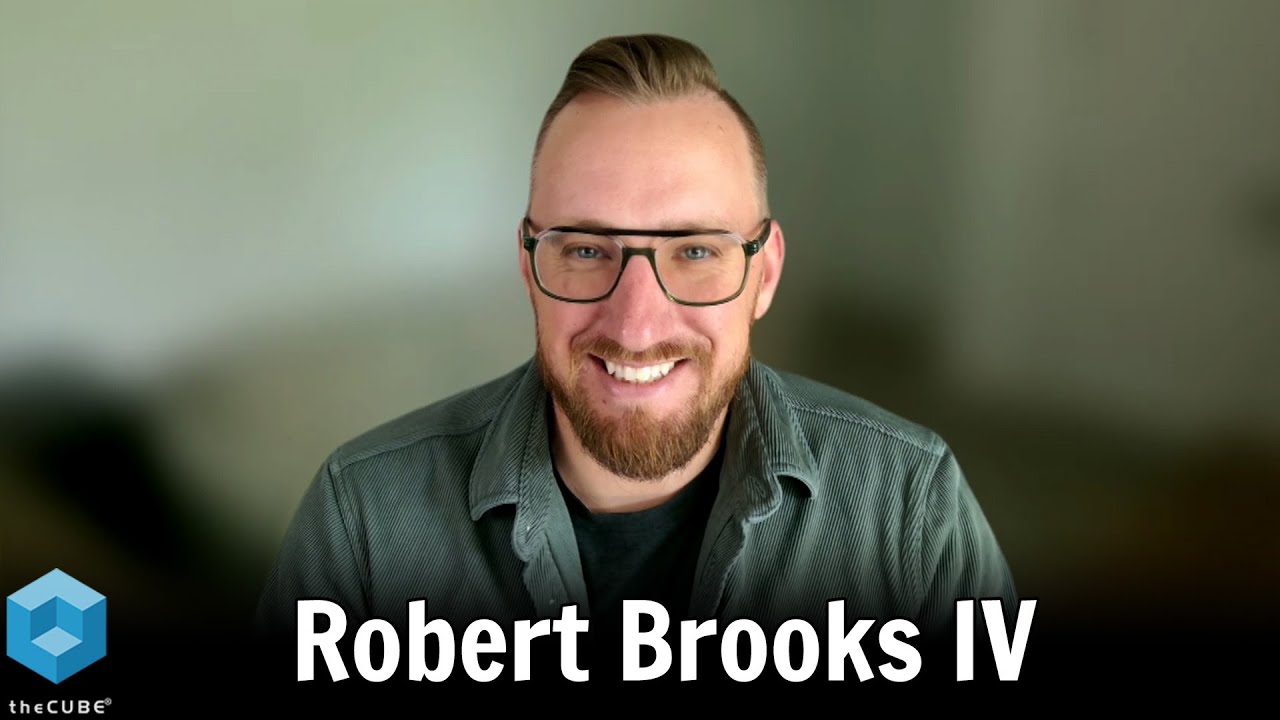
In this interview from theCUBE + NYSE Wired: Mixture of Experts, Brandon Cooper, chief executive officer and co-founder of Aphid, joins theCUBE's John Furrier to discuss how personalized AI clones could reclaim the 90,000 hours the average worker spends over a lifetime of employment. Cooper, who spent seven years as a senior technology advisor at Apple before conceiving the idea in 2018, explains how Aphid ingests a user's personality and skill sets into a digital clone that works autonomously on a computer and returns completed tasks for human review. Drawin...Read more
exploreKeep Exploring
Why did you found Aphid, what problem does it solve and how do its agent-based AIs work and affect the future of work, UBI debates, and product design/usability?add
What are you focusing on when building the clone (its engine and interface), and how are you thinking about different users' needs and the design risks involved?add
How does the clone product work now, how do people share and access it, and what features are planned next?add
Is it possible for doctors to create and deploy digital "clones" of themselves on patients' mobile apps that provide medical assessments and assistance while the real doctor monitors and intervenes through a web-based control panel (with mobile access and live chat for pro members)?add
Is the company currently hiring and raising funding, and can you briefly describe the available opportunities?add
>> Welcome back. I'm John Furrier, host of theCUBE, here at theCUBE's NYSE studio. Of course, we have our Palo Alto studio connecting Silicon Valley and Wall Street. This is part of our Mixture of Experts series. We got Brandon Cooper, CEO and co-founder of Aphid, this great AI agent solution, doing some very compelling things, cloning work, making people more productive. Brandon, thanks for coming on theCUBE. Appreciate it.
Brandon Cooper
>> Thanks for having me. Glad to be here.
John Furrier
>> So you're out of LA, Detroit, but you've got the little bit of a Hollywood vibe, Detroit vibe, Motor City vibe, and LA. You got some very interesting things going on with agents, which we've been talking about on theCUBE for two years. We've been fantasizing it on theCUBE with video that I would have a clone. And there's HeyGen out there, some other tools. You're starting to see really realistic human clones. But cloning tasks, cloning users, is real.
Brandon Cooper
>> Yes.
John Furrier
>> That's what you guys are doing. Explain the company, how many people, the product. Give a quick overview.
Brandon Cooper
>> Yeah. So background, the company was started, I was working at Apple for seven years as senior technology advisor. Overworked, and said, "Man, I wish I could just have a clone of myself doing the work on the computer." But instead, when I got replaced, I actually compensated for the work that it does for that employer. And this was 2018-ish or so, so it was way before AI was buzzwordy and everything, but I really created it to disrupt the nine-to-five because the average person is spending 90,000 hours at a job over a lifetime, so we wanted to get that time back. You can have a lot of money or a lot of time, but how do we get into that in-between? So Aphid is allowing humans to get in that in-between, and that's why the company was ultimately created. So you're basically ingesting your personality and skill sets into a digital form of yourself that works on the computer autonomously. And when it completes the task, it brings the activity back to the human controlling it.
John Furrier
>> So I could have someone write my blog posts for me, do all the research, do a video, potentially ... that's what you're thinking ... and then I can go on to a higher-level either task, chill out, do something productive on my own.
Brandon Cooper
>> Precisely.
John Furrier
>> Swing back in, check in with my apprentice, so to speak.
Brandon Cooper
>> Correct. Correct.
John Furrier
>> That gets smarter. And then that has an apprentice, clone of a clone, but this is the future of work. And agents are all about not just discovery, intelligence, but the work piece is the agent that's blowing people's minds.
Brandon Cooper
>> Yes.
John Furrier
>> That's a key area.
Brandon Cooper
>> Yeah. And also the people need the awareness on ... You already see it in the news where these big companies are laying people off. And what they don't understand is if consumers aren't healthy, there's not going to be no one to buy their products and services. So we could be heading towards what's called universal basic income, universal high income, is where people are basically getting stimulus checks every single month and there's no work. But Aphid is creating a system to safeguard humans, to say, "Well, let's put in a system in place to say you can replace us, but replace us with our own personalized AI agents that can work on behalf of the employer, and then now I can monitor those agents and get work."
John Furrier
>> Yeah. Brandon, that's a universal basic income conversation that's changed, I would say radically in five years, three years in particular. And you look back past a couple years, it went from an entitlement, let's change, give people an opportunity, that's an investment, to now we're looking at productivity gains that are now demonstrable. So if you say, it just changes the scope of what that is. So for example, if the productivity's so high, a lot of people are changing their position on this, because if we're making more money and we want to incent people to have a good life, whether it's getting back on their feet, which was the view people had before, to, no, live your life and do something good with it, a healthy life. So it's not just like, "Hey, we want to get people a chance to get on their feet because they're either struggling or don't have ... " but you could be great and still get that kind of benefit. So it's shifted to a opportunity for all. This is new. What's your reaction to that? Do you agree? Do you see the same thing, or is it me just reading the tea leaves?
Brandon Cooper
>> I really think that we're designed and programmed by society. We've been shaped into like, "Okay, I can't just sit idle. I can't just sit still. I need to be able to do something." So I see the world as being a hybrid. Let the machines do customer service to places like Dunkin' Donuts and everything. Those jobs are going to go. They're already walking up to the screen and you can order, but you don't have to wait for your coffee like, "Oh, this has taken a while." So those jobs are going to shift and then now those humans are going to work in different parts, different departments, and shift into managing machinery. So the training is going to go into robotics. You have big companies like Boston Dynamics. They're already creating these robotic systems that police are going to be using and everything else. So I think that's where the jobs are going to go. And universal basic income, if you're used to making 15,000 a month, 10,000 a month, but UBI is only 2,000, $3,000 a month, it's a big discrepancy in terms of your income and what you're used to. So there might be an outcry for people for that, so they're going to have to pick things up. So I see everything going towards fractional work, a lot of remote work. So Aphid is very, very focused in terms of future of work for remote workers, digital nomads, people who are going to work from home, being able to earn income from their Aphid clones that are operating on the internet.
John Furrier
>> So you bridge that gap.
Brandon Cooper
>> We're bridging the gap for that.
John Furrier
>> That's a key thing.
Brandon Cooper
>> That's correct.
John Furrier
>> And that's choice, of the human in the loop.
Brandon Cooper
>> Correct.
John Furrier
>> They could grind if they want. If they love to grind and grind, no problem. Keep grinding.
Brandon Cooper
>> Keep grinding. Do it more.
John Furrier
>> If that's what motivates you, grind.
Brandon Cooper
>> Precisely.
John Furrier
>> All right. So how about the tech, because I think this is where it gets interesting, because the biggest conversation this past year and continues to be is agents can combine and hyperconverge tasks and work. And AI is not like Google search, although it is a discovery mechanism, but it also can get the work done for you.
Brandon Cooper
>> Yep, correct.
John Furrier
>> So now you have work product. How is that evolving, in your mind? Where are we in the progress bar of agentic work seamlessly being done?
Brandon Cooper
>> I believe we're in this state of people getting really, really excited. There's a new shiny toy every single week. There's something that pops up like every two or three days. You have OpenClaw, another company. I'm not saying one is a shiny new toy and isn't here to stay, but I think that there's going to be almost like when we had the metaverse and everything was hyped up and everyone's using it. AI is a more serious version of that where I believe AI is a lot more here to stay. I think NFTs are going to ... It's a different conversation of how it's going to actually be used, but there's the hype train and then I guess the bubble burst and then it's going to retract. And Aphid in particular wants to make it more of the Steve Jobs, Apple, simplicity for the average person on a macro level. Right now it's primarily based for nerds. So a lot of these companies, I mean, my mom or different ... Love you, Mom, but she's not a technical person. So how do you put that into the hands of someone like that to use it? Yeah, and we're not there yet.
John Furrier
>> So talk about your Apple background, because I think that's interesting. In these major ways, the web was probably one that I would see as very comparable from a principle standpoint. When the web hit the scene, it was all analog. I'd have to go to the library. Now you got self-service with the web. But you still gotta click on stuff, put it together, but AI has that similar kind of feeling, and so the success at that time was very much make it simple, intuitive and easy to use.
Brandon Cooper
>> Yeah. Correct.
John Furrier
>> What have you brought from Apple with this agentic? What does that look like?
Brandon Cooper
>> Taste, design, it's really, really important. I'm really, really big on innovation and not looking like other products. I believe a lot of the preexisting solutions, a lot of them look the same. I think they're very intuitive, in terms of like ChatGPT and Claude. They're really, really easy to use. It's really Ask Jeeves on steroids, if you remember that. They were really the first to market. Yeah. They were really first to market, but AI wasn't integrated into it innately at that time. But that's really what it is, and it's just responding to you. So I think this is a great intro. Big, big company, but I think you're starting to see Anthropic take over.
John Furrier
>> I love the Ask Jeeves, Web 1.0 reference. That was a good laydown there. It's good. I think it's instructive, because answers are good. Answers, getting answers, is complex. There's easy answers, there's hard answers, and then work is just workflow.
Brandon Cooper
>> Correct.
John Furrier
>> So when you get into the prototyping and building these solutions, what are some of the key things that you guys think about in terms of getting right? If you have first principles, what are those first principles, and then how do you map the first principles to technology?
Brandon Cooper
>> Yeah. It comes down to creating the engine, so we're very focused on the engine. The way that you're going to use a clone is going to be very different from the way that I'm going to use a clone. Someone may want to use their Aphid clone to do sports betting or automated trading, but a real estate agent is going to use it in a very, very different way. So when we're mapping out that interface, we want it to look brand-new. It's very risky, but one thing about me in terms of my creativity is I need it to feel like it's something that you haven't seen before, even though I'm risking the educational barrier as a company, but once people learn.
John Furrier
>> That's very Jobs-like, because Steve Jobs had the DNA of people don't yet know what they want until they see it.
Brandon Cooper
>> Until they see it.
John Furrier
>> And that only works in markets where it's possible. I mean, I was telling someone on theCUBE here a couple of weeks ago when the SaaSpocalypse was happening, I actually interviewed the founder of Nest, Matt, he and Tony Fadell started Nest. He's got this new venture. He made a comment. He goes, "Well, the SaaS thing is a joke because all bad products will die," and he gave an example. He actually said he was at Apple at the time when iPod was the number-one selling product for Apple. The iPod, pre-iPhone, and Steve said, "No, we're going to make the iPhone."
Had an iPod in it, it had a phone, it was a computer, it had an app store. That's not a phone. Now, it's not an iPod either, so they basically cannibalized their own product to build a better phone, but it wasn't a phone. It was a phone, iPod, a computer and an app store. And Nokia had a chance to do it. Rim, which is Blackberry, had a chance to do it. That to me is where we are with AI, is that what you think is the product ... the Blackberry, the Nokia, the most popular phones at that time, iPod, a music device. "Oh, great. I can listen to music. Who doesn't like music? But I ain't making phone calls on that."
Brandon Cooper
>> Correct.
John Furrier
>> The balls to do that, the gut, the grit, that's what you're getting at. That's the AI moment we're in. That product, it makes sense, but it's like, "Oh, we can never do it. No keyboard? What are you talking about?"
Brandon Cooper
>> Yeah, "You're insane."
John Furrier
>> So they had to imagine that product. There was no market research that said, "Build a screen with no phone, a phone with no keyboard."
Brandon Cooper
>> No keyboard, yeah.
John Furrier
>> So to your point, the bets are there. No, that was a good bet, that bet came home, so what is your bet? What's your bet? What's your big bet? What's that iPhone-like bet that you're making?
Brandon Cooper
>> I won't give the competitors the playbook on how we're going to beat them in the Super Bowl, but I think organically it's, in a nutshell, we're going to make it to where it works on a macro level that's simplistic enough for your grandma to be able to use it and understand it, make it to want to understand it. I think you have to ... Society is not hitting them just yet until you actually lose your job. Then you're like, "Okay, I need to learn about this Aphid thing." Because until it affects you, people really don't care.
John Furrier
>> Yeah. Yeah.
Brandon Cooper
>> So that's what.
John Furrier
>> You need the software. I mean, if you deconstruct, not to go back on my Apple history, of course you worked there, but they had iLife at the time.
Brandon Cooper
>> I remember that.
John Furrier
>> You had my friend, John Murray, rest in peace, he was the architect for that product, but you also had the Mac OS was hardened. You had other software. They did the work under the covers. So what's the secret sauce in the engine, or did you give away this farm yet? Eye level. Secret sauce.
Brandon Cooper
>> But really, I see it in a world where we're very focused on the human aspect and the work-life balance. I think productivity tools, I think they're all great. I think everyone's copying each other. They are like a million copycats every single week. They even have copycat tools, software where you can just spin it up and completely copy someone's website and idea in a matter of seconds, to minutes to hours, but the secret sauce is the human aspect, the community, understanding and seeing how much time are you actually spending at work. Like that 90,000 hours that you're spending at a job, if you went into a job and you saw 90,000 hours counting downward, you would want to slit your wrist because you're like, "I can't be here for this long," because it's out of sight, out of mind. So we're bringing that data to the forefront so you can see your life metrics, ultimately, to see where's my time actually going, so I can make my son and daughter's soccer game or ballet recital.
John Furrier
>> Yeah. So it's got some collateral consequences, for sure. Talk about the momentum you have now and the product. I was asking you before we came on camera. Obviously we do video, I do a ton of it. I'd love my own clone to read news reports that looks like me. Maybe a little bit thinner, younger, Botox, a little bit of better looking, a younger John. But I mean, kidding aside, that's possible with video. Are you working on that too?
Brandon Cooper
>> Yes, we are. Yes, we are. So right now it's completely dialogue-based. That was what we call our beachhead strategy, ICP. Everyone understands how to chat, how to talk to someone through text message. So you imagine if you're sending a link of your clone to someone, they can talk to the digital version of yourself through a chat conversation right now. You have a very unique URL. The same way you would share your LinkedIn, you share your clone with someone, and they don't have to have the mobile app to talk to your clone. So that's what it does now, and then we're about to launch the web application that has voice and video. You'll be able to set parameters based on your personality, plugins, et cetera.
John Furrier
>> We've all been there in conversations, especially small talk. "Hey, John, what's up?" "Clone, get in there." Same question. "Hey, what's new? How's New York going?" Clone, "Yeah, good. Weather's nice today. How are you?" I mean, conversational rapport. You can almost tier it down to levels of I won't say IQ, but levels of sophistication, and it's got enough body of work, corpus, you can do that. How do you guys get into the task side? Because I think that gets interesting because some non-deterministic stuff comes in, because right now the big conversation is deterministic versus non-deterministic agents. Humans think non-deterministically. So I want my clone to be just as non-deterministic, but yet not hallucinate.
Brandon Cooper
>> Yeah. So within our platform, you can use the third-party models if you want. We have our own, we're vertically integrated, called Gamburian. It actually runs on IPFS. It's a decentralized system. A little slower in speed, but you actually house and keep your own data with you, so it's innate to your own system and you carry it with you. It's not on a central server.
John Furrier
>> So it's blockchain, so it's immutable, I own it?
Brandon Cooper
>> So with the IPFS, it isn't blockchain-based, but there are nodes. It's very similar to a blockchain system where people have systems at home and they're processing the blockchain transactions on their devices. IPFS runs just like that, but it's more comparable to a Napster or a BitTorrent where you can't see the data, but I can help house your data encrypted in the network where you can access it, or if you only want it on your device, you can store.
John Furrier
>> So decentralized storage.
Brandon Cooper
>> Decentralized storage.
John Furrier
>> Peer-to-peer.
Brandon Cooper
>> Peer-to-peer for your clones. And then the hallucination piece, so we have a mode where you're monitoring it in this system. So you're actually training it based on things that arise, and then that percentage is going to ultimately increase as time goes by to get more accurate. So it might start at 30, 40%, 50, 60. The more time you spend nurturing it, especially for repetitive things, you'll get to about a 80, 90% threshold.
John Furrier
>> It's almost good now. If you look at your chat history, you go to say OpenAI and based on my chat history, it knows what it sees. I guess my final question for you is, it's a double-edged sword. It certainly accelerates thoughts and ideas and productivity when it knows what it sees, but there's also human instinct. It's hard to train instincts, behavior. How do you think about that piece of it? Because there's a whole model side of it that could be a blind spot in these frontier models.
Brandon Cooper
>> I really see it as if you were to think of hitting a Record button. The more and more you're using your instincts into it, it's going to ultimately start to know the tendencies. But if you're using a machine learner model on those instincts, and it might not be exactly where you want it to be, but at least you're saving time based on those trained instincts.
John Furrier
>> So I imagine, obviously, I got my iPhone here, obviously here. If I say, "Hey, Siri," it wakes up, so it's obviously listening, hearing everything.
Brandon Cooper
>> Everything.
John Furrier
>> I interviewed a guy who built an app on the iPhone that says, based upon how you're talking on the phone, could detect if you're having a stroke. Okay, great app, great value. The question is that do you see a world where clones talk to each other, where my doctor can clone himself and send them to me?
Brandon Cooper
>> Yes.
John Furrier
>> To be resident on my app?
Brandon Cooper
>> 100%. We're actually playing around with some technology for that right now with a company in Los Angeles, working with some software by the name of Copious.
John Furrier
>> I mean, that's great added value.
Brandon Cooper
>> Yes.
John Furrier
>> It's like, forget the doctor's office. I just want to know do I have the flu.
Brandon Cooper
>> That's it. That's it. And guess what? In the Aphid system, the actual human doctor is watching everything. So if something is wrong, he can go in.
John Furrier
>> So he's got a control tower.
Brandon Cooper
>> That's right.
John Furrier
>> Is that what you guys call it, control tower?
Brandon Cooper
>> We call it the control panel.
John Furrier
>> Control panel.
Brandon Cooper
>> The web application is the control panel.
John Furrier
>> Yeah. Some people call it control tower, but basically that's a data hub for real-time intelligence on the clone.
Brandon Cooper
>> Correct. And you also have a mobile application, so you can see. If you're a pro member, you can jump in with live chat as well.
John Furrier
>> Yep. All right. So what's next? I mean, obviously if I wasn't having a great career at theCUBE doing fun interviews with folks like you, I'd probably want to come work for you. You must be getting a lot of people wanting to work at your organization. What are you focused on now? Are you guys hiring? What's the funding status? Give a quick plug for the opportunity.
Brandon Cooper
>> Yeah, we're currently raising for seed right now. We have a nice community, about 20 celebrities that are signed up, creating their clones. We have some upcoming partnerships that we're about to unveil to the world. So we're really, really excited.
John Furrier
>> You're really tight as a drum. I can't get anything out of you. It sounds like a fun event. What's the culture like?
Brandon Cooper
>> Culture is great. Los Angeles is great. That's where our team was birthed, in Silicon Beach, and we're expanding our sales and marketing office into Detroit. Detroit is really, really hot in tech right now as well, so we're bridging between those two cities.
John Furrier
>> Nice. Cool.
Brandon Cooper
>> But we are hiring for machine learning engineers, data scientists as well, to come on the team.
John Furrier
>> Brandon, great to meet you. Thanks for coming on theCUBE.
Brandon Cooper
>> Thank you.
John Furrier
>> I'm John Furrier, host of theCUBE. We got great action. Again, the sea change of society is happening. AI infrastructure continues to build out. With that enablement comes new AI-native opportunities, and that's going to impact how we live, work, and play, and the benefits are more productivity. If you can have a clone out there and have the benefit of it, feed the AI, have your own clone, integrate with others. This is the future of agents. We're doing our part to bring it to you. I am not a clone right now. Maybe soon we'll have one with Aphid, but we'll see. Thanks for watching.

























































 John Furrier