We just sent you a verification email. Please verify your account to gain access to
theCUBE + NYSE Wired: Mixture of Experts Series. If you don’t think you received an email check your
spam folder.
Sign in to theCUBE + NYSE Wired: Mixture of Experts Series.
In order to sign in, enter the email address you used to registered for the event. Once completed, you will receive an email with a verification link. Open this link to automatically sign into the site.
Register For theCUBE + NYSE Wired: Mixture of Experts Series
Please fill out the information below. You will recieve an email with a verification link confirming your registration. Click the link to automatically sign into the site.
You’re almost there!
We just sent you a verification email. Please click the verification button in the email. Once your email address is verified, you will have full access to all event content for theCUBE + NYSE Wired: Mixture of Experts Series.
I want my badge and interests to be visible to all attendees.
Checking this box will display your presense on the attendees list, view your profile and allow other attendees to contact you via 1-1 chat. Read the Privacy Policy. At any time, you can choose to disable this preference.
Select your Interests!
add
Upload your photo
Uploading..
OR
Connect via Twitter
Connect via Linkedin
EDIT PASSWORD
Share
Forgot Password
Almost there!
We just sent you a verification email. Please verify your account to gain access to
theCUBE + NYSE Wired: Mixture of Experts Series. If you don’t think you received an email check your
spam folder.
Sign in to theCUBE + NYSE Wired: Mixture of Experts Series.
In order to sign in, enter the email address you used to registered for the event. Once completed, you will receive an email with a verification link. Open this link to automatically sign into the site.
Sign in to gain access to theCUBE + NYSE Wired: Mixture of Experts Series
Please sign in with LinkedIn to continue to theCUBE + NYSE Wired: Mixture of Experts Series. Signing in with LinkedIn ensures a professional environment.
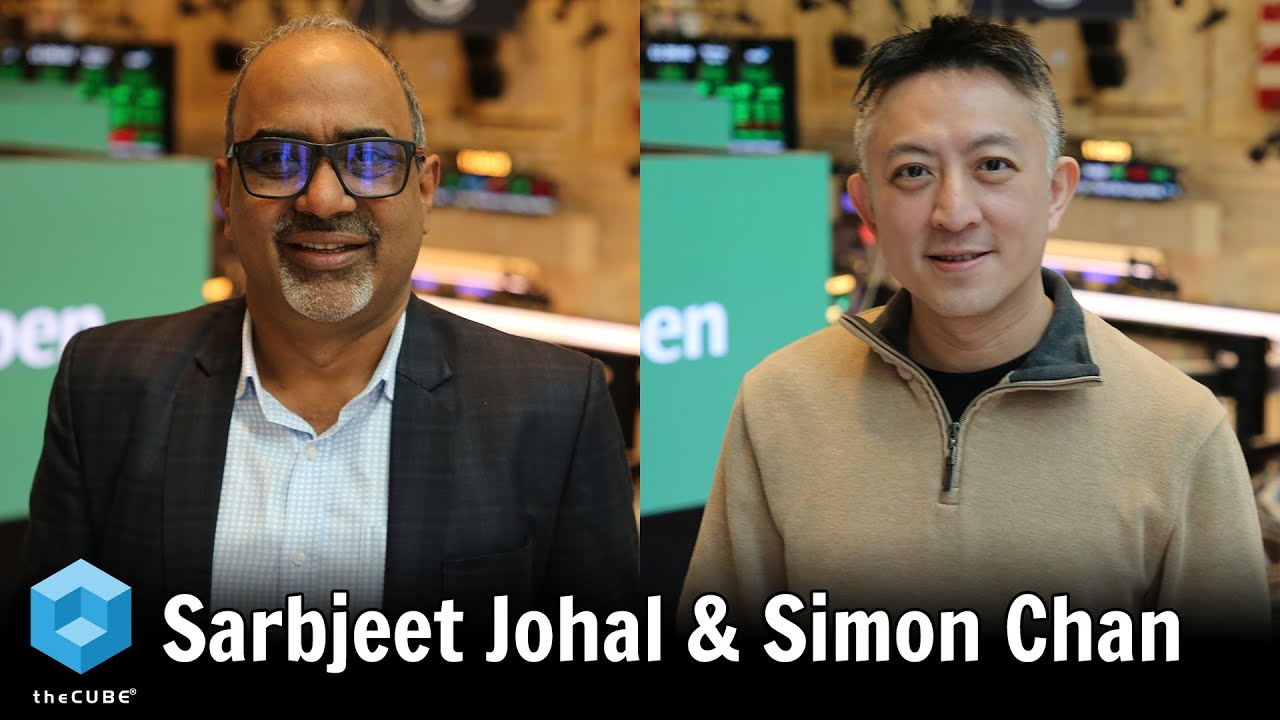
Joran Dirk Greef, TigerBeetle & Alexander Gallego, Redpanda
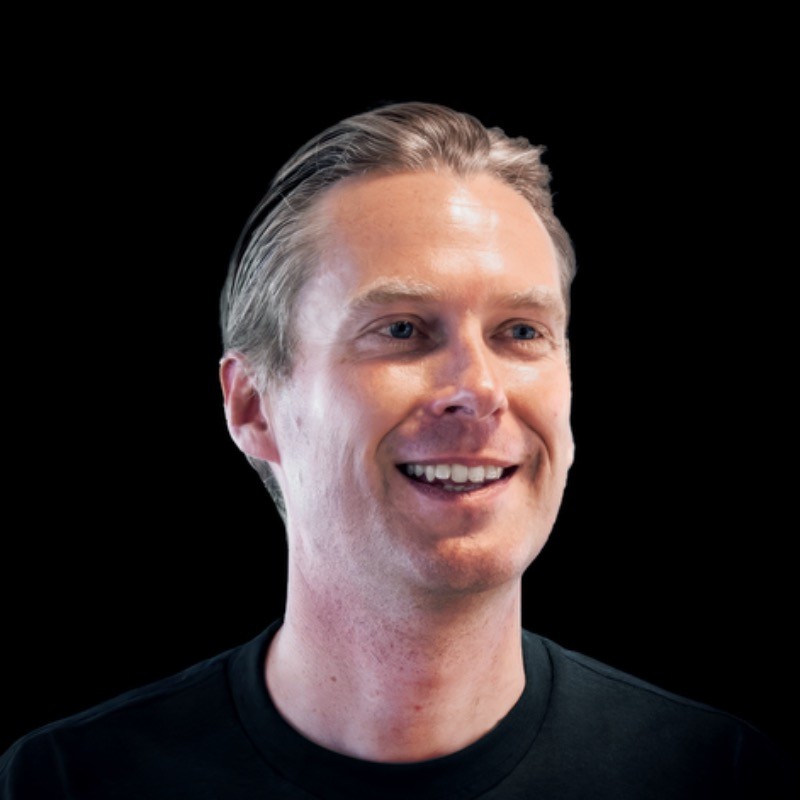
Joran Dirk Greef
Creator, Founder, & CEOTigerBeetle
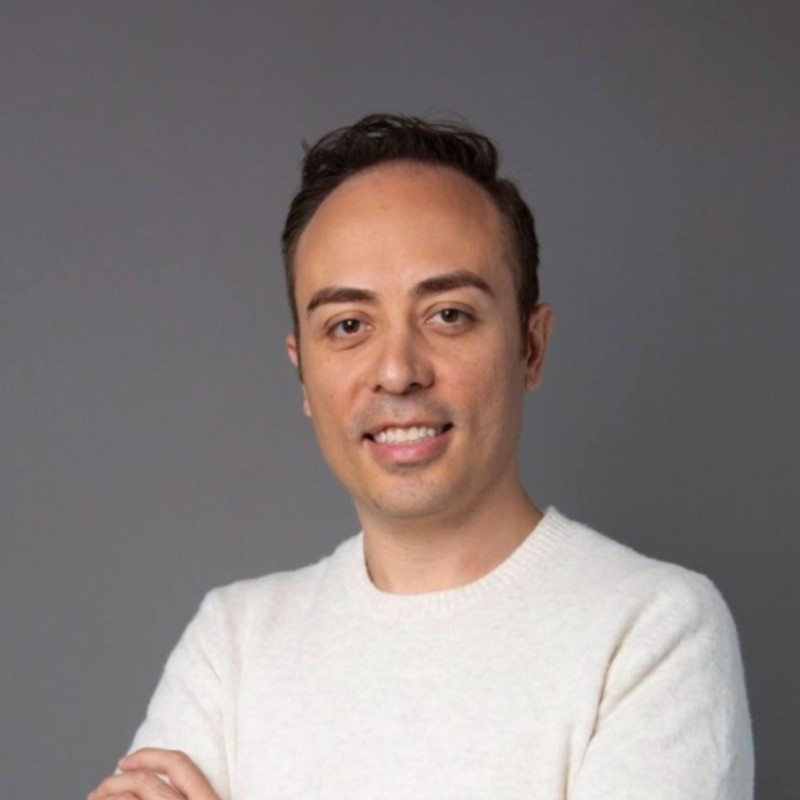
Alexander Gallego
Founder & CEORedpanda
In this episode of the Mixture of Experts series from the NYSE, John Furrier hosts Redpanda Founder and Chief Executive Officer Alexander Gallego and TigerBeetle Founder and Chief Executive Officer Joran Dirk Greef to discuss a strategic partnership aimed at redefining high-scale transaction processing. The conversation highlights how combining Redpanda’s durable streaming data platform with TigerBeetle’s specialized OLTP database addresses critical bottlenecks in modern infrastructure. Gallego and Greef explain the industry shift from legacy batch processing...Read more
exploreKeep Exploring
What recent developments have been announced regarding Redpanda and its CEO, Alex Gallego?add
What is the partnership between Redpanda and TigerBeetle?add
What is the flow of transaction processing in a banking system using Redpanda and TigerBeetle, particularly in relation to high availability, low latency, and high throughput?add
What is the role of Redpanda in the system architecture for managing banking transactions?add
What is the role of interconnects in large-scale AI systems and their relation to data transaction speeds?add
Joran Dirk Greef, TigerBeetle & Alexander Gallego, Redpanda
search
>> Welcome back, everyone. I'm John Furrier, host of theCUBE here in our NYSE CUBE Studios here in New York Stock Exchange, part of the NYSE Wired program and community. Of course, we've got our Palo Alto studio connecting Wall Street and SiliconANGLE as part of our Mixture of Expert series where we got some news from two CUBE alumni, Alex Gallego, founder and CEO of Redpanda. Welcome, back.
Alexander Gallego
>> Thanks for having me.>> Joran, great to see you. Just on with TigerBeetle founder and CEO. You guys have an announcement this morning.
Joran Dirk Greef
>> Thanks for having me.>> A partnership. So first of all, before we get into the partnership, Alex, congratulations on all the success you're having at Redpanda. You guys are moving the needle. I mean, since the last time we talked on theCUBE so much that you bought a company winning customers, big customers, real transaction volume, real high availability, real business.
Alexander Gallego
>> Yes, exactly.>> TigerBeetle thundering away with high speed, high scale transactional databases. So I could get the news. I didn't read the release, but I put the picture together. Explain the partnership between Redpanda and TigerBeetle.
Alexander Gallego
>> So we have historically at Redpanda partnered with the Global Fortune 2000. That's kind of where we deliver the most value. NYSE for example, is one of our customers. So high scale, difficult to manage, lots of volumes, low latency clearly as you can see in the tickers behind us. And so when Joran was building this database specialized for transaction process and they're like the world needs something better. Our customers frankly chose it on their own. And so we power two of the top five banks in the US. Last time, since we connected, we power all of the electric car companies in the US. And so in finance in a specific, our users... I guess our tech probably clear your paycheck this morning. That's how cool this is. And so what people have been struggling for a long time is like what does the next generation transactional stream processing compute looks like as you try to revamp old systems from batch into real time, as you're trying to update the new infrastructure. If you were to start from scratch, what would you do differently? So I think to me, this is what this partnership is. It's like this is the future. It's systems from a new angle that could do 10X better, everything that people were doing before.>> So, Joran, great compliment from Alex saying that his customers, he's got great customers. I know know them. You can't say their names, but I know what they do. They're pretty high end. They're choosing you on their own. He can't ignore you, but then he likes you because you got good solution.
Joran Dirk Greef
>> >> But this is a system. You mentioned systems. I love that word. Okay, you mentioned modern. And I love the term plumbing so generic. People can relate to plumbing. The plumbing is being recasted in a modern era, and we use the term modern legacy. It's kind of a joke on words, but it's like, "Okay, legacy is bad. Modern is quite good, but what's modern legacy? Good, bad together?" Because just five years ago or three years ago, when your competitors who were leaders, who you're disrupting, they are stealing the yard. But you're actually modern. He's got a modern database that was built for OLTP, which kind of nichey. In banks it's not. Everyone knows what it is. But he's taking it into all environments at scale. The systems are being recasted.
Alexander Gallego
>> Yes, yes. And so what I think is there's the new demand on those volume of data that are being... And so there's this shift originally from batch to real-time. And you and I have talked about, right? Basically batch is a historical artifact of how we got here. It's not the future. And so most companies, it's no longer a need. I think dynamic data is the data that matters. And so it's like, "Okay. That was where we played."
But what we saw some of our customers struggle is that, "Okay. Well, Redpanda helps you to put your data into this lake houses. We could do your operational system super well." But there was still this bottleneck of transaction processing and so-
Joran Dirk Greef
>> Over your old systems.
Alexander Gallego
>> Exactly.
Joran Dirk Greef
>> 50-year-old transaction processes.>> All right. So explain this. I'm a bank. I got Redpanda. You guys are state-of-the-art. I got the high availability. I got all that streaming. Oversimplifying it, but I love it. Thank you very much.
Alexander Gallego
>> Yeah.>> Okay. Now take me through the transaction plumbing flowchart. What happens with TigerBeetle and how does that relate to high quality environment, low latency and high throughput?
Alexander Gallego
>> Let's take a real production for one of the largest banks in the world right now. So the way this works is that, you have Redpanda here managing the application layer and Redpanda is giving the bank durability, high availability, all the safety access controls, all that. And then the app will commit the transaction that says like, "Hey, John's check, whatever. It's now cleared on this particular bank account.">> A system of record.
Alexander Gallego
>> Exactly.>> Piece of information, high quality, super important.
Alexander Gallego
>> That can go down. And so we'll talk about why does such a good synergy from the engineer. Because at the end of the day, engineers are like honey badgers and honey badgers don't care. They're going to put together the system that makes sense for them. And so to take that system, then they'll commit the transaction to TigerBeetle, then we'll consume the change data capture and with the acquisition we made last year as you referred earlier, then we'll push it into their analytics layer. And that's really an end-to-end application. When you look at it, the bulk of it is really Redpanda, the connectors and TigerBeetle. That's like the inner core of that bank.>> And so when we cover the NVIDIA is the world in these large-scale AI factors, the whole series just kicked off this week, they talk about interconnects. You're essentially creating an interconnect for a transactional layer for Redpanda.
Joran Dirk Greef
>> Yeah, that's Panda's like the super node, the super hub. It's the hub that connects you anywhere. So get it from TigerBeetle or Redpanda and you get it all.>> So you guys are interconnected. So you're taking care of your business, you have the customer. You come in for the transaction and speed.
Joran Dirk Greef
>> Just so that transactions doesn't have to be a bottleneck because Redpanda is so fast. The best streaming system in the world, fastest, safest. But you need to get a heart that can pump those arteries.>> It's like life. You don't want people to slow you down, but also you don't want them to speed you up either. So if you speed people up, you got to catch up. So no, it's being in sync. Okay. It's got the interconnect. Now the data lake piece, that's huge because that's where the analytics happen, right?
Alexander Gallego
>> Exactly, exactly.>> So I'm a company. I'm like, "Okay, I got a whole team saying, what's the dashboards look like? How do I slice the data to do stuff and understand my business or run Gen AI." Whatever they do.
Alexander Gallego
>> Totally.>> Right? So you've got that covered. You handle the app, goes to transaction, data lake gets filled.
Alexander Gallego
>> Yeah, exactly. Let's see what's the value to the builder? Why are we being selected for this mission-critical systems? Because remember the tech, even though we started philosophically from an engineering like bottom sub, we want to build the best systems possible, people selected us for the most mission-critical systems. That's the key.
Joran Dirk Greef
>> We designed for it.
Alexander Gallego
>> Yeah, totally from the ground up on the engineering principles and safety. We can't lose your data and then we give all this guarantees. But what makes the clock tick? What closes the loop is at some point somebody is going to look at a dashboard. You have to look at your bank. You log into your bank, you're like, "How much money do I have?">> I got my paycheck. I don't see it in my statement.
Alexander Gallego
>> And I pay my bills. And so the way that we partner is like, "Okay. Well, let me consume the transactions instead, change data capture form and then we'll publish it to like 310 connectors." And that's the architecture.>> Okay, I have to ask you guys, because I got two awesome experts here and succeeding with great momentum on all fronts. When you walk into a customer now you got the partnership... And I know you have individual customers, now you got the partnership. So share your slice of life. When you walk into a customer, what are you looking at? I mean, what is the environment? What's their pain? How have they been grinding? Obviously, you guys are an aspirin and a steroid and vitamins. All of the checks there. So good benefit. I see that. What's it like? What are they living? Take me through the picture. What's their tech scene? They have tech debt. Are they struggling on speed? Are they losing money? Is it leaky pipes? I mean, what is the picture?
Alexander Gallego
>> I think today CIOs are focused on two things. Either gen AI. It's top of mind. And then on the infrastructure front, they really struggle on... From the CIO point of view, cost is a big one. And so we just took a customer from 500 nodes to 60 nodes, which cause this whole competitive debacle where our competitor is like, "We'll match the price, whatever it is. We'll give you 500 nodes for the cost of 60." But really cost is a big one. People want to do more with less.>> So you're taking complexity out from a physical standpoint?
Alexander Gallego
>> Yeah, exactly. But it's also like a systems complexity. We eliminate categories of complexity. I think->> Like what?
Alexander Gallego
>> So let's see. We eliminate ZooKeeper, we eliminate the coordination system, we eliminate the separate system for schema registry and HTTP proxy. And so as an engineer it just feels like systems whack-a-mole. What broke at what time? How do I go back and debug this thing? It's single >> It's one less thing to worry about. Yes, you take things out. Again, this is a systems design concept that the world is now coming to. The system's thinking is mainstream right now, which wasn't five years ago. Engineer, even coders, they
Joran Dirk Greef
>> To think of the system as a whole because TigerBeetle could be correct, but if your streaming is not correct, it's not correct. So you need Redpanda, but you also need TigerBeetle, so the whole system is fast and safe by default.
Alexander Gallego
>> And when we walk in, I think we should talk about in finance in particular because it's easy for the audience to relay. We can't lose your check. That's why you show up to work to some extent. Safety is such a critical component and such an important thing that people continue to struggle. So there's this bottleneck. I think you talk about it last time.
Joran Dirk Greef
>> . ROWLOCKs. Yeah.
Alexander Gallego
>> It's like-
Joran Dirk Greef
>> That's what our customers see. So literally I was with the CTO of one of the biggest banks in Africa chatting face to face. The pager goes off, he shows me in a SQL server ROWLOCKs in the red for three minutes. Nothing is moving for three minutes because of ROWLOCKs. General-purpose ROWLOCKs just don't scale for transactional process.>> So I want to ask you about this operational because the gen AI hype is super high. Agents is beyond all recognition. But it's going to happen. No doubt in my mind. The evolution is going to meet up. that was all change. But that's like pie in the sky. So when I talk to end users, they're like, "Oh, I love gen AI, I use it, but are you kidding me? I got to get my operation. I can't lose money." So there's still the front lines of business where the systems are changing too. That's where you're winning. At the same time, I don't want to foreclose the future. So address that point, I get the operational success. But now I'm thinking, okay, where's the headroom? It's for gen AI.
Alexander Gallego
>> I mean, let's talk about why people are struggling with AI, which gen AI in particular? Data quality, it's a real big problem. Like garbage in, garbage out. We've been in systems for a long time. That's been the same for about the longest. And so you have to address the data quality upfront. You have to have systems that give you completeness. And so alternative architectures, they drop data. And so all of the sudden, how can you have confidence in the systems? Here's what's interesting. It's not enough that your applications are being co-generated. It's that the structure of those applications are fundamentally different today than they were when you and I were writing code, right?>> Yeah.
Alexander Gallego
>> It's like the architecture. And so you need it like from Redpanda's point of view, this durable log where you're recording every single event. And it's not enough to record the what, when, and what time stamp, but the entire transitive dependencies of all the data that's being acted. So I think trust is a big one for CIOs to be able to push it to production because you don't trust it. You're like, "I don't know what this black box thing is doing." And so I think those are some of that.>> And you covered the state problem too. That's huge.
Joran Dirk Greef
>> And I think also with this, with autonomous agents, a lot of trust is also deciding what we're not going to trust. And so it's okay. We don't need to say we trust an autonomous agent a hundred percent. We can say we trust it like 99.99%, but then give me an audit log, immutable history. And so it is going to make mistakes at some point, but we're going to have a history of that and we can do correcting entries, going to give better quality primitives, debit credit to do the transaction processing like Alex's full complete.>> What I like about what you guys are doing is, one, you hit our leader's category, which is obvious, but you mentioned losing data and the systems lose data. The state of the art wasn't a bad thing. People would have to add ZooKeeper. So there was a cobbling of stuff to solve the problem. So okay, we're losing data. Okay. Throw some stuff at it. So you have a sprawl. So architecturally you've built up too much stuff. Why I bring this up because one of the trends that we're covering here in theCUBE is that we're in a changeover, a transformation architecturally from a system standpoint. I mean, our AI factory series talks about the data center as one computer. That was not a concept five years ago. It was like a bunch of rack of servers. They talked to the other data center, rack and stack switching, scale up, scale out. But you guys are saying, "Okay, the old way, how we got here doesn't matter. Yeah, you throw stuff at the problem, but now we have an opportunity to reset."
Joran Dirk Greef
>> To reset.>> That's what you guys are hitting in my opinion. What's your reaction to that?
Joran Dirk Greef
>> We had a great 30 years of legacy infrastructure. Great 30 years. And now what does the next 30 years look like? Because we are at a transition point. Scale is going through the roof.>> You guys don't deny what I just said. Obviously, you guys are on that side of history. What's the customer reaction to that? Because now they feel it and see it, but then they have the reaction of they panic. I'm not saying they panic. That's my word. But they freeze or they go, "What do we do?" They have meetings. Then the politics, "We can't take ZooKeeper." The thing is perfectly set up. Well for what? So there's-
Joran Dirk Greef
>> Probably, I don't say that John. They're like, "Please, when can we take... You can help us hire. To be able to hire engineers if we take ZooKeeper out.>> First of all, the page is going off. That's another problem. They got pages. But what is the customer playbook now? Because that's the focus that we see. How do I get the AI factories up? How do I get my architecture set up? How do I not lose business for three minutes or three hours or three days? How do I have non-disruptive operations and bring in the new fresh?
Joran Dirk Greef
>> And there's one more dimension which is data privacy and data sovereignty. And so what you've got with this foundation models is they've already consumed all of the publicly available data, but the next frontier is private data. And in order for agents to be useful, they have to... In infrastructure, we call them connectors. In AI, we call them context because we have to give everything a cool new name.>> MCP, yeah. It's not that good either, right? But that's okay. It's getting better. I love MCP.
Joran Dirk Greef
>> Totally. So now you have to give it access to all of this internal systems. So that's a real bottleneck. How do you give access to internal systems in a way that's safe, in a way that's controllable? And that really is where a bunch of the CIOs->> Talk about safety because this is a nuanced point. We'll get to the cars in a second. I want to talk about IT. Most of these systems, internal systems are brittle and they work. So sometimes introducing new things-
Joran Dirk Greef
>> Old people think they work until the data center loses power. And you realize your old streaming system wasn't ever writing to disk. It was replicating machines in the same data center, but they weren't. So I always encourage engineers, "Go home. Check is your old streaming system actually syncing by default it probably isn't. Redpanda does by default same as TigerBeetle.
Alexander Gallego
>> By the way, that's a real call we got for a production audit. I got the call from a CIO of a bank and they said we are getting fined basically. I think it's like a hundred thousand dollars an hour by a government because I don't want to narrow it too much for the audience. And that's how we got in. They're just like, "I want a system that's safe that can keep my data to safety in this regard. It's just not losing data." Which sounds like->> Safe data.
Alexander Gallego
>> Obvious. Yeah, exactly. You're like, "Well, what the hell is the point of a database if it's not to keep my data. The point is where I send you data, I want get it back," kind of why we invented this system.
Joran Dirk Greef
>> You actually get vendors that say, "Well, we think durability and ACID. ACID, the guarantees of debt. Durability should be a spectrum. Let's make it a spectrum." We're like, "No, no. It's absolute.">> It's not a spectrum.
Joran Dirk Greef
>> It's not a spectrum.>> That's a whole nother word.
Joran Dirk Greef
>> It is the very foundation of ACID. You pull out D and you lose AC and I.>> So on safety, the reason why I brought up safety is because first thing that popped in my head was cars. You mentioned you're powering a lot of the autonomous vehicles.
Alexander Gallego
>> All of the autonomous vehicle of in the US.>> All of them. All of them.
Alexander Gallego
>> Yeah.>> That's a bold statement. Okay. So safety for them is not killing people. So there's a little AI safety thing there. How do you guys handle the autonomous vehicle piece? Because, again, that's a huge critical infrastructure piece and autonomous L-force coming, L2 with retrofits out there now. What's that?
Alexander Gallego
>> It's like thing... Just to give a scale it's in the quadrillion of rows per day. So it is a scale that is a stagger and even to the people that were a help, "Hey, we're like help with the small part." Obviously, the engineers at this company did all of the work, but what we do is we make that delivery of messaging guaranteed, safe, just worry-free. But then you can build principled systems on top of it because you can start to trust the underlying infrastructure. The only way to do this is honestly with custom tweaking all the way down to the underlying hardware because this-
Joran Dirk Greef
>> Defaults are wrong. They're not set.
Alexander Gallego
>> Yeah, exactly.
Joran Dirk Greef
>> You can't trust them.
Alexander Gallego
>> Totally. It's just all the way down. You really have to rethink. I have a saying which is sometimes you get to reinvent the wheel when the world changes, when the road changes. And so we're just trying to reinvent this wheel together.
Joran Dirk Greef
>> We were so lucky with timing because Redpanda launched 2020. I was watching that launch. I was convinced this is the future of streaming, for durable streaming. I was designing TigerBeetle July 2020. We had all the same ideas, so similar like Seastar framework, but we had Tiger style static allocation, static allocation. Just the same->> Your computer science alignment and culture fit was there.
Joran Dirk Greef
>> And a rare standard. You don't find the standard of engineering at the hyperscalers. They don't do this. The build quality as far as I know. I get engineers from Google writing to me saying, "I wish we did static allocation. Nobody does it, but this is very much embedded.">> Why don't they do it? What's the reason?
Joran Dirk Greef
>> I think we just come from this hardcore embedded engineering world. That's how we think of real time. We think of real time. This is the way you do these systems.
Alexander Gallego
>> Those are the large engineering tax here that people pay. And so I don't want to basically put it under the rug and it's like this is a panacea because there is cost. But here's the thing with complexity, you can't eliminate complexity. You can only shift it around. And either you punt it over onto the users or the system experts onboards the complexity. And so I think-
Joran Dirk Greef
>> What we do, yeah.
Alexander Gallego
>> Exactly. The philosophy->> Take that burden.
Alexander Gallego
>> Yeah.
Joran Dirk Greef
>> We say total cost of ownership across the relationship with our users. It's not our total cost of ownership. It's the best software is more than a program, I like to say. Best software is more than a program. It's a relationship between the users and the makers based on trust. And so we take total cost of ownership for the whole world. The world doesn't need us to slow or buggier software. It wants less blue screens of death. So we take that cost on and then the world rewards us.>> It's very refreshing. It's actually fun. I have to ask, what's been the reaction from the competition? I've seen your LinkedIn post. I know what they're doing. What's the reaction? Because obviously you're not going to be popular for the old guard.
Joran Dirk Greef
>> FUD comes up.>> Fear, uncertainty and doubt. That comes out.
Joran Dirk Greef
>> We actually put a anti-FUD.>> It's a spectrum.
Joran Dirk Greef
>> We deploy these anti-FUD devices, John. I'm seeing more FUD coming.>> What are some of the reactions? What are they saying?
Joran Dirk Greef
>> We don't think about it too much. We think there are going to be competitors. It's like technology moves in ways that what you really want do is be getting out there surfing the swell. And if other people are good and spotting that swell surfing->> It's noise.
Joran Dirk Greef
>> Your frenemies.>> It's a signal noise ratio.
Joran Dirk Greef
>> Your frenemies.>> You walk into a customer. I know you have customers coming to you that say, "Hey, we have a problem," and it's their problem. The other vendors you solve that. What's next with the partnership? What are you guys going to do next? Obviously, it's out there.
Joran Dirk Greef
>> Power the world.>> Joint engineering? Connectors? What's next?
Alexander Gallego
>> Trying to own the transaction process in the space for the next decade. I mean, I think the callout is if... First of all, we feel authentic in the way that we can show up to the world's most demanding workloads and honestly just like, "Let's go. Put us to the test. We could do this. We're now ready."
Joran Dirk Greef
>> And it is. I mean, it's just our job. It is our job to do that. It happens to be that that is our workload and that's what we do.
Alexander Gallego
>> Exactly.>> Guys, thanks. Alex, Joran, thanks for coming on. Again, two great CUBE alumni and thanks for being part of the community. Really appreciate it.
Alexander Gallego
>> Thanks for having me.>> All right. I'm John Furrier. We're here at theCUBE, the Mixture of Expert series. Two experts here sharing their data with you in real time. We're streaming on theCUBE, doing our part. Thanks for watching.