In this theCUBE + NYSE Wired: Mixture of Experts segment from the New York Stock Exchange, theCUBE’s John Furrier sits down with Raj Verma, CEO of SingleStore, to unpack how the intersection of technology and finance is shaping enterprise strategy. Verma shares why SingleStore is “on course” for the public markets, reflects on brand-building through the company’s partnership with golf Hall of Famer Padraig Harrington and connects that ethos to how SingleStore helps organizations fix struggling data “swings.” The discussion zeroes in on what’s next as Wall Street watches the AI infrastructure buildout: after chips and systems, the software and data layers set the pace for value creation.
Verma outlines why enterprises must modernize “brown” data estates into “green” ones to safely bring corporate context, governance and compliance into LLM workflows via RAG – and why commoditized data-at-rest puts the advantage at the query layer that unifies data in motion with data at rest. He predicts agentic AI will gain reasoning capabilities in roughly 18 months, cites industry indicators like Google reporting ~25% of its software now built by AI and argues that high switching costs will give way to disruption as buyers reassess legacy vendors. The conversation closes with concrete momentum: ~33% YoY growth, ARR in the ~$135M range, gross dollar retention ~98%, cloud NDR ~130, ~50% of business now in the cloud, landing ~3 new customers per day, a path to cash-flow breakeven in the next two quarters and a teaser for AI-related announcements in the next two months. Listeners will find notable stats, real-world use cases and forward-looking views on how databases power reliable AI at enterprise scale.
Forgot Password
Almost there!
We just sent you a verification email. Please verify your account to gain access to
theCUBE + NYSE Wired: Mixture of Experts Series. If you don’t think you received an email check your
spam folder.
Sign in to theCUBE + NYSE Wired: Mixture of Experts Series.
In order to sign in, enter the email address you used to registered for the event. Once completed, you will receive an email with a verification link. Open this link to automatically sign into the site.
Register For theCUBE + NYSE Wired: Mixture of Experts Series
Please fill out the information below. You will recieve an email with a verification link confirming your registration. Click the link to automatically sign into the site.
You’re almost there!
We just sent you a verification email. Please click the verification button in the email. Once your email address is verified, you will have full access to all event content for theCUBE + NYSE Wired: Mixture of Experts Series.
I want my badge and interests to be visible to all attendees.
Checking this box will display your presense on the attendees list, view your profile and allow other attendees to contact you via 1-1 chat. Read the Privacy Policy. At any time, you can choose to disable this preference.
Select your Interests!
add
Upload your photo
Uploading..
OR
Connect via Twitter
Connect via Linkedin
EDIT PASSWORD
Share
Forgot Password
Almost there!
We just sent you a verification email. Please verify your account to gain access to
theCUBE + NYSE Wired: Mixture of Experts Series. If you don’t think you received an email check your
spam folder.
Sign in to theCUBE + NYSE Wired: Mixture of Experts Series.
In order to sign in, enter the email address you used to registered for the event. Once completed, you will receive an email with a verification link. Open this link to automatically sign into the site.
Sign in to gain access to theCUBE + NYSE Wired: Mixture of Experts Series
Please sign in with LinkedIn to continue to theCUBE + NYSE Wired: Mixture of Experts Series. Signing in with LinkedIn ensures a professional environment.
Are you sure you want to remove access rights for this user?
Details
Manage Access
email address
Community Invitation
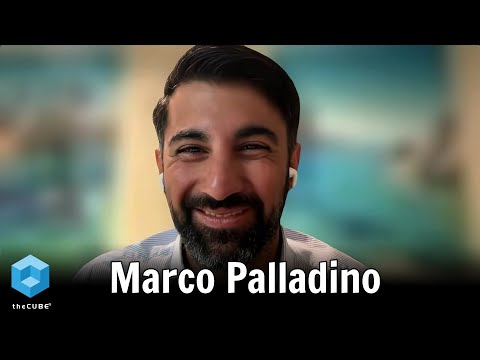
Marco Palladino, Kong
In this theCUBE + NYSE Wired: Mixture of Experts segment from the New York Stock Exchange, theCUBE’s John Furrier sits down with Raj Verma, CEO of SingleStore, to unpack how the intersection of technology and finance is shaping enterprise strategy. Verma shares why SingleStore is “on course” for the public markets, reflects on brand-building through the company’s partnership with golf Hall of Famer Padraig Harrington and connects that ethos to how SingleStore helps organizations fix struggling data “swings.” The discussion zeroes in on what’s next as Wall Street watches the AI infrastructure buildout: after chips and systems, the software and data layers set the pace for value creation.
Verma outlines why enterprises must modernize “brown” data estates into “green” ones to safely bring corporate context, governance and compliance into LLM workflows via RAG – and why commoditized data-at-rest puts the advantage at the query layer that unifies data in motion with data at rest. He predicts agentic AI will gain reasoning capabilities in roughly 18 months, cites industry indicators like Google reporting ~25% of its software now built by AI and argues that high switching costs will give way to disruption as buyers reassess legacy vendors. The conversation closes with concrete momentum: ~33% YoY growth, ARR in the ~$135M range, gross dollar retention ~98%, cloud NDR ~130, ~50% of business now in the cloud, landing ~3 new customers per day, a path to cash-flow breakeven in the next two quarters and a teaser for AI-related announcements in the next two months. Listeners will find notable stats, real-world use cases and forward-looking views on how databases power reliable AI at enterprise scale.
>> Welcome back. I'm John Furrier, host of theCUBE at our NYSE studios here on the East Coast. Part of our CUBE's NYSE Wired program. Of course, we've got our Palo Alto studio and covering the East Coast and West Coast, connecting Silicon Valley and Wall Street. We've got CUBE alumni here for special news, Marco Palladino, CTO and co-founder of Kong. Doing great. Great success. But huge news, unveiling the connectivity vision, roadmap to power, the agentic era. Marco, great to see you. You've been on many times, I can't even count. But great news because you have been teasing this out on theCUBE in the past, AI connectivity. What's the hardcore news?
Marco Palladino
>> Well, as you know, Kong for the last decade has been helping enterprise organizations around the world connect their digital services. And we always saw AI as a natural evolution to that. So, as you recall, even at your shows, we spoke about many AI products that Kong has built to power the underlying AI infrastructure of the agentic world. Every enterprise organization in the world is building the agentic transformation. Agents, in order to work, they have to connect with APIs, with MCP tools, with LLMs for the intelligence, all that we call the AI data path. So, the AI data path is these conglomerate of connections that make the agents possible. Well, now, there are three challenges with that. There is a fragmentation challenge, there is a cost challenge and there is a risk challenge. We don't want to effectively manage and govern all the data governance and the agentic governance in a separated way across the board. And so, if fragmentation is the problem, then unification of that governance is the solution and this is what our platform provides.
John Furrier
>> I really appreciate what you guys are doing. And I think on many conversations we've had on theCUBE about APIs that powered the past 16 years since we've been covering Kong, or Pre-Kong and now Kong, APIs were cloud-native and the growth was phenomenal. Okay, we saw that wave. Everyone sees it. Take us through the durability of agents and why APIs with agents are so important.
Marco Palladino
>> Well, agents without APIs, they can't do actually things. In order for an agent to be smart and do things, that agent needs to be able to consume APIs, to hook into customer data or services that the organization provides. Organizations that have made an investment in the past to nurture and create a good ecosystem of APIs are the ones that are better positioned today to create agents that are smart and capable. And the ones that have not done that investment, they can't create good agents because they don't know what the agents can do in the organization. So, APIs are prerequisite for the agentic transformation, but then agents themselves introduce a whole series of requirements and challenges that's actually quite important.
John Furrier
>> And you guys are creating a a new way to look at a stack component, some missing plumbing or software. Recently, Retail Week, we're here in theCUBE covering NRF, which is a big retail show. Some successful people in retail told me they leaned into agents early with their team, picked some end-to-end use cases, good workloads they knew. Record revenue. Revenue, not cost savings. So, take me through your vision of as you move up the stack, so to speak, or I don't know you want to call it, but add more capabilities that are touching the agents which are pulling to applications, this brings a whole nother level of technical tooling. What are some of the things that you're seeing that are emerging that weren't there Kong five years ago?
Marco Palladino
>> Well, the whole agentic world is fundamentally changing the stack that we're using to deploy these type of new use cases in production. To your point, agents are being used to create new revenue streams, they're used to create more compelling user experiences, they're also being used to transform internal business processes on how the organization operates internally. All of these are great opportunities that generate great outcomes, but in order to deploy agents in production, we need to think about what agents are doing, how they're using their data, how they are making decisions, are they making the right decision? Agents are non-deterministic. So, how can we bring down that decision making to a bound of risk management that's acceptable for the business? And that's very different from having older and traditional legacy deterministic workflows. These are all great things that need to be done, but it also unlocks a great opportunity for the business, to your point, to make more revenue and to grow faster. Organizations that don't will lose against their competitors that will. So, there is no-
John Furrier
>> It's an architectural flaw if they don't go this way.
Marco Palladino
>> We all know where this is going.
John Furrier
>> Yeah. Okay. So, back in the old days, dating myself, the network was so important, but there was a paradigm. Keep the network simple, stupid, and just move packets from point A to point B. APIs got smarter because it was cloud-based, so API-to-API. The developers did their thing, cloud-native, SaaS was born. Now, you mentioned things like data. They're now going in and having to be intelligent infrastructure. Okay, take me through your vision, because if you move from connection-oriented, and you mentioned non-deterministic, which is generative AI, basically. What is happening? Because now I have to be more intelligent. How are you guys specifically one hitting that and what should customers be thinking about?
Marco Palladino
>> For the last 20 years, organizations have built data governance in the context of deterministic usage of the data. So, you know that there is an application that's going to use the data in a specific way and that's it. It's not going to change. AI agents make that non-deterministic. What does that mean? It means that agents are going to be autonomously making decisions and these decisions, they're not always the same. They can differ. And so, the agents are going to be using the data in non-deterministic ways and all the ACL rules, all the policies, all the governance we've applied in the previous deterministic world, all of a sudden breaks down in this new agentic world. That's why we need a new stack. Even the observability stack needs to be reinvented. Agents are going to be using the data. They're going to be making decisions with it. We need to be able to trace what led an agent to make a specific type of decision. And by the way, this gets more complex as we have more agents talking to each other. So, it's not just an agent living under a rock. It's an agent talking to other agents and together they're bringing a test to completion. Well, as you can see, it is very exciting. A great degree of productivity and autonomy is going to be unlocked thanks to this, but we need the right platform to build it.
John Furrier
>> What are some of the things you guys are doing to fill that? You got the MCP registry. What are some of the elements that you guys are introducing to enable that agentic path?
Marco Palladino
>> Like I said, this new world is changing the stack, but it's also changing the protocols that we're using to connect the agents with our data or our services. MCP, it's the evolution of rest. MCP is to AI what RESTful APIs where to traditional applications in microservices, for example. MCP is real time by default. It implements auto-discovery by default. And it's a new way for agents to use our data. Now, of course, in order to build capable agents, we need to know what NCP tools the agents can use. We need a registry for it, a registry that not only humans can use, the agents themselves need to be able to query that catalog, so they can use the right tools for the right job without bloating the context of the LLM in such a way that the LLM performance is as quick as possible and as accurate as possible in pursuing those agentic workflows.
John Furrier
>> Marco, a lot of the feedback and surveys we've been taking with enterprise customers, your customers and just the market in general, is that the bar for security and accuracy are so high, accuracy specifically. Because you can get a chat wrong on ChatGPT or Gemini, just do another problems. You can't get it wrong in the enterprise. So, talk about security and scale with agents. What are people missing? What should they be thinking about the scale side of it? Because agents are going to start going crazy. I mean, Amazon Web Services reinvented billions of agents talking to each other, fleets of agents. Marc Benioff says fleets of agents. Everyone's talking, a zillion agents. Scale and security, what is the number one thing people are paying attention to or should be?
Marco Palladino
>> Well, there's four new types of governance. Four new types of governance, that's massive, that we have to think about. There is data governance that's being reinvented. Then, there is the LLM governance determining what LLMs and what models the agents should be using, creating access doors for the agents to use those models. Then, we have the MCP governance being able to determine what tools the agents can use. And then, we have the agents governance themselves to determine how they should be working together to bring it us to completion. We need all these four to be successful with agents. You see, many organizations are using agents at the periphery of their business as an experiment, but that's not very effective. In order for agentic AI to fully transform the business, by definition, it has to go at the core of the business, which means it has to go at the core of their customer data, at the core of the services that they provide, but they can't do that without the right platforms in place to ensure that level of governance and compliance. The EU AI Act also is new regulations that are emerging that's going to add even more compliance requirements to highly regulated industries like financial services and healthcare. And that compliance is not getting any smaller. It's going to get bigger over time. We need a platform to make sure that we can set all of this up and transform the business, and this is what Kong does.
John Furrier
>> Yeah. I mean, sovereign cloud, for instance, just opens up another can of worms. Regulated industries, more complexity. I mean, complexity is also a sign of innovation because you take the complexity out, the winners win. So, how are you guys managing that complexity? If asked that question, what would the answer be?
Marco Palladino
>> Well, the answer is do not reinvent this governance and these controls for each and every agent. Unify that governance in one place in such a way that we have a control tower, a control plane where we can configure and control and manage all of this without introducing duplication across the organization. Now, if we can do that, we have two advantages. Number one, we are going to accelerate the speed of innovation because we can build agents quicker and faster without having to worry about governance because that comes within the platform itself. And then, number two, all these controls are in one place, which means that we don't have to rebuild them every time and developers are not going to be wasting time reinventing the wheel on cross-cutting requirements that they don't have to build, so they can focus on the core business of the agent.
John Furrier
>> And your point about observability comes in too because they're going to be chasing down what went wrong, tracing that back. All right. So, APIs now drop to the foundation layer. I mean, Jensen Huang and NVIDIA puts energy down the bottom, of course, energy GPUs. So, you got APIs at the bottom, you got the new stacks emerging under Kong. What's the status of when customers start to deploy it? Where are you guys in this journey? Obviously, it's a roadmap, it's a vision. What specific products are impacted either on Kong's portfolio and what new products do you have?
Marco Palladino
>> Well, Kong today unlocked the AI connectivity use case. And AI connectivity is everything that operates on top of the AI data path. What is the AI data path is all the services, models, and intelligence and data that our agents need to consume in order to be able to be effective. So, we provide a platform that allows to build out that AI connectivity and build out and control that AI data path. Quarterly, we just closed our quarter, by the way, end of January, and we grew 200% year-over-year. And part of it is the great success that our AI platform has with these enterprise organizations that are trying to enact the agentic transformation.
John Furrier
>> Yeah. Marco, I have to ask you, because I'm curious, and I've always been asking everyone this question because you know we've been covering cloud-native since the beginning and you guys have been participating in the growth and now you got new growth with agents. Everyone I talk to that's in cloud-native, they've been grinding so hard, right? Kubernetes, you've got microservices and this hardened platform. They're running everything. Distributed computing is running on essentially cloud-native hybrid architecture. They're all waking up saying, "Okay, what's this AI-native thing?" So now you got on one end of the spectrum, all the young guns, "Hey, I just wrote a tool that does this. I'm vibe coding."
So, you have this cultural shift. So, I have to ask you, how are cloud-native alpha developers or key people, DevSecOps folks that have been setting the table for this wave, how are they adopting to AI-native? Is it a seamless path? Are they different worlds? Do they collide and intersect? What's your thoughts on this?
Marco Palladino
>> There are different worlds that build on top of each other. There is no AI-native without cloud-native APIs and microservices that the agents themselves can use. So, we still need all of that, but it has evolved. So, AI-native builds on top of all the good things that we've built in the cloud-native world, but it unlocks a new era of automation, a new era of intelligence, a new era of autonomy for the business and the product that the business is building for their customers.
John Furrier
>> So, AI-native is essentially the new app dev market, basically just they're using models, specifics, they're still doing DevSecOps under the covers?
Marco Palladino
>> It builds on top of all of that, but it also introduces new challenges and new requirements that the cloud-native world doesn't have an answer for. And only AI-native platforms and stack can answer for these new requirements. And this is what organizations want, our customers want, and this is what we're building for them.
John Furrier
>> Okay. So, final question, what does a cloud-native engineer or SRE-like thinker, what do they do in their career to vector into the growth of agentic?
Marco Palladino
>> Well, they have to effectively learn new core primitives and new abstractions that the agents are leveraging to provide tasks to completion. They're coming from a deterministic world, so getting more comfortable with a non-deterministic world is number one. Being able to leverage models and tooling and new protocols like MCP, we spoke about that, to be able to now make these agents effective. Effectively, it's like learning a whole new framework or a new way to build things.
John Furrier
>> It's totally doable.
Marco Palladino
>> It is totally doable and it is the future of our world. Not only that, agents today, we're using them as an accelerator for some of the things that we're building today, but agents themselves are going to be the new customer because when we're using an agentic IDE and we're asking the agentic IDE to build something, how does that ID determine what products to use? There is no human involved. The internet that we know it has been focused on human interactions and behavior. Think of the amount of time we put an effort we put into optimizing the user flows and the colors of buttons, none of that matters in an agentic world. You know what matters instead? Technical documentation, examples, frameworks, the ability to do something and it works the first time. So, that is what agents want and that is how you sell to the agents themselves.
John Furrier
>> Yeah, the agents that will be the customers. "I don't like that service. Make it better."
Marco Palladino
>> That's exactly right.
John Furrier
>> Great to see you. Congratulations on the news here at the NYSE. Great to see you come by our studio. Not too bad. Pretty nice set here. Good to see you.
Marco Palladino
>> I love it here. Thank you.
John Furrier
>> All right. I'm John Furrier here, host of theCUBE. Breaking news here at the NYSE, of course. Marco is a part of a Mixture of Experts series. He is an expert on APIs, MCP, and how agents, infrastructure and the tooling that's emerging will help deliver secure, scalable agents that will be buying and selling services with each other. Again, agents are going to be everywhere. We've got you covered here on theCUBE. Thanks for watching.
>> Welcome back. I'm John Furrier, host of theCUBE at our NYSE studios here on the East Coast. Part of our CUBE's NYSE Wired program. Of course, we've got our Palo Alto studio and covering the East Coast and West Coast, connecting Silicon Valley and Wall Street. We've got CUBE alumni here for special news, Marco Palladino, CTO and co-founder of Kong. Doing great. Great success. But huge news, unveiling the connectivity vision, roadmap to power, the agentic era. Marco, great to see you. You've been on many times, I can't even count. But great news because you have been teasing this out on theCUBE in the past, AI connectivity. What's the hardcore news?
Marco Palladino
>> Well, as you know, Kong for the last decade has been helping enterprise organizations around the world connect their digital services. And we always saw AI as a natural evolution to that. So, as you recall, even at your shows, we spoke about many AI products that Kong has built to power the underlying AI infrastructure of the agentic world. Every enterprise organization in the world is building the agentic transformation. Agents, in order to work, they have to connect with APIs, with MCP tools, with LLMs for the intelligence, all that we call the AI data path. So, the AI data path is these conglomerate of connections that make the agents possible. Well, now, there are three challenges with that. There is a fragmentation challenge, there is a cost challenge and there is a risk challenge. We don't want to effectively manage and govern all the data governance and the agentic governance in a separated way across the board. And so, if fragmentation is the problem, then unification of that governance is the solution and this is what our platform provides.
John Furrier
>> I really appreciate what you guys are doing. And I think on many conversations we've had on theCUBE about APIs that powered the past 16 years since we've been covering Kong, or Pre-Kong and now Kong, APIs were cloud-native and the growth was phenomenal. Okay, we saw that wave. Everyone sees it. Take us through the durability of agents and why APIs with agents are so important.
Marco Palladino
>> Well, agents without APIs, they can't do actually things. In order for an agent to be smart and do things, that agent needs to be able to consume APIs, to hook into customer data or services that the organization provides. Organizations that have made an investment in the past to nurture and create a good ecosystem of APIs are the ones that are better positioned today to create agents that are smart and capable. And the ones that have not done that investment, they can't create good agents because they don't know what the agents can do in the organization. So, APIs are prerequisite for the agentic transformation, but then agents themselves introduce a whole series of requirements and challenges that's actually quite important.
John Furrier
>> And you guys are creating a a new way to look at a stack component, some missing plumbing or software. Recently, Retail Week, we're here in theCUBE covering NRF, which is a big retail show. Some successful people in retail told me they leaned into agents early with their team, picked some end-to-end use cases, good workloads they knew. Record revenue. Revenue, not cost savings. So, take me through your vision of as you move up the stack, so to speak, or I don't know you want to call it, but add more capabilities that are touching the agents which are pulling to applications, this brings a whole nother level of technical tooling. What are some of the things that you're seeing that are emerging that weren't there Kong five years ago?
Marco Palladino
>> Well, the whole agentic world is fundamentally changing the stack that we're using to deploy these type of new use cases in production. To your point, agents are being used to create new revenue streams, they're used to create more compelling user experiences, they're also being used to transform internal business processes on how the organization operates internally. All of these are great opportunities that generate great outcomes, but in order to deploy agents in production, we need to think about what agents are doing, how they're using their data, how they are making decisions, are they making the right decision? Agents are non-deterministic. So, how can we bring down that decision making to a bound of risk management that's acceptable for the business? And that's very different from having older and traditional legacy deterministic workflows. These are all great things that need to be done, but it also unlocks a great opportunity for the business, to your point, to make more revenue and to grow faster. Organizations that don't will lose against their competitors that will. So, there is no-
John Furrier
>> It's an architectural flaw if they don't go this way.
Marco Palladino
>> We all know where this is going.
John Furrier
>> Yeah. Okay. So, back in the old days, dating myself, the network was so important, but there was a paradigm. Keep the network simple, stupid, and just move packets from point A to point B. APIs got smarter because it was cloud-based, so API-to-API. The developers did their thing, cloud-native, SaaS was born. Now, you mentioned things like data. They're now going in and having to be intelligent infrastructure. Okay, take me through your vision, because if you move from connection-oriented, and you mentioned non-deterministic, which is generative AI, basically. What is happening? Because now I have to be more intelligent. How are you guys specifically one hitting that and what should customers be thinking about?
Marco Palladino
>> For the last 20 years, organizations have built data governance in the context of deterministic usage of the data. So, you know that there is an application that's going to use the data in a specific way and that's it. It's not going to change. AI agents make that non-deterministic. What does that mean? It means that agents are going to be autonomously making decisions and these decisions, they're not always the same. They can differ. And so, the agents are going to be using the data in non-deterministic ways and all the ACL rules, all the policies, all the governance we've applied in the previous deterministic world, all of a sudden breaks down in this new agentic world. That's why we need a new stack. Even the observability stack needs to be reinvented. Agents are going to be using the data. They're going to be making decisions with it. We need to be able to trace what led an agent to make a specific type of decision. And by the way, this gets more complex as we have more agents talking to each other. So, it's not just an agent living under a rock. It's an agent talking to other agents and together they're bringing a test to completion. Well, as you can see, it is very exciting. A great degree of productivity and autonomy is going to be unlocked thanks to this, but we need the right platform to build it.
John Furrier
>> What are some of the things you guys are doing to fill that? You got the MCP registry. What are some of the elements that you guys are introducing to enable that agentic path?
Marco Palladino
>> Like I said, this new world is changing the stack, but it's also changing the protocols that we're using to connect the agents with our data or our services. MCP, it's the evolution of rest. MCP is to AI what RESTful APIs where to traditional applications in microservices, for example. MCP is real time by default. It implements auto-discovery by default. And it's a new way for agents to use our data. Now, of course, in order to build capable agents, we need to know what NCP tools the agents can use. We need a registry for it, a registry that not only humans can use, the agents themselves need to be able to query that catalog, so they can use the right tools for the right job without bloating the context of the LLM in such a way that the LLM performance is as quick as possible and as accurate as possible in pursuing those agentic workflows.
John Furrier
>> Marco, a lot of the feedback and surveys we've been taking with enterprise customers, your customers and just the market in general, is that the bar for security and accuracy are so high, accuracy specifically. Because you can get a chat wrong on ChatGPT or Gemini, just do another problems. You can't get it wrong in the enterprise. So, talk about security and scale with agents. What are people missing? What should they be thinking about the scale side of it? Because agents are going to start going crazy. I mean, Amazon Web Services reinvented billions of agents talking to each other, fleets of agents. Marc Benioff says fleets of agents. Everyone's talking, a zillion agents. Scale and security, what is the number one thing people are paying attention to or should be?
Marco Palladino
>> Well, there's four new types of governance. Four new types of governance, that's massive, that we have to think about. There is data governance that's being reinvented. Then, there is the LLM governance determining what LLMs and what models the agents should be using, creating access doors for the agents to use those models. Then, we have the MCP governance being able to determine what tools the agents can use. And then, we have the agents governance themselves to determine how they should be working together to bring it us to completion. We need all these four to be successful with agents. You see, many organizations are using agents at the periphery of their business as an experiment, but that's not very effective. In order for agentic AI to fully transform the business, by definition, it has to go at the core of the business, which means it has to go at the core of their customer data, at the core of the services that they provide, but they can't do that without the right platforms in place to ensure that level of governance and compliance. The EU AI Act also is new regulations that are emerging that's going to add even more compliance requirements to highly regulated industries like financial services and healthcare. And that compliance is not getting any smaller. It's going to get bigger over time. We need a platform to make sure that we can set all of this up and transform the business, and this is what Kong does.
John Furrier
>> Yeah. I mean, sovereign cloud, for instance, just opens up another can of worms. Regulated industries, more complexity. I mean, complexity is also a sign of innovation because you take the complexity out, the winners win. So, how are you guys managing that complexity? If asked that question, what would the answer be?
Marco Palladino
>> Well, the answer is do not reinvent this governance and these controls for each and every agent. Unify that governance in one place in such a way that we have a control tower, a control plane where we can configure and control and manage all of this without introducing duplication across the organization. Now, if we can do that, we have two advantages. Number one, we are going to accelerate the speed of innovation because we can build agents quicker and faster without having to worry about governance because that comes within the platform itself. And then, number two, all these controls are in one place, which means that we don't have to rebuild them every time and developers are not going to be wasting time reinventing the wheel on cross-cutting requirements that they don't have to build, so they can focus on the core business of the agent.
John Furrier
>> And your point about observability comes in too because they're going to be chasing down what went wrong, tracing that back. All right. So, APIs now drop to the foundation layer. I mean, Jensen Huang and NVIDIA puts energy down the bottom, of course, energy GPUs. So, you got APIs at the bottom, you got the new stacks emerging under Kong. What's the status of when customers start to deploy it? Where are you guys in this journey? Obviously, it's a roadmap, it's a vision. What specific products are impacted either on Kong's portfolio and what new products do you have?
Marco Palladino
>> Well, Kong today unlocked the AI connectivity use case. And AI connectivity is everything that operates on top of the AI data path. What is the AI data path is all the services, models, and intelligence and data that our agents need to consume in order to be able to be effective. So, we provide a platform that allows to build out that AI connectivity and build out and control that AI data path. Quarterly, we just closed our quarter, by the way, end of January, and we grew 200% year-over-year. And part of it is the great success that our AI platform has with these enterprise organizations that are trying to enact the agentic transformation.
John Furrier
>> Yeah. Marco, I have to ask you, because I'm curious, and I've always been asking everyone this question because you know we've been covering cloud-native since the beginning and you guys have been participating in the growth and now you got new growth with agents. Everyone I talk to that's in cloud-native, they've been grinding so hard, right? Kubernetes, you've got microservices and this hardened platform. They're running everything. Distributed computing is running on essentially cloud-native hybrid architecture. They're all waking up saying, "Okay, what's this AI-native thing?" So now you got on one end of the spectrum, all the young guns, "Hey, I just wrote a tool that does this. I'm vibe coding."
So, you have this cultural shift. So, I have to ask you, how are cloud-native alpha developers or key people, DevSecOps folks that have been setting the table for this wave, how are they adopting to AI-native? Is it a seamless path? Are they different worlds? Do they collide and intersect? What's your thoughts on this?
Marco Palladino
>> There are different worlds that build on top of each other. There is no AI-native without cloud-native APIs and microservices that the agents themselves can use. So, we still need all of that, but it has evolved. So, AI-native builds on top of all the good things that we've built in the cloud-native world, but it unlocks a new era of automation, a new era of intelligence, a new era of autonomy for the business and the product that the business is building for their customers.
John Furrier
>> So, AI-native is essentially the new app dev market, basically just they're using models, specifics, they're still doing DevSecOps under the covers?
Marco Palladino
>> It builds on top of all of that, but it also introduces new challenges and new requirements that the cloud-native world doesn't have an answer for. And only AI-native platforms and stack can answer for these new requirements. And this is what organizations want, our customers want, and this is what we're building for them.
John Furrier
>> Okay. So, final question, what does a cloud-native engineer or SRE-like thinker, what do they do in their career to vector into the growth of agentic?
Marco Palladino
>> Well, they have to effectively learn new core primitives and new abstractions that the agents are leveraging to provide tasks to completion. They're coming from a deterministic world, so getting more comfortable with a non-deterministic world is number one. Being able to leverage models and tooling and new protocols like MCP, we spoke about that, to be able to now make these agents effective. Effectively, it's like learning a whole new framework or a new way to build things.
John Furrier
>> It's totally doable.
Marco Palladino
>> It is totally doable and it is the future of our world. Not only that, agents today, we're using them as an accelerator for some of the things that we're building today, but agents themselves are going to be the new customer because when we're using an agentic IDE and we're asking the agentic IDE to build something, how does that ID determine what products to use? There is no human involved. The internet that we know it has been focused on human interactions and behavior. Think of the amount of time we put an effort we put into optimizing the user flows and the colors of buttons, none of that matters in an agentic world. You know what matters instead? Technical documentation, examples, frameworks, the ability to do something and it works the first time. So, that is what agents want and that is how you sell to the agents themselves.
John Furrier
>> Yeah, the agents that will be the customers. "I don't like that service. Make it better."
Marco Palladino
>> That's exactly right.
John Furrier
>> Great to see you. Congratulations on the news here at the NYSE. Great to see you come by our studio. Not too bad. Pretty nice set here. Good to see you.
Marco Palladino
>> I love it here. Thank you.
John Furrier
>> All right. I'm John Furrier here, host of theCUBE. Breaking news here at the NYSE, of course. Marco is a part of a Mixture of Experts series. He is an expert on APIs, MCP, and how agents, infrastructure and the tooling that's emerging will help deliver secure, scalable agents that will be buying and selling services with each other. Again, agents are going to be everywhere. We've got you covered here on theCUBE. Thanks for watching.













































 John Furrier